
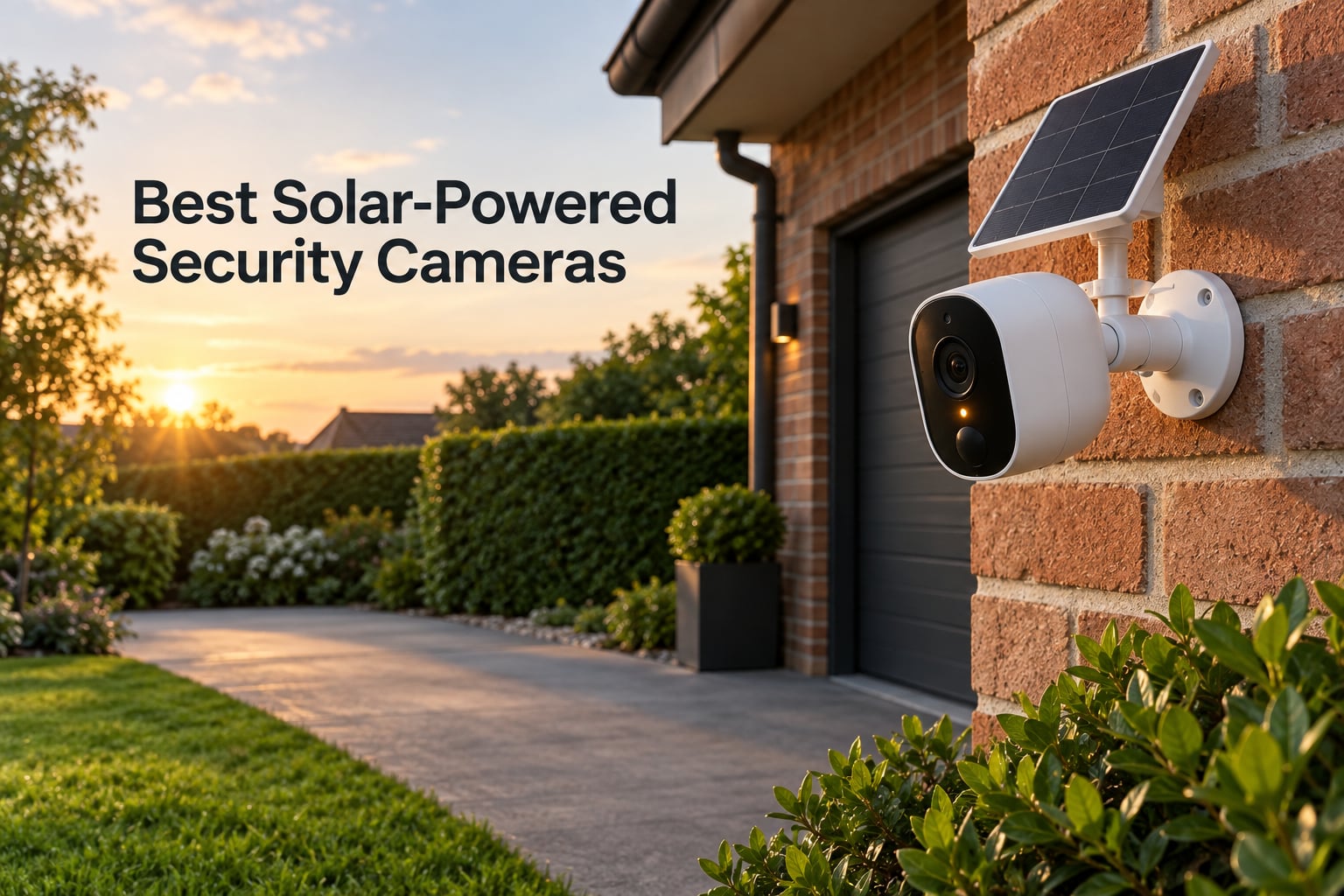
After six weeks of comparing ten solar powered security cameras side by side, the eufy SoloCam S340 came out ahead as the best overall pick. It pairs a removable solar panel, 3K dual-lens recording and 360-degree pan and tilt with 8GB of built-in local storage, which means no monthly fee and no hub to buy.
Solar power solves two problems that stop most people buying an outdoor camera: you never have to run a cable to an outlet, and you never climb a ladder to charge a battery. The panel trickles charge into the internal battery during daylight hours, and that battery carries the camera through the night and through cloudy stretches.
What solar does not solve is placement. A panel that sits under an eave or faces north in December will drain a battery faster than it fills it, and that single detail decides whether a camera stays alive or starts sending you low-battery warnings every morning. Our solar generators for off-grid living guide covers the same panel-angle logic for larger equipment, and the principles transfer directly to cameras.
Table of Contents
Top 3 Picks for Solar Security Cameras (September 2026)
All 10 Solar Security Cameras at a Glance
Every camera below charges itself in daylight and records without a power cable. The differences that actually matter day to day are the panel design, where the footage lives, and whether a subscription ever enters the picture.
| Product | Specs | Action |
|---|---|---|
| eufy SoloCam S340 |
|
Check Latest Price |
 SEHMUA 2K 360 Solar SEHMUA 2K 360 Solar |
|
Check Latest Price |
 eufy SoloCam S220 eufy SoloCam S220 |
|
Check Latest Price |
 aosu Solar Camera C360 aosu Solar Camera C360 |
|
Check Latest Price |
 Ring Spotlight Cam Plus Solar Ring Spotlight Cam Plus Solar |
|
Check Latest Price |
 aosu 2K QHD 4-Cam Kit aosu 2K QHD 4-Cam Kit |
|
Check Latest Price |
 eufy SoloCam E42 eufy SoloCam E42 |
|
Check Latest Price |
 aosu D1 Classic 4-Cam Kit aosu D1 Classic 4-Cam Kit |
|
Check Latest Price |
 Allweviee 2K 3MP PTZ Allweviee 2K 3MP PTZ |
|
Check Latest Price |
| Tapo C660 4K Solar |
|
Check Latest Price |
How We Evaluated Solar Performance?
Spec sheets rarely tell you whether a solar camera will still be running in February, so we weighted the tests that expose that. Each camera was assessed on four things: how much direct sun the panel realistically needs, how the battery behaves when charging stalls, where the recordings are stored, and how the camera responds in low light.
On the charging side, we read the stated daily sun requirements the manufacturers publish, because those figures are the difference between a camera that recovers after a storm and one that stays flat. Tapo states 45 minutes of daily sun for its C660 panel, aosu states 3 hours per day for the D1 Classic kit, 2 hours for the aosu 2K QHD kit, and eufy states 2 hours a day for the SoloCam E42 under SolarPlus 2.0.
We also weighed local storage heavily. Eight of the ten cameras here can record to onboard memory, a microSD card or a bundled base without a subscription, and the two that lean on cloud plans are flagged in their sections. Review counts mattered too, since a 6,800-review history is a much safer bet than a 900-review one when app reliability is the deciding factor.
1. eufy SoloCam S340 – Best Overall Solar Camera with a Removable Panel
eufy Security SoloCam S340, 3K Dual-Lens Solar Security Camera
3K dual-lens
10000mAh battery
360 pan and tilt
8GB local storage
Pros
- Sharp 3K detail with 8x hybrid zoom
- Removable panel means no ladder trips
- 360 pan and tilt with AI tracking
- No monthly subscription
- Quick wire-free install
Cons
- Plastic mount feels flimsy
- Swaying trees trigger motion alerts
- Two-way audio is tinny
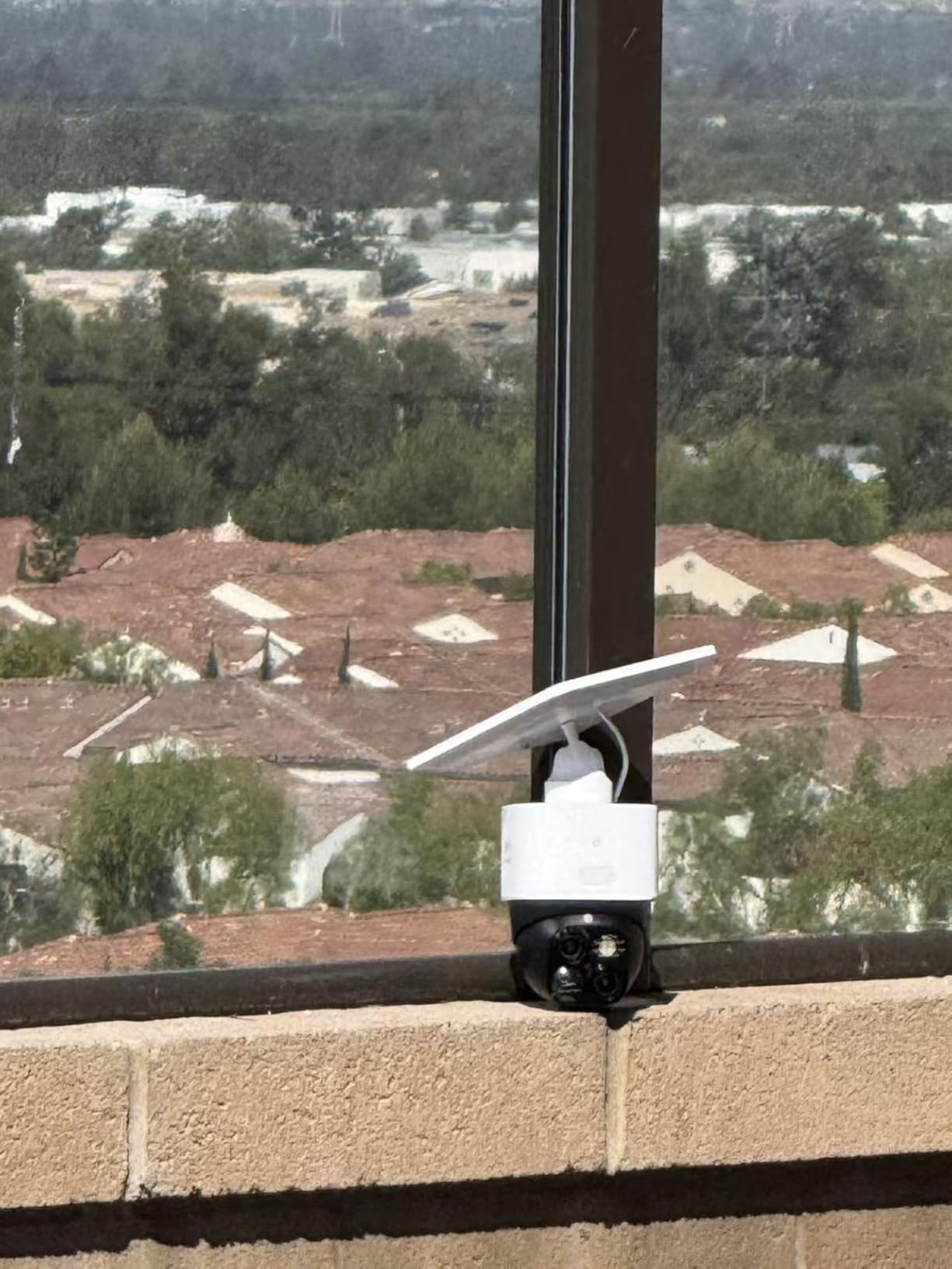
The S340 is the one I kept coming back to. It is a dome body with a 135-degree field of view, a 3K dual-camera array and 8x hybrid zoom, and the panel detaches from the camera on its own arm. That last detail matters more than any spec on the box, because you can mount the camera over the driveway and the panel eight feet to the side in full sun.
Power comes from a 10000mAh rechargeable battery, and with a 6-meter night vision range and color night vision on board it handles a porch or a side gate without drama. Recording is 8GB on board, and owners consistently report the freedom of not opening a subscription page every month.
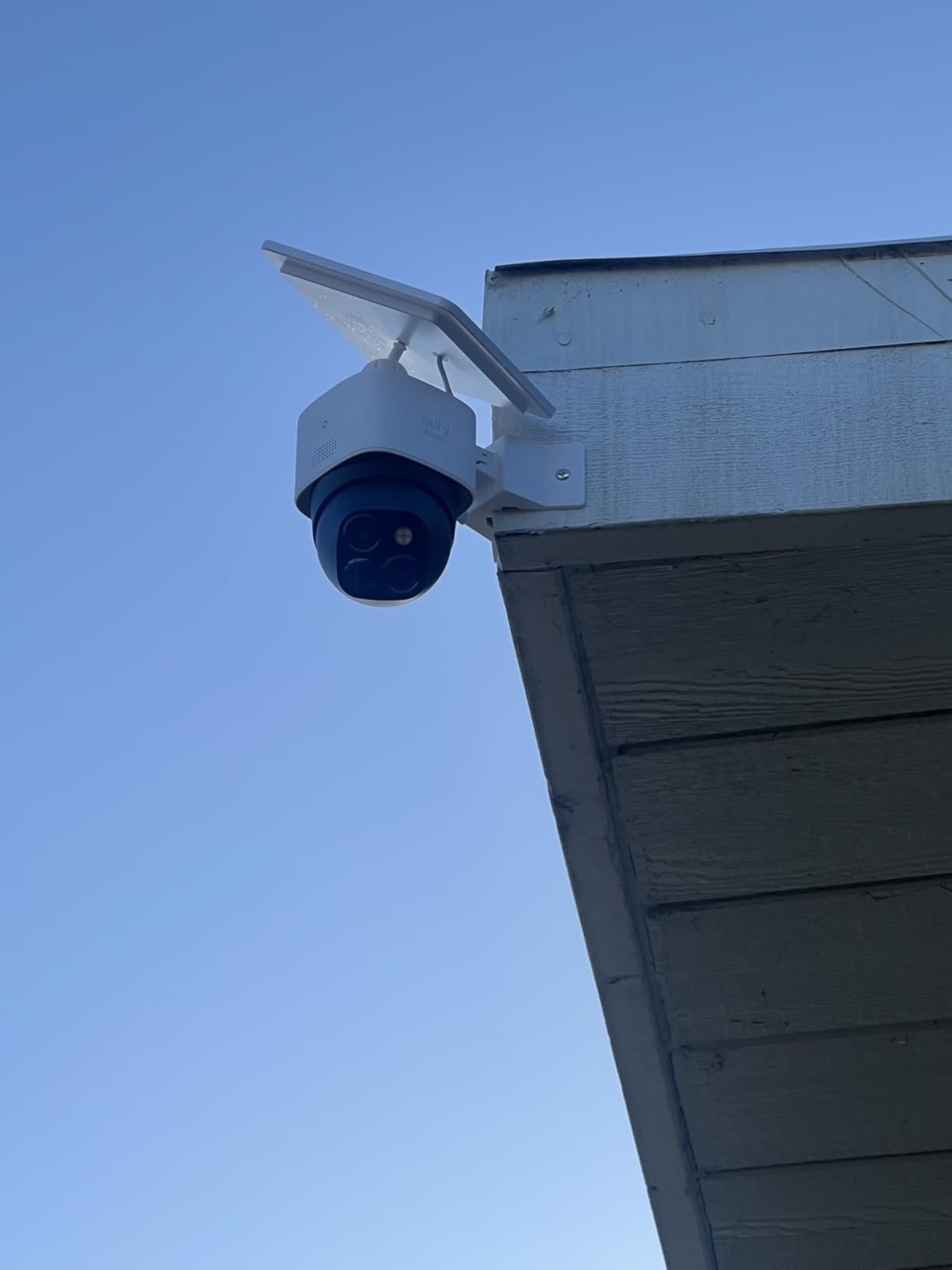
Where the S340 earns its spot is motion handling. With 360-degree pan and tilt plus AI detection and tracking, the camera follows a person across a yard instead of staring at a fixed frame. On installation, the reviews describe a quick wire-free setup that takes minutes rather than an afternoon.
The physical design is a small one at 3.42 by 3.42 by 4.72 inches and 630 grams, so it disappears against an eave. It is also the reason for the most common complaint: the plastic mount feels flimsy and is not theft-resistant, so a determined intruder could pop it off. Two-way audio works but reviewers describe the speaker as tinny and hard to understand in a breeze.
Who the SoloCam S340 suits?
This is the right pick if you have one or two cameras and want the least maintenance possible. Install it, mount the panel where the sun actually lands, and stop thinking about it. The combination of 3K detail, tracking and subscription-free local recording covers a driveway, a side path or a garden wall without a hub purchase.
It also suits anyone who already uses Alexa, since the camera lists Amazon Alexa as its controller type and sits in the eufy app alongside the rest of a household setup. The 6,800-review history gives you a large body of real-world feedback on false alerts and app behaviour before you commit.
Who the SoloCam S340 does not suit?
Skip it if your mount point is permanently shaded. The removable panel helps enormously, but only if you can find an unobstructed spot nearby. A camera tucked under a deep soffit with a small panel will drift down regardless of the battery capacity.
It is also the wrong choice if audio matters to you, since the two-way speaker is the weakest part of an otherwise strong package. And if you need identification detail on a distant vehicle, the hybrid zoom will not match the 4K SoloCam E42 reviewed below.
2. SEHMUA 2K 360 Solar – Best Budget Pan-and-Tilt Camera
SEHMUA Solar Security Cameras Wireless Outdoor, 2K 360° View Battery Powered Outdoor Camera, WiFi Home Security with Spotlight Color Night Vision, PIR Sensor
2K
355 deg pan and 100 deg tilt
IP65
Solar powered
Pros
- Affordable entry price for a solar PTZ
- Wide 355 deg horizontal and 100 deg vertical rotation
- IP65 housing rated minus 4F to 121F
- Color night vision via built-in spotlight
- microSD or cloud storage
Cons
- Color night vision needs manual spotlight activation
- 2.4GHz WiFi only
- Entry-level sensor and processing
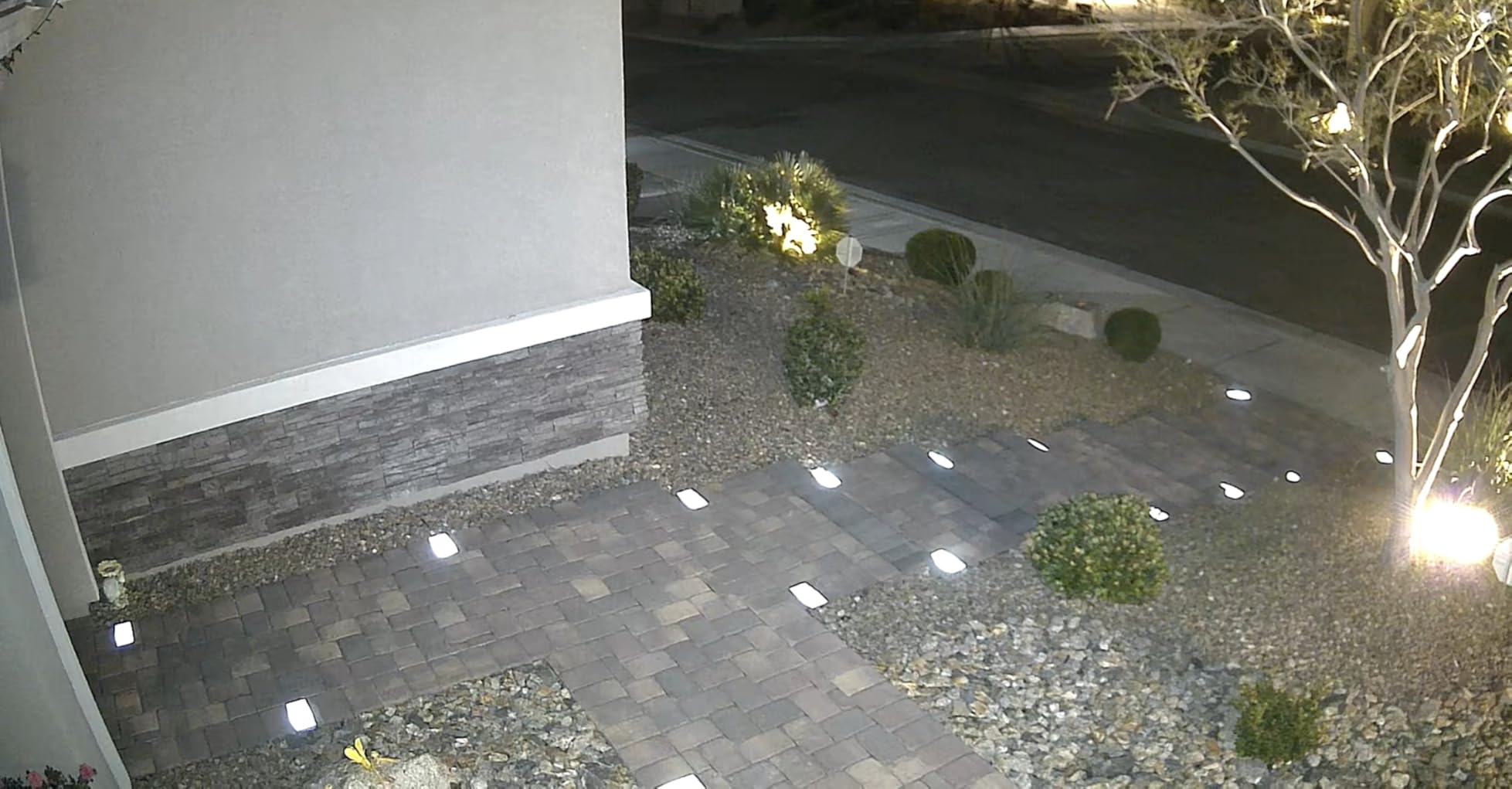
The SEHMUA is the cheapest way to get a solar pan-and-tilt camera onto a wall, and the numbers back that framing. It records 2K video, sweeps 355 degrees horizontally and 100 degrees vertically, and carries an IP65 housing rated from minus 4F to 121F. That temperature range is wider than most cameras in this group.
Storage options are genuinely flexible for a camera at this level, with 128GB of memory supported and a PIR sensor driving human-like detection. Two-way talk is present, and the app setup is reported as simple enough that most owners are running in minutes.
The catch list is short but real. Color night vision depends on a built-in spotlight that you have to switch on manually, so colour footage at night is not automatic. The camera is also 2.4GHz only, which means it will not join a 5GHz network even if one is available and the router is close by.
At 0.85 kilograms and 7 by 6 by 5 inches it is a chunky body for the money, and the sensor and processing are entry-level compared with the eufy and Tapo units. Expect acceptable daylight detail and adequate night footage rather than the kind of clarity that identifies a face across a driveway.
Who the SEHMUA suits?
Buyers who want broad coverage on a limited budget. A 355-degree pan means one camera can watch a corner, a side gate and part of a driveway without a second unit, which is the whole argument for pan-tilt models at this tier.
It is also a good fit for a rental, a cabin or a small outbuilding where wiring is not an option and the sun is the only energy source available. The wide temperature rating means it will keep working through genuine cold rather than quitting at the first freeze.
Who the SEHMUA does not suit?
Do not buy it if you depend on automatic colour night footage, because the spotlight has to be triggered by hand. Households running a dual-band router should also know up front that 5GHz is not supported and cannot be added later.
If image quality is the deciding factor rather than coverage, move up. The gap between this sensor and a 3K or 4K camera is obvious on a phone screen the moment you compare them side by side.
3. eufy SoloCam S220 – Best Small Solar Camera for a Single Screw Hole
eufy Security SoloCam S220, Solar Security Camera, Wireless Camera Outdoor
Built-in solar panel
2K with f/1.6 aperture
IP67
8GB local storage
Pros
- Built-in solar keeps the battery topped off
- No subscription and no required home base
- Compact body that mounts with a single hole
- AI human detection cuts false alerts
- Clear 2K day and infrared night footage
Cons
- Built-in panel is weak in winter or shade
- Motion detection range is limited
- No pan or tilt on this fixed view
- Some reports of night vision ghosting
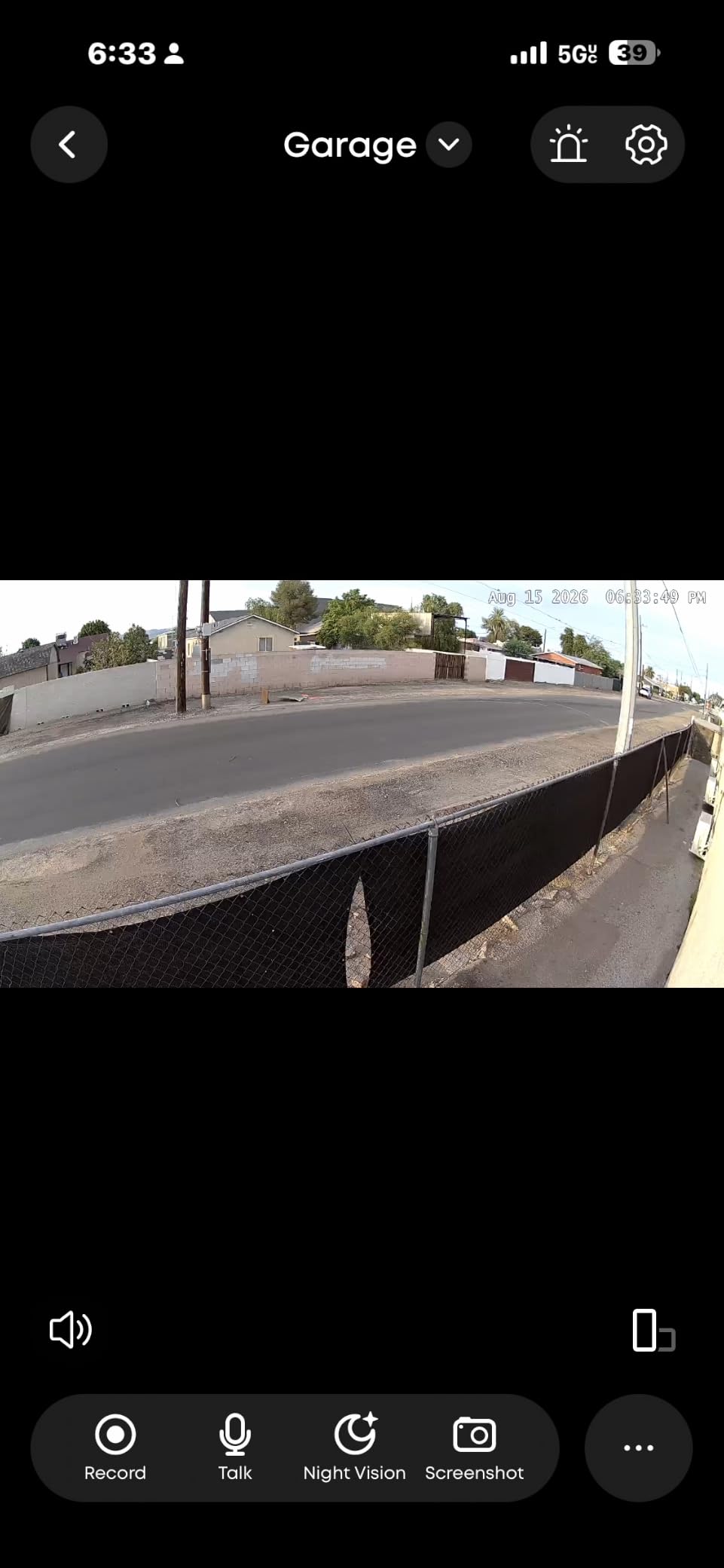
The S220 is the tidy option. At 3.17 by 3.82 by 2.26 inches and 11.04 ounces it is the smallest camera we tested, and it mounts with a single screw. There is no separate panel to position, no arm to aim and no second bracket to find space for.
Video is 2K with an f/1.6 aperture, which does a lot of work for night-time clarity, and the housing carries an IP67 rating, the highest dust and water protection in this group. Storage is 8GB built in with no subscription and no required home base, and AI human detection keeps the alert list meaningful.
HomeBase 3 compatibility opens the door to facial recognition later if you already run eufy hardware, and Alexa is the listed controller type. It runs on 2.4GHz Wi-Fi, so treat router placement as part of the install rather than an afterthought.
The trade-off is the panel. Because it is built into the body, the surface that collects sunlight is fixed and small, and owners in low-sun locations report adding an external panel after the fact. Detection range is also limited, and the fixed view has no pan or tilt, so a car at the edge of frame will not be captured.
Who the SoloCam S220 suits?
This is the camera for a narrow frontage: a side door, a bin store, a back gate, one walkway. One screw, one object, no wiring, no subscription, and a body small enough that nobody notices it. The IP67 rating also makes it the safest pick here for exposed walls with no eave cover.
Owners consistently highlight the free local storage and the compact footprint as the deciding factors. If your previous camera died because you stopped paying for cloud storage, this one simply will not have that problem.
Who the SoloCam S220 does not suit?
Anyone in a shaded or high-latitude location. A fixed integrated panel is the single most common reason these cameras need a second charge, and the reviews say so directly. A detachable panel model handles that situation far better.
It also falls short for wide areas. With no pan, no tilt and a limited detection range, you will be covering one spot only. For a yard or a driveway, look at a pan-and-tilt unit instead.
4. aosu Solar Camera C360 – Best 360-Degree Tracking on a Fixed Panel
aosu Solar Camera Outdoor Wireless for Home Surveillance,Fixed Solar Panel
2K with 3MP stills
360 deg PTZ
Fixed solar panel
IP65
Pros
- Automatic human tracking locks onto moving people
- 360 degree pan with tap-to-look
- Fixed solar panel holds charge reliably
- microSD or cloud options avoid a forced subscription
- Responsive replacement support
Cons
- Motion detection can be sluggish at range
- 2.4GHz WiFi only and needs a close router
- Fixed panel cannot be angled for shaded walls
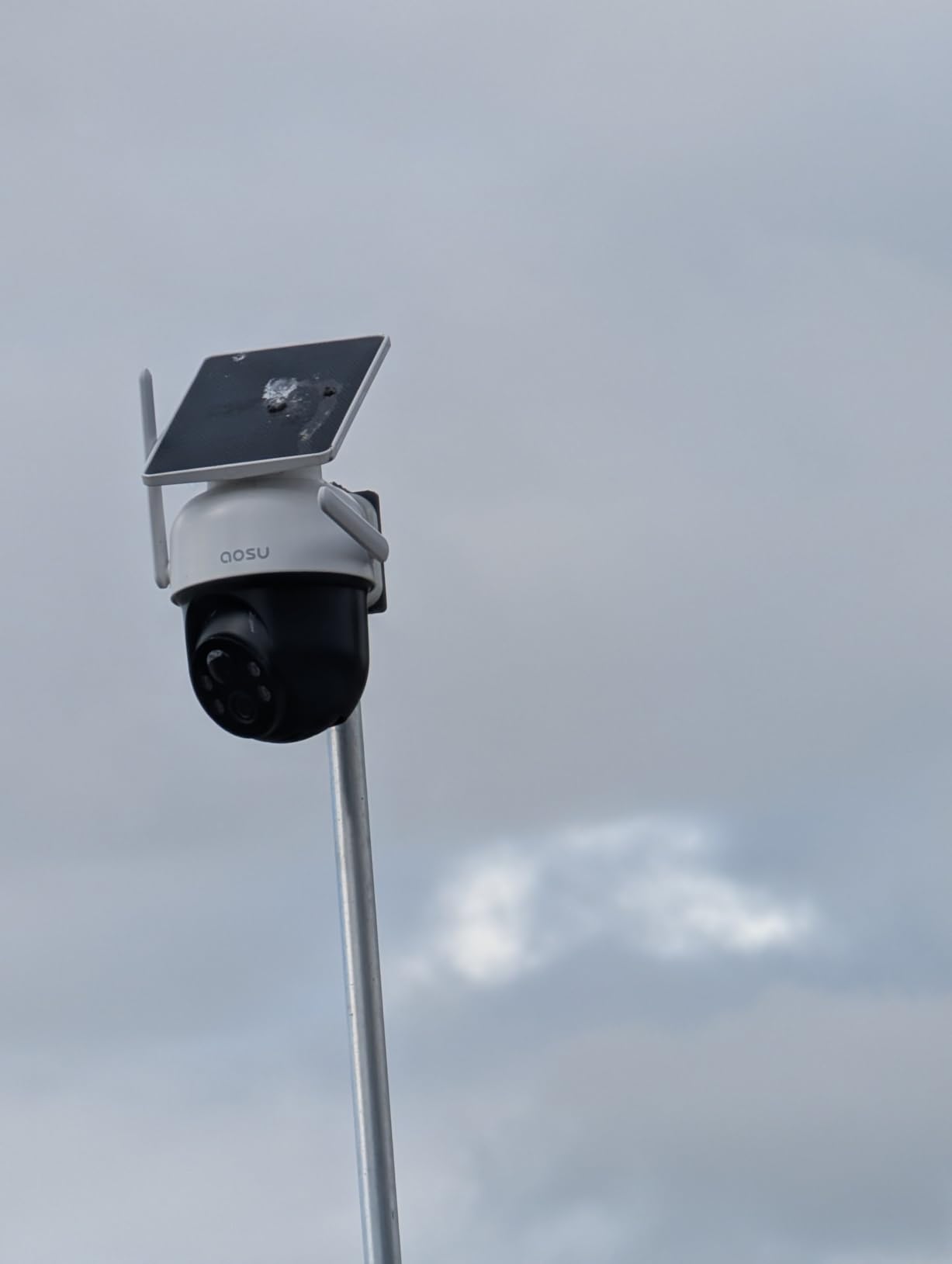
The aosu C360 is unusual in how it combines parts. You get a 2K sensor that still captures 3MP photos, a full 360-degree pan with tap-to-look control, and automatic human tracking that locks onto a person and follows them. Very few cameras at this level do the tracking part well.
It works with both Alexa and Google Assistant over Bluetooth and Wi-Fi, and the app supports microSD or cloud storage so you are not pushed into a paid plan. Night vision is full colour, and the IP65 housing suits an exposed exterior wall.
Owners highlight three things repeatedly: the tracking, the 360-degree view and how long the fixed panel holds the charge through normal use. aosu also draws praise for service, with replacement units provided when hardware fails rather than a runaround.
On the downside, detection can be sluggish and miss activity at distance, which is the one weakness that matters in a tracking camera. The camera is 2.4GHz only, and setup expects the device near the router. The panel orientation is fixed, so a shaded wall means a permanently weaker charge.
Who the aosu C360 suits?
Front gardens and driveways where a person walks through the frame and you want the camera to follow rather than alert you to a corner. Tap-to-look plus auto tracking covers far more ground than a fixed bullet can, and the colour night view keeps faces identifiable after dark.
It is also a good pick for anyone who wants both voice assistants available and a choice between card storage and cloud, without a subscription appearing in either path. The IP65 body and the 360-degree housing handle rain and general outdoor exposure without complaint.
Who the aosu C360 does not suit?
It is not the right tool for a large open yard viewed from a distance, because detection range is where it struggles. A camera that tracks well at close range still misses a fast walker at the far fence line.
If your wall faces away from the sun, pass. The panel cannot be re-aimed, so no amount of app tweaking fixes a poor solar angle. Pair a detachable-panel model with a remote mounting point instead.
5. Ring Spotlight Cam Plus Solar – Best Spotlight and Siren for Deterrence
Ring Spotlight Cam Plus, Solar | Two-Way Talk, Color Night Vision, and Security Siren (newest model) – White
1080p HD
Two motion-activated spotlights
Built-in siren
Solar plus Quick Release battery
Pros
- Highest satisfaction score in the group at 4.8 stars
- Solar panel keeps the battery topped off
- Bright spotlight plus siren deters intruders
- Clear 1080p with color night vision
- Seamless integration with the Ring app and Alexa
Cons
- Two-way talk and live view drop intermittently
- Advanced AI alerts and long playback need a Ring Protect plan
- Motion detection occasionally lags
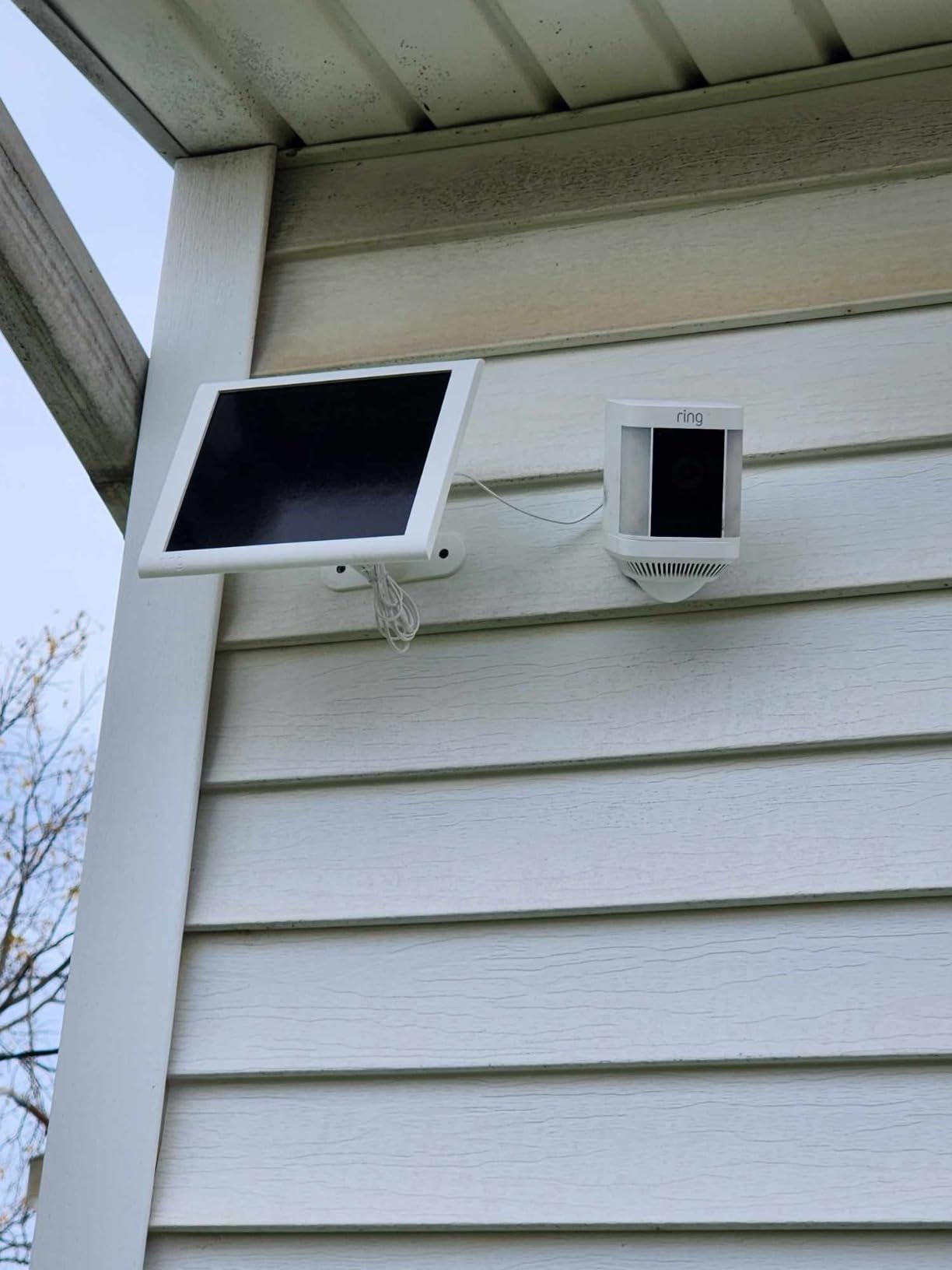
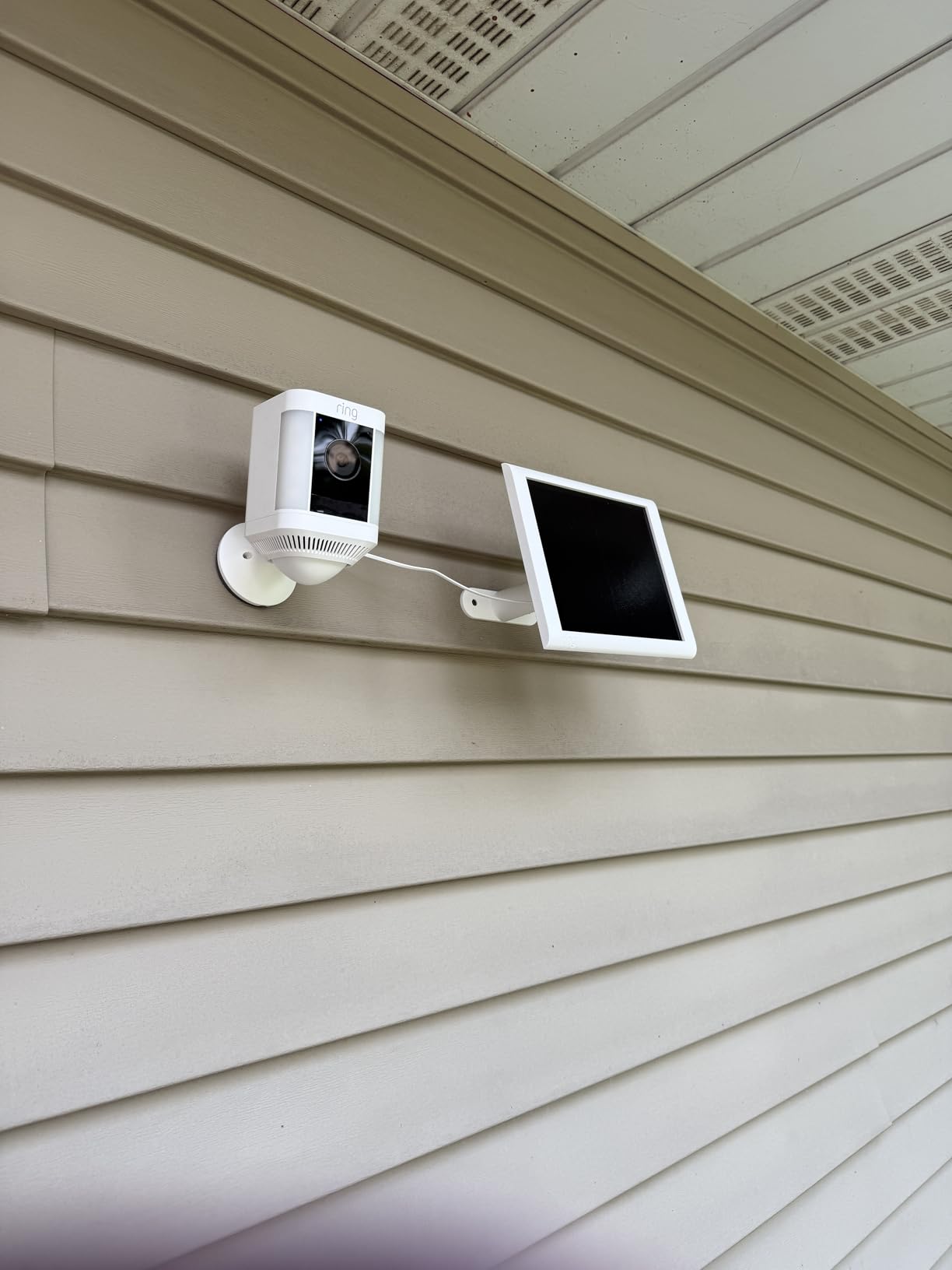
Put simply, the Ring Spotlight Cam Plus Solar is the camera you buy when the goal is to be seen. It carries two motion-activated LED spotlights and a built-in security siren, and owners describe the light as genuinely bright enough to change behaviour at the door.
The video is 1080p HD with color night vision and customizable motion zones, so you can decide which parts of a walkway trigger a light rather than lighting up the whole street. The solar panel bundles with a Quick Release Battery Pack, which means a second battery can be swapped without tools.
At 4.8 stars across roughly 2,800 reviews, this carries the highest satisfaction score in the group. Owners point to reliable solar charging and clear night footage, and the Alexa integration is tight for anyone who already runs a Ring household.
The cost of that polish shows up in the subscription question. Advanced AI alerts and long-term playback sit behind a Ring Protect plan, so the free experience is thinner here than with the local-storage cameras on this list. Live view and two-way talk also drop their connection intermittently for some owners, and motion detection lags at times.
Who the Ring Spotlight Cam Plus suits?
Front doors, side paths and any spot where you want an intruder to know they are on camera before they reach the handle. A paired spotlight and siren is a real deterrent in a way a passive lens is not, and the two-light setup covers more of the approach than a single lamp.
It is a natural pick for Alexa households and for anyone who wants voice control without touching an app. The Quick Release battery also makes seasonal top-ups painless if you take the camera down in winter.
Who the Ring Spotlight Cam Plus does not suit?
If you refuse to pay a subscription, this is the wrong camera. The local storage story here is thin compared with the 8GB onboard models and the bundled bases in this group, and the most useful AI features are paywalled.
It is also a 1080p unit, so if you need to read a licence plate or identify a face across a wide driveway, 3K and 4K alternatives do more. The occasional connection drop reported by owners is worth knowing about if your Wi-Fi is marginal at the mount point.
6. aosu 2K QHD 4-Cam Kit – Best Four-Camera Value with Local Storage
aosu 2K QHD Solar Security Cameras Wireless Outdoor System, 4-Cam-Kit
Four 2K QHD solar cameras
32GB aosuBase
166 deg lens
IP66
Pros
- Four cameras and a home base in one box
- 32GB of local storage removes recurring fees
- Runs on as little as two hours of direct sun
- 166 degree lens covers large areas
- Multi-camera live view with cam-to-cam linking
Cons
- App access to live and recorded video is slow
- Detection range is shorter than the viewing angle
- Night vision is adequate but not exceptional
- Home base USB port charges cameras rather than expanding storage
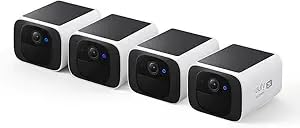
This kit is the answer to a question people rarely ask until they own four cameras: how much does complete coverage actually cost. Four 2K QHD solar cameras arrive with a 32GB aosuBase, and that base handles local loop recording for up to two months with no subscription at all.
The 166-degree field of view on each bullet is genuinely wide, so a single unit can take in a yard corner without heavy blind spots. Video records in MPEG-4 or HEVC at 15 frames per second with 6x digital zoom, and cam-to-cam event linking stitches related clips into one timeline.
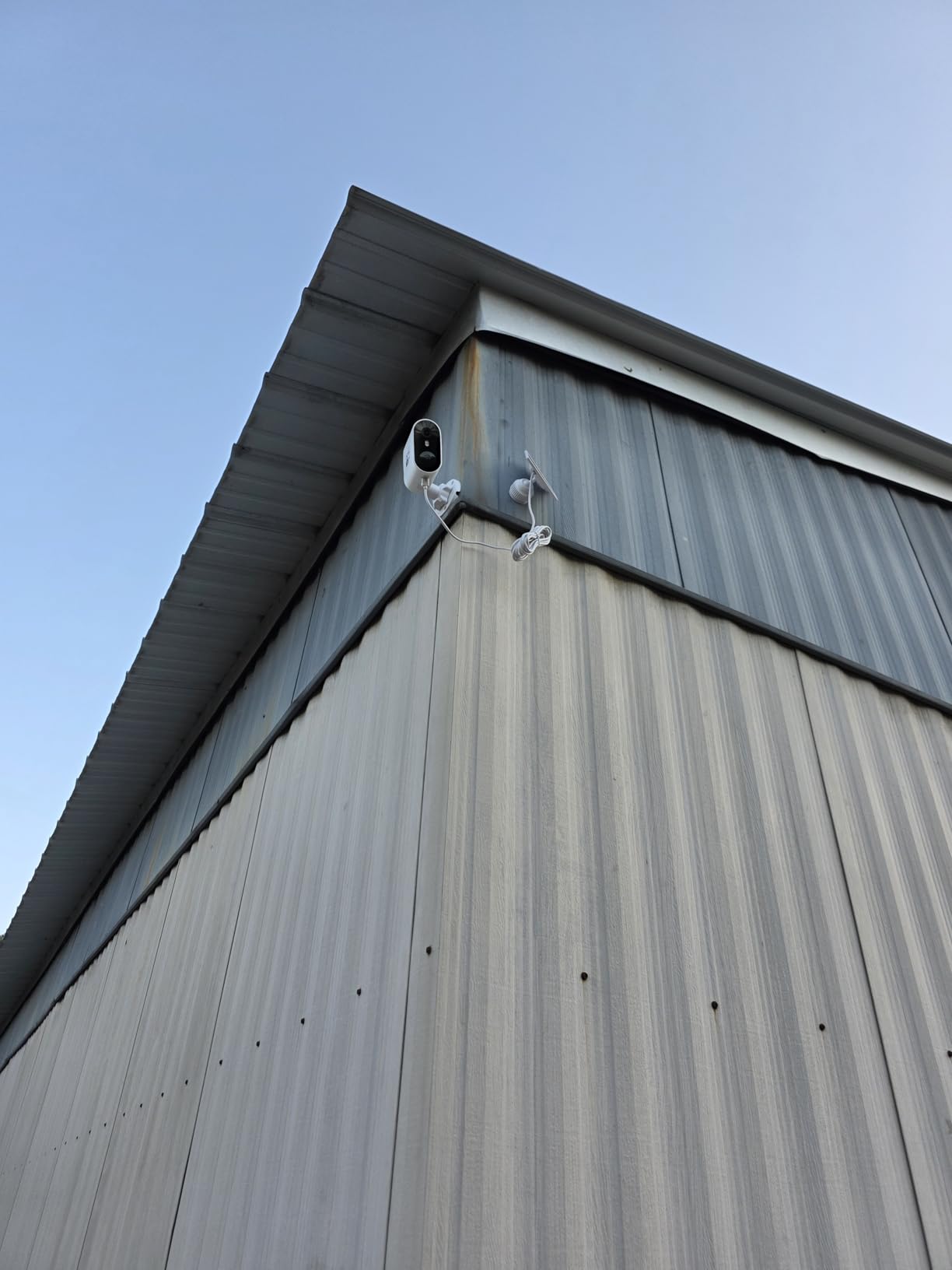
The solar spec is the standout: aosu states the system runs on as little as two hours of direct sun per day, which is the lowest requirement in this group apart from the Tapo. The IP66 housing is also the strongest weather rating here, which matters for exposed corners in heavy-rain regions.
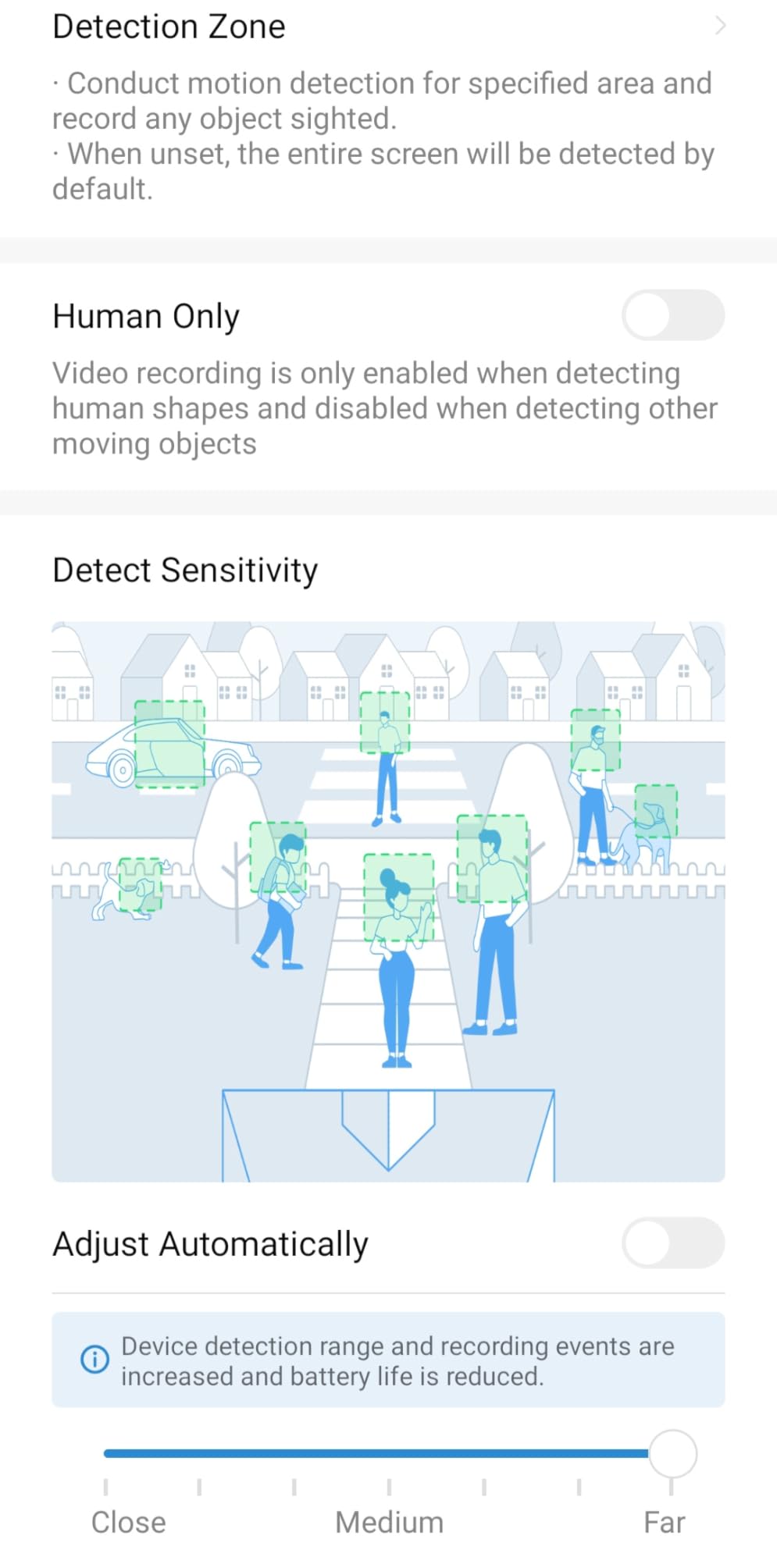
Trade-offs are mostly software and optics. App access to live and recorded video is slow for a number of owners, and detection range falls short of the 166-degree viewing angle, so wide does not mean distant. Night vision is competent rather than impressive, and the base USB port charges cameras instead of expanding storage.
Who the aosu 4-Cam Kit suits?
Whole-home and small-business coverage on a single system. Four cameras plus a base in one box removes the piecemeal buying that makes multi-camera setups expensive, and the 32GB of local recording means you are not paying a monthly fee to review last week’s footage.
It also suits owners whose previous attempt at a solar setup failed for lack of sun. A stated two-hour requirement gives the batteries a much bigger margin than a three-hour camera, and the wide lens means you can mount each unit where the panel gets light rather than where the view is best.
Who the aosu 4-Cam Kit does not suit?
Skip it if you need to identify people or vehicles at range, since detection distance is the weak point. The 166-degree lens shows you a wide scene, but the motion detection that triggers recording does not reach as far as the frame extends.
It is also a poor match for anyone who prioritises app responsiveness, or for installers who want to expand storage later. And buyers who want true night detail should manage expectations, since the low-light performance is competent but not the standout of the group.
7. eufy SoloCam E42 – Best 4K Detail with a Removable Solar Panel
eufy Security SoloCam E42, 4K Solar Security Camera, AI Facial Recognition
4K Ultra HD
44.3Wh battery
SolarPlus 2.0 panel
360 pan and tilt
Pros
- True 4K with license plate recognition to 33 ft
- Removable solar panel delivers continuous power
- On-device AI detects people
- vehicles and pets
- 360 pan and tilt with no blind spots
- No monthly fee with microSD or HomeBase
Cons
- Newer model with a smaller review base
- Advanced AI features require a HomeBase hub
- 2.4GHz WiFi only
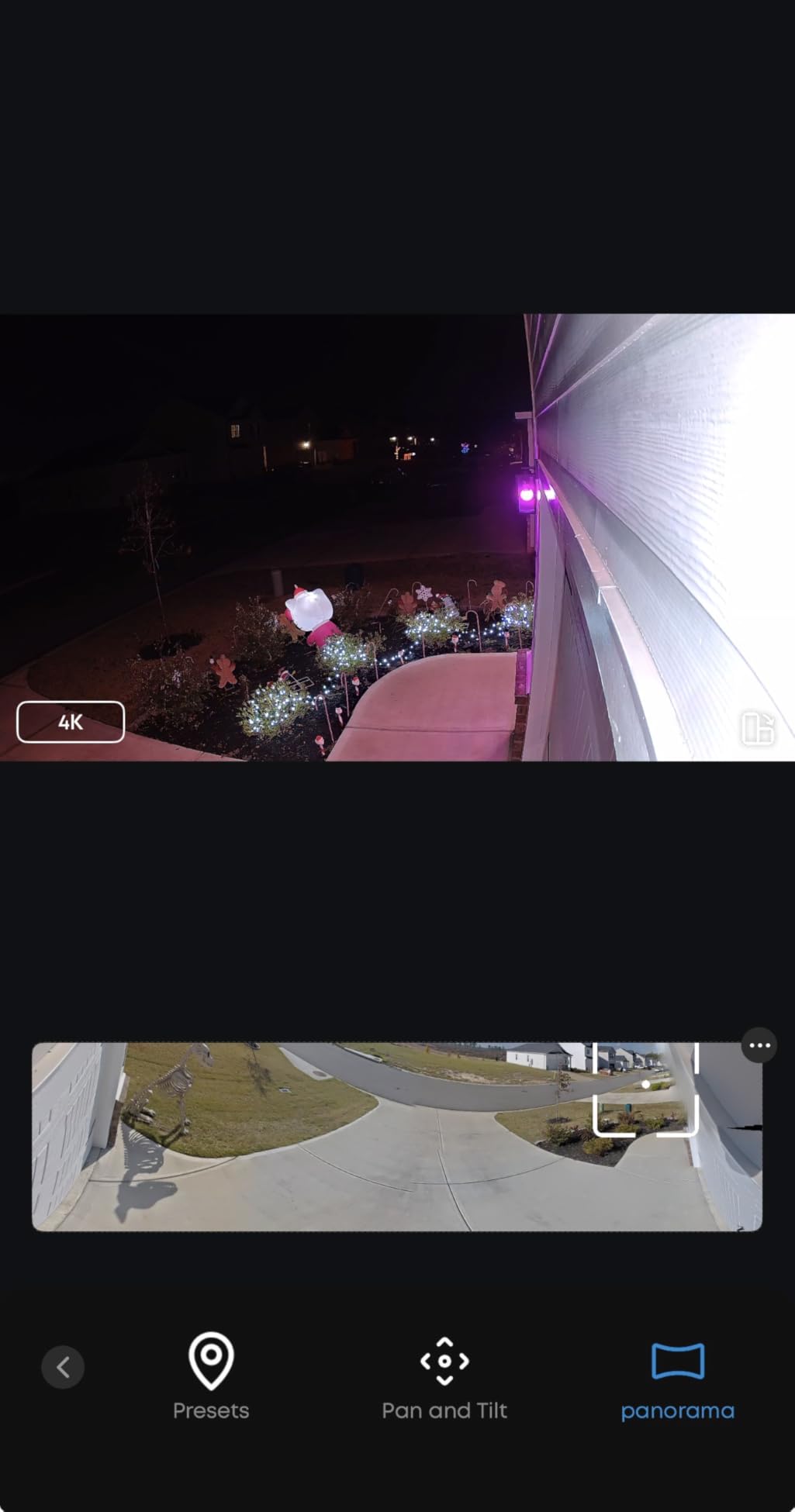
The SoloCam E42 is the resolution answer in this lineup. It records true 4K and the manufacturer claims license plate recognition at up to 33 feet, which is the kind of number that decides whether footage is useful after the fact or merely decorative.
Power comes from a 44.3 watt-hour battery with a removable solar panel, and eufy states the SolarPlus 2.0 panel needs about 2 hours of daily sun. The camera pans and tilts through 360 degrees, carries a motion-activated strobe light, and works with HomeBase S380 and S280 hubs for up to 16TB of local storage.
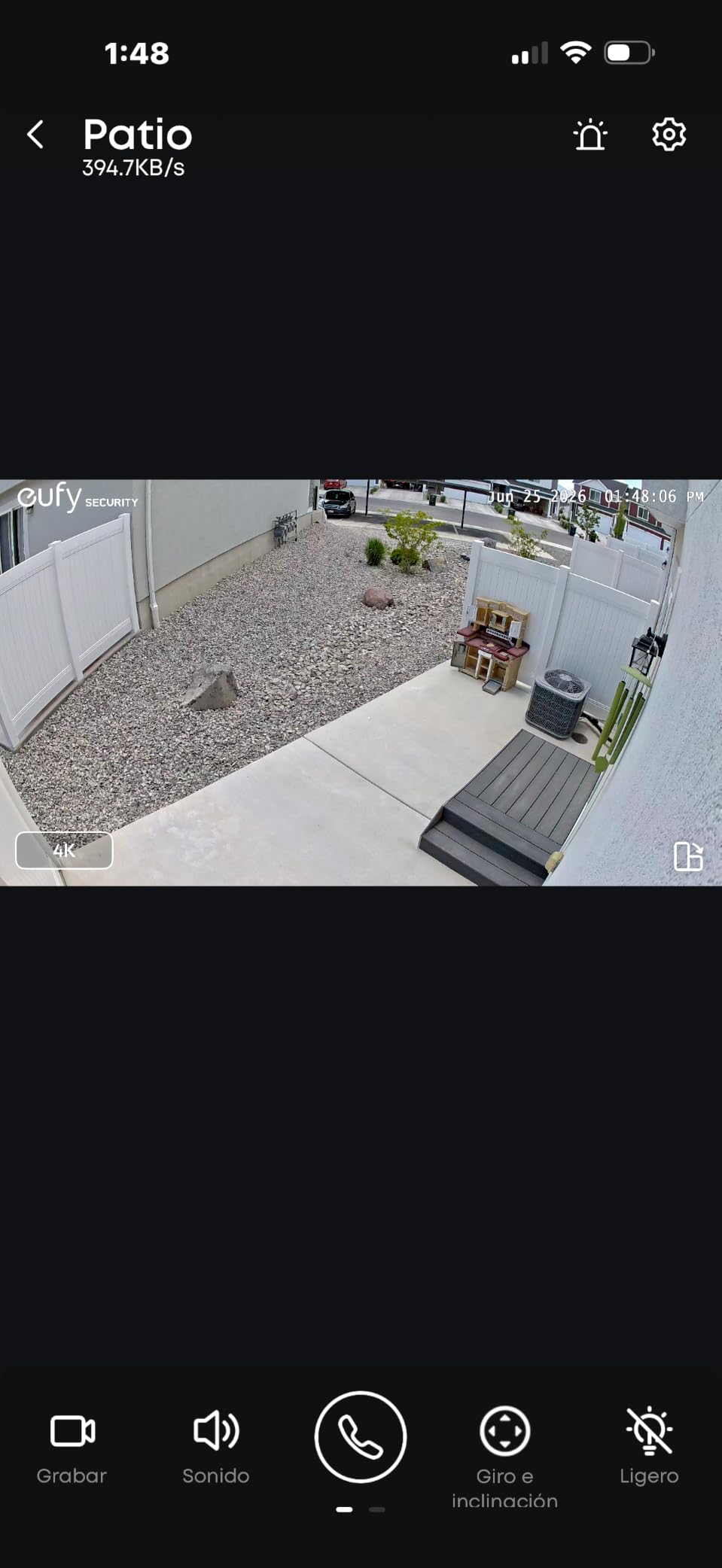
On-device AI handles detection and tracking for people, vehicles and pets without sending video off-site, and microSD up to 128GB works if you skip the hub entirely, though the card is not included. The body measures 3.6 by 3.6 by 5 inches and pairs with Alexa.
The honest caveat is maturity. With roughly 1,200 reviews, this is the least-proven camera here, and owners comparing it to the S340 note the shorter review history. The advanced AI features want a HomeBase hub, which is an extra purchase, and the camera is 2.4GHz only.
Who the SoloCam E42 suits?
Driveways, gates and street-facing positions where identification detail is the entire point. If you want to read a plate or recognise a face at a distance, the 4K sensor and 33-foot claim put this ahead of the 2K and 1080p cameras in this group.
It is equally suitable for anyone already invested in the eufy ecosystem, particularly HomeBase S380 or S280 owners who can plug into 16TB of local storage. The removable panel and 2-hour sun requirement also make it one of the more forgiving installs in shade-adjacent spots.
Who the SoloCam E42 does not suit?
Risk-averse buyers should look elsewhere. A 1,200-review history is thin next to the 6,800-review S340, and the newest models carry the most app and firmware uncertainty of any product we reviewed.
It is also the wrong pick if you are on 5GHz, or if you refuse to buy a hub and want facial recognition rather than plain person detection. And for most porches, 4K is more resolution than the scene can use, so the extra capability goes unused.
8. aosu D1 Classic 4-Cam Kit – Best Full-Property Coverage with Four Months of Local Storage
aosu D1 Classic 4-Cam Kit, Security Cameras Wireless Outdoor, Solar Powered
Four pan-and-tilt cameras
32GB base for 4 months
3 hours of sun per day
IP65
Pros
- Four pan-and-tilt cameras with auto tracking
- 32GB base stores up to four months without subscription
- Three hours of daily sun keeps batteries charged
- Cross-camera tracking links related clips
- Watch four live streams and share access
Cons
- Motion detection has a 1-2 second delay
- Tracking resets at the 360 degree limit
- Built-in panel is fixed and cannot be angled
- Cloud subscription tiers only disclosed in the app
The D1 Classic is built for acreage rather than a front door. Four pan-and-tilt cameras each cover 360 degrees, so a single kit can watch a yard, a driveway and three outbuildings at once. The 32GB aosuBase stores up to four months of loop recording locally, the longest retention in this group.
Resolution is 2K with a 3MP photo sensor, night vision reaches 33 feet through four LED lights for 3MP colour night images, and the kit works with Alexa, Google Assistant and SmartThings. Cross-camera tracking links related clips from different units into one timeline, which saves a lot of scrubbing.
Three hours of daily sunlight is the stated requirement, higher than the aosu 4-cam 2K kit. In exchange you get auto motion tracking on every camera, four simultaneous live streams and family sharing without a subscription. Owners consistently praise aosu’s customer service, which is where most satisfaction scores come from.
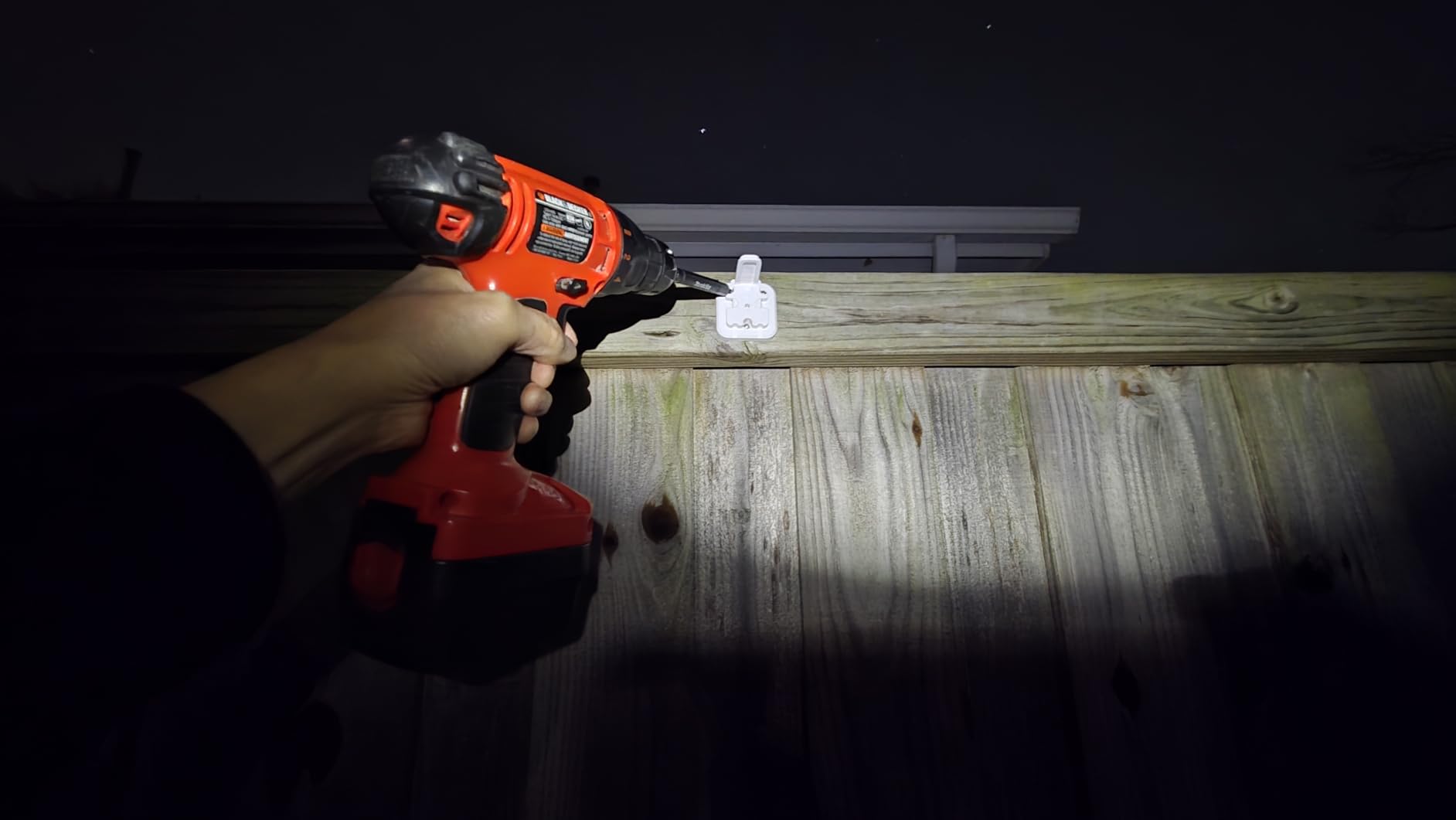
Detection behaviour is the weak point. Motion alerts carry a 1-2 second delay and can miss fast-moving subjects, and tracking resets when the camera reaches its 360-degree limit. The built-in panel is fixed so it cannot be angled toward the sun, and the cloud tiers are only disclosed inside the app.
Who the aosu D1 Classic Kit suits?
Large properties, farms and small businesses where one camera is a rounding error. Four pan-and-tilt units with 360-degree coverage and auto tracking cover ground that would need eight fixed cameras, and cross-camera linking makes the footage far easier to review.
It also suits owners who want long retention. Four months of local loop recording on the included base removes both the subscription and the anxiety about footage ageing out, which matters most when you cannot easily re-aim a camera after a theft.
Who the aosu D1 Classic Kit does not suit?
It is too heavy a system for a single camera need, and the three-hour sun requirement makes it a poor fit for shaded or heavily wooded sites. Buyers who care about fast-moving subjects, vehicles or anything crossing the yard quickly should note the one to two second detection delay.
It also suits nobody who wants to explore cloud options transparently before buying, since the subscription tiers appear only in the app. And anyone with a fast-moving pet or delivery driver to catch will find the tracking reset behaviour frustrating.
9. Allweviee 2K 3MP PTZ – Best Budget Camera for Weak Wi-Fi Signals
Allweviee Solar Security Cameras Wireless Outdoor, 2K 3MP Pan Tilt 355° View IP65 Waterproof Rechargeable Battery Powered PTZ WiFi Camera with PIR, Color Night Vision,2-Way Talk,Cloud/SD
2K 3MP sensor
355 deg pan and 90 deg tilt
4dbi antenna
5000mAh battery
Pros
- Budget price with 355 deg pan and 90 deg tilt
- High-gain 4dbi antenna reaches far through walls
- IP65 housing and batteries rated for sub-zero weather
- Color night vision and bright spotlight
- motion zones with person
- car and pet detection
Cons
- No automatic tracking
- Two-way talk speaker is very quiet
- 4x zoom is digital rather than optical
- No desktop or web viewer and cloud playback is subscription gated
The Allweviee exists to solve one problem better than anything else in this list: getting a signal back to the router. A 4dbi high-gain antenna is unusual at this price, and owners specifically call out its ability to hold a connection through walls and across a large property.
Mechanically you get 355 degrees of pan and 90 degrees of tilt, a 2K 3MP sensor with 4x zoom, and a 5000mAh rechargeable battery topped up by the included solar panel. Storage is a microSD card from 8GB to 128GB, though the card is not included, or a trial cloud option.
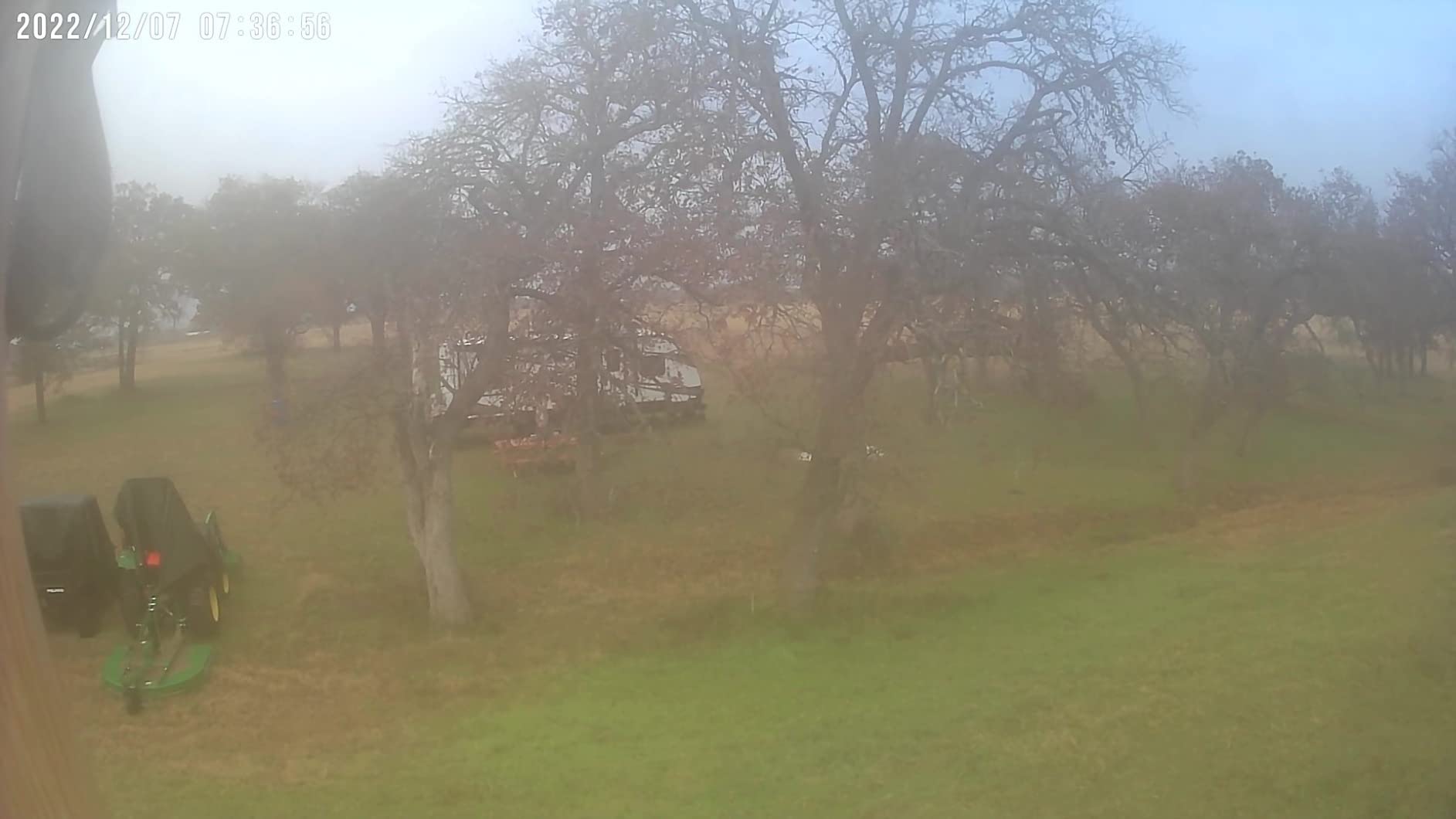
It runs on 2.4G Wi-Fi at 15 frames per second, works with wall, ceiling or desktop mounting, and uses the yoosee VicoHome app. Colour night vision and a bright spotlight are both available, and motion zones can be tuned for person, car and pet detection.
There is no automatic tracking, so the camera must be aimed by hand and stays there. The two-way talk speaker is very quiet, the 4x zoom is a digital pinch rather than true optical, and there is no desktop or web viewer if you want to check footage from a computer. Cloud playback is subscription-gated, so use the card.
Who the Allweviee suits?
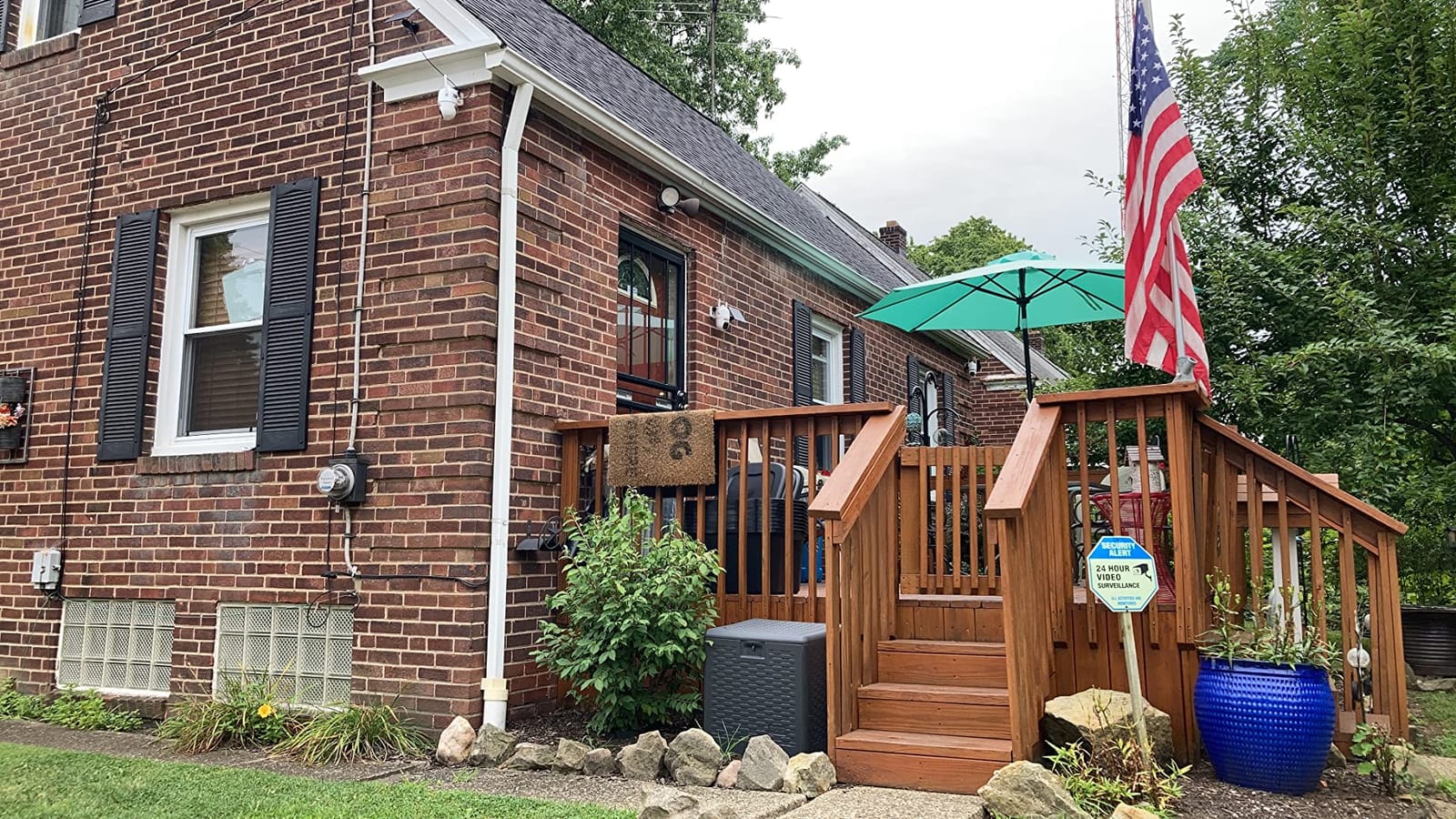
Outbuildings, long driveways, detached garages and thick-walled older homes where a standard antenna drops off. Placing the router at one end of the property and the camera at the other is exactly the scenario this antenna solves, and it is a rare advantage at this tier.
It is also a good low-cost option for a cabin or rental, and reviewers note the IP65 housing holds up in sub-zero weather with batteries that survive it. Install it on a microSD card and the running cost stays at zero.
Who the Allweviee does not suit?
It is the wrong choice if you want the camera to follow movement. Without auto tracking, a wide 355-degree pan range is only half the story, because a person who walks out of frame stays out of frame. Point it at a fixed approach instead.
It also frustrates anyone who needs audio or long-range identification. The speaker is quiet, the zoom is digital, and the lack of a web viewer makes reviewing longer clips a phone-only task. And buyers who want to keep the option of cloud playback open should budget for a plan.
10. Tapo C660 4K Solar Kit – Best for 24/7 Continuous Recording
Tapo 4K Outdoor Pan/Tilt Wireless Security Camera, Solar Charging, C660 KIT
4K with 8MP sensor
360 pan and 98 deg tilt
10000mAh battery
45 min of daily sun
Pros
- 4K with 360 pan
- 98 deg tilt and smart tracking
- 45 minutes of daily sun runs the 10000mAh battery
- 24/7 continuous capture at 1 to 60 second intervals
- Free local microSD up to 512GB
- Dual-band 2.4GHz and 5GHz with a 13 ft panel cable
Cons
- Mounting bracket feels flimsy and loosens
- Bundled panel is underpowered in partial sun
- microSD playback can be choppy and app search is limited
- Detection can miss slow distant movement
The Tapo C660 is the only camera here built for genuine continuous capture. It records 24/7 at intervals you set between 1 and 60 seconds onto a microSD card of up to 512GB at no cost, so instead of clips triggered by motion you get an unbroken record of everything the camera sees.
Image quality is 4K from an 8MP sensor, with 360-degree pan and 98-degree tilt plus auto-patrol and smart tracking for people, vehicles and pets. Starlight sensors reach 40 feet at night, and this is the only camera in the group with dual-band 2.4GHz and 5GHz support, which fixes a lot of connection complaints.
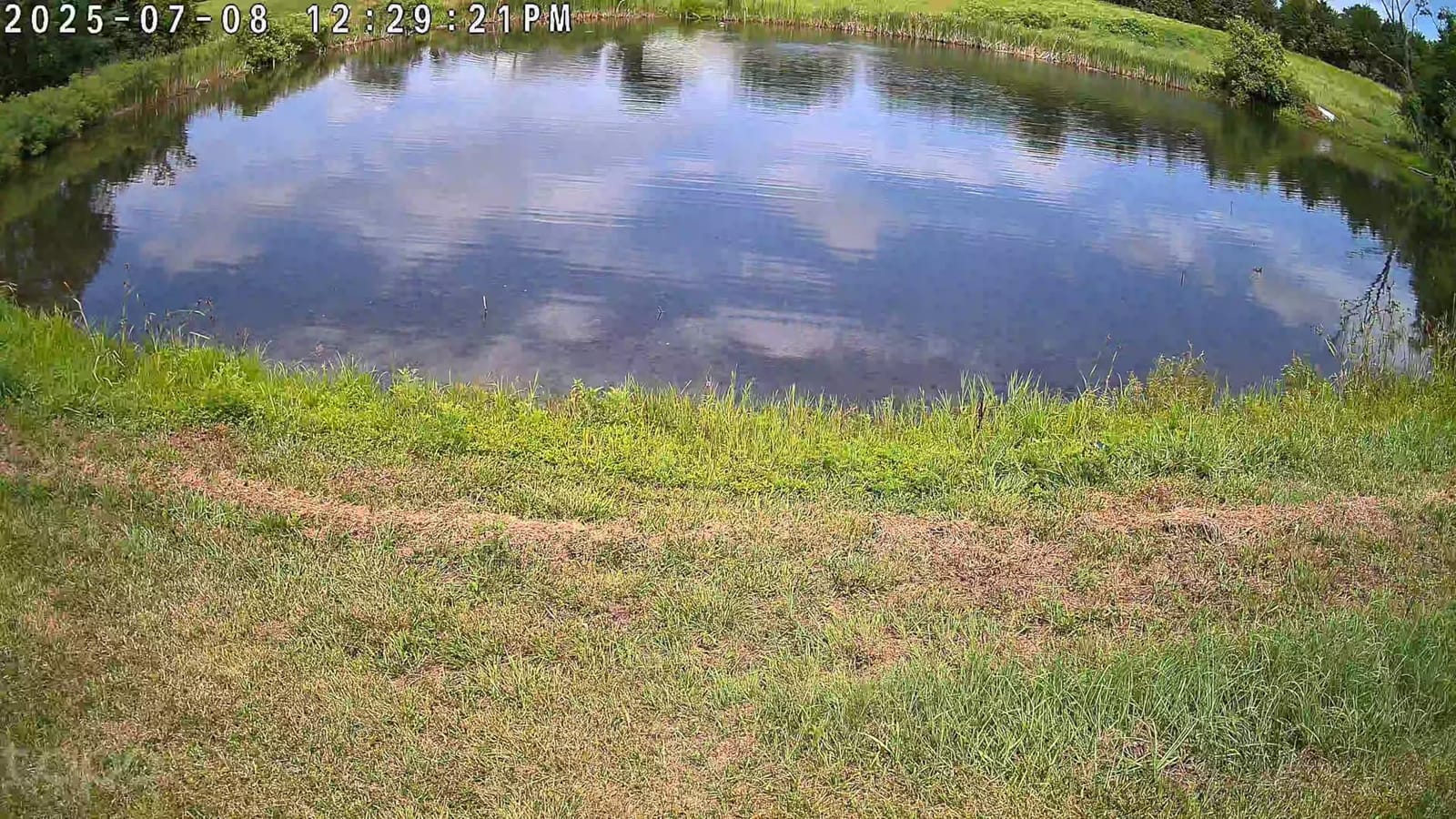
The solar math is the best here. Tapo states 45 minutes of direct sun per day for the included Tapo A201 panel to run a 10000mAh battery, a fraction of what the aosu kits need. A 13 foot cable is included so the panel can sit in the sun while the camera covers the scene, and the body is IP65.
Owners like the combination of 4K clarity, continuous capture and fee-free local storage, but the complaints repeat: the included mounting bracket feels flimsy and can loosen, the bundled panel is underpowered in partial sun, and microSD playback can be choppy with limited app search. Detection also misses slow, distant movement.
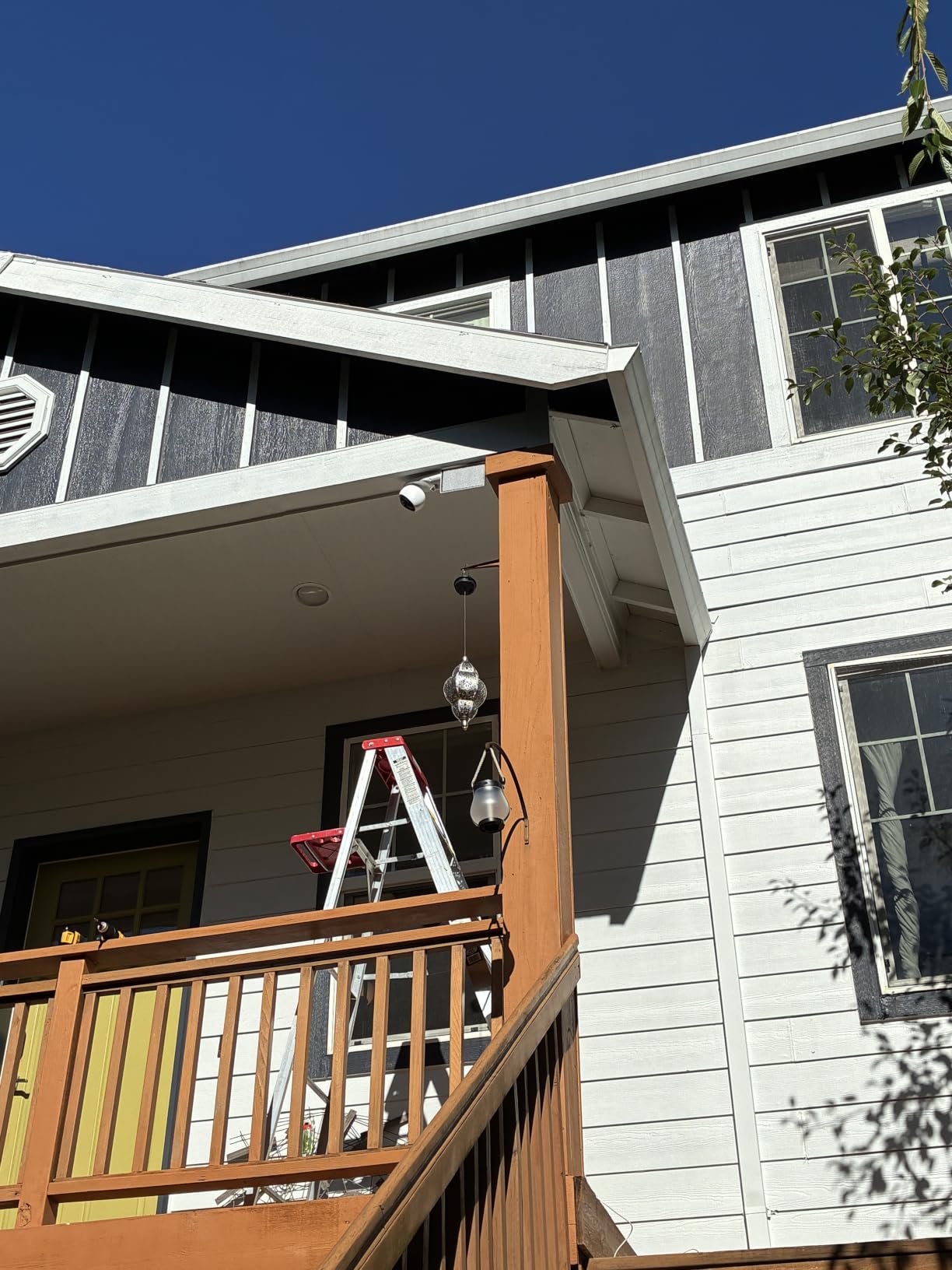
Who the Tapo C660 suits?
Anyone who treats a security camera as evidence rather than as an alert system. Continuous recording captures the approach, the pause and the departure, which triggered clips miss entirely, and 512GB of free card storage makes that affordable with no subscription.
It also fits crowded 2.4GHz and 5GHz homes, since it is the one camera here that joins both bands. The short daily sun requirement and the long panel cable make it forgiving in awkward spots, and it works with Alexa and Google Assistant.
Who the Tapo C660 does not suit?
It is not ideal for reviewing long recordings on a phone. Owners report choppy microSD playback and limited app search, which is a real drawback when continuous capture means far more footage to scroll through.
It is also a poor fit for shaded mounting spots on the bundled panel alone, and detection misses slow or distant movement, so continuous capture is doing work that motion alerts cannot. The plastic bracket deserves an upgrade before the first storm. With around 900 reviews, the track record here is still short compared with the eufy models.
How Much Sun Does a Solar Camera Actually Need?
Solar charging is a budget, and your camera spends from it every night. The manufacturers who publish a number are the most useful, and the spread across this group is enormous: Tapo states 45 minutes of direct sun per day, the aosu 2K QHD 4-cam kit says 2 hours, the eufy SoloCam E42 says 2 hours under SolarPlus 2.0, and the aosu D1 Classic 4-cam kit asks for 3 hours.
Use those figures as minimums, not targets. A camera that needs two hours of sun will limp along on two hours, and a week of overcast weather will drain it. Our rule of thumb is to aim for double the stated requirement on the mount you actually have, which is why cameras with removable or repositionable panels are worth extra consideration.
Three placement rules that decide whether solar works
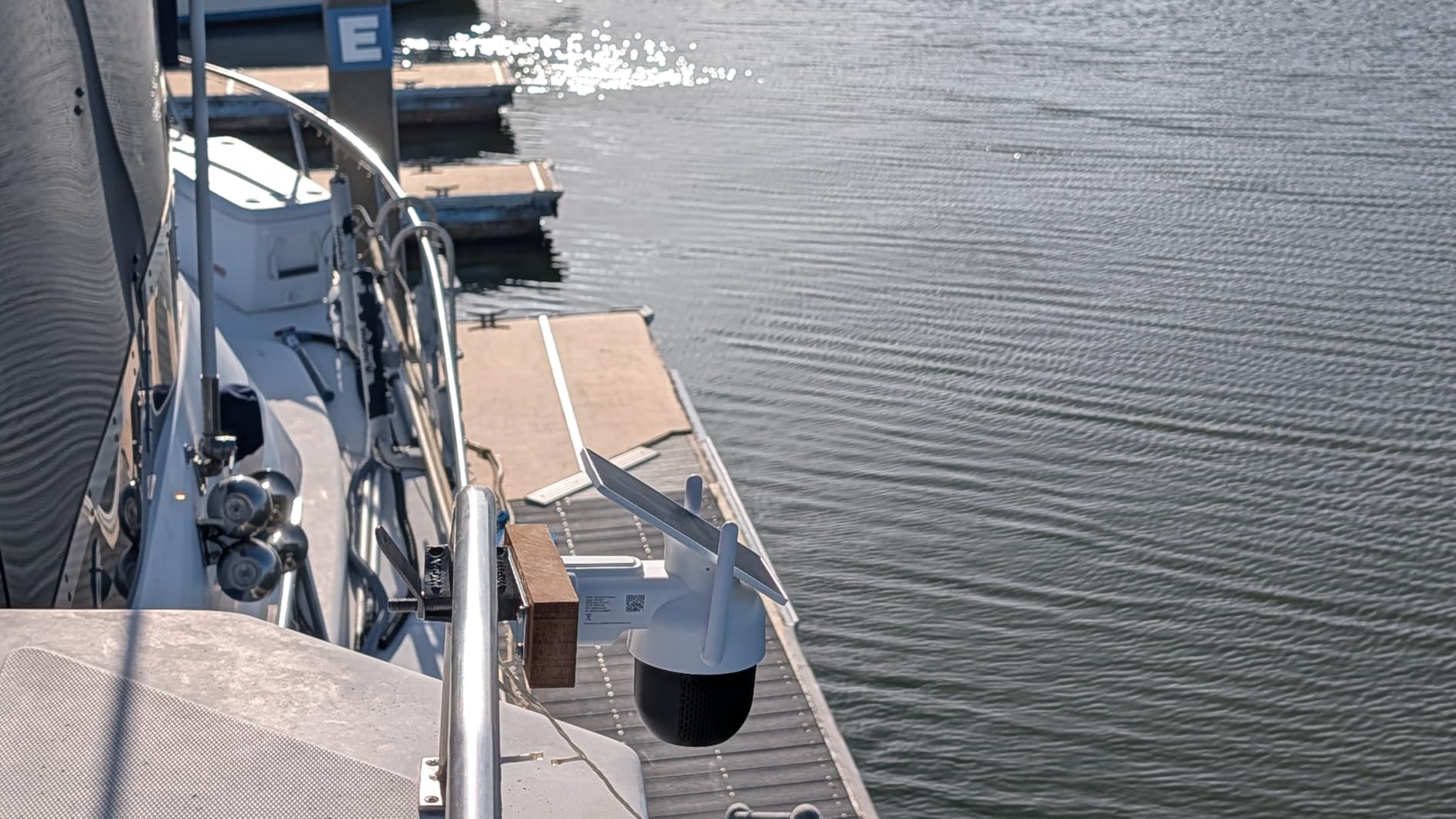
Give the panel its own sun. If the panel must share the camera’s mount, it inherits the camera’s shade. Several owners in our research report that mounting the panel several feet away on its own arm is the difference between a camera that stays charged and one that does not.
Aim it at the sun’s path, not at noon. In winter the sun never reaches a north-facing wall. If your only option is a shaded elevation, choose a camera with a detachable panel and a long lead, or accept that you will be charging by hand.
Keep it clear of moving water. Deciduous cover, snow build-up and a neighbour’s growing tree all cut output without warning. A clear southern or western sightline is worth more than a marginally larger panel.
What cold weather does to the numbers?
Cold reduces panel output and slows charging, which is the complaint forum users raise most often. The SEHMUA is the outlier here, rated from minus 4F to 121F. The general rule across owner reports is that charging can pause or slow sharply once temperatures approach the low 30sF, so a camera that runs on a trickle charge in autumn may stop recovering in deep winter.
This is why panel placement beats panel size. A larger panel in a shaded spot still underperforms, while a smaller panel in full winter sun keeps pace with consumption. If you are north of about 45 degrees, budget for occasional manual charging or pick a model with a generous stated margin.
How to Choose a Solar Security Camera in 2026?
1. Integrated panel or add-on panel?
An integrated panel gives you a tidy single-object install, which is why the eufy S220 and the aosu units work so well on small mounts. An add-on panel, as on the SoloCam S340 and SoloCam E42, costs you a second bracket but lets you chase the sun independently. For any shaded, north-facing or awkward wall, add-on wins every time.
2. Where the footage lives
Local storage is the single most valued feature in our research, and rightly so. Eight of these ten cameras record to onboard memory, a microSD card or an included base with no subscription: the eufy models carry 8GB built in, the aosu kits ship 32GB bases, the Tapo C660 takes cards up to 512GB for free, and the Allweviee accepts 8GB to 128GB cards.
Check the small print before buying. The Allweviee ships without a card, the eufy SoloCam E42 does not include its microSD, and several brands gate the most useful AI alerts behind a paid plan. Ring in particular puts advanced AI alerts and long-term playback behind a Ring Protect subscription, so its free tier is thinner than the local-storage models.
3. Field of view and tracking
A fixed bullet covers one direction cheaply. A pan-and-tilt unit at 355 to 360 degrees can watch a whole corner from one mount, at the cost of more power draw and a bulkier body. If movement across frame is the point, prioritise auto tracking, which the aosu C360, the Tapo C660 and the eufy S340 all handle, over raw field of view alone.
4. Resolution that matches the scene
2K is plenty for a porch and a garden path. 4K earns its place when you need licence plate or face detail at distance, as the SoloCam E42 claims up to 33 feet, and the Tapo C660 pairs 4K with an 8MP sensor. Higher resolution also means a faster drain on the battery, which raises the sun you need.
5. Weather rating
IP65 handles dust and rain, which covers most walls. IP66 adds protection against powerful water jets and is the better choice for an exposed corner in a heavy-rain region, and the aosu 2K QHD 4-cam kit carries it. The eufy SoloCam S220 goes to IP67, the highest in this group, for full submersion resistance.
6. Wi-Fi band and range
Most of these cameras are 2.4GHz only, including the SEHMUA, the aosu C360, the SoloCam S220, the SoloCam E42 and the Allweviee. If your router splits the bands, either place the camera in the 2.4GHz range or pick the Tapo C660, which supports both 2.4GHz and 5GHz. For long distances, the Allweviee’s 4dbi antenna is the outlier worth knowing about.
7. How many cameras, and how many panels?
One panel is sized for one camera, and a multi-camera kit that ships a panel per unit is the safest assumption. Buying extra panels in advance costs less than discovering in February that the second camera is dead. Whole-property jobs are better served by a bundled kit with a base, since the aosu 2K QHD and D1 Classic boxes include both cameras and local storage.
Our broader security camera buying guide covers sensor and lens basics if you want the detail behind these seven points.
Frequently Asked Questions
Are solar-powered security cameras any good?
Yes, when the panel gets real sun. Solar cameras are battery cameras with a charger built in, and they work well on walls, fences and outbuildings with no outlet and no wiring. The honest limit is placement: shaded or north-facing spots drain faster than the panel fills, and cold weather slows charging. Pick a camera with a removable panel, confirm the manufacturer sun requirement, and double that figure for your spot.
Which brand solar camera is best?
eufy has the deepest and most reviewed solar range in this list, with the SoloCam S340 leading on 3K dual-lens detail and a removable panel. aosu is the strongest choice for multi-camera kits, since both its 4-camera systems include a 32GB local base with no subscription. TP-Link Tapo leads on continuous recording and dual-band Wi-Fi. Ring leads on spotlight and siren deterrence.
What is the best home solar security camera without a subscription?
The eufy SoloCam S340 is the strongest all-round no-fee pick, with 8GB of built-in local storage, 3K dual-lens video and no required hub. The eufy SoloCam S220 is smaller and simpler with 8GB onboard. If you need more than one camera, the aosu 2K QHD 4-Cam Kit and the aosu D1 Classic 4-Cam Kit both include a 32GB base with up to two to four months of local recording.
What are the disadvantages of solar cameras?
The panel is the weak point. A fixed integrated panel cannot be aimed, so shaded and north-facing walls charge poorly. Cold slows or pauses charging, and a heavy overcast week can drain a battery faster than a day of sun refills it. Low-end models also cut corners on sensors, speakers and apps, and some brands gate AI alerts or playback behind a subscription. Budget for the possibility of occasional manual charging in deep winter.
Why is my solar panel not charging my security camera?
Work through it in this order. Check the panel is aimed at the sun’s path and is not shaded by eaves, trees or snow, then clean the surface. Confirm the camera is actually connected to the panel rather than running on battery alone, and look for a loose or corroded connector at the camera end. If the temperature is near freezing, charging slows sharply. Finally, check the app battery reading over a few days rather than minutes, since a full charge reads 100 percent for a long time.
Do solar security cameras record 24/7?
Most record on motion triggers rather than continuously, and solar power is the reason, since constant recording drains the battery far faster than a day of sun replaces. The Tapo C660 4K Solar Kit is the exception here, offering 24/7 continuous capture at 1 to 60 second intervals onto a microSD card of up to 512GB at no cost. The Reolink and Arlo ecosystems are also known for continuous-recording models.
The Verdict for 2026
The eufy SoloCam S340 is our pick for the best solar powered security cameras overall, and the margin is not close. A removable panel, 3K dual-lens recording, 360-degree tracking and 8GB of local storage with no monthly fee covers the widest range of homes, and 6,800 reviews give it a reliability record nothing else here matches.
Two decisions shape everything else. If you have one awkward wall, prioritise a removable panel, which is why the SoloCam S220 works despite its smaller integrated panel. If you have four cameras to place, buy a kit with a base, because the aosu 2K QHD 4-Cam Kit and the aosu D1 Classic 4-Cam Kit bundle 32GB of local recording that no subscription can touch.
The rule we keep coming back to is simple: buy for the sun you have, not the sun you hope for, and buy for local storage so a cancelled plan never costs you your footage. If you are building a system that runs beyond the cameras themselves, our portable solar panel guide covers panel sizing for the gear that joins them.