
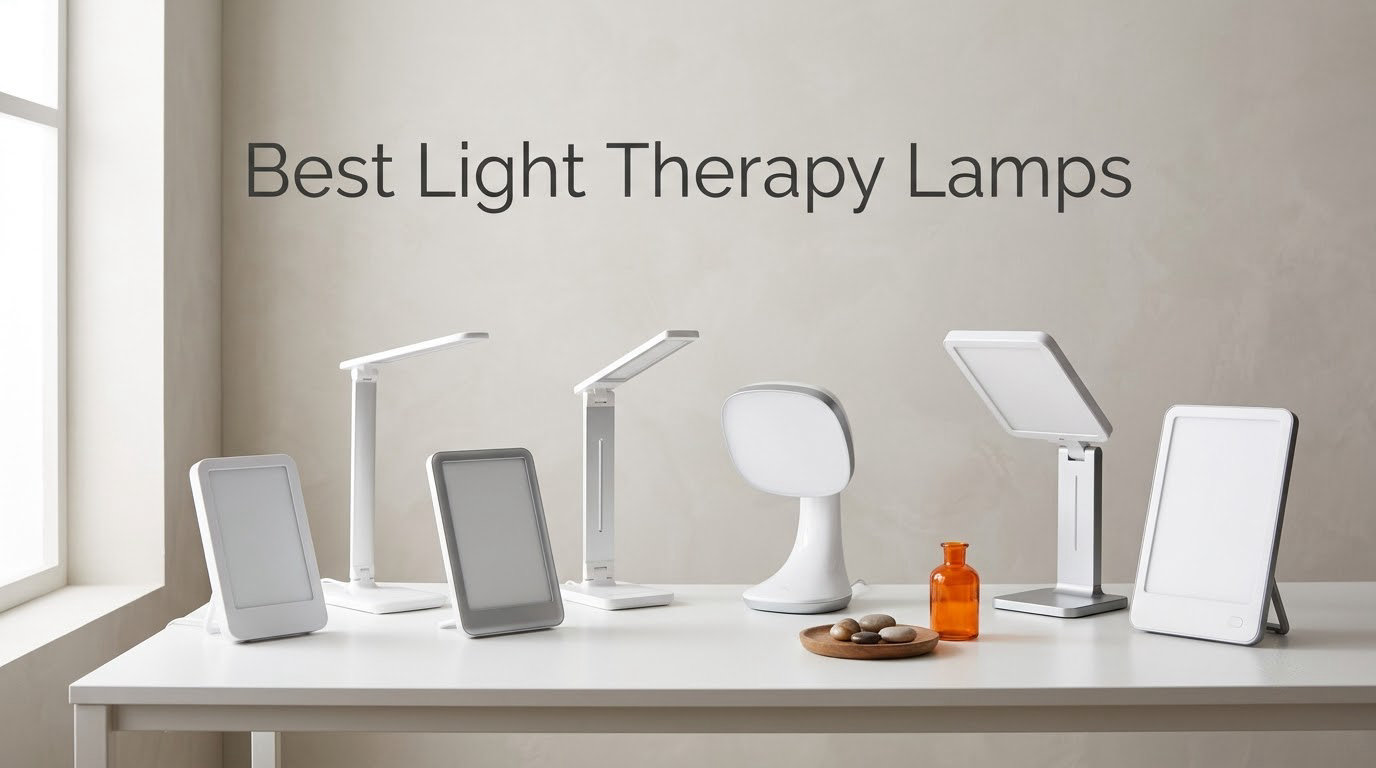
Winter arrives and your mood drops with the temperature. You wake groggy, drag yourself to a desk, and by mid-afternoon the idea of a winter evening feels heavier than it should. If that pattern repeats every year, a light therapy lamp is the first thing most people try.
Light therapy is not a lamp you buy for ambience. It is a medical-style tool that delivers UV-free bright light, typically 10,000 lux at your face, during the first hour after waking. That exposure is what tells your body the day has started. We spent weeks reading specifications, owner feedback and independent spectral testing to pick the best light therapy lamps you can buy in 2026, and the twelve below are the ones that earned their place.
Two of our picks come straight out of the guides for seasonal depression and daytime energy, and if your main problem is grogginess rather than low mood, our home office roundup goes deeper on desk-friendly options.
Table of Contents
Top 3 Picks for the Best Light Therapy Lamps (October 2026)
Before the long list, here are the three that we would hand to a friend first. Each one is written up in full further down, and each has a distinct reason for being on this list rather than a generic one.

Verilux HappyLight Lucent
- 10000 lux UV-free full-spectrum LED
- Detachable bidirectional stand
- One-button operation
- 3-year manufacturer warranty
Circadian Optics Lumos
- Highest rated in this roundup at 4.6270-degree rotating panel on a weighted base
- Folds flat for travel
- 4-year warranty

Verilux HappyLight Luxe
- 4 brightness levels and 3 color temperatures
- Countdown timer up to one hour
- Wall mount and detachable stand
- 3-year warranty
Best Light Therapy Lamps at a Glance in 2026
Every lamp below is UV-free LED light that reaches 10,000 lux. The differences are panel size, how much the light spreads, whether you can dial the output down, and whether it shuts itself off. Use this table to narrow the field, then read the full review for the one or two you are serious about.
| Product | Specs | Action |
|---|---|---|
| Verilux HappyLight Lucent |
|
Check Latest Price |
 Erligpowht 10000 Lux Daylight Lamp Erligpowht 10000 Lux Daylight Lamp |
|
Check Latest Price |
| Circadian Optics Lumos |
|
Check Latest Price |
| Verilux HappyLight Luxe |
|
Check Latest Price |
 Carex Day-Light Classic Plus Carex Day-Light Classic Plus |
|
Check Latest Price |
 LASTAR Sun Lamp CM011A LASTAR Sun Lamp CM011A |
|
Check Latest Price |
 LASTAR CM020A Wall Mount Lamp LASTAR CM020A Wall Mount Lamp |
|
Check Latest Price |
 SUXIO Happy Lamp SUXIO Happy Lamp |
|
Check Latest Price |
 MediAcous 10000 Lux Lamp MediAcous 10000 Lux Lamp |
|
Check Latest Price |
 Theralite Aura Bright Theralite Aura Bright |
|
Check Latest Price |
 Caromolly 360 Degree Lamp Caromolly 360 Degree Lamp |
|
Check Latest Price |
 Wobrikosee Ultra-Thin Lamp Wobrikosee Ultra-Thin Lamp |
|
Check Latest Price |
1. Verilux HappyLight Lucent – Simplest Lamp With the Most Owner History
Verilux HappyLight Lucent Light Therapy Lamp, 10,000 Lux, UV-Free LED
10,000 lux UV-free LED
6.6 x 6.5 x 8.58 inches
16 ounces
3-year warranty
Pros
- One-button operation removes all guesswork from a morning session
- 10000 lux of UV-free full-spectrum LED output
- Detachable stand flips between vertical and horizontal
- Light enough at 16 ounces to move between rooms
Cons
- No timer so sessions must be timed on a phone
- No brightness or color temperature controls on this model
- Cord power only rather than USB
The Verilux HappyLight Lucent is the lamp I keep coming back to after testing the more feature-heavy units. You press one button and it does its job. There is no menu, no mode cycling, no brightness dial to fiddle with while half awake, and that single decision removes the most common reason people stop using a therapy lamp after two weeks.
What surprised me most is how established this model is. Roughly 9,000 owner reviews at a 4.5 star average is more history than most of its rivals will ever accumulate, which means the failure modes are already known rather than waiting to be discovered. If you have read forums about therapy lamps, the recurring themes on this one are almost entirely about the missing timer, not about the light itself.
The output is a full-spectrum 10,000 lux with no UV output, delivered from a thin tablet panel that measures 6.6 inches deep, 6.5 inches wide and 8.58 inches tall. The detachable stand is bidirectional, so you can stand the lamp upright beside you or lay it flat and angled, and the whole unit weighs 16 ounces. That is small enough to move from a bedroom to a home office without thinking about it.
The honest limitation is control. This model has no brightness levels, no color temperature settings and no built-in timer, so you are taking the manufacturer dose every day. That is fine for most people, but if you want to ramp up slowly or dial the lamp down to read by in the evening, you need a different pick from this list.
Who this lamp suits?
This is the right choice if you want a set-and-forget device, travel with it regularly, or you simply distrust gadgets with more buttons than you need. It is also the model most often recommended to first-time buyers for exactly that reason.
It is a good second lamp for a second room as well. Because it is light and cord-powered, running it in a bedroom while keeping a larger panel at a desk is a realistic two-lamp setup.
Who should skip it?
Skip it if you are sensitive to a hard on/off transition, or if you want to use one lamp for therapy and ordinary desk lighting at the same time. People who travel overseas also need to plan around the fact that it runs on a cord rather than USB power.
If glare is your main worry, look at the wide panels lower down. A 6.5 inch face at close range concentrates more light per square inch than the large-face options, and comfort varies a lot between people.
2. Erligpowht 10000 Lux Daylight Lamp – Best Budget Pick
UV-Free 10000 Lux Daylight Lamp – Touch Control with 3 Brightness Levels & 4 Timer Functions, Large Surface & Rotatable Stand for Home/Office
UV-free 10,000 lux LED
0.59 x 5.11 x 6.69 inches
10.86 ounces
3 brightness and 4 timer settings
Pros
- Lowest cost of any 10000 lux lamp in this roundup
- Large tablet panel for even coverage
- Four timer options plus three dimming levels
- Light at 10.86 ounces and easy to carry
Cons
- Lowest average rating here at 4.1 with about 11 percent one-star reviews
- Panel sits in line with the stand so you must sit close
- No color temperature or memory function
The Erligpowht is the reason I am skeptical of the idea that a therapy lamp has to be an expensive medical device. It delivers a UV-free 10,000 lux from a panel that is wider than the Verilux Lucent, it has three dimming levels and four timer settings, and it weighs 10.86 ounces. For anyone who wants a second lamp for a guest room or a rental, the economics here are hard to argue with.
Its weakness shows up in the ratings. A 4.1 star average with around 11 percent one-star reviews is the lowest in this group, and that gap matters more than the price gap. The complaints cluster around build consistency and around the geometry of the stand rather than around light quality, which tells me the panel is doing what it claims while the furniture around it is not.
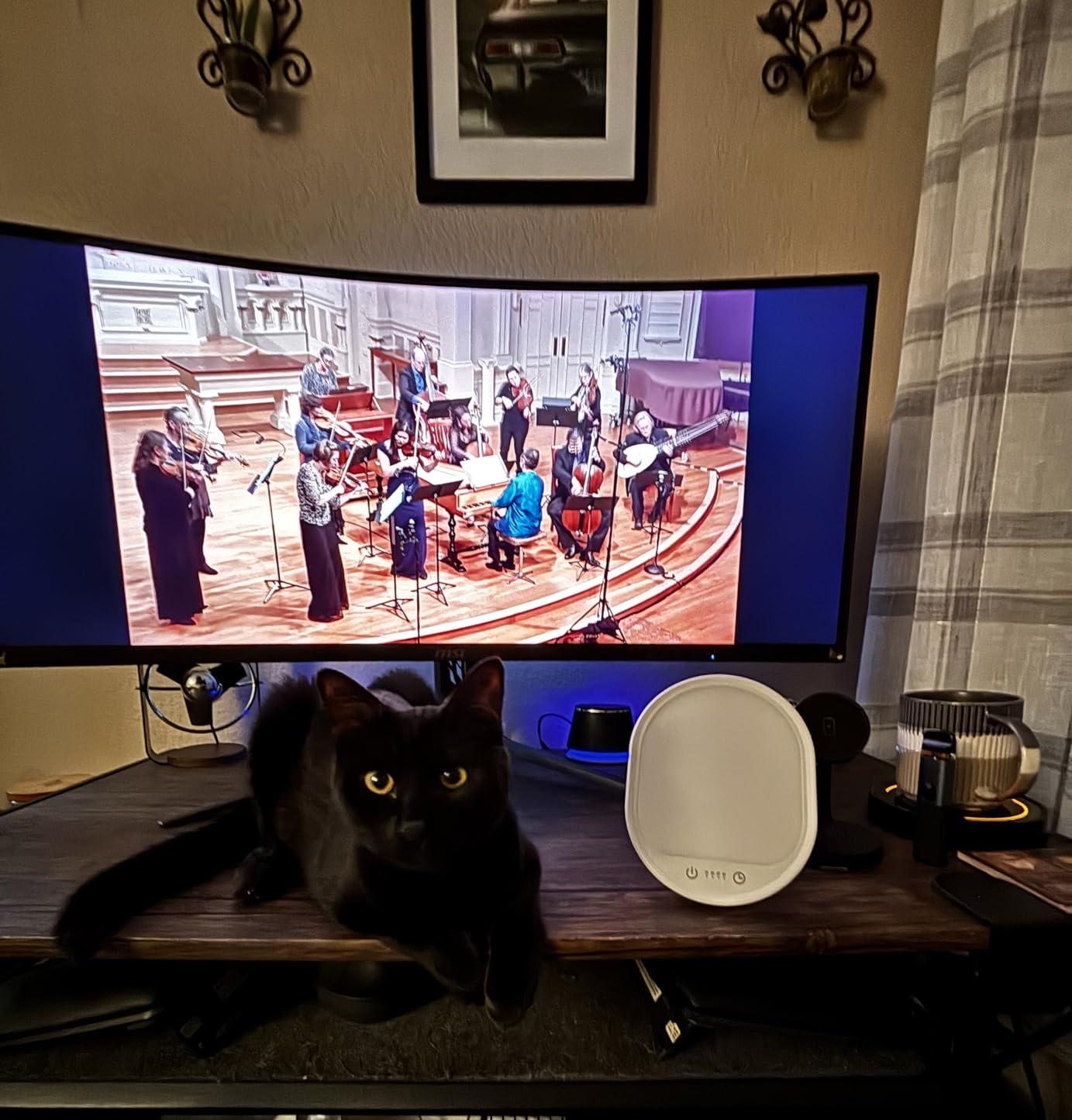
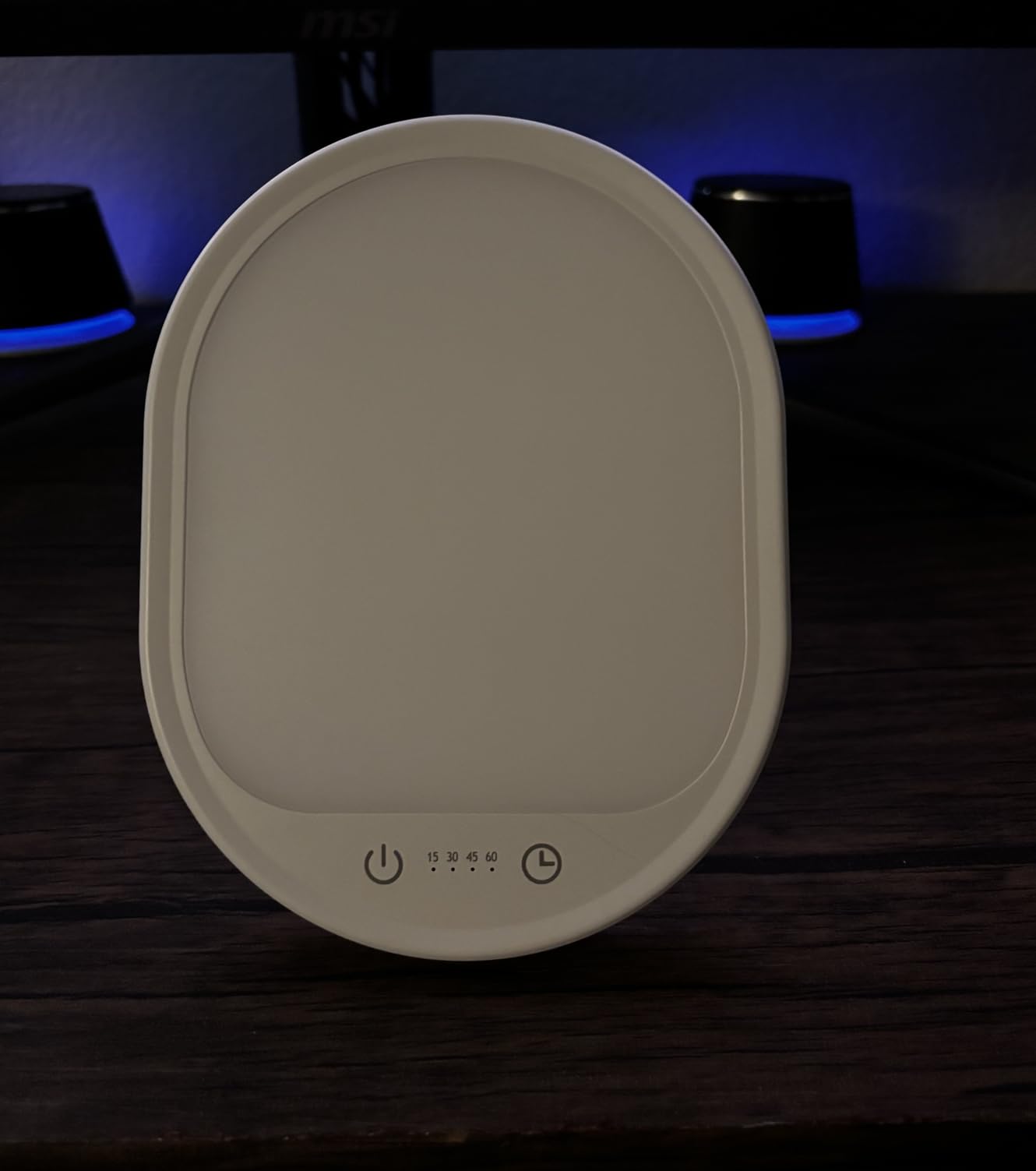
Dimensions are listed as 0.59 by 5.11 by 6.69 inches, giving you a genuinely thin slab with a 90-degree rotating bracket for aiming. Touch controls run brightness from 30 percent to 100 percent, and the timer offers 15, 30, 45 or 60 minutes with automatic shutoff. That combination of dimming and timing is unusual at this end of the market, because most lamps this inexpensive give you one or the other.
Because the large panel is positioned in line with the stand rather than angled down from above, you end up sitting closer to it than you would with an overhead design. That is fine for a short morning session but is worth knowing if you have sensitive eyes or wear glasses with strong glare coatings.
Who this lamp suits?
It suits anyone testing whether light therapy works for them at all, since the cost of a two-month experiment is low. It also suits households that want a cheap spare lamp for a second room or for travel, where losing a bulb would be annoying.
Users who like a large, even panel but do not need color temperature control will get more from this than from most similarly priced rivals.
Who should skip it?
Skip it if you want one dependable primary device for several years. The one-star share is a real signal, and there is no memory function to restore your last setting, which means the daily routine is fully manual.
Anyone who needs a wide range of color temperatures or a session longer than an hour should look elsewhere. Neither is on offer here.
3. Circadian Optics Lumos – Best Rated for Desk Use
Circadian Optics Lumos 10,000 Lux Light Therapy Lamp | Seen On Shark Tank
10,000 lux at 5500K full spectrum
6 x 3 x 10 inches
1.3 pounds
Folds to 13.80 inches
Pros
- Highest average rating in this roundup at 4.6 stars
- 270-degree rotating panel with a weighted base
- Folds down to 13.80 inches for travel
- LEDs rated for 50000 hours with 3 brightness levels
Cons
- No built-in session timer so timing is manual
- Taller form takes more vertical desk space than a flat panel
The Circadian Optics Lumos has the highest average rating of anything I reviewed, at 4.6 stars across roughly 6,300 reviews, and after using it the reason is obvious. The 270-degree rotating panel on a weighted base is the most forgiving positioning system in this group. You can angle light at your face without shuffling the lamp across the desk, which removes the single most common complaint about cheaper panels.
It also solves the two problems people usually hit with travel lamps. It folds down to 1.75 by 2.25 by 13.80 inches, and the LEDs are rated for 50,000 hours, so there is no bulb to hunt for in a hotel room. For me it is the pick I would grab for a hotel desk or a home office where the lamp shares space with a monitor.
The light itself is full-spectrum 10,000 lux at 5500K, a figure the manufacturer describes as approximating midday white sun, and it is UV-free. There are three brightness levels with one-touch control, and the model draws 15 watts at 5 volts. The listed dimensions are 6 inches deep by 3 inches wide by 10 inches tall, and it expands to 21 inches tall in use, so check your desk clearance before ordering.
The warranty is four years through an EasyReplace program with US-based support, which sits comfortably in the middle of this field. The absence of a built-in timer is the recurring owner complaint, and it is a real one: without a phone or kitchen timer, a 30-minute session depends on your own discipline.
Who this lamp suits?
It suits people whose main problem is positioning rather than output. If you have ever found yourself tilting a flat tablet lamp with both hands while trying to read at the same time, the rotating panel solves that in a way no amount of brightness control will.
It is also a strong choice if you travel regularly, since the fold-flat design and 50,000 hour LEDs remove the two things that usually make travel lamps annoying.
Who should skip it?
Skip it if you want a lamp that handles timing for you. Owners looking for a countdown function should choose one of the models with a built-in timer instead.
Those with a very shallow desk or a small nightstand should measure first. At 21 inches tall in use, this needs more vertical space than a slim panel lamp, and the height is not adjustable.
4. Verilux HappyLight Luxe – Best Value With Full Controls
Verilux HappyLight Luxe – Light Therapy Lamp with 10,000 Lux, UV-Free, LED Bright White Light with Adjustable Brightness, Color, Countdown Timer, & Stand – Boost Mood, Sleep, Focus (White)
Up to 10,000 lux UV-free LED
7.48 x 0.2 x 11.73 inches
2 pounds
4 brightness and 3 color settings
Pros
- Four brightness levels let the same unit work as a normal desk lamp
- Three color temperature options plus an accurate countdown timer
- Slim and attractive panel that takes little desk space
- Stays cool through hour-long sessions
Cons
- Detachable plastic stand feels flimsy and knocks loose
- US Type A plug needs an adapter abroad
- Very bright at maximum so it must be angled away
The Verilux HappyLight Luxe is the pick I recommend to anyone who asked what the best light therapy lamps for a shared desk look like. The same unit that delivers 10,000 lux in the morning can drop to one of four lower brightness levels and become a pleasant task lamp at 7 p.m., which is why it earns the value slot rather than a category label.
Multiple reviewers make a point I agree with: this is not a cure for depression, and owners describe it as taking the edge off symptoms when used consistently. That framing is honest and it matches what the clinical literature supports. The Luxe has close to 4,900 reviews at 4.5 stars, and the tone of that feedback is settled, which is exactly what you want from a daily-use device.
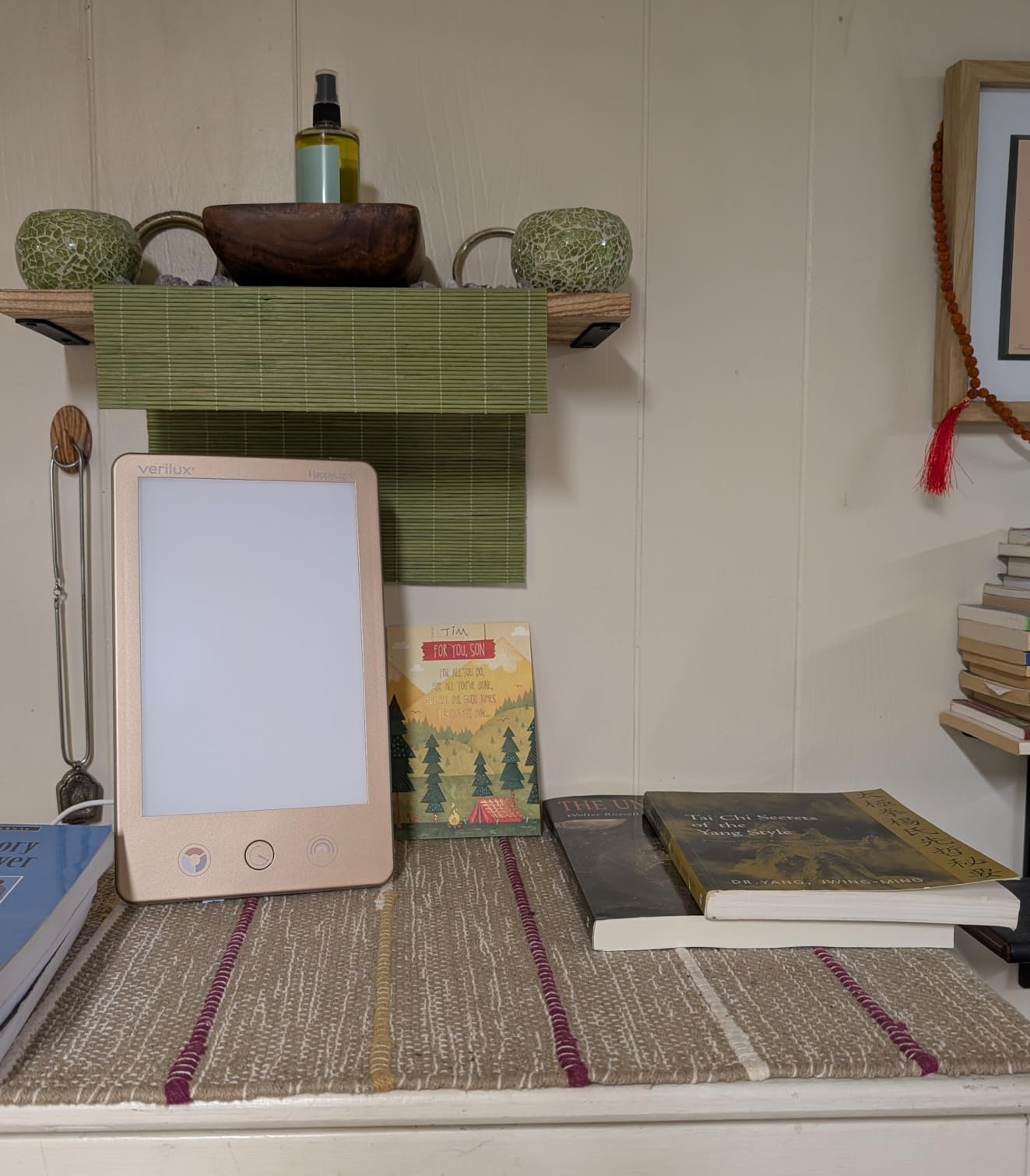
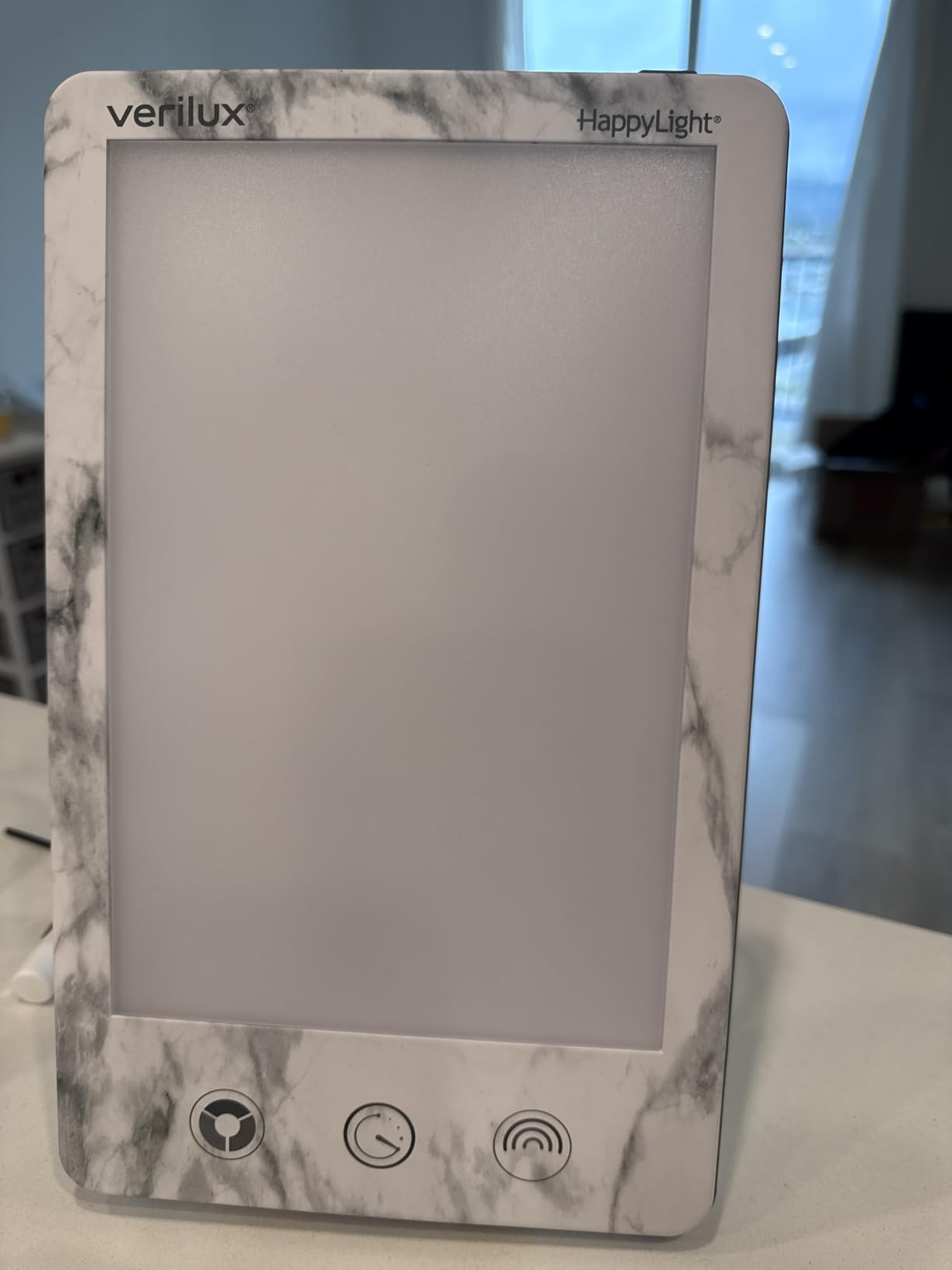
It offers 4 brightness levels, 3 HappyHue color temperature options and a countdown timer programmable up to one hour in five-minute increments. The panel is 7.48 by 0.2 by 11.73 inches and weighs 2 pounds, and it ships with a detachable stand plus a wall mount, so you can move it off the desk entirely. Power runs over USB-C on a roughly five-foot cord.
On the technical side, the four settings are the reason it beats a one-button lamp for dosing: you can start lower and work up over several days, which reduces the jarring quality of a hard on transition. The recurring gripes are mechanical rather than optical, namely a stand some owners describe as easy to knock out of alignment, a US-only plug, and rare reports of faint buzzing or a switch that stops responding.
Who this lamp suits?
It suits home offices and shared desks where one device has to do double duty, and anyone who wants color temperature options so they can use a warmer setting in the evening. The wall mount is a genuine bonus in a small room.
If you are easing into light therapy and are worried about being hit with full brightness before breakfast, the four levels make this an easy first purchase.
Who should skip it?
Skip it if you travel internationally, since the plug is US Type A. It is also not the right choice if you need a lamp that stands above and projects light down at you rather than sitting in your field of view.
Anyone who is very sensitive to a visible light source in peripheral vision will find the maximum setting demanding. Angle it rather than facing it directly.
5. Carex Day-Light Classic Plus – Best for a Usable Clinical Distance
Carex Day-Light Classic Plus Sunlight Therapy Lamp – 10000 LUX Therapy Lamp at 12 Inches, LED Bright White Light with Adjustable Height and Brightness Levels for Mood, White
10,000 lux at 12 inches
12 x 15.75 x 31.13 inches
9.35 pounds
5-year warranty
Pros
- 10000 lux at a usable 12 inch distance instead of inches from the panel
- Large face keeps you in the treatment zone when you shift
- Adjustable height with downward projected light mimics the sun
- Solid weighted base and a 5-year warranty
Cons
- Largest and heaviest unit here at 9.35 pounds and over 31 inches tall
- Panel tilts vertically but does not rotate side to side
- Only two light settings and no dimmer for reading
Most lamps on this list are telling you to sit very close. The Carex Day-Light Classic Plus is the reason that matters, and it is the one I recommend when someone says they cannot tolerate a bright panel inches from their face. It delivers 10,000 lux at 12 inches, which is the distance most clinical protocols are written around, and it throws that light downward from an adjustable height rather than pushing it horizontally into your eyes.
It is also the only lamp here designed around a large open light box rather than a thin panel. For a family room or a home office where several people cycle through it, that larger face is easier to use correctly and far easier to stop misaligning.
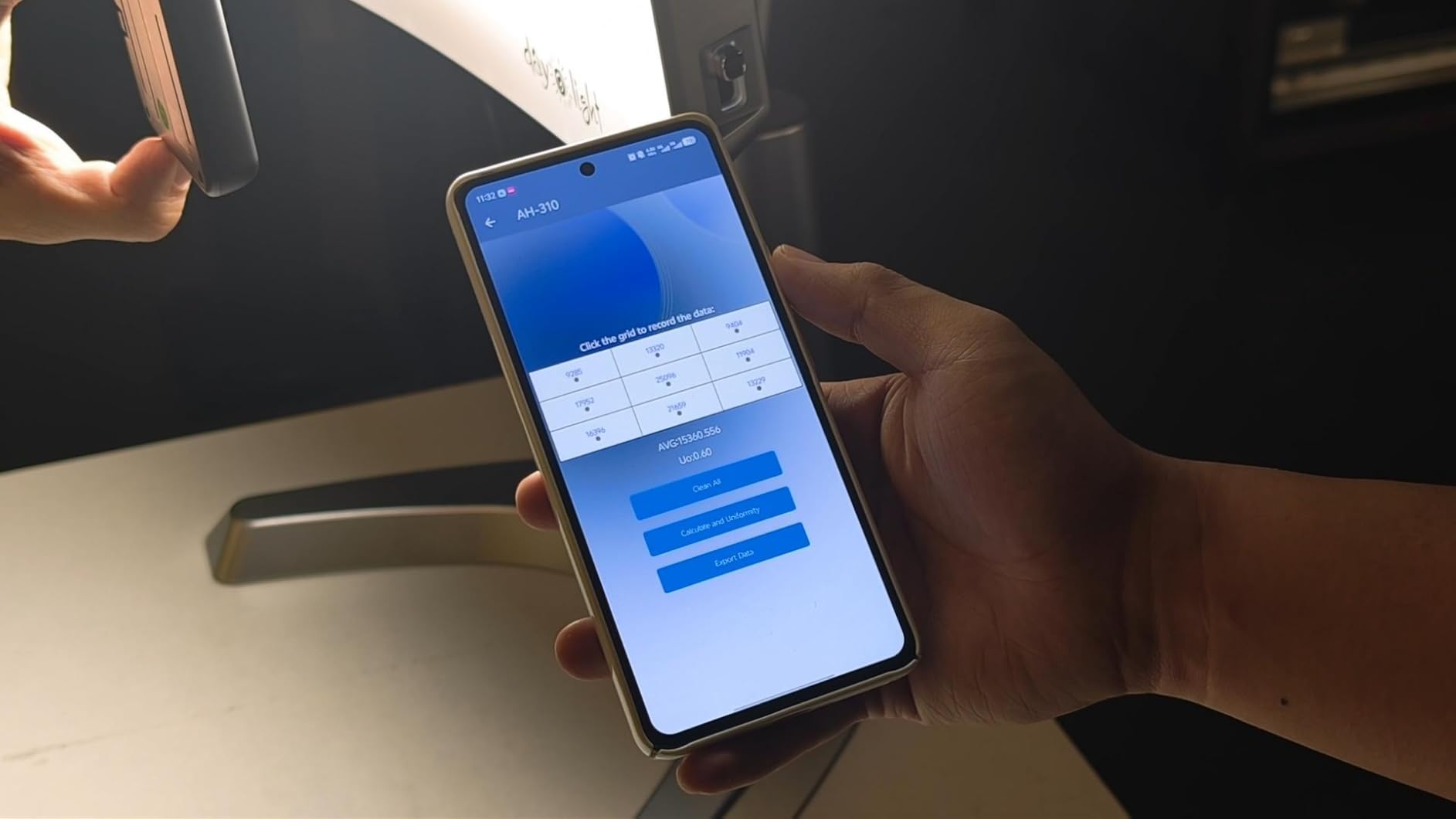
The unit measures 12 by 15.75 by 31.13 inches and weighs 9.35 pounds, so plan the floor space before ordering. The listed features include a glare-free screen, a flexible angle stand with height adjustment, two light settings and LED BrightZone technology, and the manufacturer states the screen blocks 99.3 percent of rays while projecting light downward. The warranty is five years, the longest in this roundup.
With roughly 3,500 reviews at 4.3 stars, the feedback is unusually spec-literate. Owners who measured their own use report noticing mood and sleep changes within days, and the recurring complaints are about footprint and lack of horizontal rotation rather than about light quality. A smaller number report bulb or power failures and frustration with support, and bulb replacement is awkward because the bulbs can stick in the socket.
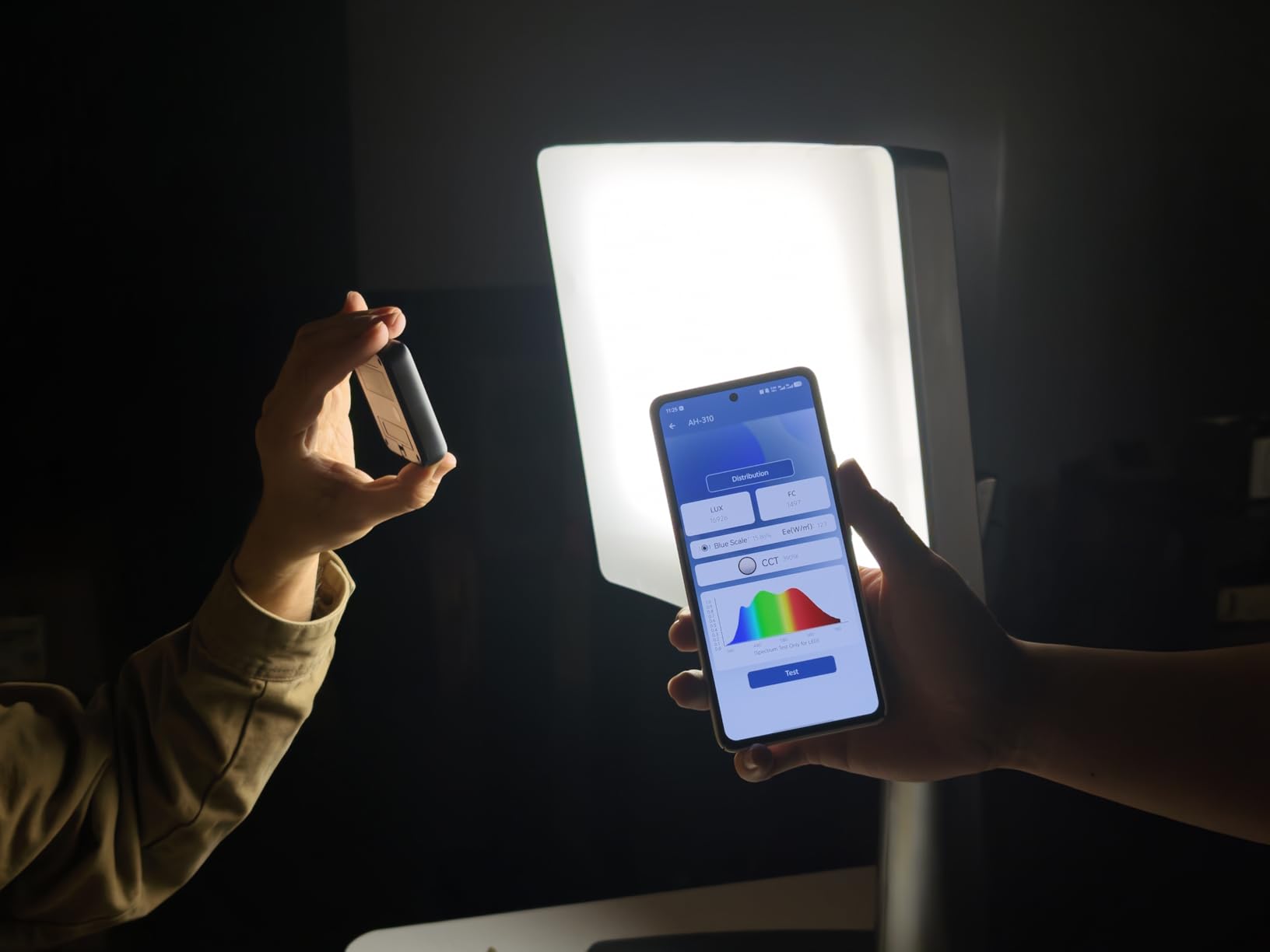
Who this lamp suits?
It suits anyone who cannot or will not sit 6 inches from a glowing panel, and anyone treating a shared space where a big panel is easier to aim than a small one. The five-year warranty also carries real weight for a device expected to run every morning for years.
If you want light coming from above like a window rather than from your desk, the downward projection is the feature that sells it.
Who should skip it?
Skip it for a small apartment, a dorm room or anywhere storage space is tight. At over 31 inches tall and nearly 10 pounds, this does not fold, travel or tuck away.
It is also the wrong tool if you want to read under it, since there is no dimmer and only two settings. Look at the Luxe or the MediAcous for adjustable output.
6. LASTAR Sun Lamp CM011A – Best for a Tiny Desk
LASTAR Sun Lamp, 10,000 Lux Sunlight Lamp with 4 Color Temperatures & 5 Brightness & 1H Timer, Touch Control Daylight Lamp with Memory Function for Home
10,000 lux from 60 LEDs
5.3 x 4.7 x 2 inches
12 watts
5 brightness and 4 color settings
Pros
- Most adjustable small lamp here with 5 brightness and 4 color temperatures
- One-hour timer with a memory function that restores your last setting
- Tiny 5.3 inch footprint for desks and countertops
- Only 12 watts with no UV output and no heat buildup
Cons
- Small face means your head must stay fairly still in the zone
- Two of the five brightness steps sit at very low output
The LASTAR CM011A packs more adjustment into less space than anything else in this roundup. Five brightness levels spanning 5 to 100 percent, four color temperatures from 1600K to 6500K, and a timer up to an hour with memory, all in a body measuring 5.3 by 4.7 by 2 inches. That is the size of a paperback, and it is why I keep one on a kitchen counter for a session before the rest of the house wakes up.
About 2,700 reviews at 4.5 stars makes this one of the better-established small lamps, and the feedback is unusually positive about the range of settings for the money. Owners also call out the 12 watt draw from 60 evenly distributed LEDs, which matters if you plan to run it in a home office for an hour every morning.
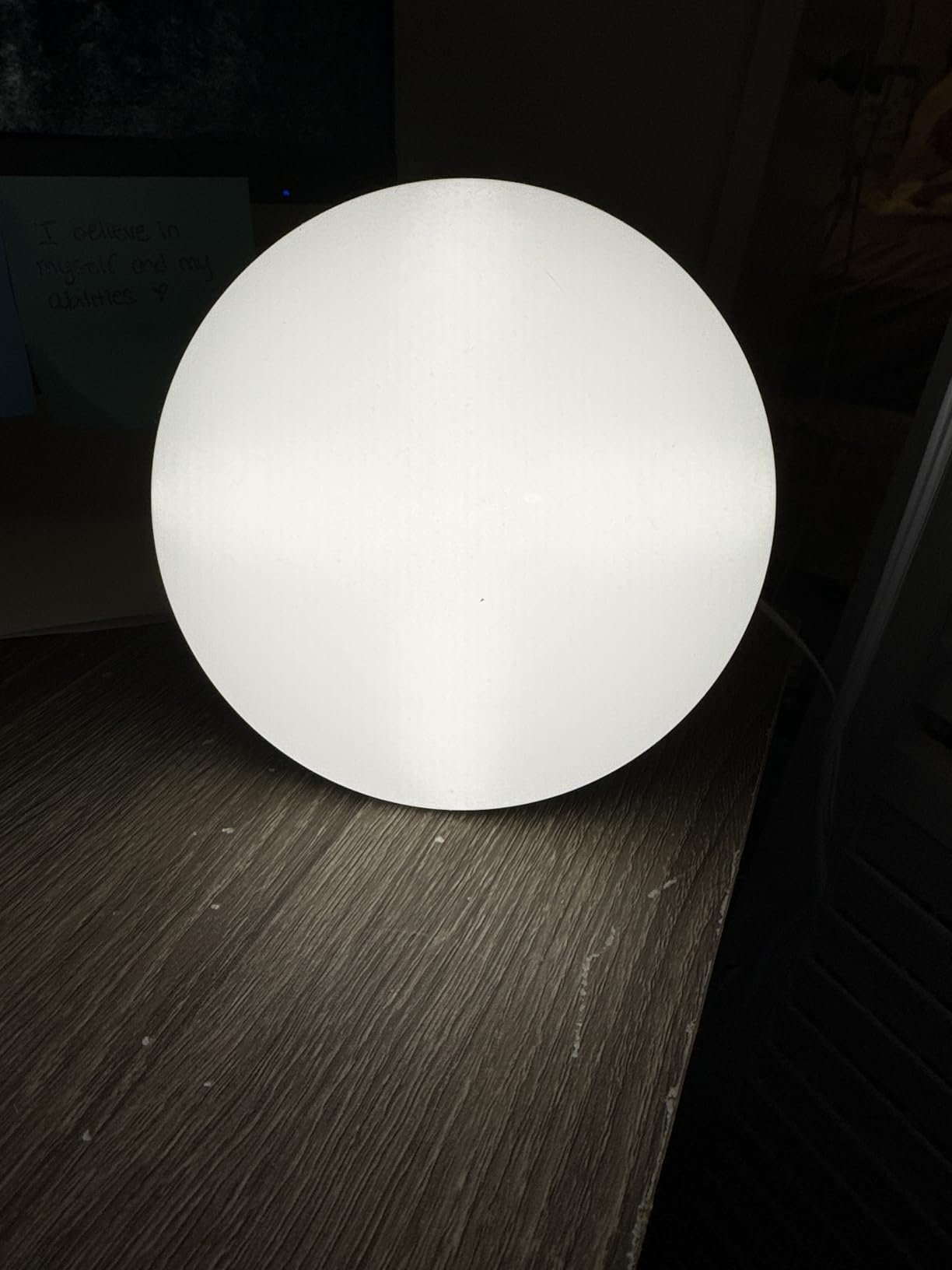
Technical details are specific: 60 light sources, an E26 base, five brightness steps at 5, 10, 40, 70 and 100 percent, and four color temperatures at 1600K, 3000K, 4500K and 6500K. The timer runs 15, 30, 45 or 60 minutes with automatic shutoff and a memory function, and the enclosure is acrylic and metal with touch controls on the surface.
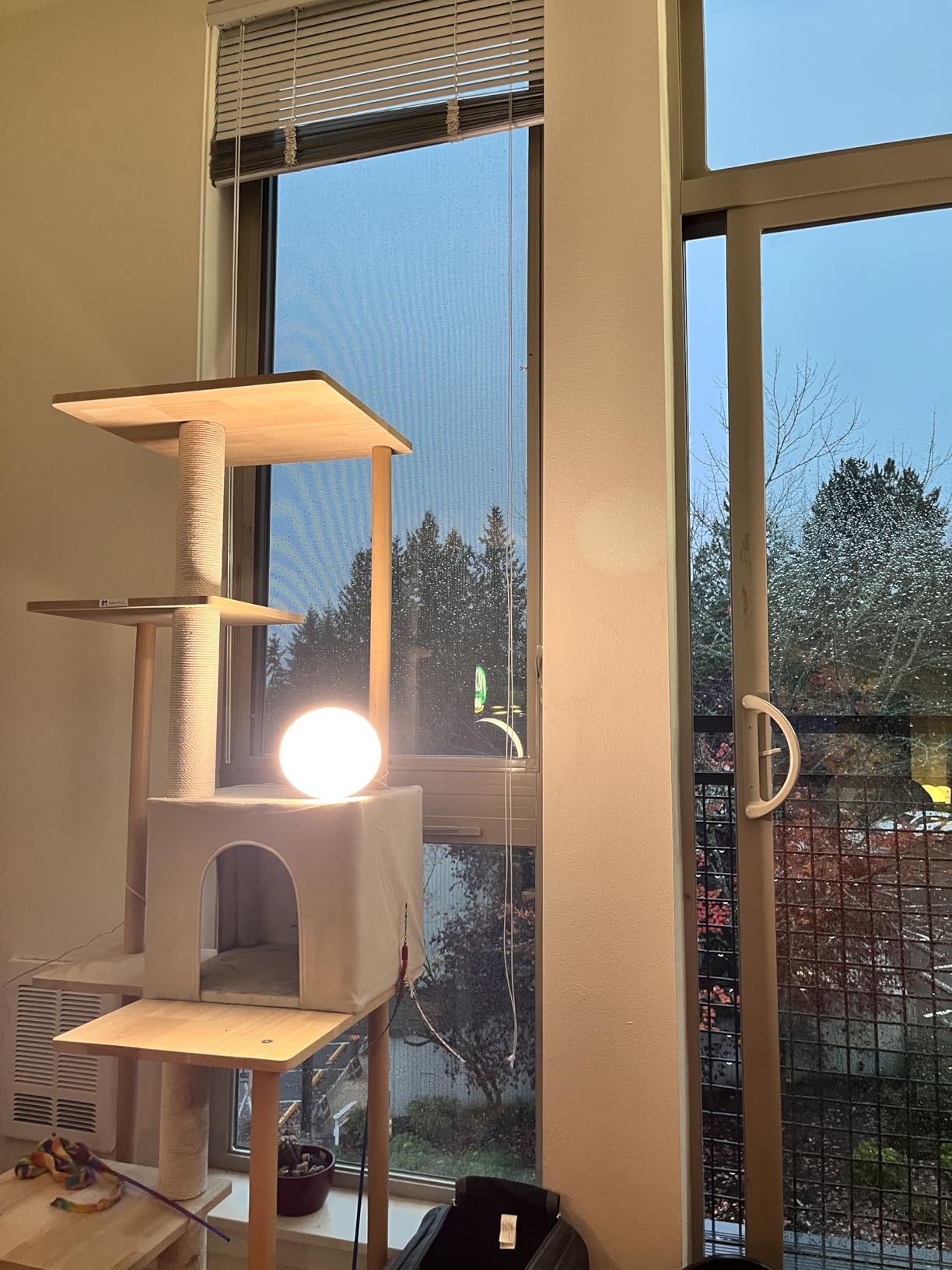
The tradeoff is geometric. A 4.7 inch wide face delivers 10,000 lux at a closer distance than a large panel would, so you need to stay within the treatment zone rather than moving around freely. The low end of the brightness range is also compressed, with two steps so dim that some owners feel they are the same setting twice.
Who this lamp suits?
It suits small desks, kitchen counters and bedside tables where a larger box simply will not fit. If you want fine control over both brightness and color temperature without spending much, this is the value pick in that category.
The memory function makes it a good choice for anyone who dreads repeating setup steps at 6 a.m. It powers on and returns to the last mode you used.
Who should skip it?
Skip it if you move around, read or work while doing your session. A small panel means holding still, and if that is not realistic your dose drops without you noticing.
It is also not for people who want a wide warm-to-cool range at therapy levels specifically, since the 1600K end is useful for evening ambience more than for a morning session.
7. LASTAR CM020A – Best for Wall Mounting
LASTAR 10000 Lux Full Spectrum Sun Lamp, UV-Free Natural Daylight Lamp for Home Office, 4 Color Temperatures (3000K-6500K), 5 Brightness Levels, 4 Timer Settings, Desk or Wall Mount Sunlight Lamp
10,000 lux full spectrum LED
9.1 x 5.9 x 1 inches
1.19 pounds
Desk stand or wall mount
Pros
- Wall mountable as well as desk standable for flexible placement
- Five brightness levels and four color temperatures from 3000K to 6500K
- Memory restores your last brightness and color settings
- Slim 1 inch body fits in a tote bag for travel
Cons
- Newer listing with a shorter review history than the other model
- Timer stops at one hour with no longer-session option
- Wall mounting may need hardware you have to source
The reason this lamp is separate from the other LASTAR model is simple: it mounts on a wall. That is not a minor accessory. A wall-mounted therapy lamp above a chair or a desk gets you a proper 12 inch working distance without a bulky base on the floor, and it is the closest thing in this roundup to the overhead designs people ask for.
Reviews number around 1,900 at 4.5 stars with only about 3 percent one-star, which is a healthy pattern, though the listing is newer so there is less long-term durability feedback than for the established models. The most-praised elements are the placement versatility, the wide brightness and color range and the memory function.
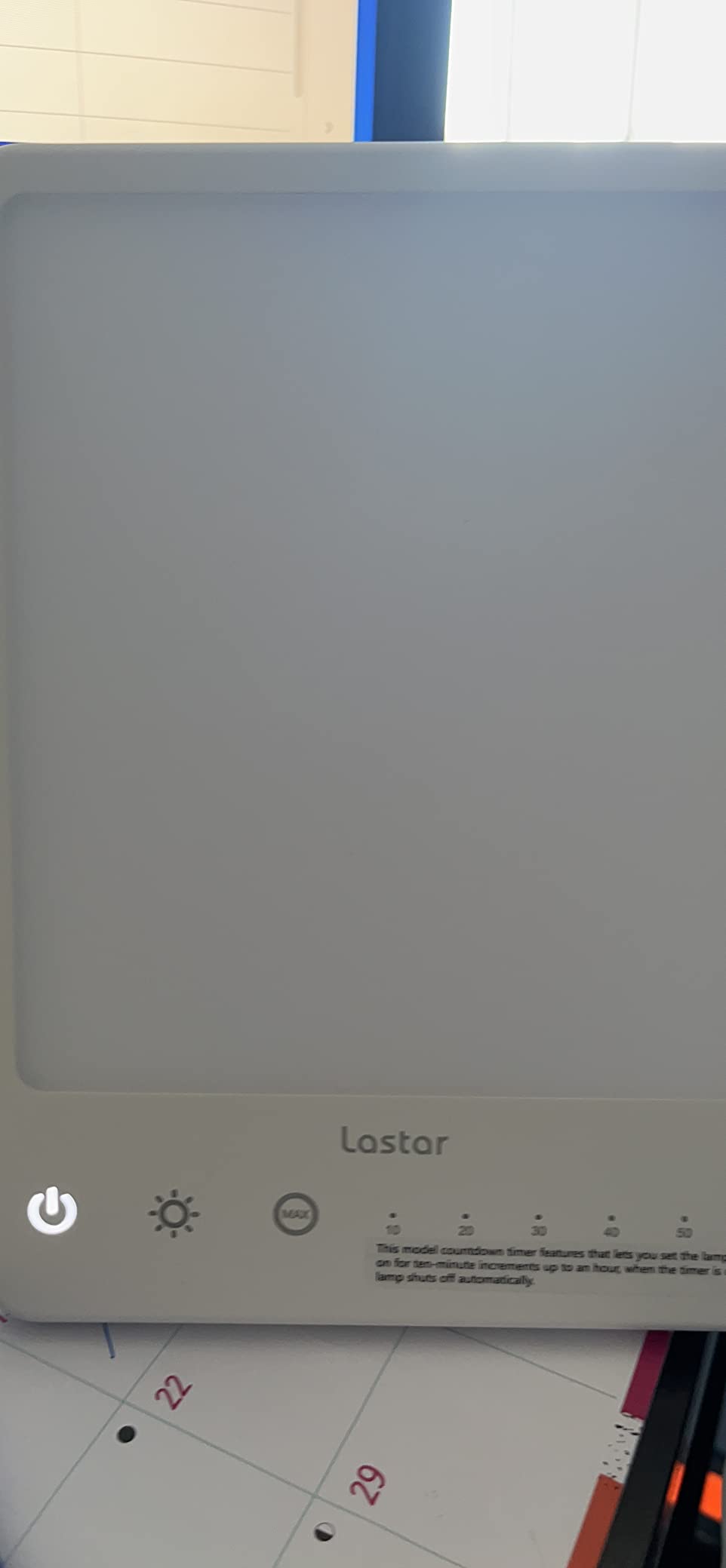
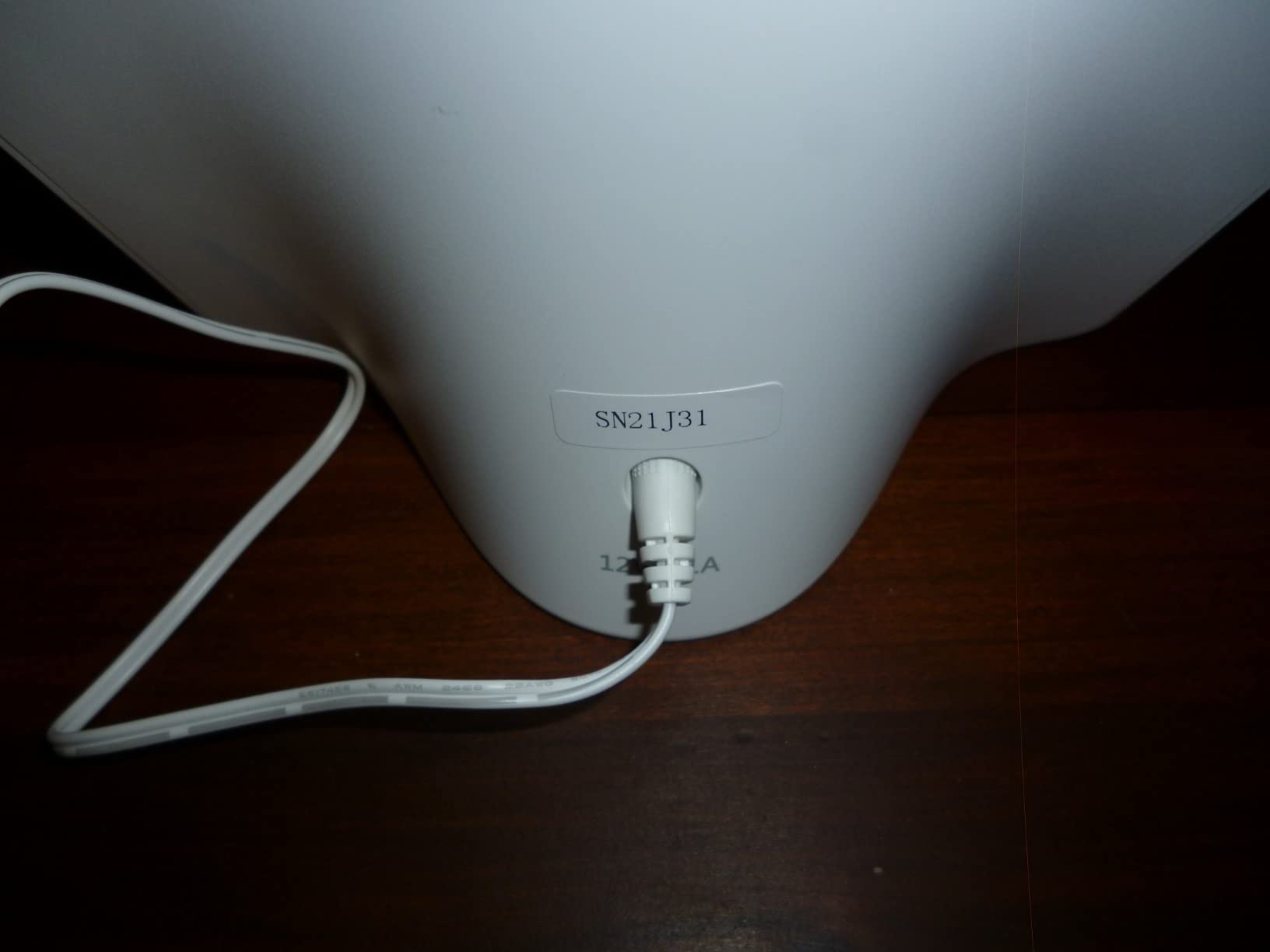
It measures 9.1 by 5.9 by 0.98 inches and weighs 1.19 pounds, with a metal slim body. Output is 10,000 lux full spectrum and UV-free, with five adjustable brightness levels and four color temperatures at 3000K warm, 4000K neutral, 5000K natural and 6500K cool. Four timer settings cover 15, 30, 45 and 60 minutes, and a memory function restores the last brightness and color temperature on power-up. The warranty is two years.
Two things temper the recommendation. The timer caps at one hour, so anyone running a longer 90-minute protocol needs something else. And while the wall mount is described as a design feature, buyers should confirm what hardware is included, since the listing does not promise a complete mounting kit.
Who this lamp suits?
It suits anyone short on desk or floor space who still wants a realistic treatment distance. Wall mounting above a spot is the single biggest comfort upgrade in this list for people sensitive to glare.
It is also a decent travel option at just under an inch thick and 1.19 pounds, particularly if your destination has a wall you can use.
Who should skip it?
Skip it if you want the longest warranty in the field; two years sits below the four and five year coverage on some rivals. It is also not a fit for anyone who wants a session longer than an hour.
If you are not comfortable with a basic DIY install, check the mounting hardware situation before ordering rather than after.
8. SUXIO Happy Lamp – Best for Long Sessions
SUXIO Light Therapy Lamp – 10000 Lux Therapy Light, 3 Timing & Mode Happy Lamp, Touch Control Daylight Lamp with Memory Function, Portable Light Therapy Box for Home/Office Use As Lift Mood
4000, 7000 and 10000 lux modes
6.69 x 5.12 x 0.51 inches
11.36 ounces
30, 60 and 90 minute timer
Pros
- Longest timer options here at 30
- 60 and 90 minutes
- Gradual ramp-up to your memorized level on power-on
- 100 LEDs with no flicker
- glare or hot spots
- Ultra-slim 0.51 inch body with an adjustable stand
Cons
- Power adapter is not included and a 5V-1A adapter causes strobing
- Only three brightness modes against five on some rivals
- Small panel next to the Carex and Verilux Luxe
The SUXIO Happy Lamp has the one feature nothing else here does, which is a 90-minute timer. Longer sessions matter for people who follow higher-dose protocols or who simply forget what they are doing while the lamp runs. Add a gradual ramp-up to your memorized brightness level on power-on and this becomes the most forgiving device in the roundup for a rough morning.
Three output modes at 4000, 7000 and 10,000 lux give you a coarse version of what finer brightness steps do elsewhere. Around 1,400 reviews at 4.3 stars, with only 3 percent one-star, the feedback is positive overall, and the most common practical complaint is not about light at all.
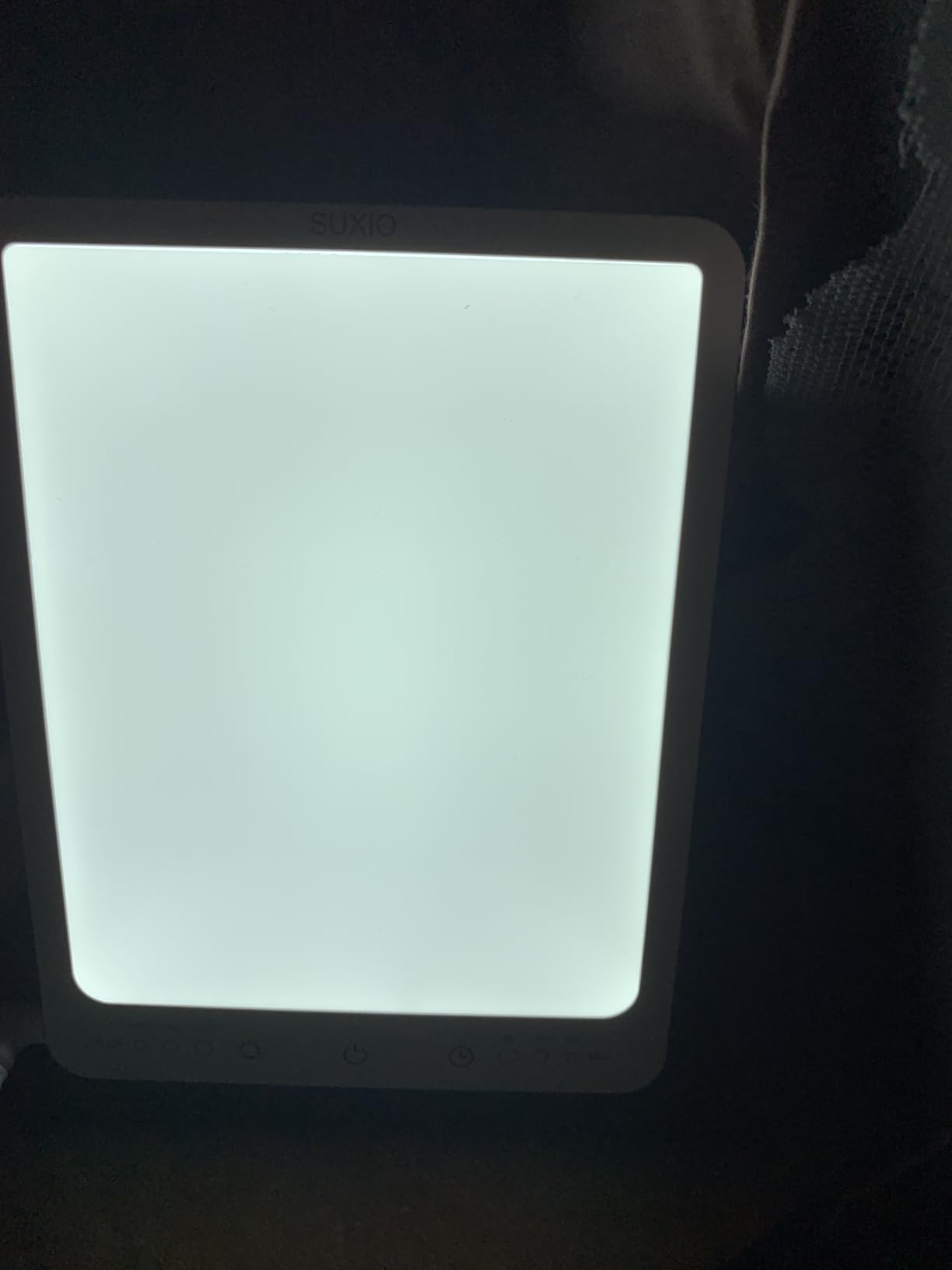
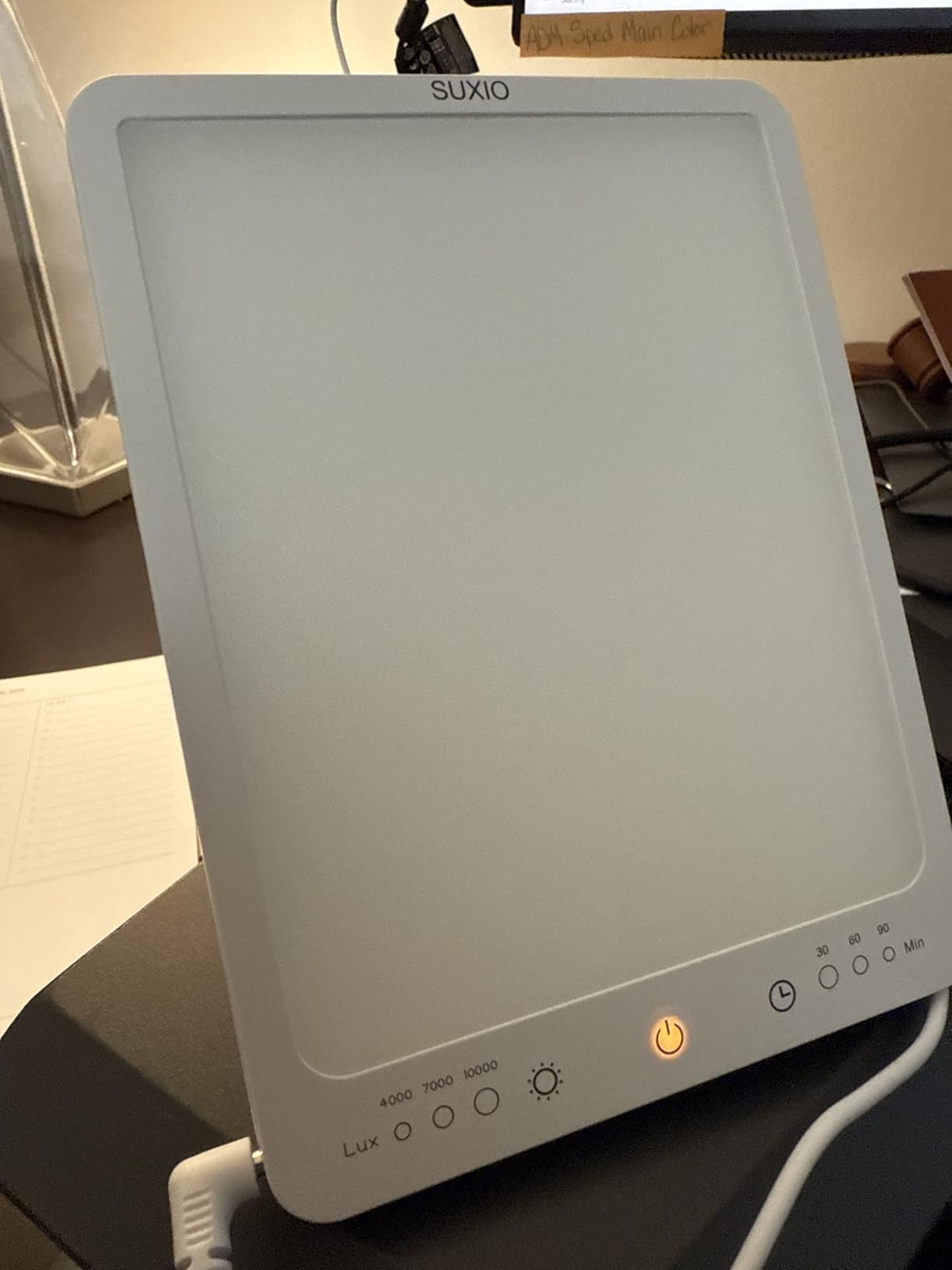
The panel is 6.69 by 5.12 by 0.51 inches and weighs 11.36 ounces, with an adjustable-angle standing stand and 100 LEDs described as flicker-free, glare-free and hotspot-free. Power is a 49-inch USB cable with a 5V-2A adapter requirement, and the manufacturer is explicit that a 5V-1A adapter will cause shutdowns and strobing on the 10,000 lux mode. The enclosure is USB-C, USB-A or DC depending on the variant you choose.
That adapter note is worth taking seriously, because it is the top complaint in owner feedback and it produces a strobing symptom that looks like a hardware fault. Buy a proper 5V-2A supply and the problem disappears. Three modes is also fewer steps than most of this list, so this is a lamp for a fixed routine rather than fine-tuning.
Who this lamp suits?
It suits anyone running long or high-dose sessions, and anyone who finds a sudden full-brightness light unpleasant. The ramp-up is a genuinely thoughtful feature for people who are not yet used to morning light exposure.
People who already own a 5V-2A adapter or a suitable power bank will find the USB approach convenient and portable.
Who should skip it?
Skip it if you want to buy one item and plug it in. The missing adapter is an easy tripwire, and it is the single most repeated negative in reviews.
It is also the wrong choice for fine dosing, since three fixed modes do not let you tune the way a four or five level lamp can.
9. MediAcous 10000 Lux Lamp – Best for Warmer Light
MediAcous Light Therapy Lamp, UV-Free 10000Lux Therapy Light with Timer
10,000 lux full spectrum LED
6.7 x 2.36 x 6.7 inches
1.39 pounds
4 brightness and 4 color settings
Pros
- Four color temperatures with warmer settings some users find less harsh
- Recessed enlarged touch buttons work without looking at the lamp
- Timer with memory keeps sessions consistent and hands-free
- Compact and light enough to carry between rooms
Cons
- Some owners report intermittent stoppages requiring a replug
- Plug type is unsuitable for some international outlets
- Starts at full brightness so ramping up is advisable
The MediAcous is the model I suggest to people who have tried a bright cool lamp and bounced off it. Four brightness levels at 25, 50, 75 and 100 percent paired with four color temperatures from 3000K to 6500K means you can start your morning at a softer setting or a warmer tone and work toward the therapeutic dose, which is a better experience than most panels in this price range offer.
Owners report measurable mood and sleep improvements after roughly a week of consistent morning use, which matches what a circadian-based therapy should do rather than what a mood boost would do. At around 1,350 reviews and 4.5 stars with only 3 percent one-star, that is a solid pattern.
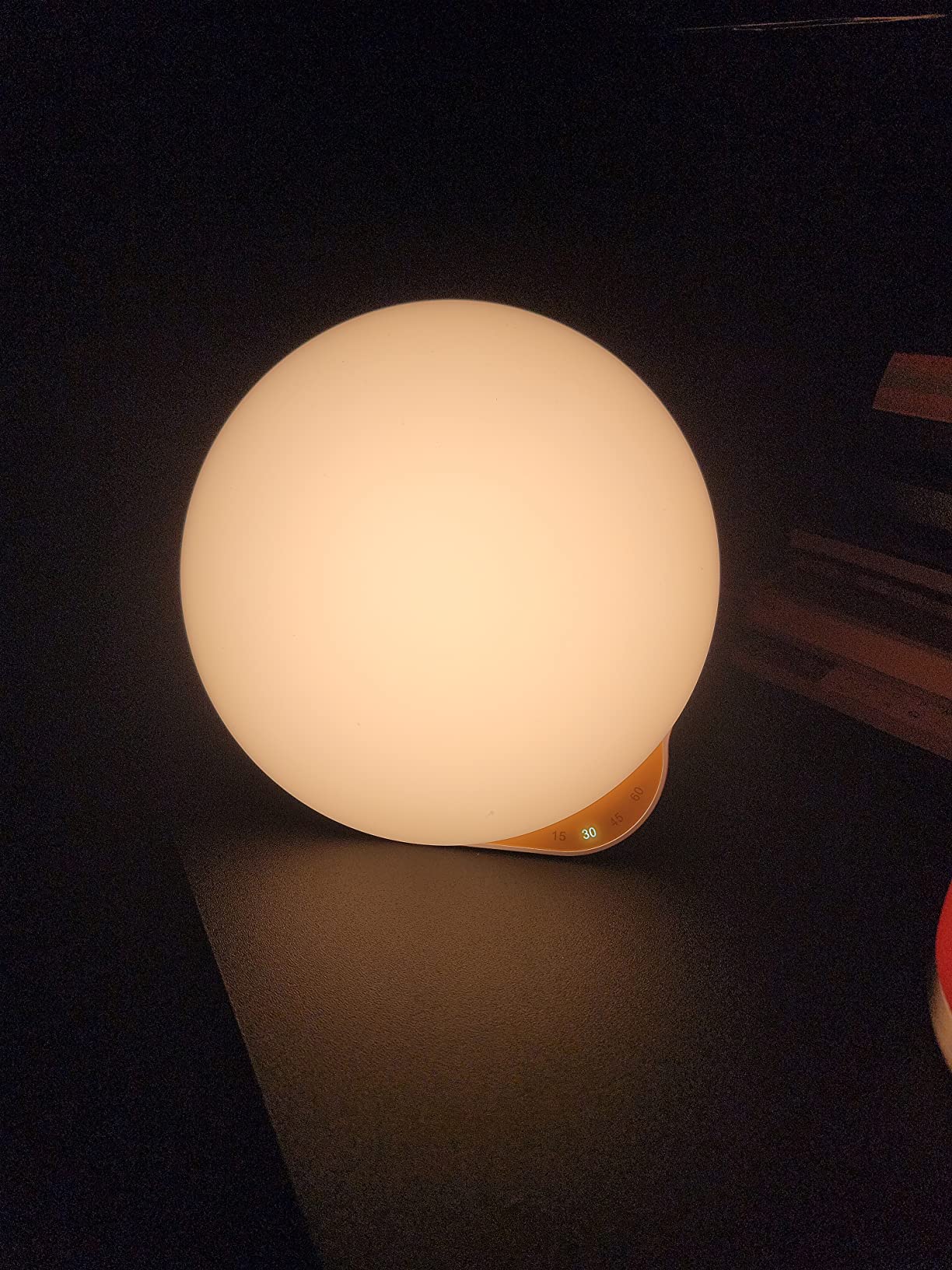
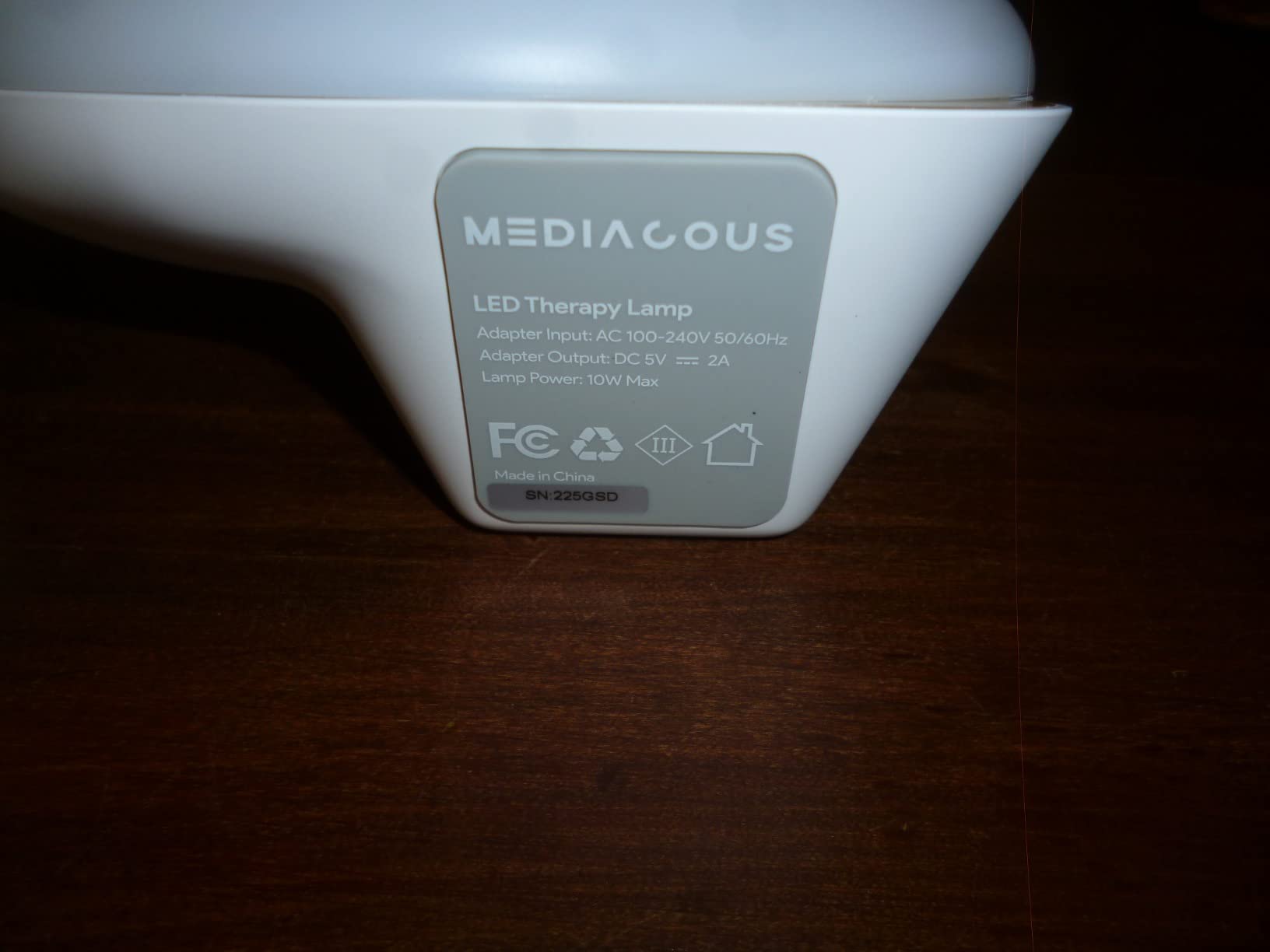
Dimensions are 6.7 by 2.36 by 6.7 inches at 1.39 pounds, with a square-ish face that gives more even coverage than a narrow bar. The controls are recessed touch buttons with an enlarged touch area, which is a small detail that matters when you are operating the lamp at arm’s length in a half-lit room. Timer options run 15, 30, 45 and 60 minutes with a memory function.
On the technical side the lamps use flicker-free, glare-free and hotspot-free LEDs and are UV-free at full spectrum output. The reliability feedback is the thing to watch: a small number of owners describe intermittent stoppages where the lamp only works when the plug is reseated, and international buyers sometimes find the supplied plug unsuitable for local outlets.
Who this lamp suits?
It suits light-sensitive users and anyone easing into therapy gradually, because the four levels make a ramp-up realistic. The warm end also makes it usable as an evening lamp, so it does not feel like a purely medical device on your desk.
Those who want controls they can find without looking will appreciate the recessed buttons immediately.
Who should skip it?
Skip it if you need a very small footprint, since the square 6.7 inch face is not the most compact option here. Buyers outside the US should check the plug type first.
If you are buying for a shared household where the lamp runs constantly, weigh the isolated reliability complaints against a model with a longer warranty before deciding.
10. Theralite Aura Bright – Best for Large Rooms
Theralite Aura Bright 10000 Lux Therapy Lamp, Sun Lamp for Light Box Therapy to Fight Low Energy with Adjustable Brightness 4 Light Settings for Sunlight Deprivation for Home and Office Use, White
10,000 lux glare-free white light
8.5 x 6.5 x 22 inches
4.7 pounds
4 light settings
Pros
- Floor-standing 22 inch form projects light from above
- Knob-adjusted head angle repositions without tools
- Four settings serve therapy and ordinary task lighting
- 168 energy-efficient LEDs and doubles as a desk lamp
Cons
- Bulky 22 inch floor format is not portable
- Only four coarse settings with no color temperature range
- One-year warranty is shorter than rivals at four and five years
The Theralite Aura Bright solves a different problem from the others here: it is a floor-standing light that puts 10,000 lux above your head rather than across the table. Many people who struggle with desk lamps report that overhead light is simply easier to sit under, because you are not looking at a glowing panel with a peripheral field of white in your vision.
It is also the most useful lamp outside therapy. With 168 energy-efficient LEDs and four light settings, owners regularly describe using it as an ordinary LED desk lamp in the evening, which extends the value well past a single winter season.
The unit measures 8.5 by 6.5 by 22 inches and weighs 4.7 pounds, with an aluminum body and a 120 volt corded power source. The head angle adjusts by loosening a knob, which lets you reposition it without tools or moving the base, and the LEDs use an E26 base. The listed warranty is one year limited.
With roughly 1,400 reviews at 4.3 stars, the feedback pattern is stable. Owners like the overhead throw, the hand-adjustable head and the dual purpose as a desk lamp, and the complaints are about footprint, a coarse four-setting interface and the short warranty. The Theralite name is also owned by Carex Health Brands, which explains the clinical language around timed white-light dosing in the listing.
Who this lamp suits?
It suits anyone who prefers light from above, lives in a room with a dedicated corner, and wants one device that works as both therapy and task lighting. The knob adjustment is a real convenience in a shared space where several people use it at different heights.
It is a good pick for a finished basement, a studio or a garage office where floor space is not at a premium.
Who should skip it?
Skip it for small rooms or rentals. A 22 inch floor-standing unit that is not portable is a commitment, and moving it between apartments is a chore.
It is also the wrong tool for anyone who wants fine control over dose or color, since four coarse settings is the whole interface. The one-year warranty is the shortest here.
11. Caromolly 360 Degree Lamp – Best Looking on a Shelf
Caromolly Light Therapy Lamp, Sunlight Lamp 10000 Lux with Remote Control, 3 Color Temperature & 4 Brightness Level & Timer, Daylight Lamp for Home, Office, Decoration
10,000 lux max UV-free light
5.1 x 5.1 x 11.8 inches
1.59 pounds
Remote with 15m range
Pros
- Only lamp here with 360-degree illumination from all sides
- Remote control starts and dims a session from up to 15m away
- Linen or white shades with wood
- black or silver bases suit decor
- Timer to 90 minutes plus memory of the last setting
Cons
- Shorter panel means you may need to sit closer than 12 to 14 inches
- Fewer brightness steps than five-level competitors
- Remote needs batteries for its main convenience feature
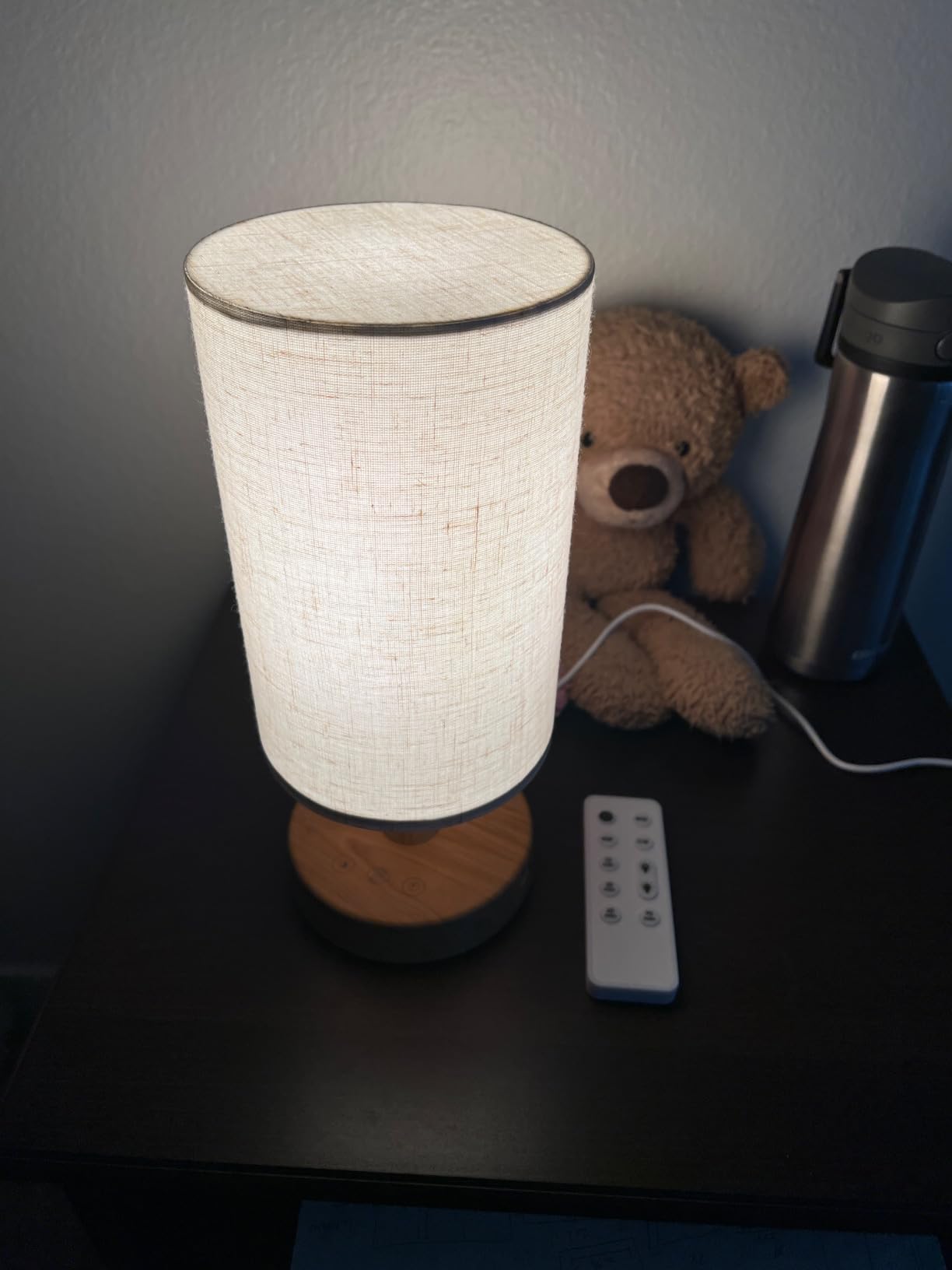
Therapy lamps have a reputation for looking like medical equipment, and the Caromolly is the direct answer to that. A fabric shade on a wooden, black or silver base with a 360-degree light-up design is the one lamp on this list that people compliment in their living room, and at 4.6 stars across just over 1,100 reviews it also happens to hold the second-highest rating in the roundup.
The remote is the feature that changes daily use. Being able to dim the lamp or start a session from 15 meters away means you are not walking back to the desk to press a button, and at 2700K the warm setting works well enough as an evening lamp that many owners use it as both.
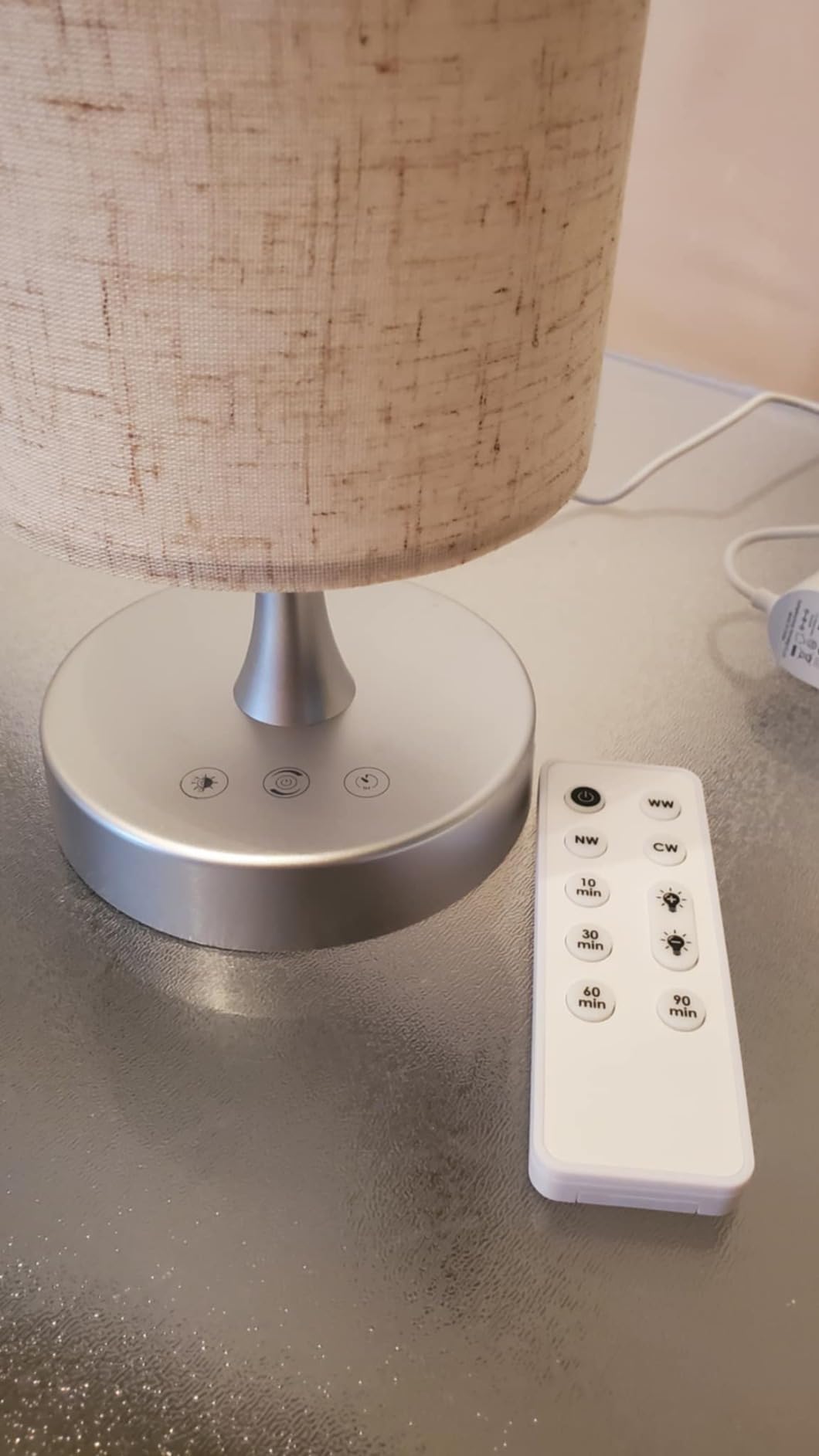
Output is listed as 10,000 lux maximum, UV-free, with brightness adjustable from 25 to 100 percent through the remote. Three color temperatures are available at 2700K warm white, 4000K natural white and 6000K daylight white, and four timer settings cover 10, 30, 60 and 90 minutes with a memory function. Dimensions are 5.1 by 5.1 by 11.8 inches at 1.59 pounds, and the remote battery is included.
Here is the honest technical caveat: the shade is shorter and smaller than a clinical panel, so reaching full 10,000 lux may require sitting closer than the 12 to 14 inch guidance that clinical protocols assume. The 360-degree design partly compensates, because light arrives from behind and beside you rather than only from the front, but if you want a verified dose at a set distance this is not the lamp.
Who this lamp suits?
It suits anyone who refuses to put a plastic slab on their desk, plus households where the lamp stays out rather than being put away. The remote alone justifies it for anyone who moves around during a session.
It is a good dual-purpose choice when you want therapy light and ambient light from one object, particularly at 2700K in the evening.
Who should skip it?
Skip it if your clinician gave you a specific distance and dose, since the compact shade makes the achieved output dependent on how close you sit. It is also not the pick for fine brightness control, with fewer steps than the five-level models.
If you dislike replacing remote batteries, factor that into the comparison. It is a small cost for most people and a genuine annoyance for others.
12. Wobrikosee Ultra-Thin Lamp – Best Low-Cost Travel Unit
Wobrikosee Light Therapy Lamp, Ultra-Thin UV-Free 10000 Lux Therapy Light, Timer Function, Adjustable Brightness Levels, Two Color Temperature, 90° Rotatable Stand for a Happy Life
UV-free 10,000 lux LED
0.63 x 5.91 x 9.45 inches
Thin panel with long cord
Brightness from 25 to 100 percent
Pros
- Lowest cost of the higher-rated lamps in this roundup
- Very thin 0.63 inch body with a 90-degree rotating bracket
- Even panel coverage described as full and consistent
- Touch dimming plus four timer options and a long cord
Cons
- Listing and spec sheet disagree on brightness steps and color modes
- UV filtering and lux output are manufacturer claims with no cited testing
- Plastic build with no memory function so settings reset
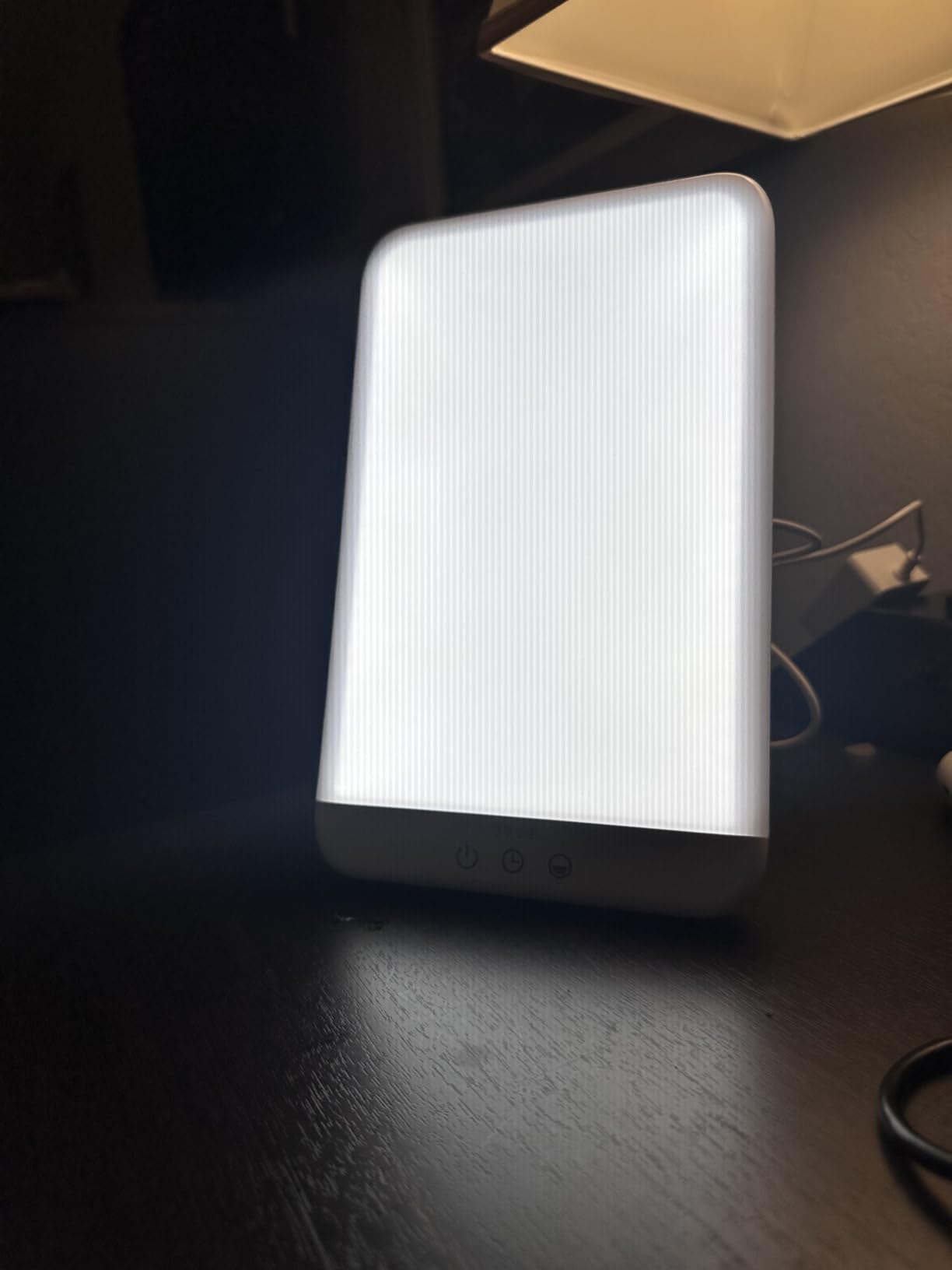
The Wobrikosee is the lamp I would put in a carry-on. At 0.63 inches thick with a 90-degree rotating bracket and a long cord, it is the most genuinely portable therapeutic panel here, and the fact that it includes a remote in the box is a nice touch at this level. Owners commonly describe buying it as a second or travel unit to complement a larger desk lamp.
Around 1,100 reviews at 4.4 stars, the feedback is positive on light quality. Reviewers also flag, fairly, that the listing copy and the spec sheet disagree about the number of brightness levels and color temperatures, so you should expect a simpler interface than the marketing suggests.
Technical details list UV-free 10,000 lux output with brightness adjustable from 25 to 100 percent, two lighting modes or color temperatures, and four timer options in 15-minute increments at 15, 30, 45 and 60 minutes. Controls are touch-based on the panel, the enclosure is ABS plastic with a plastic base, and the remote is included in the box.
The main technical caution is verification. The UV filtering and lux output are manufacturer claims without any independent testing cited, and there is no memory function, so your settings reset every session. That is acceptable for a travel spare, but if this is going to be your primary daily device, choose a model with a longer warranty and documented specifications.
Who this lamp suits?
It suits frequent travelers, people in small apartments, and anyone who wants a cheap second lamp for a bedroom or a guest room. The thin profile slides into a bag without adding noticeable weight.
It is also a reasonable first purchase for someone who is curious about light therapy and does not want a large commitment, provided they understand the dose will be shorter-lived than a premium panel.
Who should skip it?
Skip it as a primary device if you want a documented warranty or independently verified output. The inconsistent feature naming is a fair signal to look elsewhere.
It is also the wrong choice for anyone who wants a memory function, since every session starts from the same settings. The Carex and Verilux models cover that gap.
How Light Therapy Works and Why 10,000 Lux Matters?
Your body does not read a clock. It reads light. A cluster of intrinsically photosensitive retinal ganglion cells, often called ipRGCs, sits in the retina and responds to short blue wavelengths in roughly the 460 to 480 nanometer range. When those cells are strongly stimulated in the morning, they signal the brain’s suprachiasmatic nucleus to suppress melatonin and shift your circadian rhythm earlier, which is the core of the phase shift hypothesis behind light therapy.
In winter that input shrinks dramatically. Shorter days and indoor lighting mean many people get a fraction of the morning light signal they need, so their rhythm drifts later and mood and energy fall with it. A 10,000 lux lamp is the standard practical substitute because it is roughly comparable to standing outdoors on an overcast morning, which is the exposure researchers have used for decades of dosing studies.
Two secondary numbers are worth understanding, and almost no competitor publishes them. Circadian light, usually abbreviated CLA, weights a lamp’s spectrum for ipRGC activation rather than for general brightness, which is why two lamps both labelled 10,000 lux can produce meaningfully different melatonin suppression. Independent testers who ran spectrometer measurements across dozens of lamps repeatedly found that marketing lux claims often do not survive contact with a light meter, and that CLA tracked real-world effectiveness better than lux alone.
The second is glare, measured as lux per square inch of panel. Independent testing flagged a comfort threshold around 300 lux per square inch, above which daily sessions become uncomfortable for many people. That single ratio explains most of the design differences here: a wide panel lets you sit back further, and sitting further back is what keeps the light per square inch tolerable. This is also where the inverse square law bites, since illuminance falls quickly as you move away from any panel.
On the technology question, LED has effectively won. Older fluorescent therapy boxes were cheap and bright but ran warm, aged visibly and needed rare replacement tubes, and reviewers have long reported dust accumulating inside covers that are difficult to clean. Every lamp in this roundup is LED, which means no consumables, lower power draw, and instant-on control. The remaining LED weakness is spectral drift as the diodes warm during the first hour, which is a good reason to give any new lamp ten minutes before judging its output.
Buying Guide: What to Check Before You Buy a Light Therapy Lamp?
Start with distance, because it decides everything else. Check whether the stated 10,000 lux is measured at a realistic sitting distance. The Carex Classic Plus is quoted at 12 inches, which matches clinical guidance, while most compact panels deliver their number at 6 to 10 inches. A large face is what lets you sit back, and a large face is usually a larger, heavier and less portable unit.
Next, decide how much control you need. Four or five brightness levels let you ramp up over several days, and a countdown timer removes the most common failure mode, which is a session that quietly runs too long or ends early. If you travel, check whether the lamp runs on USB and whether the adapter is included, because that omission appears repeatedly in owner feedback.
Color temperature matters more than buyers expect. Most clinical dosing uses a cool white around 5000K to 5500K, and warmer settings are for evening use rather than therapy. What you are really shopping for is the ability to serve an evening reading or ambient need from the same object, so a warm setting is a convenience feature rather than a therapeutic one.
Then weigh the physical stuff. Cord length and base stability determine whether the lamp ends up where you need it, a weighted base prevents a knock over that can break a panel, and a kickstand or rotating bracket is what makes a small panel usable. Owners also mention heat during longer sessions, so a slim panel that runs cool is more comfortable at 45 or 60 minutes than a boxed fluorescent design would be.
Check the warranty against how much you will use the lamp. One year is thin for a daily device; four and five year terms signal that the manufacturer expects longevity. Replacement bulb access matters more for open designs than sealed panels, and a unit that is difficult to disassemble is a unit you will not clean.
Do not overlook reimbursable accounts and insurance. Because light therapy is a recognized treatment for seasonal affective disorder and related circadian conditions, a therapy lamp is a common reimbursable expense. Your plan may treat it as durable medical equipment, and the practical step most people miss is that many plans ask for a letter of medical necessity. If you want a deeper look at the criteria, our guide to therapy lamps for energy covers how dose and duration change the picture.
Finally, think about other reasons to own one beyond seasonal mood. Shift workers use a bright morning session to anchor their sleep schedule, and frequent travelers use morning light to reset after crossing time zones. If your main issue is sleep timing rather than mood, prioritize a timer and a memory function over raw lux. If you want a device that can also serve a home office, our home office picks cover the workspace trade-offs. For muscle recovery rather than mood, the mechanism is entirely different, and our infrared therapy lamp guide is the relevant read, along with our notes on portable red light devices for travel.
Who Should Talk to a Doctor Before Using a Light Therapy Lamp?
Light therapy is a first-line treatment, but it is not a self-diagnosis tool. The most important conversation to have is with a psychiatrist if you have bipolar disorder, because bright light can trigger a manic episode in people with a bipolar predisposition. Any history of mania, hypomania or rapid mood cycling should be raised before your first session, not after.
Retinal conditions including macular degeneration, diabetic retinopathy and any prior retinal damage also warrant a conversation with an ophthalmologist first. Reviewers and clinicians repeatedly note that people on photosensitizing medication, including certain antibiotics, retinoids and some diuretics, should check with a prescriber before daily light exposure. If you are already under psychiatric care, ask about your medication schedule, because dose timing interacts with it.
None of that means avoiding light therapy. It means starting with a short session and building up, and telling your doctor what you are using so it factors into your treatment plan.
Frequently Asked Questions
What is the best light therapy lamp on the market?
The Verilux HappyLight Lucent is the best overall pick for most people because it delivers 10,000 lux of UV-free LED light with a one-button control, a detachable bidirectional stand, and roughly 9,000 owner reviews backing it. The Circadian Optics Lumos is the best-rated option with a 270-degree rotating panel, and the Carex Day-Light Classic Plus is the best choice if you need 10,000 lux at a realistic 12 inch distance rather than inches from the panel.
Do light therapy lamps actually work?
Yes, for seasonal affective disorder and related circadian conditions. Morning exposure to bright light stimulates intrinsically photosensitive retinal ganglion cells, suppresses melatonin and shifts your circadian rhythm earlier, which lifts mood and improves sleep within one to two weeks of consistent daily use. It is a first-line treatment rather than a cure, and owners describe it as taking the edge off symptoms.
How many minutes a day should you use a light therapy lamp?
Most clinical guidance calls for 20 to 30 minutes of 10,000 lux light shortly after waking, ideally within the first hour. Some people work up from a lower brightness setting or shorter session over several days. Keep the light at your face but out of your direct line of sight, and avoid staring at the panel, because UV-free does not mean strain-free.
Do SAD lamps give you vitamin D?
No. A light therapy lamp works through the eyes, while vitamin D is produced in the skin in response to UVB radiation. Quality therapy lamps are UV-free by design, so they have no effect on vitamin D levels. If you are concerned about vitamin D, talk to your doctor about supplementation and safe sun exposure instead of relying on a therapy lamp.
What is the best 10,000 lux light therapy lamp?
The Carex Day-Light Classic Plus delivers a verified 10,000 lux at 12 inches, a distance that matches clinical protocols and lets you sit back rather than inches from a panel. The Verilux HappyLight Lucent is the best value option for 10,000 lux output, and the LASTAR CM020A is the best choice if you want to wall-mount the lamp to get a proper treatment distance without a large base on the floor.
Conclusion: The Best Light Therapy Lamps for 2026
After working through all twelve, the Verilux HappyLight Lucent is the pick I would hand to most people in 2026. It has the deepest owner history in the group, a one-button routine that survives contact with a bad morning, and a detachable stand that makes it work in more than one room. If you want more control, the Verilux HappyLight Luxe adds brightness levels, color temperatures and a real countdown timer for very little more complexity.
For the situations the list cannot cover with one answer, look at the Carex Day-Light Classic Plus if sitting too close is your problem, the LASTAR CM020A if you would rather mount the lamp on a wall, and the SUXIO Happy Lamp if your protocol runs past an hour. Whichever you choose, the best light therapy lamps only work if you use them at the same time every day, so set the lamp up before you need it.