
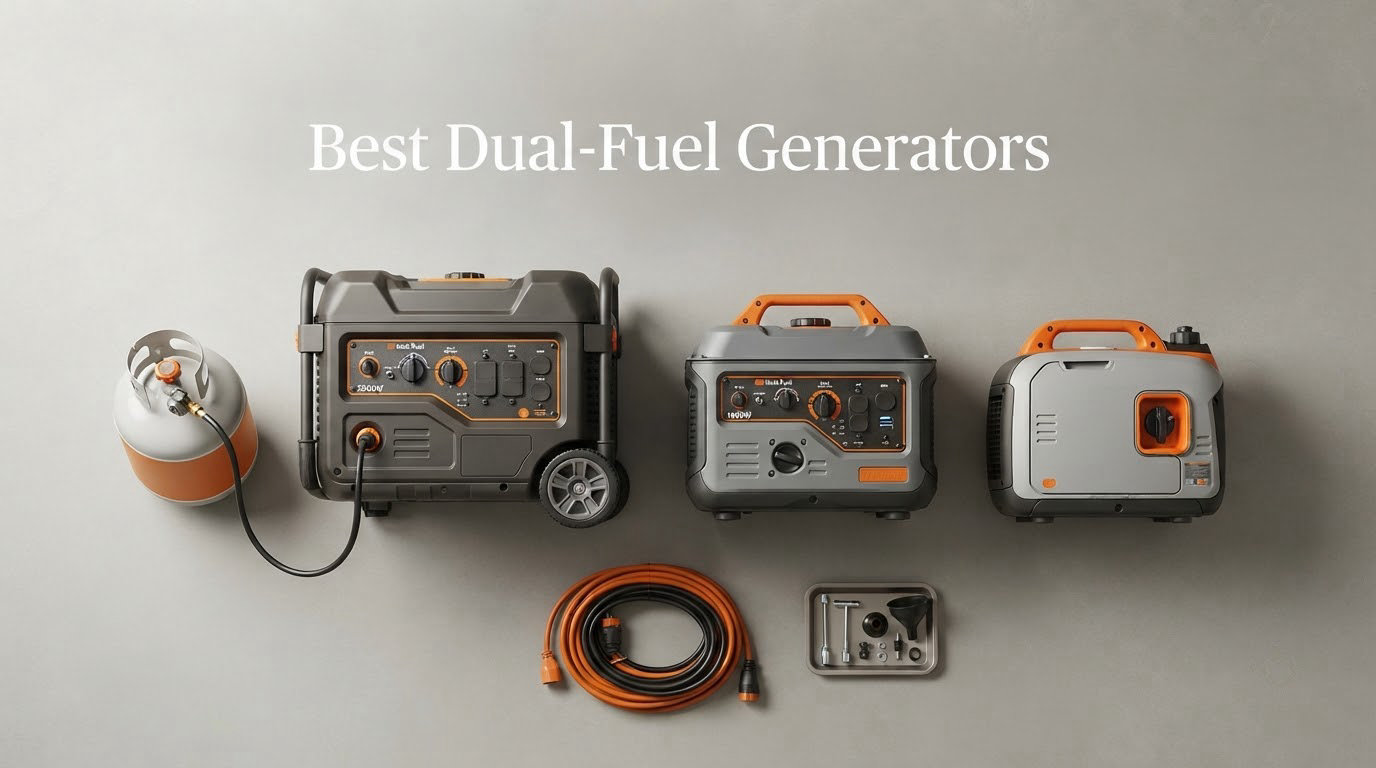
Gasoline goes stale. That is the whole reason a dual fuel generator exists, and it is the first thing we tell anyone who asks us which machine to buy. A dual fuel generator runs on both gasoline and propane from the same engine, so you can burn through the gasoline in the tank during a short outage and then flip a lever over to a 20 lb propane cylinder that will still be there next month, next year, or next decade.
Below is our list of the best dual fuel generators for 2026. We compared 12 models weighing 49 to 234 pounds, from a 3800 watt camping inverter to a 13000 watt whole-home machine, and read the owner review data on every one. Our method was simple: verify the running and peak wattage on both fuels, check the outlet panel against the loads you actually want to run, then weight the noise rating, the real weight, the warranty and the documented complaints.
Table of Contents
Top 3 Best Dual Fuel Generators (October 2026)

Westinghouse WGen9500DF
- 9500 running watts on gas
- 30A and 50A outlets
- 12 hour runtime
- key fob remote start


Best Dual-Fuel Generators at a Glance in 2026
| Product | Specs | Action |
|---|---|---|
| Westinghouse WGen9500DF |
|
Check Latest Price |
| DuroMax XP13000EH |
|
Check Latest Price |
 WEN DF475T WEN DF475T |
|
Check Latest Price |
| Westinghouse iGen5000DF |
|
Check Latest Price |
 PowerSmart 3800W Inverter PowerSmart 3800W Inverter |
|
Check Latest Price |
 Westinghouse WGen5300DFcv Westinghouse WGen5300DFcv |
|
Check Latest Price |
 Champion 4000W Inverter Champion 4000W Inverter |
|
Check Latest Price |
 WEN DF360iX WEN DF360iX |
|
Check Latest Price |
 WEN DF680iX WEN DF680iX |
|
Check Latest Price |
 DuroStar DS13000MX DuroStar DS13000MX |
|
Check Latest Price |
 Pulsar PG5250B Pulsar PG5250B |
|
Check Latest Price |
 Champion 4250W Open Frame Champion 4250W Open Frame |
|
Check Latest Price |
What Is a Dual-Fuel Generator?
A dual fuel generator is a portable generator whose engine is designed to burn either gasoline or propane. A fuel selector valve routes the correct fuel to the carburetor and changes the metering jets to match, so the changeover costs you a few percent of power rather than an engine restart.
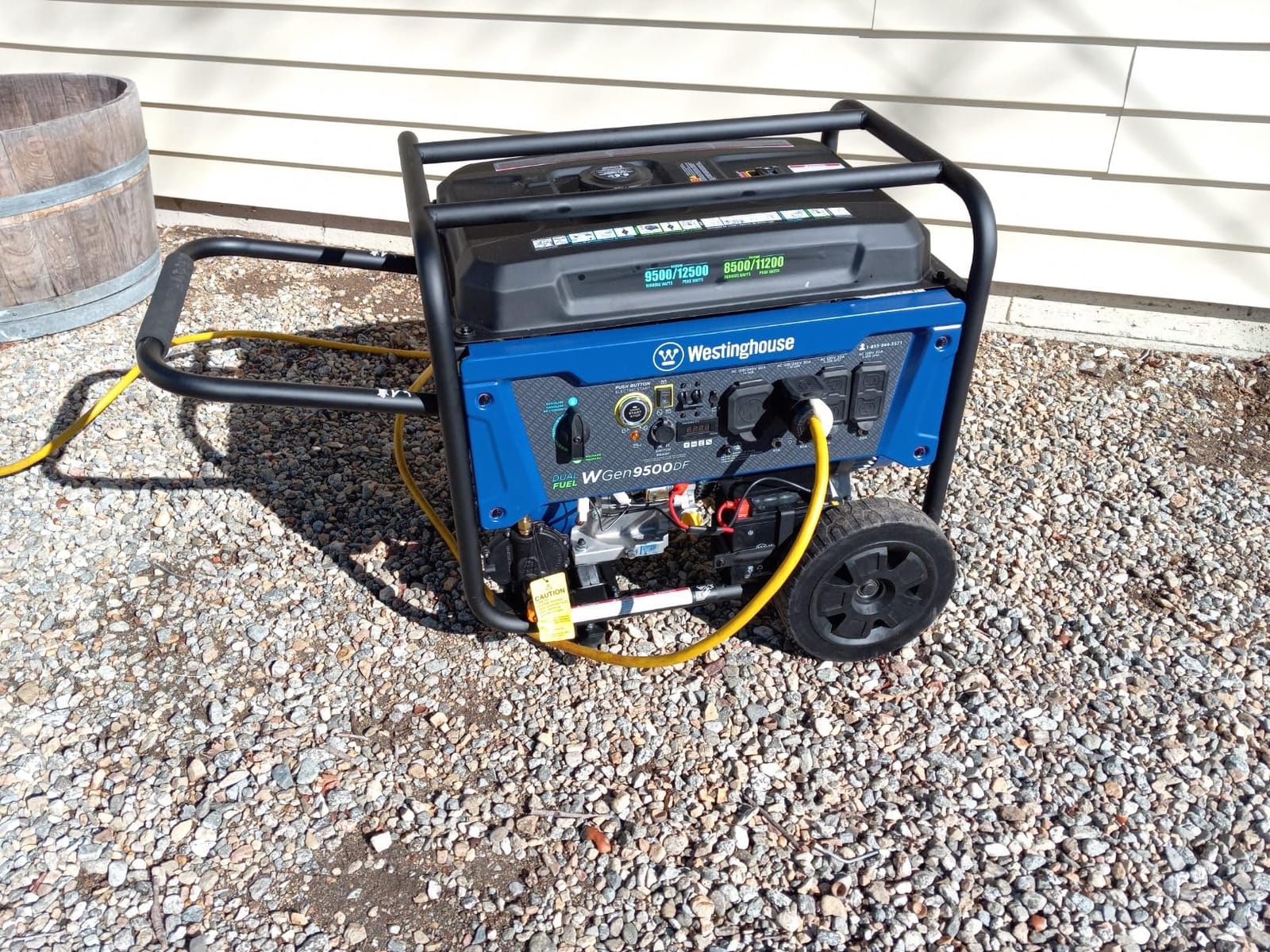
The output difference is real and buyers miss it constantly. On the Westinghouse WGen9500DF, for example, the headlined 12500 peak watt figure drops to 11200 peak and 8500 running watts once you select propane. That pattern repeats across every machine in this list, so any spec sheet that lists one number only is quoting gasoline.
Propane also stores indefinitely while gasoline degrades in a few months and gums up a carburetor, which is the storage argument that forum users on r/preppers and r/OffGrid repeat more than any other. It is why dual fuel machines stay ready through a season of disuse, and why one extra cylinder of propane in a garage is decent emergency insurance.
1. Westinghouse WGen9500DF – Best Overall Dual-Fuel Generator for Home Backup
Westinghouse 12500 Watt Dual Fuel Home Backup Portable Generator, Remote Electric Start, Transfer Switch Ready, Gas and Propane Powered
9500W gas / 8500W propane running
6.6 gal tank, 12 hour runtime
30A and 50A outlets
Pros
- 9500 running and 12500 peak watts on gasoline
- Remote key fob start with electric and recoil backup
- 30A transfer switch ready and 50A RV outlets
- 12 hours on a 6.6 gallon tank with fuel gauge
- 3 year warranty with cast iron sleeve engine
Cons
- 210 lb frame needs two people to move
- Open frame runs louder than enclosed inverter units
This is the machine we keep coming back to. The 457cc four-stroke engine carries a cast iron sleeve, which is the part that decides whether an engine survives five years of hard use, and the 8911 reviews averaging 4.7 stars give us the deepest owner history of anything we tested. Owners cite starting reliability and wattage headroom more than anything else, with 85 percent of reviews landing at five stars.
What sells me is the outlet panel. Two GFCI 120V duplex receptacles, an L14-30R that is transfer switch ready, and a 14-50R for an RV. That is a full home panel rather than a handful of household plugs, and it means you can wire a transfer switch once and forget about adapters.
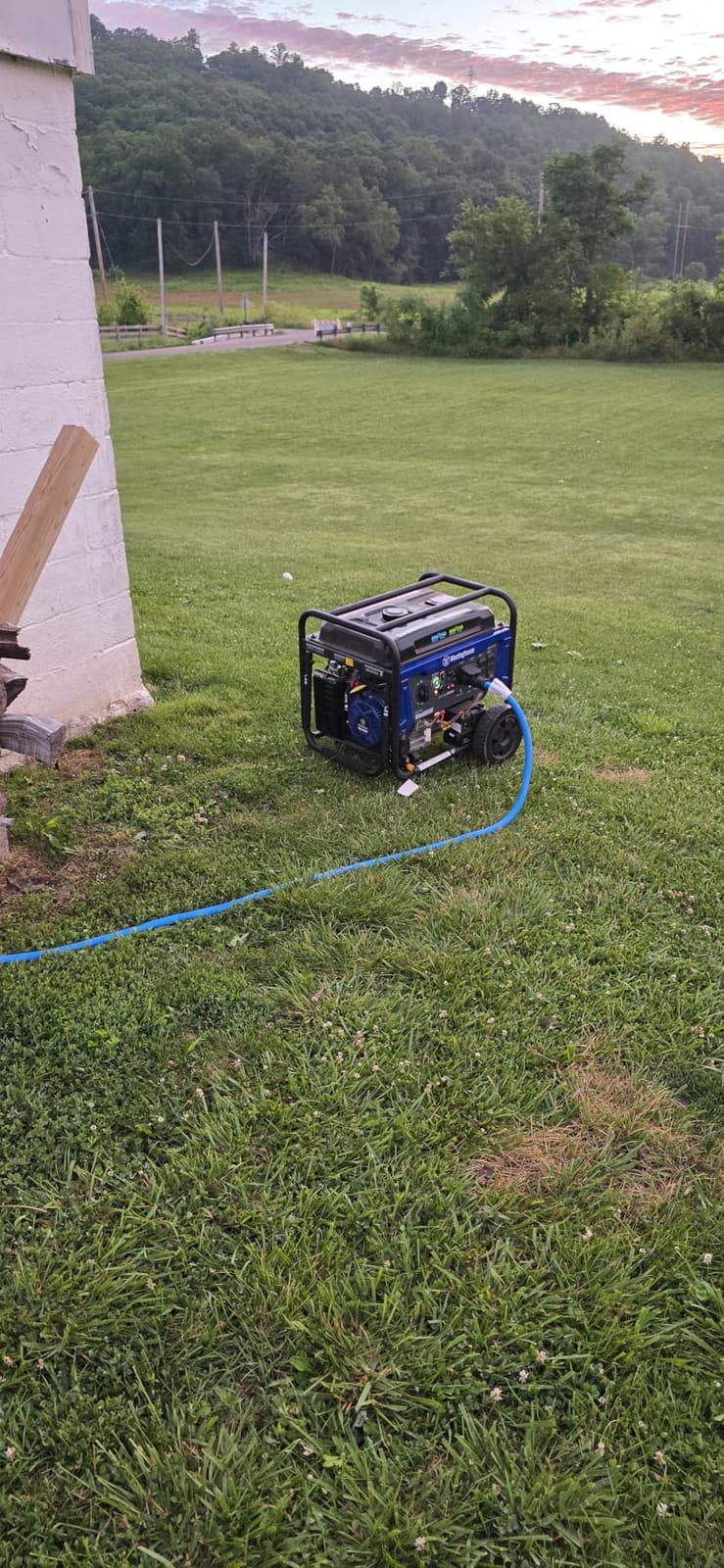
The 6.6 gallon tank and fuel gauge translate into about 12 hours of run time, which covers a typical overnight outage without a midnight refuel. The VFT display tracks voltage, frequency and lifetime hours, so a blown head gasket shows up on the readout instead of as a fried appliance.
Remote electric start works with the included key fob, and there is a recoil start underneath as a backup. That matters more than it sounds: forum owners repeatedly flag key-dependent electric start as a real failure mode, and knowing you can still pull-start the machine with a dead battery is genuine insurance.
What 9500 running watts actually covers?
Gasoline output is 9500 running and 12500 peak watts. Propane gives you 8500 running and 11200 peak. On gasoline that handles a refrigerator, a freezer, lights, internet equipment and a gas furnace blower with room to spare for a microwave or a laptop charger.
Propane numbers are where a well pump or a 3-ton air conditioner gets tight. If your planned load includes a 240V motor above 5 hp, size up one class instead.
Who should skip it?
Skip this one if you plan to run it next to a camper or in a residential neighborhood at night. The open frame is inherently louder than an enclosed inverter, and 210 lb means two people or a ramp for any move you did not plan for.
It is also overkill for a tailgate or a pop-up camper. Below 100 lb the Westinghouse iGen5000DF or the Champion 4250 does the same job with a fraction of the effort.
2. DuroMax XP13000EH – Best Dual-Fuel Generator for Heavy Whole-Home Loads
DuroMax XP13000EH 13,000-Watt Dual Fuel Portable Generator – Gas & Propane, Electric Start, Whole Home Backup Power, Transfer Switch Ready, RV & Emergency Ready
10500W running / 13000W peak
500cc engine, push button start
50A transfer switch outlet
Pros
- 13000 peak watts cover whole home running loads
- Push button electric start with reliable recoil backup
- Copper windings and an all metal frame
- Transfer switch ready 50 amp outlet
- Never flat tires roll over rough ground
Cons
- Louder than premium inverter competitors
- The box does not include engine oil
- Higher harmonic distortion than pricier brands
This is the one owners point to when they describe running two HVAC units, refrigerators, freezers and networking gear through a 9 hour outage. The 500cc engine produces 10500 running and 13000 peak watts, and the 3 year warranty plus a 3991-review history at 4.5 stars gives it the second-deepest owner record in our set.
One owner report stands out for the better: DuroMax customer service replaced a failed machine quickly under warranty. That kind of service response is the difference between a 220 lb mistake and a solved problem, and it is worth more than most buyers price it at.
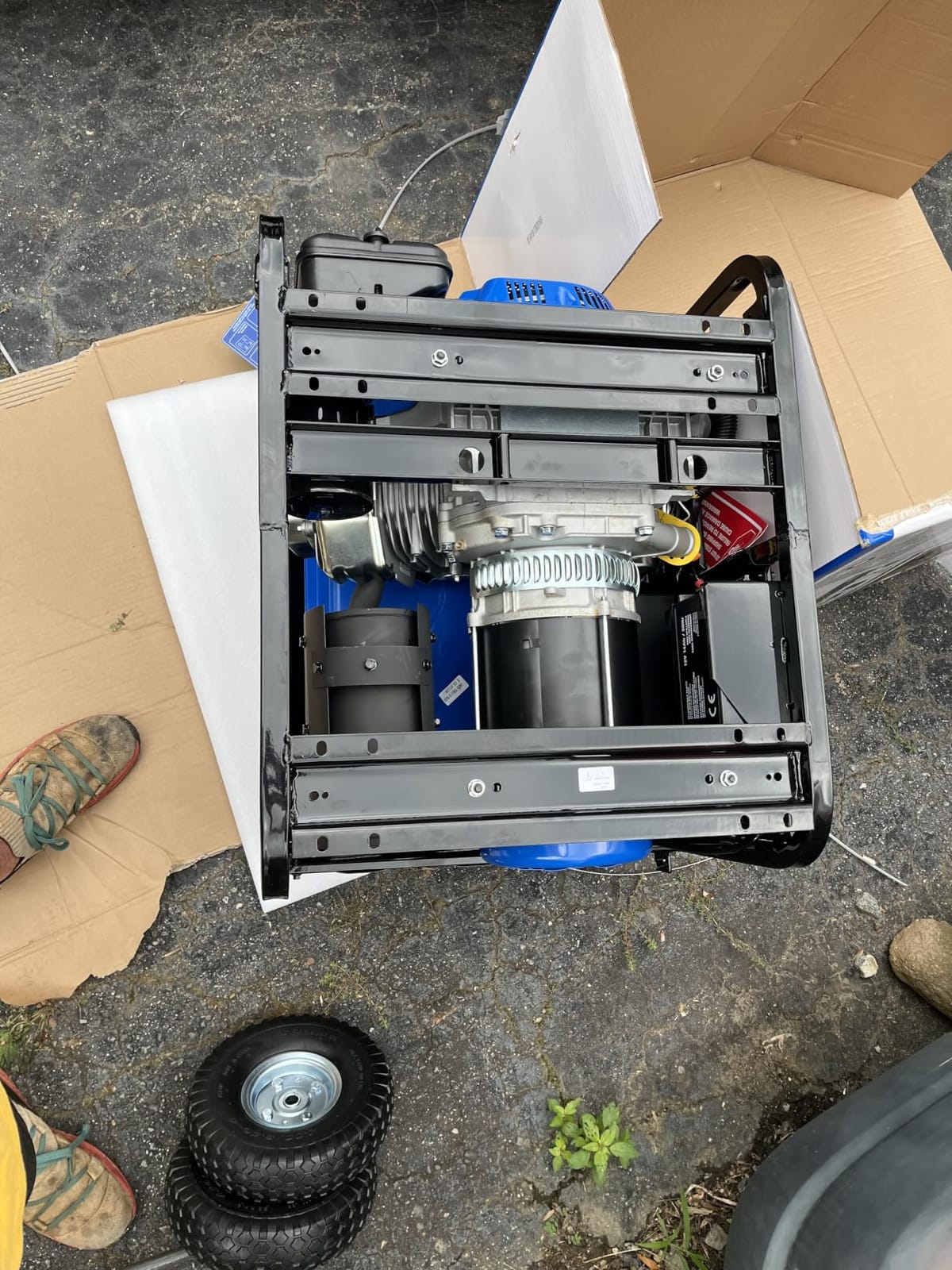
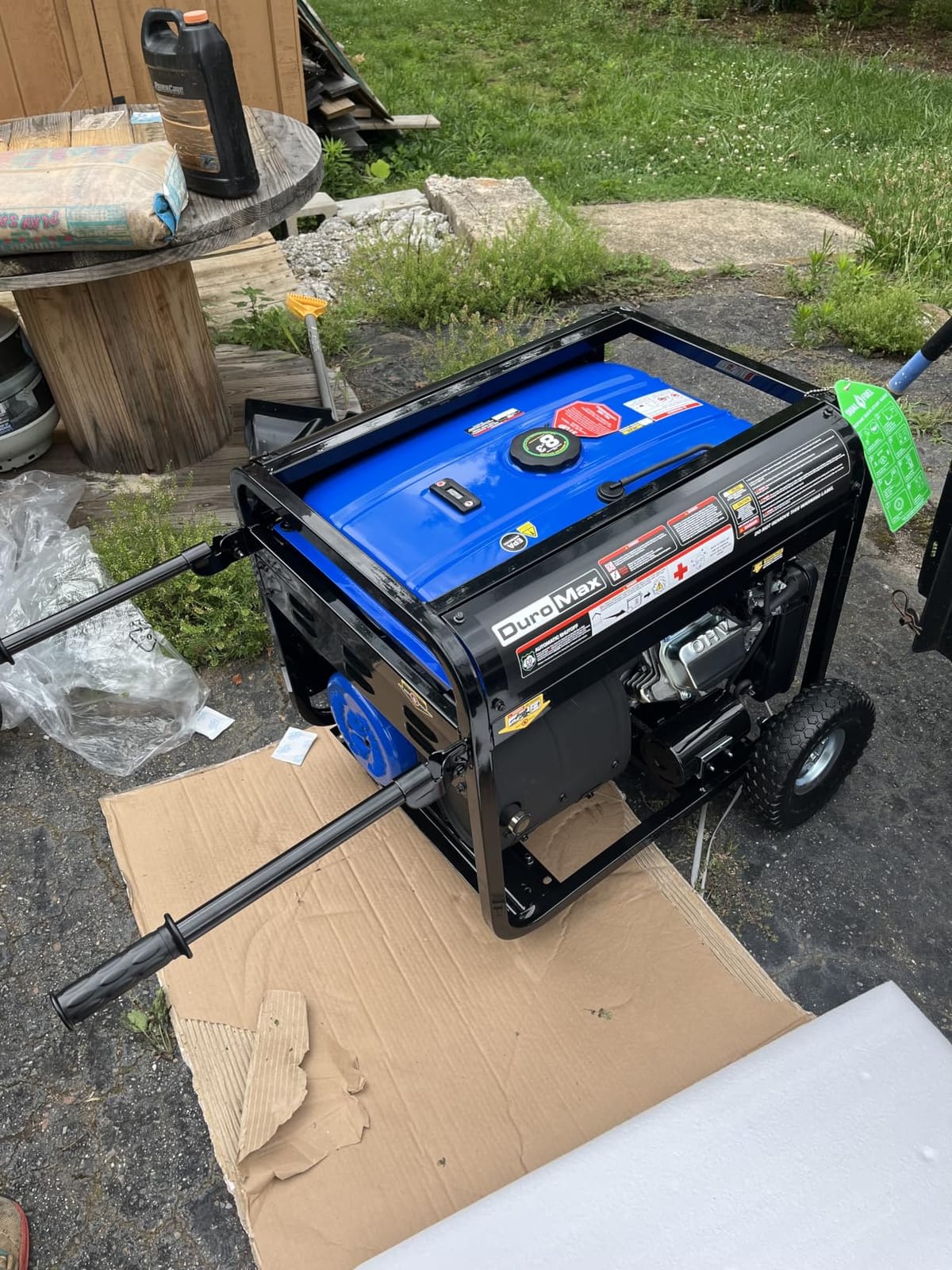
Build quality is above what the price tier suggests. Copper windings, an all-metal frame and power panel, no plastic structural pieces, and never-flat tires that handle the gravel driveway most of these machines end up parked on.
The honest drawbacks are consistent across reviews. The muffler is louder than premium inverter competitors, harmonic distortion runs higher than pricier brands, and the documentation has a reversed choke sticker that can cause a stall on first start. Around 7 percent of reviews are one star, mostly warranty or early-failure experiences.
How the 50A outlet changes the installation?
The transfer switch ready 50 amp outlet means a 10kW-class machine can feed a properly sized subpanel instead of a handful of extension cords. The interlock kit and the licensed electrician are the real cost, not the outlet.
Push-button electric start sits on the panel next to a front-facing fuel selector, so switching fuel does not mean walking around the frame. That is a small design decision that saves real time in the dark.
Where it disappoints?
At 234 lb this is the heaviest machine we list, and the wheels are the weak point reviewers mention on heavy open-frame models generally. Plan the storage location before you buy, not after.
Open-frame noise is the other issue. If the unit will run within a few feet of a bedroom wall at 2 am, pick an enclosed inverter instead and accept less output.
3. WEN DF475T – Best Dual-Fuel Generator for a 120V and 240V Transfer Switch
WEN 4,750-Watt 120V/240V Dual Fuel Portable Generator with Wheel Kit and Electric Start (DF475T)
3800W running / 4750 peak on gas
3500W running on propane
120V and 240V switchable
Pros
- Selection dial switches between gasoline and propane
- 120V and 240V switchable output for a transfer switch
- 11 hours half load on a 4 gallon tank
- Wheel and handle kit included
- Oil and LPG hose included in the box
Cons
- Open frame is louder than inverter models
- 105.8 lb limits one person transport
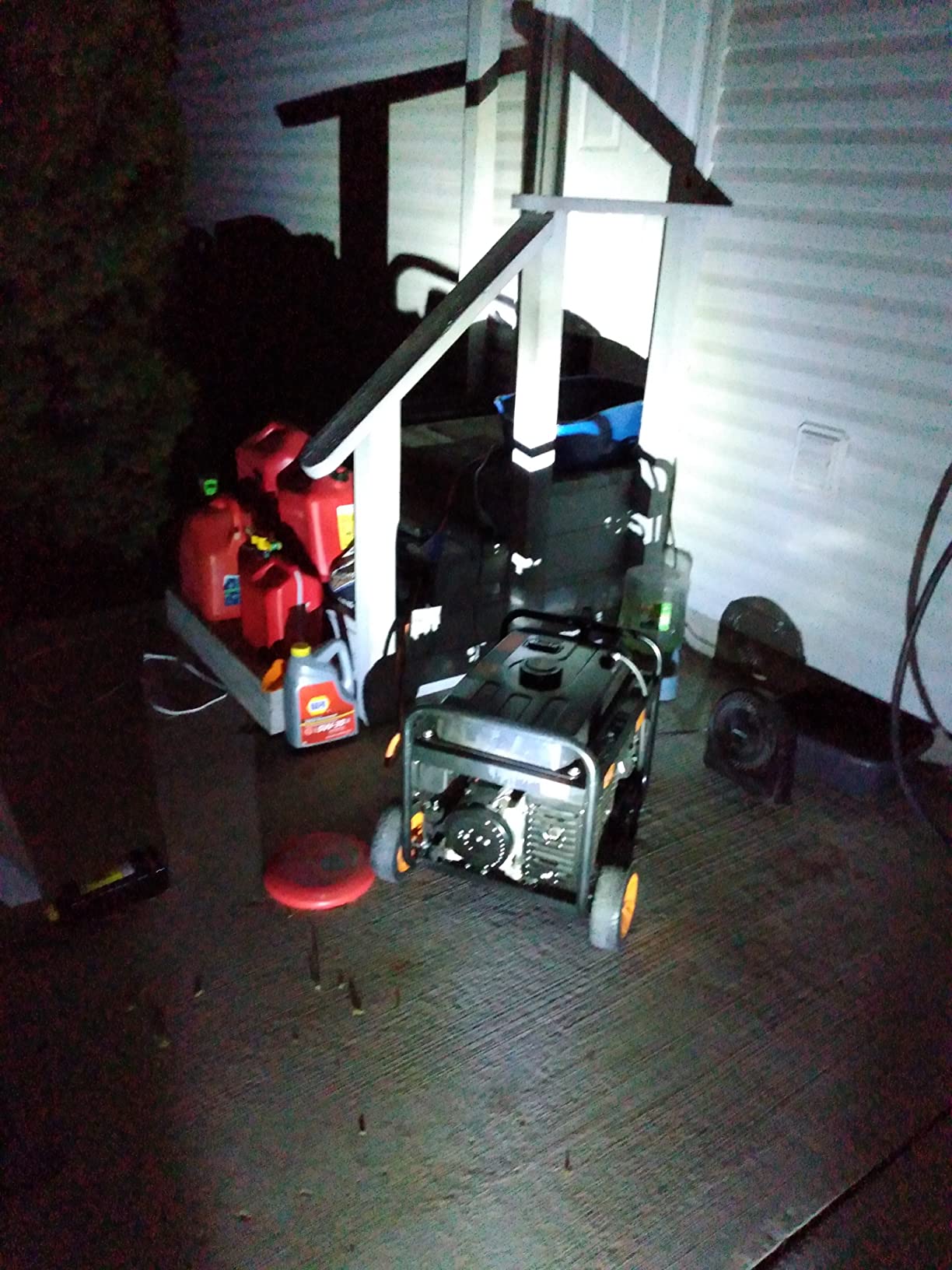
The DF475T is the value pick in this roundup and the cleanest answer to a specific problem: powering a 240V well pump or a 3-ton air conditioner during an outage. Output is 3800 running and 4750 peak watts on gasoline, 3500 running and 4350 peak on propane, and the voltage selector switch moves the whole panel between 120V and 240V.
Those two outlets are a 5-20R GFCI duplex and a 30A L14-30R twist lock. Feed a transfer switch from the 30A and you have a legitimate 240V circuit without buying an inverter unit that costs several times more.
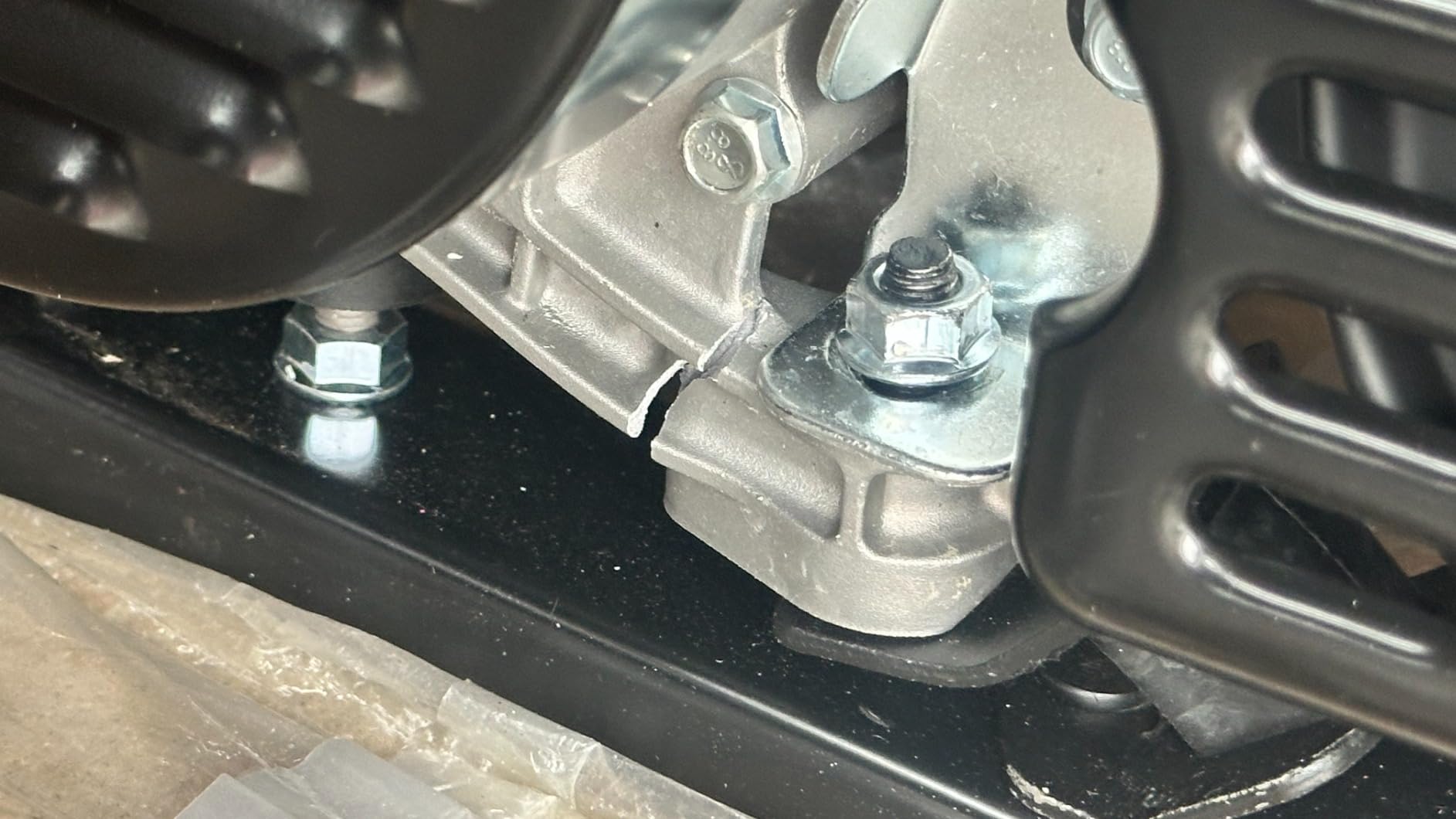
The 224cc four-stroke OHV engine with electric start is a simple, proven design, and the 4 gallon tank gives about 11 hours at half load. Buyers highlight value, 240V capability and the electric start, with 74 percent of reviews at five stars.
Noise is the most common complaint, which is the open frame talking rather than a defect. In a garage or a shop a few hundred feet from the house, that is a fair trade for the 240V capability.
Why 240V capability matters at this size?
A 1 hp well pump draws around 8 amps running but 16 or more on start. On a 120V-only 20A circuit that is a coin flip; on a dedicated 30A 240V branch it is routine. The 30A twist lock is the reason to pick this model over a lighter 120V inverter.
The voltage switch is mechanical, so confirm the outlet position matches the load before every start. Forgetting that step is the most common cause of a burned pump controller we hear about.
What you give up?
There is no CO sensor on this model and no remote start, so you are physically present to run it. At 105.8 lb it is a two-person carry for most adults despite the wheel kit.
If quiet running matters more than 240V, the Westinghouse WGen5300DFcv covers similar ground with a CO sensor and a 3 year warranty.
4. Westinghouse iGen5000DF – Best Quiet Dual-Fuel Inverter Generator
Westinghouse 5000 Peak Watt Super Quiet Dual Fuel Portable Inverter Generator, Remote Electric Start, Gas & Propane Powered, RV Ready 30A Outlet, Parallel Capable, Blue/Black
3900 running / 5000 peak watts
Under 3 percent THD, 52 dBA
18 hour runtime, 3.4 gal tank
Pros
- 52 dBA inverter output under 3 percent THD
- Remote key fob start with electric and recoil options
- 18 hours on a 3.4 gallon tank in economy mode
- Telescoping handle and 30A RV ready outlet
- LED data center shows run time and voltage
Cons
- 104.7 lb is heavy for a portable inverter
- 3.4 gallon tank is small for long gasoline runs
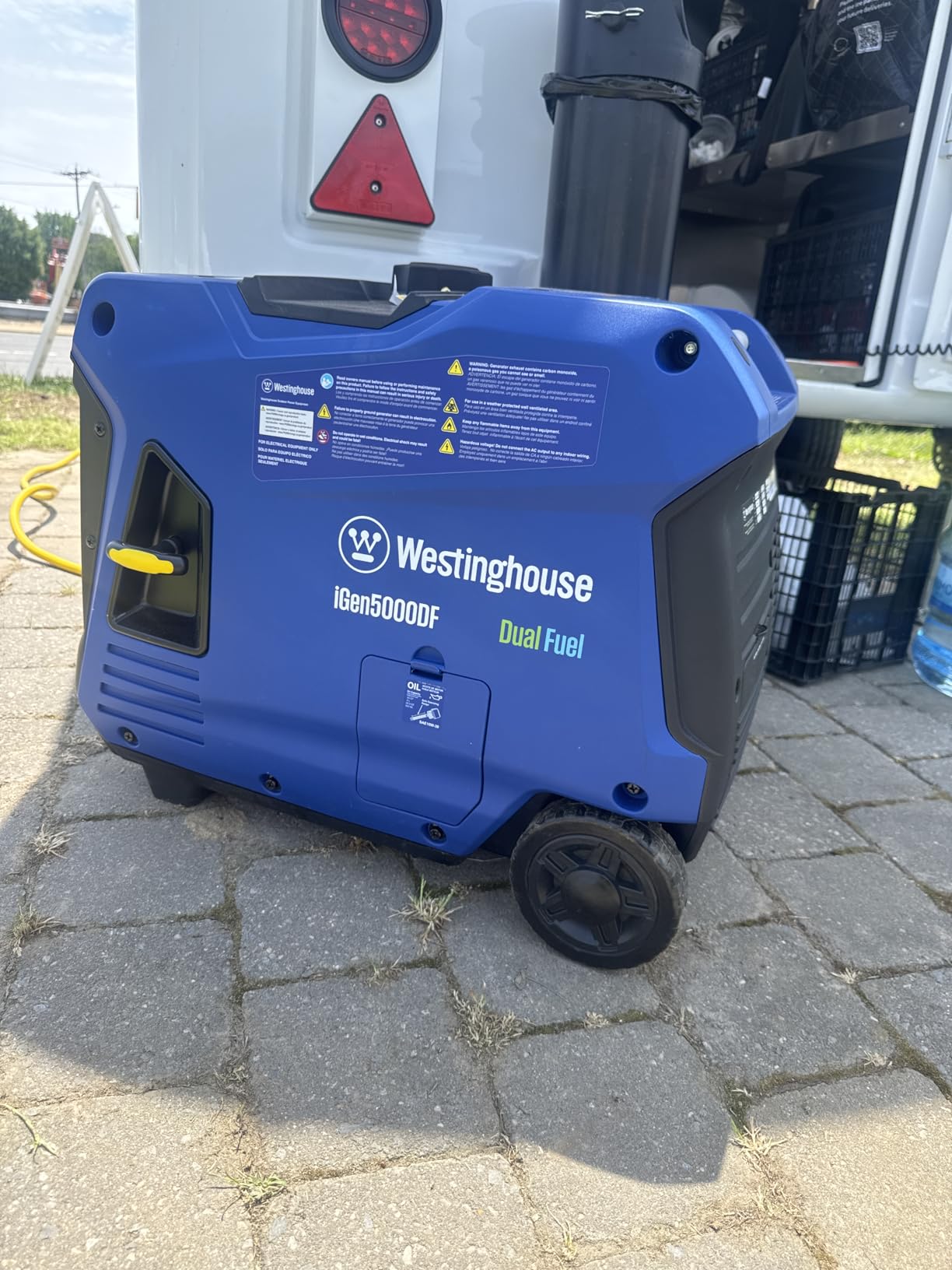
This is the quietest machine in the group, and the 52 dBA figure is not marketing filler. A normal conversation runs about 60 dB, so this unit sits below the noise of the people standing next to it. That opens up campgrounds, tailgates and neighborhood use that open-frame models simply cannot handle.
Power quality is the other half of the case. Under 3 percent total harmonic distortion is inverter-class output, which is what makes laptops, monitors, TVs and medical equipment safe to run without a surge protector stacked on top.
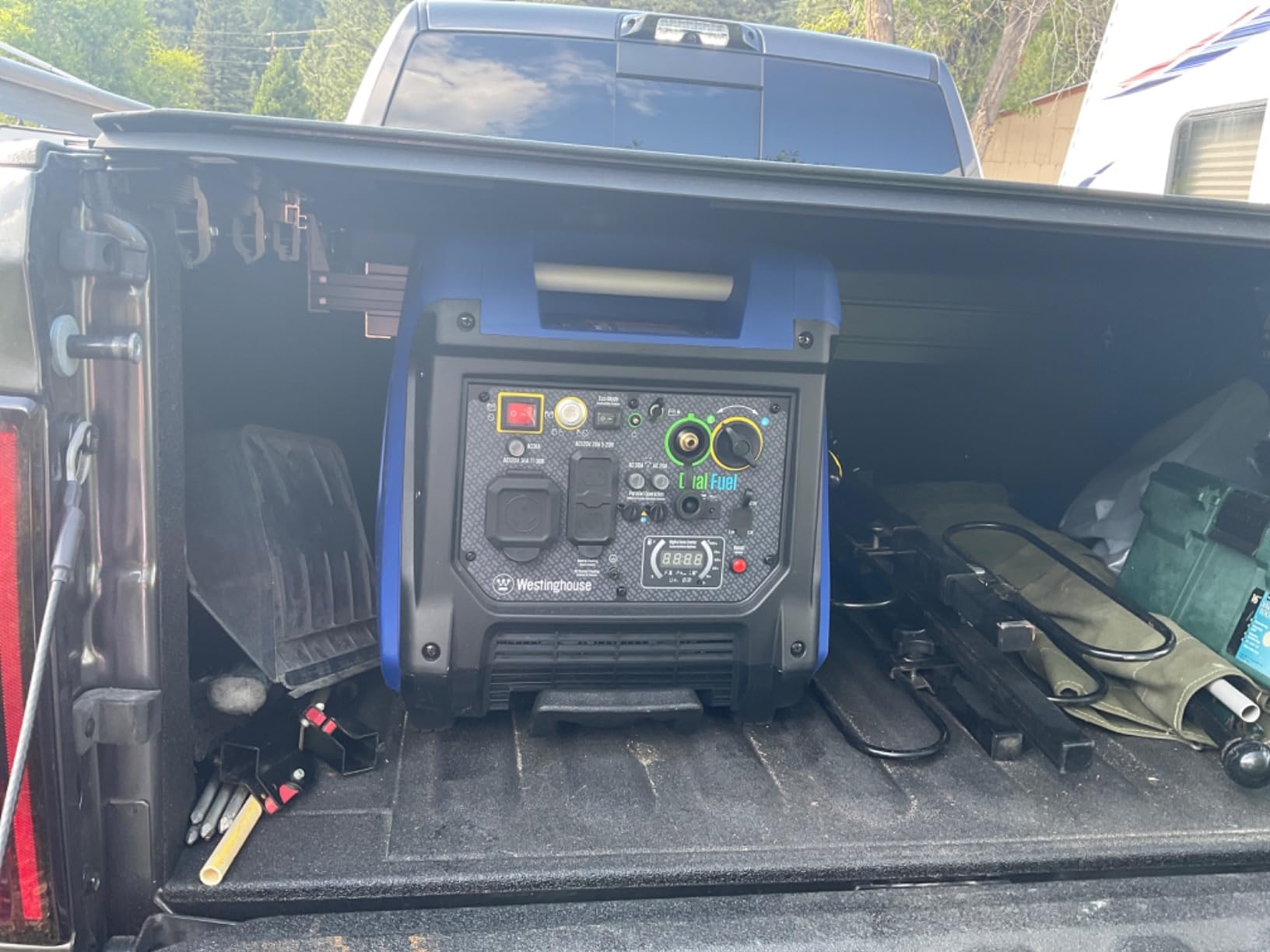
Owners mention the remote start with key fob most often, along with the 18 hour run time and the economy mode that throttles the engine down at light load. 82 percent of reviews are five stars, and the ratings hold at 4.7 across 1676 reviews.
Output is 3900 running and 5000 peak watts, which covers an RV air conditioner, a refrigerator and a bank of USB devices without strain. Propane output is lower again, so confirm the number before you plan a load around it.
Who this inverter is built for?
RV owners and boondockers get the most from it. The RV ready TT-30R 30A outlet, the telescoping handle and the 52 dBA footprint make it the one you can actually sleep beside. The two USB outlets are a nice touch for phones and tablets.
It also works as a home backup machine for a fridge, a freezer, internet equipment and lights, where the 18 hour runtime in economy mode covers a full night plus a morning. If you need something even quieter to run sensitive equipment indoors during a short event, our portable inverter generator picks cover the lighter end of the range.
The trade-offs
At 104.7 lb it is heavy for a portable inverter, and the 3.4 gallon tank is genuinely small next to a 6.6 gallon open frame. Long gasoline outages mean more refills than the weight suggests you would need.
If the load is mostly 120V and you do not need 240V, this is the correct pick. If you need to run a well pump, go back to the WEN DF475T.
5. PowerSmart 3800W Dual-Fuel Inverter – Best Dual-Fuel Generator for Camping
PowerSmart 3800 Watt Dual Fuel Inverter Generator for Camping or Home Use
3300 running / 3800 peak watts
59 dBA at 25 percent load
CO sensor and low oil shutdown
Pros
- Quiet 59 dBA Eco Mode output for campsites
- 50.7 lb body carries with one hand
- Parallel ready to double output with a matching machine
- CO sensor plus low oil and overload shutdown
- USB and 12V DC outlets for phones and tools
Cons
- 1.3 gallon tank means frequent refills
- Service panels need a Phillips screwdriver
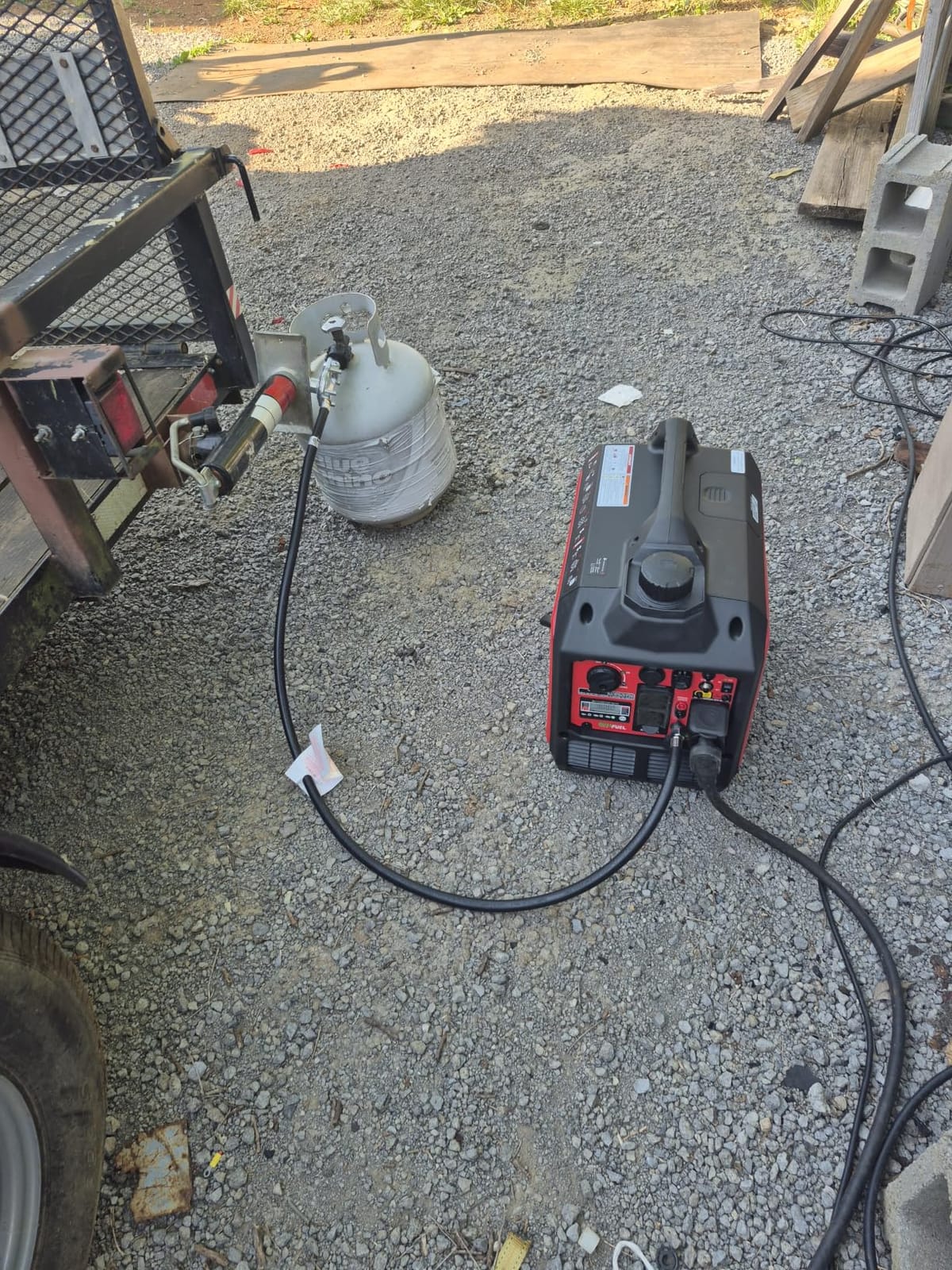
This is a dual fuel inverter at 50.7 lb, which is a genuinely one-person carry rather than a machine that needs a second pair of hands. The 149cc engine pushes 3300 running and 3800 peak watts on gasoline and 3100 running on propane.
Runtime is where the spec reads oddly and the explanation is simple. The 1.3 gallon gasoline tank gives about 8 hours at 25 percent load, while a 20 lb propane cylinder carries it up to 24 hours. On a camping trip the cylinder is the answer, and that is exactly why dual fuel matters here.
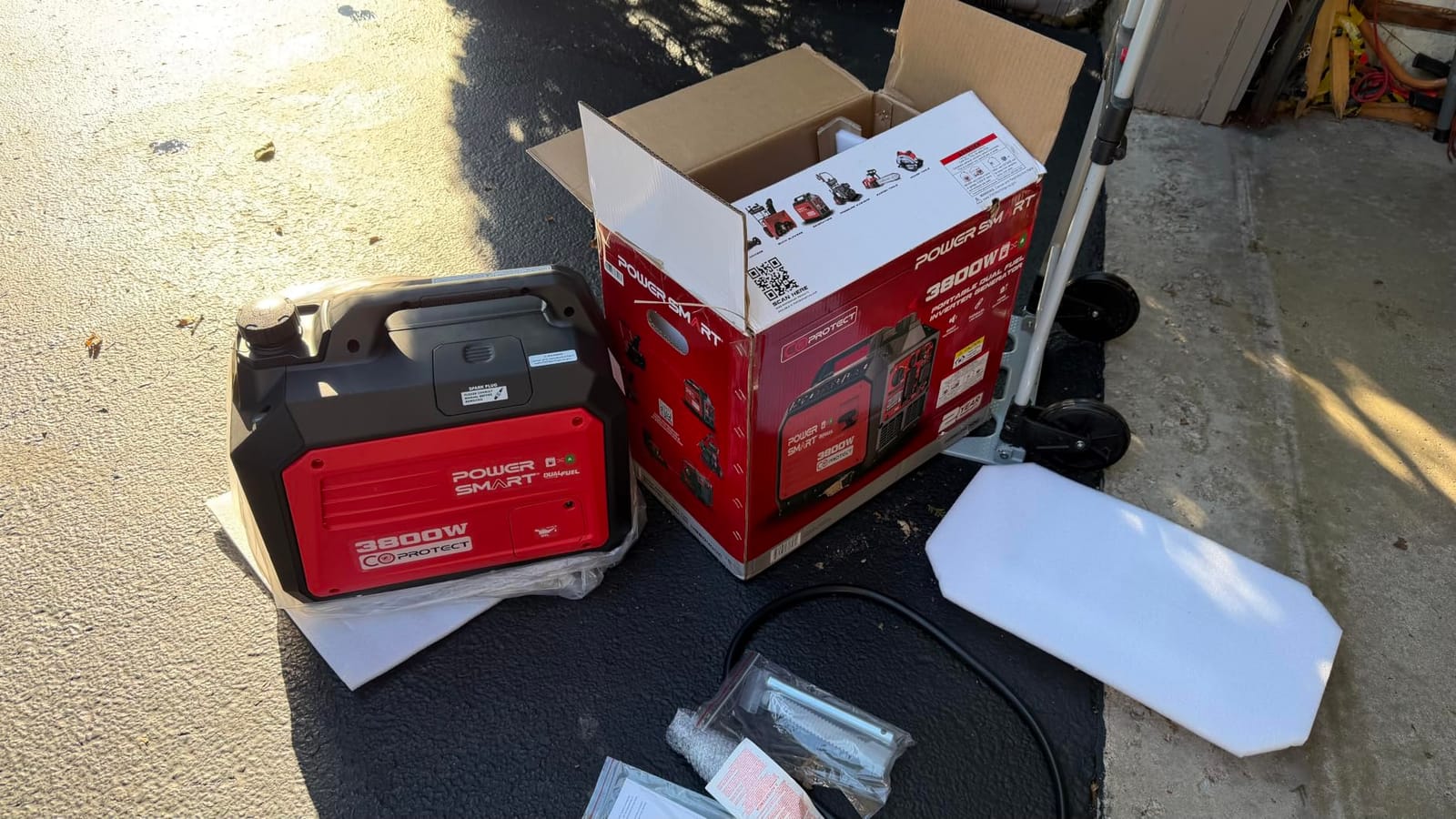
Safety hardware is better than the price tier suggests: overload protection, short circuit protection, a CO sensor and low oil shutdown all come standard. The outlet panel covers a 30A L5-30R twist lock, a 20A duplex, a 12V 8A DC outlet and dual USB ports.
Owners call it excellent value with quiet clean power, and the parallel ready capability means a second matching unit doubles your output for a larger camper or a group site.
What fits in a car trunk?
At 21.9 by 13.4 by 19.5 inches this is the smallest footprint in the roundup, and 50.7 lb is within the range most people can lift into a hatchback alone. That single number matters more for camping than any wattage figure.
The 59 dBA rating holds at 25 percent load in Eco Mode. Past that it climbs quickly, so set expectations accordingly for a site with hard neighbors.
Where it falls short?
Service panels and the oil door need a Phillips screwdriver, which is an annoyance in bad weather and a genuine inconvenience in the field. The 1.3 gallon tank also makes long gasoline runs a chore.
The display panel is hard to read at ground level and there is no Bluetooth app. Owners also mention an occasional defective unit with hard-to-reach support, so keep the receipt.
6. Westinghouse WGen5300DFcv – Best Dual-Fuel Generator With a CO Sensor
Westinghouse 6500 Watt Dual Fuel Home Backup Portable Generator, Transfer Switch Ready 30A Outlet, RV Ready 30A Outlet, CO Sensor
5300 running / 6500 peak watts
4800 running watts on propane
CO sensor and low oil shutdown
Pros
- CO sensor shuts the engine down automatically
- 4.7 gallon tank and fuel gauge for 14.5 hour runtime
- Transfer switch ready and RV ready 30A outlets
- Oil
- funnel
- propane hose and wheel kit included
- 3 year warranty coverage
Cons
- 135.6 lb is heavy for a mid size machine
- Open frame is louder than enclosed inverter models
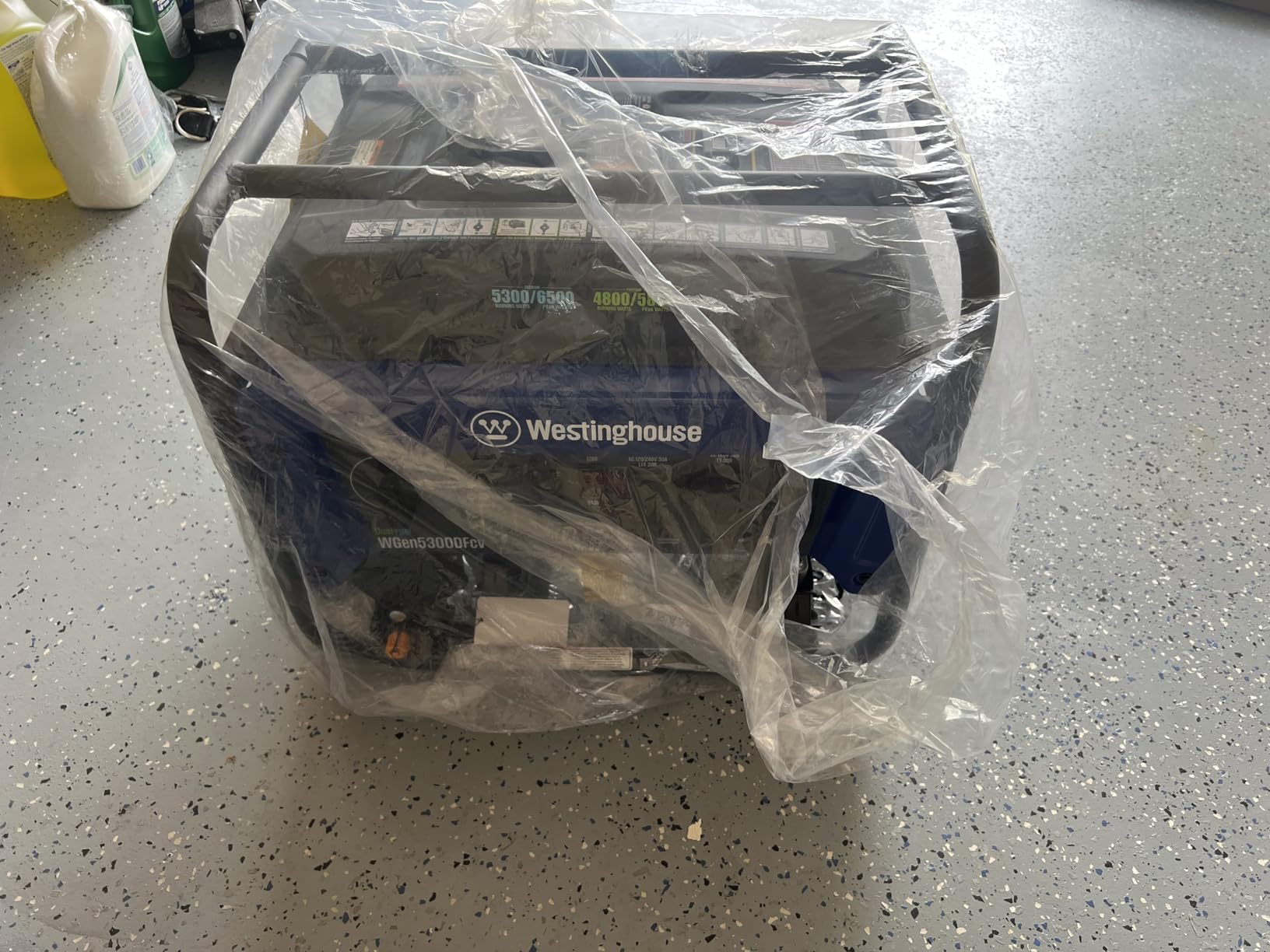
This is the model we send people to when they ask which mid-size machine takes safety features seriously. The 274cc OHV engine with a cast iron sleeve carries both a CO sensor and low oil shutdown, and at 4.5 stars across 997 reviews with 77 percent five-star ratings it is one of the more consistent machines in the group.
Output is 5300 running and 6500 peak watts on gasoline, 4800 running and 5800 peak on propane. The 120/240V volt selector switch means the same panel handles a transfer switch connection or straight household loads without rewiring.
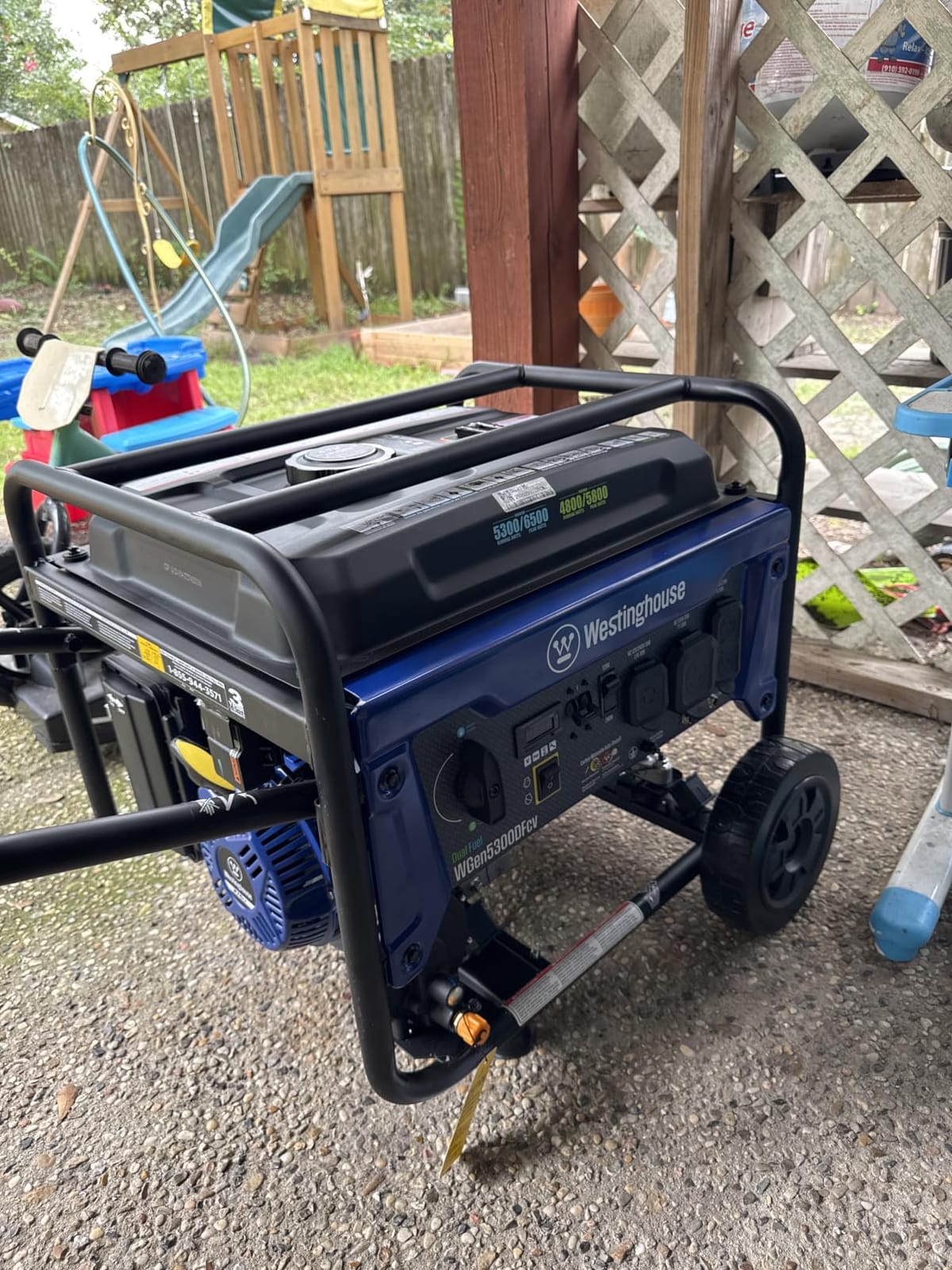
The 4.7 gallon tank with a fuel gauge supports about 14.5 hours of run time, and outlets include a 5-20R duplex, an RV ready TT-30R 30A and a transfer switch ready L14-30R 30A. Both ends of the 30A story in one frame is unusual at this size.
It also arrives genuinely complete: engine oil, funnel, propane hose, tool kit and wheel kit are all in the box. That matters more to a first-time buyer than any spec on the sheet.
Why the CO sensor decides it?
A carbon monoxide sensor with automatic shutdown is a hardware interlock. It kills the engine when exhaust readings climb, which matters in a garage, a basement run or any enclosed porch where a machine that is only 20 feet from an open window can still push exhaust indoors.
Combined with low oil shutdown, this is the model we would put next to a house with a finished basement and a family in it.
The compromise
At 135.6 lb it is heavy for a mid-size unit and the open frame is louder than an enclosed inverter. If the machine will be running at night near the house, the noise is a legitimate reason to step up to the iGen5000DF instead.
On the propane side, dropping from 5300 to 4800 running watts is exactly the derating pattern we describe in the buying guide. Plan propane loads about 10 percent below your gasoline number.
7. Champion 4000-Watt Dual-Fuel RV Ready Inverter – Best for RV Air Conditioners
Champion 4000-Watt Dual Fuel RV Ready Portable Inverter Generator
3000 running / 4000 peak watts
2700 running watts on propane
CO Shield auto shutoff
Pros
- Roughly 52 lb still runs a 12000 BTU RV air conditioner
- Under 3 percent THD clean inverter power
- Up to 25 hours on a propane cylinder
- CO Shield auto shutoff and overload reset
- 3 year warranty with lifetime technical support
Cons
- Louder at 64 dBA than smaller Champion units
- May need a break in run on gasoline first
- Cannot run an air conditioner and a microwave together
The headline claim here is that 52 lb runs a 12000 BTU RV air conditioner, and owners back it up. The 149cc engine delivers 3000 running and 4000 peak watts on gasoline, 2700 running on propane, and 4.6 stars across 686 reviews with 83 percent at five stars makes this the highest-rated sub 60 lb machine in the roundup.
Outlets are a 120V 25A TT-30R RV plug, a 120V 20A GFCI duplex and a 12V automotive outlet. The TT-30R is the one that matters for a camper, and it is wired for exactly that.
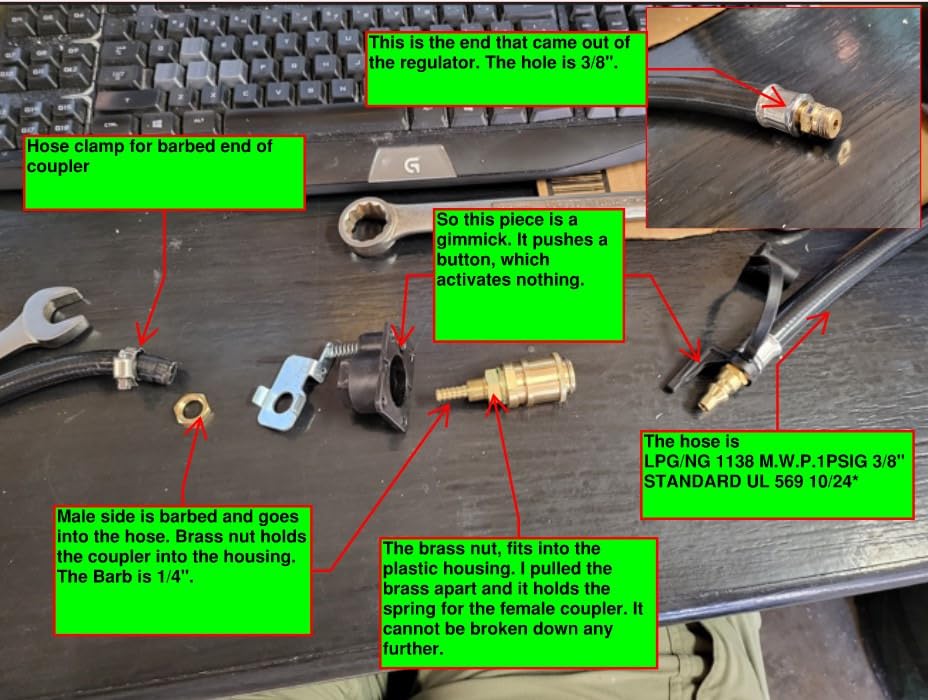
Runtimes split hard by fuel, which is the clearest illustration of why dual fuel exists. About 10 hours on the 1.54 gallon gasoline tank, up to 25 hours on propane. The CO Shield carbon monoxide auto shutoff and an overload reset button both add real protection during long runs.
Owners mention tool-free quarter-turn oil access, which is a small design choice that pays off in a campground with cold hands and no workbench.
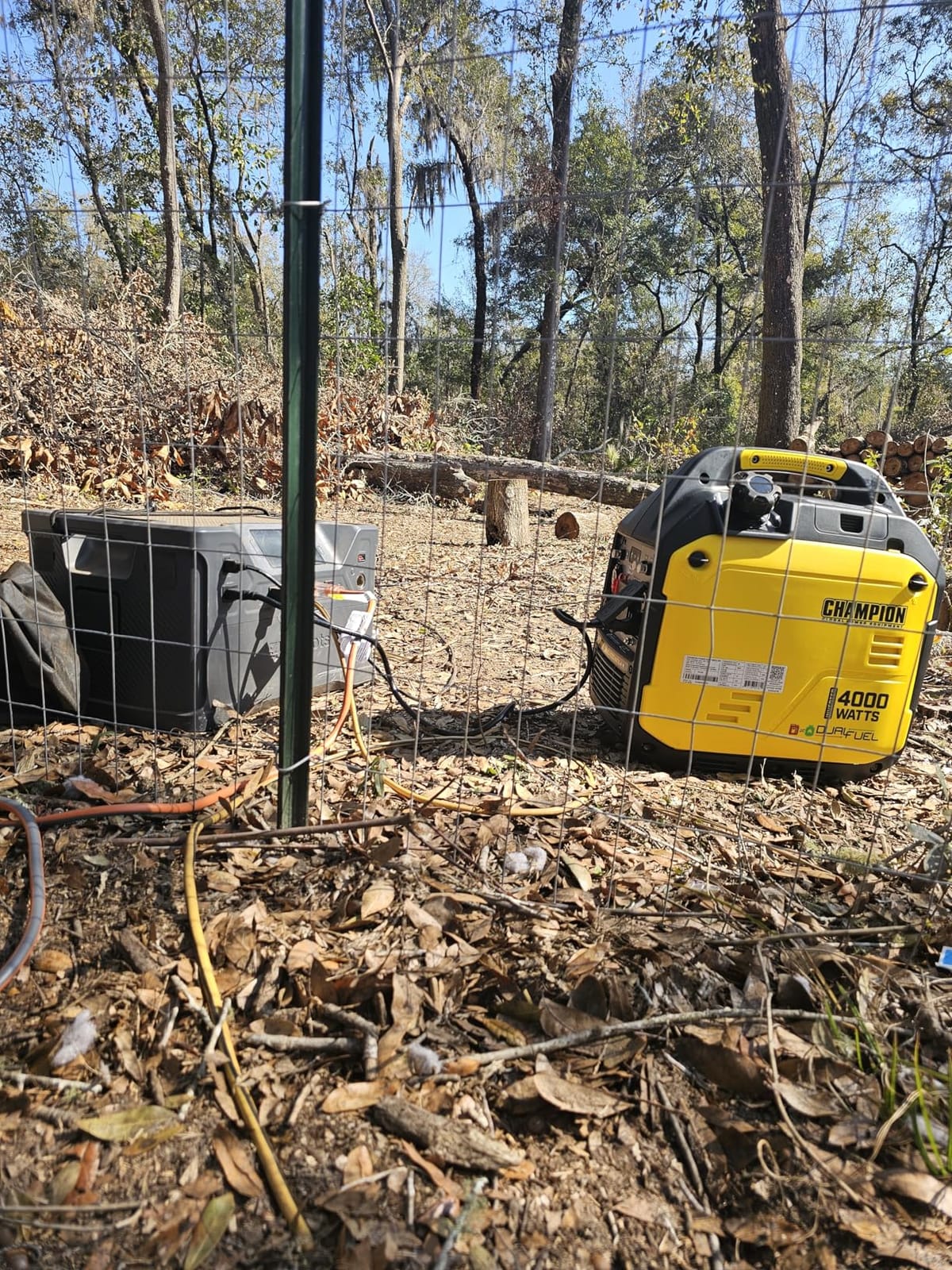
Matching an RV air conditioner
A 12000 BTU RV air compressor typically pulls close to the 3000 running watt ceiling on startup, which is why this unit is rated for it. The practical limit is that it cannot run the air conditioner and a microwave at the same time, and on propane the headroom shrinks by roughly 10 percent.
If your camper runs a 15000 BTU unit, skip to the WEN DF680iX, which has been reported running two of them on propane.
What to watch?
Two recurring issues. It may refuse to run on propane until it has been broken in on gasoline, and the 64 dBA reading is louder than smaller Champion units in the same class. Forum consensus is that most propane start failures are startup procedure, not a broken machine: open the gas valve, confirm the regulator is seated, and close it before you try.
There is also one report of a returned unit resold as new, so inspect the box on arrival.
8. WEN DF360iX – Best Lightweight Dual-Fuel Inverter for Boondocking
WEN Quiet and Lightweight 3600-Watt Dual Fuel RV-Ready Portable Inverter Generator with Fuel Shut Off and CO Watchdog (DF360iX)
2900 rated / 3600 surge on gas
2600 rated watts on propane
WEN Watchdog CO shutdown
Pros
- 49 lb body loads into a car with one hand
- Quiet idle and Eco Mode under 3 percent THD
- Digital data center tracks load and run time
- WEN Watchdog CO sensor and fuel shut off
- Seven outlets including USB and 12V DC
Cons
- 30A RV receptacle is awkwardly placed
- Non standard LPG quick connector
- Loud once a larger load is applied
At 49 lb this is the lightest dual fuel inverter with genuine output, and the 2600 watt rated propane figure handled a coffee maker and a window air conditioner in real owner use. Gasoline numbers are 2900 rated and 3600 surge, propane is 2600 rated and 3500 surge.
The WEN Watchdog CO shutdown sensor and the fuel shut-off that drains the carburetor for storage are the two features that separate it from a toy. Storage drain matters for a machine that lives in a truck bed between trips.
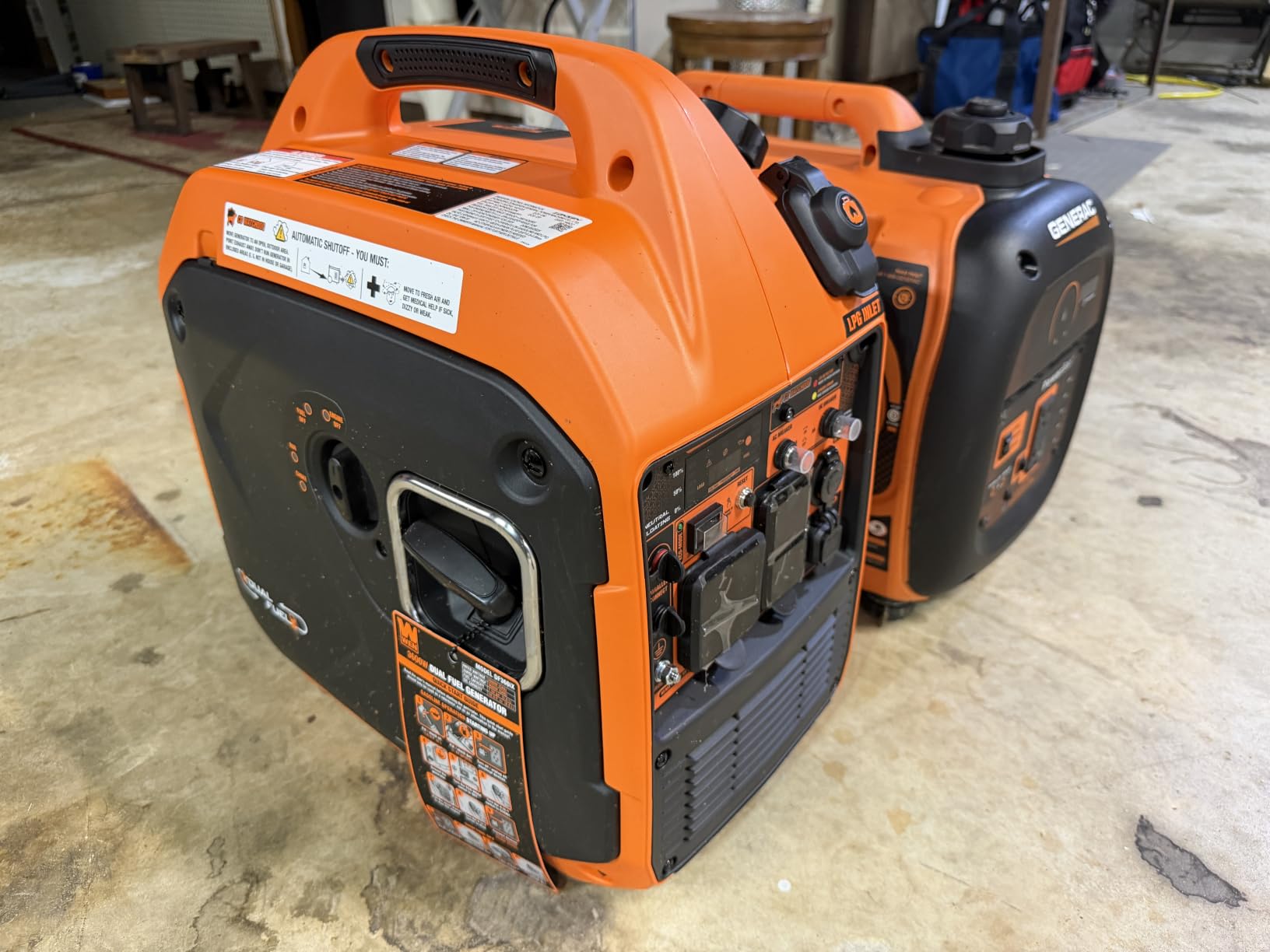
Outlet count is the best in this weight class: two 120V three-prong receptacles, a TT-30R RV receptacle, a 12V DC receptacle and two 5V USB ports. The digital data center tracks fuel gauge, load, voltage and run time, so you know when the last service interval is due.
Owners report 75 percent five-star ratings, praising value, clean power and low weight. Runtime is about 5 hours on the 1.5 gallon tank, which is realistic rather than generous.
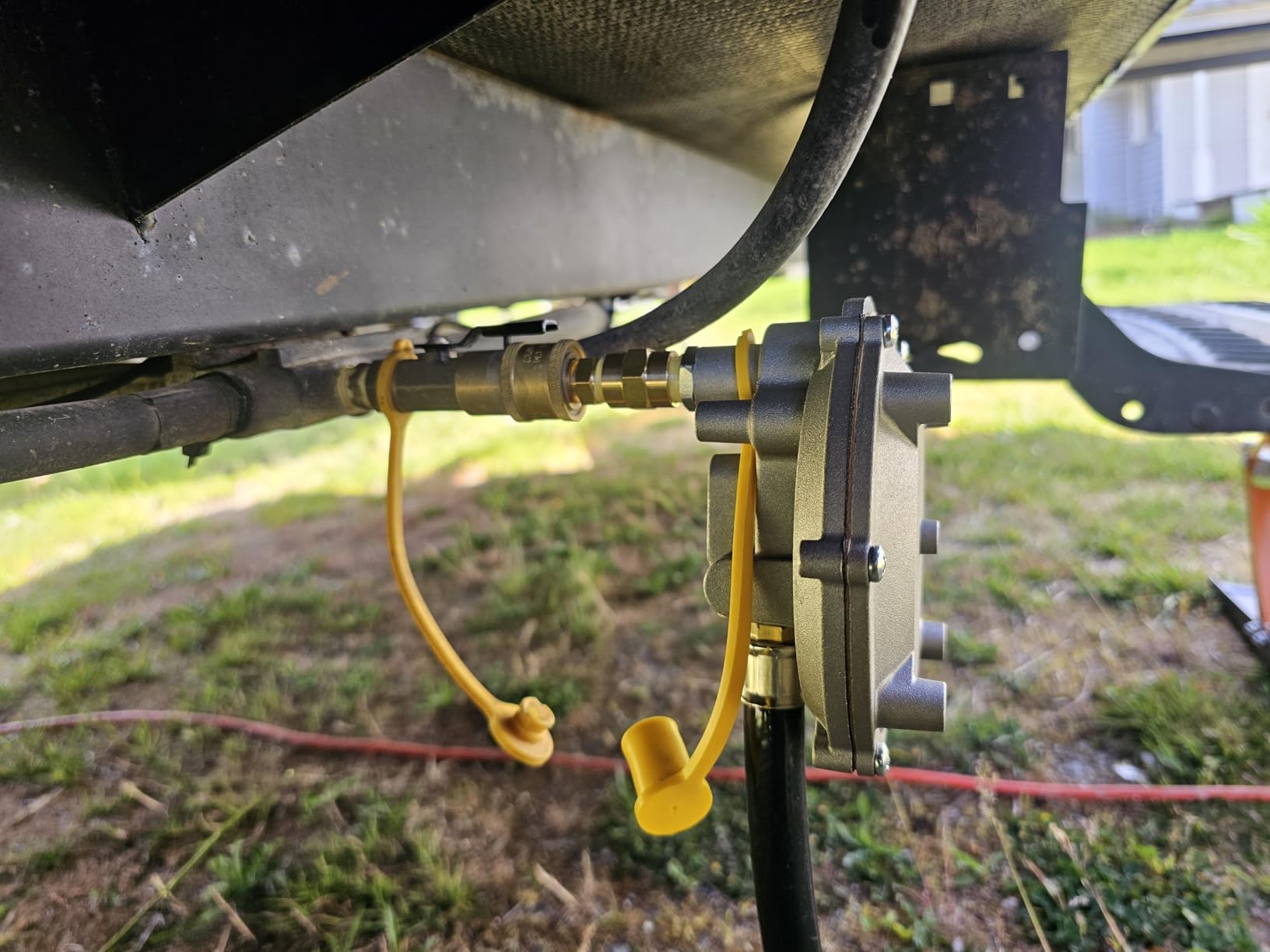
What 2600 watts will and will not run?
A 2600 watt propane load covers a laptop, phone chargers, a fan, a coffee maker and lights. Add a window air conditioner and you are near the ceiling, which is exactly what reviewers report working and where the noise jumps.
For a 15000 BTU RV unit or a 3-ton central air conditioner, this is the wrong class. Step up to the Champion 4000 or the WEN DF680iX.
Two fit and finish problems
The 30A RV receptacle is placed so that plugs cannot fully seat without forcing them, and the LPG quick connector is non-standard, so common quick-connect fittings will not mate with it. Plan to use the supplied connector only.
New units can also be hard to prime and start on the first few pulls, and the 149cc engine gets loud under heavier load because it has to rev up to keep up.
9. WEN DF680iX – Best Dual-Fuel Inverter for RV and EV Charging
WEN 6800-Watt Dual Fuel RV-Ready Electric Start Portable Inverter Generator with Fuel Shut Off and CO Watchdog for Electric Vehicle Backup (DF680iX)
5100 rated / 6800 surge on gas
4500 rated watts on propane
Bonded neutral 240V for EV charging
Pros
- Ran two 15000 BTU RV air conditioners on propane
- About 12 hours on a standard propane bottle
- Bonded neutral 240V supports Level 2 EV charging
- Wheels and telescoping handle at 99.2 lb
- Eight outlets including USB and 12V DC
Cons
- Gets loud under heavy load
- Only two 120V household receptacles
- A few owners report a no spark failure mode
This is the most capable machine under 100 lb we found, and the only one here with a bonded-neutral 240V output, which is the configuration a Level 2 EV charger needs. Gasoline output is 5100 rated and 6800 surge watts, propane 4500 rated and 6000 surge.
Owner reports include running two 15000 BTU RV air conditioners plus lights entirely on propane, and about 12 hours on a standard propane bottle. Owners running 40 lb cylinders report 28 to 30 hours, which is the kind of number that changes how you plan an outage.
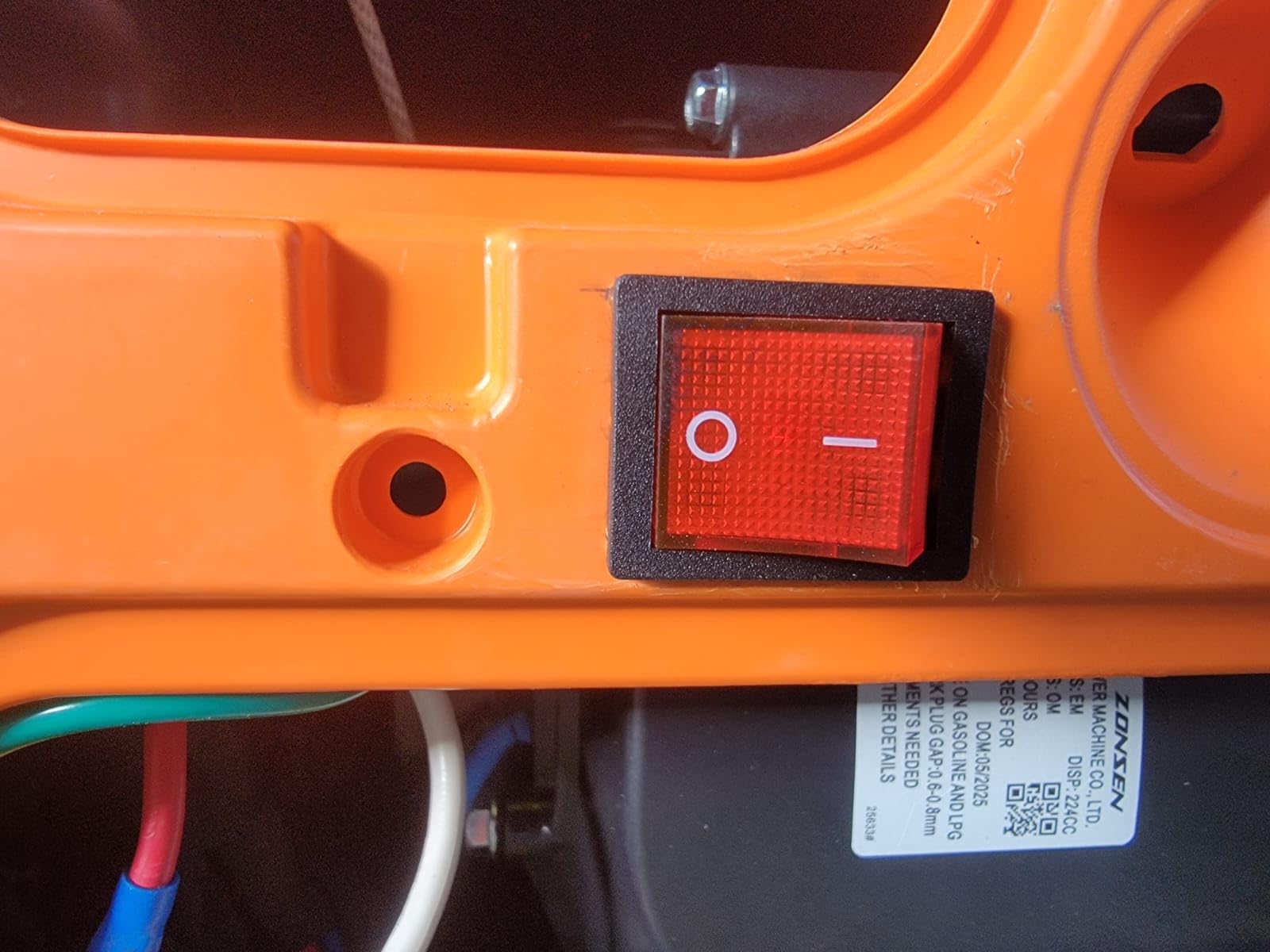
The outlet panel is the widest here: an L14-30R 120/240V receptacle, two 120V three-prong outlets, a TT-30R RV receptacle, a 12V DC outlet and two 5V USB ports. Eight outlets total, with a voltage selector switch to manage the 240V leg.
Wheels and a telescoping pull handle are onboard, which is why a 99.2 lb inverter is still manageable in a garage. WEN Watchdog CO shutdown and fuel shut-off round out the safety hardware.
EV charging and the bonded neutral
A Level 2 charger draws 30 amps or more at 240V and will not start on a normal household circuit without a bonded neutral and a correctly sized breaker. That single feature puts the DF680iX in a category of its own among the machines in this roundup.
Verify your vehicle and charger are compatible before buying, and confirm the neutral bond is correct in the outlet wiring. A 5100 watt rated output comfortably covers a 7 kW charger at about 7 amps per kilowatt.
Weak points
It gets loud under heavy load, and only two household receptacles means you need the RV and twist lock plugs for extra capacity. A small number of owners also report a no-spark failure mode and slow manufacturer support response, which is worth weighing against a 3 year warranty.
Bottom stabilizers can catch on lined storage compartments, so measure before you commit to a pass-through bay.
10. DuroStar DS13000MX – Best 13,000-Watt Dual-Fuel Generator With Remote Start
DuroStar DS13000MX 13,000-Watt 500cc Dual Fuel Portable Generator – Gas and Propane, Remote Electric Start, Whole Home Power Backup, Transfer Switch Ready, RV & Emergency Ready
10500 running / 13000 peak watts
8.3 gal tank, 17 hour runtime
CO Alert shutdown
Pros
- 13000 peak watts for home
- job site or RV backup
- 8.3 gallon tank gives the longest runtime in the 13000 watt class
- Remote control plus push button electric start
- CO Alert carbon monoxide shutdown
- Transfer switch ready 50 amp outlet
Cons
- 220 lb is among the heaviest here
- Open frame runs loud compared with inverter models
- Around 10 percent of reviews are one star
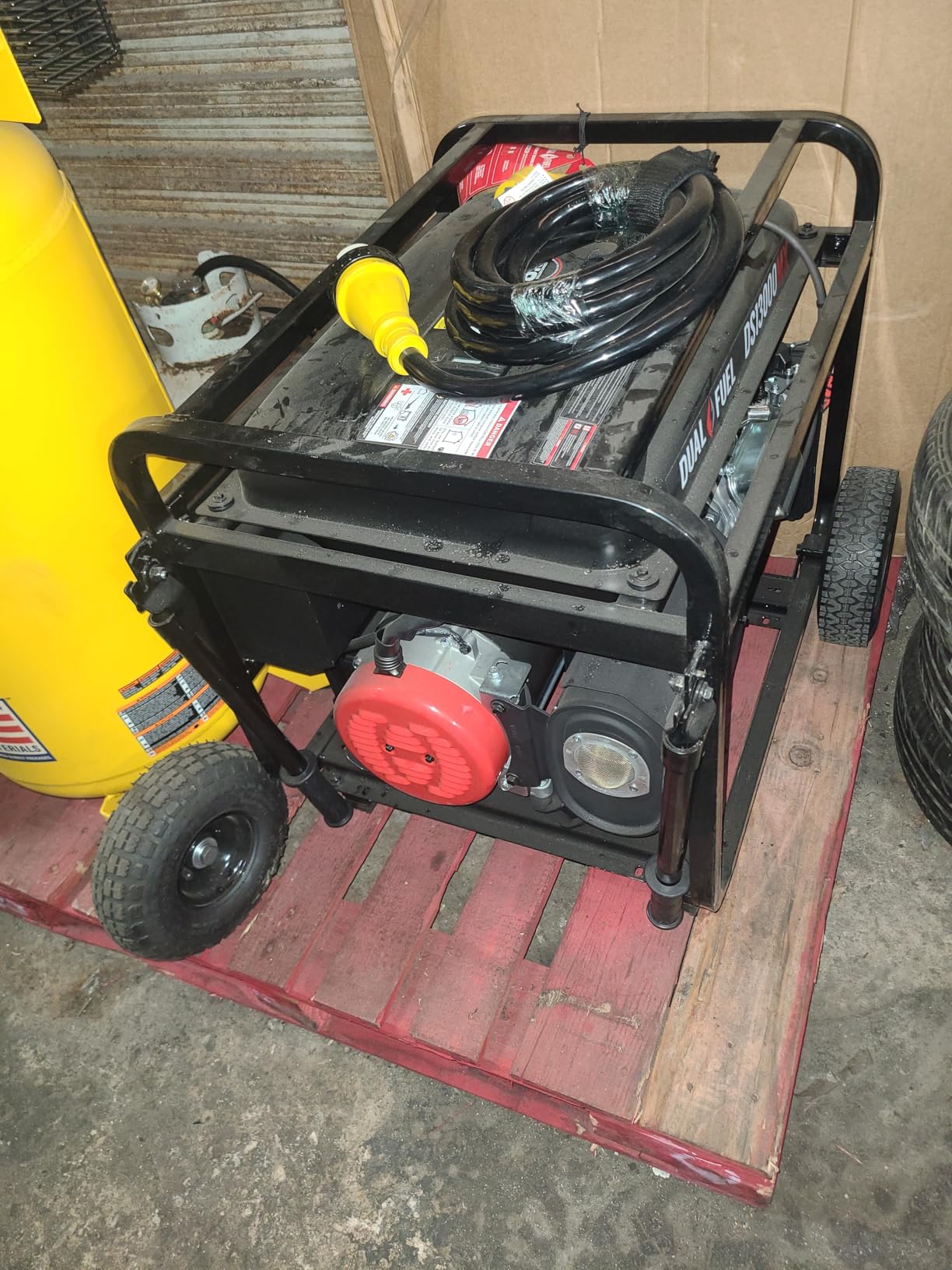
The DS13000MX shares its output class with the DuroMax XP13000EH but takes a different approach to tank size and controls. The 8.3 gallon tank delivers up to 17 hours of run time, the longest claimed figure in the 13000 watt class, and a 500cc engine covers a home, a job site or a travel trailer.
The included remote control is the distinguishing feature. A full key fob plus push-button electric start means you can fire the machine up from inside while it sits on the pad outside, which is a meaningful convenience during a long outage.
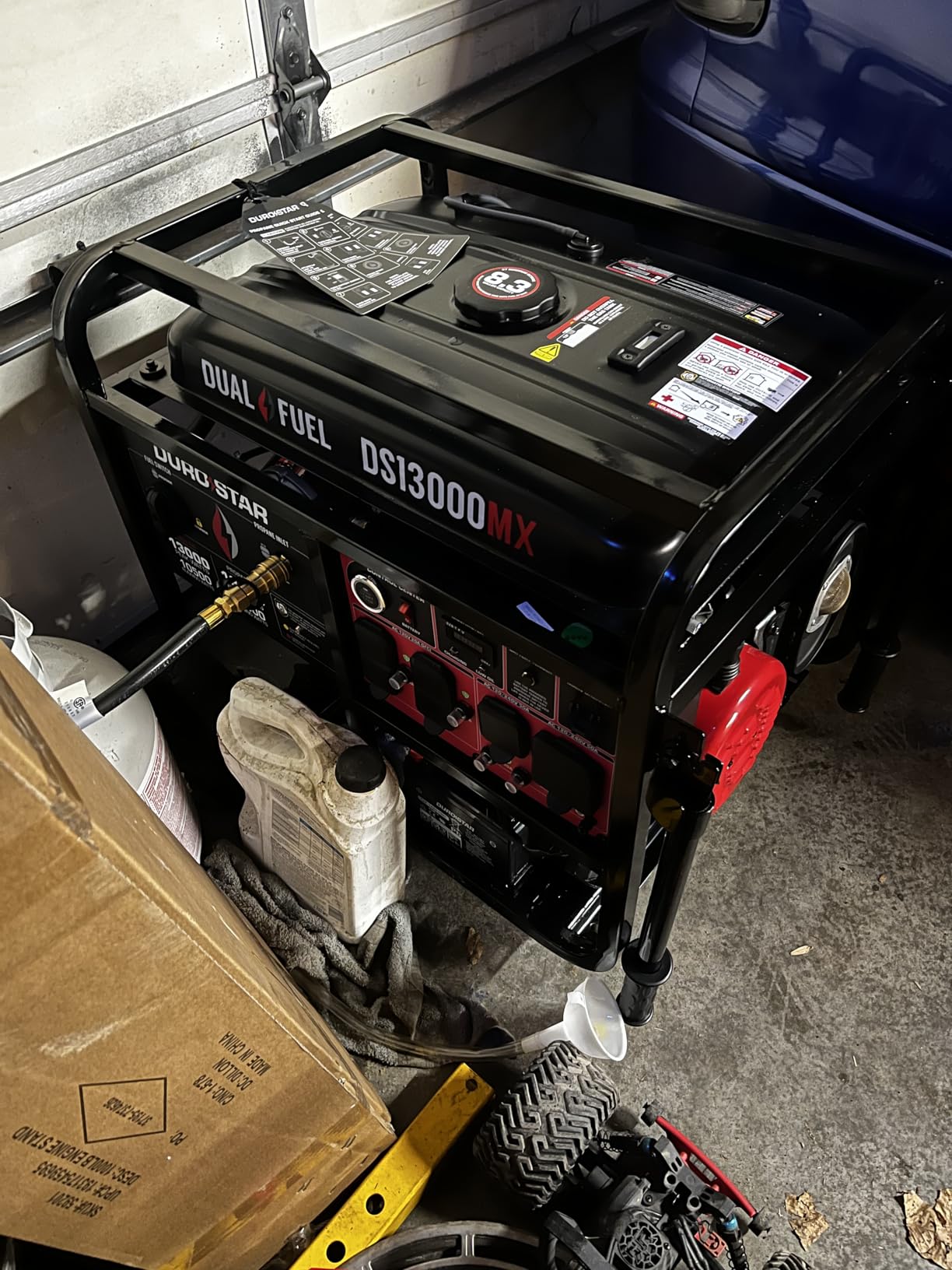
CO Alert provides automatic carbon monoxide shutdown, and the transfer switch ready 50 amp outlet handles a subpanel feed. The reinforced all-steel frame and power panel are built for a unit that lives outside rather than in a closet.
Outlets total five, and the box includes the oil funnel, spark plug wrench, tool set, wheel and handle kit, propane regulator and remote control.
Runtime as the deciding factor
A 17 hour claim on a single tank is the difference between running the generator overnight and running it overnight plus a full day without a fuel run. For a home with a refrigerator, a freezer and a gas furnace, that is a meaningful reduction in how often you handle fuel.
Set your expectation on propane, though. The gasoline tank does the runtime work here, and cylinder capacity is what limits propane hours.
Read the one-star reviews
About 10 percent of reviews are one star, the highest share of one-star ratings in this roundup, and they point to some early unit failures. That is the honest counterweight to the wattage and runtime numbers.
At 220 lb this is also near the top of the weight range. Combined with an open frame that is loud next to a house, it suits a garage or a yard away from sleeping quarters.
11. Pulsar PG5250B – Best Dual-Fuel Generator for Switch-While-Running Fuel Changes
Pulsar 5,250W Dual Fuel Portable Generator with Switch and Go Technology, PG5250B
4250 rated / 5250 peak on gas
3850 rated watts on LPG
Switch and Go fuel transition
Pros
- Switch and Go changes fuel without stopping the engine
- 4 gallon tank runs about 12 hours at half load
- 30A RV port and 120/240V twist lock outlet
- Fold down handle with never flat wheels
- 3 in 1 digital meter and low oil shutdown
Cons
- Loud compared with inverter machines
- Only a 1 year limited warranty
- Some report a dead electric start battery
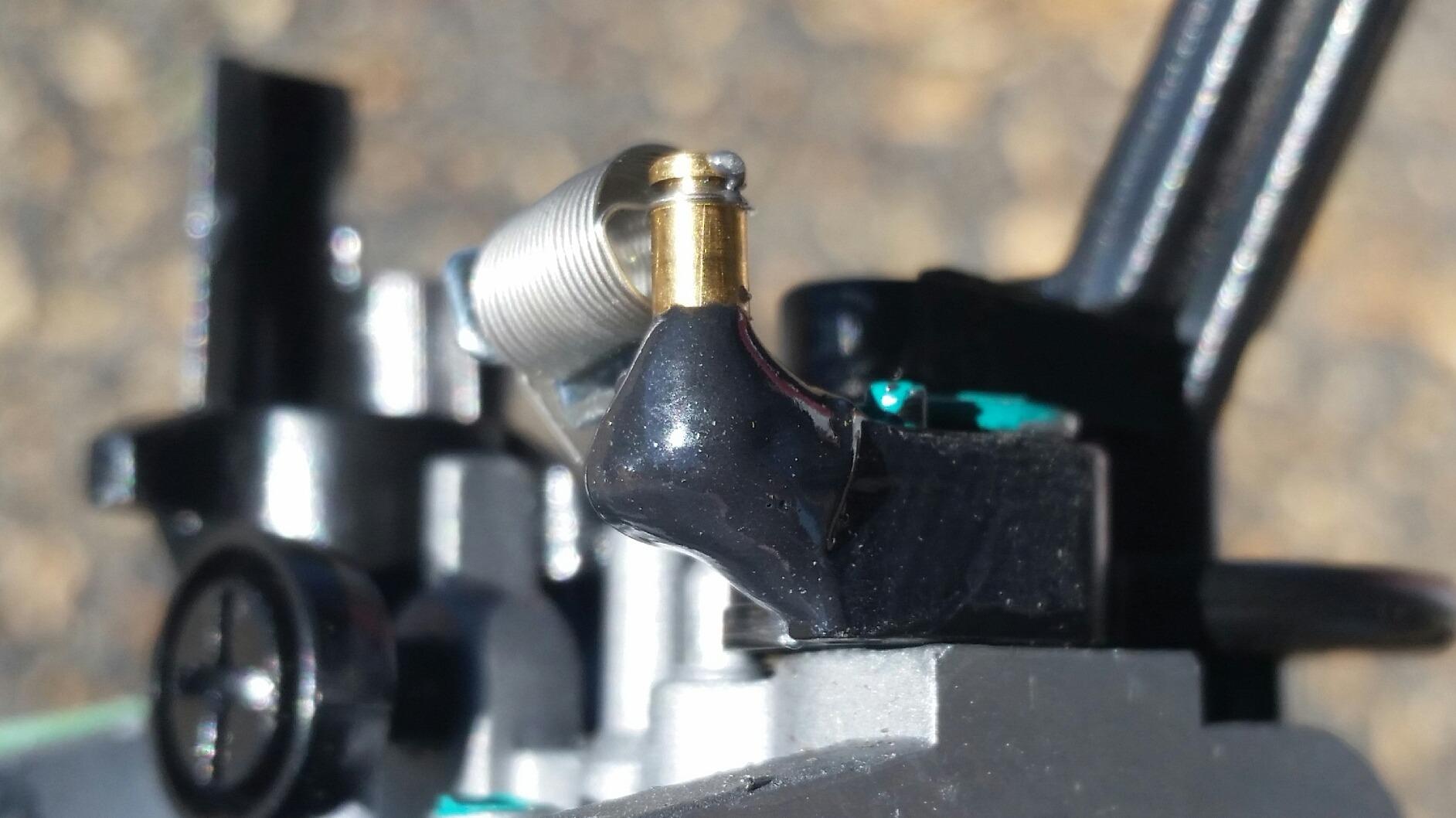
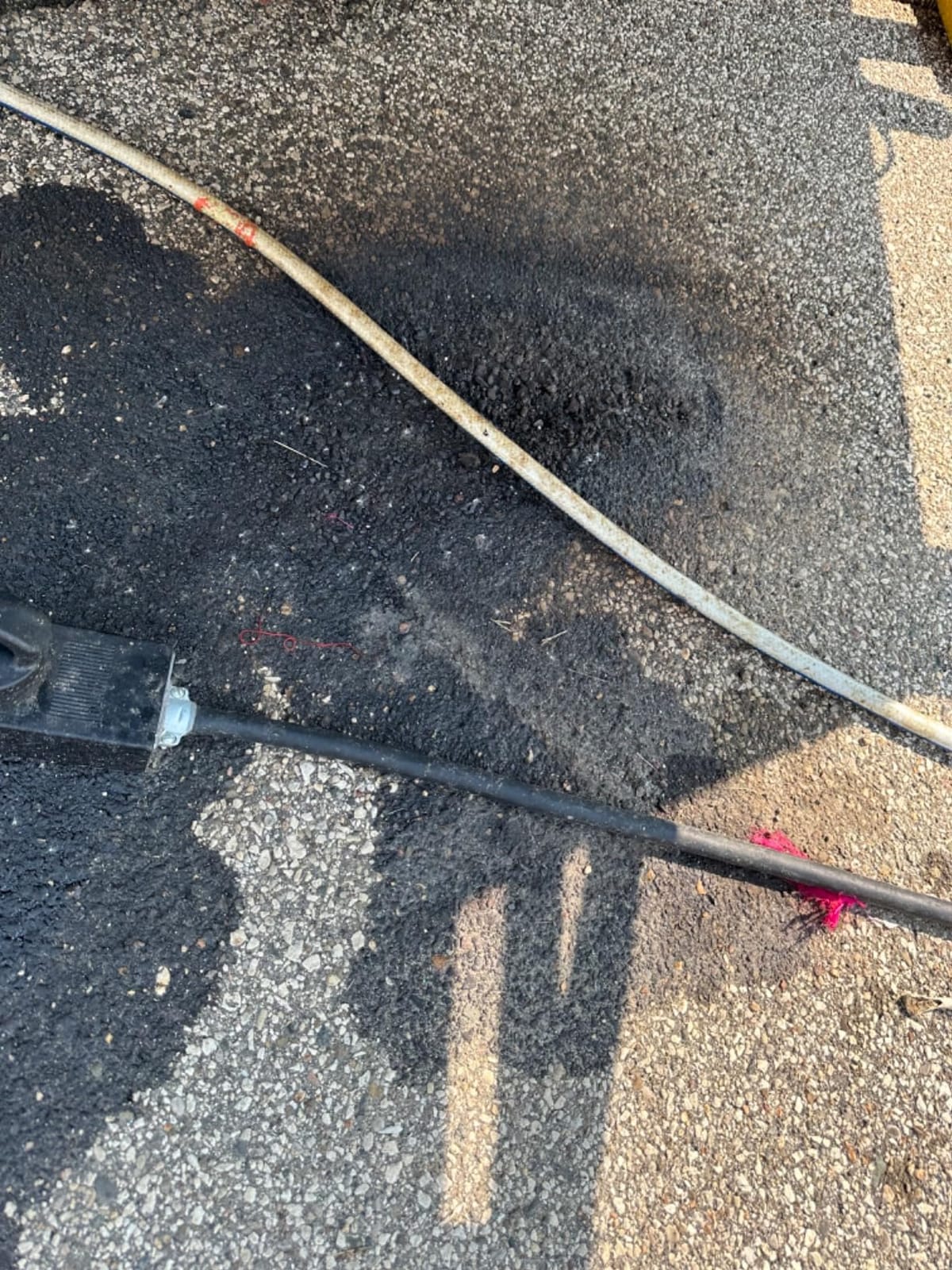
Switch and Go is the feature that defines this machine. A fuel selector valve lets you move from gasoline to propane and back without shutting the engine down, so a load that is running does not blink when you change fuel. Almost every other dual fuel generator in this list requires a stop and restart.
Output is 4250 rated and 5250 peak watts on gasoline, 3850 rated and 4750 peak on LPG, from a 224cc four-stroke OHV engine in a powder coated steel frame. The 4 gallon tank covers about 12 hours at half load.
One owner ran a camper air conditioner, refrigerator and medical equipment on straight propane for years, and that is the scenario this model is built for. Outlets include two 120V AC outlets, a 30A RV port and a 120/240V twist lock.
The 3-in-1 digital meter with a low oil indicator and low oil shutdown gives you a quick read on load, fuel and runtime before you leave for the hardware store.
Why hot-swapping fuel matters?
During a multi-day outage the practical failure is running out of gasoline while appliances are live. Switch and Go lets you transfer the load to propane mid-run, then back to gasoline once you have refilled, with no restart delay for the fridge or a medical device.
That is also the reason to keep a second propane cylinder on standby rather than relying on the tank alone.
The warranty gap
At 115 lb with an open frame, this machine is loud next to an enclosed inverter of similar output. More importantly it carries only a 1 year limited warranty, the shortest in this roundup, and owner support responsiveness is reported as poor by some buyers.
For a machine you expect to own for a decade, that warranty length is a legitimate reason to pick the Westinghouse WGen5300DFcv or the Champion 4250 instead.
12. Champion 4250-Watt Dual-Fuel Open Frame Inverter – Best for Long Runtime
Champion 4250-Watt Dual Fuel Portable Open Frame Inverter Generator, CARB
3500 running / 4250 peak watts
64 dBA, up to 22 hour runtime
RV ready 30A outlet
Pros
- Up to 22 hours on a 4 gallon gasoline tank
- 50 percent quieter than the older 3500W Champion
- 79 lb frame is 20 percent lighter than the older model
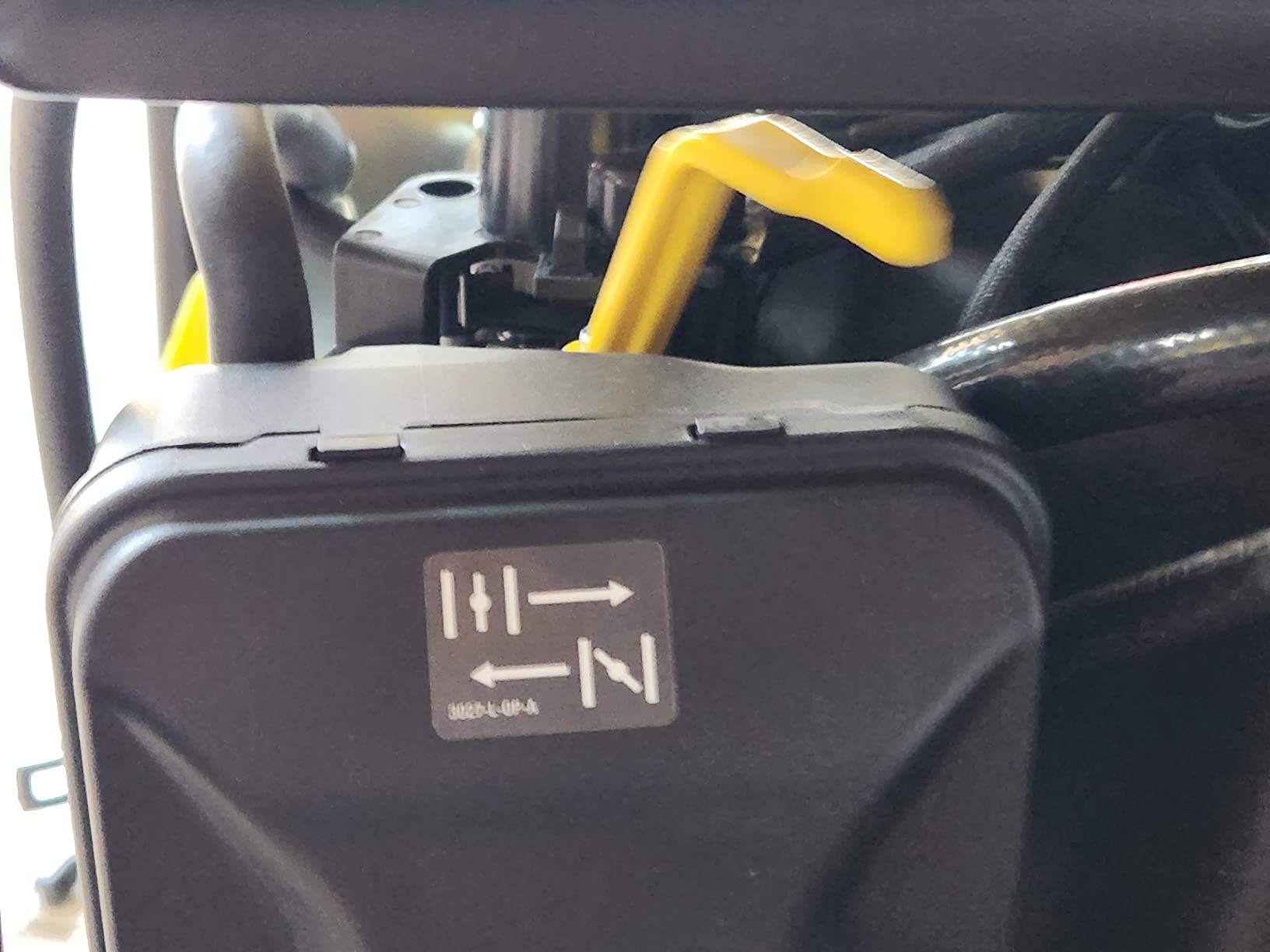
- Dual fuel operation with a simple fuel selector
- RV ready 30A outlet plus 120V and 12V DC
Cons
- Open frame is louder than fully enclosed inverters
- Parallel operation needs a ParaLINK kit
The longest run time of any gasoline machine in this roundup is 22 hours, and it comes from the 4 gallon tank combined with economy mode throttling the 224cc engine down at light load. Output is 3500 running and 4250 peak watts, with dual fuel operation from a simple fuel selector.
Champion redesigned this as a digital hybrid and claims it is 50 percent quieter and 20 percent lighter than the older 3500 watt generator it replaces. At 79 lb it is the second lightest open-frame dual fuel machine we list, and 4.5 stars across 552 reviews with 76 percent five stars backs the redesign up.
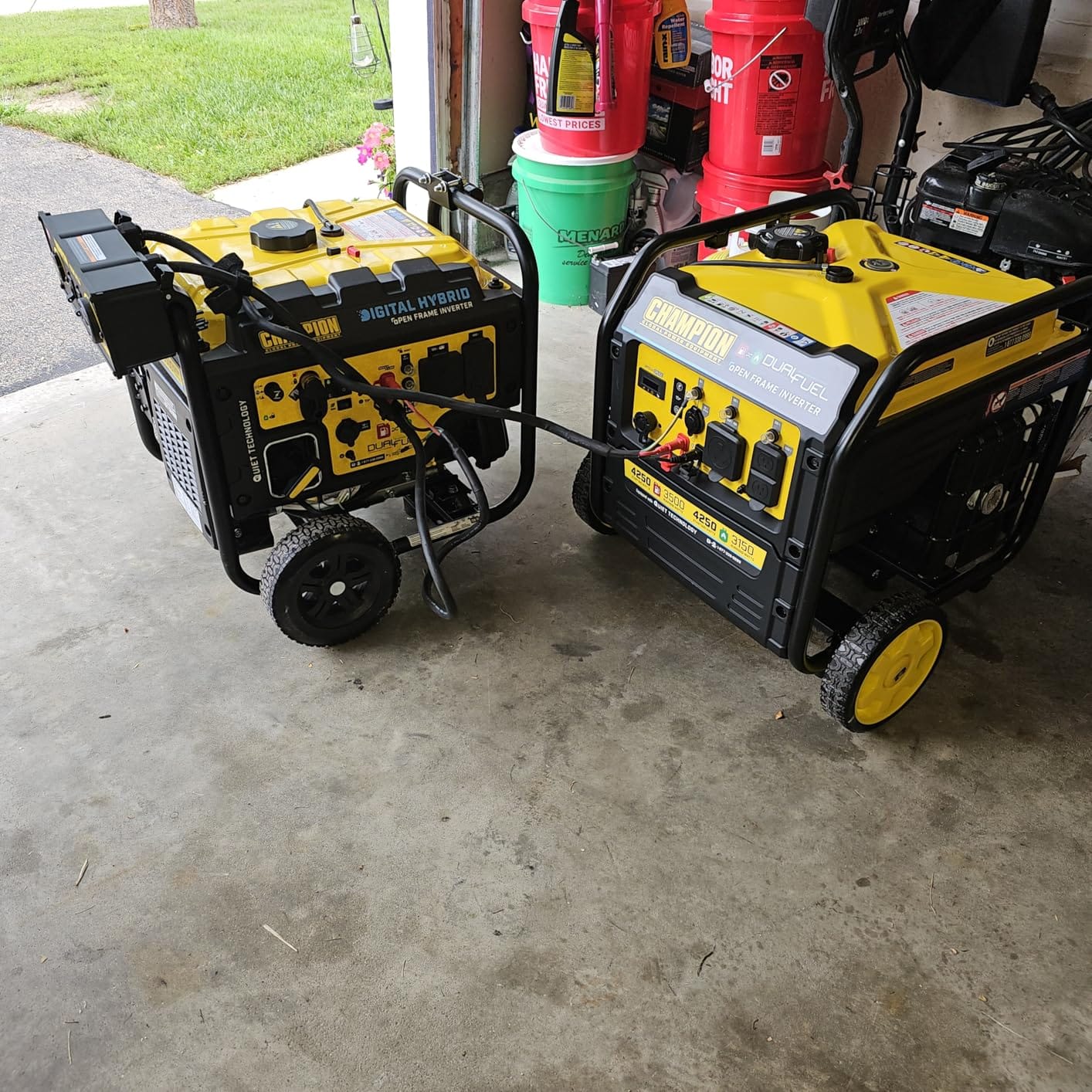
Outlets are a 120V 30A RV outlet, two 120V 20A household outlets and a 12V DC outlet with a dual USB adapter. Oil, funnel, propane hose and USB adapter all ship in the box, and the 3 year warranty carries lifetime technical support.
It is parallel ready through an optional ParaLINK kit, so two of these can be linked for a larger load if your installation supports it.
When 22 hours matters?
For a fridge, a freezer, internet equipment and medical devices, 22 hours means a full night and most of the next day without anyone walking out to a gas can. That is a genuinely different ownership experience from a 4 gallon tank on a machine without economy mode.
The trade is that this is an open frame unit rated at 64 dBA, so it wants a garage, a shop or a yard rather than a bedside during a camping trip.
What the low weight gets you?
At 79 lb a single adult can load it into a pickup without help, and the 27.9 by 23.4 by 21.7 inch frame fits most storage shelves once the tank is drained.
Parallel operation needs the extra ParaLINK kit, so budget for it if you plan to run two units rather than one. A 3 year warranty with lifetime technical support partly offsets the lighter feature set.
How to Choose a Dual-Fuel Generator?
Size it from your running watts, not peak watts
List every appliance you plan to run and add up the running watts on each nameplate. Then add 25 percent headroom and treat peak watts as the number that decides whether a compressor or a pump can start at all. A 1 hp well pump draws around 8 amps running but 16 or more on start, and that gap is where undersized machines trip their breakers.
Size propane loads about 10 percent below your gasoline number. The Westinghouse WGen9500DF drops from 9500 to 8500 running watts, the WEN DF360iX from 2900 to 2600 rated watts, and the pattern holds across every dual fuel engine made.
Gas or propane: decide which fuel does the work
Propane stores indefinitely, burns cleaner and costs less per hour of output, but you give up roughly 10 percent of power and need a refillable cylinder on hand. Gasoline gives full output and a big tank you rarely refill, but it degrades in months and gums the carburetor.
Most owners in outage threads run propane for the bulk of a long event and keep gasoline as the top-up. That is the behaviour dual fuel hardware is designed to enable, and it is why the machines with the largest tanks, like the DuroStar DS13000MX, pair well with cylinders.
Noise decides where the machine can live
Under 60 dBA lets you run a generator in a campsite or near a house without fighting your neighbours. 64 dBA is acceptable in a garage or a yard but not beside an open bedroom window. Open-frame machines sit at the loud end by design, and no amount of tuning changes that.
Tank size and runtime
Runtime claims are measured at half load or 25 percent load, so treat them as a ceiling. A 4 gallon tank on the Champion 4250 yields 22 hours at half load, while a 1.3 gallon tank on the PowerSmart gives 8 hours at 25 percent load. Match the tank to how long you expect to be without power, not to how often you want to visit a gas station.
Start method and CO protection
Electric start with a key fob is standard on the larger machines here, and recoil start is the fallback that keeps a dead battery from ending your outage. A CO sensor with automatic shutdown appears on the Westinghouse WGen5300DFcv, the DuroStar, the Champion 4000 and the WEN Watchdog models, and we consider it close to mandatory for a unit running near a home.
Transfer switch readiness and 240V
If you intend to wire a transfer switch, match the outlet before you buy: an L14-30R handles a 30A circuit, a TT-30R is the RV standard, and a 50A outlet feeds a subpanel. The WEN DF475T switches voltage to 240V on the same panel, and the WEN DF680iX offers a bonded neutral for Level 2 EV charging.
Also confirm the machine is parallel ready and whether the kit is included, because a second unit plus a parallel kit is often cheaper than a single larger generator.
Warranty and service
Warranty length shows up in forum threads as a genuine deal breaker. Westinghouse and Champion use 3 year coverage, WEN uses 3 years on the inverter models, and the Pulsar PG5250B carries only 1 year. For a machine that may sit unused for a season, longer coverage is worth more than a small wattage increase.
Before buying, search your area for a service center. Several brands in this category share manufacturing, and parts availability differs even when the badge does not.
If the outage planning is going further than a generator, our solar generator picks for off-grid living cover the battery-first approach, and if you are cooling a room rather than powering a whole house, our dual-hose portable air conditioner guide handles the load on the other side of the outlet.
Generator Safety Rules Worth Memorizing
Never run a generator indoors, in a garage, in a basement, in a shed or under a porch, even with the door wide open. Carbon monoxide is colourless and odourless, and a running engine in a small enclosed space can raise the level to dangerous concentrations in minutes.
Place the unit outdoors at least 20 feet from your house, away from doors, windows and vents, and point the exhaust away from the building. Exhaust on a calm day will still travel further than you expect, which is why distance matters more than direction.
Install a working carbon monoxide alarm on every level of the home, and inside sleeping areas. A CO sensor on the generator, such as the CO Alert on the DuroStar or the Watchdog system on WEN models, is a second layer rather than a replacement for the alarm in your ceiling.
Store gasoline in an approved container with a proper cap, in a shed that is not attached to the house, and away from ignition sources. Propane cylinders get the same treatment: upright, outdoors or in a ventilated storage area, with the valve closed when not in use.
Before storage, run the engine to drain the carburetor or use the fuel shut-off valve where the machine has one, and add fuel stabilizer to anything left in the tank. That is the problem dual fuel solves, and using a dual fuel machine as a gasoline-only unit throws away the reason you bought it.
Frequently Asked Questions
What is the most reliable generator brand?
Reliability in this category tracks engine design and warranty length more than the badge. Westinghouse and Champion both use 3 year coverage and engines with cast iron sleeves, and the Westinghouse WGen9500DF carries the deepest owner record in our roundup at 8911 reviews. Value-tier brands tend to use shorter warranties, so check coverage before choosing.
Is a dual fuel generator a good idea?
For most homeowners it is, because gasoline degrades in a few months while propane stores indefinitely. A dual fuel generator lets you use gasoline for maximum output and switch to propane when the gas goes bad or runs low, so the machine is still ready months later. The tradeoff is a higher purchase cost and about 10 percent less output on propane.
Is it cheaper to run a dual fuel generator on gas or propane?
Propane is cheaper per hour of output and burns cleaner, and a 20 lb cylinder delivers far more total runtime than most small gasoline tanks. Gasoline still wins on raw power, since propane costs roughly 10 percent of the output. The common approach is propane for the bulk of a long outage and gasoline as a top-up.
What is the disadvantage of a dual fuel generator?
Three things stand out. Output drops about 10 percent on propane, so you must size propane loads below the headline gasoline number. You have to store and handle two fuel types, and cylinders need refilling. A few models also require a break-in run on gasoline before they will fire on propane.
Are propane generators safer than gasoline models?
Propane burns cleaner and leaves less carbon residue in the oil, but a propane generator still produces carbon monoxide and is just as deadly indoors. Safety comes from outdoor placement at least 20 feet from the house, a working CO alarm on every level, and a generator with a CO sensor and automatic shutdown.
The Best Dual-Fuel Generator Verdict
The Westinghouse WGen9500DF is our pick for the best dual fuel generator in 2026. It combines 9500 running watts with the widest outlet panel in the roundup, a 3 year warranty, a cast iron sleeve engine and 8911 reviews averaging 4.7 stars. The key fob remote start with a recoil backup covers both convenience and the failure mode owners worry about most.
Match it to your situation instead. For quiet inverter power and sensitive electronics, the Westinghouse iGen5000DF runs at 52 dBA under 3 percent harmonic distortion. For a 240V well pump on a budget, the WEN DF475T switches voltage on the same panel. For 13000 watt whole-home loads, the DuroMax XP13000EH brings copper windings and a 50 amp outlet.
Whatever you choose, remember the 10 percent propane derating, the 20 foot outdoor rule, and the fact that a machine which cannot start is worth nothing in an outage. Run the unit under load for twenty minutes before the next storm season, and you will have a working generator on the worst night of the year.