
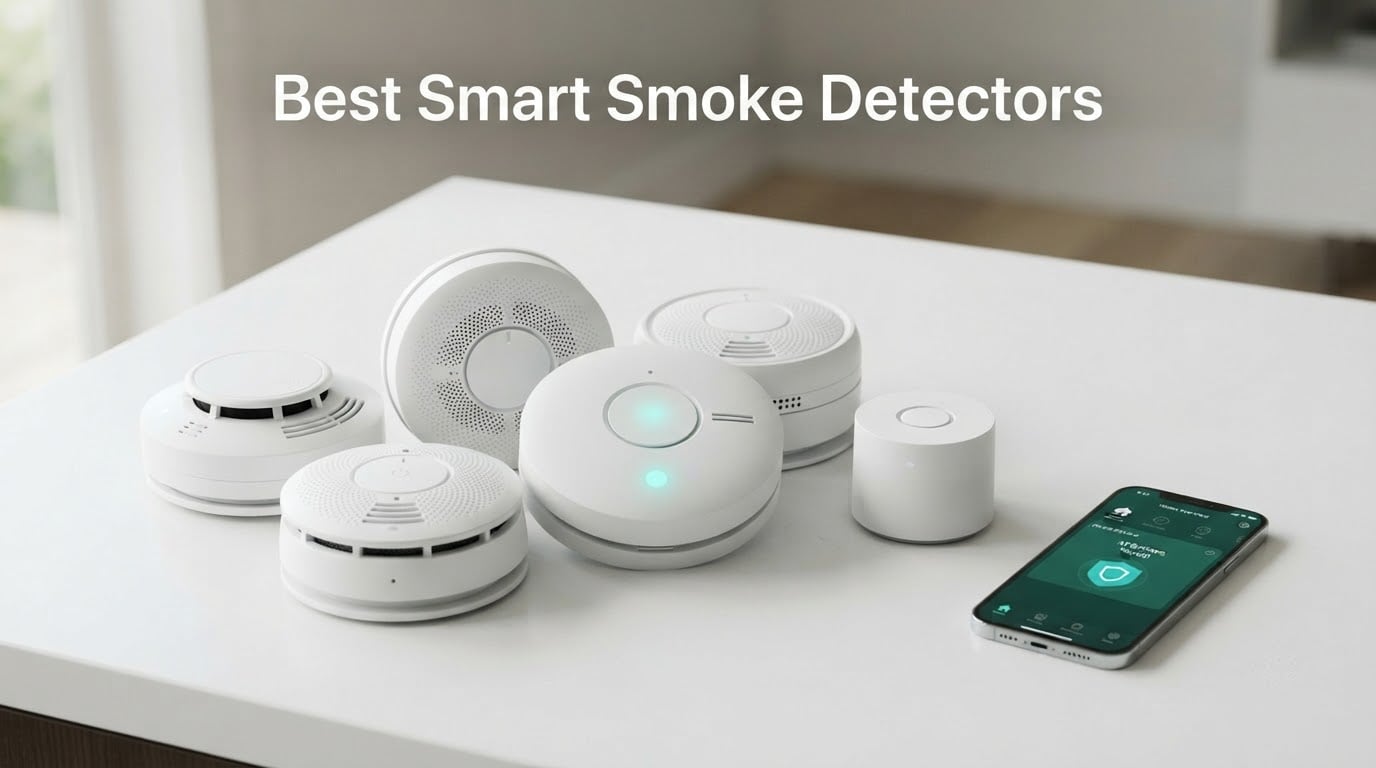
If you are still shopping from a list written three or four years ago, that list is probably recommending a product that no longer exists. The best smart smoke detectors in 2026 are a genuinely different lineup from the one most comparison pages still show, and the reason is Google. When the Nest Protect stopped being sold, the single most-cited smart alarm in the country left a hole that the category is still filling.
What follows is a full roundup of the connected smoke and carbon monoxide alarms currently worth buying, checked against manufacturer documentation and a large body of long-term owner reviews rather than spec sheets alone. We focus on the things that decide the purchase: whether the alarm reaches your phone, whether it still sounds when the internet drops, whether it fits the ecosystem you already run, and whether the whole thing interlocks when one alarm goes off.
We also cover what actually replaced the Nest Protect, where to physically install each type of alarm, and how many alarms your home really needs. All six picks below are genuine connected or interconnected smart detectors. Two of them are the closest things to a straight Nest Protect swap, and one of those is not as good as the reviews suggest.
A note on how we picked: every product here was verified against the manufacturer’s own documentation for connectivity, certification and power requirements, then cross-read against owner reviews that run past the first month. In a life-safety category, a 4.0 rating built on 500 reviews tells you more than a 4.8 built on 30, so we weight volume heavily. We updated this guide in October 2026.
Table of Contents
What Replaced the Google Nest Protect?
The Nest Protect is no longer sold, and no single product takes its place one-for-one. The three realistic migration paths are the First Alert SC5 for Google Home households, the Kidde alarms with Ring for Alexa and Ring households, and the Heiman Matter over Thread models for anyone who would rather not be locked into one vendor’s app.
If you already have Nest Protect alarms installed, you do not need to replace them today. The consensus on r/Nest is that existing units are supported until the end of their hardware life and simply stop receiving new features. They remain smoke alarms first, and they will keep detecting smoke and sounding locally. What you lose is new functionality, not safety.
You can also replace them one at a time rather than all at once. Several owners on r/homeowners who made the switch ended up on Kidde smart smoke and smoke-and-CO alarms that integrate with Ring, and Home Assistant community users report high satisfaction with First Alert hardware, citing excellent battery life. Neither camp is wrong; it depends on which app you want to live in.
Top 3 Best Smart Smoke Detectors (October 2026)
These are the three that cover the most homes well. The Kidde with Ring is the default answer, the eufy E10 is the cleanest install, and the Heiman 3-pack is the one to buy when you need coverage rather than an app.

Kidde Smart Smoke and CO…
- Smoke and CO in one alarm
- Real-time Ring app alerts with no subscription
- Wireless interconnect
- 2-AA batteries
- no wiring

eufy Security Smoke Alarm E10
- UL 217 10th edition compliant
- 70 mm compact body
- 5-year sealed lithium battery
- 656 ft link to HomeBase

Heiman Photoelectric Smoke…
- Wireless interconnect up to 656 ft
- Dual-beam photoelectric sensing
- UL 217 10th Edition certified
- 85 dB buzzer
- three alarms included
All Six Picks at a Glance (2026)
Every alarm below is listed with the deciding feature rather than a full spec dump, so you can see quickly which ones reach your phone and which ones only talk to each other.
| Product | Specs | Action |
|---|---|---|
| Kidde Smart Smoke and CO with Ring |
|
Check Latest Price |
| eufy Security Smoke Alarm E10 |
|
Check Latest Price |
| Heiman Interconnected Photoelectric Smoke Alarm 3-Pack |
|
Check Latest Price |
 Heiman Matter over Thread Smoke Alarm S1-TM Heiman Matter over Thread Smoke Alarm S1-TM |
|
Check Latest Price |
 Kidde Smart Smoke and Indoor Air Quality Monitor Kidde Smart Smoke and Indoor Air Quality Monitor |
|
Check Latest Price |
 First Alert SC5 Battery Smart Smoke and CO Alarm First Alert SC5 Battery Smart Smoke and CO Alarm |
|
Check Latest Price |
1. Kidde Smart Smoke and CO Detector with Ring – Best Overall
Kidde Smart Smoke & CO Detector with Ring, AA Battery, RGCUDR-RW
Smoke and CO detection
Ring app alerts, no subscription
2-AA batteries
Wireless interconnect
Pros
- Smoke and carbon monoxide in one alarm
- Real-time Ring app alerts with no subscription
- Wireless interconnect sounds every alarm at once
- Battery-only install needs no wiring
- Improved sensing reduces cooking nuisance alarms
Cons
- Some owners report an unresponsive test and silence button
- Battery contact design lets the alarm pop out of its mount
Best for: Ring households and Alexa homes that want smoke and carbon monoxide coverage with phone alerts and no paid plan.
We spent the most time with this one because it is the most complete package on this list. The RGCUDR-RW covers smoke and carbon monoxide in a single body, runs on two AA batteries, and sends real-time smoke, CO and low-battery notifications to the Ring app. There is no subscription requirement for any of that. Optional professional monitoring exists if you want it, but nothing in the core feature set is held back.
The interlock is the part that matters most in a real house. When one alarm detects something, every paired alarm sounds, which is the difference between waking up in a smoke-filled bedroom and hearing the whole system. Kidde claims detection that is over 25% faster than a leading competitor based on internal testing, and owners on r/homeowners who moved off the Nest Protect landed on this class of alarm for exactly the connectivity reason.
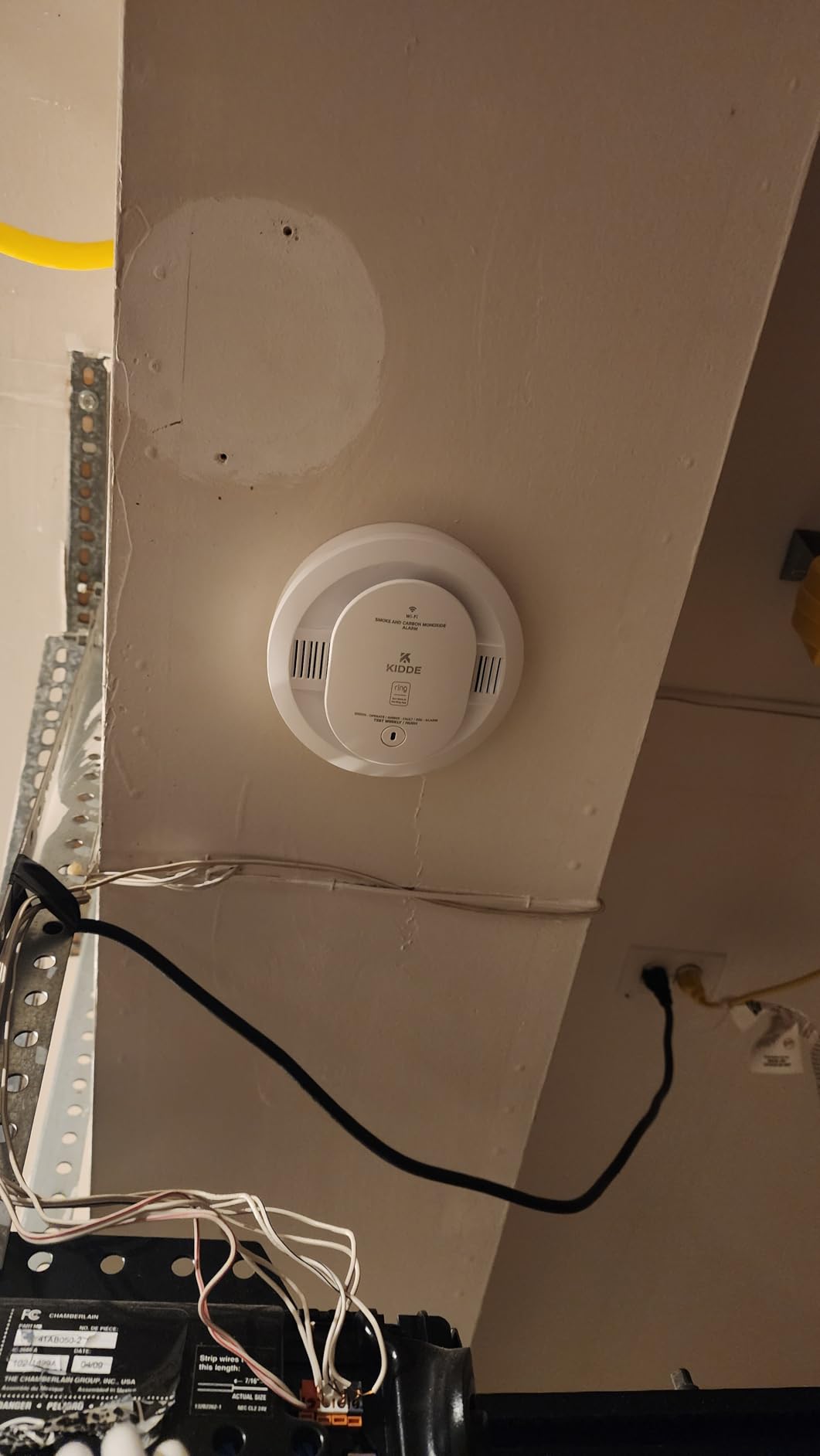
Two things surfaced repeatedly in long-term owner reviews and are worth knowing before you commit. First, the centre test and silence button is not always responsive on every unit, which is frustrating but never a safety problem because the alarm still sounds. Second, the battery contact design lets a unit pop out of its mount when you are changing cells, so check that it is seated properly before you walk away from it.
The app experience is the strongest argument for this pick. Notifications arrive quickly, low-battery warnings reach you before a 3 a.m. chirp, and the same unit handles both hazards so you are not balancing two different devices in two different rooms. It is certified to UL 217 and FCC standards, which is the baseline you should insist on from any alarm you install.

What it does that cheaper alarms do not?
Three things separate this from a basic interconnected alarm. The phone notification is the obvious one, but the low-battery alert is nearly as useful because dead batteries are the single most common cause of a non-functioning alarm. The third is the optional Ring monitoring tier, which is there if you want someone else to call the fire department while you are not home.
Where it falls short for you?
If you run Google Home or Apple Home rather than Ring or Alexa, this is the wrong pick even though the hardware is good. Ring remains its own app, so you are choosing a vendor rather than an open standard. And if you are replacing hardwired alarms, the AA batteries mean you are replacing a wired system with a wireless one rather than upgrading in place.
2. eufy Security Smoke Alarm E10 – Best for Small Homes on a Hub
eufy Security Smoke Alarm E10, Smoke Detector, Ultra-Compact 70 mm Design
UL 217 10th edition compliant
70 mm compact body
5-year sealed lithium battery
Needs eufy HomeBase
Pros
- Very small 70 mm footprint that suits tight ceilings
- Five-year sealed lithium battery removes low-battery chirps
- Long 656 ft open-air link to HomeBase
- UL 217 10th edition compliant sensing
- Loud siren with instant app alerts
Cons
- Will not operate without a compatible eufy HomeBase hub
- HomeBase firmware must be updated to a minimum version
- Closed ecosystem with no Matter or Zigbee interoperability
Best for: eufy owners who already run a HomeBase and want the least obtrusive alarm on the ceiling.
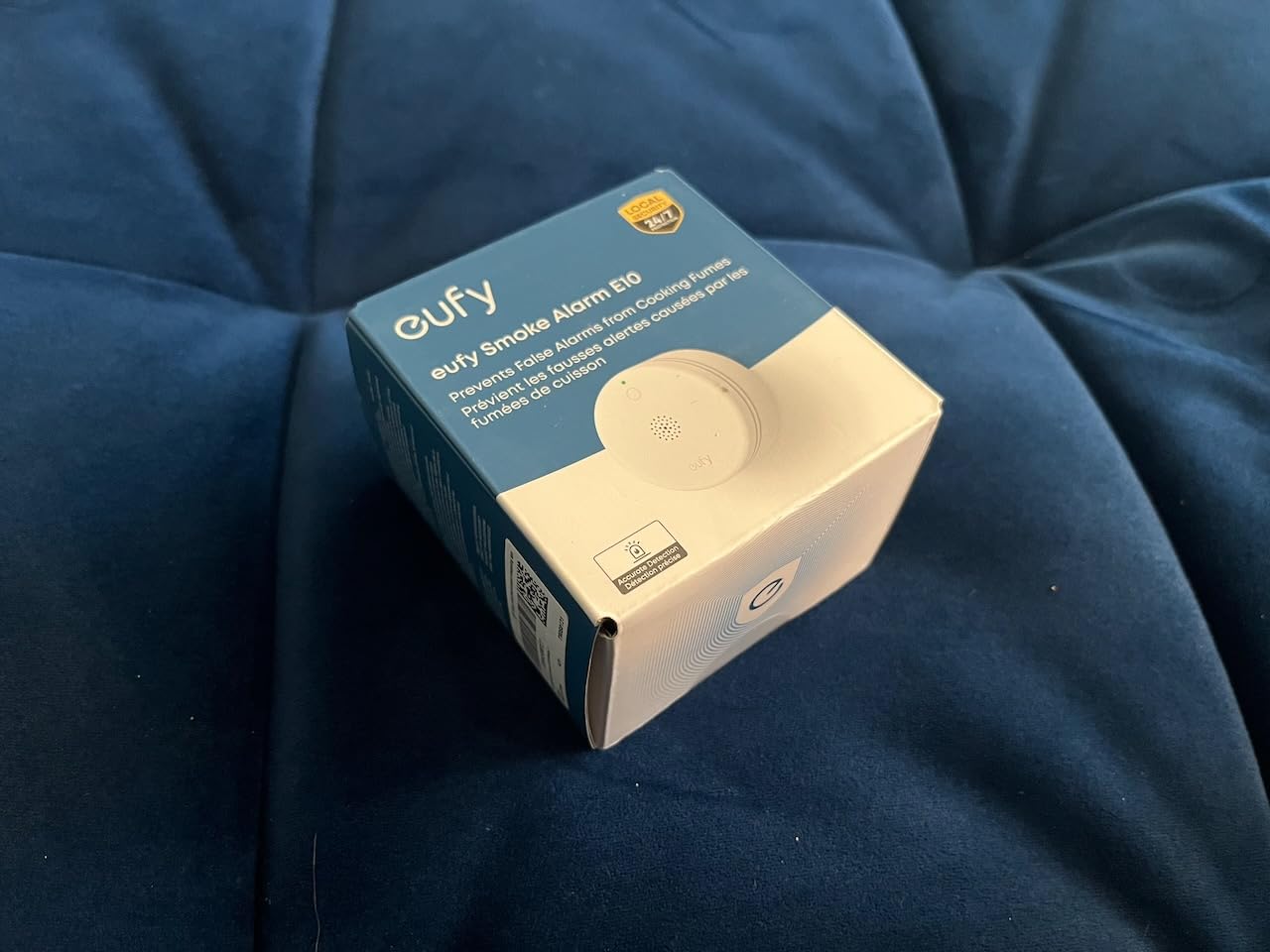
This is the highest-rated alarm in the group, at 4.4 across 221 reviews, and the reason is physical rather than electronic. At 70 mm across, roughly one third the diameter of a traditional detector, it disappears into a ceiling in a way the others do not. If you have a low hallway ceiling or a tight spot near a joist, this solves a real problem.
The detection side is straightforward and properly certified. It meets UL 217 10th edition requirements, which is the newer standard written specifically to cut nuisance alarms, and the sealed five-year lithium battery removes the annual battery-change chore entirely. The advertised link range to HomeBase is up to 656 ft in open air, which is more than enough coverage for a normal house on one hub.
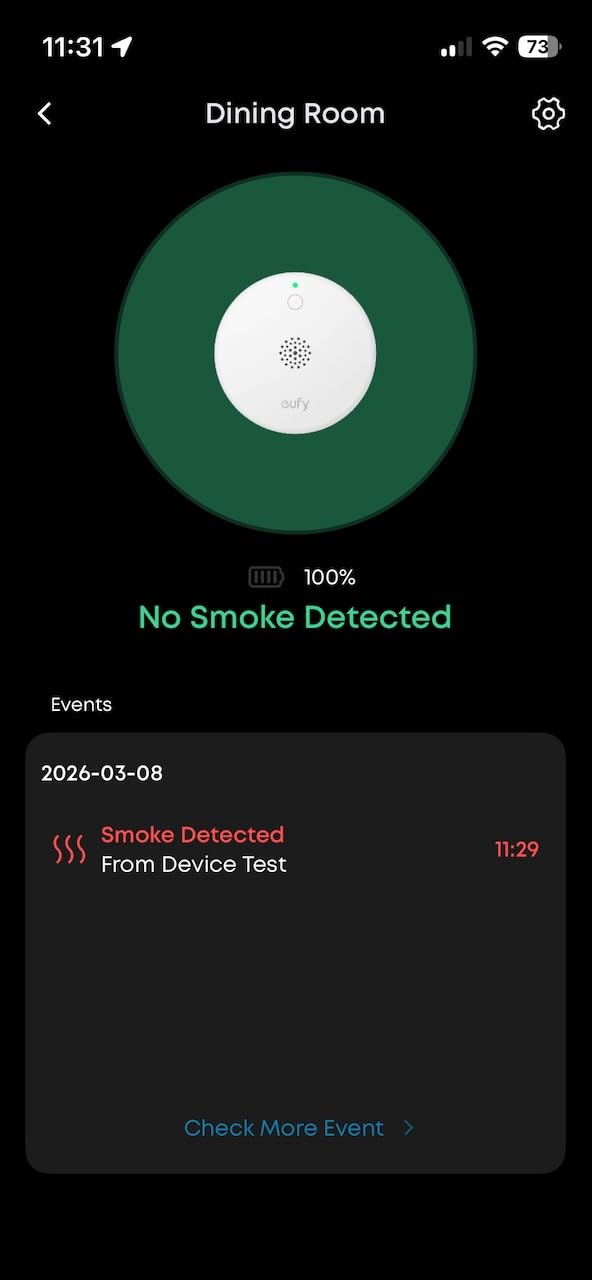
Read the requirements carefully, because they are the whole story here. The E10 does not operate without a compatible eufy HomeBase, and your hub firmware must be at or above a specific minimum version: 4.0.5.2 on the Mini, 3.4.1.2 on the HomeBase 2, 3.7.2.6 on the HomeBase 3, or 4.1.4.3 on the HomeBase Pro. Buyers without a hub are the main source of confusion in the reviews, and the confusion is entirely about hardware, not quality.
It is also a closed system. There is no Matter, no Zigbee, and no Z-Wave, so if you leave the eufy ecosystem later you are replacing the alarm as well as the hub. For anyone who has been burned by a vendor retreat in this category before, that is a genuine consideration.
What it does that the others do not?
Size and battery life together. A five-year sealed cell plus a 70 mm body means fewer visible devices, no low-battery chirps at night, and no yearly ladder-and-chair routine. The 656 ft open-air range also means one hub can cover a large home without a repeater.
Where it falls short for you?
The hub requirement is the dealbreaker for most people. It also has no carbon monoxide sensor, so a CO alarm elsewhere in the home is still required. And the firmware floor means an older HomeBase may need updating before the alarm will pair.
3. Heiman Interconnected Photoelectric Smoke Alarm 3-Pack – Best Value
Heiman Smoke Detector, Wireless Interconnected Smoke Alarm for Home, 3 Pack
Three interconnected alarms
Wireless range up to 656 ft
Dual-beam photoelectric
85 dB buzzer
Pros
- Roughly 30 seconds to pair after mounting
- Linked alarms sound within about 30 seconds
- Loud 85 dB alert audible through closed doors
- Compact 2.75 inch body
- dual-beam sensing resists steam
Cons
- No app or Wi-Fi
- so no phone alerts
- Some owners dispute the 10-year battery claim
- Some buyers report interconnect not working as expected
Best for: renters and anyone who wants whole-home interlock without wiring, an app, or a hub.
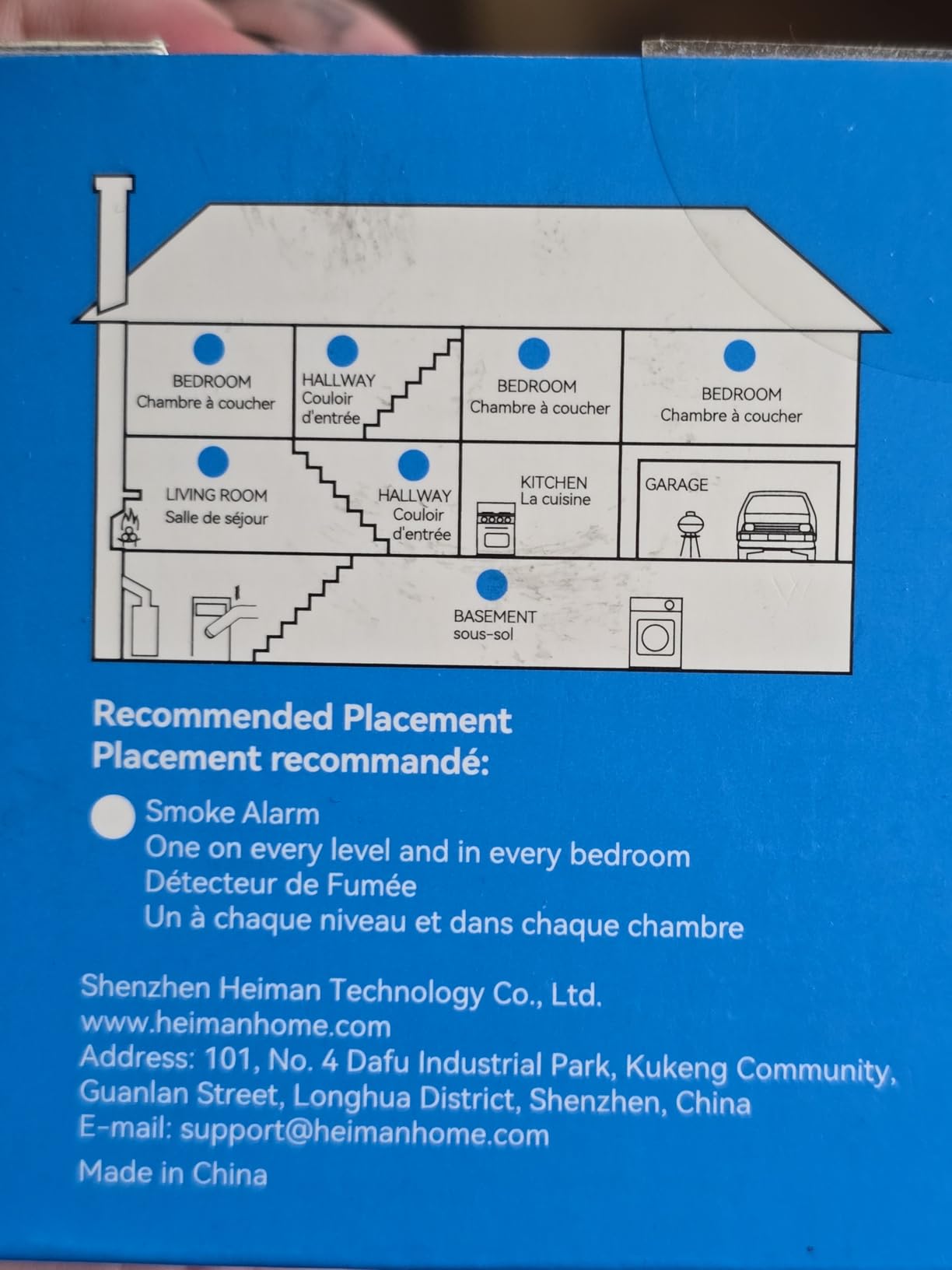
Three alarms in one box is the practical reason this ranks here, and coverage is the reason it works. Because a real home needs several smoke alarms rather than one, buying a multi-pack is how you actually get a code-sensible layout for one bedroom, one outside each sleeping area, and one on every level. Wireless interconnection reaches up to 656 ft in open areas, so all three sound together.
The sensing hardware is dual-beam photoelectric, which means two light beams must be interrupted before the alarm triggers. That design is measurably better at rejecting cooking steam and humidifiers than a single-beam chamber, and the test and silence button gives you a ten-minute hush for nuisance alarms rather than silencing the device permanently.
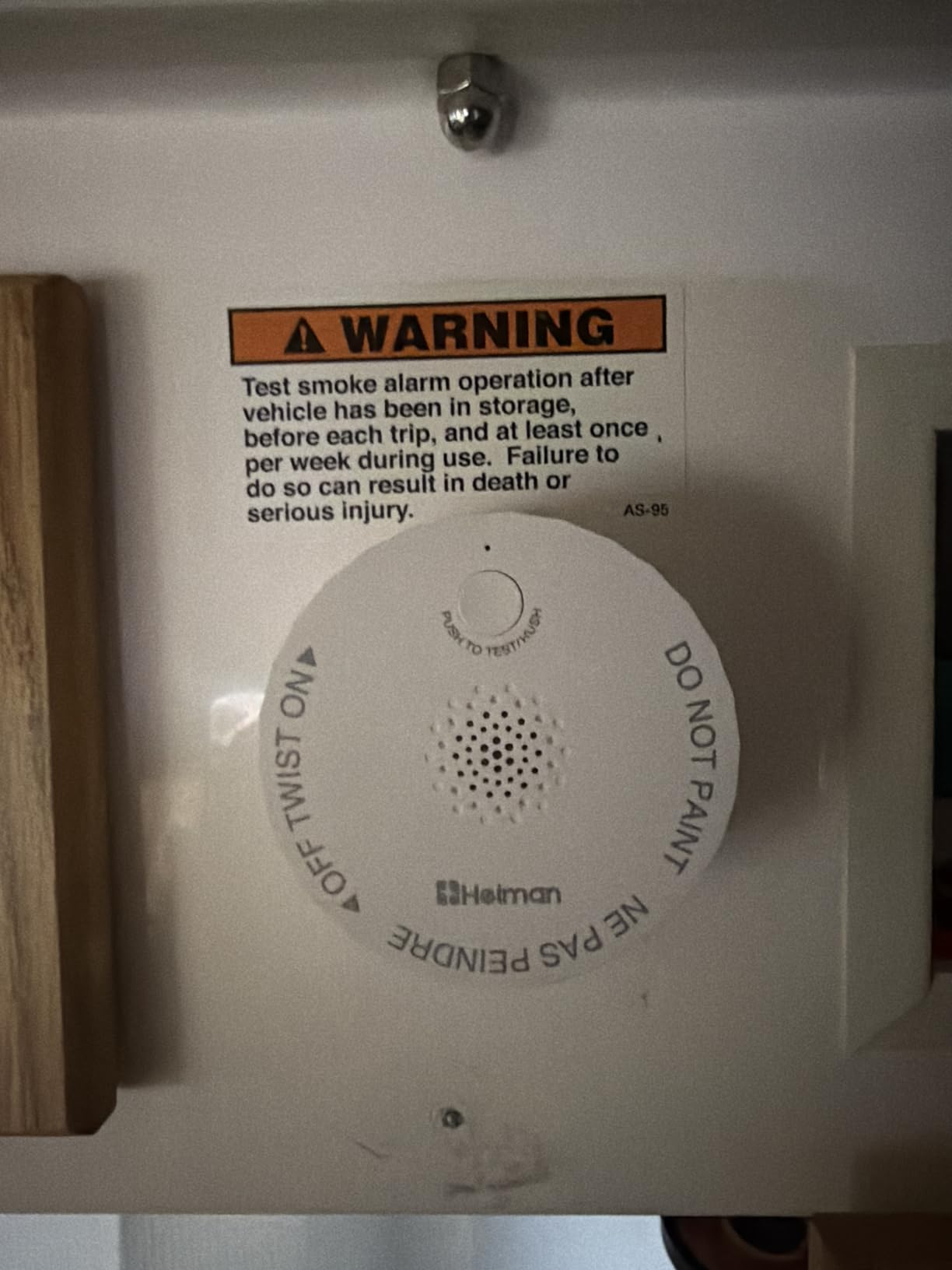
Be clear-eyed about what this is and is not. The listing states plainly that there is no direct app or Wi-Fi connection. These alarms talk to each other, and that is the entire feature set. If you want a phone notification, this is the wrong product, and picking it expecting one is the single most common mistake we saw in the reviews.
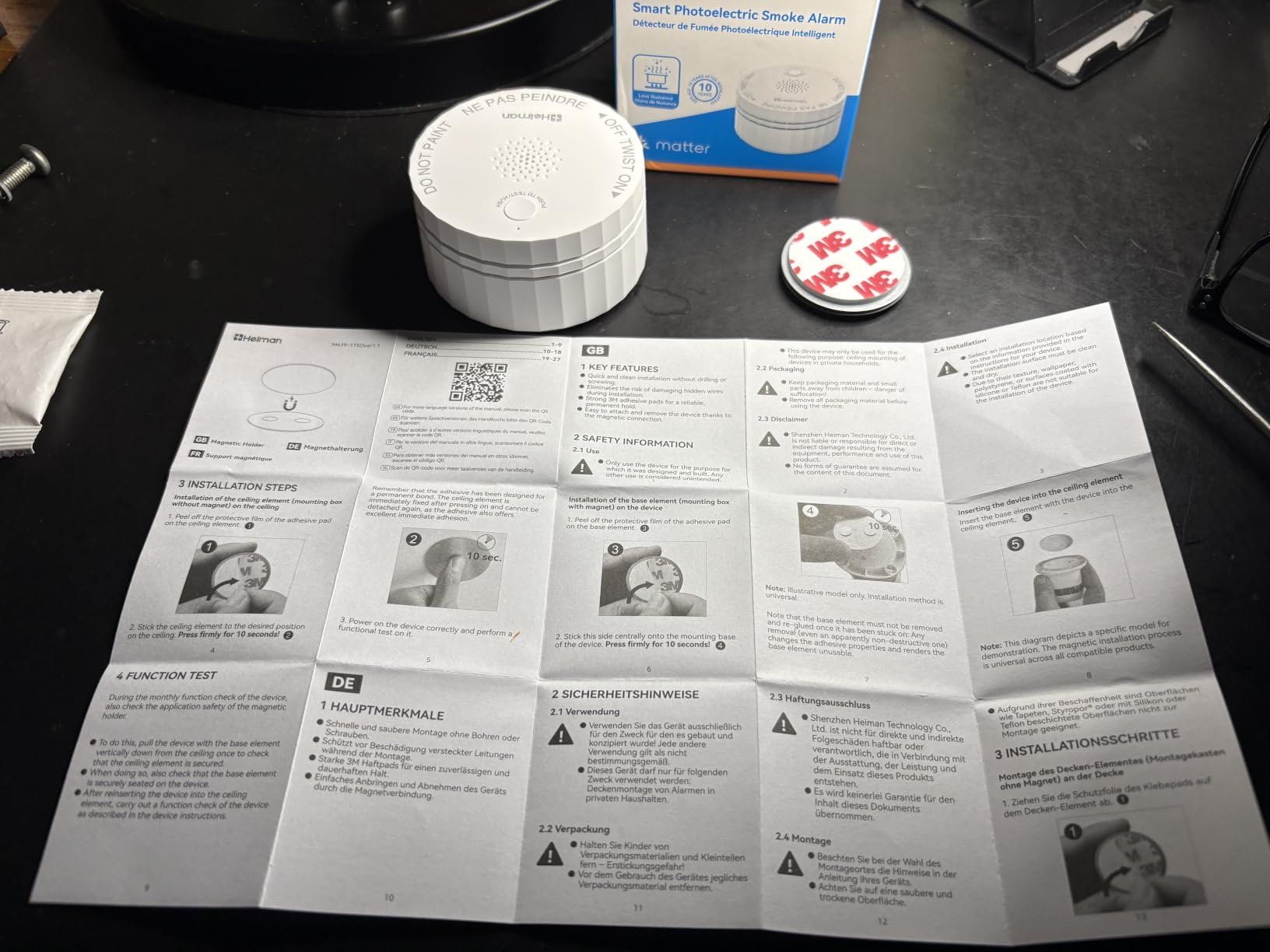
The 85 dB buzzer is specified at ten feet, which is the standard the fire authorities work to, and the housing is flame-retardant ABS and PC rated to UL94 V-0. It is UL 217 10th Edition certified. A magnetic mount option makes battery changes and monthly test presses simple.
What it does that the others do not?
It delivers a working interconnected system for the least outlay per room in this roundup, with no hub, no subscription and no wiring. For a rental, a cabin, or a house where an electrician is not an option, that combination is genuinely rare.
Where it falls short for you?
No phone alerts and no carbon monoxide detection. Some owners also dispute the advertised 10-year battery life and report units running out sooner, so plan on checking cells annually rather than trusting a decade of silence.
4. Heiman Matter over Thread Smoke Alarm S1-TM – Best for Apple Home and Matter
Heiman Smoke Detector, Matter Over Thread, with Temp&Humidity Sensor, S1-TM
Matter over Thread, no Wi-Fi needed
Apple Home and Google Home support
Temperature and humidity sensors
UL 217 10th Ed. and CSFM listed
Pros
- Matter over Thread reaches the broadest smart home ecosystem range
- Local automations run without cloud or internet
- Built-in temperature and humidity sensors
- Dual-beam photoelectric sensing
- UL 217 10th Ed. and CSFM listed
Cons
- Requires a Matter controller with a Thread Border Router
- Newer listing with no rating history yet
- Home Assistant setup needs IPv6 and mDNS configuration
Best for: Apple Home, Google Home, SmartThings and Home Assistant users who want one alarm that works across platforms.
This is the only pick on the list that is genuinely platform-neutral, and that matters more in 2026 than it used to. Matter over Thread means the same alarm joins Apple Home, Google Home, Alexa, SmartThings, Homey and Home Assistant through a Thread Border Router. Supported hubs include the second-generation HomePod, the HomePod mini, Apple TV 4K, Nest Hub 2nd gen, Nest Hub Max, SmartThings Hub v3, SmartThings Station, Echo 4th gen, Echo Show 8 and Echo Show 10.
There is a second advantage here that is easy to miss. Local automations run without depending on the cloud or the internet, so your alarm-to-lighting and alarm-to-fan routines keep working even if your connection drops. For anyone running Home Assistant, that is the difference between a real safety integration and a subscription on someone else’s server.
The temperature and humidity sensors are a genuinely useful bonus. One device on a hallway ceiling now reports room conditions remotely through the app, which tells you when a room is running damp before it turns into a mould problem. Detection itself is dual-beam photoelectric tuned for smoldering and fine smoke, with an 85 dB alarm, LED indicators and a one-touch test and silence.
Certification is thorough for a new listing: UL 217 10th Edition, CSFM listed, FCC certified, and a UL94 V-0 flame-retardant housing. It won a Red Dot Design Award as well, which is a small but real signal that the enclosure was engineered rather than moulded to a price.
We want to be straight about the limitation. This listing carries no aggregate customer rating yet, so there is no long-term reliability data to lean on. Every claim above comes from manufacturer documentation. Treat it as a well-specified new product rather than a proven one, and install it alongside a proven alarm in the first months rather than as your only coverage.
What it does that the others do not?
Matter interoperability and offline local control. No other alarm here joins Apple Home and Google Home from the same device, and none of them run automations without the cloud. If you are trying to avoid vendor lock-in in a category that has already produced one high-profile exit, those two features are decisive.
Where it falls short for you?
It needs a Matter controller and a Thread Border Router before it is anything more than a conventional alarm, which rules it out for plenty of households. There is no carbon monoxide sensor, and there is no owner history to judge long-term battery behaviour.
5. Kidde Smart Smoke Detector and Indoor Air Quality Monitor – Best for TVOC Tracking
Kidde Smart Smoke Detector & Indoor Air Quality Monitor, WiFi, Alexa Compatible Device, Hardwired w/Battery Backup, Voice & App Alerts
Smoke plus TVOC and humidity
Hardwired with battery backup
Voice alerts naming the hazard
85 dB alarm with status LEDs
Pros
- Only 2-in-1 unit here that also tracks TVOCs and humidity
- Straightforward retrofit over an existing 2-wire mount
- 85 dB alarm audible throughout a home
- Simple QR-scan app setup
- Voice announcements name the hazard and end-of-life
Cons
- Frequent nuisance alarms reported from humidifiers and cooking
- Short hush window lets the alarm retrigger
- App hush commands can lag
Best for: households that want indoor air quality data alongside smoke detection, and owners with an existing hardwired system to retrofit.
The genuinely distinctive feature is the second sensor. This unit tracks total volatile organic compounds from paint, cleaning products and furnishings, plus humidity, and reports both through the app. It is the first UL listed device to combine smoke detection with indoor air quality monitoring, which makes it useful in a freshly painted home or one with a new floor. If you also care about filtering the air itself, our air purifier guide for smoke and VOCs covers the hardware on the other side of that problem.
It is hardwired with a battery backup position, and the included 10-year lithium battery means detection continues during a power cut. The voice alarm announces the hazard type, including the end-of-life replacement condition, which is genuinely useful for anyone who cannot interpret chirp patterns. Green, amber and red LEDs cover normal, operating error and fire or CO event states, and the manufacturer warranty on the alarm is ten years limited.
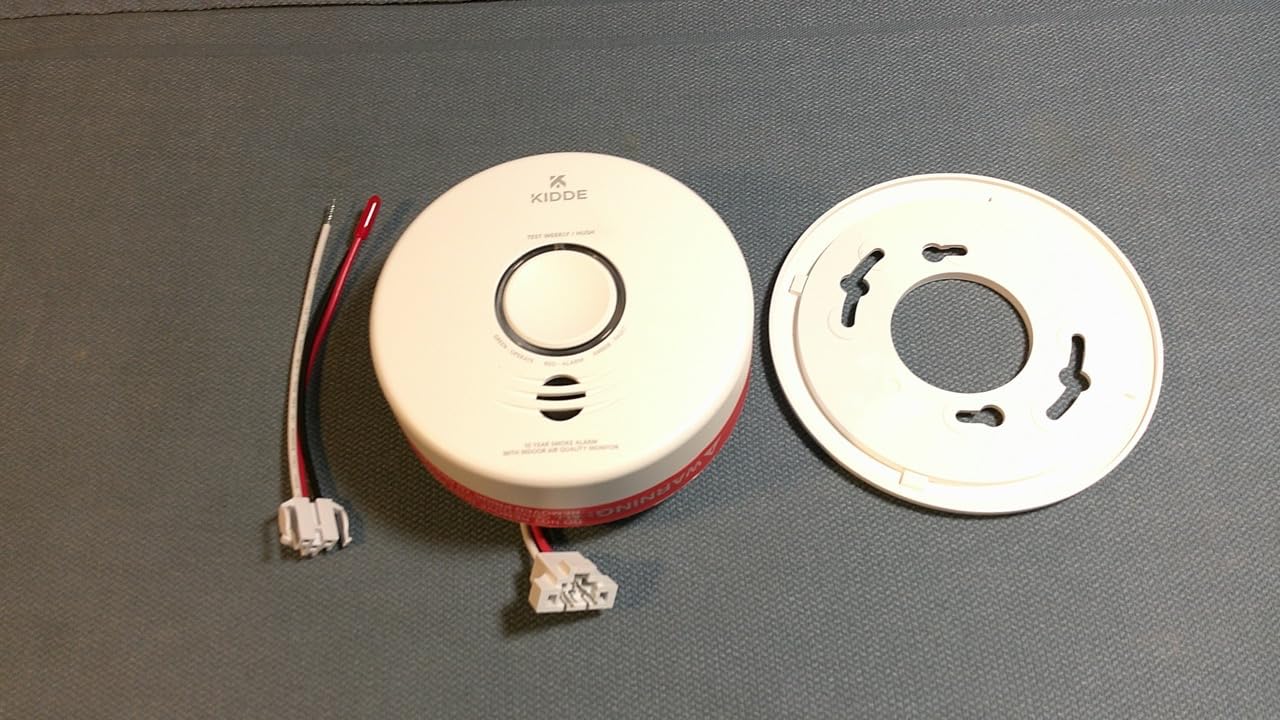
Now the hard part, because this is the weakest consensus rating in the roundup at 3.3 across 194 reviews, and the reason is consistent enough to plan around. Owners report frequent nuisance alarms triggered by humidifiers, vaporizers, cleaning products and cooking. The hush window is short, so the alarm can retrigger before the air clears, and app hush commands sometimes lag, which leaves you pressing the button on the device.
There is a second detail in the reviews worth flagging honestly. The split is unusually polarised, with a large share of one-star ratings alongside a large share of five-star ratings, which usually means a setup problem rather than a bad product. If you run a humidifier in the same room, this is the wrong alarm for that room.
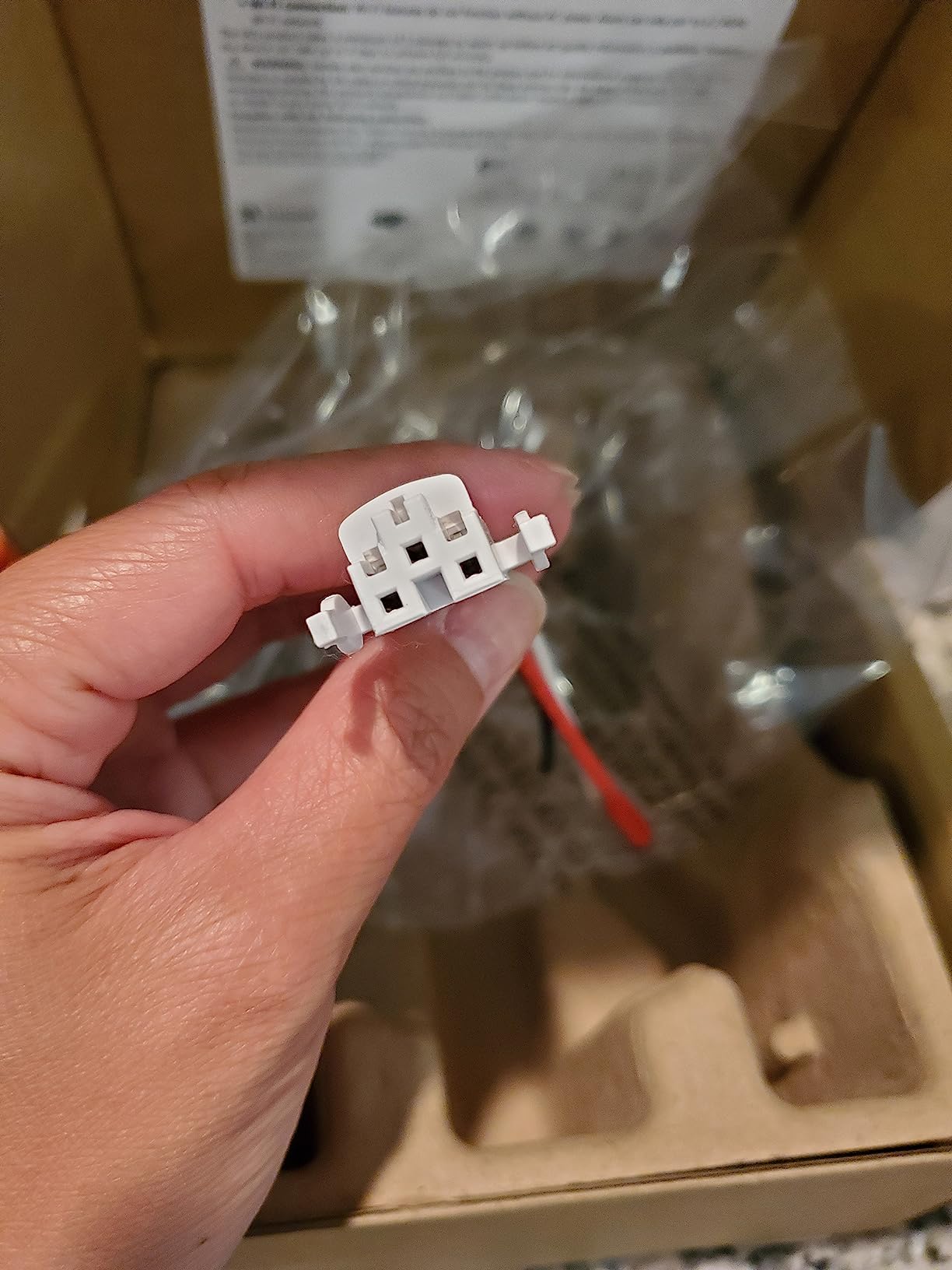
The other reason it is here is placement. It is a photoelectric sensor tuned to smoldering fires, it fits a standard 2-wire mount for a straightforward retrofit, and it works with Alexa, Google Home, iPhone and Android. It is the only pick here that is hardwired, which makes it the natural companion to a whole-home wired system.
What it does that the others do not?
It is the only alarm here that reports TVOC concentration and humidity alongside smoke, and the only hardwired option in the group. If you are replacing older 2-wire alarms across a whole floor, retrofitting over the existing mount is far less work than running new cable.
Where it falls short for you?
False-alarm sensitivity is the dealbreaker in humid or cooking-heavy rooms, and the short hush window makes it worse. The app hush can lag behind the physical button, and the ten-year warranty covers the alarm rather than the air quality sensing side.
6. First Alert SC5 Battery Smart Smoke and CO Alarm – Best Nest Protect Swap
First Alert SC5 Battery Smart Smoke & Carbon Monoxide Alarm
Fits the Nest Protect bracket
First Alert app phone alerts
Home-wide interconnection
3V CR123A lithium power
Pros
- Fits the existing Nest Protect mounting bracket
- Keeps Nest ecosystem voice alert behavior
- QR scan setup plus Google Home linking
- Interconnect works across a full home
- Low-battery notifications reduce late-night chirps
Cons
- Needs a separate First Alert app rather than the Google Home app
- No path light or night light
- Recurring false alarms and Wi-Fi drop-out notifications
Best for: Google Home households replacing existing Nest Protect alarms and keeping the same physical mounting point.
The installation argument is the reason to buy this one. It fits the existing Nest Protect mounting bracket, so a like-for-like swap takes minutes with no new holes and no electrician, which matters enormously if you have a whole floor of them. Multiple owners in larger homes report that QR-scan setup and Google Home linking completed reliably.
It detects smoke and carbon monoxide, sends phone alerts through the First Alert app, and interoperates with the Nest Protect and the Nest thermostat. When any compatible alarm in the house detects something, the rest sound together. Voice Heads-Up warnings name the type and location of the danger, and Precision Detection Technology is used for nuisance-alarm reduction. It runs on 3V CR123A lithium batteries, which are included.
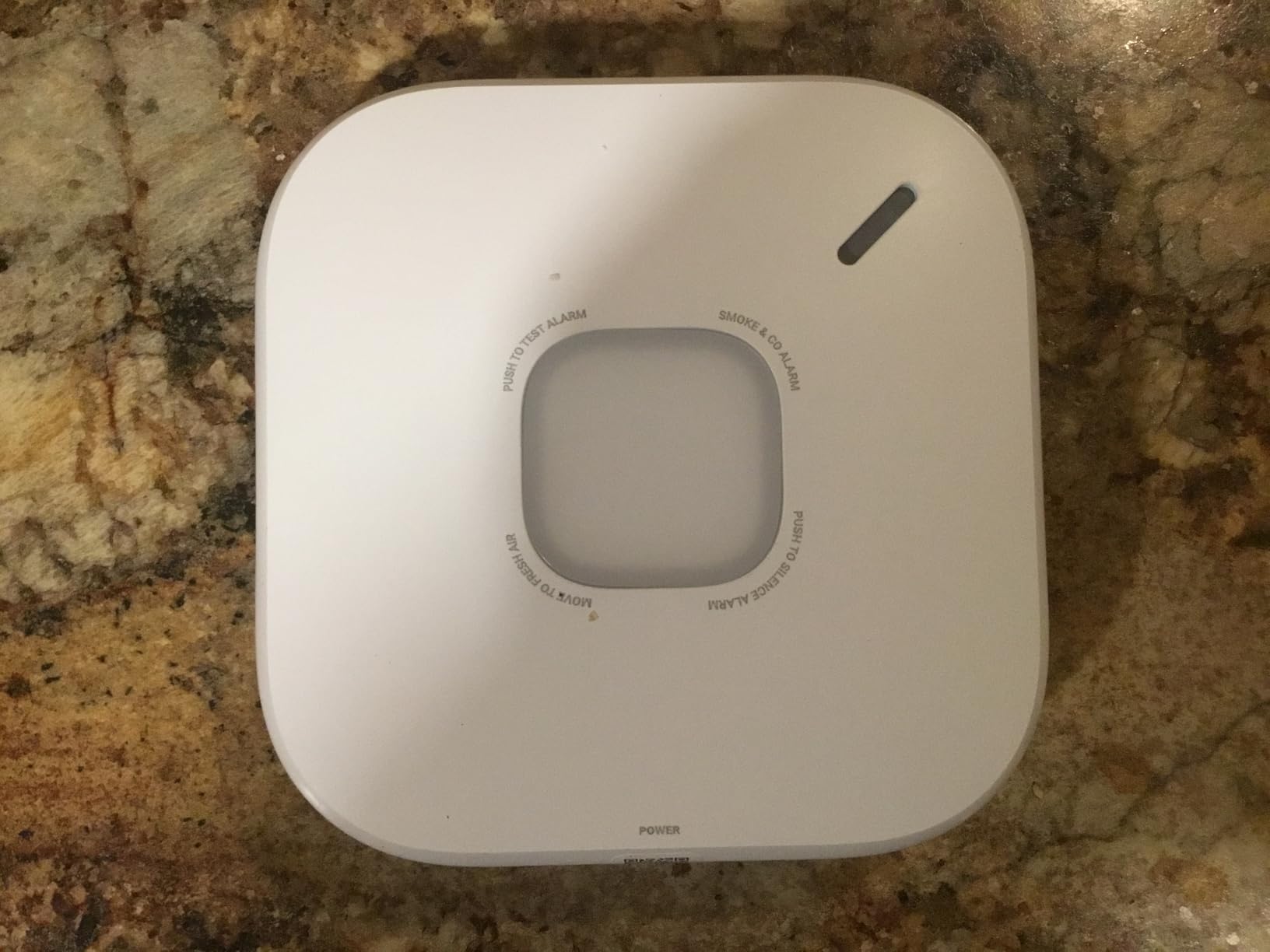
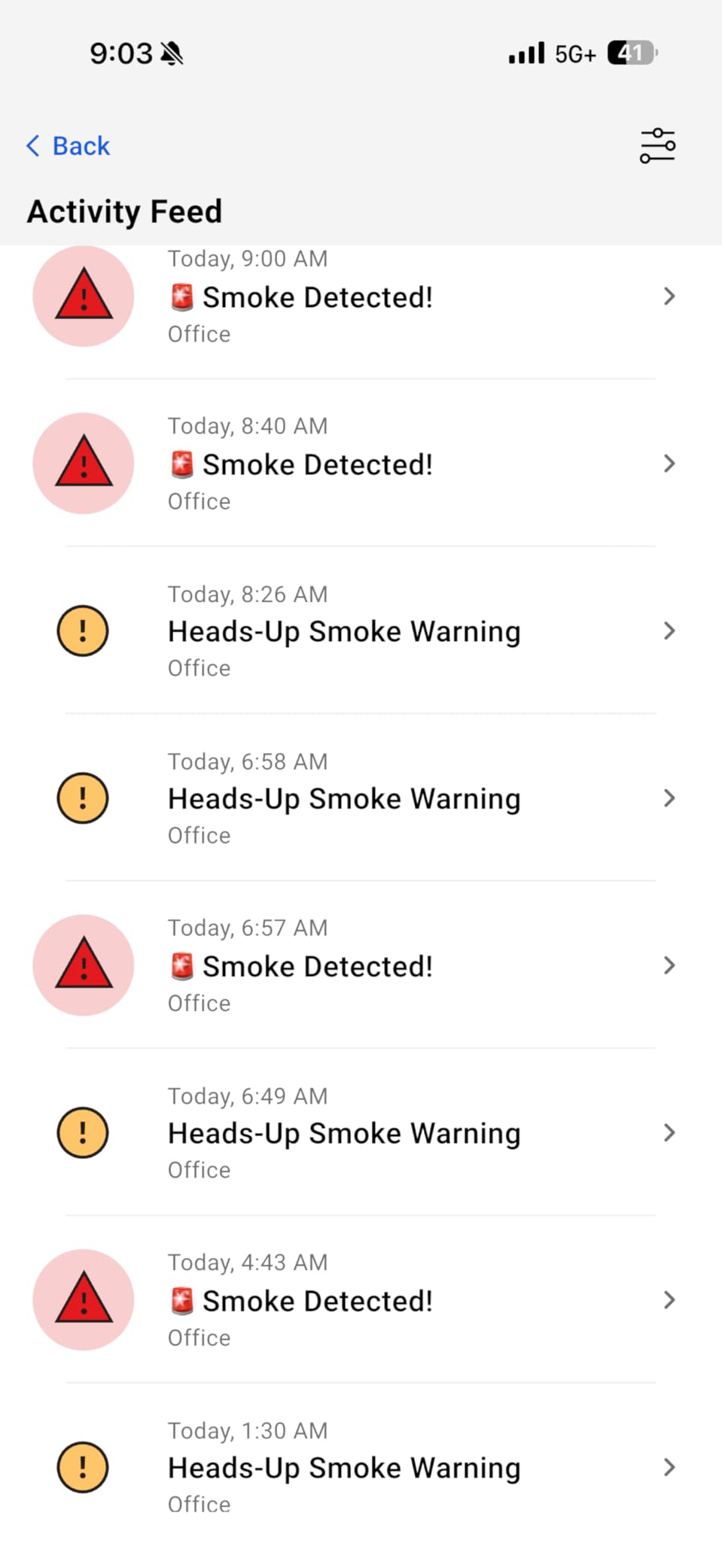
It also carries the largest review pool in this roundup at 586 ratings, and that is where the problem shows. The 3.2 average reflects a genuinely divided customer base, and the split maps closely onto expectations. Buyers replacing Nest Protects report easy bracket reuse, reliable linking and preserved voice alerts. Buyers who expected a Nest-quality product report cheaper plastics, a less clear voice prompt, a second app to learn, and recurring false alarms.
Two specific shortcomings come up enough to plan for. First, it does not integrate into the Google Home app directly, so you end up with two apps on your phone. Second, it has no path light and no night light, which were genuinely useful features of the unit it replaces. Owners also report frequent Wi-Fi drop-out notifications requiring the alarm to reconnect.
Our read is that this is a competent hardware product being judged against a very high standard. If you are coming from a Nest Protect and your priority is swapping the physical units without rewiring, it does that well. If you are buying fresh and comparing on build quality and app polish, the Kidde at number one is the stronger buy.
What it does that the others do not?
It is the only pick here that reuses the Nest Protect bracket, and the only one that pairs with the Nest thermostat alongside the alarms. For a straight Nest-to-something-else migration, that compatibility is unmatched.
Where it falls short for you?
You get a second app rather than a Google Home integration, and you lose the path light and night light. The false-alarm and Wi-Fi drop-out complaints are frequent enough that we would not call it our first recommendation for a fresh installation.
How Smart Smoke Detection Actually Works?
A smart smoke detector is an ordinary alarm with a radio and a software layer attached. The sensing hardware is the part that matters for your safety, and the connectivity is the part that matters for your convenience. Understanding the difference explains most of the trade-offs in this roundup.
Ionization alarms use a small amount of radioactive material to ionize air and detect the change that smoke causes. They respond fast to open-flame fires but are notorious for nuisance alarms from humidity and cooking, and they have largely disappeared from the residential market. Photoelectric alarms use a light beam that smoke particles interrupt, so they respond faster to smoldering fires, which are the ones that produce most residential deaths.
Split-spectrum sensing, used by several alarms in this category, is a photoelectric chamber with multiple sensing elements that discriminate between smoke of different densities and light scattering patterns. In practice this is the technology that reduces false alarms, which is why UL 217 was rewritten around 10th edition requirements with nuisance-alarm performance baked into the listing. The Heiman models here use dual-beam photoelectric sensing for the same reason.
Carbon monoxide is detected chemically rather than optically. An electrochemical sensor reacts to carbon monoxide and produces a proportional current, which is why CO alarms can display a parts-per-million reading and why they need to be replaced on a schedule. Smoke should be detected on or near the ceiling where smoke collects; carbon monoxide mixes with air, so CO alarms belong at floor level and near sleeping areas.
How to Choose a Smart Smoke Detector?
Photoelectric, ionization or split-spectrum
For home use in 2026, photoelectric or split-spectrum is the right answer, and every pick on this list uses one of the two. Ionization is harder to find new and rejects fewer nuisance alarms. If a listing does not state the sensor type at all, that is a reason to look elsewhere in a life-safety purchase.
Hardwired with battery backup versus a sealed battery
Hardwired alarms run on your home’s wiring with a battery backup, which means no battery changes and no flat alarm in a power cut. Battery alarms install without an electrician, which is the only option in a rental. Sealed 10-year lithium cells are the best middle ground where they are available, since they remove both the annual chore and the low-battery chirp.
The most common complaints about hardwired systems are practical rather than technical: installation cost, dependence on the electrical panel, and a breaker trip taking out detection. Fire authorities generally favour interconnected hardwired alarms with battery backup for new construction, and their standard advice is that no home should rely on battery-only units. For an existing home, a battery alarm that actually gets installed beats a hardwired one that gets postponed.
Combination versus separate smoke and CO alarms
A combination alarm puts both sensors in one body, which saves a mounting point and a hole in the ceiling. The trade-off is that the two hazards have opposite placement rules, and CO is only dangerous where combustion appliances are, so a kitchen-adjacent combination alarm is not always the right call. Interconnected combos are the simplest choice for apartments and single-storey homes.
Matching your ecosystem
This is where most buyers get stuck, and the terminology is genuinely opaque. Z-Wave and Zigbee need a hub. Thread needs a Thread Border Router, which is built into many modern hubs. Matter is the open standard layered on top, and a Matter over Thread alarm is the least locked-in option available today. Wi-Fi alarms need only a 2.4 GHz network and your account, which is the simplest setup and the most vendor-dependent.
One recurring theme across the enthusiast communities that rank for this topic is that no single detector satisfies everyone. The most common request is for one alarm that works with Home Assistant, Ring, Alexa and Google Home at once, and the honest answer in 2026 is that Matter over Thread gets closest. For people who want to keep their existing hardwired alarms and simply get phone notifications, Home Assistant users repeatedly point to audio listeners such as the Zooz zen 55, which listens to the sound of a conventional alarm and forwards it into the automation platform without touching any wiring.
Interconnection and mixing brands
Interconnection is not universal. Most systems will only chain with alarms from the same manufacturer, and in several cases only with specific models from that manufacturer. Mixing brands on one house-wide system is the most common installation error we found in forum discussion, and the result is an alarm that sounds in one room only. Confirm the compatible-model list before you buy more than one.
Certification
UL 217 covers smoke alarms and UL 2034 covers carbon monoxide alarms. A combination alarm should carry both, or carry the relevant listing for each hazard it detects. CSFM listing matters if you are in California. Certification is not a quality differentiator between the products here, because all six are listed, but its absence is a reason to walk away.
Where to Install Smart Smoke Detectors?
Placement does more for your protection than the brand you choose, and it is the question homeowners ask most often. The rules are standardised by fire authorities, and they are worth following exactly rather than approximating.
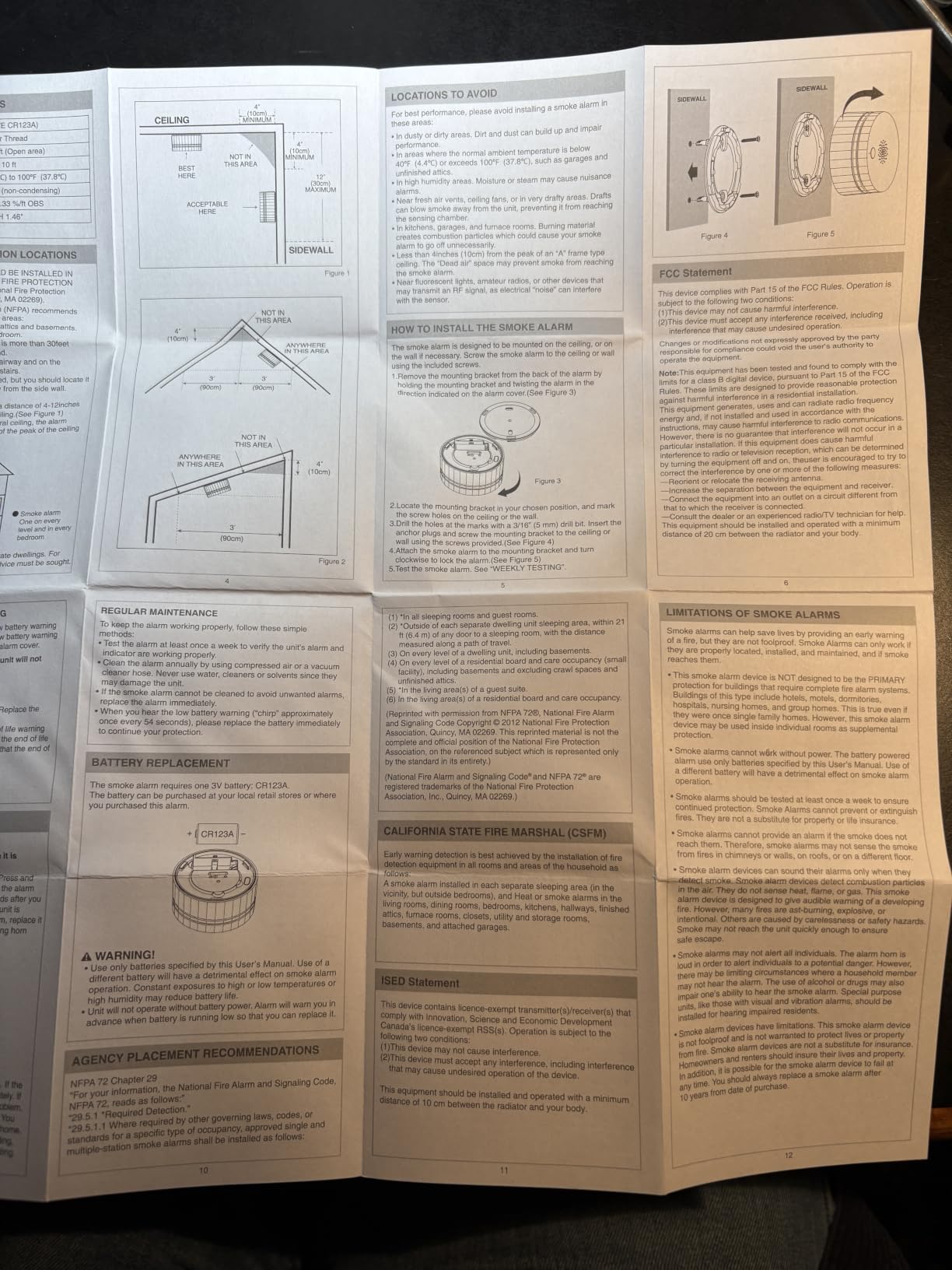
On a ceiling, mount the alarm at least 4 inches away from any wall, and no more than 6 inches from the ceiling to the edge of the alarm. On a wall, put it on the ceiling or upper third of the wall, again at least 4 inches from a corner. Keep smoke alarms at least 10 feet from a cooking appliance so that steam does not trigger them, and avoid bathrooms, laundry rooms and other high-humidity spaces unless the alarm is rated for it.
For coverage, you need at least one alarm in every bedroom, one outside each sleeping area, and one on every level of the house including the basement. That is the multiplier people forget: the unit you research is the smallest part of the decision, because a proper layout typically means three to six alarms. Our basement and radon detector guide covers the lower level in more detail.
Carbon monoxide alarms follow different rules. CO mixes with air rather than rising to the ceiling, so install them at floor level or on a wall about 5 feet up, on every level, and within 3 feet of any bedroom door. If your home has a fuel-burning furnace, fireplace or garage, that is where the CO alarm belongs. For whole-home fan and ventilation control, our smart fan picks are worth a look once the alarms are in.
One last thing worth saying plainly, because forum threads about false alarms produce genuinely dangerous advice: never remove a battery or disable an alarm because it keeps going off at night. Fix the cause, which is almost always placement near a kitchen or a humidifier, and use the hush feature or the app silence instead.
Are Smart Smoke Detectors Worth It?
Yes, but for narrower reasons than most marketing suggests. The core safety case does not depend on connectivity at all: a working alarm of any kind, positioned correctly, is what protects you. What the smart part adds is that you find out what the danger is and where it is, you get told when you are not in earshot, and a nuisance alarm can be silenced without a chair.
Those three things matter most for people who sleep deeply, who are away from home for long hours, who have children or elderly parents who cannot interpret a chirp code, or who have multi-floor homes where a single alarm cannot be heard everywhere. The value also rises sharply if you already run a smart home, because voice alerts and lighting automations come free once the alarm is connected.
What a smart detector does not do is replace an interconnected system, correct placement, or the ten-year replacement cycle. Fire authorities recommend interconnected alarms, replacement at end of life, and at least one alarm per level, and none of those three things is solved by Wi-Fi. If a smart alarm is going to be ignored on a high shelf because it is also the only one in the house, a standard UL listed alarm placed properly is the better purchase.
Frequently Asked Questions
Is it worth getting a smart smoke detector?
Yes, for people who need to know what the danger is and where it is, who are away from home for long hours, or who run an existing smart home. The safety itself comes from placement, interconnection and timely replacement, not from connectivity. A correctly placed standard alarm beats a smart one that never gets installed.
What is replacing the Google Nest Protect?
There is no one-for-one replacement. Google Home households typically move to the First Alert SC5, which fits the existing Nest Protect bracket and links with the Nest thermostat. Ring and Alexa households move to the Kidde smart smoke and CO alarms. Apple Home, Google Home, SmartThings and Home Assistant users can use a Matter over Thread alarm such as the Heiman S1-TM.
Is the Nest Protect smoke alarm being discontinued?
Yes. The Nest Protect is no longer sold, and Google has moved on from the hardware. The consensus on r/Nest is that already-installed units are supported to the end of their hardware life and simply stop receiving new features. They keep detecting smoke and sounding locally, and you can replace them one at a time rather than all at once.
Which smoke alarms are better, Kidde or First Alert?
Both are long-established life-safety manufacturers with properly listed hardware. In practice Kidde currently leads on connected features and owner consensus: the Ring-integrated smoke and CO alarm holds a 4.3 rating across 426 reviews, while the First Alert SC5 sits at 3.2 across 586. First Alert wins on Nest Protect bracket reuse, and Kidde wins on app polish, interconnection and false-alarm handling.
Do smart smoke detectors work without Wi-Fi?
The alarm itself always works. Every alarm on this list detects smoke and sounds its 85 dB siren locally on battery power, independent of any network, so a Wi-Fi outage or a dead router does not disable detection. What you lose without a connection is the phone notification, the app silence button, and any remote testing. Local Matter automations on the Heiman S1-TM also keep running without an internet connection.
Can you mix brands of interconnected smoke detectors?
Usually not. Interconnection is brand-specific, and in several cases model-specific within a brand. Mixing manufacturers on one house-wide system is the most common installation mistake and results in an alarm that sounds only in the room where the danger is. Check the compatible-model list for your chosen alarm before you install more than one, and never assume a neighbour’s smart alarm will chain to yours.
What smoke detectors do firemen recommend?
Fire authorities consistently recommend interconnected alarms, with at least one alarm on every level, one inside each bedroom, and one outside each sleeping area. They also recommend replacement at end of life rather than when a unit fails, and they strongly advise against disabling an alarm after a nuisance alarm. A hardwired system with battery backup is generally preferred for new construction, and UL 217 and UL 2034 listing should be the baseline.
The Verdict: Which One to Buy?
If you run Ring or Alexa and want one alarm that covers both hazards and reaches your phone without a subscription, buy the Kidde Smart Smoke and CO Detector with Ring. It has the strongest balance of rating, review volume and feature completeness in this roundup, and it is the pick we would install in our own homes.
If you already own eufy hardware, the eufy E10 is the most discreet option and the highest rated here. If you want whole-home interlock with no app and no wiring, the Heiman three-pack covers the most rooms for the least money. If you are replacing Nest Protects and want the same bracket, the First Alert SC5 is the pragmatic swap even though its owner reviews are mixed. And if platform lock-in is the thing you most want to avoid, the Heiman Matter over Thread S1-TM is the only alarm here that joins Apple Home and Google Home from the same device.
Whichever you choose, install the full layout: one alarm per bedroom, one outside each sleeping area and one on every level, and a separate carbon monoxide alarm at floor level near sleeping areas. A partial smart system is still a system. Check our basement detector guide if the lowest level is unfinished space, because a smoke alarm alone does not cover every hazard a home throws up.