
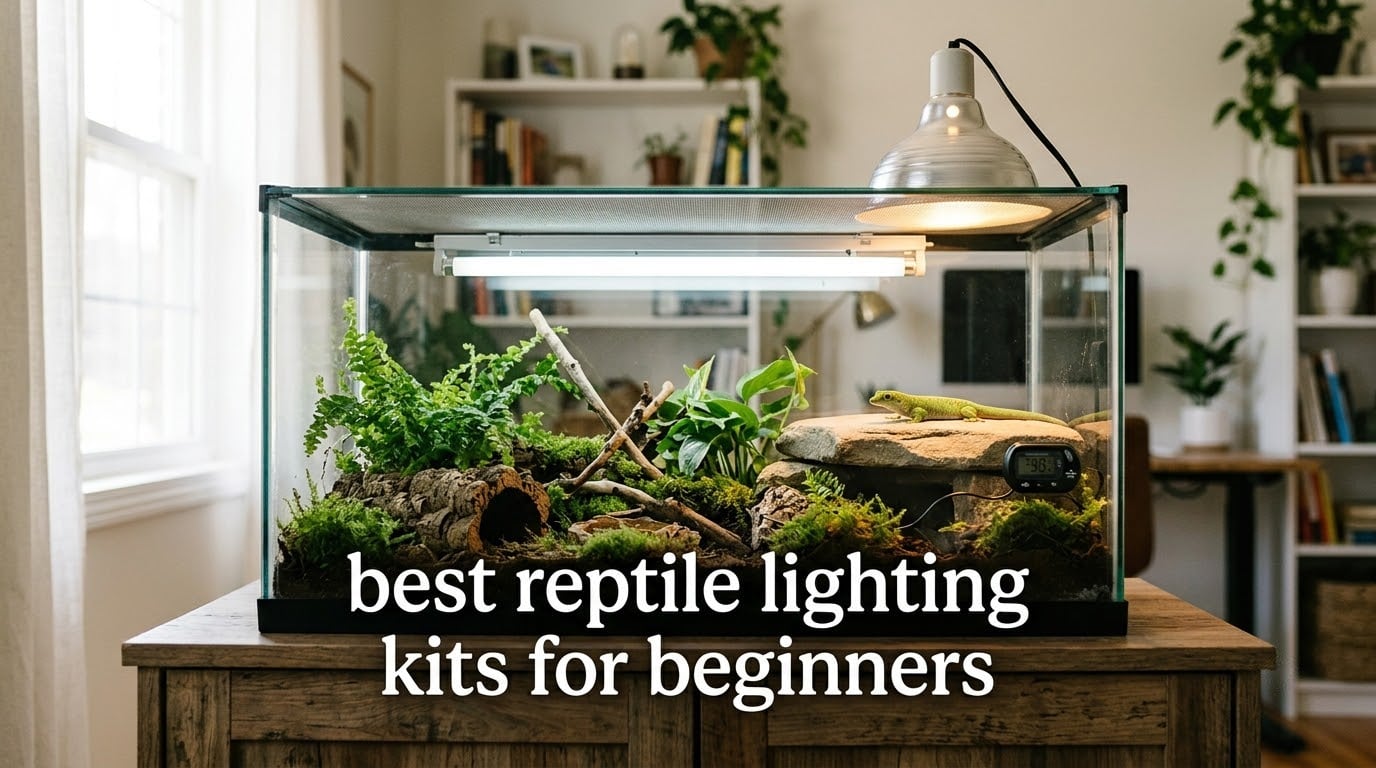
The first reptile enclosure is where most beginners lose a week of research and, sometimes, lose the animal. The reason is simple: lighting looks like one purchase, but it is three separate jobs that get sold as a single box. A UVB source your animal cannot see, a basking bulb that creates a warm zone, and the controller hardware that holds both of those steady. Buy one part and the setup stalls. Buy the wrong part and the animal cannot process calcium properly, which shows up months later as metabolic bone disease rather than as a bad-looking lamp.
That is the trap this roundup is built to close. We compared the ten best reptile lighting kits for beginners currently sold, focusing on the one question retail listings never answer plainly: is the bulb actually in the box? Several kits marketed as complete arrive as a bare dome. Several “UVB kits” arrive with a weak compact tube that experienced keepers describe as nowhere near enough for a diurnal species. Every review below states exactly what arrives, how it mounts, and who should skip it.
A few terms first, because the rest of this guide uses them constantly. UVB is short-wavelength ultraviolet that reptiles need to synthesize vitamin D3 and absorb calcium. A basking bulb is a heat lamp and produces no UVB at all. A T5 HO fixture is a long linear lamp, where HO means high output. A photoperiod is how many hours per day the lights run, and 10 to 12 hours is the normal range. If you take one idea from the buying guide at the bottom, make it the difference between a heat lamp and a UV lamp, because that is the confusion behind most beginner lighting mistakes. We also cover kit assembly and budget tiers in more detail in our beginner hobby starter kit guide, which uses the same decision framework.
Table of Contents
Top 3 Best Beginner Reptile Lighting Kits in 2026
Our three front-runners cover three very different first setups. The Zoo Med dual kit is the one we would hand to a first-time desert keeper. The REPTI ZOO dual dome is the flexible chassis to build around, since you choose the bulbs. The Zoo Med turtle kit is the only option here built for a wet enclosure, and it also carries one of the strongest review counts in the group.
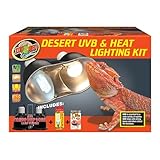
Zoo Med Desert UVB and…
- Fixture plus 75W basking spot plus 10.0 UVB lamp
- Deep dome holds both lamps
- Made for desert species

REPTI ZOO Dual Reptile…
- Two 150W ceramic sockets
- Independent on and off switches
- Bulbs chosen by you

Zoo Med Aquatic Turtle UVB…
- Splashproof 100W halogen
- Two light sources included
- Metal deep dome
All 10 Reptile Lighting Kits Compared in 2026
This table lists every kit in the roundup with the bulb type it arrives with, because that single detail separates a genuine kit from a fixture with a photo on the box. Read the bulb column first, then match the rest to your species and enclosure size.
| Product | Specs | Action |
|---|---|---|
| Zoo Med Desert UVB and Heat Dual Kit |
|
Check Latest Price |
| REPTI ZOO Dual Reptile Dome Fixture |
|
Check Latest Price |
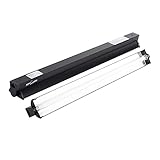 REPTI ZOO T5 HO UVB Combo Kit 24 inch REPTI ZOO T5 HO UVB Combo Kit 24 inch |
|
Check Latest Price |
| Zoo Med Aquatic Turtle UVB and Heat Kit |
|
Check Latest Price |
 LUCKY HERP T5 8W 10.0 UVB Kit 12 inch LUCKY HERP T5 8W 10.0 UVB Kit 12 inch |
|
Check Latest Price |
 Hygger zoo T5 10.0 UVB Kit 12 inch Hygger zoo T5 10.0 UVB Kit 12 inch |
|
Check Latest Price |
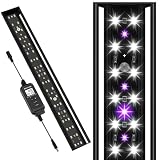 REPTITRIP 16 inch LED UVB Light REPTITRIP 16 inch LED UVB Light |
|
Check Latest Price |
 MIXJOY T5 HO Kit 22 inch 24W MIXJOY T5 HO Kit 22 inch 24W |
|
Check Latest Price |
 REPTIDLDB T5 UVB Combo Kit 22 inch 24W REPTIDLDB T5 UVB Combo Kit 22 inch 24W |
|
Check Latest Price |
 REPTI ZOO Heat Lamp Combo Pack Dual Fixture REPTI ZOO Heat Lamp Combo Pack Dual Fixture |
|
Check Latest Price |
1. Zoo Med Desert UVB and Heat Dual Kit – the best complete kit for a first desert setup
Zoo Med Desert UVB & Heat Lighting Dual Kit
75W basking spot
13W ReptiSun 10.0 compact
Deep dual dome
2.2 pounds
Pros
- Fixture and both bulbs included
- 10.0 UVB suits desert species
- Deep dome keeps the lamp seated
- 4.4 stars from 1389 reviews
Cons
- Compact UVB fades on a 6 to 12 month cycle
- 13W tube is weak for a large vivarium
- No independent switches
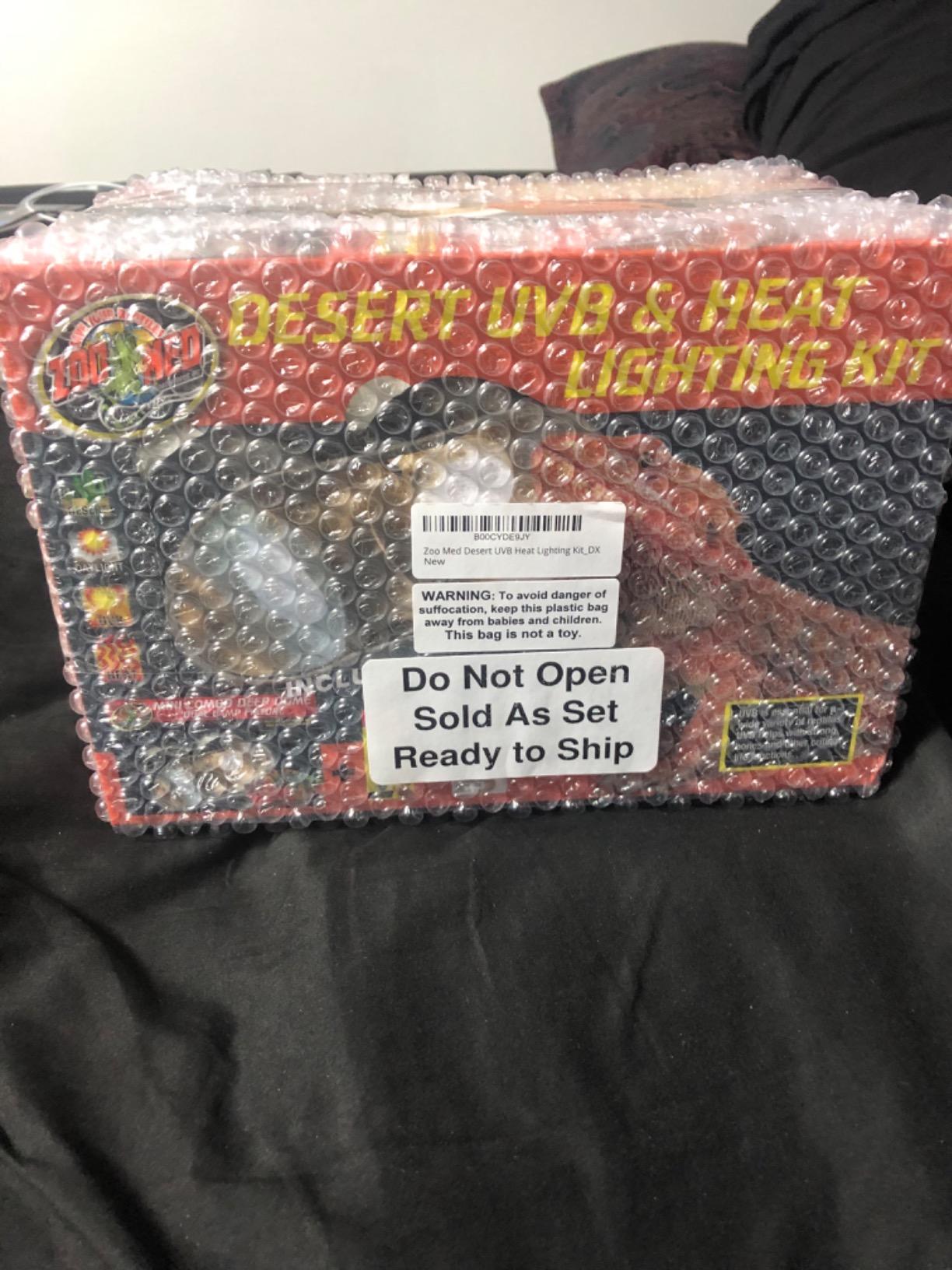
This is the kit we recommend first, and the reason is completeness rather than peak performance. The box contains a deep combo dome, a 75 watt Repti Basking Spot Lamp, and a 13 watt ReptiSun 10.0 compact fluorescent. Nothing else needs buying on day one except a thermostat and a thermometer.
The deep dome matters more than it looks. Most shallow dome reflectors let a bulb sit partly outside the reflector, which throws a narrow, hot cone at one spot and nothing at the rest of the enclosure. The deep profile keeps the whole lamp face inside the reflector, so the basking spot is more even and the animal can actually use it. Buyers note the dome is the piece they notice most in the enclosure.
The honest limitation is the UV source. A 13 watt compact fluorescent spreads light in every direction from a single point, which is why experienced keepers on beardeddragon.org and chameleonforums.com repeatedly push larger keepers toward a linear T5 HO tube instead. A compact bulb is also closer to the enclosure than most linear lamps, so it reaches the reptile with usable UV. In a 20 gallon long or smaller, that works. In a 4x2x2 adult enclosure, the beam simply does not cover the width.
Plan a second purchase in year one. Keep this kit for the first month, watch how your animal uses the basking spot, and add a T5 HO fixture if you move up in size. The metal construction and the 2000 hour rated lamp life both suggest it will keep working while you do that.
Who this kit suits
It suits a first-time keeper with a juvenile bearded dragon, a tortoise, or any desert species in an enclosure up to about 24 inches long. It also suits anyone who wants both jobs handled by one purchase and does not want to research fixture lengths before they have an animal in hand.
The one-box approach is genuinely valuable for a nervous beginner. There is a single box to open, two lamps to screw in, and a single fixture to aim. Nothing about that first evening is confusing.
Who should skip it
Skip it if you already own a large adult enclosure, because a 13 watt compact will not deliver usable UV across that width. Also skip it if you plan to run two heat zones, since the combo dome has one fixture and no independent switching.
And if you keep nocturnal or crepuscular species, this is the wrong tool entirely. They need a heat gradient and very little visible light during the day, not a bright desert sun simulation.
2. REPTI ZOO Dual Reptile Dome Fixture – the Budget Pick chassis when you want to choose your own bulbs
REPTI ZOO Dual Reptile Light Fixture for Reptile Dome UVB Lamp Fixture Dual Reptile Reflector Dome Lamp Cap Combo Integration Design Heat Lighting Lamp Kit
Two 150W ceramic sockets
Independent switches
Hanging hook
1 pound
Pros
- Runs heat and UV on separate switches
- Ceramic caps rated to 150W each
- Most reviewed fixture in this roundup
- Vent holes aid heat dissipation
Cons
- Bulbs are sold separately
- Dome geometry gives a narrow UV beam
- Plastic body
Be clear about what this is: a fixture, not a lighting kit. It ranks at number seven in reptile and amphibian habitat lighting with 5255 reviews, and it is the most-reviewed product in the roundup, but no bulbs are inside the box. If you want a chassis to build around, this is the one.
Two heat-resistant ceramic lamp caps sit side by side, each rated to 150 watts, and each has its own switch on an independent power line. That single feature is why we keep recommending it. Most dome fixtures wire both lamps to one switch, which forces you to run the basking bulb at night or the UV lamp after dark. With separate lines you can put the heat on a thermostat probe and leave the UV on a timer for 10 to 12 hours, exactly the setup experienced keepers describe as correct.
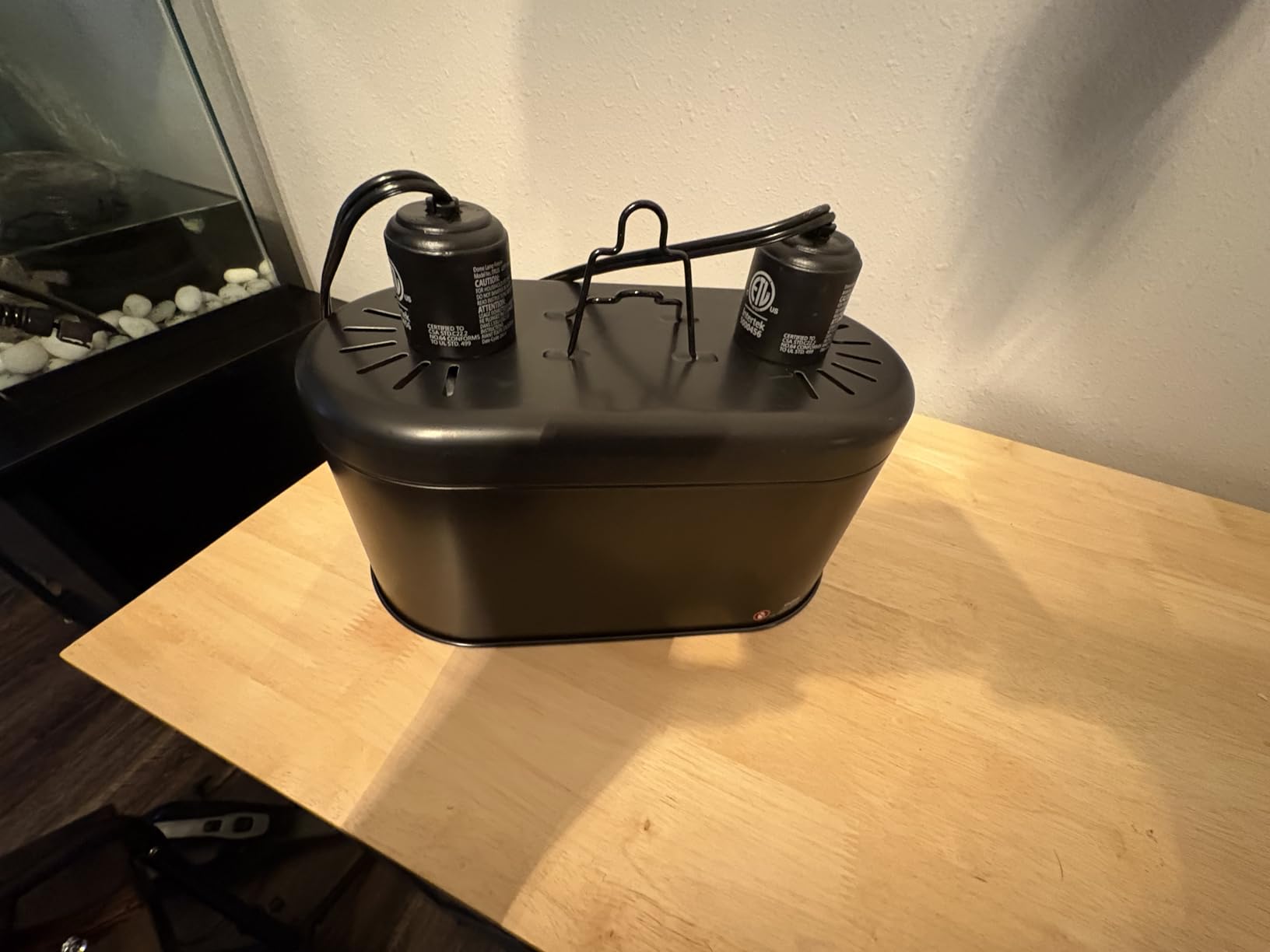
The ceramic sockets also matter. Plastic sockets deform under sustained heat, and a deformed socket stops making contact, which is the sort of failure that shows up as a lamp that works on one day and not the next. The hanging hook and the top ventilation holes are small details that make it easy to position above a screen top on a lamp stand.
The narrow spot is real. A dome concentrates light, so a compact fluorescent placed in it throws a visible circle of UV on the enclosure floor rather than an even wash. That is acceptable for a single spot where basking light and UV meet in a small terrarium. It is not a substitute for a linear T5 HO over a wide enclosure.
Who this fixture suits
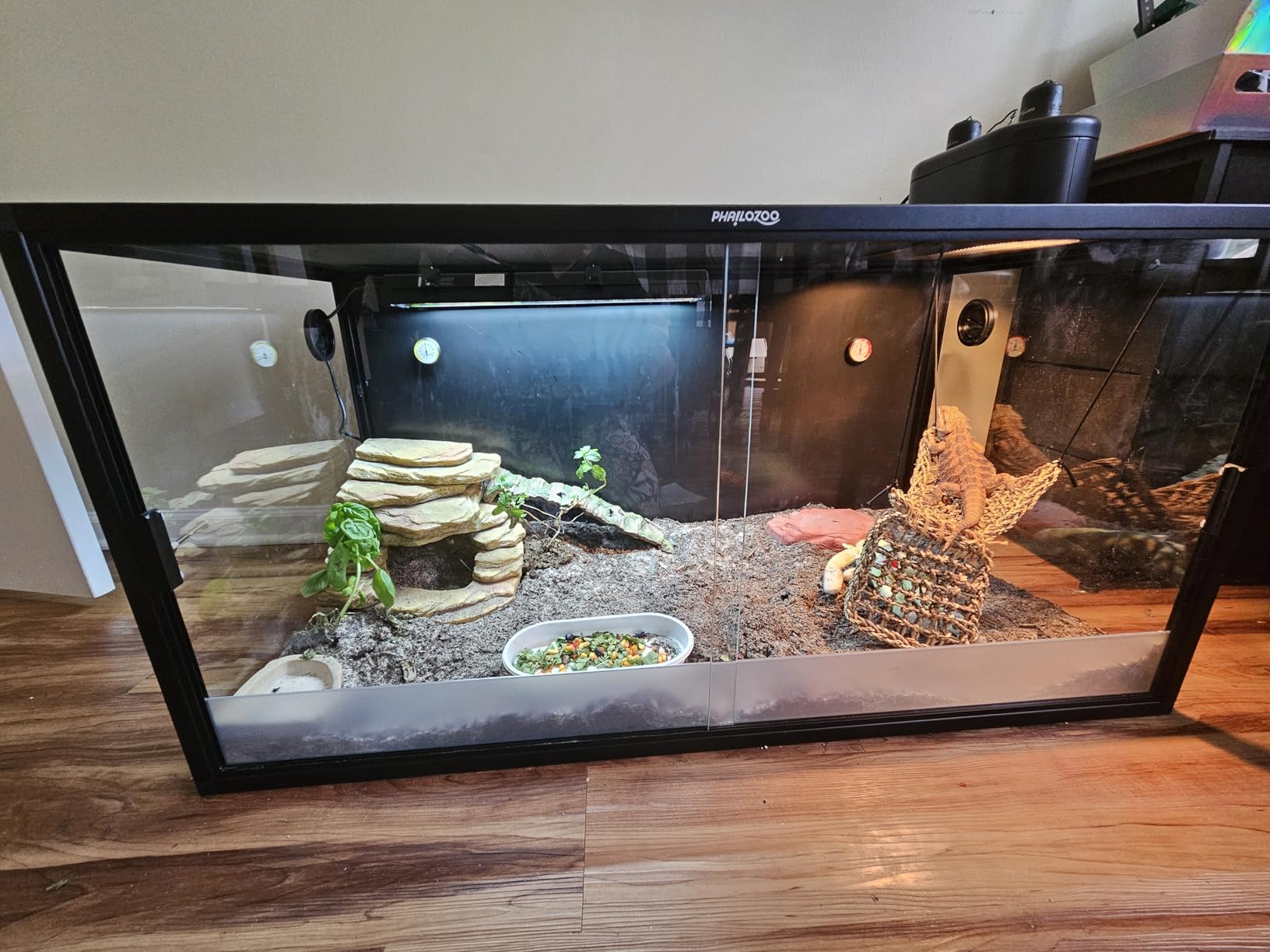
It suits a beginner who already knows which species is coming, or who wants to buy a compact fluorescent now and a stronger tube later. It also suits anyone running a small to medium enclosure where one basking spot and one UV source is the whole plan.
The two-switch layout means you can wire a probe thermostat to the heat side and a plug-in timer to the UV side, which is the setup that most experienced keepers describe as the baseline rather than an upgrade.
Who should skip it
Skip it if you want one purchase. You will still need to choose and buy a basking bulb and a UV lamp, and that is exactly the decision this roundup exists to make simpler for you.
Also skip it for wide enclosures. Two domes side by side cover roughly 24 inches of width, and beyond that the outer thirds of the tank get light but not usable UV.
3. REPTI ZOO T5 HO UVB Lighting Combo Kit – the best linear kit for a 24 inch bearded dragon enclosure
REPTI ZOO T5 HO UVB Lighting Combo Kit, Terrarium Hood Comes with Desert 10.0 UVB T5 Lamp (24W)
24W 10.0 T5 HO tube
Curved polished reflector
24 inch coverage
0.59 kg
Pros
- T5 HO tube and fixture in one box
- Polished curved reflector widens the beam
- Sized for 24 inch enclosures
- Works on 120-240V
Cons
- Some ballast failures reported
- Mostly plastic construction
- Protector caps to remove before mounting
This is the format that forum consensus points to as the default safe answer. A 24 watt high output T5 lamp throws UV across a wide, even area rather than a single point, and the 10.0 tube in this kit is a desert-strength lamp. For a 24 inch enclosure holding a juvenile bearded dragon, it does the job a dome fixture cannot.
The reflector is where output really comes from. This kit uses a highly polished curved reflector, which takes light that would otherwise scatter upward and rearward and pushes it down into the enclosure. That geometry is exactly what the community means when it says to favor established reflector designs over unbranded lookalikes.
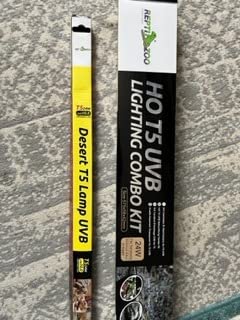
A caution that applies to this kit and every compact T5 product: check for a plastic UV cover. Some units arrive with a plastic protector over the tube. If it is still on at night, you get no usable UV from a lamp you are paying for. The end caps on this fixture are the safety kind and stay in place, but the shipping film over the tube is not the same thing.
It is also a UV-only fixture. There is no heat source in this box, so you still need a basking lamp and a dome, plus a thermostat for it. Reviewers do raise durability concerns, with a number of ballast failures reported after several months, so keep the receipt and set a seasonal reminder to re-check the lamp’s brightness.
Who this kit suits
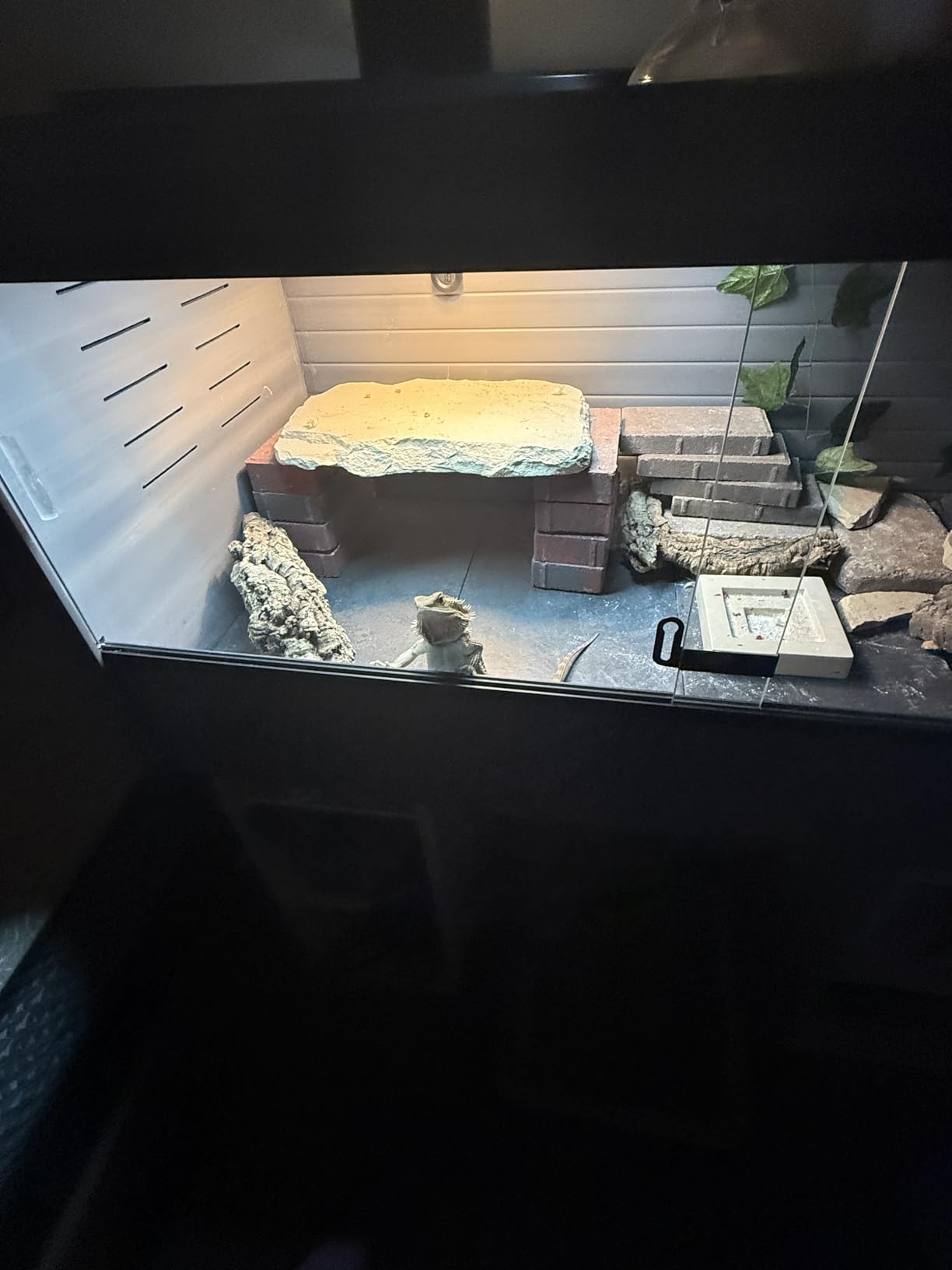
It suits a keeper with a juvenile bearded dragon, uromastyx, or tortoise in a 24 inch wide vivarium who wants linear UV spread and can add a separate basking lamp. It also suits anyone who has read that compact fluorescents are not enough for a diurnal desert species and wants the format that answers that concern.
If your enclosure is taller than 36 inches, note the tube size guidance that comes with this fixture family: 24 watt for 24 inch enclosures, stepping up to 39 watt for 36 inch and 54 watt for 48 inch. Taller vivariums need a longer tube or a higher mounting position, and a 24 watt lamp in a 48 inch tank will leave the far corners bare.
Who should skip it
Skip it if you want a one-box setup, because there is no heat lamp in the package. Skip it if you plan a very tall enclosure without stepping up to a larger tube size, since the beam will not reach the bottom of a 48 inch vivarium from a 24 watt lamp mounted at the top.
4. Zoo Med Aquatic Turtle UVB & Heat Lighting Kit – the best kit for a wet turtle enclosure
Zoo Med – Lght KIT AQTURTLE HEATUVB
Splashproof 100W halogen
Two light sources
11.13 inch deep dome
2.4 pounds
Pros
- Splashproof halogen designed for water setups
- 4.6 stars from 2838 reviews
- Metal deep dome and dual sources
- Holds 800 lumens
Cons
- Built specifically for aquatic turtles
- Halogen runs hot and needs clearance
- Not versatile for terrestrial reptiles
This draws a 4.6 star rating across 2838 reviews, and it earns that with a specific design choice: a splashproof 100 watt halogen basking lamp. A standard halogen breaks when splashed, and a turtle enclosure is a splash zone by definition. This one is built for it.
Two light sources come in the box, which is what makes the rating consistent rather than occasional. You get the halogen for a hot, bright basking platform above the waterline and a UV source for calcium metabolism. Both mount in a metal deep dome measuring just over 11 inches, tall enough that the lamp face sits fully inside the reflector.
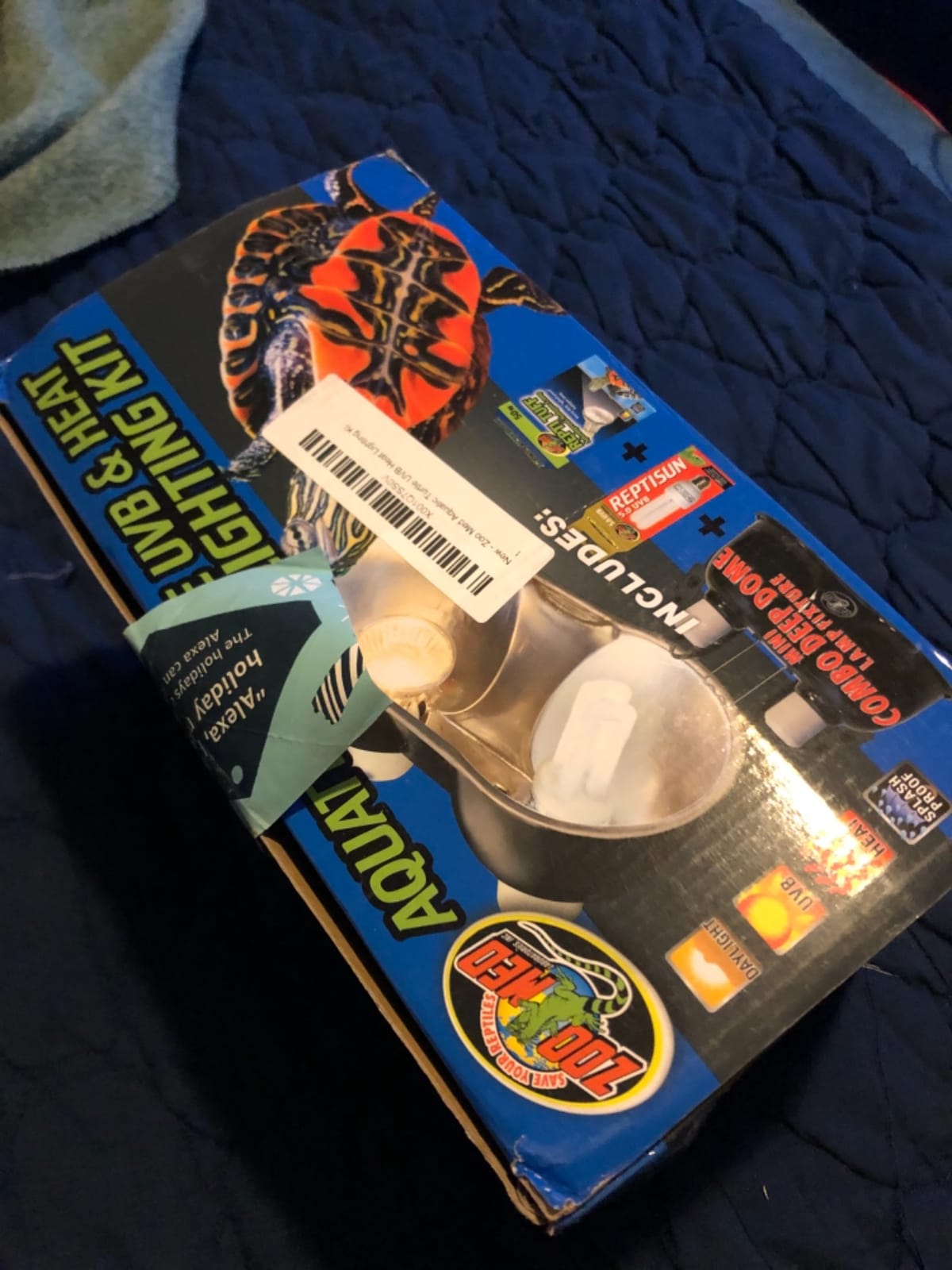
Metal rather than plastic is the second reason to like it. A wet enclosure is a humid enclosure, and metal housings do not sag or creep the way plastic can over time in a warm damp space. The build is simple and heavy at 2.4 pounds, which also means it stays put when you reach into the tank.
Halogen produces more heat than almost any alternative, so this is a fixture where a thermostat matters. Without one, a spotlight halogen in a small aquarium can push the water temperature past what the animal can escape. Plan for a probe thermostat before the first warm day.
Who this kit suits
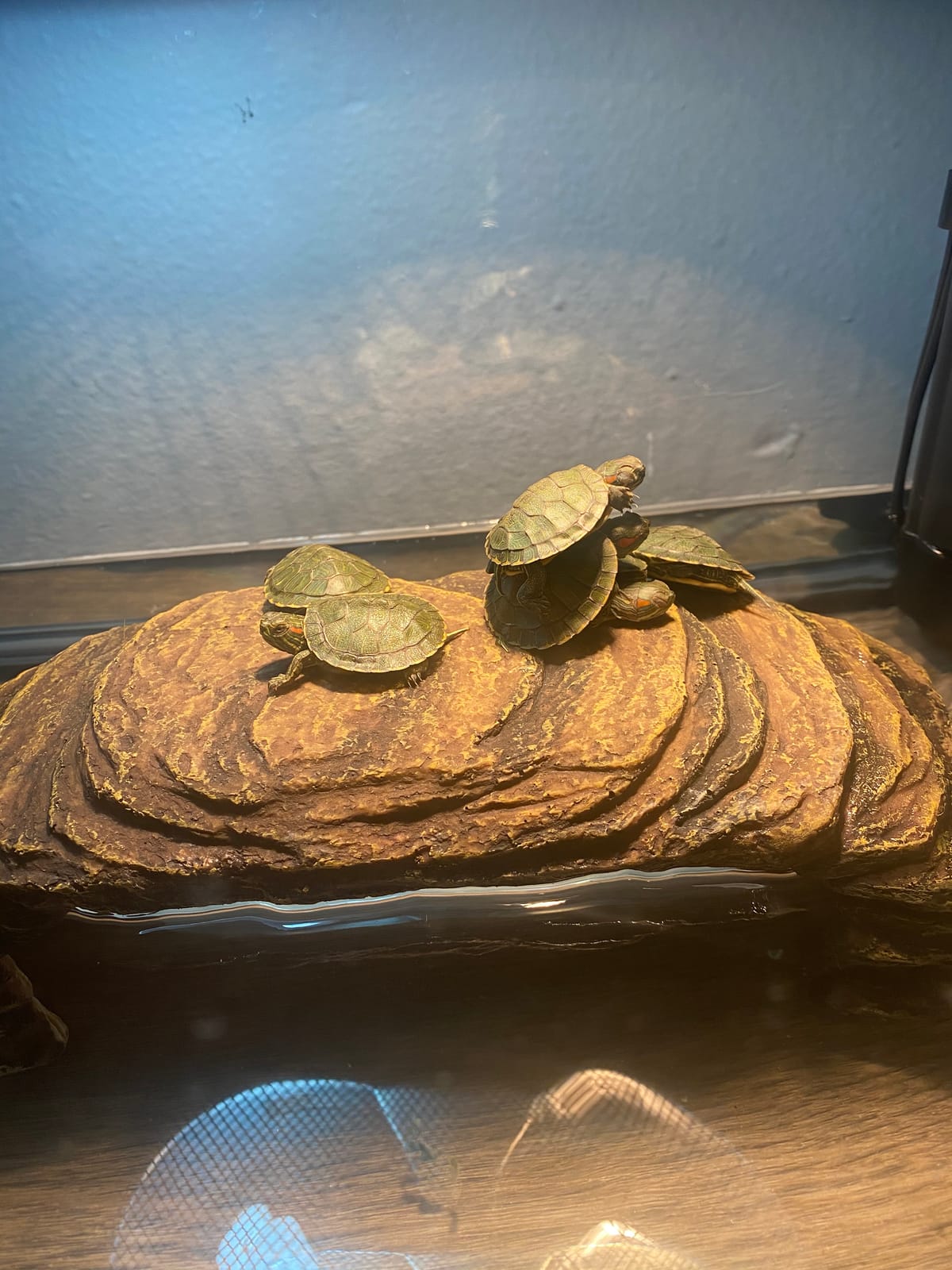
It suits a first-time aquatic turtle keeper who wants heat and UV from a single brand-matched box in a wet enclosure. It also suits anyone keeping a semi-aquatic setup where a splashproof lamp is the deciding factor between a setup that lasts and one that does not.
The 800 lumen output means the basking platform above water will be bright and clearly defined, which is what encourages a turtle to haul out and bask rather than staying in the water where it cannot synthesize vitamin D3 effectively.
Who should skip it
Skip it for anything terrestrial. There is nothing wrong with a halogen basking lamp, but the kit is built and warranted around a wet environment, and you would be paying for splashproofing you would not use.
Also skip it if you have a large adult turtle enclosure, since a single 100 watt lamp in a long pool spreads heat thinly. Bigger animals need a bigger heat zone, not a hotter small one.
5. LUCKY HERP T5 8W 10.0 UVB Kit – the best budget T5 combo for a small terrarium
LUCKY HERP T5 Reptile Light Fixture Combo Kit 8W (New Upgrade), 10.0 UVB Light for Reptiles and Amphibians, UVA UVB Basking Light Desert Lamp for Lizard, Bearded Dragon, Tortoise 12inch
8W 10.0 UVB tube
Alloy reflective layer
12 inch fixture
0.62 kg
Pros
- T5 fixture and 10.0 tube in one box
- Alloy housing sheds heat
- 100-250V ballast
- Range of sizes from 12 to 46 inch
Cons
- 8W covers a small footprint only
- Flicker and connection issues reported
- Smaller review base
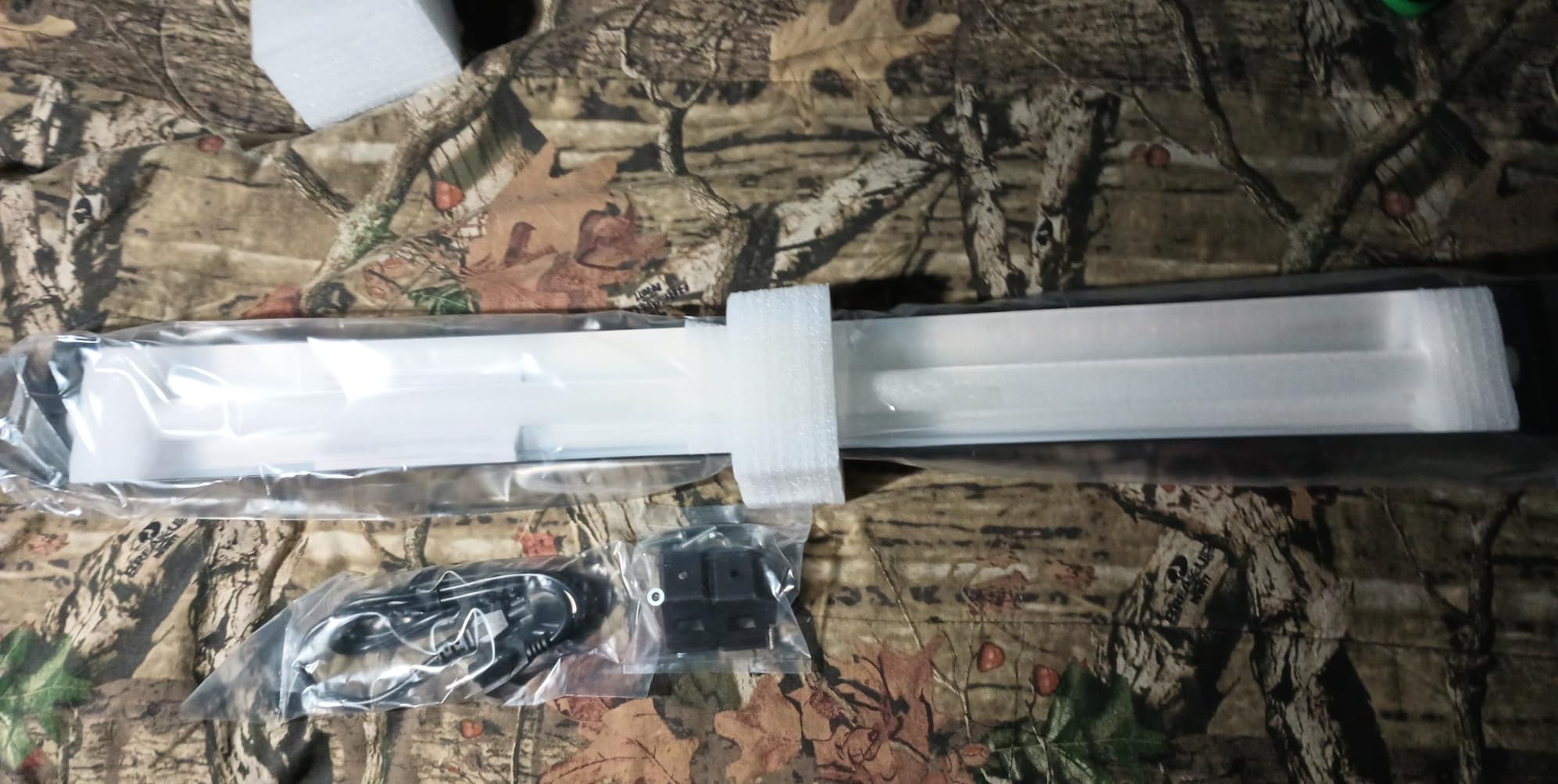
This is a low-cost way into a genuine T5 format with the tube already seated in the fixture. The 12 inch version includes an 8 watt 10.0 UVB fluorescent lamp, an alloy metal reflector, and an aluminum housing, and the ballast runs on 100 to 250 volts so it travels between regions without a converter.
The manufacturer claims the alloy reflective layer raises UVB and UVA output substantially compared to a bare tube. Treat the exact percentage as a marketing figure rather than a measurement, since no independent UV reading is published. What is verifiable is the geometry: a reflector behind the tube pushes light downward instead of losing it to the back of the enclosure.
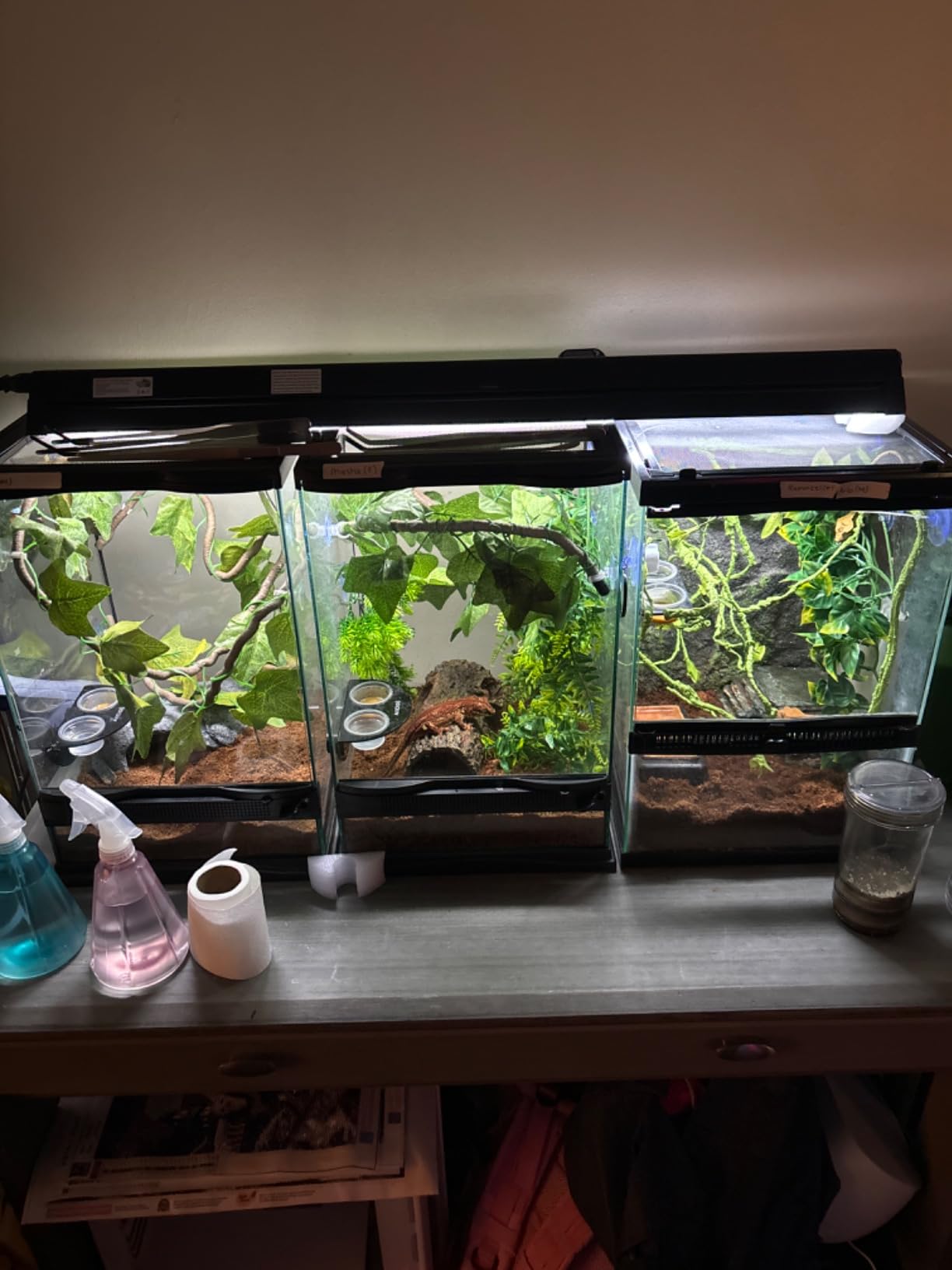
The 4.1 rating is the lowest in this roundup and the reviews explain why. Multiple owners report flickering or lamps that will not seat properly, and some describe lamps that stopped working after the return window closed. That is a real reliability concern on a lighting component, because a failed ballast means a dark enclosure until you notice.
The 8 watt tube is also the limiting factor. It covers a 12 inch footprint well and is genuinely useful in a 10 gallon or 20 gallon long setup. Scaled up to a 40 inch adult vivarium, you would want a much higher wattage. The good news is that this kit family comes in larger sizes, so you can step up without changing formats.
Who this kit suits
It suits a beginner on a tight budget who has a small enclosure, a nocturnal or crepuscular species, or a juvenile animal that will outgrow the setup within a year. In those cases the low wattage is an advantage rather than a compromise, because a strong lamp in a small tank overheats quickly.
It also suits anyone who wants a linear format as a stepping stone. Owning a T5 fixture teaches you mounting distance and reflector geometry before you commit to an expensive setup.
Who should skip it
Skip it for an adult diurnal desert animal. A single 8 watt tube is not enough width or intensity for that animal, and a 4.1 rating with reported connection problems is not the foundation you want to build a long-term enclosure on.
Skip it if your enclosure is taller than 18 inches and you cannot raise the fixture, because the beam thins out fast as distance grows.
6. Hygger zoo T5 10.0 UVB 12 Inch Combo Kit – the best small kit for nano and 10 gallon enclosures
T5 UVB Reptile Light Fixture HO UVB Bulb Lighting Combo Kit, 10.0 UVB Light for Reptiles Terrarium Hood with 8W Reptile Light Bar UVA UVB Desert Lamp for Bearded Dragon Turtle Tank, 12 Inch
8W 10.0 UVB tube
12 inch aluminum housing
Curved reflector
1.04 pounds
Pros
- Fixture and 10.0 tube included
- Mounts on mesh or inside the tank
- Aluminum housing dissipates heat
Cons
- Blue protective film must be removed
- Some early fixture failures
- Mounting hardware not secure on every tank
Where the previous kit is a value option, this one is a footprint option. It is a 12 inch T5 housing with a highly polished curved reflector, an aluminum body for heat dissipation, and an 8 watt 10.0 tube, aimed squarely at 10 gallon and nano enclosures where a 24 inch bar would be physically pointless.
Two mounting methods are offered, on a mesh cover or inside a glass tank or wooden vivarium. That second option is the one worth knowing about. UV output falls off sharply through glass and acrylic, so mounting inside the enclosure or directly under a screen is the difference between usable light and a bright room lamp. This kit supports both because the housing is narrow.
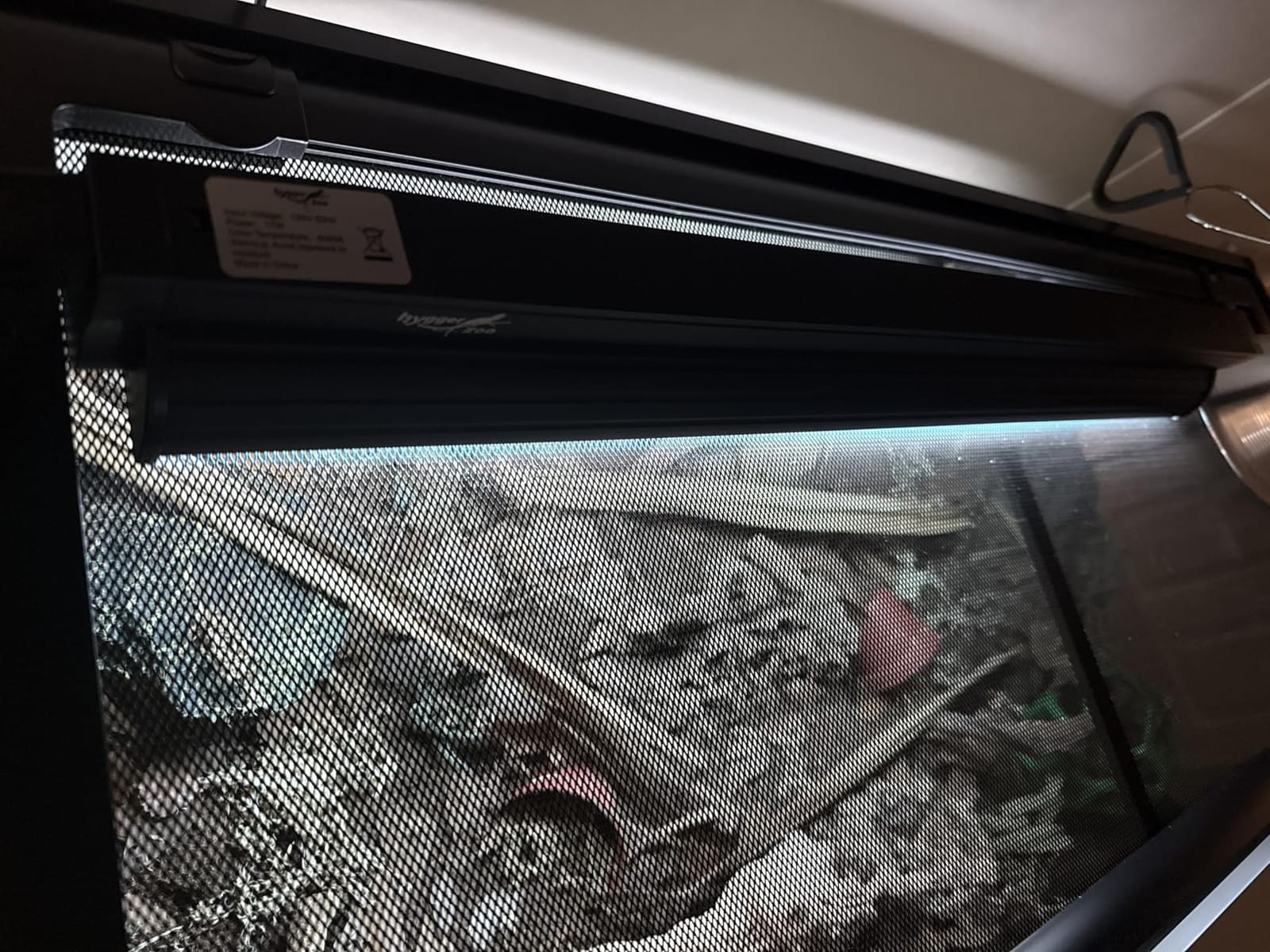
One instruction is not optional: pull the blue protective film off the tube before you mount it. Reviewers mention this repeatedly, and a film still in place can cause the tube to overheat and shatter. It takes ten seconds and prevents the single most common early failure with new T5 tubes.
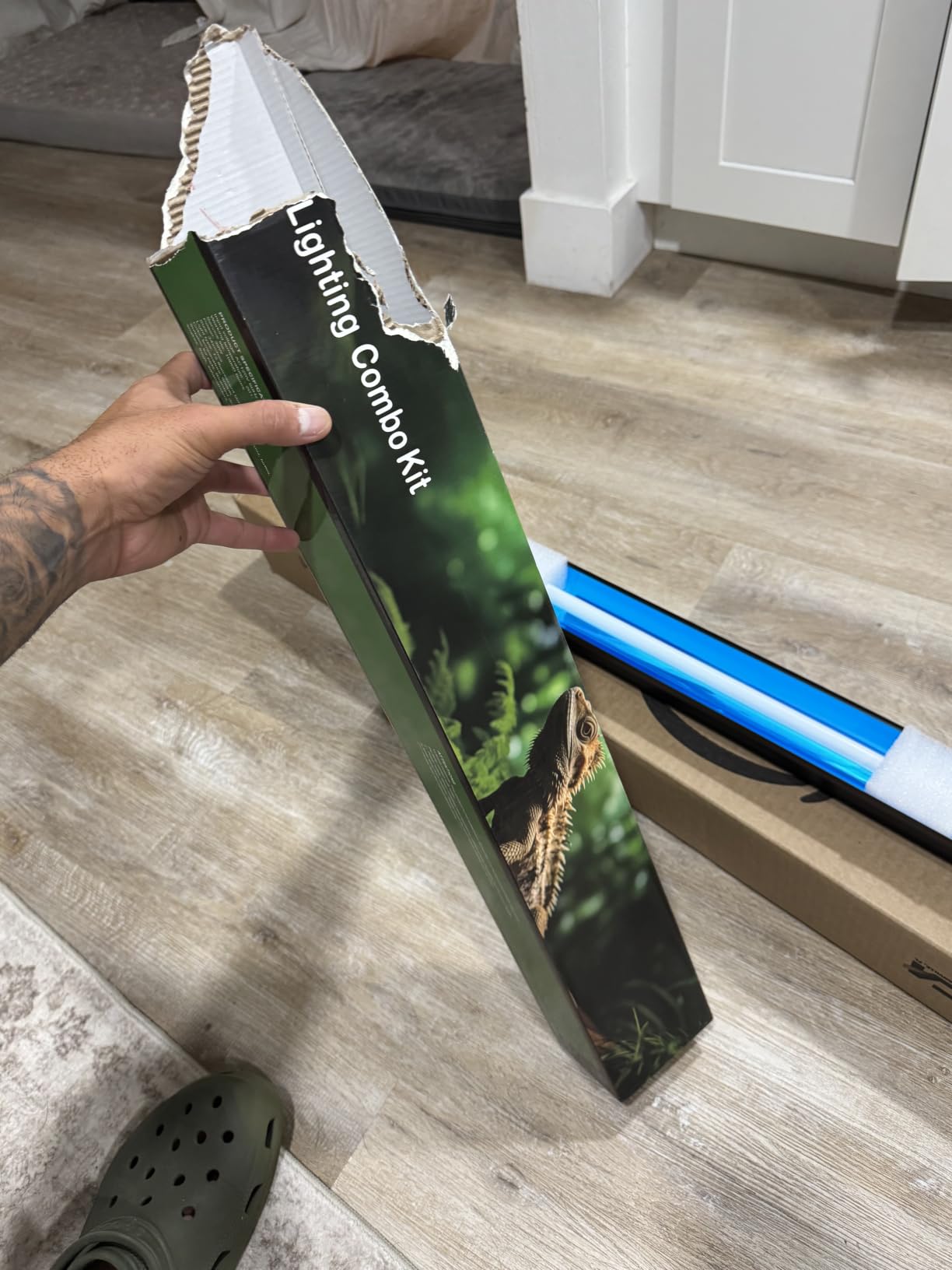
The rating sits at 4.2 from 491 reviews with a number of one-star reports about fixtures failing after three or four months, plus a few bulbs arriving dead. Because this is a newer product, treat that as limited long-term data rather than a settled verdict, and check the lamp monthly for the first season.
Who this kit suits
It suits a beginner with a juvenile animal in a 10 gallon or 20 gallon long enclosure, a leopard gecko or crested gecko keeper who wants a shade-level light source, and anyone who needs a bar that physically fits a small hood.
It also suits a keeper who already owns a heat dome and only needs the UV half. The reflector and the 10.0 tube are the part of the setup most often omitted when a bare dome is used instead.
Who should skip it
Skip it for adult animals in wide enclosures, where a 12 inch bar leaves the far end of the basking platform unlit. Skip it if you want a wide, even UV field and would rather start with a 22 or 24 inch fixture.
7. REPTITRIP 16 Inch LED UVB Light – the best kit with a built-in timer and day-night dimming
REPTITRIP 16-Inch LED UVB Reptile Light with Auto On/Off & Preset Day-Night Cycle Dimming, 4 UVI Modes Fixture Controller, 14W Aluminum UVA UVB Lamp for Bearded Dragons, Turtles & Snakes, 6500K
14W LED UVB source
Four UVI modes
1200 lumens
7000 hour life
Pros
- Timer and dimming built into the fixture
- Four UVI presets for different zones
- Runs cool with no heat output
- 7000 hour rated LED life
Cons
- Adds no heat so needs a separate basking lamp
- Not sealed against heavy humidity
- LED UV is newer than linear fluorescent
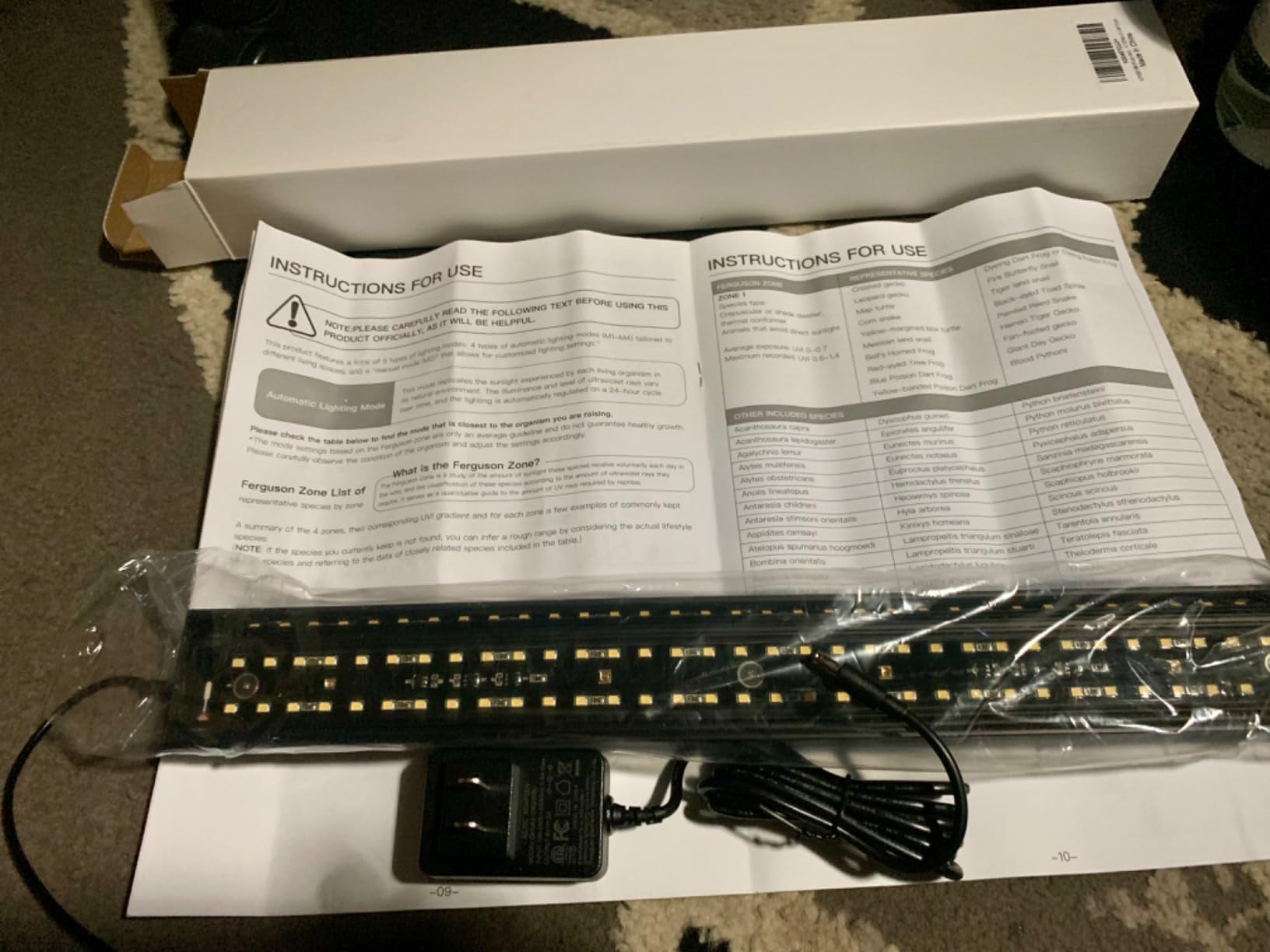
This is the only kit here with a controller built in, and for a beginner that changes the setup math. There is no separate plug-in timer to buy, no menu to learn on a wall timer, and no risk of forgetting to switch the UV off at night. Auto on and off with preset day-night cycle dimming is the entire point of the product.
The four UVI modes are the feature experienced keepers would most want and rarely find in a budget fixture. Modes M1 through M4 correspond to different Ferguson zone intensities, so you set the lamp for a shade dweller or a high-desert species with a button instead of guessing at mounting distance. The 6500K cool white output and 1200 lumens give a bright daytime surface without adding meaningful heat.
It is a 14 watt LED with a rated life over 7000 hours, which is many times the working life of a fluorescent tube. There is no glass to break and no ballast to fail, and the aluminum housing dissipates whatever little heat exists. Reviews rate the instructions highly, with species-specific guidance that is genuinely more useful than most included manuals.
Two honest limits. First, it produces no heat, so a basking lamp and thermostat are still required for any species that needs a warm zone. Second, it is not sealed for heavy humidity, and buyers in tropical setups report corrosion over time, so keep it out of the spray zone.
Who this kit suits
It suits a beginner who wants the day-night cycle handled automatically and who would rather not maintain a separate timer. It also suits anyone whose reptile is sensitive to light at night, since the dimming presets let you dim toward darkness rather than snapping from full brightness to black.
It works well in a bioactive tropical enclosure where a fluorescent tube would sit in constant humidity, and in enclosures where a glass top would eat most of the UV output.
Who should skip it
Skip it if you want one box to do everything, because there is no heat source. Skip it if you keep nocturnal species, where a daylight UV bar is largely wasted spend, and consider it cautiously for very high desert species until you have measured output with a UVI meter at the basking surface.
8. MIXJOY T5 HO UVB Light Kit 22 Inch 24W – the best mid-size kit for a 24 inch vivarium
MIXJOY T5 HO UVB Reptile Light Kit, 22Inch 24W 10.0 Bulb for Bearded Dragon
22 inch T5 HO fixture
24W 10.0 UVB bulb
Polished aluminum reflector
12-18 inch reach
Pros
- Fixture bulb hardware and manual all included
- Polished reflector for wide coverage
- Three mounting positions
- Flicker free ballast
Cons
- Short review history
- Occasional bulb damage in transit
- Less support for a newer brand
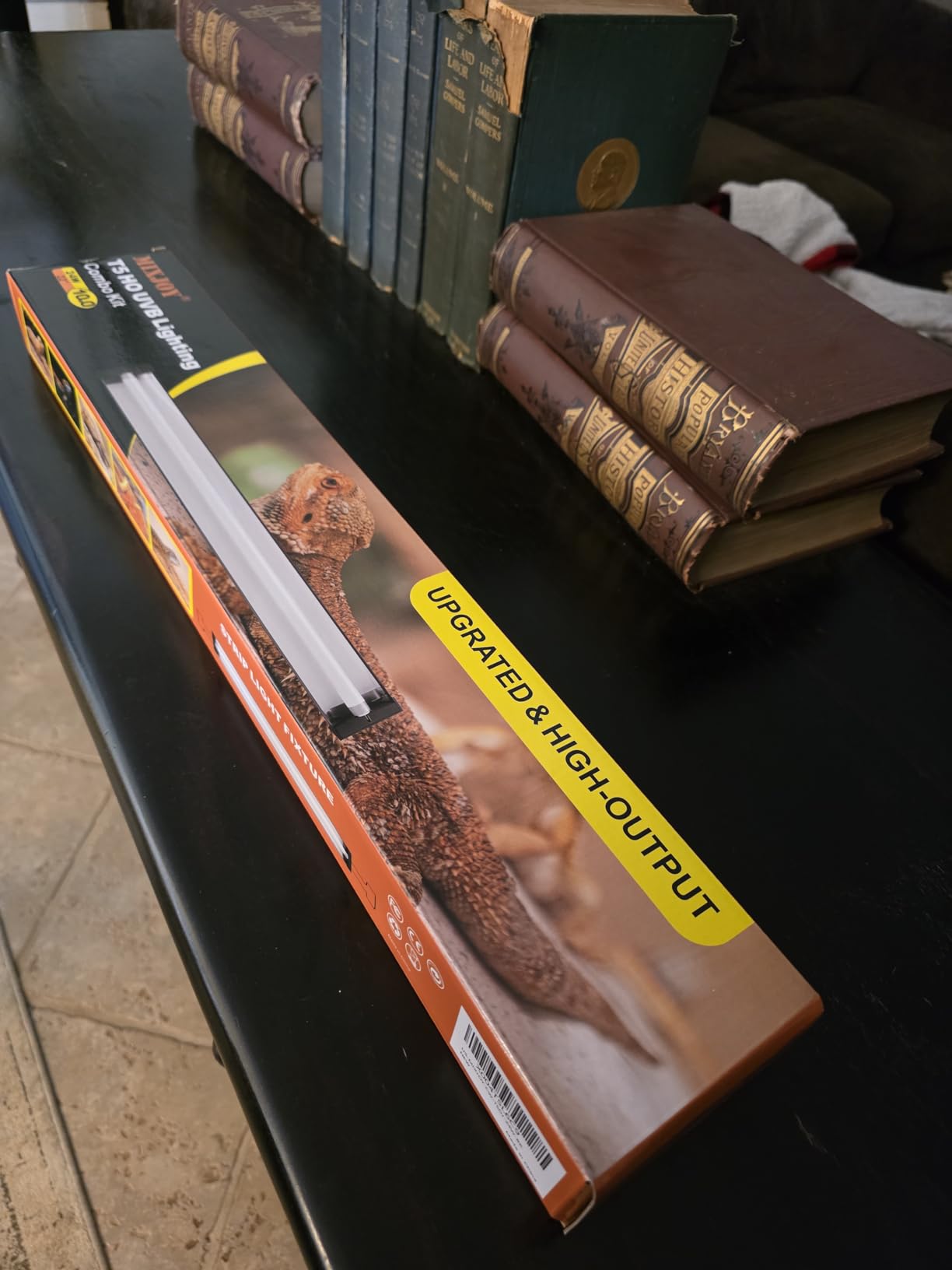
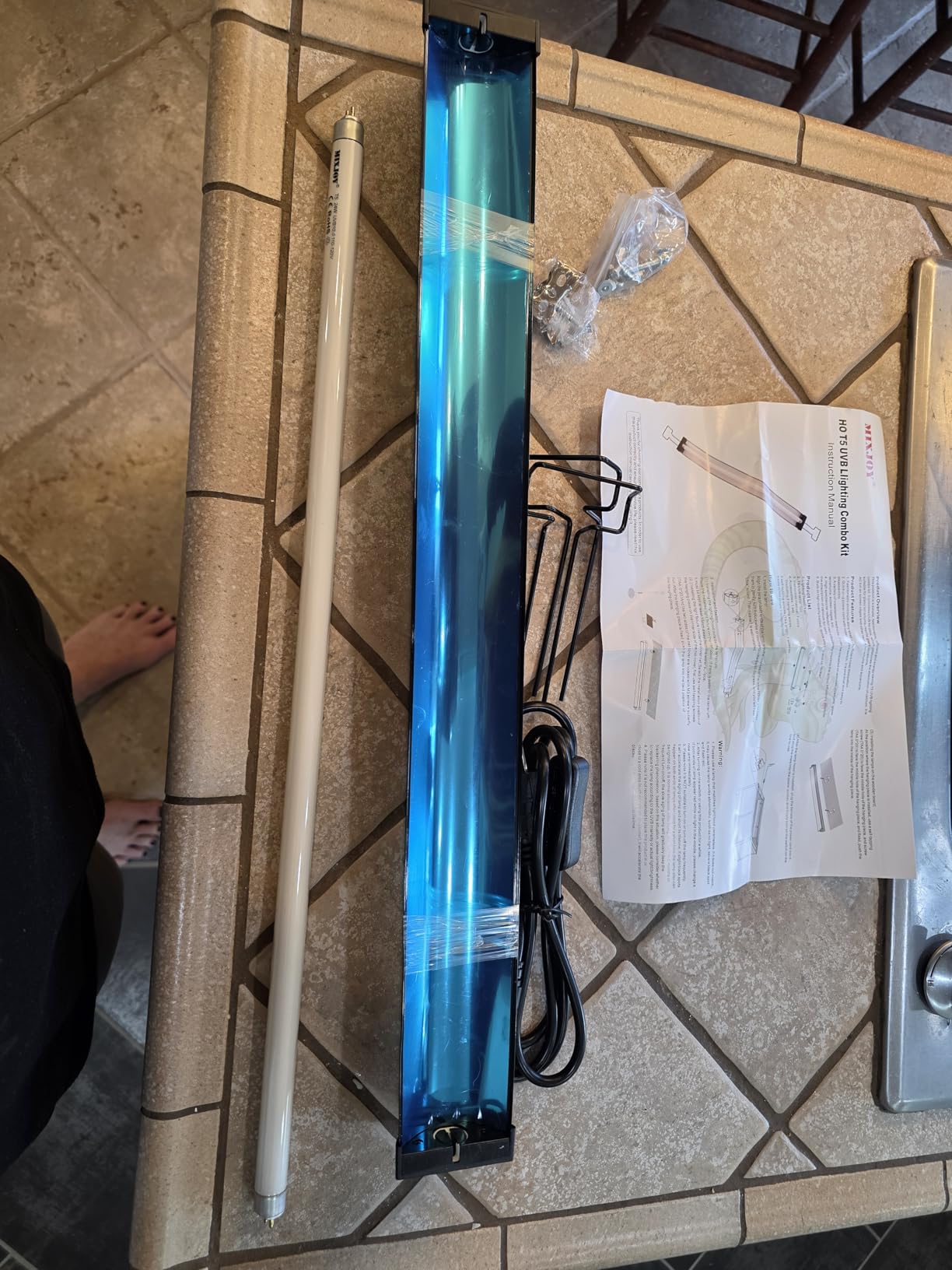
What this kit does better than most is include everything in the carton. The fixture, a 24 watt 10.0 UVB T5 HO bulb, mounting clips, screws, a power cable, and a manual arrive together. Nothing is missing and nothing needs a second order, which for a first setup removes a real source of delay.
The reflector is specified as 95 percent or better polished aluminum, and the effective coverage is stated as 12 to 18 inches of vertical reach. That number is the one to use when you are setting mounting height. Know where your basking surface sits and mount the fixture so the beam still lands on it at the top of the enclosure.
Three mounting positions are supported: above mesh, beneath a screen, and on a wooden enclosure frame. That flexibility matters because the correct answer depends on your top. A wooden vivarium with a solid top will cut output badly unless the fixture sits inside or directly under the vent, so a kit that lets you move the bar is one you can adapt later.
The rating is 4.3 from 236 reviews, which is a small sample and one to treat cautiously. Reviewers mention a fixture failing after roughly three months and one bulb arriving broken. A flicker free electronic ballast is claimed, and no one describes visible strobing, which is worth something for a shallow-water or glass-sided tank.
Who this kit suits
It suits a keeper building a 24 inch long vivarium for a juvenile bearded dragon, tortoise, or uromastyx, who wants a high output linear lamp and complete mounting hardware in one purchase. The 24 watt tube is the right class of power for a tank of that size.
It also suits anyone who wants to learn the mounting geometry properly. With hardware for three positions and a stated coverage range, you can experiment until the UV beam and the basking beam overlap in one spot, which is the arrangement experienced keepers treat as the goal.
Who should skip it
Skip it if your setup is very small, since a 22 inch bar in a 10 gallon tank is oversized and you would be paying for reach you cannot use. Skip it if long-term support matters to you more than price, because a newer brand with 236 reviews has a thinner record when something fails.
9. REPTIDLDB 24W T5 UVB Combo Kit 22 Inch – the best kit with a replaceable tube and responsive support
24W T5 UVB Reptile Light Fixture Combo Kit – 10.0 UVB Fluorescent Tube for Bearded Dragons, Lizards & Tortoises – UVA UVB Reptile Light, 22″ Terrarium Hood (UVB 10.0-Desert, 22INCH-24W)
22 inch T5 fixture
24W 10.0 UVB tube
10% UVB and 30% UVA
No flicker ballast
Pros
- Replaceable 10.0 tube so UV is not a one-off cost
- Built-in no flicker electronic ballast
- Alloy reflective layer
- Mounts over mesh or on a tank lid
Cons
- Only 136 reviews so far
- One reported ballast failure at four months
- Blue film to remove before use
The design decision here is the replaceable tube. Most kits that include a bulb treat the whole fixture as disposable when UV fades, which is a false economy given that bulbs are rated for a limited number of hours. This one uses a standard replaceable 10.0 fluorescent, so a year two refresh costs one tube rather than a new fixture.
Output is stated as 10 percent UVB with 30 percent UVA, which puts it in the desert range, and the built-in electronic ballast is described as flicker free. Minimal heat emission means it will not fight your basking lamp for control of the enclosure temperature, which is a quiet benefit in a small tank.
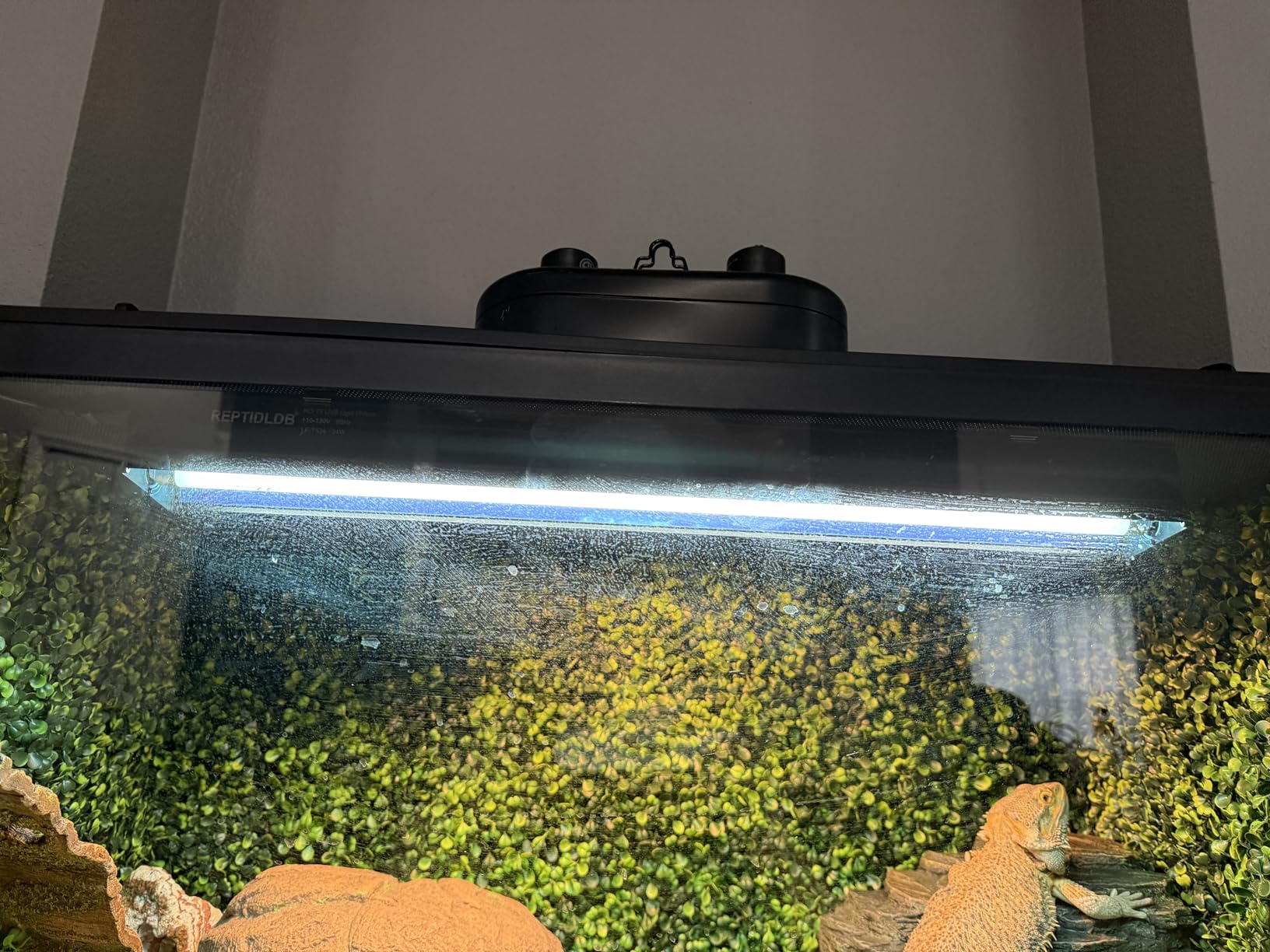
Mounting is flexible, working over a mesh top or internally on a tank lid, and a detachable cable with an on and off switch is included. It ranks near the top of reptile and amphibian habitat lighting, which tells you more about sales velocity than quality, but the 4.5 rating from 136 reviews is a strong early signal.
The sample is small, and that is the honest caveat. Buyers report vendor support that includes replacements when a ballast fails, which is exactly the situation you want covered, but 136 reviews cannot yet tell you how this fixture behaves at year three.
Who this kit suits
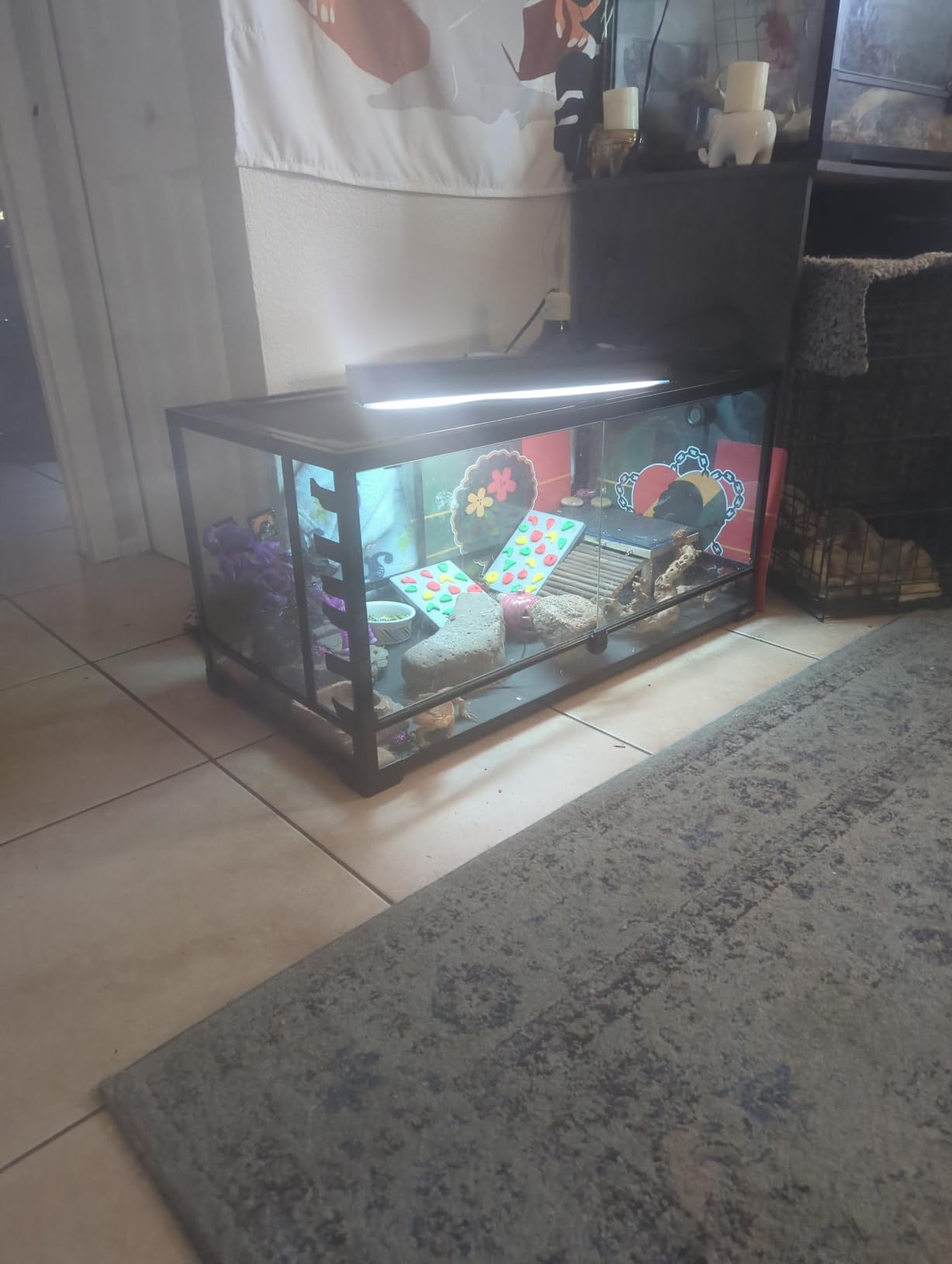
It suits a keeper who plans to keep the same fixture for years and wants to control ongoing replacement costs. It also suits anyone whose enclosure top is a screen or a light lid, since external and internal mounting are both supported and UV loss through glass is the most common beginner error we saw described.
The 22 inch 24 watt configuration matches a juvenile to subadult desert animal well, and the size range extends up to a 46 inch fixture if your enclosure grows.
Who should skip it
Skip it if you want the longest proven track record available, because this kit is new and lightly reviewed. Skip it if your animal is a shade dweller, since a 10 percent desert tube is stronger than a leopard or crested gecko needs. For those species, a lower output tube is the closer match.
10. REPTI ZOO Heat Lamp Combo Pack with Dual Fixture – the best all-in-one starter with a basking lamp included
REPTI ZOO Reptile Heat Lamp Combo Pack with Dual Reptile Light Fixture, 100W Intense Basking Spot Light UVA Daylight Heating Lamp & 26W Energy Saving UVA UVB Bulb Spiral Compact Bulb 10.0
100W basking spot
26W 10.0 spiral UVB bulb
Dual switched fixture
ETL certified
Pros
- Fixture plus both bulbs in one box
- Two independent switches
- ETL certified with a one year warranty
- Hanging hook included
Cons
- Compact UV is weaker than a T5 HO tube
- Dome limits UV spread
- Small review base
This kit bundles the most components into one box. You get the dual fixture, a 100 watt intense basking spot lamp, and a 26 watt 10.0 spiral compact bulb, plus a hanging hook. Three components, one box, and a real heat source, which is the piece most dome-only bundles leave you to source yourself.
That 100 watt basking spot is rated for 2000 to 3000 hours and claimed at a 35 percent efficiency improvement over a conventional incandescent. A 400 watt incandescent equivalent in a small or medium terrarium is a meaningful basking zone. It also means you need a thermostat immediately, because a 100 watt lamp with no thermostat is a burn waiting to happen.
Each socket handles up to 150 watts and has its own switch, so heat and UV run on independent lines, which is the correct arrangement for a 10 to 12 hour UV schedule and an overnight heat zone. The fixture is ETL certified and carries a one year manufacturer warranty, and ventilation holes help move heat out of the dome.
The limitation is the UV source. A spiral compact spreads light from one point and outputs less UV than a linear T5 HO tube, which experienced keepers describe as inadequate for a full-grown bearded dragon. In a 20 gallon or smaller it is a reasonable starting point. In a 4x2x2 adult enclosure, plan to add a linear lamp within the first year.
Who this kit suits
It suits a beginner who wants both heat and UV in the box on day one, in a small to medium enclosure, and who would rather not make a second purchase before the weekend. It also suits anyone who already owns a quality basking lamp and just needs a dual fixture with two switches.
The compact bulb is quoted as good for 365 days at 6 to 8 hours a day, so it roughly matches a standard annual replacement cycle. Set that reminder now rather than waiting for the animal to look dull.
Who should skip it
Skip it for large enclosures and adult high-desert species, where compact UV output is the limiting factor. Also skip it if you plan to run a deep heat projector or ceramic emitter instead, since the 100 watt spot in this box would then be redundant.
How to Choose a Beginner Reptile Lighting Kit in 2026?
What bulbs do reptiles need?
Most reptiles need three things from a lighting setup. First, a UVB lamp or tube, because without usable ultraviolet the animal cannot synthesize vitamin D3 and absorb calcium properly. Second, a basking or halogen bulb for a warm, bright daytime zone the animal can move toward and away from. Third, a non-light heat source such as a ceramic heat emitter or a deep heat projector if your species still needs warmth at night, plus a thermostat and thermometer to hold it steady.
Snakes are the exception worth stating plainly. UVB is optional rather than required for most commonly kept snakes, because they do not bask to process calcium the way a bearded dragon does. A heat gradient and a hiding place on both the warm and cool side matter far more than a UV tube. If you are undecided, treat UVB as inexpensive insurance.
Is a basking light the same as a UVB light?
No, they are different bulbs doing different jobs, and most reptiles need both. A basking light is a heat lamp: it produces visible light and radiant heat, and it produces no UVB at all. A UVB lamp produces short-wavelength ultraviolet for vitamin D3 synthesis and calcium absorption, and it produces very little to no heat. The only overlap is that a well-made UV lamp also throws some UVA, which supports color and behavior rather than calcium.
That single distinction explains the most common beginner failure. A tank with a red bulb and a dome looks lit, and the animal sits under a warm rock, and six months later the bones are soft. Heat and ultraviolet are not interchangeable, and a kit with only one of them is not a complete kit.
Choose T5 HO unless the kit is tiny
T5 HO is the format to buy by default, because it spreads UV across a wide area and reaches further than a compact bulb of the same nominal strength. The tradeoff is price, physical size, and the need for a reflector of decent quality. T8 tubes are the older standard, cheaper and easier to find, but lower output and often the plastic cover trap.
T5 HO linear: wide, even UV spread, mounted inside the enclosure or directly under a screen. The right choice for any adult animal or any enclosure over 24 inches.
T8 fluorescent: moderate, point-source output. Check for and remove any plastic cover. A budget build only, and only after output is verified.
Compact CFL: narrow output from a single point, mounted close to the animal under 18 inches. Suits small enclosures, juveniles, and temporary setups.
LED UVB bar: even output with no heat, mounted above mesh or inside. Suits automatic day-night cycles and tropical setups.
The plastic cover deserves its own warning because it appears on so many kits. Some compact and T8 fixtures arrive with a clear plastic cover over the tube. It blocks essentially all UVB. Experienced keepers on beardeddragon.org describe it plainly as a deal breaker, and it is removed with a few screws in about two minutes. Check the fixture the day it arrives, before you mount anything.
Tubular bulbs also fade faster than most beginners expect. A 10.0 tube that still glows brightly in your hand can be delivering a fraction of its original UV, and the animal is the one that notices, through poor calcium processing rather than any visible symptom.
Kit completeness checklist: five things to confirm
Before you buy any of these kits, confirm five things in the listing. One: is the bulb included, or is this a bare fixture? Two: is the UVB source linear T5 HO, or a compact? Three: can heat and UV be switched independently? Four: is the socket ceramic, and what is its wattage rating? Five: does the reflector look like a reflector, or a flat plastic cover?
Add a sixth, non-electrical item: buy any of these kits and you still need a thermostat and a thermometer. A dimmer or a low wattage bulb is not a substitute for a thermostat. Regulated heat is what separates a setup that works for ten years from one that works for one.
How to verify your kit is actually working
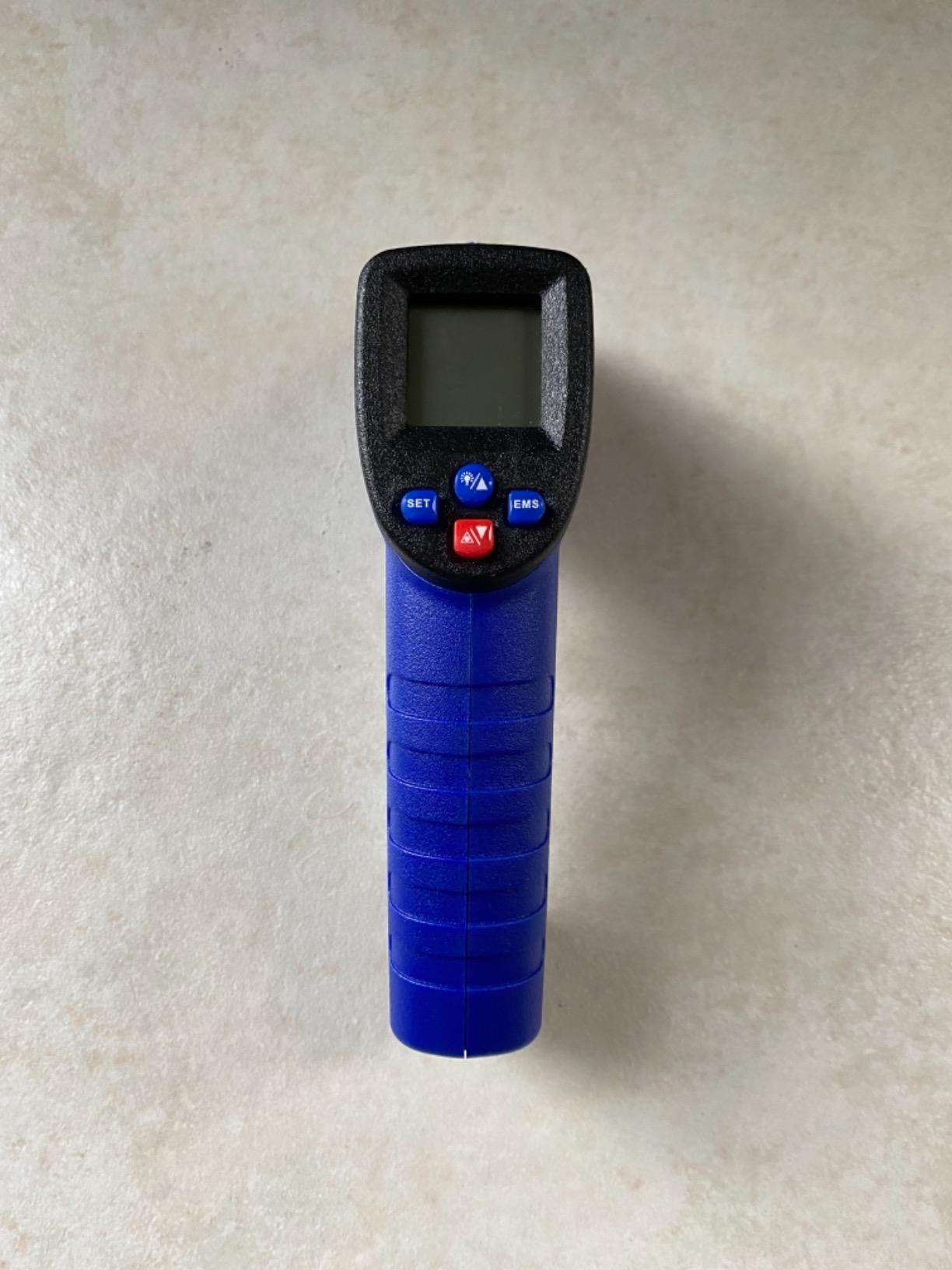
Measure rather than assume, which is the advice that comes up most often from experienced keepers. Start by setting a probe thermometer at animal level in the basking zone and another on the cool side, so you can see a real gradient rather than guessing. Infrared guns read surface temperature, which is useful for checking a basking platform but is a cross-check, not a replacement for a probe.
Then verify UV. A UV index meter, the type known as the Solarmeter 6.5R, gives a numeric reading at the basking surface so you can confirm the tube works, that the mounting height is right, and that a screen top is not eating most of the output. Aimed readings by zone run roughly 2 to 3 for a low zone, 4 to 6 for a moderate zone, 7 to 10 for a high zone, and 11 and above for the highest zone. If your reading is a fraction of what your species needs, move the lamp closer before you replace it.
Set two calendar reminders. One for a 10 to 12 hour photoperiod on a timer, which should be the first thing you buy after the kit. The other for bulb replacement, typically 6 to 12 months for UV sources, because tubes fade well before they visibly fail and the animal pays for it silently.
Which kit matches which species
Bearded dragons and other high-desert diurnal species need the strongest UV in this roundup and a bright basking zone. The linear kits, the 24 watt T5 HO options or the Zoo Med desert dual kit, are the right call, with a 10 to 12 percent tube. Look for a 100 to 110F basking surface temperature measured at the rock, and give them a long basking platform, not a small one.
Leopard geckos, crested geckos, and gargoyle geckos are shade dwellers. They need a low output UV source positioned higher in the enclosure, or the lower end of what these kits deliver if you can only mount them close to the substrate. A 10.0 tube held at a distance is a reasonable compromise, and an LED kit with a low UVI preset is the cleaner answer. Snakes are heat and gradient first, with UVB as optional insurance. Tortoises need strong UV plus broad, even heat, which favors a longer linear tube over a dome.
Turtles are the easiest match here. The turtle kit is purpose-built, with a splashproof halogen where a standard dome lamp can fail on contact with water. For a land tortoise in a long indoor enclosure, plan a 34 inch or 46 inch fixture and a heat lamp at one end, so the animal can choose its own body temperature across a real gradient rather than being held at one temperature all day.
If you are still working out the rest of the setup, our guide to under-bed lighting setups covers the timer and dimming side of day-night control, which applies directly to running your reptile lights on a schedule.
Frequently Asked Questions
Do reptile lighting kits come with bulbs?
It depends entirely on the kit, which is why you must check the listing. In this roundup, the Zoo Med desert dual kit, both REPTI ZOO T5 HO combo kits, the LUCKY HERP, Hygger zoo, MIXJOY and REPTIDLDB kits, and the REPTITRIP LED all include a bulb. The REPTI ZOO dual dome fixture arrives with no lamps and you choose your own bulbs. If a listing photo shows a glowing bulb, assume nothing is included until the contents are listed in writing.
Is a basking light the same as UVB light?
No. A basking light is a heat lamp that produces visible light and radiant heat but no UVB. A UVB lamp produces short-wavelength ultraviolet so the animal can synthesize vitamin D3 and absorb calcium, and it produces very little heat. Most reptiles need both: a UV source mounted along the length of the enclosure and a basking lamp creating a warm zone at one end.
Is T5 or T8 better for reptiles?
T5 HO is better for almost every beginner setup. It produces more UV, spreads it across a wider area, and reaches further from the fixture, so it covers a full-length vivarium. T8 tubes cost less but produce less output and point-source rather than even light, and some are packaged with a plastic cover that blocks effectively all UVB. Choose T8 only for a budget build in a small enclosure, and remove any plastic cover before mounting.
What is the safest way to heat a reptile tank?
Use a thermostat with any heat lamp, without exception. A halogen basking spot in a dome is the standard and safest daytime source because the animal can move away from the heat. Add a ceramic heat emitter or a deep heat projector for nighttime warmth, controlled by the same thermostat. Avoid heat rocks and unregulated heat mats, which cause burns because the animal cannot move away from a surface that stays hot.
How much UVB does my reptile need?
It depends on the species, and the honest way to answer it is with a measurement rather than a percentage on a box. A UV index meter reading at the basking surface is the standard check: roughly 2 to 3 for a low zone, 4 to 6 for moderate, 7 to 10 for high, and 11 or more for the highest zone. A bearded dragon belongs at the top of that scale, while a leopard gecko belongs near the bottom.
How high should a UVB light be mounted?
Mount it as high as your enclosure allows while keeping usable UV at the animal’s level. Too high and the beam thins out until it is negligible; too low and the animal sits in direct light with no choice to move. Aim for the beam to overlap your basking spot so one location delivers heat, UVA and UVB together, and add perches at multiple heights so the reptile can self-regulate. Above a screen top, measure again because mesh reduces output.
Are red reptile night lights harmful?
Red and blue night bulbs are widely used and widely disputed. They produce visible light when the animal should be in darkness, and keepers report that many reptiles still attempt to bask under them, which leads to burns. A dim night heat source such as a ceramic emitter or a deep heat projector on a low thermostat setting, paired with total darkness, is the arrangement most experienced keepers recommend.
How often should you replace a reptile UVB bulb?
Replace UV sources every 6 to 12 months, and replace them on a date rather than on appearance. Fluorescent tubes and compact bulbs lose meaningful UV output while still looking bright to you, so a bulb that looks fine can quietly stop working. Write the purchase date down and set a reminder. LED UV sources last many times longer, with a rated life over 7000 hours, but the same habit of scheduled checking still applies.
Final Verdict: The Best Reptile Lighting Kits for Beginners in 2026
Start with the Zoo Med Desert UVB and Heat Dual Kit if you want one box that solves both jobs on day one in an enclosure up to about 24 inches. Start with the REPTI ZOO dual dome fixture if you already know your species and want to build your own lamp pairing with independent switches. Start with the REPTI ZOO 24 watt T5 HO combo if your animal needs wide, even UV across a full-length vivarium, and plan to add a basking lamp and thermostat alongside it.
Whichever route you take, the best reptile lighting kits for beginners all share three things that matter more than the label on the box. Is the bulb actually included. Is the UV source mounted where the animal can reach it and not behind glass. And is the heat on a thermostat. Get those three right and almost any competent kit will serve you well for years.