
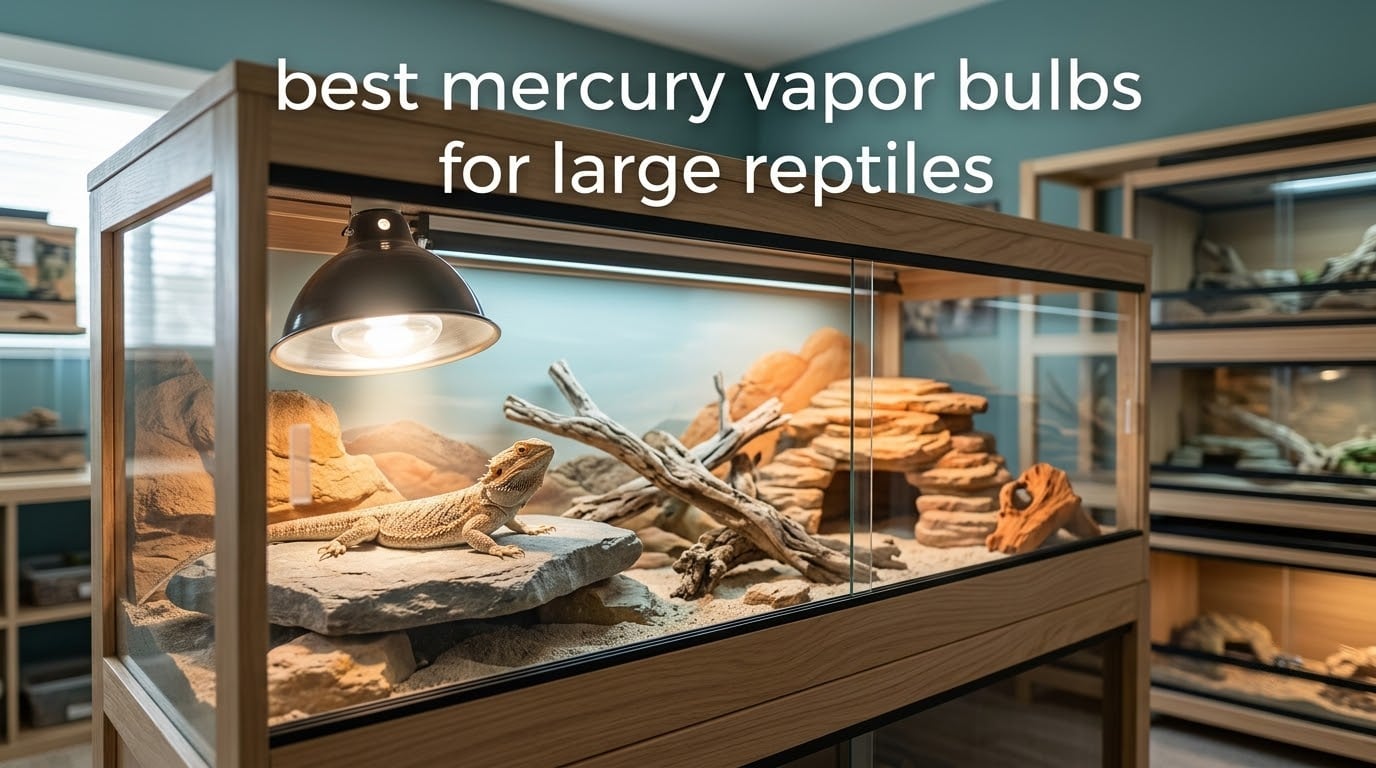
Short answer: the best mercury vapor bulbs for large reptiles are the self-ballasted 100W and 160W lamps that project UVB far enough to reach a basking surface in a 4x2x2 or a tall vivarium, and we narrowed ten of them down to three standouts below. A mercury vapor bulb is a self-ballasted high-intensity discharge (HID) lamp that produces UVB, UVA, visible light and infrared heat from a single bulb, so one fixture can serve as both the basking heat source and the UVB source.
That single-lamp approach is why these bulbs exist at all. A long T5 HO tube mounted in a hood works beautifully over a 40-gallon tank, but in a 120-gallon 4x2x2 with a basking rock 16 inches above the floor, the UVB coming off the tube is often too weak where the animal actually sits. Large species such as adult bearded dragons, green iguanas, monitor lizards, tegus and tortoises need UV that reaches the basking surface, and that is exactly the problem a mercury vapor bulb solves.
We spent weeks reading the review data on ten of the most-reviewed mercury vapor bulbs available, comparing their rated UVB output, wattage, base type, warm-up behaviour, warranty terms and the failure patterns keepers report. We also cross-checked long-running keeper discussions about bulb lifespan, because the single most useful fact on this topic is one no product page tells you: the UVB output fades long before the visible glow does.
A quick note on what we left out. Two entries in this list are not true mercury vapor lamps. The TEKIZOO 125W and the MIXJOY 160W are self-ballasted halogen all-in-one lamps, and the YauldSun 100W is a metal halide. We kept them because keepers buy them as mercury vapor replacements constantly and deserve an honest read on how they behave, not because the listings confuse them for HID bulbs.
There is also a regulatory question hanging over this whole category, and we address it head-on further down, because the answer is not as simple as the product listings suggest. Before you read the reviews, you may also find our guides to smart light bulbs useful for thinking about the ambient lighting side of a planted enclosure.
Table of Contents
Top 3 Best Mercury Vapor Bulbs for Large Reptiles in 2026
These three earned the badges based on the combination of rating, review volume, stated UVB output and build specifics. The Mega-Ray sits at the top because of its stated longevity and its ceramic-socket, long-throw design; the Zoo Med PowerSun is the pick when throw distance matters more than anything else; the REPTI ZOO is the one to buy when cost per enclosure is the deciding factor.


REPTI ZOO P95100 100W
- 100 watts
- Integrated thermal protection
- E26 base
- 100W to 160W options
All 10 Bulbs Compared Side by Side (October 2026)
Every lamp below screws into a standard E26 medium socket unless noted, and every one of them runs warm enough to need a ceramic socket and real clearance. Key Features lists the specs that actually change the outcome in an enclosure: stated UV output, wattage, base, and the physical or electrical quirks you will live with.
| Product | Specs | Action |
|---|---|---|
| Mega-Ray 100W Mercury Vapor Bulb |
|
Check Latest Price |
| Zoo Med PowerSun 160W |
|
Check Latest Price |
 AIICIOO 100W UVB Reptile Light AIICIOO 100W UVB Reptile Light |
|
Check Latest Price |
 MIXJOY 100W Full Spectrum Lamp MIXJOY 100W Full Spectrum Lamp |
|
Check Latest Price |
 LUCKY HERP 100W Coated LUCKY HERP 100W Coated |
|
Check Latest Price |
 TEKIZOO 125W UVA UVB Lamp TEKIZOO 125W UVA UVB Lamp |
|
Check Latest Price |
| REPTI ZOO P95100 100W |
|
Check Latest Price |
 MIXJOY 160W Heat Lamp MIXJOY 160W Heat Lamp |
|
Check Latest Price |
 YauldSun 100W Metal Halide YauldSun 100W Metal Halide |
|
Check Latest Price |
 LUCKY HERP 160W Vapor Heat Lamp LUCKY HERP 160W Vapor Heat Lamp |
|
Check Latest Price |
1. Mega-Ray Mercury Vapor Bulb 100W Review
Mega-Ray Mercury Vapor Bulb (100, Watts)
100 watts
E26 medium base
PAR38 reflector glass
10 year rated life
Pros
- Longest stated UVB production of any mercury vapor bulb
- All-in-one heat plus UVA plus UVB from one lamp
- UVB output verified by owners with meters
- Responsive warranty replacement service
Cons
- Some units fail before the rated lifespan
- Runs hot enough to demand a ceramic socket
- Needs 15 minutes before it will restart
- Bulb is large and will not fit every fixture
The Mega-Ray 100W is the bulb I keep coming back to, and the reason is unglamorous: it has the largest body of long-term keeper reports of anything in this list. It carries a 4.4 rating across more than 700 reviews, and the pattern in those reviews is consistency rather than excitement. People bought it, it kept working, they bought another one.
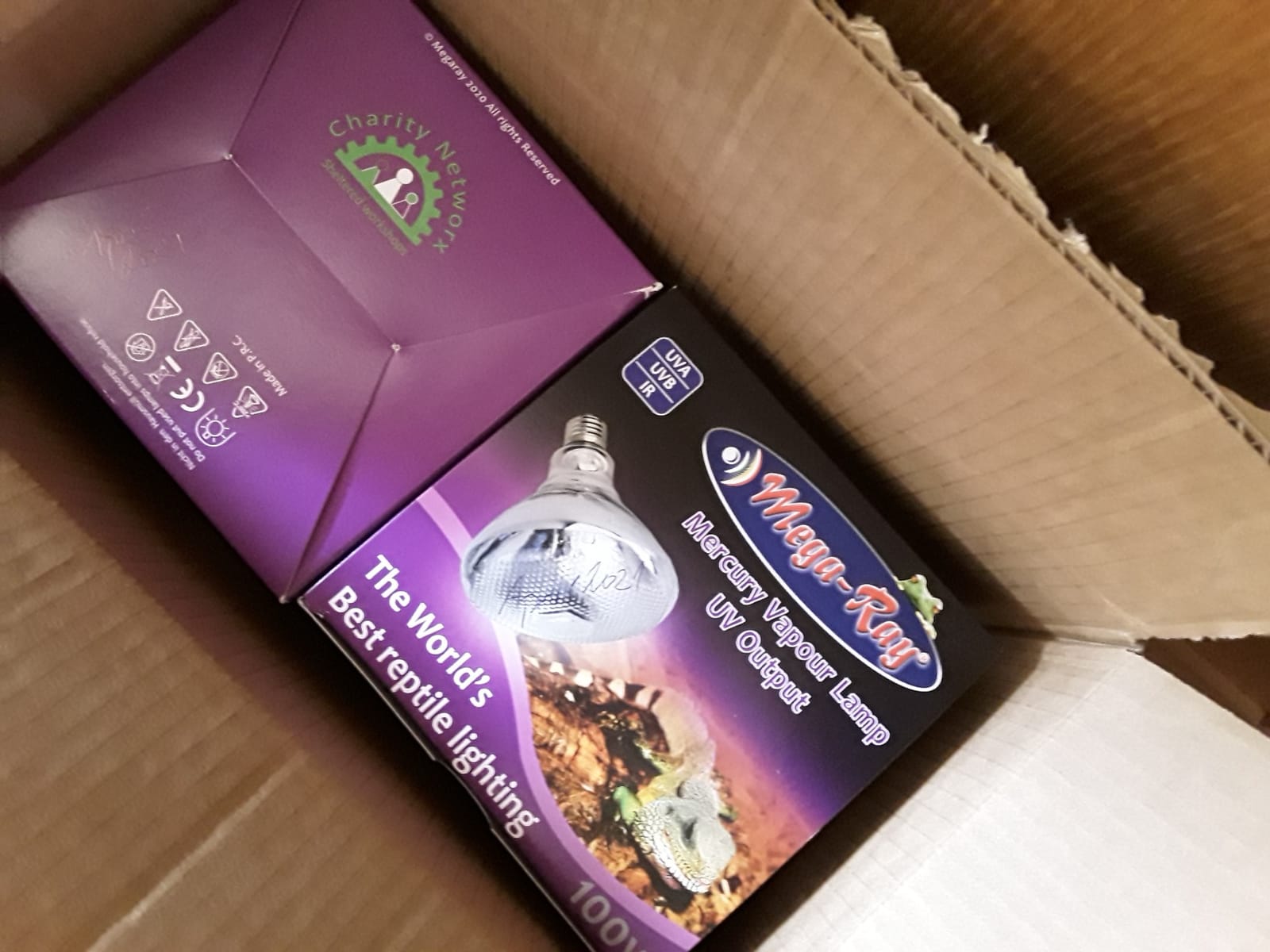
Physically it is a proper HID lamp in a PAR38 reflector envelope with a transparent glass shell, running 100 watts on 120 volts in a standard E26 medium base. That PAR38 footprint is the one practical warning. It is a large bulb, and it will not clear every shallow dome reflector sold for reptiles, so measure your fixture before you order.
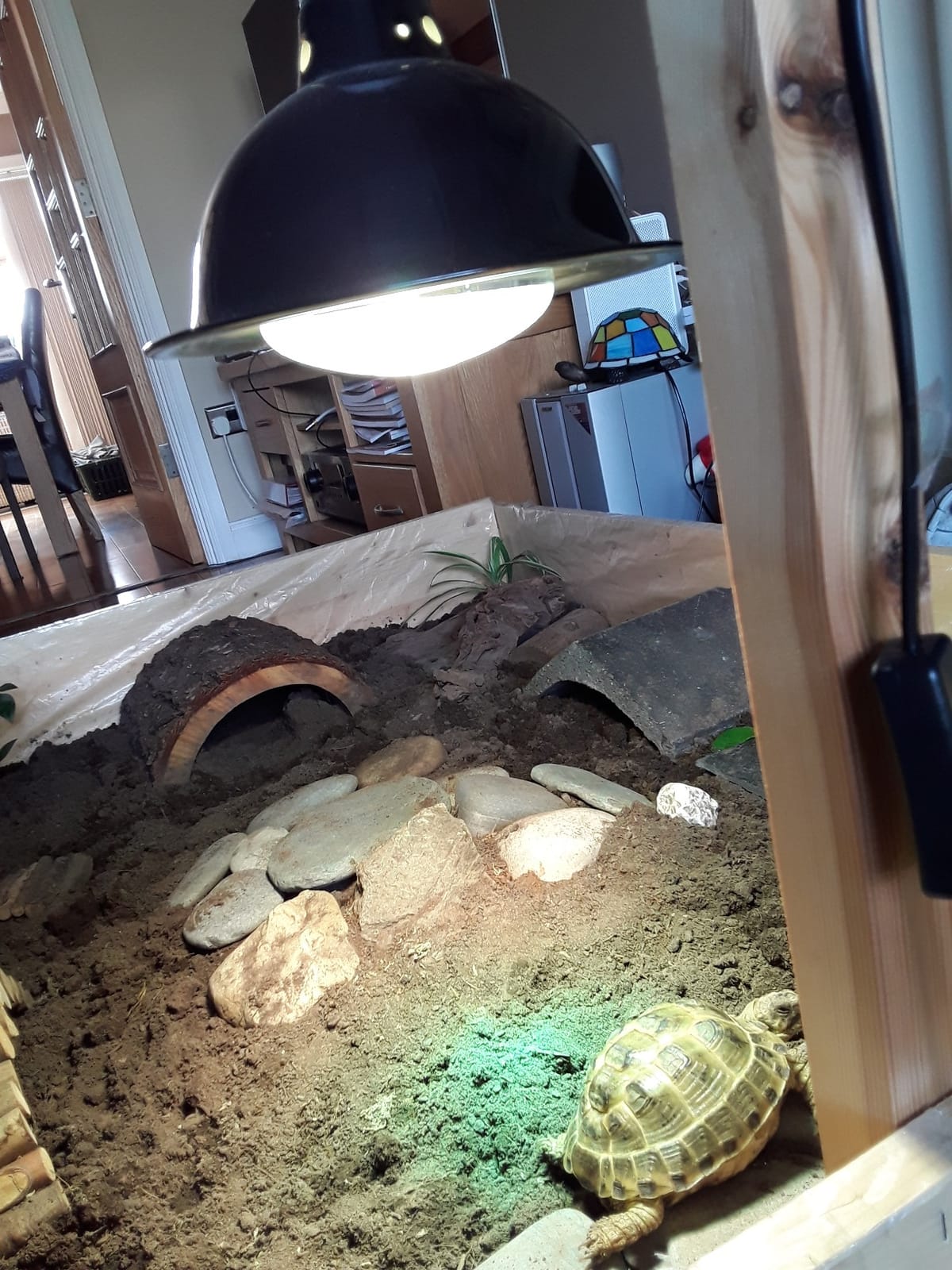
Where it earns its reputation is throw. Owners running this lamp over a 4x2x2 report usable UV landing well past the front glass line, which is exactly the failure point of a T5 tube in the same enclosure. The lamp also carries the longest stated operating life in the category at 10 years, and the manufacturer positions it as producing UVB comparable to natural sunlight that supports vitamin D3 synthesis and helps prevent metabolic bone disease.
The heat output is substantial. This is not a lamp you can tuck under a low canopy, and reviewers consistently pair the bulb with a deep ceramic reflector dome and a proper dimming-capable ceramic socket. The one electrical quirk that catches people out is the restart delay: once you switch it off, it will not fire again for roughly 15 minutes. Plan your photoperiod around that rather than fighting it.
What you should check before mounting the Mega-Ray
Check the reflector depth against the 11.8 inch overall length, and check that your socket is rated for the heat. Then check the distance from bulb to basking surface, because a 100W HID running at enclosure height can push a stone surface past safe basking temperature in a short time.
Long-standing keeper consensus on reptile forums names Mega-Ray and the Zoo Med PowerSun as the two reliable names in this category, and a tortoise forum keeper adds an important caveat: Mega-Ray has had noticeable supply and quality problems in recent months. That means fresh inventory matters, and it means you should buy from a seller who will replace a failed bulb.
Where the Mega-Ray falls short
The main weakness is early failure. Some units in the review data fail well before the 10 year rating, which is the single most common complaint across every lamp in this roundup regardless of brand. If a keeper buys one of these, the sensible move is to run a long T5 tube alongside it as a redundant UVB source rather than trusting one arc tube.
The other limitation is heat control. Because the lamp puts out serious infrared output, you cannot simply reduce the basking temperature by dimming, and you need to drop the wattage or add distance. If your animal needs a modest basking surface in a smaller enclosure, this is more lamp than the job requires.
2. Zoo Med PowerSun 160 Watt Mercury Vapor Lamp Review
Zoo Med PowerSun UV Bulb 160 Watt
160 watts
E26 base
R25 envelope
One year warranty
Pros
- UVB projects up to several feet into large enclosures
- Heat plus UVA plus UVB from one fixture
- Nickel plated threads resist corrosion
- Full one year warranty with responsive support
Cons
- Costs more than most competing brands
- Some units fail within months
- Shuts off if moved and needs a 15 minute reset
- Heat output demands a large fixture
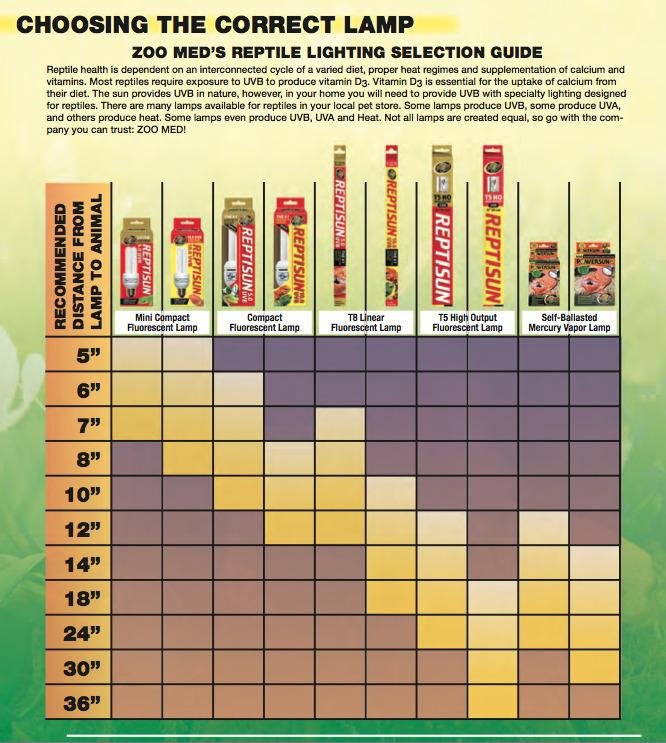
The PowerSun 160W is the throw champion. At 160 watts it is the most powerful lamp in this roundup that is still a genuine mercury vapor design, and the manufacturer states its UVB projects up to several feet. If your animal spends its day on a basking platform at the top of a tall vivarium, this is the bulb built for that geometry.
It runs in a standard E26 base with no external ballast, which means it drops into the same ceramic socket and reflector dome as a halogen flood. The 160 watt draw is the catch. You need a fixture rated well above that, real clearance from the enclosure top, and a thermostat strategy that does not rely on dimming the lamp.
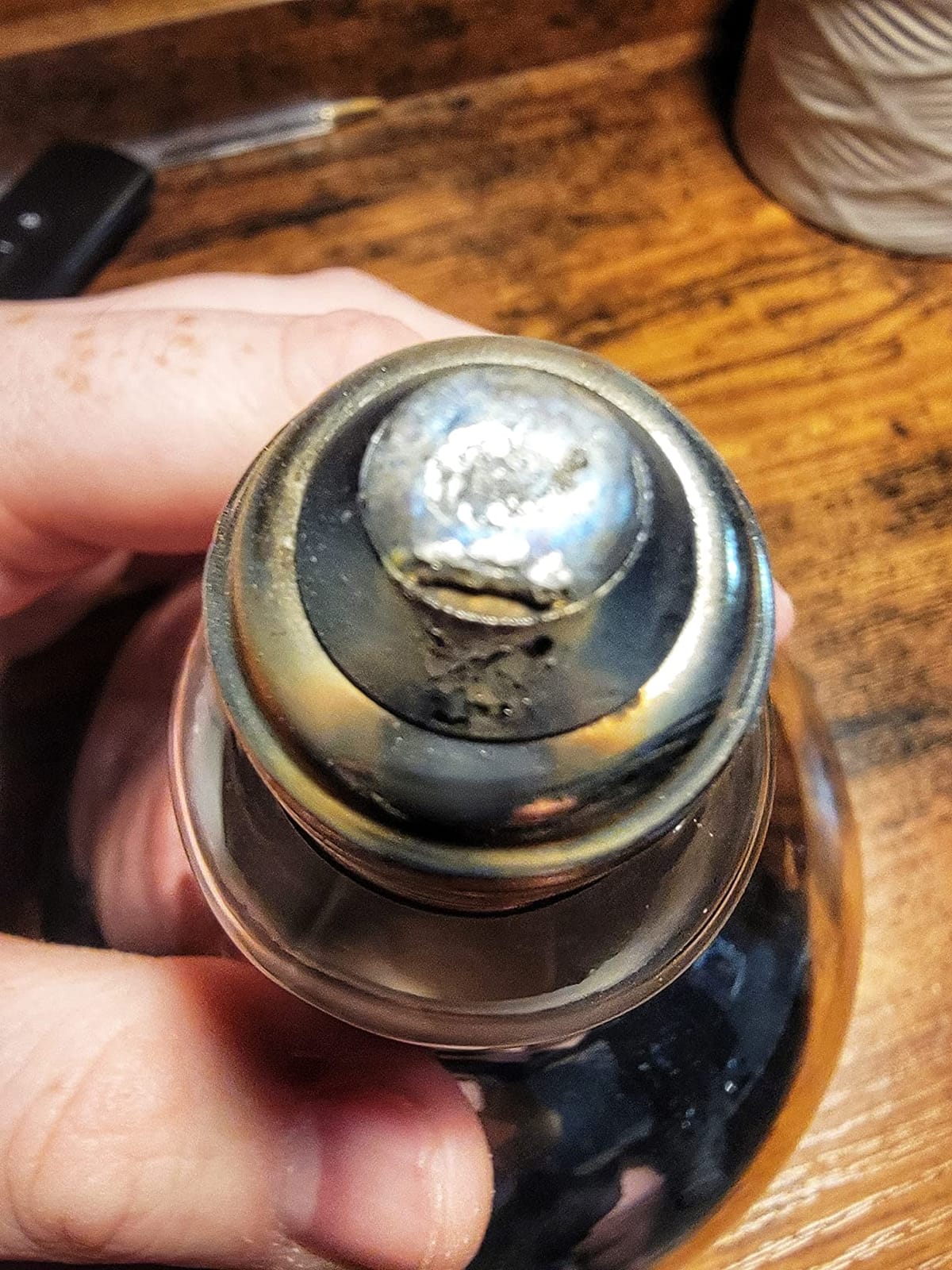
What stands out in the 626 reviews is the warranty. Zoo Med supplies a full one year warranty, and owners describe support as genuinely responsive, which matters enormously in a category where early failure is common. The nickel plated threads are a smaller but real detail, since corrosion at the base contact is a leading cause of flicker in humid setups.
For species that need a high UVI basking surface, the argument for this lamp is straightforward. Reptile Systems and several other brands appear on retailer shelves with small or troubled review counts, whereas the PowerSun has years of accumulated feedback from keepers who have burned through several units. An owner of the 160W reports turtles visibly favouring the light, with heat output and running cost as the main complaints.
When the 160W wattage is the right call
Reach for the 160W when the basking surface sits more than 14 inches above the substrate and you cannot lower it. A 100W lamp in that geometry will produce a warm spot that the animal can reach, but the UV at that distance falls short of what a high-UVB desert species needs.
Also choose it when you are moving up from a smaller animal. A juvenile bearded dragon in a 40 gallon tank on a T5 tube can be stepped up to a 100W mercury vapor lamp; an adult in a 120 gallon 4x2x2 is where the 160W earns its place. Mount high, measure with an infrared thermometer, and adjust before the season settles.
Where the PowerSun falls short
The heat is genuinely serious. Reviewers repeatedly describe the fixture needing to be large and well ventilated, and a 160W bulb inside a smaller wooden vivarium can raise ambient temperature enough that night cooling becomes difficult. If your enclosure is 4 feet tall or shorter and the basking surface is low, this is more lamp than you need.
Cost is the other honest drawback, and the review data also includes early failure reports and complaints about consistency in newer production runs. Buy it where the warranty is honoured, and keep a T5 tube as backup, because the same UVB-fades-first problem applies here as to every other lamp on this list.
3. Aiicioo 100W UVB Reptile Light Review
Aiicioo UVB Reptile Light 100W – UVB Light Bulb for Reptile Mercucry Vapor Bulb Heat Basking Lamp Bulb Full Spectrum UVA UVB All in One Sun Lamp for Bearded Dragon Lizard Turtle
100 watts
E26 base
Self-ballasted
15 minute reset
Pros
- Very affordable for a 100W all-in-one lamp
- Built-in overheat protection shuts the lamp off
- Available in 80W 100W and 160W
- Full spectrum UVA and UVB for D3 synthesis
Cons
- Some units burn out within days or weeks
- UVB output can be too strong for sensitive species
- Inconsistent quality control between batches
- 15 minute cool-down before restart
The Aiicioo is the entry point that makes sense if you have never run a mercury vapor bulb and you do not want to spend heavily on the first attempt. At 100 watts in a standard E26 base it is a conventional self-ballasted design with no external ballast to wire, and at 4.4 stars across 367 reviews it holds a better rating than most of the premium options.
What makes it interesting is the built-in protection. The lamp has an automatic shut-off if it overheats, with a 15 minute reset cycle, which is a sensible safety feature given how much heat these bulbs throw. It also comes in 80W, 100W and 160W variants, so you can step wattage as your animal grows without changing fixture type.
The warm-up behaviour is standard for the category. The bulb starts dim and reaches full brightness after about 15 minutes, so do not judge its output in the first few minutes after switching it on. It also starts dim every time it is switched on, and it needs 15 minutes of cool-down before it will fire again after a power cut.
Getting the Aiicioo right in a first setup
Vertical mounting is recommended by the manufacturer and it genuinely helps lifespan, because a bulb running base-up traps heat in the arc tube. If your reflector can be angled, angle it so the bulb sits upright rather than horizontal.
Because the UVB output is not measured in the specifications, treat this lamp as a starting point rather than a known quantity. If you can borrow a Solarmeter 6.5, measure the UVI at the basking surface after a full warm-up. If you cannot, run a T5 tube alongside it so your animal has a predictable UV source.
Where the Aiicioo falls short
Quality control is the honest weak point. The 367 reviews split sharply, with some owners reporting multi-year service and others reporting failure within days or weeks. That pattern is typical of a high-turnover budget lamp and it is the main reason this bulb does not carry our top badge despite a strong rating.
The other issue is overshoot. Reviewers note that the UVB can be stronger than some species need, and species that are sensitive to UV, including many nocturnal and crepuscular reptiles, should not sit in a high-output beam at close range. This is also not a lamp to run at 12 hours a day if longevity is your priority.
4. MIXJOY 100W Full Spectrum Reptile Heat Lamp Review
MIXJOY 100W Reptile Heat Lamp Bulb Full Spectrum UVA UVB Sun Light for Reptile and Amphibian Use
100 watts
E26 base
3.54 inch body
One and two pack
Pros
- Compact 3.54 inch body fits more fixtures
- UVB output confirmed by owners using meters
- More than 780 reviews holding a 4.3 rating
- Responsive customer service issuing replacements
Cons
- Some bulbs arrive defective or fail quickly
- Fragile glass that can break in transit
- Surface temperature high enough to be a burn risk
- 15 minute cool-down before restart
The MIXJOY 100W is the one that solves a physical problem other bulbs create. At 3.54 inches in diameter it is the most compact reflector in this roundup, and that matters in a crowded fixture where a PAR38 or G30 body simply will not seat. Owners running two lamps in one dome or a multi-enclosure rack will find it the easiest to fit.
It is a genuine all-in-one: UVB, UVA, visible light and infrared heat from a 100 watt self-ballasted mercury vapor lamp in a standard E26 socket. That combination, plus more than 780 reviews holding steady at 4.3 stars, gives it the second-largest verified review base here, and a fair number of owners report confirming the UVB with a meter.
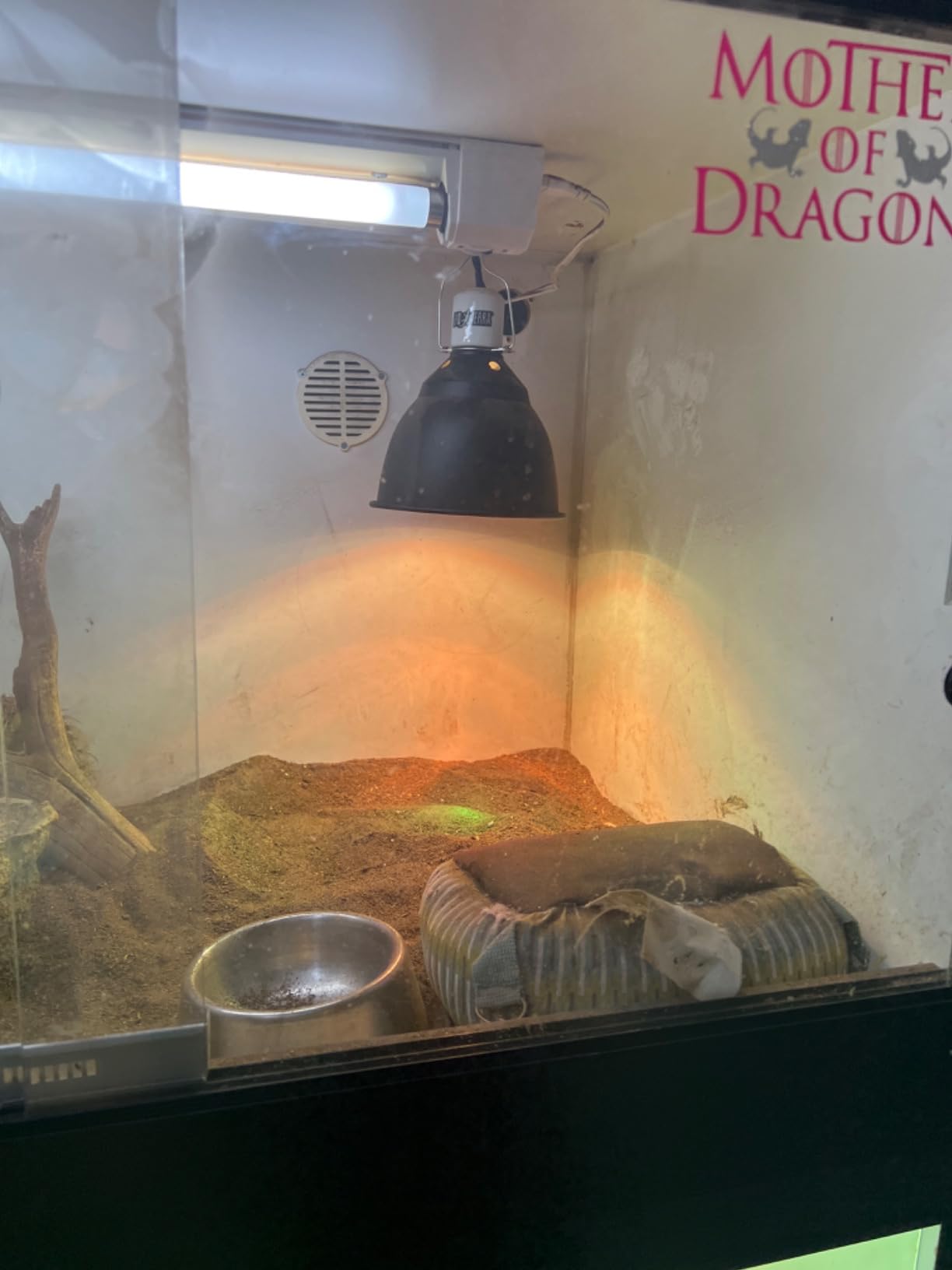
What we like most is the packaging practicality. It is sold in a single and a two-count pack, so if you run a reptile rack or a two-animal enclosure you can match bulbs without mixing output levels. The compact size also means less of the reflector dome is blocked, which spreads the beam a little wider than a narrow flood.
The customer service is a genuine strength. Owners report receiving replacements for units that failed, including past the standard return window, which is a meaningful difference in a category where early failure is the most common complaint across every brand.
What to verify on a MIXJOY before it goes in the dome
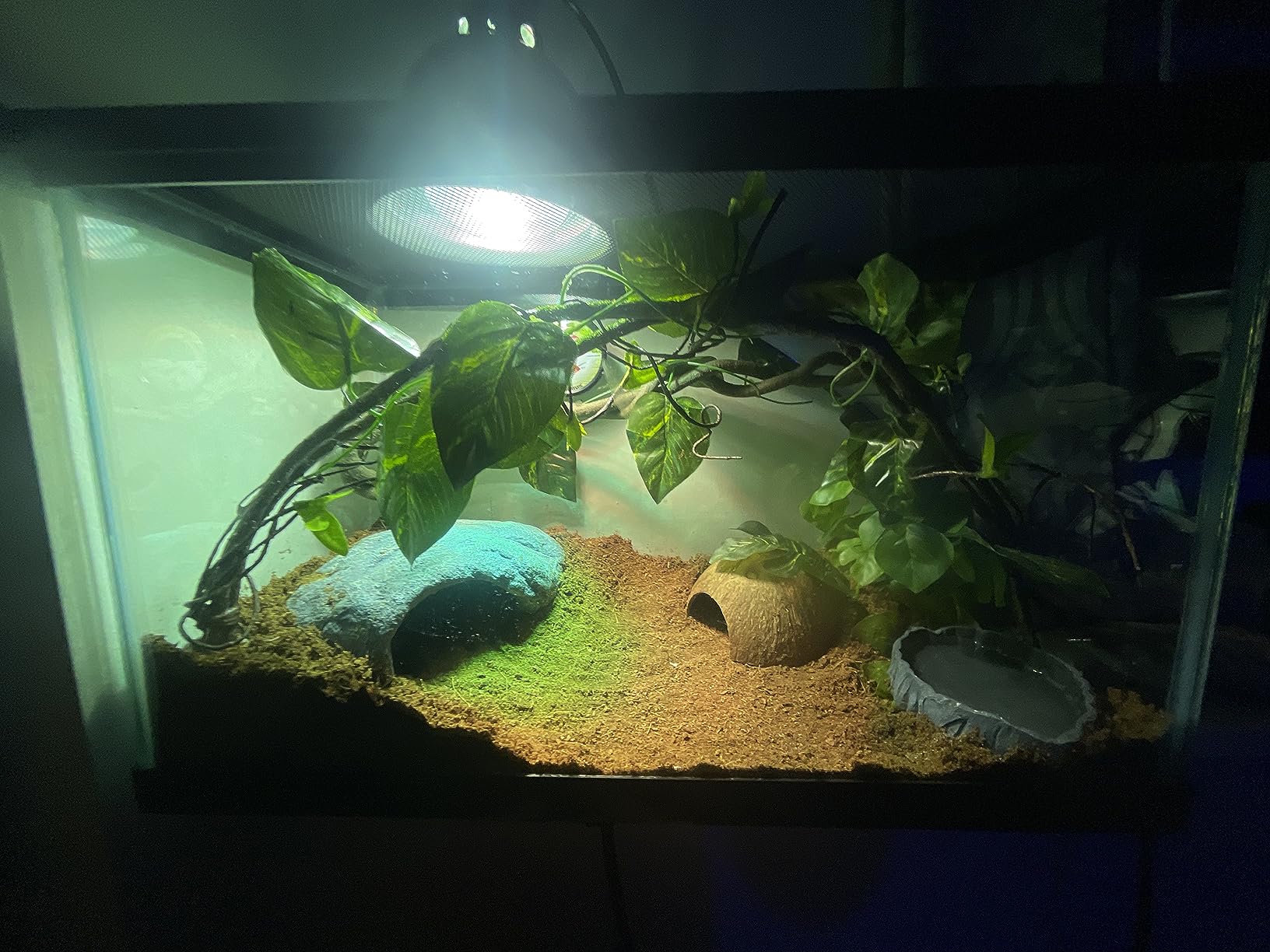
Check it on arrival, immediately and in daylight. The glass is thin and shipping damage is one of the recurring complaints, and a cracked arc tube should be discarded rather than powered up. Inspect the base threads and the glass for chips before it ever reaches a socket.
Then run the standard 15 minute warm-up before you make any judgement. The bulb starts dim and brightens over that window, and its first two minutes are not representative of the UVB it will deliver across a full photoperiod. Plan a timer so the lamp is never cycled more than once a day.
Where the MIXJOY 100W falls short
The failure pattern is the reason this sits fourth rather than higher. Alongside the strong long-term reports there is a steady stream of bulbs arriving defective or dying quickly, and a few owners report the lamp tripping its own protection when bumped. Treat the thermal cut-off as a feature, not a fault, but do mount it where it cannot be knocked.
Surface temperature is the other limitation. This is a burn risk lamp with a glass envelope that gets extremely hot, so keep the basking rock far enough below it that a curious animal cannot reach the surface, and keep children and other pets out of the enclosure top area.
5. LUCKY HERP 100W Coated UVA UVB Vapor Heat Lamp Review
LUCKY HERP 100 Watt UVA UVB Full Spectrum Vapor Heat Lamp Bulb, Self-Ballasted UV Heat Lamp/Bulb/Light for Reptile and Amphibian, Sun Lamp for Bearded Dragon Lizard Turtle(Coated)
100 watts
E26 base
80uW/cm2 UVB
Three month warranty
Pros
- Stated UVB output of 80uW/cm2
- Thicker glass built for higher humidity enclosures
- Clear and coated versions to reduce glare
- Service has issued refunds past the return window
Cons
- Some bulbs fail within weeks of use
- Run at 10 hours a day or less for longevity
- Not compatible with dimmers or rheostats
- Long body protrudes from a standard dome
The LUCKY HERP 100W is the one to look at if your enclosure is humid. It is built with thicker glass than most competitors, and the coated variant we tested is designed to cut glare, which matters in a screened enclosure where a bare mercury lamp reflects harshly and pushes an animal away from the basking area.
Unlike several other lamps here, it publishes a UV figure: 80uW/cm2 of UVB. That is a usable number. It lets you compare it against the 300uW/cm2 figure on the 160W version of the same lamp and gives you a real basis for deciding whether 100W is enough for your enclosure height.
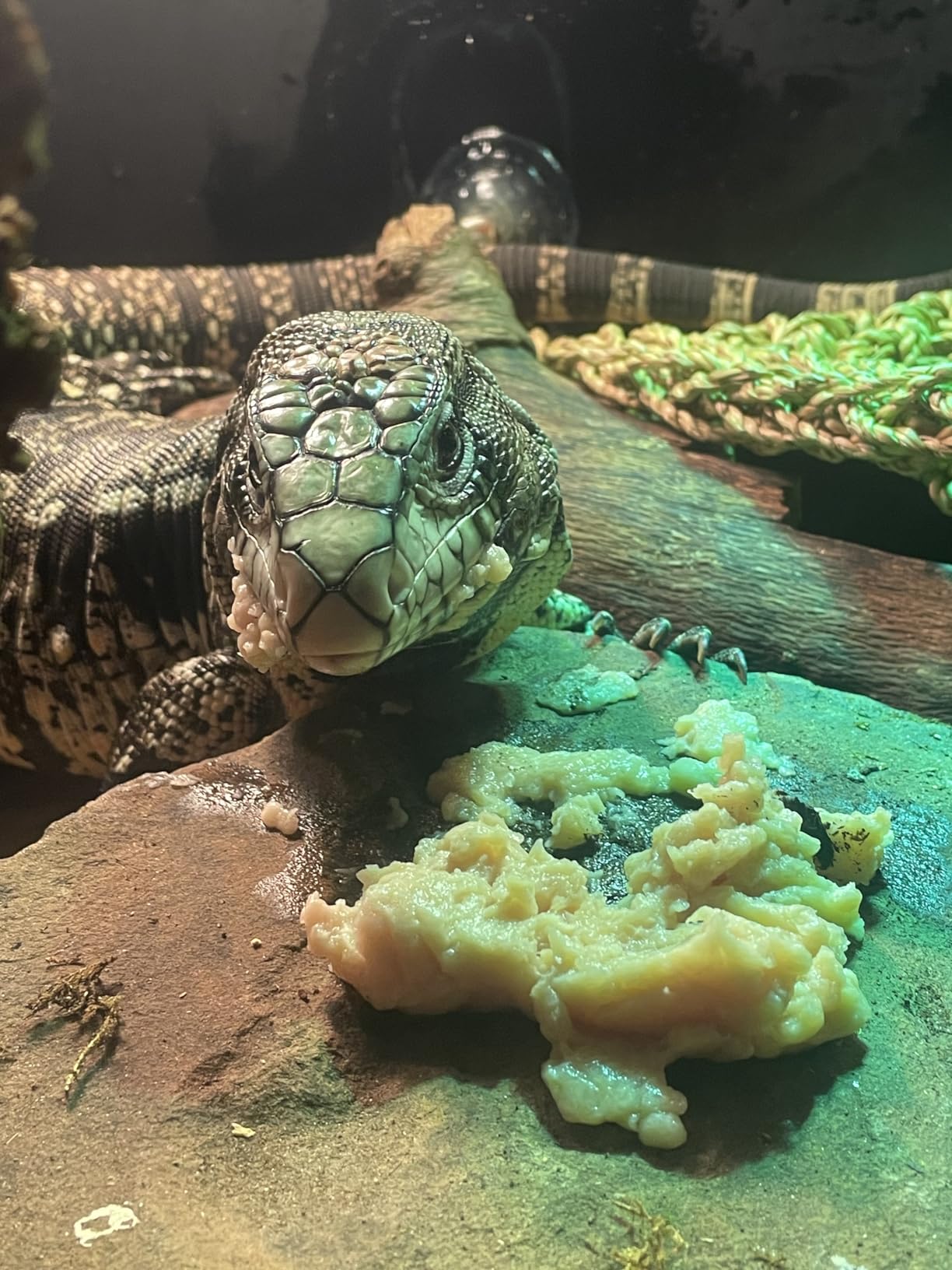
Durability is a surprise strength. Reviewers report bulbs surviving drops, which is not what you expect from a lamp in this category, and the customer service has been willing to refund past the return window. For a three-month warranty that is generous handling, and it partly offsets the shorter expected service life.
It is also an established listing, available since late 2017, and it holds a 4.3 rating across more than 700 reviews. That volume of feedback makes it one of the better-documented options at this price tier, and it sits comfortably in the middle of the roundup on both rating and consistency.
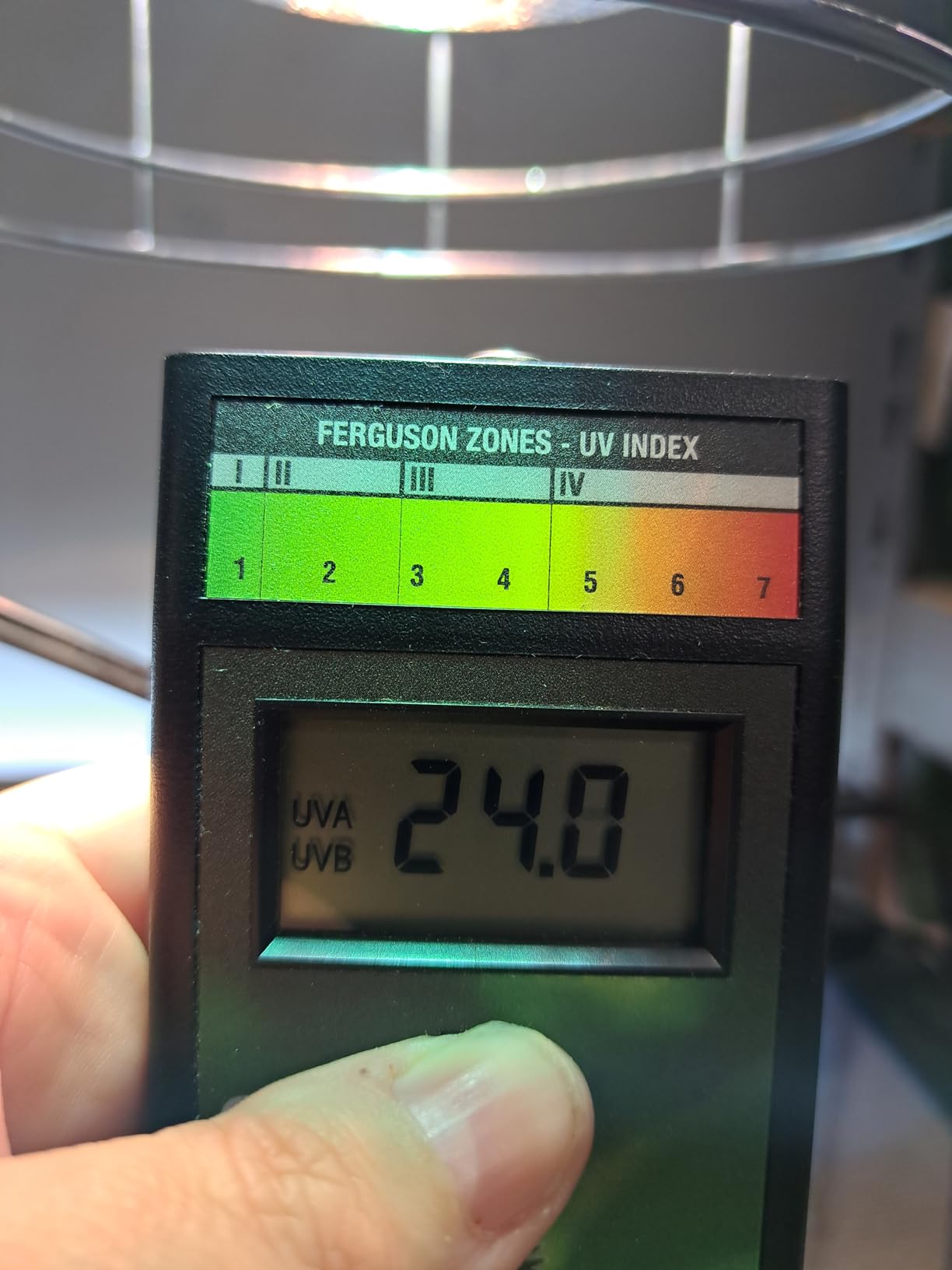
How to get the rated life out of the LUCKY HERP
The most useful thing owners report is a simple rule: run the lamp for no more than about 10 hours a day. That is below a natural summer photoperiod, which is precisely why the technique works, and it is the reason this lamp outlasts others in the same household. Pair it with a low-output T5 tube if your animal needs a longer day.
Also plan around the 10 hour ceiling when you choose a photoperiod timer. A timer that runs 12 hours on a non-dimmable lamp like this one is the fastest way to burn the arc tube out early and to waste power while producing less UVB by month eight.
Where the LUCKY HERP 100W falls short
The warranty is only three months, which is the shortest in this roundup apart from the free replacements some retailers offer. If your bulb fails in month five you are relying on goodwill, so buy from a seller with a clear return policy and keep the packaging.
It also cannot be dimmed. That removes the option of using a dimming thermostat to soften a midday basking temperature, and combined with the long body that protrudes from a standard dome, it makes this a lamp that suits an open wire fixture with generous clearance rather than a tight enclosed reflector.
6. TEKIZOO 125W Self-Ballasted UVA UVB Lamp Review
TEKIZOO UVA UVB Sun Lamp High Intensity Self-Ballasted Heat Basking Lamp/Light/Bulb for Reptile and Amphibian (125W)
125 watts
E26 base
180 day warranty
2000 lumens
Pros
- 180 day warranty with free replacement
- All-in-one UVA plus UVB plus heat plus visible light
- Ceramic construction handles heat well
- Largest review base of any lamp in this roundup
Cons
- Halogen technology rather than mercury vapor
- 5000 hour rated life is short for the category
- Surface runs hot enough to demand real clearance
- Not usable with a dimmer or thermostat
First, the honesty check: this is a halogen lamp, not a mercury vapor lamp. The listing states a halogen light source with a 5000 hour rated life, ceramic material and 2000 lumens of maximum output at a warm 2800 Kelvin. If you specifically need the throw profile of a mercury vapour bulb, this is not that. If you need heat, UV and visible light from one fitting at a mid-level price, it does the job.
What makes it worth a place in this roundup is the warranty and the review volume. At more than 1,000 reviews it has the largest verified review base of any lamp here, holding a 4.2 rating, and the 180 day manufacturer warranty with free replacement is the strongest coverage in the category. Owners confirm the UVB with test cards, so at least the UV claim is being checked by users rather than asserted.
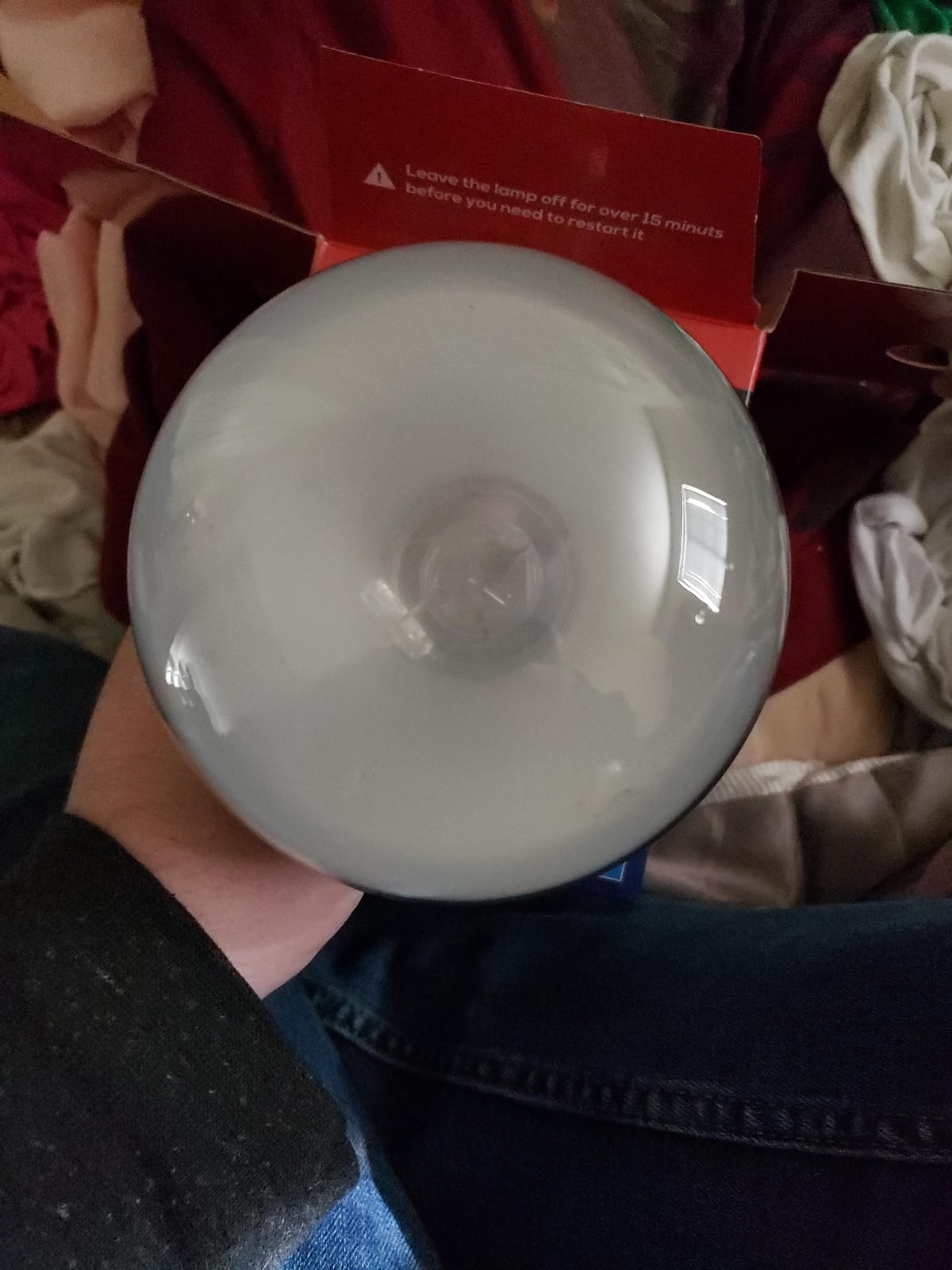
Physically it is a 125 watt A15 reflector shape with a 4.5 inch diameter, a colour rendering index of 63, and a ceramic body. The ceramic construction is a real advantage in an enclosure with regular misting, because it tolerates thermal cycling and moisture better than a thin glass envelope.
Because it is halogen rather than HID, the arc is far more forgiving. It reaches output quickly, it restarts immediately after a power cut, and it does not carry the 15 minute warm-up and cool-down behaviour that defines the mercury vapor lamps in this list. That is a practical advantage for keepers who need a predictable lamp that recovers from a power cut overnight.
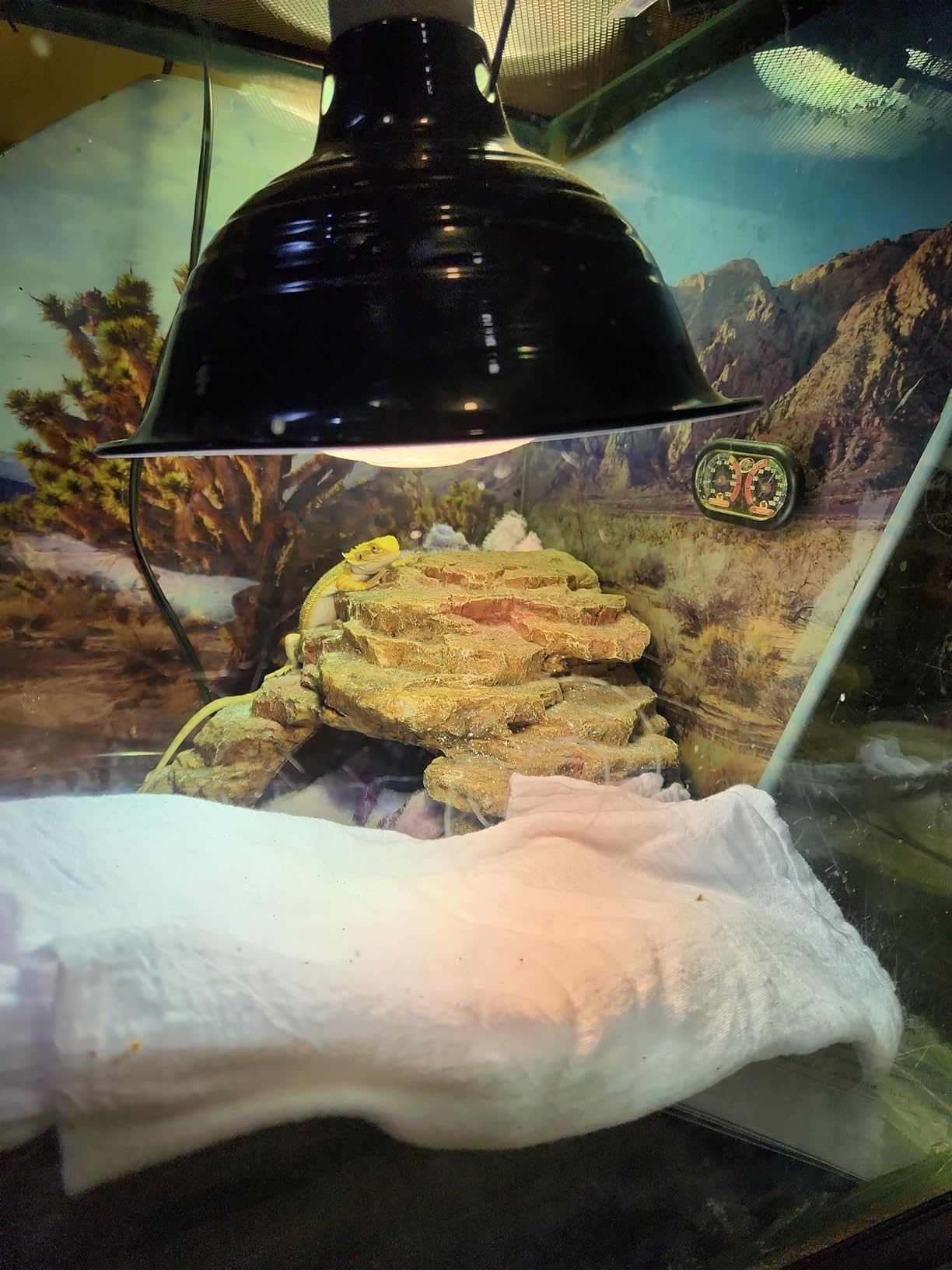
What halogen changes for your enclosure
Two practical differences. First, start-up is immediate, so you can evaluate the basking temperature minutes after switching on rather than waiting out a 15 minute warm-up. Second, the UV spectrum is not identical to a mercury arc, so if your species has a documented high-UVB requirement, treat this as a companion UV source rather than the only one.
On heat, a 125 watt halogen flood produces a usable basking surface at typical 4x2x2 mounting heights, and the wide reflector shape spreads it more evenly than a narrow HID beam. Check the surface with an infrared thermometer and adjust height before you leave it running unattended.
Where the TEKIZOO falls short
The 5000 hour rated life is the honest limitation. That is well under what a mercury vapor lamp is claimed to deliver, and combined with early failure reports it means more frequent replacement than the HID options here, which partly offsets the low purchase cost.
It also cannot be used with a dimmer, rheostat or dimming thermostat, so temperature control has to come from mounting height rather than from the lamp. The 180 day warranty is the mitigation here, and it is the reason we would pick this bulb over a cheaper alternative with no coverage at all.
7. REPTI ZOO P95100 100W Full Spectrum Sun Lamp Review
REPTI ZOO Full Spectrum UVA + UVB Sun Lamp Self-Ballasted Vapor Lamp/Bulb/Light for Reptile and Amphibian Use
100 watts
E26 base
Integrated thermal protection
One count
Pros
- Lowest cost per lamp of any self-ballasted UVB bulb here
- Highest review count with a consistent 4.2 rating
- Integrated thermal protection as standard
- Wattage and pack options for multi-enclosure racks
Cons
- Early failures within the first week reported
- Needs an open wire fixture rather than an enclosed dome
- Protection cut-off can be mistaken for a fault
- Quality control varies between production runs
The REPTI ZOO P95100 is the bulb most likely to be the correct answer on cost per enclosure, and it has the numbers to back that. At more than 1,300 reviews holding a 4.2 rating, it has the largest verified review base in this roundup, which means the failure rate you are accepting is a well-documented one rather than an unknown.
It is a straightforward 100 watt self-ballasted mercury vapor lamp in a standard E26 base, measuring 3.74 inches in diameter, with integrated thermal protection. The line is available in 100W, 125W and 160W and in one, two and three-count packs, so a multi-unit rack is straightforward to fill with matched output.
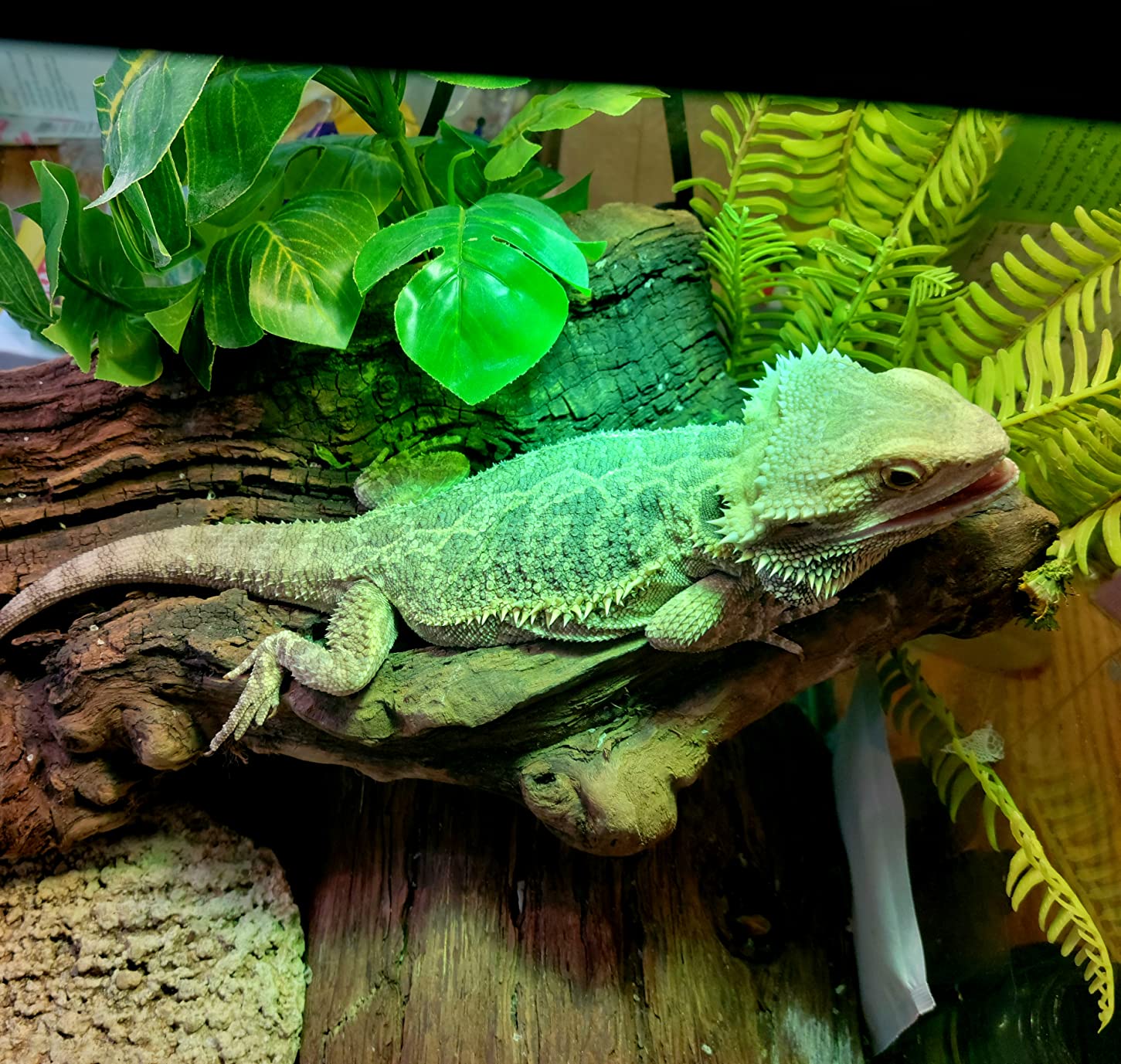
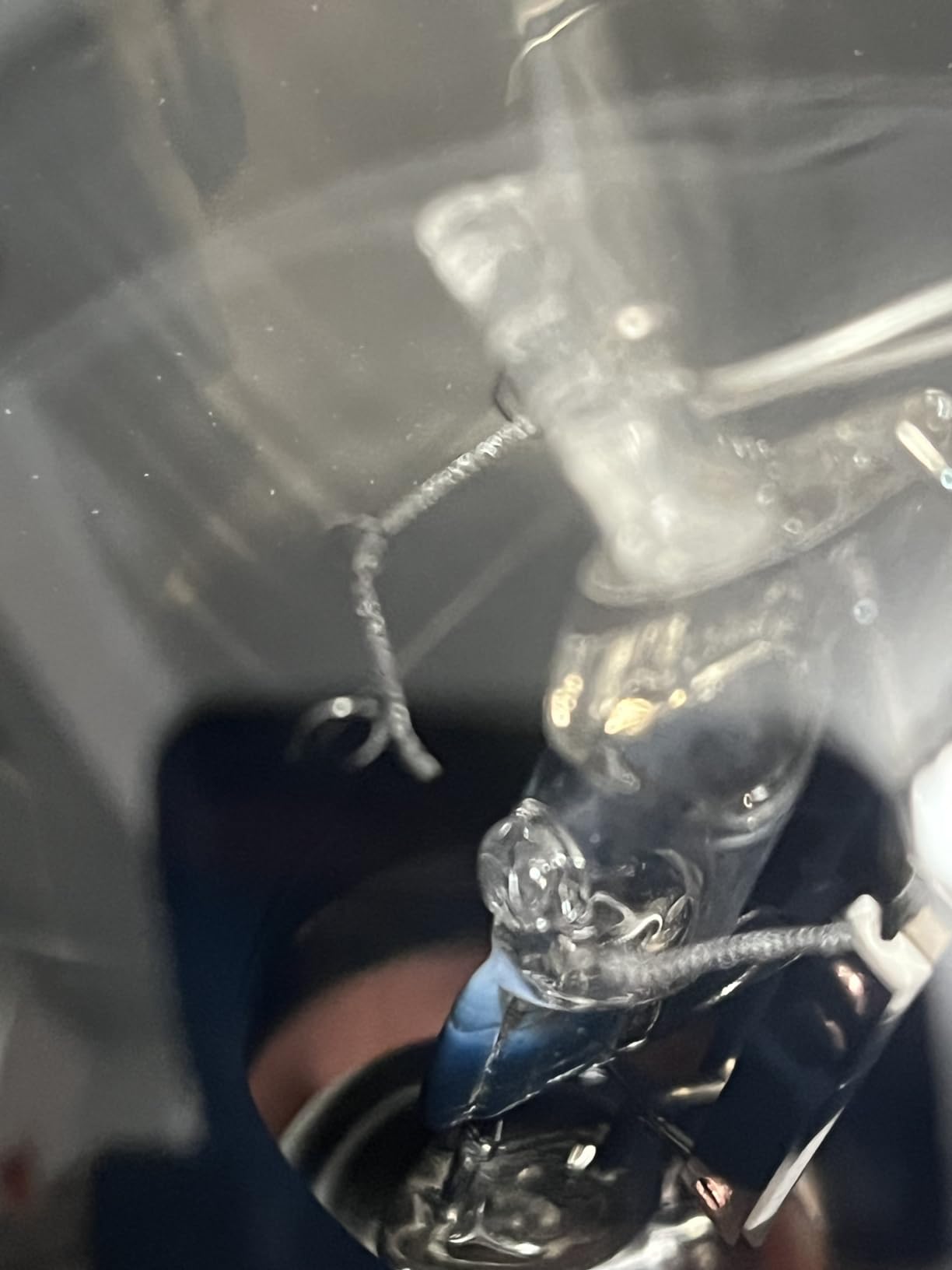
The thermal protection is worth understanding rather than resenting. The lamp shuts itself off if it overheats and then needs a delay before it will restart, which some owners initially read as a defect. It is not. It is also why the lamp needs an open wire or ventilated fixture rather than a fully enclosed dome, where the protection would be cycling constantly.
Owners report the UVB output as good and verified, and the customer service is described as responsive on a 24 hour basis. For a first-time mercury vapor bulb in a single adult enclosure, the arithmetic is hard to argue with: you get a proven 100W all-in-one lamp for a fraction of what the premium HID brands ask.
Where the REPTI ZOO is the right answer
Choose it when you are running multiple enclosures on a rack, where matching wattages and pack sizes matter more than brand pedigree. Three identical lamps at one wattage means one measurement, one mounting height and one replacement schedule, which is a real operational advantage in a breeding or display setup.
It is also the sensible choice for a juvenile stepping up to adulthood. A 100W in a 75 gallon gives a usable basking surface with room to grow into, and the step to 125W or 160W is the same fixture and the same base, so nothing needs rewiring when the animal gets bigger.
Where the REPTI ZOO falls short
Early failure is reported, including units that die within the first week. Buyers regularly report early failures on the premium HID brands too, but there is no long warranty listed here to catch you when it happens. That is the trade-off behind the low purchase cost.
It also trips its safety cut-off if the lamp is bumped or jostled, which is a real risk in a large enclosure where a heavy animal moves furniture. Secure the fitting out of reach and check the lamp after any enclosure work rather than assuming it recovered.
8. MIXJOY 160W Reptile Heat Lamp Review
MIXJOY 160W Reptile Heat Lamp Bulb, Full Spectrum UVA UVB Reptile Light Bulb, UVB Light for Reptiles and Amphibians Use
160 watts
E26 base
1200 lumens warm white
One and two pack
Pros
- Highest wattage in this roundup for large enclosures
- Self-ballasted with no external ballast needed
- Two-count pack available for matching units
- Warm white light at 1200 lumens
Cons
- Listed as halogen and infrared rather than mercury vapor
- Some units fail quickly
- 15 minute cool-down before restart
- Fragile glass and very hot surface
The 160W MIXJOY is the wattage answer for genuinely large enclosures, but the technology label matters here. The product details list the light source as infrared and halogen, not mercury vapor, so this belongs in the same category as the TEKIZOO rather than with the Mega-Ray and PowerSun. It is a self-ballasted all-in-one that produces UVB, UVA, visible light and infrared heat from a 160 watt draw.
What it does well is cover ground. At 160 watts in an R37 reflector it produces a wide, hot basking area that suits a 6 foot tall vivarium or a large tortoisesome enclosure where a 100W lamp simply cannot raise the surface to temperature. The warm white output at 1,200 lumens reads well on camera and looks natural to the animal.
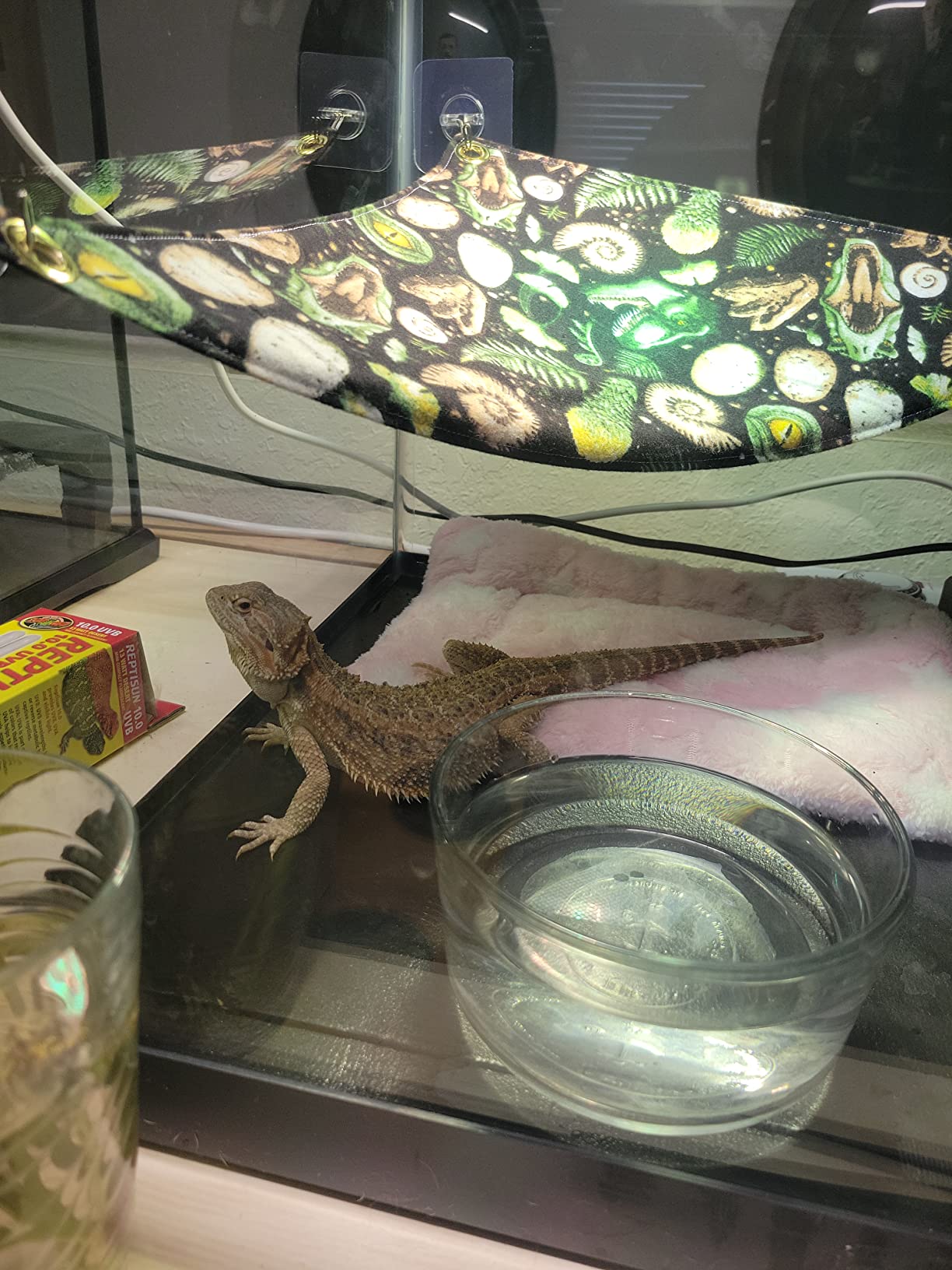
With more than 600 reviews at 4.2 stars, it has a solid documented track record, and the two-count pack makes it practical to run a matched pair across a wide enclosure. The self-ballasted design means it fits the same ceramic socket as a halogen flood, so the fixture cost is minimal.
It also shares the category-standard warm-up behaviour. The lamp starts dim and reaches full output after about 15 minutes, and it needs an equivalent cool-down before restarting. Set your timer so the lamp is switched once per day, not several times, or you will spend a third of your photoperiod in a cool-down state.
Matching the 160W to a tall enclosure
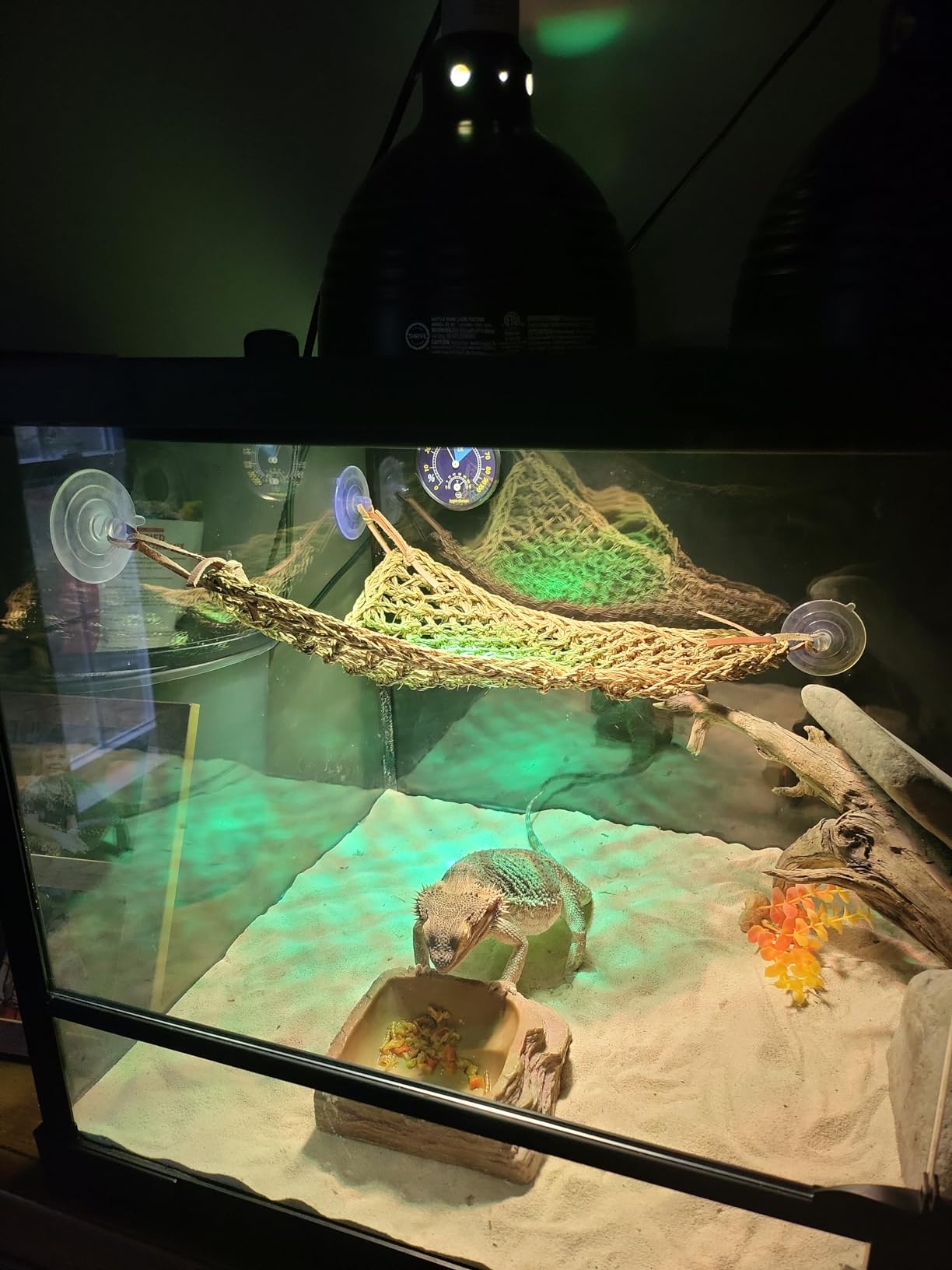
Mount it high. The rule of thumb for large species is that the basking surface should sit 14 to 18 inches below the bulb, which keeps the animal out of the hottest part of the beam while leaving enough UV intensity to be useful. A 6 foot tall vivarium is exactly the geometry this lamp is built for.
Measure before you trust it. Run the lamp for a full 20 minutes, then check the surface temperature with an infrared thermometer at three points: directly under the bulb, mid-enclosure and on the cool side. If the hot spot is overshooting, raise the lamp rather than reducing the wattage, since you cannot dim this one.
Where the MIXJOY 160W falls short
The technology mismatch is the main point. If you are buying specifically because a T5 tube cannot deliver enough UV to your basking surface, a halogen arc delivers a different spectrum to a mercury arc and is not a straight substitute. Know which one you are buying before you order.
The other limitations are shared across this category: early failure reports, fragile glass, and a surface temperature high enough to be a genuine burn risk. The 15 minute restart delay is the most annoying in daily use, because a thermostat that cuts power for an hour leaves you with no heat and no lamp.
9. YauldSun 100W Metal Halide UVB Bulb Review
YauldSun 100W UVB UVA Reptile Basking Heat Light Bulbs UV Sun Lamp for Bearded Dragon Lizard Tortoise Turtle Amphibian 1 Pack
100 watts
E26 base
Metal halide source
One year warranty
Pros
- Metal halide arc for the deepest UV penetration available
- One year manufacturer warranty
- Bright output at 1600 lumens
- Runs on standard 110 to 120V AC supply
Cons
- Metal halide is a different UV spectrum to mercury vapor
- Needs a 30 minute or longer cool-down before restart
- Tubular shape will not fit every dome fixture
- Smaller review base than the established brands
The YauldSun is the metal halide entry, and it is here because metal halide is the technology a chameleon forum discussion identifies as delivering superior UVB penetration when you have a meter to prove it. The arc burns hotter and emits UV further than a mercury arc at the same wattage, which is the argument for it in a tall vivarium.
It runs 100 watts on a standard E26 socket from an AC 110 to 120V supply, produces 1,600 lumens of yellow-toned light, and comes with a one year manufacturer warranty. The 4.4 rating across 296 reviews is the highest rating of any lamp in this roundup, though the review base is the smallest of the ten, so treat that number with appropriate caution.
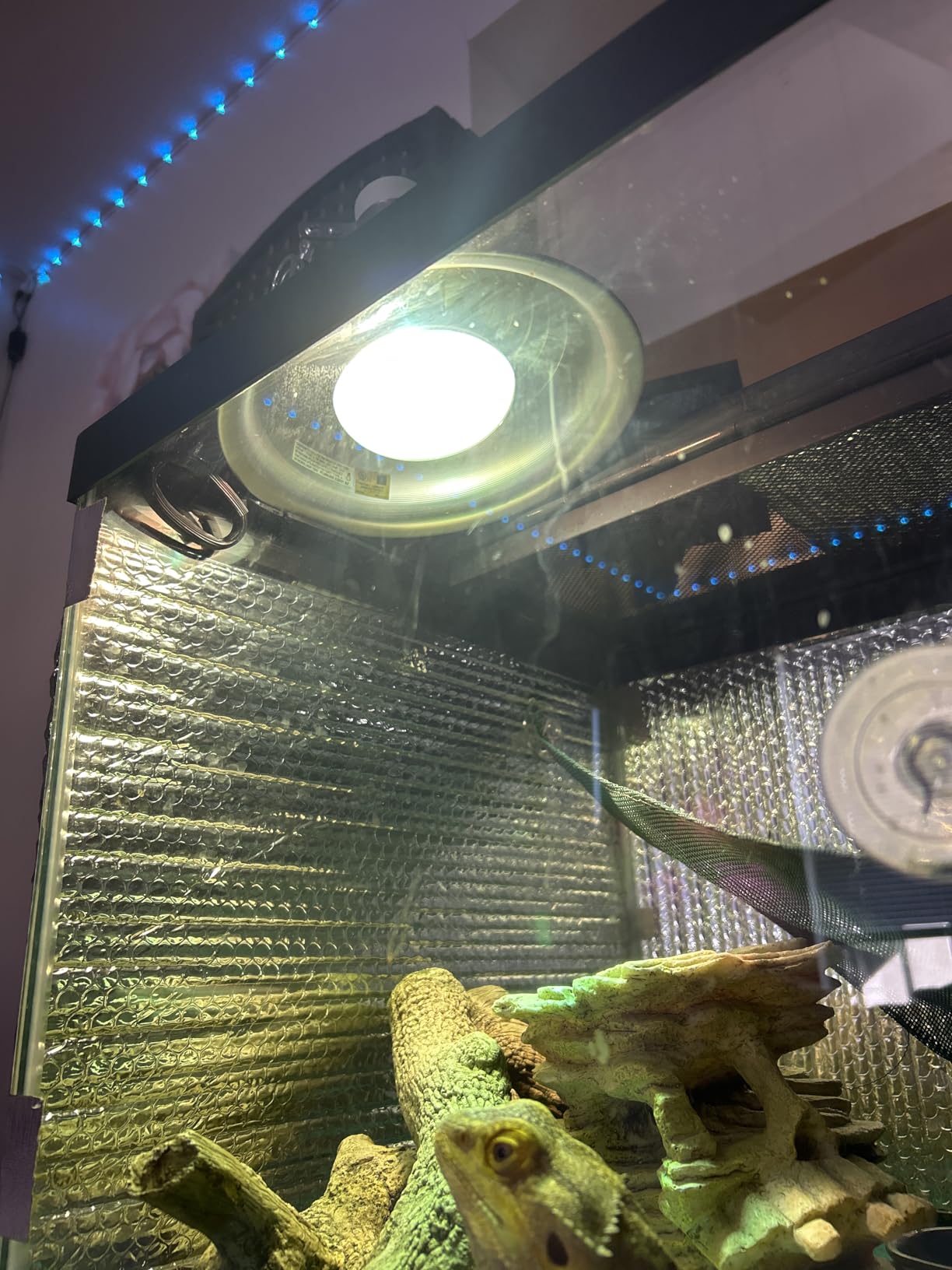
The technical difference you will notice in daily use is the restart delay. Metal halide lamps of this type need a 30 minute or longer cool-down before they will fire again after being switched off. In practice that means one switch-on per photoperiod, no dimming, and no thermostat cutting power mid-day.
Its shape is the practical constraint. This is a tubular G30 envelope rather than a compact reflector, and it will not seat in a shallow dome. Budget for an open wire fixture with real clearance, and keep the basking surface far enough below that a tall animal cannot reach the glass.
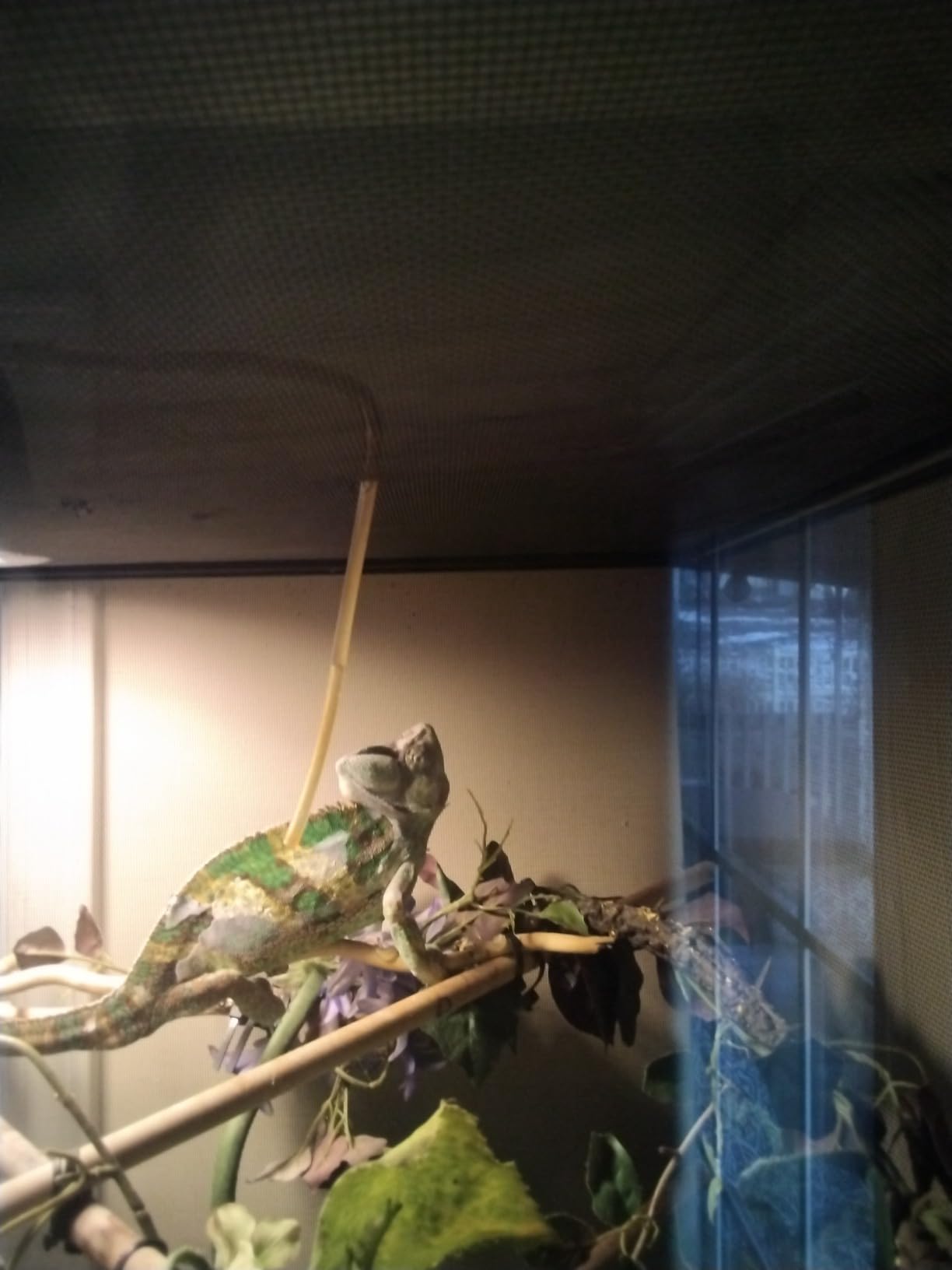
Metal halide versus mercury vapor for a tall vivarium
If your vivarium is 6 feet or taller and your basking surface is more than 20 inches from the lamp, metal halide is the better UV source. The arc runs at a higher temperature, so the emitted UV is shorter wavelength and more intense at distance, which is exactly the gap a mercury arc leaves in a very tall enclosure.
Below that height, the difference narrows and the mercury vapor options become simpler to run, because they have a shorter cool-down. The honest summary from keeper forums is that metal halide has a reputation problem it does not fully deserve, and that keepers avoid it mostly because they have no Solarmeter to confirm what they are getting.
Where the YauldSun falls short
The spectrum is the main caveat. Metal halide is not interchangeable with mercury vapor, and if you are following a species husbandry guide that specifies a particular UV profile, changing arc type changes the result. Read the guide for your species before switching technology.
The 30 minute cool-down and the tubular fit are the everyday problems, and the 296-review base means less long-term data than the established names. It is a good lamp with a strong warranty, but it is a less predictable purchase than the Mega-Ray or the REPTI ZOO.
10. LUCKY HERP 160W High Output Vapor Heat Lamp Review
LUCKY HERP 160 Watt UVA+UVB Vapor Heat Lamp Bulb, High Intensity Self-Ballasted Heat Basking Lamp/Bulb/Light for Reptile and Amphibian, Sun Lamp for Bearded Dragon Lizard Turtle
160 watts
E26 base
300uW/cm2 UVB
Thicker glass
Pros
- Highest stated UVB output in this roundup at 300uW/cm2
- Thicker glass tolerates humid enclosures
- Available in 80W 125W and 160W
- Self-ballasted with no external ballast
Cons
- Lowest rating at 4.1 stars of the lamps listed
- Smallest review base with 219 reviews
- Not compatible with dimmers or rheostats
- Large body needs clearance from fixture walls
The 160W LUCKY HERP publishes the highest UV figure in this roundup at 300uW/cm2 of UVB, which is nearly four times the stated output of the 100W version of the same lamp. On paper that makes it the strongest single-lamp UV source here for a large, tall enclosure.
In practice it carries the lowest rating in the list at 4.1 stars, and the smallest review base at 219 reviews, which is why it sits at number ten rather than higher. The 100W version of the same lamp holds 4.3 across more than 700 reviews, and the durability caveats are shared between the two.
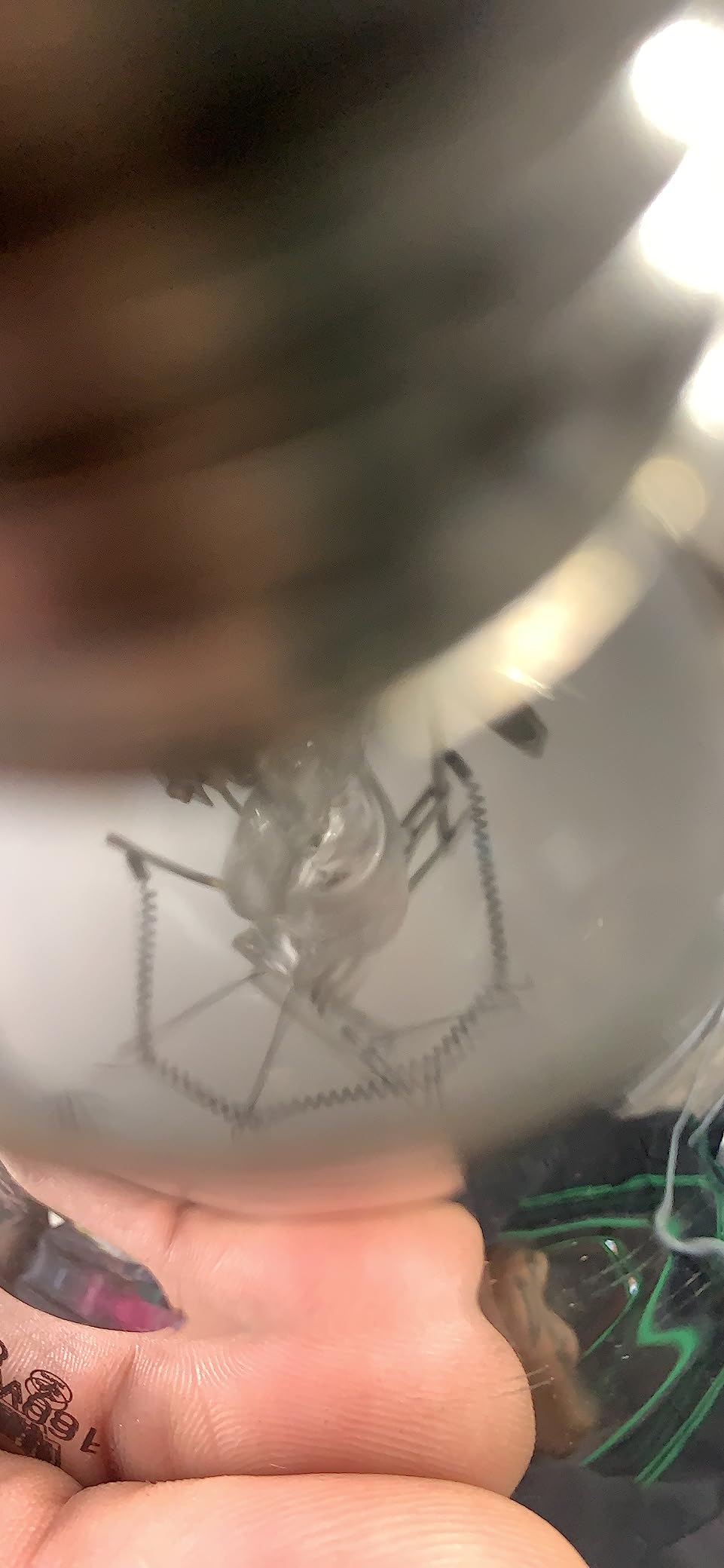
The physical design is the same family as the coated 100W: thicker glass that handles humid enclosures well, a standard E26 base, and a self-ballasted mercury vapor design with no external ballast. It has been listed since 2016, so it is an established product rather than a new listing, and the 80W, 125W and 160W options come from the same line.
Because the stated output is high, mounting discipline matters more here than on any other lamp we list. Measure the UVI at the basking surface after a full warm-up, and set the height so the animal receives a high but not excessive reading. Excess UV is a real problem in sensitive species, not just a theoretical one.
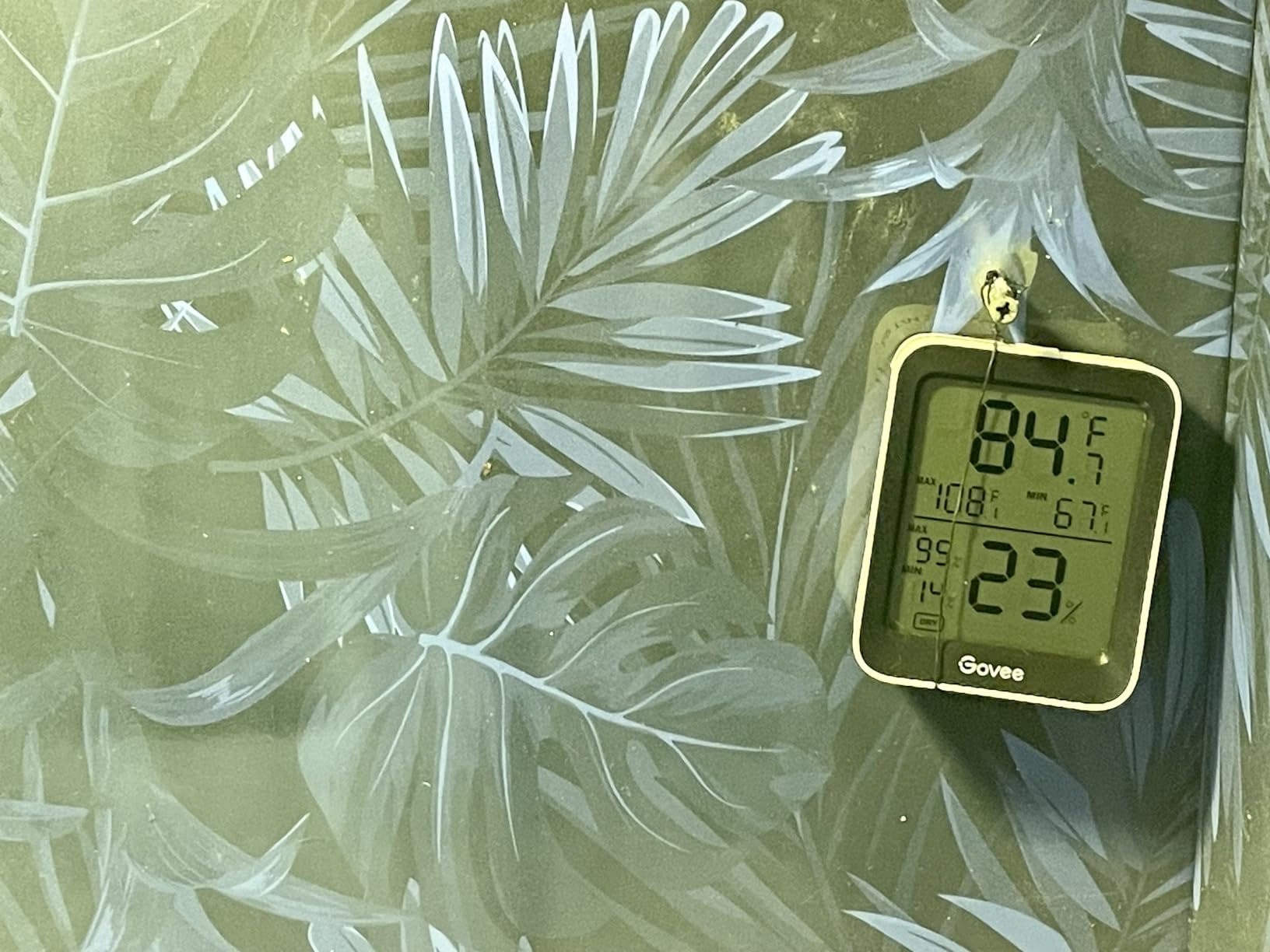
Reading the 300uW/cm2 figure correctly
A published microjoules per square centimetre figure is a lab measurement at a fixed distance, not a promise about your enclosure. The number you care about is the UVI at the basking surface, measured with a Solarmeter 6.5, and that value drops sharply with distance, with glass and through mesh screen.
So use the specification to choose between lamps, then measure to place it. Mount the 160W higher than you think you need, take a reading, and lower it in small increments until the reading at the basking surface sits in the range your species guide specifies.
Where the LUCKY HERP 160W falls short
The 4.1 rating and 219 reviews are the reason this is last. Fewer reviews means less evidence, and the rating suggests a higher share of dissatisfied buyers than the rest of the list. For a 160 watt HID lamp the purchase risk is higher because the failure costs more to recover from.
It also cannot be dimmed, which combined with a 160 watt heat load means all of your temperature control has to come from mounting height. If your basking surface is already at the right temperature with a 125W, stepping to 160W here is buying output you do not need.
How to Choose a Mercury Vapor Bulb for a Large Reptile?
Choose on enclosure geometry first, brand second. The mistake most keepers make with these lamps is buying wattage based on the animal rather than on the distance from bulb to basking surface, and then ending up with a surface that is either too cool to bask on properly or hot enough to burn.
Match wattage to enclosure size
The number that matters is the vertical distance from the bulb to the basking surface, not the volume of the enclosure. A 4x2x2 with a low platform needs far less than a 4x2x2 with a 20 inch tall stack, and a 6 foot vivarium needs more than either. Use this as a starting point, then measure.
Below 12 inches from bulb to surface: 80W to 100W. Between 12 and 18 inches: 100W to 125W. Above 18 inches, or in a vivarium 6 feet or taller: 160W, or a metal halide lamp. If your basking surface is lower than 10 inches from the lamp, a mercury vapor bulb is usually the wrong tool entirely and a halogen flood is safer.
E26 versus E39 and the fixture you actually need
Every lamp in this roundup is an E26 medium screw base, which is the same base as a standard household bulb. That simplicity is a real advantage, but it also means the fitting is your responsibility. A mercury vapour bulb in a cheap plastic socket will fail, and in a humid room it can arc.
You need a ceramic rated socket with the correct wattage, a deep reflector dome sized to the bulb body, and enough clearance to the enclosure lid that you are not running a 160W lamp inches from a plastic top. If the bulb protrudes from a standard dome, the answer is an open wire fixture, not a modification.
Measure UVB with a Solarmeter instead of guessing
Owners on keeper forums treat measurement as the only real currency, and they are right. A Solarmeter 6.5 reading at the basking surface, taken after a full 20 minute warm-up, converts an argument into a fact. Without one, you are guessing at the one variable that determines whether your animal makes vitamin D3.
Take three readings: at the basking surface, at mid-enclosure, and at the animal level on the cool side. That gives you the gradient rather than a single number. Repeat it when you change wattage, change mounting height, or add a second lamp, because the gradient changes faster than keepers expect.
Glass, mesh screen and PVC all cut UVB
UVB does not pass through ordinary glass at any useful level, so a bulb outside a glass vivarium delivers heat but effectively no UV to the animal. Mesh screens block a meaningful fraction as well, which is the main argument for using a mercury vapor bulb with its own reflector dome under a screen top rather than relying on a tube.
PVC and acrylic sheeting behave the same way, and so does fine expanded metal. The practical consequence is that you should never assume a lamp will perform the same after a barrier change, and that a bulb inside a glass enclosure should be sized by the glass heat loss, which is why glass enclosures often need more wattage than the table above suggests.
Mercury vapor bulb versus T5 HO tube: when the tube wins
The tube wins in almost every standard setup. For a 40 gallon tank, a 75 gallon tank, or any enclosure where the basking surface is close to the hood, a long T5 HO tube gives more usable UVB for less money, runs far cooler, dims with a thermostat, and lasts longer. Most large enclosures do not need a mercury vapor bulb.
The mercury vapor bulb wins in two specific cases. The first is a tall enclosure where the surface sits more than 18 inches below the hood, because a tube loses intensity with distance faster than an HID arc does. The second is an adult animal in a very wide enclosure where you need one lamp to cover a basking area measured in feet rather than inches.
There is a middle path many keepers use, and it is worth considering. Run the mercury vapor bulb as your basking and primary UV source, and add a long T5 tube as redundant UVB. That is a common arrangement in the community precisely because keepers do not trust a single arc tube’s UVB lifespan, and the UVB fades long before the heat does.
Disadvantages you need to know before you buy
The downsides are real and they are consistent across the category. Heat is the first: a mercury vapor bulb is a basking lamp, an infrared heater and a UV source in one, and you cannot separate those functions. That means no dimming, a hot socket, real burn risk, and a basking surface that can overshoot within minutes of switching on.
Restarts are the second. Most of these lamps need 15 minutes of cool-down before they will fire again, and a metal halide needs 30 or more. A thermostat cutting power for a short period therefore leaves you with no light and no heat, and any automatic feeding or misting schedule has to be programmed around that behaviour.
Cost and lifespan are the third. Mercury vapor bulbs cost several times what a T5 tube costs, fail early more often than the marketing suggests, and their UV output declines steadily while the visible glow looks unchanged. Eye exposure is the fourth, and it is the one that rules the lamp out for some species entirely.
If you are still comparing options rather than committing, our picks for other rooms in the house are collected in the guides to large ceiling fans and large toaster ovens, which use the same buy-once-and-rely-on-it logic.
Safety: Burn Distance, Eye Exposure and Over-Exposure
Never look directly at a mercury vapor bulb, and keep it out of eye level. A running mercury vapour lamp is bright enough to be uncomfortable at close range, and repeated close exposure to high-output UV can damage eyes. That is a documented risk rather than a theoretical one: a carpet python keeper on aussiepythons.com warns explicitly that an animal exposed to a high powered UV lamp like a mercury vapour lamp could suffer photokerato conjunctivitis, which is UV damage to the eye surface.
This is the reason we do not recommend these lamps for snakes, for nocturnal species, and for any animal that can position itself level with the bulb. A nocturnal reptile in a dark enclosure has no reason to be near a UV source at all, and for a snake, the light is at best unnecessary and at worst harmful. Those keepers should use a T5 tube or no UV lamp at all.
Burn risk is the everyday hazard. Both the Mega-Ray and the PowerSun run hot enough that a large animal could reach the glass, and the LUCKY HERP and MIXJOY listings both carry explicit hot surface warnings. Keep the basking surface at least 14 inches below the bulb, keep children and other pets away from the enclosure top, and never handle a running lamp.
You can also give a reptile too much UVB. Over-exposure shows up as hiding from the light, closed eyes in the beam, and an animal that will not settle under a high-output lamp rather than one that basks constantly. If your animal avoids a high-output lamp, drop the wattage or increase the mounting distance rather than forcing the behaviour.
One more practical hazard: 230V mercury vapor bulbs are sold into 120V sockets in some marketplaces. A lamp rated for 230V in a 120V fixture will not strike properly and can overheat the socket. Check that the listing states 120V or 110 to 120V, which every lamp in this roundup does, and never fit a European bulb into a North American fixture.
Can You Still Buy Mercury Vapor Bulbs?
Yes, mercury vapor bulbs are still sold, but the regulatory picture changed and keepers are right to be cautious about it. Following the 2021 federal action restricting the sale of mercury-added products in the United States, bulbs that were manufactured before the ban are no longer permitted to be sold. Newly manufactured mercury vapor bulbs remain available from legitimate sellers.
That distinction matters when you buy, because much of the remaining supply is older inventory. Look for a manufacture date on the box or the bulb base, and buy from a seller who will state it. A listing that shows no date, an unusually old listing, and a price that undercuts the market are the three signals that you are looking at pre-ban inventory rather than a current product.
On the ground, the practical test is simple. A newly manufactured bulb strikes cleanly, warms up over about 15 minutes, and produces the UV output the listing claims. Older inventory often runs dimmer, warms up unevenly, and fails sooner, which is indistinguishable from a worn bulb unless you know what a new one is supposed to do.
Maintenance and the UVB-Decays-Before-Heat Problem
The most important maintenance fact in this category is that the UV output fades well before the visible light does. A bulb at month ten can look as bright as the day you unboxed it while delivering a fraction of its original UVB. This is the complaint that appears most often in keeper discussions, and it is why nobody who has been through it runs a single mercury vapor bulb as their only UV source.
The consensus advice from long-running keeper threads is to plan a replacement schedule rather than a replacement trigger. A common approach is a T5 tube as permanent redundant UVB, and replacing the mercury vapor bulb on a fixed interval of roughly 8 to 12 months whether or not it still appears to work. For owners who will not run a second lamp, a Solarmeter is the only way to know when output has dropped.
Three habits extend the life of these lamps. Run them no longer than the animal needs, and treat 10 hours a day as a ceiling rather than a target where you can. Mount them upright where the fixture allows, because heat trapped at the arc tube shortens life. And never cycle them repeatedly, since each switch-on costs you a 15 minute cool-down and adds stress to the arc.
Check the socket while you are at it. Corrosion at the base contact is a leading cause of flicker and of lamps that will not strike, and a clean ceramic socket with nickel plated threads will outlast a cheap plastic one every time. It costs nothing to inspect.
Frequently Asked Questions
Can you still buy mercury vapor bulbs?
Yes. Following the 2021 federal restriction on mercury-added products in the United States, bulbs manufactured before the ban can no longer be sold, but newly manufactured mercury vapor bulbs are still sold by legitimate sellers. Check the manufacture date on the box or bulb base, buy from a seller who states it, and be wary of listings with no date that undercut the market, since those are usually pre-ban stock. Confirm the lamp is rated 120V or 110 to 120V.
What are the disadvantages of mercury vapor lamps?
The main drawbacks are heat, cost, and UV output that fades early. One lamp cannot be dimmed, its socket runs extremely hot, and the basking surface can overshoot within minutes. Most models need 15 minutes of cool-down before restarting, so a thermostat cutting power leaves you with no light and no heat. They cost several times more than a T5 tube, fail early more often than claimed, and their UVB declines while the visible glow looks unchanged. They are also unsuitable for snakes and nocturnal species because of eye exposure risk.
What watt UVB bulb for a bearded dragon in a 40 gallon tank?
A 40 gallon tank does not need a mercury vapor bulb at all. A long T5 HO tube mounted in a hood delivers more usable UVB over a low basking surface, runs cooler, dims with a thermostat, and costs far less. Use a mercury vapour bulb only once the basking surface sits more than 18 inches below the hood. At that point start at 80W to 100W for a juvenile and step to 125W or 160W for an adult, then verify the UVI at the basking surface with a Solarmeter 6.5.
Can you give a reptile too much UVB?
Yes, over-exposure is a real risk with high-output UV lamps. Signs of too much UV include an animal that avoids the basking area, keeps its eyes closed in the beam, or sits in shade rather than basking. Over-exposure can also cause photokeratitis, which is UV damage to the eye surface, and keepers on python forums warn specifically about this with high-powered UV lamps. The fix is to increase mounting distance or drop the wattage, never to force the animal to bask.
Is T5 or T8 better for reptiles?
T5 is better in almost every case, and T8 is close to obsolete for UVB delivery. A T5 HO tube is brighter, more efficient, and usually longer than a T8 of the same length, which means more usable UVB reaches the basking surface at the same mounting distance. For a standard 40 or 75 gallon enclosure a T5 HO tube remains the best value. Reach for a mercury vapor bulb only in a tall enclosure where the basking surface sits more than 18 inches below the hood.
What are the symptoms of a bearded dragon not receiving enough UVB light?
Common signs include a dark or blackened beard in adult males, flattened or pancaked body posture, lethargy, reduced appetite, and reluctance to bask rather than constant basking. Over time inadequate UVB leads to metabolic bone disease, which shows as bowed limbs, soft jaw or facial deformity, and weakness. Keepers on reptile forums repeatedly report animals with MBD traced back to inadequate UV. Measuring the UVI at the basking surface with a Solarmeter 6.5 is the only reliable way to confirm the level your animal actually receives.
Conclusion
For most keepers reading this, the honest starting point is that a long T5 HO tube remains the better bulb for a reptile habitat, and a mercury vapor bulb earns its place only when the basking surface is far enough below the hood that a tube cannot deliver enough UV. If that is your situation in 2026, the Mega-Ray 100W is the best mercury vapor bulb for large reptiles overall, because it combines the largest body of long-term keeper reports in the category with a ceramic-socket, long-throw design. The Zoo Med PowerSun 160W is the pick when throw distance decides the outcome, and the REPTI ZOO P95100 is the pick when you are filling several enclosures and cost per lamp matters most.
Whichever you choose, measure the UVI at the basking surface, mount it high enough that the animal cannot reach the glass, and run a second UV source rather than trusting one arc tube. That last point is the one keepers wish they had acted on sooner, because the UVB fades long before the light looks like it has.