
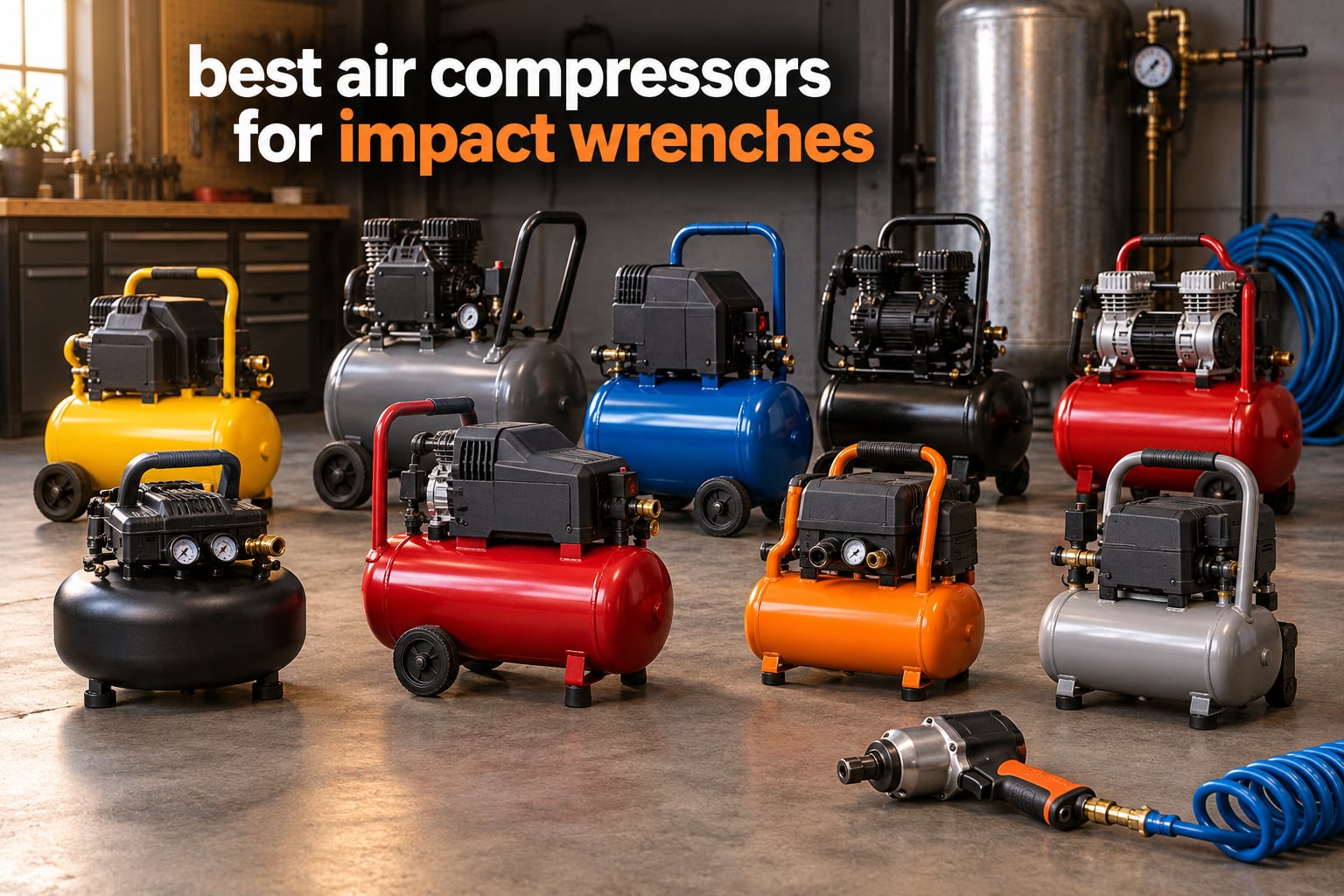
Impact wrenches need 4 to 5 CFM of airflow at 90 PSI, so any compressor that holds 4 CFM or better at working pressure can run a typical 1/2-inch drive impact gun. Tank size decides how long you wait between bursts, not whether the wrench works at all.
That single number is what separates a compressor that pulls lug nuts all afternoon from one that leaves you standing around waiting for the tank to refill. We went through nine compressors and matched every published CFM-at-90-PSI figure against the wrench drives it can realistically serve, then sorted them by tank class so you can find the right one whether you work out of a single-car garage or a three-bay shop.
Two things shaped every pick here. First, we weighted the honest CFM-at-90-PSI number far more heavily than peak CFM, because a compressor advertised at 6 CFM that only makes 3 at working pressure will not hold a wrench together. Second, we counted noise in dBA, since a lot of people run these machines in a residential garage rather than a shop with a roll-up door. If your real goal is quiet airflow for spraying or inflating rather than wrenches, our automobile painting compressor picks cover that side of the market.
Table of Contents
Top 3 Best Air Compressors for Impact Wrenches in 2026

Makita MAC2400
- 4.2 CFM at 90 PSI
- 4.2-gallon tank
- Cast iron oil-lubricated pump
- 12.3 A start-up draw

California Air Tools 10020C
- 5.3 CFM at 90 PSI
- 10-gallon tank
- 70 dB
- Oil-free dual piston pump

Best Air Compressors for Impact Wrenches in 2026: Quick Overview
| Product | Specs | Action |
|---|---|---|
| Makita MAC2400 2.5 HP Big Bore Air Compressor |
|
Check Latest Price |
| California Air Tools 10020C 10-Gallon Ultra Quiet |
|
Check Latest Price |
| Klutch 29-Gallon 2.5 HP Vertical Compressor |
|
Check Latest Price |
 VEVOR 15-Gallon Oil-Free 2 HP VEVOR 15-Gallon Oil-Free 2 HP |
|
Check Latest Price |
 VEVOR 13-Gallon Quiet Compressor VEVOR 13-Gallon Quiet Compressor |
|
Check Latest Price |
 Stealth 20-Gallon Ultra Quiet Stealth 20-Gallon Ultra Quiet |
|
Check Latest Price |
 Craftsman 20-Gallon 175 PSI Oil-Free Craftsman 20-Gallon 175 PSI Oil-Free |
|
Check Latest Price |
 Craftsman 10-Gallon 150 PSI Portable Craftsman 10-Gallon 150 PSI Portable |
|
Check Latest Price |
 California Air Tools 15020C 15-Gallon California Air Tools 15020C 15-Gallon |
|
Check Latest Price |
How Much CFM and PSI an Impact Wrench Actually Needs
Here is the short answer most people are after. A 3/8-inch drive impact wrench pulls roughly 3 CFM, a 1/2-inch drive pulls about 4 to 5 CFM, a 3/4-inch drive wants 7 to 9 CFM, and a 1-inch drive needs close to 10 CFM. Every one of them wants 90 PSI of working pressure at the regulator, not at the tank.
The reason a small compressor can still work surprises people who assume CFM is everything. An impact wrench is an intermittent tool: each nut takes about 15 seconds of airflow, then the wrench stops and the pump refills the tank while you move to the next wheel or the next bolt. Tank size governs the wait between bursts, while CFM governs how hard the wrench hits on every burst.
3/8-inch drive: about 3 CFM. A 4 CFM compressor runs it, and any compressor below 3 CFM will stall it repeatedly.
1/2-inch drive: 4 to 5 CFM. This is the mainstream DIY and weekend mechanic case, and it is where most of our picks live.
3/4-inch drive: 7 to 9 CFM. You are past the capacity of every small portable machine here and into the 20 to 30 gallon shop class.
1-inch drive: close to 10 CFM. One wrench this size needs a compressor that holds that figure at 90 PSI while the tool is running, not a machine that peaks at it.
The honest limit case matters too. Compressors rated below 4 CFM, and most 2-gallon and 3-gallon pancake compressors, cannot run an impact wrench without constant recovery pauses that leave the last bolts in a job feeling weak. If you own one of those, it is a nailer and inflation machine, not a nut-busting machine.
1. Makita MAC2400 – Best Air Compressor for Impact Wrenches Overall
Makita MAC2400 2.5 HP* Big Bore™ Air Compressor
4.2 CFM at 90 PSI
4.2-gallon tank
2.5 HP oil-lubricated pump
79 dB
12.3 A draw
Pros
- Highest average rating in the group at 4.7 from 1319 reviews
- 4.2 CFM at 90 PSI is strong for a small footprint
- Oil-lubricated cast iron pump runs cooler and lasts longer
- Low 12.3 A start-up draw trips fewer breakers
- Roll-cage steel frame handles jobsite abuse
Cons
- 4.2-gallon tank means frequent pauses on sustained work
- Oil-lubricated pump needs periodic oil changes
- 79 dB is loud for a residential garage
The cast iron Big Bore pump on this one is the reason it holds 4.2 CFM at 90 PSI inside a 4.2-gallon footprint, which is unusual. Owners working a weekend on one car will move through lug nuts without a single pause, because 4 CFM covers a 1/2-inch drive cleanly.
Its 1,730 RPM motor design is the other quiet trick. Slower pump speed means less noise and less wear than a higher-RPM small compressor, and the 12.3 A start-up draw means it will not trip a household breaker when it kicks on mid-conversation with an impact gun running.
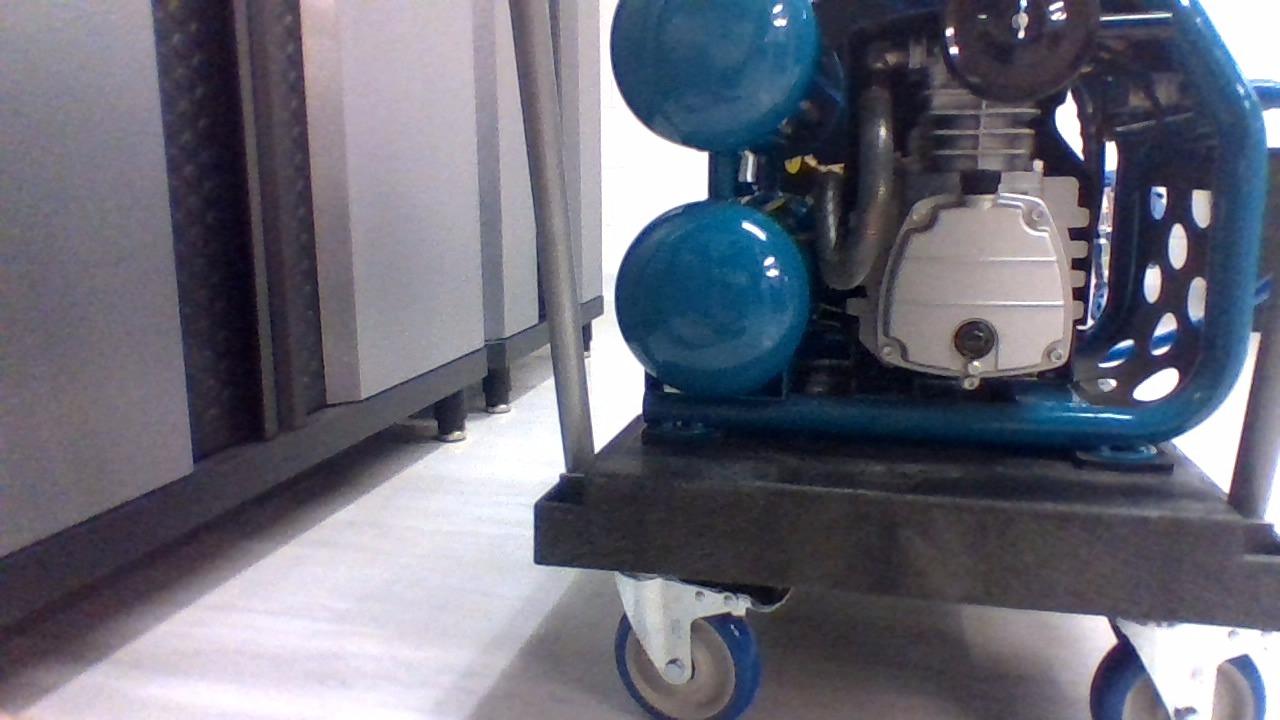
The 4.2-gallon tank is the real tradeoff. This is not a compressor for a long brake job where you also want to run a die grinder between bolts. It is a specialist: small, tough, and fast-recovering, with a removable cast iron cylinder that makes servicing straightforward.
Reviews note the oil-lubricated design runs cooler and lasts longer than oil-free units in the same class, but it does mean you check the oil sight glass and change it on a schedule. Owners consistently report the 12.3 A draw as the feature that lets them keep it on a normal 15-amp circuit without thinking about it.
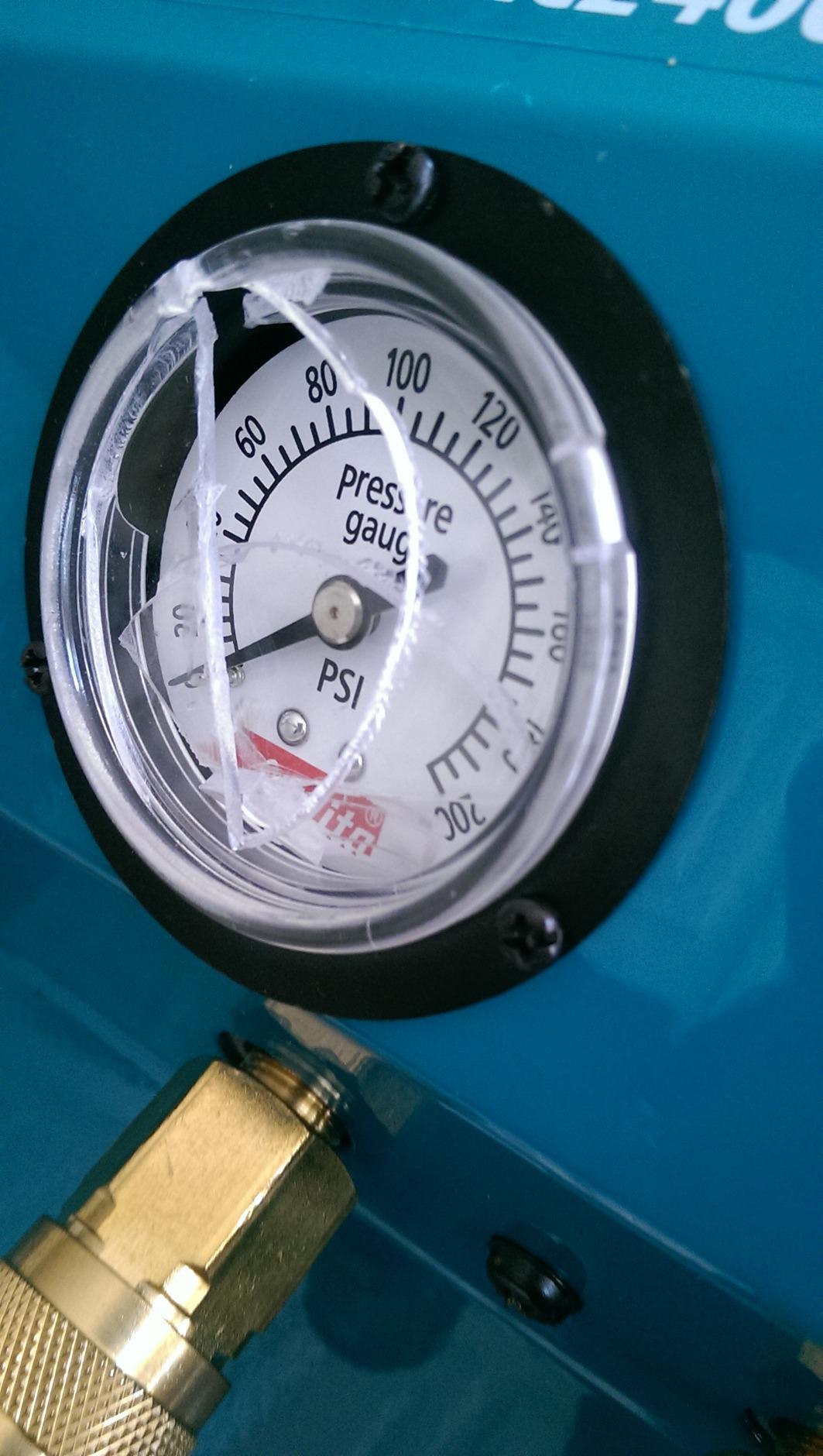
When this compressor earns its tank space
This is the right pick when your work is lug nuts, brake hardware and suspension bolts on passenger cars, done in short bursts with time in between. A small footprint means it lives on a shelf or a bench instead of eating a quarter of the garage floor.
It is also the safest choice electrically. If your compressor sits on a 15-amp household circuit and you want to run a 1/2-inch impact gun plus a blow gun without the breaker flipping, that 12.3 A rating removes the guesswork.
When this compressor will disappoint you
It will not run a 3/4-inch or 1-inch drive wrench. Four CFM cannot feed a 7 to 10 CFM tool, so you would be waiting on the tank through the entire burst rather than between bursts.
The other honest limit is noise. At 79 dB it sits near the loud end of this group, and 4.2 gallons disappears quickly if you add a sander or a die grinder to the session.
2. California Air Tools 10020C – Best Value Air Compressor for Impact Wrenches
California Air Tools 10020C 2.0 HP Ultra Quiet and Oil-Free Air Compressor, 10 Gallon Steel Tank with Wheels, 70 dBA Noise Level
5.3 CFM at 90 PSI
10-gallon tank
70 dB
Oil-free dual piston pump
125 PSI max
Pros
- 5.3 CFM at 90 PSI covers 1/2-inch drives with margin
- 70 dB is quiet enough for a residential garage
- Oil-free dual piston pump rated over 3000 hours
- 10-gallon tank with wheels and handle
- 1508 reviews show long-term ownership
Cons
- 125 PSI maximum is among the lowest here
- Oil-free design can thermal cut off after sustained running
- Some long-term reports of small air leaks and switch wear
This is the combination we send most people home with. You get 5.3 CFM at 90 PSI, which clears a 1/2-inch impact gun with room to spare, in a 10-gallon vertical tank that rolls on wheels.
At 70 dB it is quiet enough that owners report holding a normal conversation beside it. That matters more than any spec on the sheet if your garage shares a wall with a bedroom or a neighbour’s fence sits close.
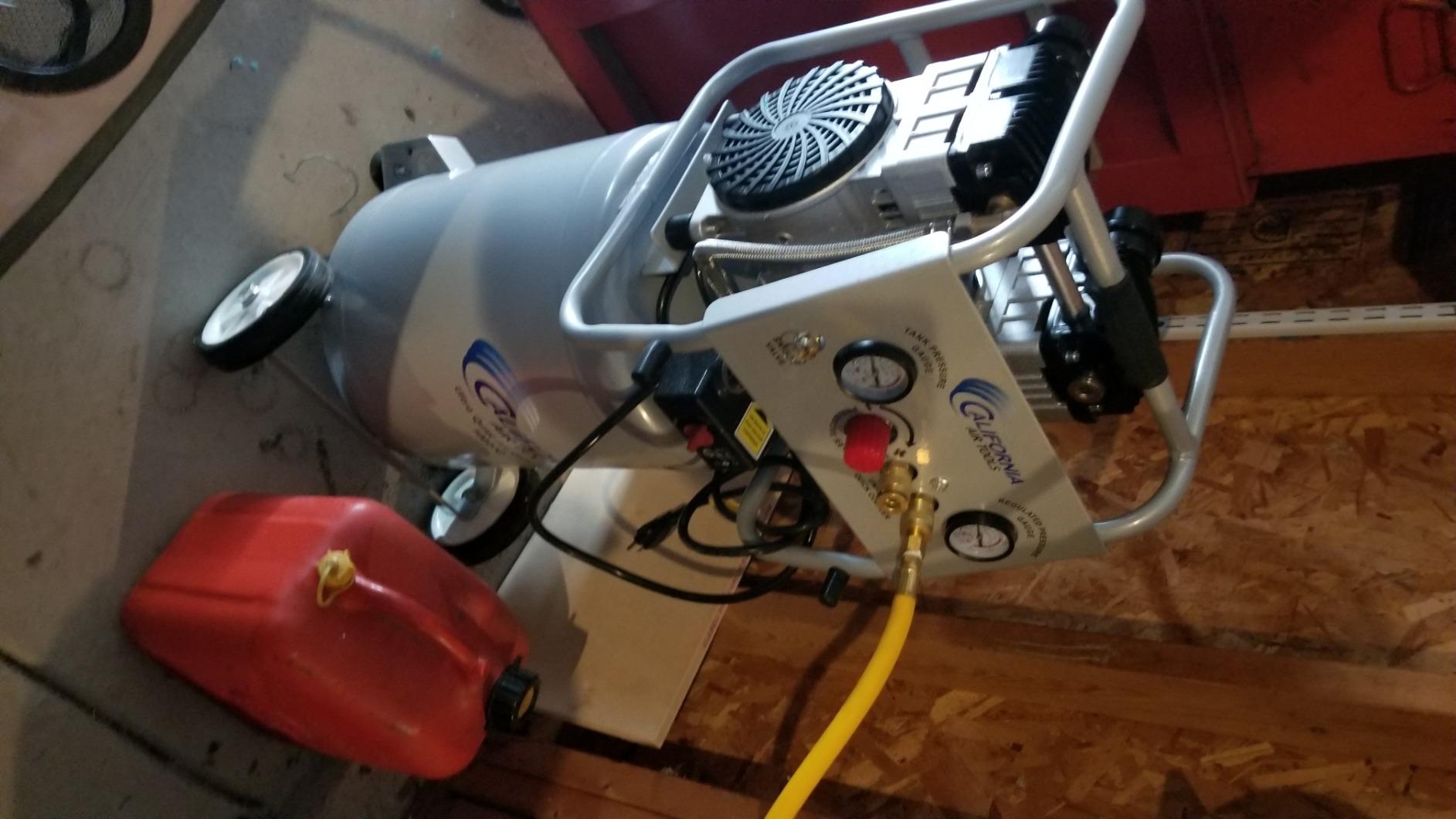
The oil-free dual piston pump is rated past 3000 hours and removes oil changes entirely. One owner paired it with an auxiliary tank to run a high-output 1/2-inch impact through winter wheel changes, which tells you the pump has airflow headroom beyond the base machine.
The catch is duty cycle. Because the pump is oil-free, sustained running triggers a thermal cut-off and a long cool-down. For bolt-on-bolt wrench work that never happens, but do not plan to sandblast or run a die grinder off this for an hour straight.
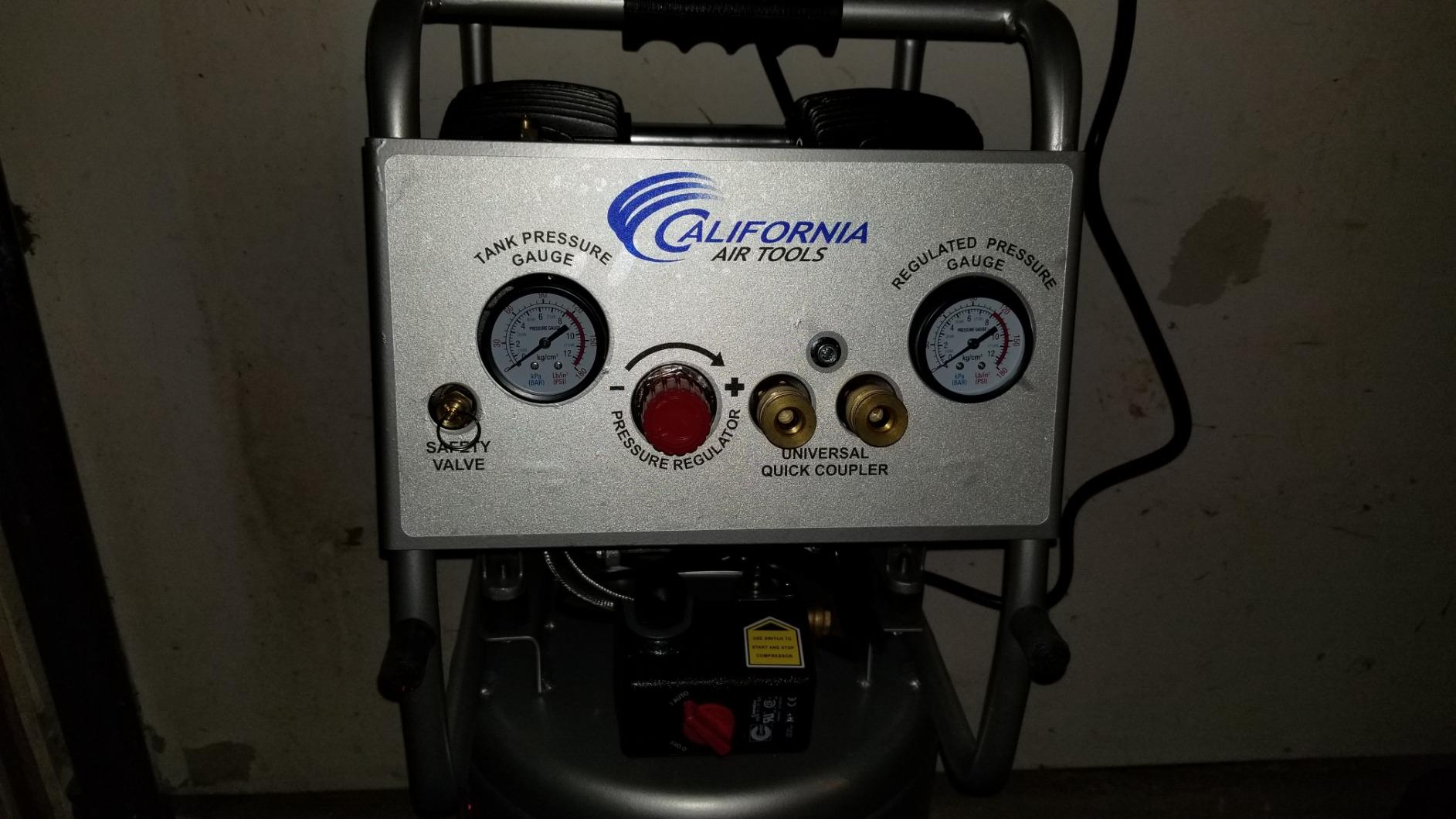
Who should buy this one
Anyone running brakes, suspension and wheel work on one or two vehicles who also cares about noise. The 10-gallon tank holds roughly four full wrench bursts before the pump catches up, so you are rarely standing idle.
It is also a strong pick for a shared garage or an indoor workspace where an 80 dB machine would be unusable. The Easy Start valve helps on cold mornings, drawing fewer amps at start-up.
Where the limits show up
The 125 PSI ceiling is the lowest in this lineup alongside the VEVOR units. For impact wrench work that is not a practical problem, but it removes headroom for spray guns and sanders that want more pressure.
A small minority of owners report leaks or pressure switch wear after years of service, and some found the tank cuts out near 120 PSI rather than the advertised 125. If you want zero maintenance and long-run thermal headroom, look at the oil-lubricated Makita instead.
3. Klutch 29-Gallon Vertical – Best Air Compressor for Sustained Wrench Work
Klutch 29-Gallon Air Compressor, 2.5 HP, 120V, 175 PSI, 5.1 CFM at 90 PSI
5.1 SCFM at 90 PSI
29-gallon vertical tank
175 PSI maximum
2.5 HP on 120V
81 dB
Pros
- 29-gallon tank is the largest in the group
- 175 PSI maximum gives real headroom
- Runs on a standard 120V outlet with no dedicated circuit
- Vertical footprint saves floor space
- Owners report holding pressure with no measurable loss
Cons
- 127 pounds is heavy to lift into a truck bed
- 81 dB is loud for an enclosed garage
- Some reviewers question the stated CFM figure
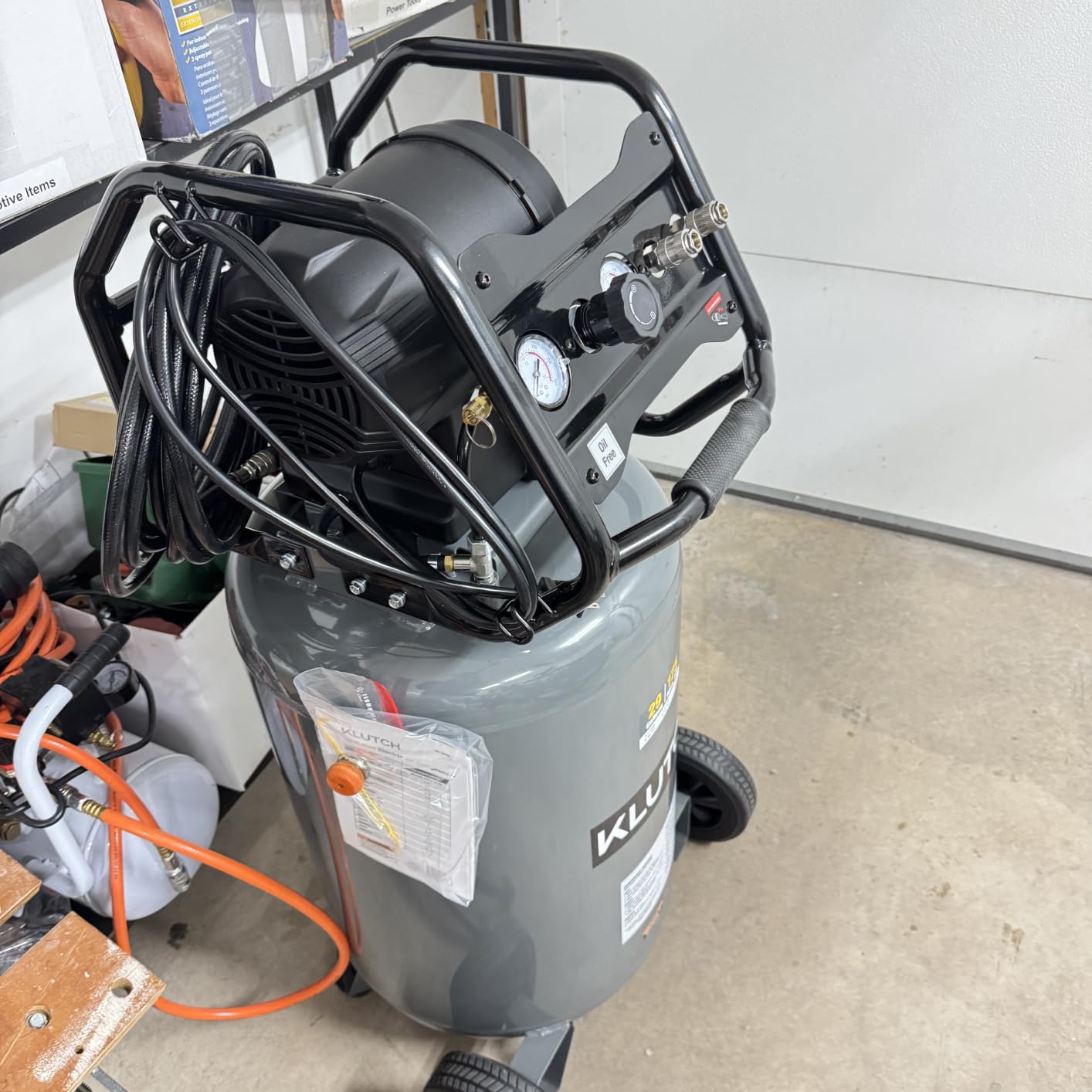
This is the machine to buy when the impact wrench is one of several tools on the same circuit. A 29-gallon tank means you can run a 1/2-inch impact gun, then a die grinder, then another wrench, without watching the gauge fall.
It also pulls 5.1 SCFM at 90 PSI, which is honest working-pressure airflow rather than a zero-PSI marketing figure. Owners doing brake work report it holds 150 PSI for weeks with no measurable leak.
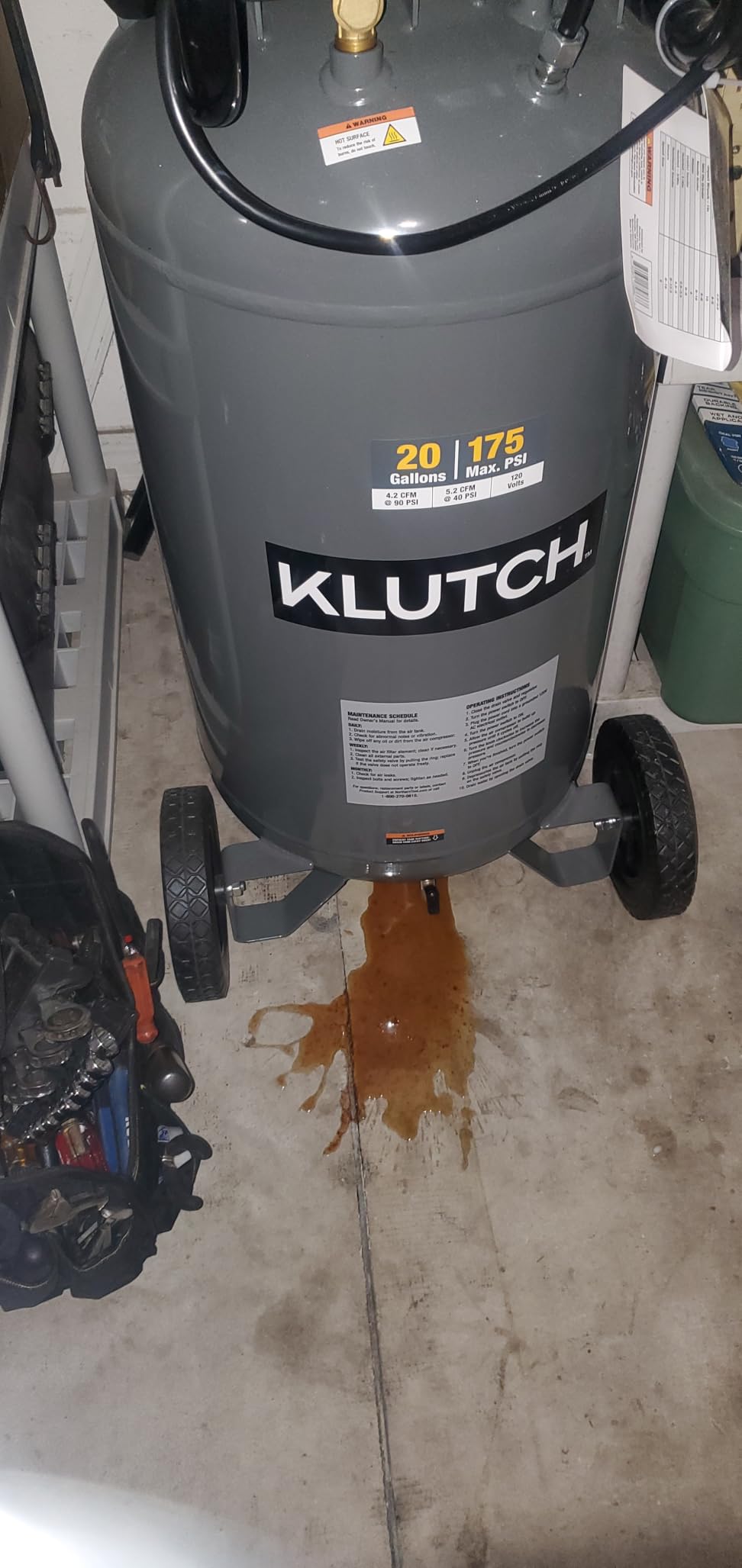
The 175 PSI maximum is the joint highest here and matters when you move beyond wrenches into framing nailers or paint prep. The brass quick-connect coupler takes one-handed hose changes, which adds up over a day.
Large flat-free tires and a handle make it easy to move across a shop floor, and the vertical layout leaves the space under the tank free for storage. It runs on a standard 120V outlet, so you do not need an electrician.
The compromises are physical. At 127 pounds, lifting it into a truck bed is a two-person job, and 81 dB is the loudest machine here. A 29-gallon tank also takes a while to fill from empty, so the first job of the day starts with a wait unless you leave it plugged in.
Where this compressor earns its floor space
Mixed-tool shops where the wrench is the primary tool but the sander and grinder get used too. The tank size means you stop thinking about air supply and start thinking about the job.
It is the right size for a home shop that has outgrown a pancake and has not yet reached a three-bay shop’s needs. Two people can work off it comfortably at a moderate pace.
Where it does not fit
Do not buy it if noise matters in your space, or if you need to move it regularly. A single-technician operator will also find that 5.1 SCFM is modest for a tank this size when adding a second tool at the same time.
A small minority of owners question whether the advertised CFM matches real output, and there are isolated reports of an electrical defect on a single production batch. If continuous two-tool operation is your normal pattern, you want a larger CFM figure, not just a bigger tank.
4. VEVOR 15-Gallon Oil-Free – Best Airflow for Wrench Work on a Single Machine
VEVOR Air Compressor, 15 Gallon Steel Tank, 2HP 5.3 CFM@90 PSI Oil Free Air Compressor & Max. 125PSI Pressure, 78dB Ultra Quiet Portable Compressor, for Auto Repair, Tire Inflation, Spray Painting
5.3 CFM at 90 PSI
15-gallon tank
78 dB
2 HP oil-free motor
Dual outlets
Pros
- 5.3 CFM at 90 PSI handles a 1/2-inch drive with margin
- 15 gallons gives long bursts before recovery
- 78 dB is usable outdoors at night
- Dual outlets run two hoses off one pump
- Owners report seamless-welded tanks with no leaks
Cons
- Power cord is short and units are sensitive to extension cords
- Wheels and handle feel cheaper than the pump and tank
- Motor housing runs hot to the touch
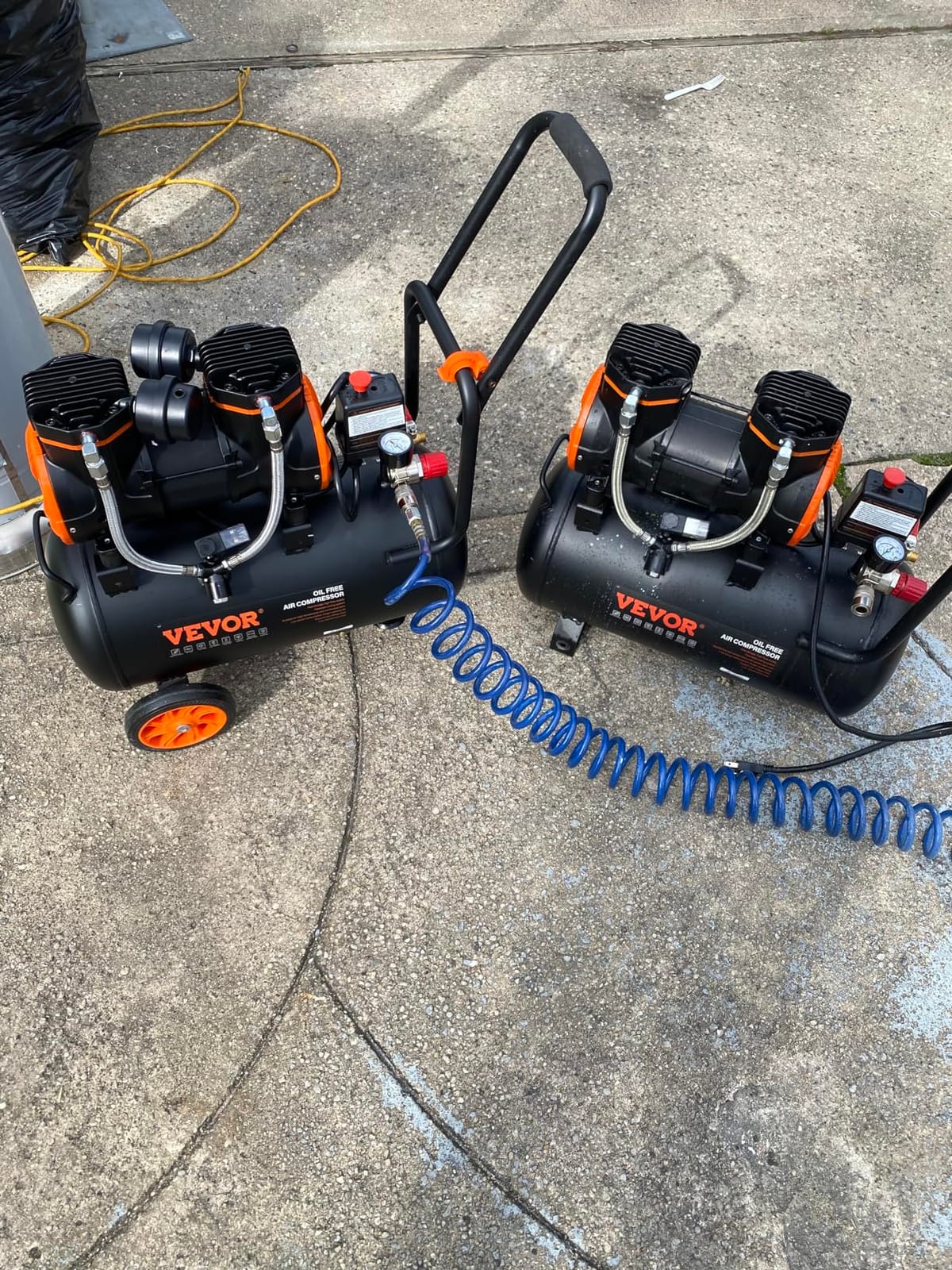
Here you get the same 5.3 CFM at 90 PSI as the 10-gallon California Air Tools unit but paired with a 15-gallon tank. For someone whose wrench work comes in long sessions, the extra tank matters more than the extra quiet.
Owners consistently praise two things: fast fill times, with several reporting full pressure in about a minute, and a noise level they describe as usable outdoors late at night. The dual outlets let a second tool run off the same pump.
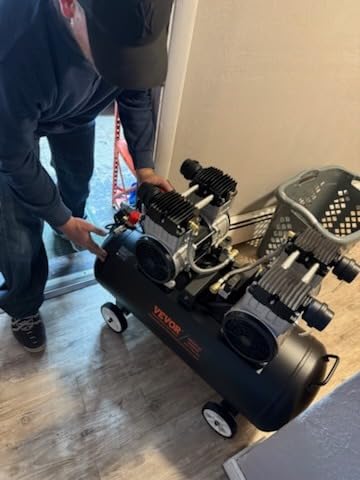
Construction is the other strength. The tank uses a three-layer rust and wear-resistant coating over Q235B structural steel with seamless welding, and owners report zero leaks over time. A large cooling fan and automatic overheat protection back up the oil-free pump.
The criticisms are all around the electrical setup and the fittings. Several owners note the cord is short enough to force the machine near an outlet, and the unit can refuse to run on a long extension cord, which matters if your outlet is not where the work is.
There are also repeated complaints that the wheels and handle feel like cost-cutting next to a well-built pump and tank, and that the motor housing gets hot enough to burn skin on contact. The 125 PSI maximum is the lowest tier here.
Who this compressor suits
Weekend wrench users in a garage who will do a full day of wheels, brakes and suspension and dislike stopping between cars. The 15-gallon tank absorbs several bursts per fill.
It is also a sensible choice if you want two hoses available, so a nail gun can run while the impact gun is working on the same machine. Just plan the outlet placement before you buy.
Where buyers get frustrated
The electrical caveats are real. Voltage picky units will not start on a long or multi-gauge extension cord, and a short cord can make the machine unusable in a large shop layout.
Hot motor housing and low-grade wheels are quality-of-life complaints rather than failures, but both affect how long you will enjoy the machine. If you want a longer cord and serviceable hardware, the Klutch has both in a taller package.
5. VEVOR 13-Gallon Quiet Compressor – Best for Quiet Garages with Wrench Work
VEVOR 13-Gallon Air Compressor, 2HP, 4.6 SCFM@90PSI, Oil-Free Tank, 66dB Quiet Operation, Ideal for Tire Inflation, Woodworking, Auto Repairs, and Spray Painting (Maximum Pressure 125 PSI)
4.6 SCFM at 90 PSI
13-gallon tank
66 dB
Oil-free, no maintenance
Pros
- Quietest machine in the group at 66 dB
- 13-gallon tank is larger than typical pancake units
- No oil changes and no maintenance
- Tank builds pressure in under 3 minutes
- Two pressure gauges included
Cons
- 4.6 SCFM is modest for the tank size and reported continuous output is lower
- Some units need a 20 to 30 minute thermal reset
- 71 pounds makes it awkward to lift
At 66 dB this is the quietest compressor in the lineup, and owners say you do not need hearing protection when it cycles on. That figure is roughly 14 dB below the loudest machine here.
The 13-gallon vertical tank is what separates it from a pancake. It builds pressure in under three minutes, and owners report it fills about as fast as much smaller tanks despite the larger capacity.
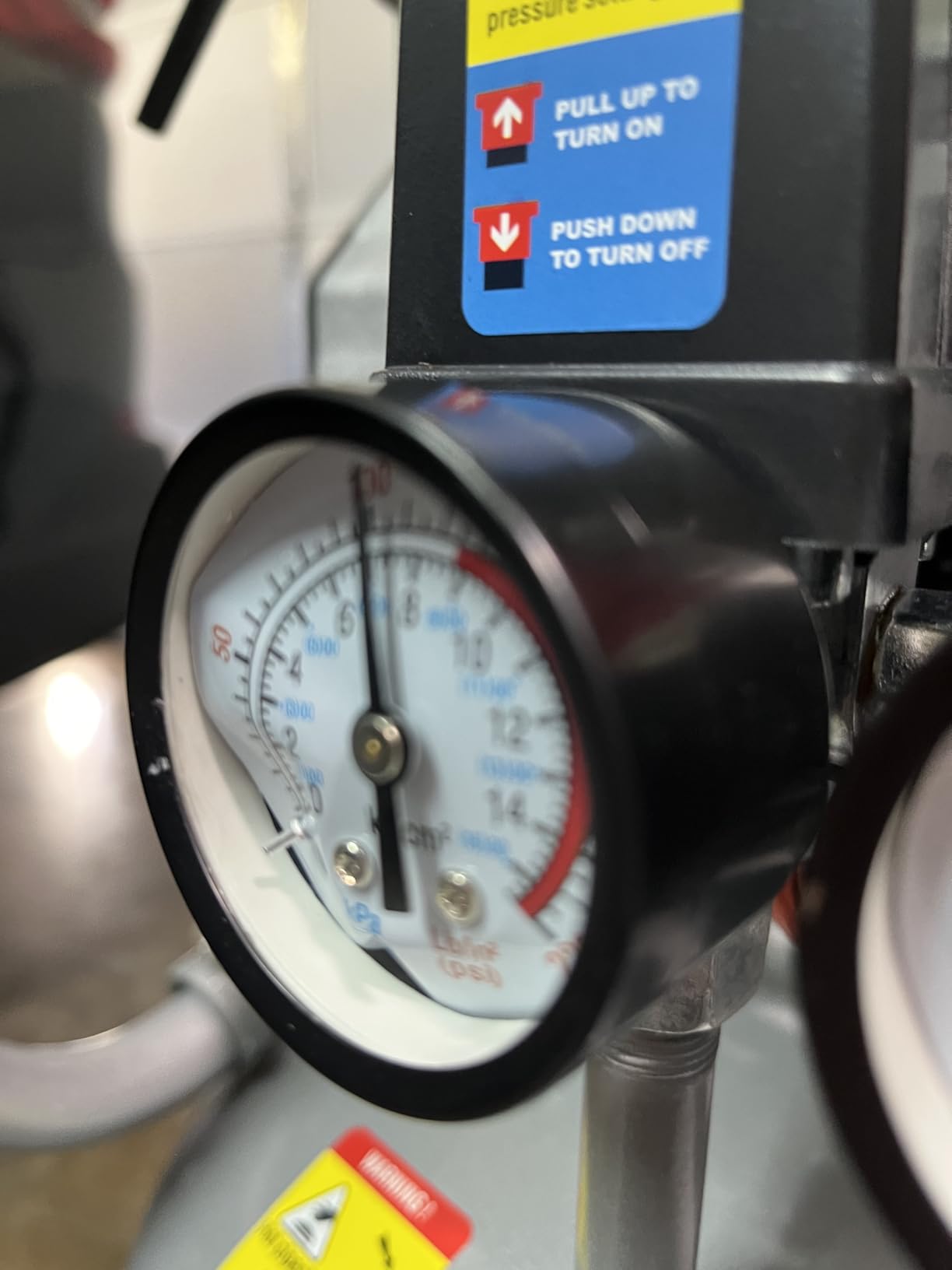
Two 7-inch reinforced rubber wheels make it easy to roll between an indoor workspace and outside, and the oil-free design needs no oil changes at all. Two pressure gauges and dual connections are useful additions at no fuss.
The important caveat is real output. One detailed review cites manufacturer support conceding roughly 2.7 CFM continuous rather than the advertised 4.6 SCFM. A meaningful minority of one-star reviews report units that overheat and need a 20 to 30 minute thermal reset.
That matters more for wrenches than for nailers. A 4 CFM target is the floor for a 1/2-inch drive, and a machine delivering closer to 2.7 CFM continuous will feel weak under sustained nut busting.
Where the quietness pays off
Apartment-adjacent garages and indoor workshops where a 78 to 81 dB machine would be genuinely disruptive. Owners describe holding a conversation beside it without raising their voice.
It also suits intermittent wrench work well, because you can move the machine where the car is rather than bringing the car to the machine.
When the spec gap matters
If you plan to break loose seized or corroded lug nuts regularly, skip this one. The gap between advertised SCFM and the reported continuous output is exactly the scenario where a weak compressor frustrates you most.
The thermal-reset reports are also worth weighing. A machine that stops for 20 to 30 minutes during a wheel job is a different experience from one that merely pauses for 40 seconds.
6. Stealth 20-Gallon Ultra Quiet – Best for Quiet Shop Work
Stealth 20 Gallon Ultra Quiet Air Compressor,1.8 HP Oil-Free Peak 150 PSI 68 Decibel, 5.5 CFM @ 40 PSI 5 CFM @ 90 PSI Silent Long Life Electric Air Compressor W/Wheel for Garage
5 CFM at 90 PSI
20-gallon steel tank
150 PSI peak
68 dB
Two quick couplers
Pros
- 20-gallon tank with 5 CFM at 90 PSI
- Measured around 65 dB at 8 to 10 feet
- Two quick couplers for swapping tools
- Backed by a limited lifetime warranty
- Holds pressure well when idle
Cons
- Will not restart unless the tank is fully drained
- 121.4 pounds is heavy to maneuver
- Some reports of early failure and tripped breakers
A 20-gallon tank paired with 5 CFM at 90 PSI is the rare combination that quietly covers both a 1/2-inch drive and the odd grinder session. Several owners measured it at about 65 dB from 8 to 10 feet.
The tone is the story here. Owners describe a soft purr rather than the clatter of a conventional reciprocating compressor, and the 8-inch rubber wheels roll well even at 121.4 pounds on level ground.
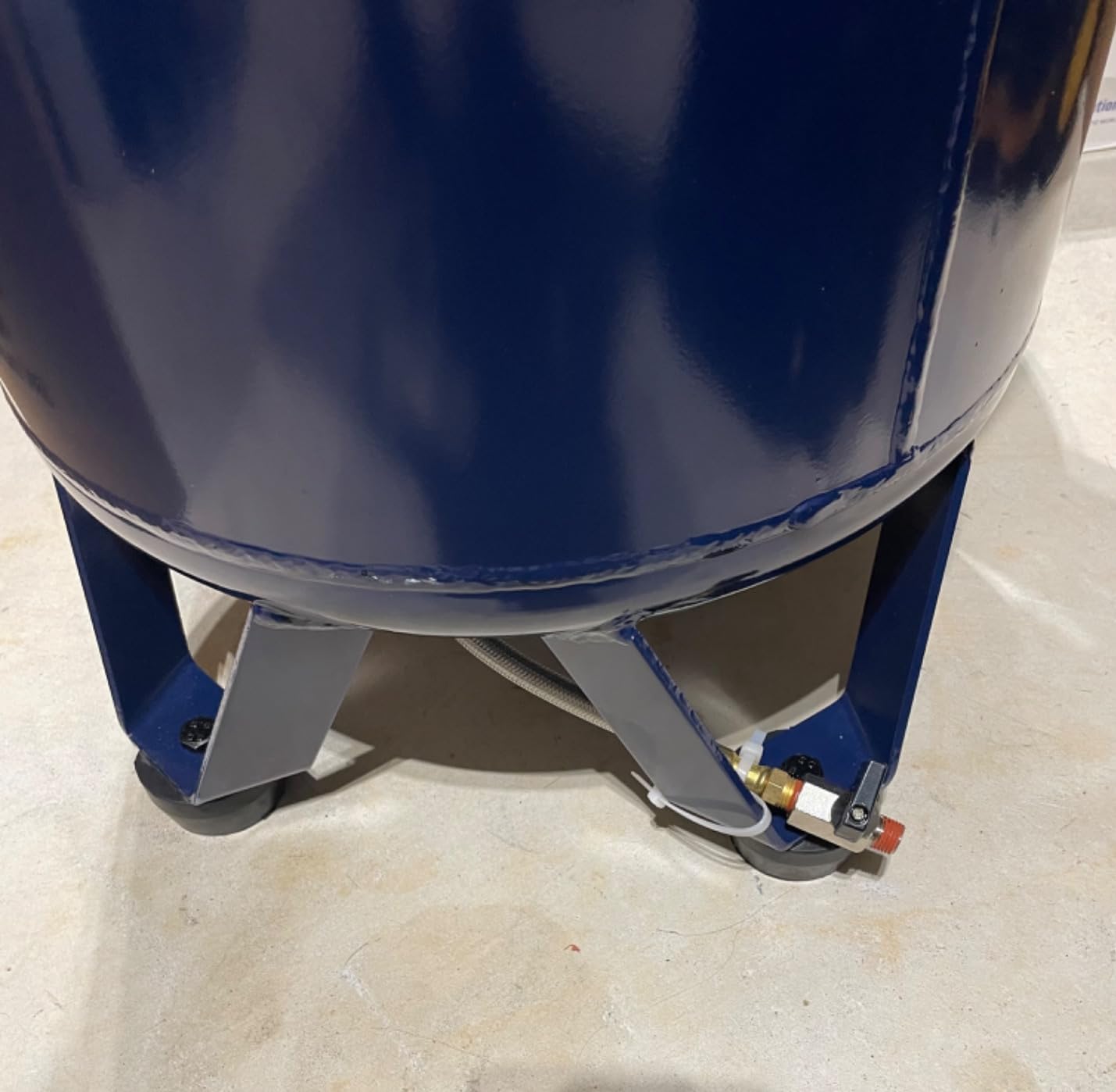
Two quick couplers mean you can keep a nailer connected while the impact gun is on the other side, and pressure holds well when the machine is idle. The limited lifetime warranty is the strongest warranty claim in this group.
The biggest practical complaint is that it will not start under load. Owners report having to drain the tank completely before it restarts, which breaks up any job that needs continuous airflow, and sandblasting is simply out of reach.
There are also reports of early failure within a few weeks, some involving tripped breakers, and owners who could not get the warranty support form to submit. At 4.2 stars with a 12 percent one-star share, this is the least consistent consensus in the lineup.
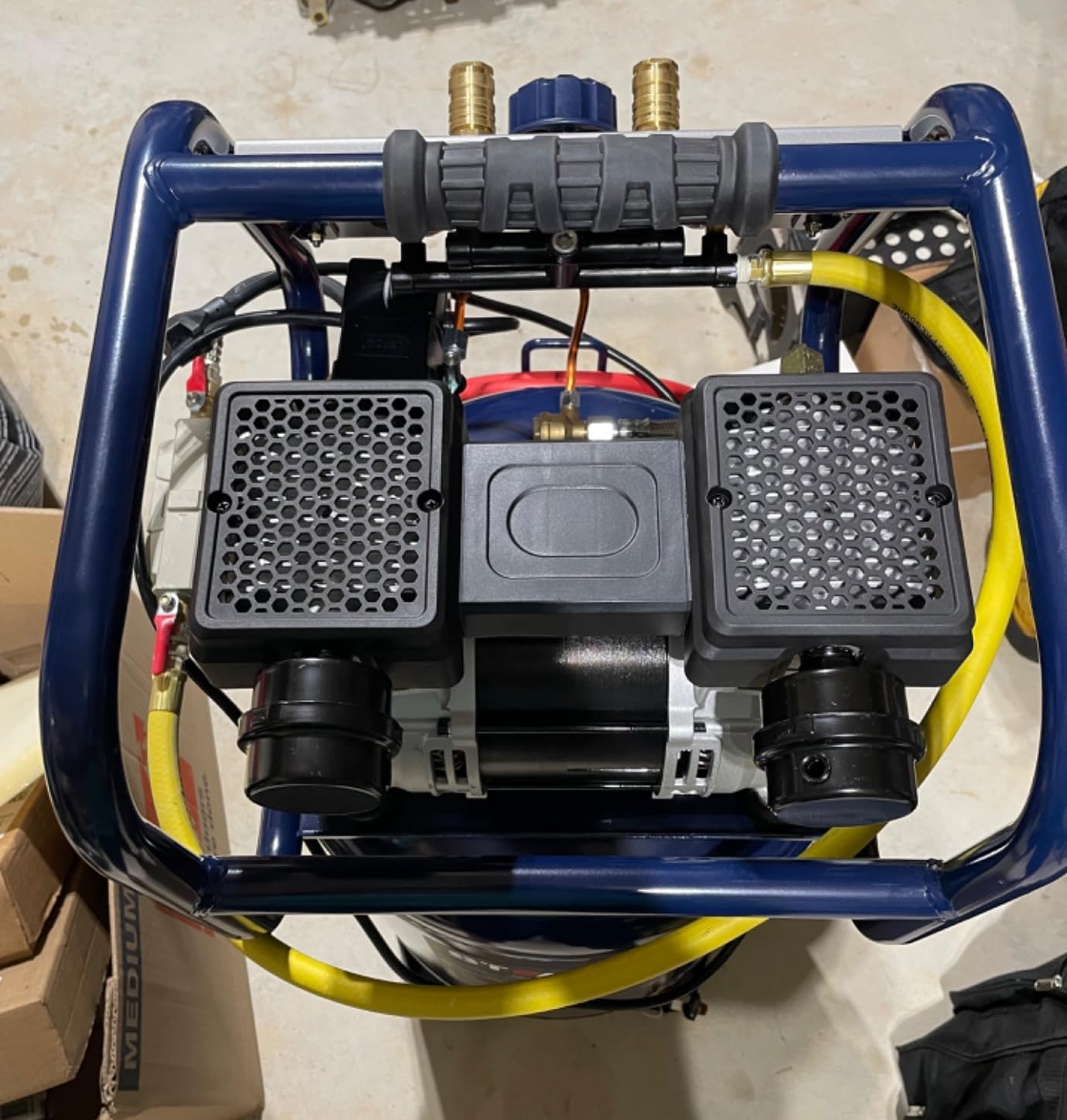
Where this compressor makes sense
Quiet shops and small detailing businesses that run wrenches in short bursts and care more about sound than about sustained grind work. The 20-gallon tank is generous for that pattern.
If you already own other compressors and want a quiet second unit for wheel work, this fills that niche well. Warranty coverage is a plus on a machine of this size.
Where it falls short
Any job needing uninterrupted airflow. Sandblasting, extended grinding and multi-tool continuous work all run into the restart behaviour owners describe.
The weight and the support experience are the other drawbacks. At 121.4 pounds with no restart-under-load behaviour, it is a fixed machine rather than a portable one, and warranty friction is a real risk at this volume.
7. Craftsman 20-Gallon 175 PSI – Best for Running Two Tools at Once
Craftsman Air Compressor, 20 Gallon Oil-Free 1.8 HP Max 175 PSI Pressure Two Quick Couplers Big Capacity, Red- CMXECXA0232043
4 SCFM at 90 PSI
20-gallon stainless tank
175 PSI max
Two quick couplers
Pros
- 175 PSI maximum is among the highest here
- 20-gallon stainless tank stores a lot of air
- Two quick couplers run two tools at once
- Oil-free pump needs no oil changes
- Rubber feet dampen vibration
Cons
- 4 SCFM at 90 PSI is below several cheaper machines
- 80 dB is loud for an enclosed garage
- 1.8 HP on a 20-gallon tank limits drive
Two quick couplers on a 20-gallon tank is the feature that separates this one. You can run an impact gun on one side and a nailer on the other, which no other machine in this lineup pairs with a tank this size at this pressure ceiling.
The 175 PSI maximum is joint highest in the group and gives the most headroom for accessories beyond wrenches. The stainless steel tank construction is solid, and rubber feet cut the vibration that travels up through a workbench.
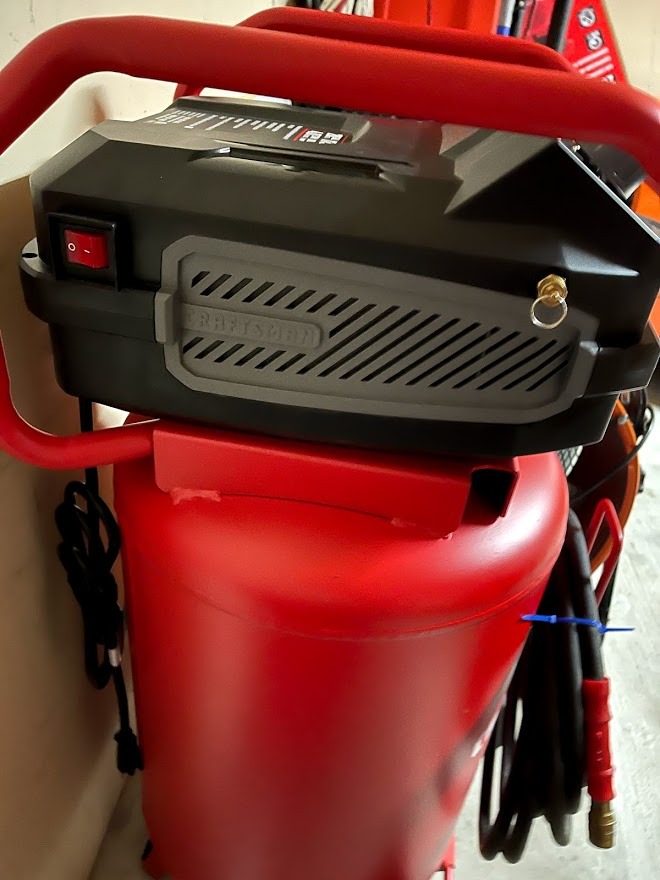
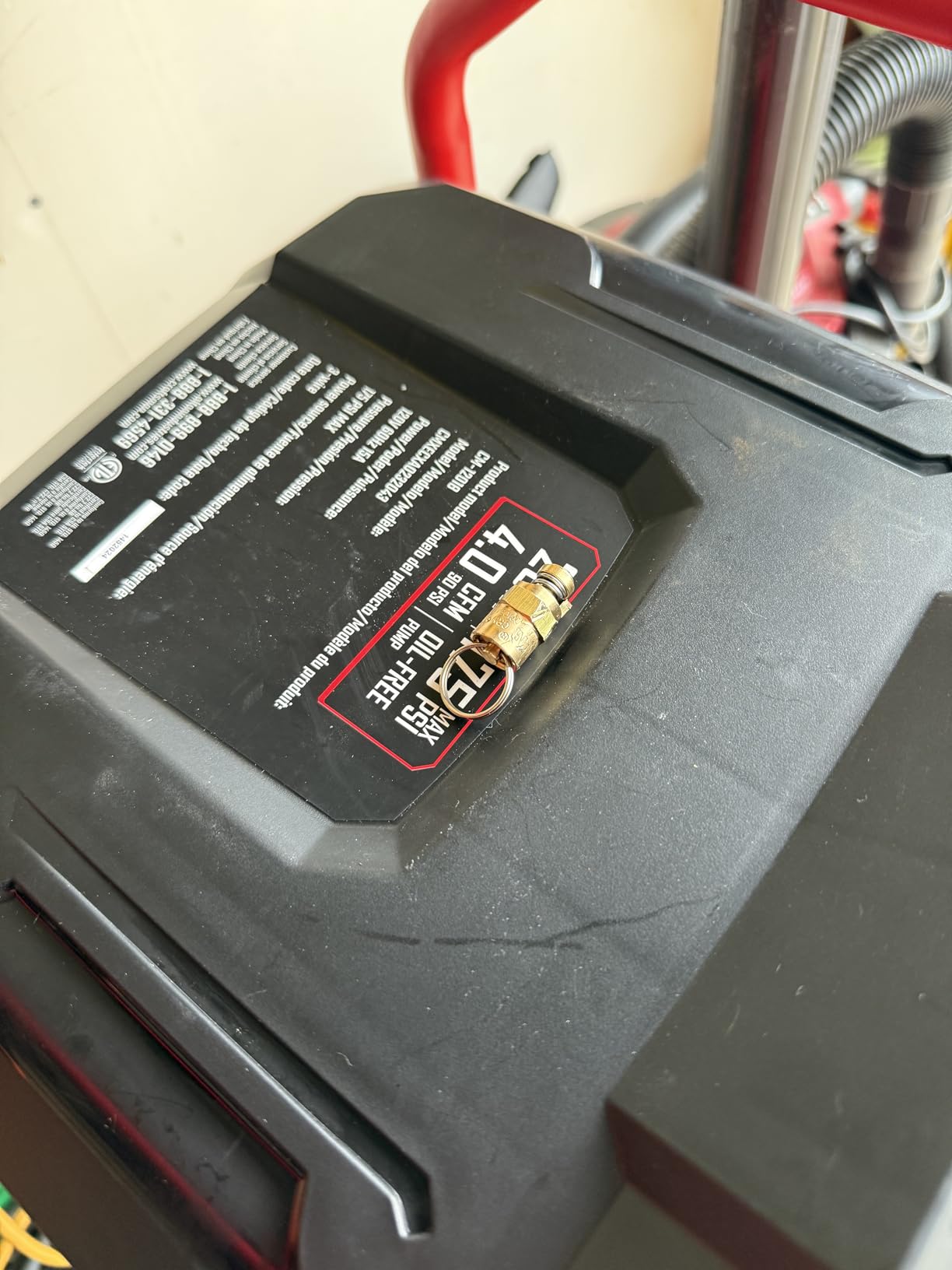
Where the spec sheet undersells it, the airflow does not. 4 SCFM at 90 PSI sits right at the floor for a 1/2-inch drive, which means a 3/8-inch drive is comfortable and a 1/2-inch drive is adequate rather than roomy.
The catch is that 1.8 HP on a 20-gallon tank is a modest pairing. When both couplers are running at once, the pump has to keep up with two tools on 4 SCFM of delivery, and it will not.
Owners also note 80 dB, which is among the loudest here and not suited to a shared wall. The oil-free pump removes maintenance entirely, and the box includes a 6-foot cord, a drain valve, a filter and two couplers.
Who should pair with this compressor
Owners who alternate between wheel work and trim nailing in the same session. The twin couplers remove the reconnect-and-wait cycle that single-coupler machines force on you.
The 175 PSI ceiling also makes it reasonable if you will add a spray gun or a caulk gun later, even though the delivery figure stays modest.
Where the 4 CFM figure bites
Running both couplers simultaneously with a high-draw tool is where it will feel slow. If two-tool work is occasional, the tank covers it. If it is your normal pattern, you need more CFM than this has.
With only 359 ratings and the weakest share of five-star reviews in the group, the ownership signal here is thinner than the rest of the lineup, so expect less consensus on long-term durability.
8. Craftsman 10-Gallon Portable – Best Lightweight Compressor for Wrench Work
Craftsman Air Compressor 10 Gallon, Peak 1.8 HP, Max 150 PSI, 4.0CFM@90PSI, 5.0 CFM@40PSI, Oil-free, Portable Air Compressor with Wheel, 120V, Model: CMXECXA0331042
4.0 CFM at 90 PSI
10-gallon tank
68.9 pounds
150 PSI max
Oil-free pump
Pros
- Lightest machine in the group at 68.9 pounds
- Lowest one-star review share at 6 percent
- Dual quick couplers for multiple tools
- Vertical shape fits under a workbench
- Long-term owners report no loss of air
Cons
- 80 dB
- with one owner measuring 87 dB
- Comes with no hose or fittings
- Some machines arrive with damaged wheels
At 68.9 pounds this is the machine you can actually carry between the house and the car, or roll across a shop floor without planning for it. The 4.0 CFM at 90 PSI covers a 1/2-inch drive adequately and a 3/8-inch drive comfortably.
The vertical footprint is genuinely useful. Owners fit it under a workbench, and the foldable handle with wheels makes it the easiest machine here to move from one job to the next.
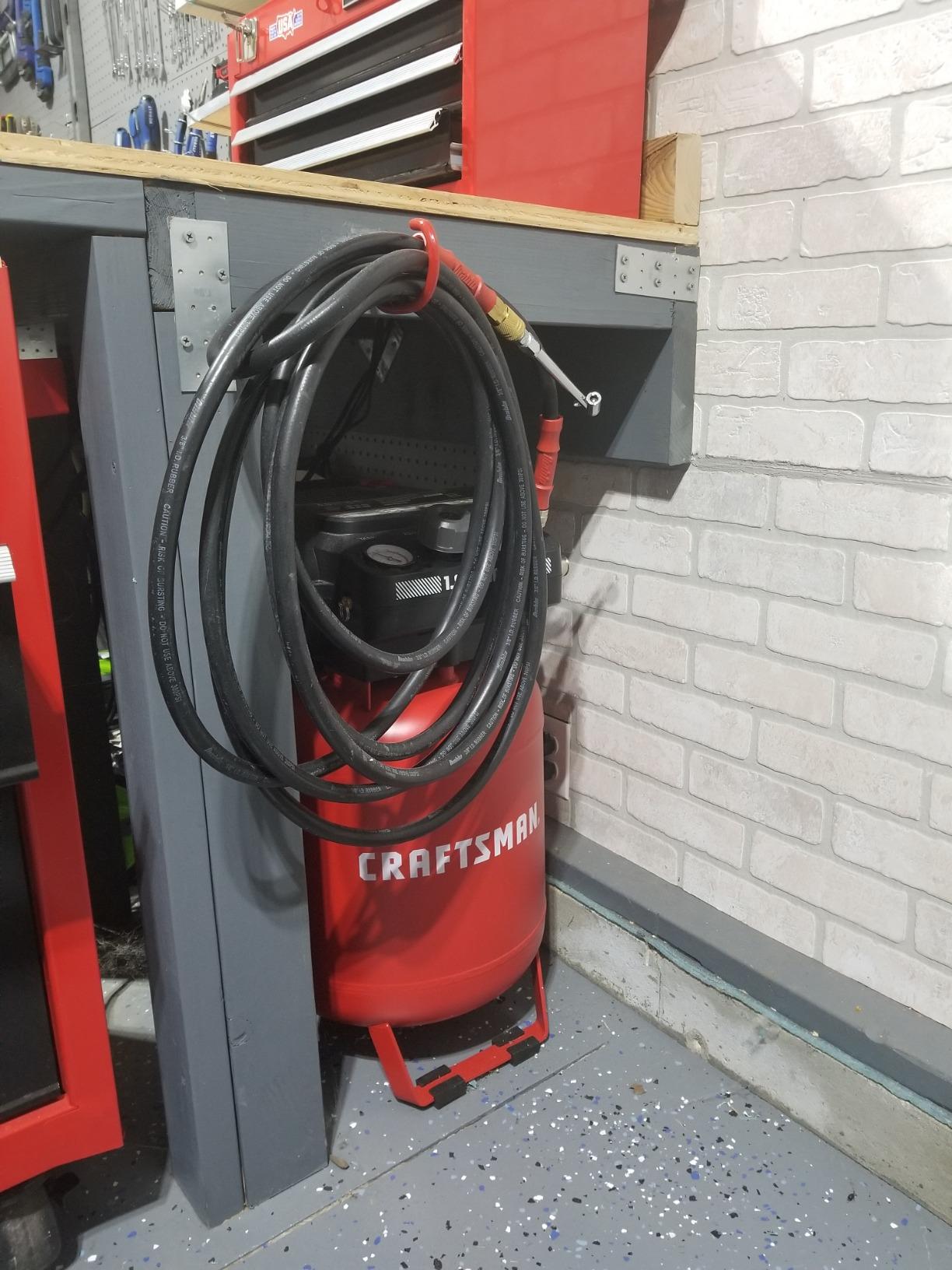
Durability reports are the strongest thing in the reviews. One long-term owner describes two years of heavy use including impacts, nail guns and wire brushing a badly rusted car, with no loss of air. The internal check valve also holds tank pressure when the tool valve closes.
Two things work against it. The 80 dB rating puts it near the threshold where hearing protection matters, and one owner measured 87 dB, which is genuinely loud for an enclosed garage.
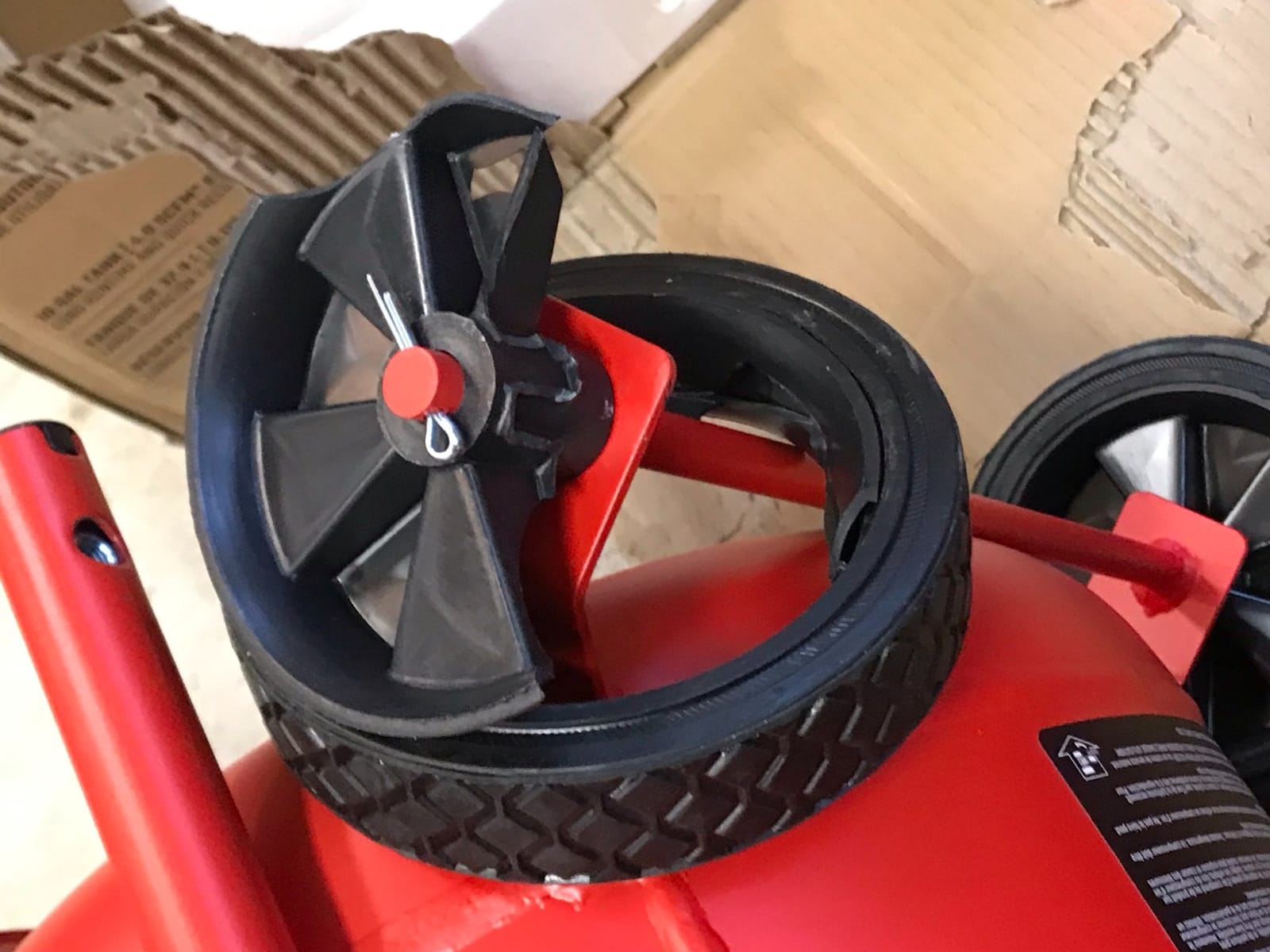
It also arrives as a bare machine. No hose, no nozzles, no fittings, which means your first purchase after the compressor is the accessories kit. A minority of owners report machines arriving with destroyed wheels, and support was unhelpful when they needed replacements.
Where portability wins
Mobile work where the compressor travels to the job. At 68.9 pounds full, it is the only machine here most people will load into a car without thinking twice.
It is also a strong second compressor for a shop that already has something big, giving you a small unit you can grab for wheel work instead of dragging a 127-pound tank across the floor.
Where the noise costs you
Close-quarters work is the problem. At 80 dB and above on some samples, this is an outdoor or open-garage machine rather than an indoor one, and the 4 CFM ceiling means it is not the choice for seized lug nuts.
Budget for a hose, a regulator and quick couplers from the start, because none of that is in the box.
9. California Air Tools 15020C – Best Horizontal Tank Setup for Wrench Work
California Air Tools 15020C Powerful 2.0 HP Ultra Quiet and Oil-Free Air Compressor with Wheels, 15 Gallon Tank Capacity, 70 dB Noise Level, Electric, Portable
6.4 CFM rated airflow
15-gallon horizontal tank
130 PSI max
70 dB
Oil-free
Pros
- 70 dB allows a conversation beside the machine
- 6.4 CFM rated airflow on a 110V supply
- 15-gallon horizontal tank stores useful air
- Assembled in Mexico
- Quick pressure build and good hold
Cons
- Reliability concerns in detailed long-term reviews
- Horizontal shape is bulky in tight spaces
- Gauges face downward and the drain is hard to reach
This is the horizontal-tank option here, and for some shop layouts that geometry is the deciding factor. A 15-gallon horizontal tank rolls under a long bench where a vertical machine would not.
The 6.4 CFM rated airflow on 110V is a strong figure for a household supply, and owners report good recovery for a 1/2-inch impact gun. At 70 dB, owners describe holding a conversation beside it.
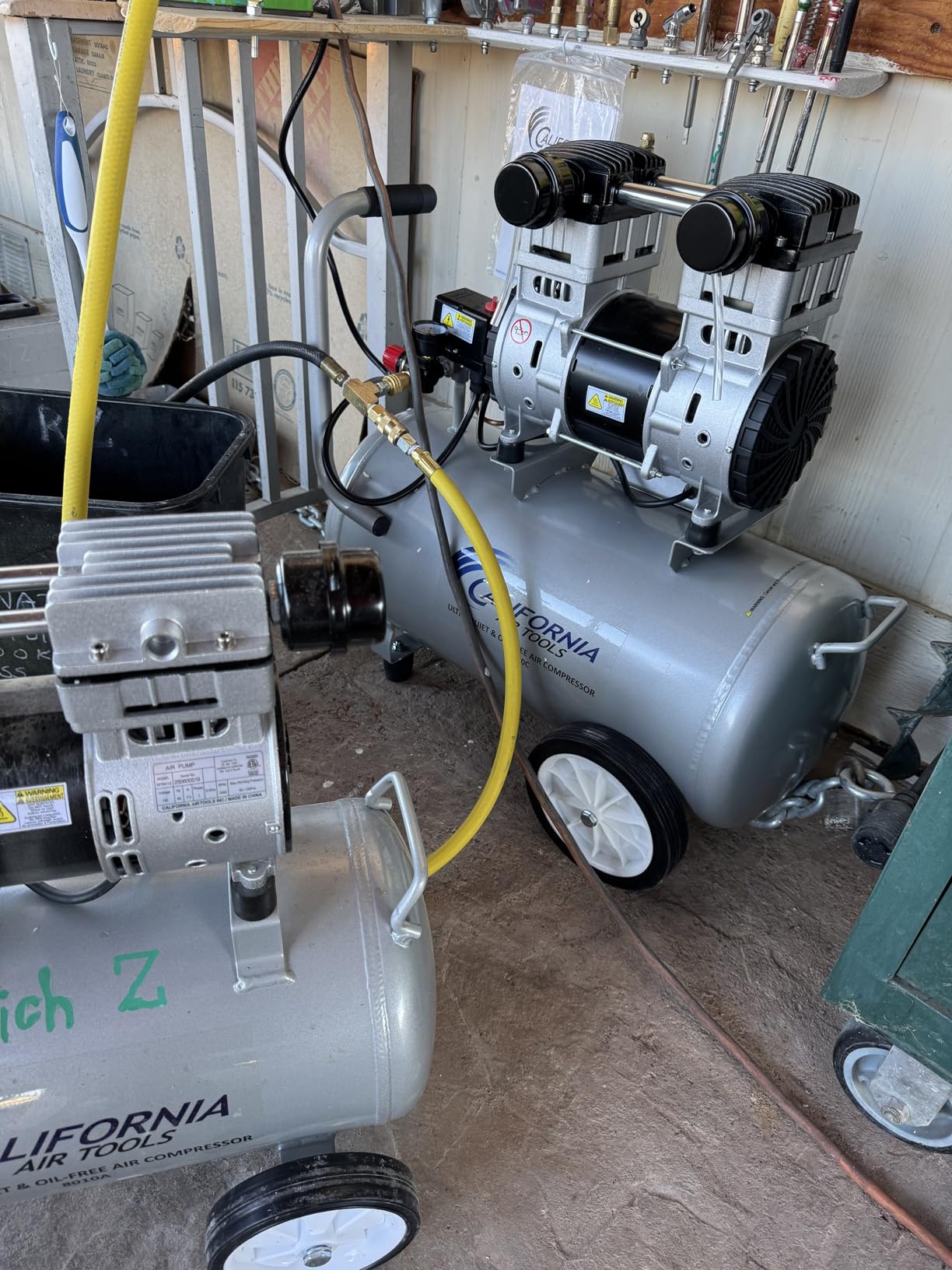
It is assembled in Mexico, and owners running multiple California Air Tools machines report trouble-free ownership of earlier models. One owner leak-tested the tank on arrival and found nothing.
There is an assembly detail worth knowing. The machine is noticeably noisy until the supplied air intake filters are fitted during assembly, after which it settles to its rated level.
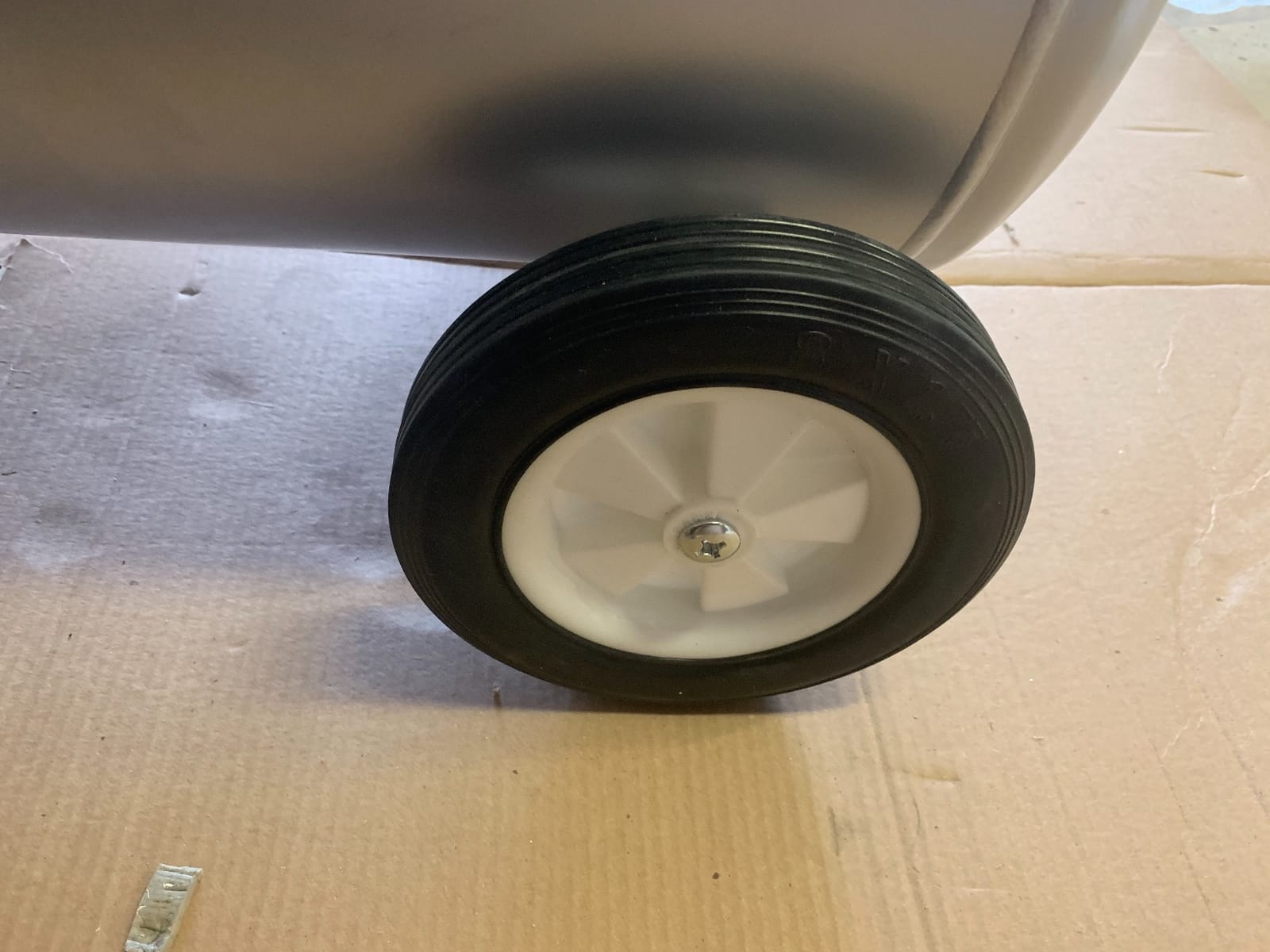
The reliability reports are the concern. Two detailed accounts describe failures between 18 months and two years, including pressure switch leaks causing airlock, a release valve popping because the unit would not shut off, and a motor failure. The gauges also face downward, so you crouch to read them, and the drain is hard to reach.
Where the horizontal tank wins
Shops with a long low bench, a mobile service unit, or a pickup bed where a vertical tank will not fit. The 15-gallon horizontal tank is a practical shape that the vertical machines here cannot match.
If quiet operation and airflow matter most, the 70 dB rating and 6.4 CFM figure are genuinely strong for a 110V machine.
Where long-term ownership worries us
Detailed reliability accounts at 18 months to two years are the main reason this sits at the bottom of our order. With only 167 ratings, there is not a large enough owner base to outweigh those specific failure modes.
The airflow also feels modest for filling truck tires, and the downward-facing gauges plus a hard-to-reach drain are small annoyances you will notice every time you use it.
How to Choose an Air Compressor for Impact Wrenches?
The buying decision comes down to four numbers and one question: how long is the hose, and how thick is it. Get those right and almost any compressor in this roundup will serve you well.
Match the compressor to your wrench drive size
Use the drive size chart above as a hard floor. A 3/8-inch drive at roughly 3 CFM will run on almost anything here. A 1/2-inch drive at 4 to 5 CFM needs a machine that publishes its figure at 90 PSI rather than at zero pressure, and that is where the marketing numbers start to fall apart.
Anything at or above 3/4-inch drive moves you into a different class entirely, and a compressor with 5 CFM will simply stall it. If you own heavy-duty trucks and routinely remove 1-inch drive hardware, budget for a genuinely larger machine rather than hoping a big tank compensates.
Tank size and duty cycle for intermittent wrench work
Impact wrenches draw air for about 15 seconds per nut, so tank size controls downtime rather than performance. A 6-gallon tank holds roughly three to four bursts, a 10-gallon about six to eight, a 15-gallon around ten, and a 20-gallon closer to fifteen.
That is why a smaller tank with strong CFM often beats a large tank with weak airflow. Recovery speed decides how quickly you get back to the next bolt, and delivery decides how hard the wrench hits when you do.
Oil-free versus oil-lubricated pumps
Oil-free pumps need no oil changes and keep a garage clean, which matters if you also run spray equipment or blast guns. The trade-off is thermal behaviour: oil-free machines cut off when run hard for long stretches, while oil-lubricated cast iron pumps run cooler and last longer under sustained load.
For weekend wrench work, oil-free is the easier choice. For a machine that will run all day alongside other tools, the lubricated pump is the better long-term bet.
Noise, hose bore and the accessories that matter
Noise matters more than most spec sheets suggest. Below about 70 dB you can work next to the machine and carry on a conversation; above 80 dB you will want hearing protection and an open door.
Hose bore and length quietly waste airflow. A 50-foot run of 3/8-inch hose delivers noticeably less at the tool than a 25-foot run of 1/2-inch hose, which is a leading cause of complaints that a compressor feels weak. Use 1/2-inch hose for any run beyond about 25 feet, and add a whip check on both ends. Budget for a decent regulator and quick couplers too, since several machines here arrive without them.
If noise is your main concern but your airflow needs are for spraying, our house painting compressor guide covers that use case in detail.
When you should skip the compressor entirely
If an impact wrench is the only pneumatic tool you will ever own, a cordless impact gun may be the better purchase. You skip the compressor, the hose, the regulator and the oil or maintenance, and you get a tool that works anywhere including a parking deck with no power.
The compressor maths only tips in your favour once you add a second air tool. Grinders, sanders, spray guns and blasters are what turn a compressor into a necessity, which is exactly why mechanics tend to plan the whole tool collection before they buy the tank. For quiet, low-volume air tasks such as inflating tires or running a brad gun, our quiet compressor picks for quilting cover lighter-duty options.
Frequently Asked Questions
How much CFM do I need for an impact wrench?
A 3/8-inch drive impact wrench needs about 3 CFM, a 1/2-inch drive needs 4 to 5 CFM, a 3/4-inch drive wants 7 to 9 CFM, and a 1-inch drive needs close to 10 CFM. Buy a compressor that publishes airflow at 90 PSI, not at zero pressure, and treat 4 CFM as the floor for a 1/2-inch drive.
How many PSI do I need to run an air impact wrench?
Around 90 PSI at the regulator is the working pressure for nearly every impact wrench. Most air wrenches are rated between 90 and 100 PSI and do not benefit from more. What matters is sustained pressure, so set the regulator around 90 PSI and make sure the compressor can keep the tank above that line while the tool runs.
Is a 6 gallon air compressor enough for an impact gun?
Yes, for a 3/8-inch or 1/2-inch drive, provided it publishes 4 CFM or more at 90 PSI. A 6-gallon tank holds roughly three to four wrench bursts before the pump catches up. It is not enough for a 3/4-inch or 1-inch drive, and it is not enough for grinders or sanders at the same time.
Can a 20 gallon air compressor run an impact wrench?
Yes, comfortably, and it is the sweet spot for mixed tool use. A 20-gallon tank holds around fifteen wrench bursts per fill, so you can run an impact gun, a grinder and another wrench without watching the gauge fall. Pair it with 5 CFM at 90 PSI or better so the wrench still hits hard on every burst.
What tools can a 6 gallon air compressor run?
A 6-gallon compressor running 4 to 5 CFM handles impact wrenches up to a 1/2-inch drive, brad and finish nailers, tire inflation, blow guns and small pneumatic screwdrivers. It struggles with die grinders, cut-off tools and sanders, and it cannot feed a 3/4-inch or 1-inch drive impact wrench without repeated recovery pauses.
Our Verdict on Impact Wrench Compressors
For most people reading this, the Makita MAC2400 is the answer to the question of which compressor is best for impact wrench work. It holds 4.2 CFM at 90 PSI, runs cool, pulls few enough amps to sit on a household circuit, and carries the highest rating in this group at 4.7 from 1319 reviews.
If noise is your constraint, the California Air Tools 10020C gives you 5.3 CFM at 90 PSI and a 10-gallon tank at 70 dB, which is the best pairing of airflow and quiet we found. If the wrench is only one of several tools, look at the Klutch 29-gallon for tank size and 175 PSI headroom.
Whatever you choose, buy on CFM at 90 PSI first, tank size second, and noise third. Add 1/2-inch hose if your run exceeds 25 feet, and drain the tank after every session so moisture never reaches your wrench internals.