
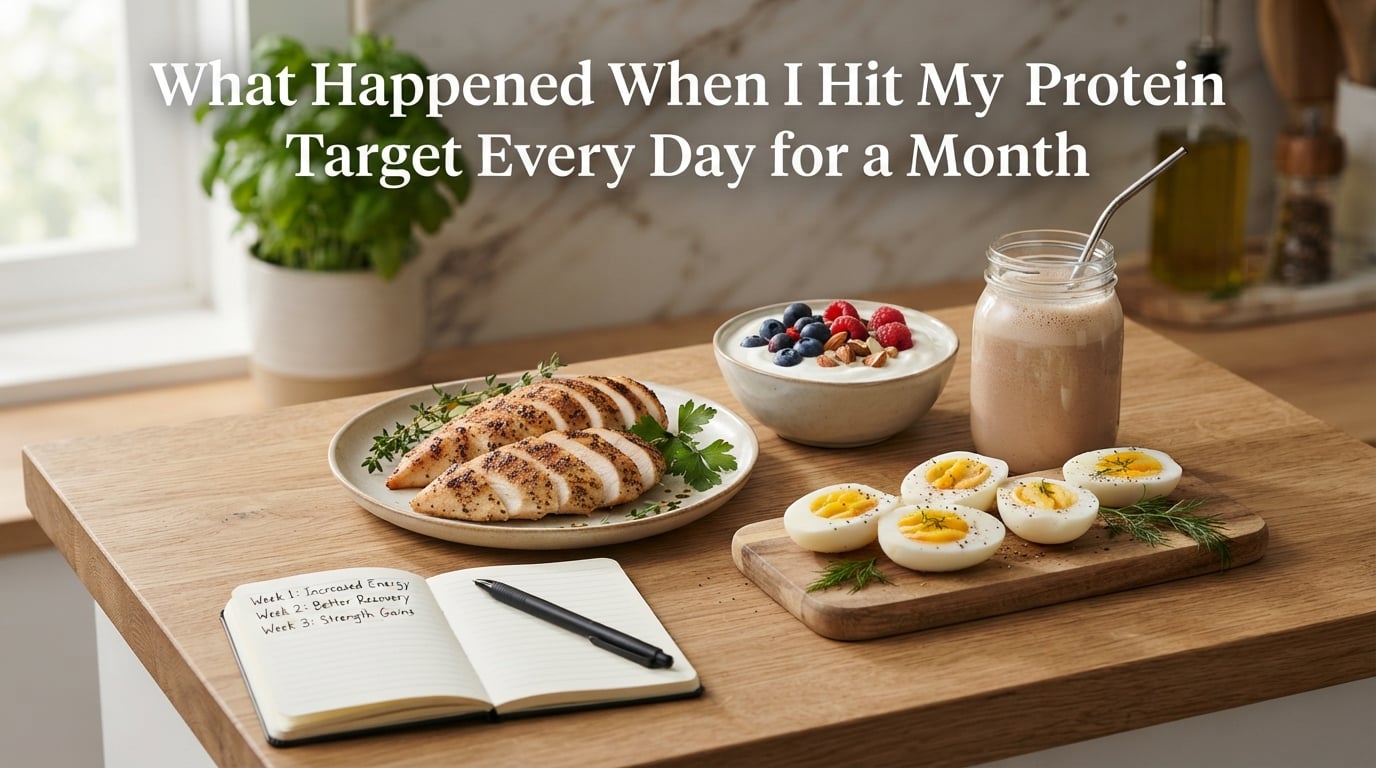
For thirty days straight, I made one simple commitment: I would hit my protein target every day for a month. No exceptions, no cheat days, no “I’ll make it up tomorrow.” I wanted to know whether the hype around high protein diets was justified or just another nutrition trend dressed up in marketing.
I had been hovering around 60 to 70 grams of protein daily, which barely cleared the recommended dietary allowance (RDA) for someone my size. I felt fine, mostly. But I was tired by mid-afternoon, snacky after dinner, and my workouts felt flat.
So I set a goal of 130 grams per day, roughly one gram per pound of my lean body mass, and tracked everything I ate. What follows is an honest account of what changed, what surprised me, and what I wish someone had told me before I started.
If you have ever wondered what happens when you consistently meet your daily protein goal, this article walks through my entire experiment. I will cover the foods that made it possible, the physical and mental changes I noticed, the obstacles that nearly derailed me, and practical tips you can use to hit your own protein intake targets without making food feel like a second job.
A quick note before we get started: this is my personal experience, not medical advice. If you have kidney issues, a history of disordered eating, or specific health conditions like Hashimoto’s or elevated creatinine levels, talk to a registered dietitian before making major changes to your protein intake.
Table of Contents
Before the Experiment: My Baseline
Here is what my baseline looked like before I committed to hitting my protein target every day for a month.
My diet was typical for someone who eats “healthy-ish.” I had oatmeal for breakfast, a salad with chicken for lunch, and whatever my family was having for dinner. Protein was an afterthought, not a priority.
On paper, I was getting about 65 grams per day. For context, the RDA for a sedentary adult is 0.8 grams per kilogram of body weight, which comes out to roughly 55 grams for someone weighing 150 pounds. I was barely clearing that bar.
But I was not sedentary. I lifted weights three times a week and walked daily. Research from 2026 suggests active adults benefit from 1.2 to 2.0 grams per kilogram to support muscle maintenance and recovery. By that measure, I was significantly under-eating protein.
My energy levels told the story. I crashed hard around 3 PM every day, raided the pantry after dinner, and watched my strength gains plateau for months. I suspected protein was part of the problem, and I wanted to test that hypothesis with real data.
How I Set My Protein Target for the Month?
I landed on 130 grams of protein per day. Here is how I arrived at that number and why it matters.
Most nutrition experts recommend 0.7 to 1.0 grams of protein per pound of body weight for active individuals looking to build or maintain lean body mass. I weighed about 145 pounds at the time, so 130 grams sat right in the sweet spot of that range.
I could have gone higher. Some bodybuilders and athletes push 1.5 grams per pound or more. But I wanted a target that was ambitious yet sustainable, something I could realistically hit every single day without relying heavily on supplements.
I also broke my target into meals. Rather than trying to cram 130 grams into dinner, I aimed for roughly 35 grams at breakfast, 40 grams at lunch, 40 grams at dinner, and 15 to 20 grams in snacks. Research on muscle protein synthesis suggests that distributing protein evenly across the day, in doses of 20 to 40 grams, is more effective than loading it all at once.
This distribution strategy turned out to be one of the most important decisions I made. It kept me full, prevented the dreaded evening protein scramble, and made the goal feel manageable from day one.
The High-Protein Foods That Got Me Through the Month
Hitting 130 grams of protein every day required a reliable rotation of foods. Here is exactly what I ate and why these choices worked.
Breakfast Staples
My mornings started with two whole eggs and three egg whites scrambled with spinach, delivering about 28 grams of protein for under 300 calories. On busier days, I relied on meal-prepped egg cups made in a muffin tin on Sunday, which I could grab and reheat in under a minute. A bowl of Greek yogurt with berries and a tablespoon of chia seeds added another 18 grams on the side.
Lunch Go-Tos
I kept lunch simple and repeatable. A large salad with five ounces of grilled chicken breast, chickpeas, and a hard-boiled egg gave me roughly 45 grams. When I wanted variety, I swapped in canned tuna mixed with Greek yogurt instead of mayo, or a bowl of lentil soup with a side of cottage cheese.
Dinner Rotation
Dinner was where I leaned into variety. Four to six ounces of salmon, lean ground turkey, pork tenderloin, or tofu stir-fry provided 35 to 45 grams of protein. I paired these with complex carbs like quinoa or sweet potatoes and plenty of vegetables.
Salmon had the added benefit of delivering omega-3s, which support recovery and reduce inflammation. That nutritional bonus made it a weekly staple even though it cost more than chicken or turkey.
Snacks That Actually Helped
I kept protein bars, beef jerky, and roasted edamame at my desk. A single-serve Greek yogurt in the afternoon bridged the gap between lunch and dinner. These were not afterthought snacks but planned parts of my daily total.
Plant-Based Protein Sources
Even though I eat animal protein, I intentionally included plant-based proteins like lentils, tempeh, and hemp seeds. They added fiber, which animal proteins lack, and helped me hit both protein and fiber goals simultaneously. That combination turned out to be the secret to feeling genuinely full rather than just stuffed.
What Happened When I Hit My Protein Target Every Day for a Month?
Here is where things get interesting. The results surprised me in ways I did not expect.
Week One: The Adjustment Period
The first five days were rough. I felt uncomfortably full because my stomach was not used to that volume of food, and I felt a strange mental pressure around tracking. By day six, my appetite began to regulate and the fullness shifted from uncomfortable to satisfying.
My Appetite Changed Dramatically
By the second week, I stopped thinking about food between meals. The 3 PM energy crash that had plagued me for years simply vanished. My blood sugar felt stable for the first time in as long as I could remember.
Protein slows digestion and blunts the hunger hormone ghrelin. I could feel that mechanism working in real time, and it explained why I was no longer ravenous by late afternoon.
Late-Night Snacking Disappeared
This was the most immediate and noticeable change. For years, I had a habit of grazing on chips, chocolate, or cereal after dinner. Within ten days of hitting my protein goal consistently, the urge faded almost entirely.
I was not forcing myself to stop snacking. I simply was not hungry anymore. That distinction matters because willpower-based restriction almost always fails, while genuine satiety sustains itself.
My Energy Levels Became Remarkably Steady
Before the experiment, my energy looked like a roller coaster. After two weeks, it was more like a flat line in the best possible way. I woke up feeling rested, stayed focused through the afternoon, and still had energy for evening workouts.
The sugar crashes I used to blame on caffeine withdrawal were actually blood sugar dips from inadequate protein earlier in the day. Once I frontloaded protein into breakfast and lunch, the afternoon slump simply stopped happening.
My Workouts Felt Stronger
I train with resistance three times a week, mostly compound lifts and dumbbell work. By week three, my working weights felt noticeably lighter. I added five pounds to my squat and pressed through a plateau on overhead press that had stalled for months.
Amino acids from dietary protein are the raw material your body uses to repair muscle tissue after training. I could feel the difference in recovery speed between sets and between sessions.
My Mood Became More Stable
This was the change I least expected. I am not exaggerating when I say I felt emotionally steadier, and small frustrations that used to send me into a spiral felt manageable.
Forum discussions I read later confirmed this is not uncommon. Many people on Reddit report reduced “hanger” and improved mood when they consistently hit protein targets.
Protein helps regulate neurotransmitters like dopamine and serotonin, which depend on amino acid precursors from your diet. When those precursors are scarce, mood stability suffers.
My Sleep Quality Improved
I tracked my sleep using a wearable device throughout the experiment. By week three, my deep sleep percentage increased by about 12 percent compared to baseline.
I am cautious about over-interpreting wearable data, but the trend was consistent and I subjectively felt more rested. Some research from 2026 suggests that protein-rich meals support better sleep quality, particularly when consumed earlier in the evening.
The Scale Barely Moved
I lost about two pounds over the month, which is modest. But my clothes fit differently, my waist felt slightly trimmer, and I looked leaner in progress photos despite minimal weight change.
This makes sense: when protein intake is adequate and you are in a small caloric deficit, your body tends to preserve lean body mass while slowly shedding fat. The scale does not capture that recomposition.
Cravings for Ultra-Processed Foods Dropped
I found myself reaching for an apple instead of a cookie, not out of discipline but out of genuine preference. When your body is getting enough complete proteins and steady energy, the drive to seek out quick sugar fixes weakens considerably.
The Challenges I Faced Along the Way
The experiment was not all smooth sailing. Here are the obstacles that tested my commitment and how I worked through them.
Hitting Protein on Rest Days Felt Pointless
On days I did not train, I questioned whether I really needed 130 grams. The answer is yes. Muscle protein synthesis continues for 24 to 48 hours after a workout, meaning your body is still repairing tissue on rest days.
Once I understood that recovery happens between sessions, not during them, it became easier to justify eating the same amount of protein on off days.
Dining Out Was Genuinely Hard
Restaurant portions are carb-heavy and protein-light by default. A typical pasta dish might deliver 15 grams of protein alongside 80 grams of carbohydrates. I learned to scan menus for lean protein options and order a side of chicken or shrimp to add to salads.
Sometimes I ate a protein bar before going out so I was not starting from zero. It felt awkward at first, but it prevented the end-of-night scramble to make up a 50-gram deficit.
Social Pressure Was Real
Friends and family noticed I was tracking food and asked questions. Some were supportive, while others rolled their eyes or made jokes about “protein bros.”
I learned to keep my explanations brief and focus on how I felt rather than defending the numbers. People respond better to “I have way more energy” than to a lecture about amino acids.
Getting Enough Fiber Alongside Protein
This was a surprise challenge. High protein diets can be low in fiber if you lean too heavily on animal sources, and I noticed some digestive sluggishness in week one.
I combated this by pairing every animal protein with a fibrous vegetable or legume. Lentils, broccoli, Brussels sprouts, and berries became non-negotiable side dishes that fixed the problem within days.
Food Fatigue Was Real by Week Three
Eating the same rotation of chicken, eggs, and Greek yogurt got old. I fought this by experimenting with new recipes and swapping in plant-based proteins like tempeh and edamame for variety.
I also allowed myself one meal per week that was purely about enjoyment rather than hitting a number. That psychological break kept me sane for the full thirty days.
The Cost of High-Protein Eating
Quality protein sources are not cheap. My grocery bill increased by roughly 20 to 25 percent over the month, with eggs, Greek yogurt, chicken, and fish adding up quickly.
I managed costs by buying in bulk, choosing frozen fish over fresh, and relying on affordable staples like lentils and cottage cheese. The extra spend felt worth it given how much better I felt.
My Best Tips for Hitting Your Daily Protein Goal
If you want to try this yourself, these are the strategies that made the biggest difference for me. I have organized them from most to least impactful based on my experience.
1. Frontload Protein at Breakfast
Starting the day with 30 to 40 grams of protein set the tone for everything that followed. On days I ate a protein-heavy breakfast, I consistently hit my goal.
On days I skipped breakfast or ate something carb-heavy, I spent the rest of the day playing catch-up and usually fell short. Breakfast is where the experiment was won or lost.
2. Find Protein Sources You Genuinely Enjoy
Sustainability comes down to enjoyment. If you hate Greek yogurt, do not force it.
Experiment with cottage cheese, protein pancakes, smoked salmon, turkey burgers, or tofu scrambles until you find options you look forward to eating. Reddit users say the same thing over and over: finding protein sources you actually like is the single biggest factor in long-term success.
3. Prep Protein in Advance
I batch-cooked chicken breasts, hard-boiled eggs, and egg cups every Sunday. Having ready-to-eat protein in the fridge meant I never had an excuse to skip it, even on chaotic days.
This took about 90 minutes per week and paid for itself ten times over in convenience and consistency.
4. Use Snacks Strategically, Not Reactively
Instead of grabbing whatever is nearby when hunger hits, I planned protein-rich snacks into my day. A protein bar between lunch and dinner, a handful of roasted edamame at my desk, or a cup of Greek yogurt before a workout kept my intake steady without requiring huge meals.
5. Do Not Over-Rely on Supplements
Protein powder is convenient, but I capped my supplement intake at one shake per day. The rest came from whole foods.
Whole food proteins come packaged with vitamins, minerals, and fiber that powders cannot replicate. They also keep you fuller for longer, which matters when you are trying to eat less overall.
6. Track for Two Weeks, Then Trust Yourself
I logged every gram for the first 14 days. After that, I had a strong intuitive sense of how much protein was on my plate.
I continued tracking loosely but stopped obsessing over exact numbers. The goal is awareness, not perfection, and most people overestimate their intake by 20 to 30 percent without tracking.
7. Give Yourself Grace on Hard Days
Hitting 120 grams instead of 130 is not a failure. Your body does not reset at midnight.
What matters is the weekly average, not a single day. This mindset shift removed the anxiety that almost made me quit in week one.
8. Listen to Your Body Above the Numbers
If you feel excessively full, bloated, or uncomfortable, back off. Protein targets are guidelines, not laws.
A registered dietitian can help you find the right number for your body, activity level, and goals. The best protein target is the one you can sustain without misery.
FAQs
Do I need to hit my protein goal everyday to lose weight?
No, you do not need to hit your protein goal every single day to lose weight, but consistency matters more than perfection. Protein supports satiety and muscle preservation during a caloric deficit, which makes weight loss easier to sustain. What matters most is your average protein intake across the week, not whether you hit an exact number on any given day.
What if I don’t hit my protein goal everyday?
Missing your protein goal one day will not derail your progress. Your body does not have a strict daily reset button. If you fall short on Tuesday, you can eat slightly more on Wednesday to balance your weekly average. The real risk of consistently missing protein targets is gradual muscle loss and increased hunger, not a single off day.
Do I need to hit my protein goal on rest days?
Yes, rest days are when your body does most of its repair work. Muscle protein synthesis continues for 24 to 48 hours after resistance training, meaning your muscles are still rebuilding on days you do not lift. Maintaining your protein intake on rest days gives your body the amino acids it needs for that recovery process.
Do I need to hit my protein goal everyday to build muscle?
For the best muscle growth, consistent daily protein intake is ideal. Research shows that spreading protein across the day in 20 to 40 gram doses maximizes muscle protein synthesis. While you will not lose muscle from one low-protein day, building muscle efficiently requires giving your body a steady supply of amino acids over time.
Conclusion
Committing to hit my protein target every day for a month changed how I think about food, energy, and my body in ways I did not anticipate.
The most surprising takeaway was not the physical change but the mental shift. Steady energy, reduced cravings, stable mood, and better sleep all stemmed from giving my body enough of the building blocks it had been missing. I did not realize how much I was compensating for inadequate protein until I stopped having to.
I am not religious about hitting 130 grams anymore. Some days I land at 110, others at 140. But I never go back to the 60-gram baseline I started from, because the difference in how I feel is too dramatic to ignore.
If you take one thing from this experiment, let it be this: protein is not just for bodybuilders. It is the macronutrient most adults underconsume, and the benefits of correcting that gap go far beyond muscle.
You do not need supplements, expensive products, or perfectionism. You need a realistic target, a rotation of foods you enjoy, and the willingness to prioritize protein at every meal.
Start small. Add 20 grams to your day and see how you feel. Then adjust from there.