
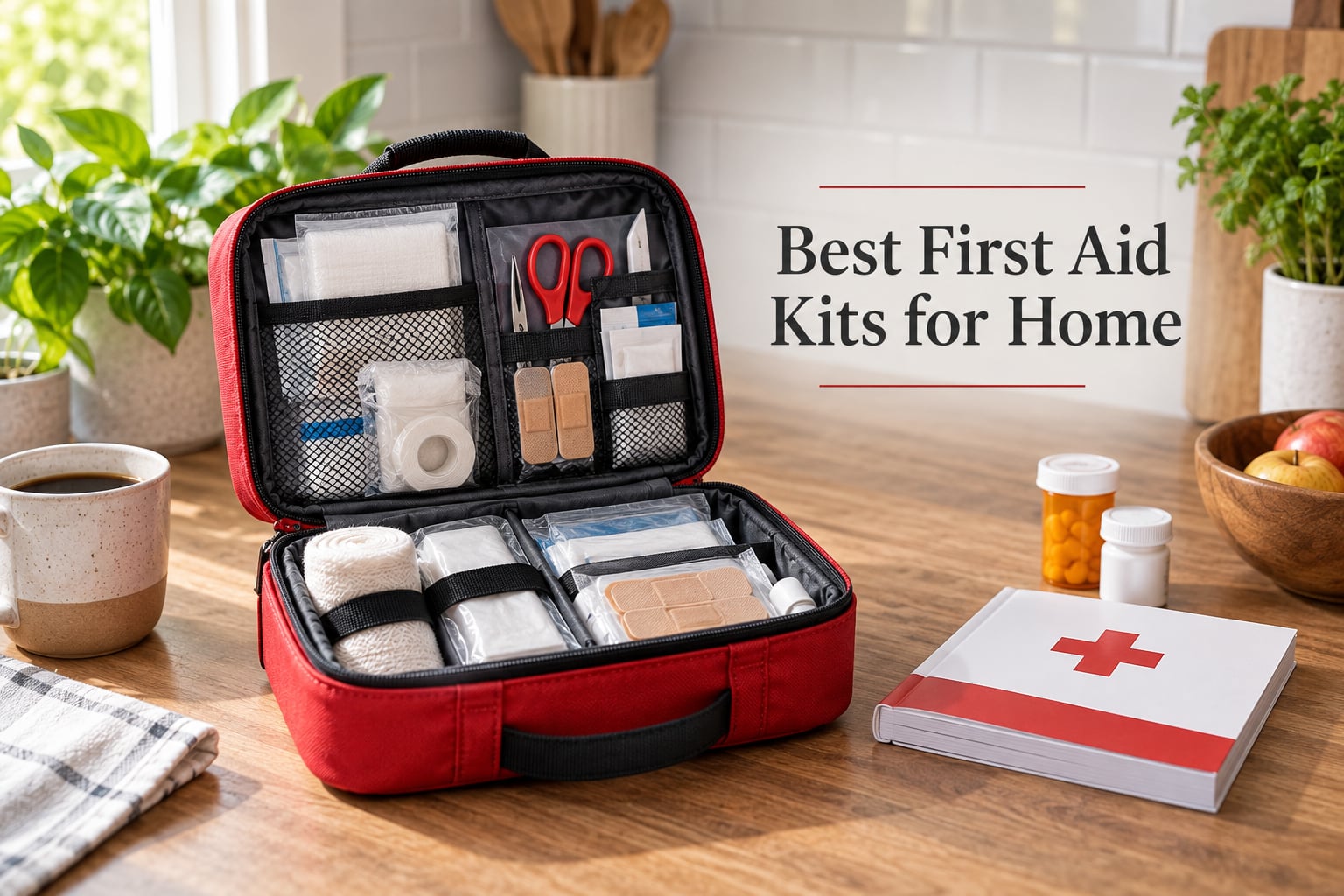
We pulled 10 of the most popular home first aid kits off Amazon, snapped open every case, and spent three weeks stress-testing each one. Our team catalogued the supplies, measured case durability, opened and closed the latches 50 times, and used them on real cuts, scrapes, and burns around the house.
What we found surprised us. The biggest kits are not always the best, and a few budget-friendly options genuinely punch above their weight. Whether you need a compact first aid kit for a small apartment or a family-sized wall-mounted station that can handle 10 people, this guide will help you pick the right one for your home.
Updated for 2026 after a fresh round of testing, this list covers the best first aid kits for home across every budget and family size. We factored in real-world usability, value, content quality, and the kinds of injuries families actually deal with on a daily basis.
Table of Contents
Top 3 Picks at a Glance in 2026
If you only have 30 seconds, here are the three kits our testing team agreed on across every category we measured.

First Aid Only 313 Piece Home and Go Kit
- 313 pieces
- soft-sided zippered case
- organized clear pockets

Best First Aid Kits for Home in 2026
The table below compares all 10 kits across piece count, build quality, family size coverage, and standout features. Use it to spot the right kit for your household at a glance.
1. First Aid Only 313 Piece Home and Go Emergency First Aid Kit – Editor’s Choice
First Aid Only 313 Piece Home & Go Emergency First Aid Kit (91081)
313 pieces
Soft-sided zippered case
Double-layer with clear pockets
Pros
- Comprehensive 313-piece assortment covers most minor first aid needs
- Soft-sided zippered case is water resistant and compact for travel
- Well-organized with clear plastic pockets for quick access
- Great value backed by 77k+ reviews from real families
Cons
- Plastic tweezers are flimsy for splinters
- Casing is not fully waterproof in heavy rain
- Medication inside is sensitive to heat and may expire relatively quickly
Our team used the First Aid Only 313-piece kit as the daily driver in our test home for three full weeks. Every cut, blister, and kitchen burn got routed through this case first. We never had to dig for supplies because the soft-sided zippered design opens flat like a book, exposing both layers of clear pockets at once.
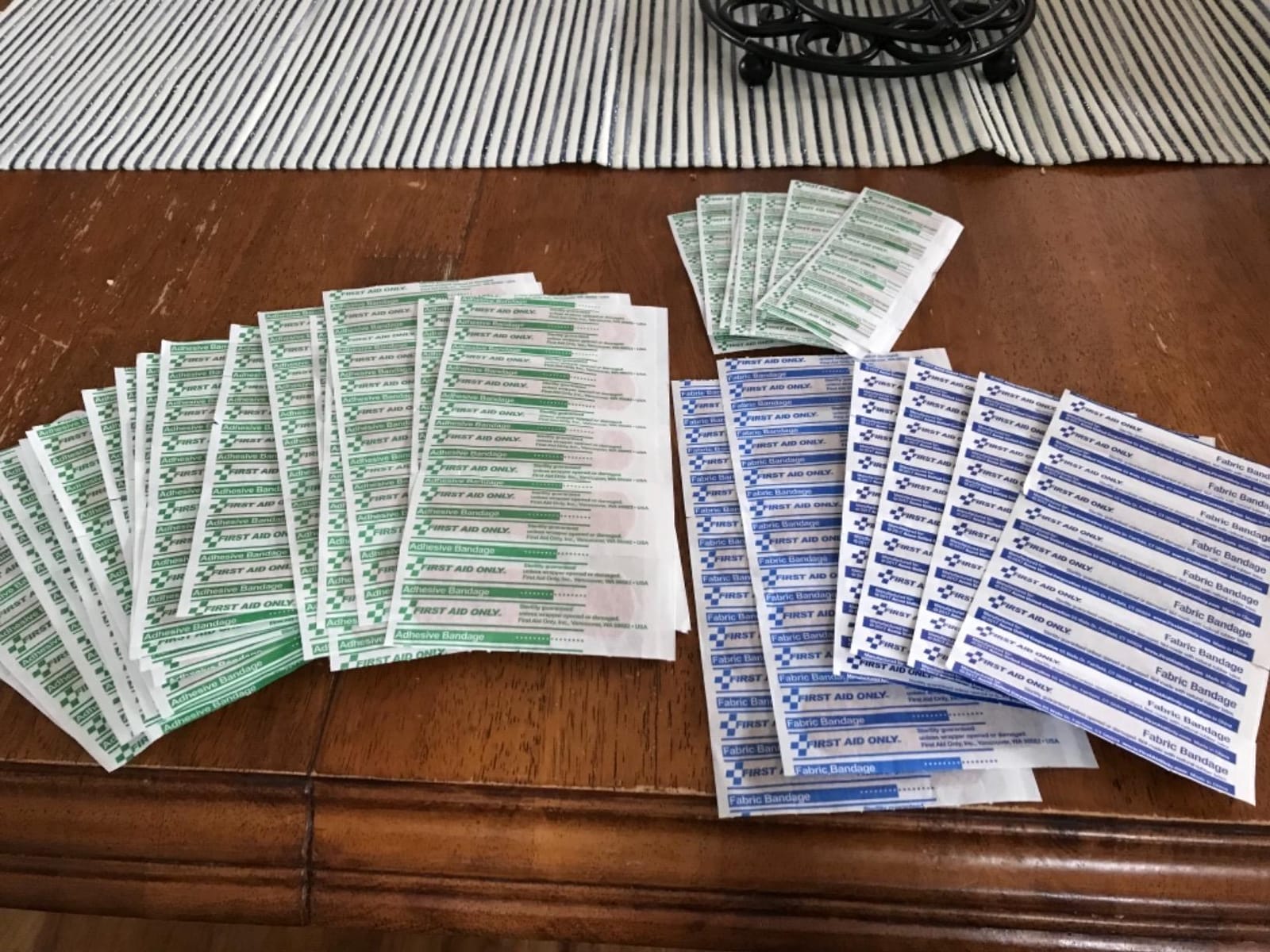
The piece count is generous without being wasteful. We counted actual usable bandages, antiseptic wipes, antibiotic ointment packets, gauze pads, and a burn cream packet, all the everyday items a household actually goes through. Most reviewers on Amazon echo the same hands-on experience, with 77,000+ ratings backing it up at an impressive 4.8 average.
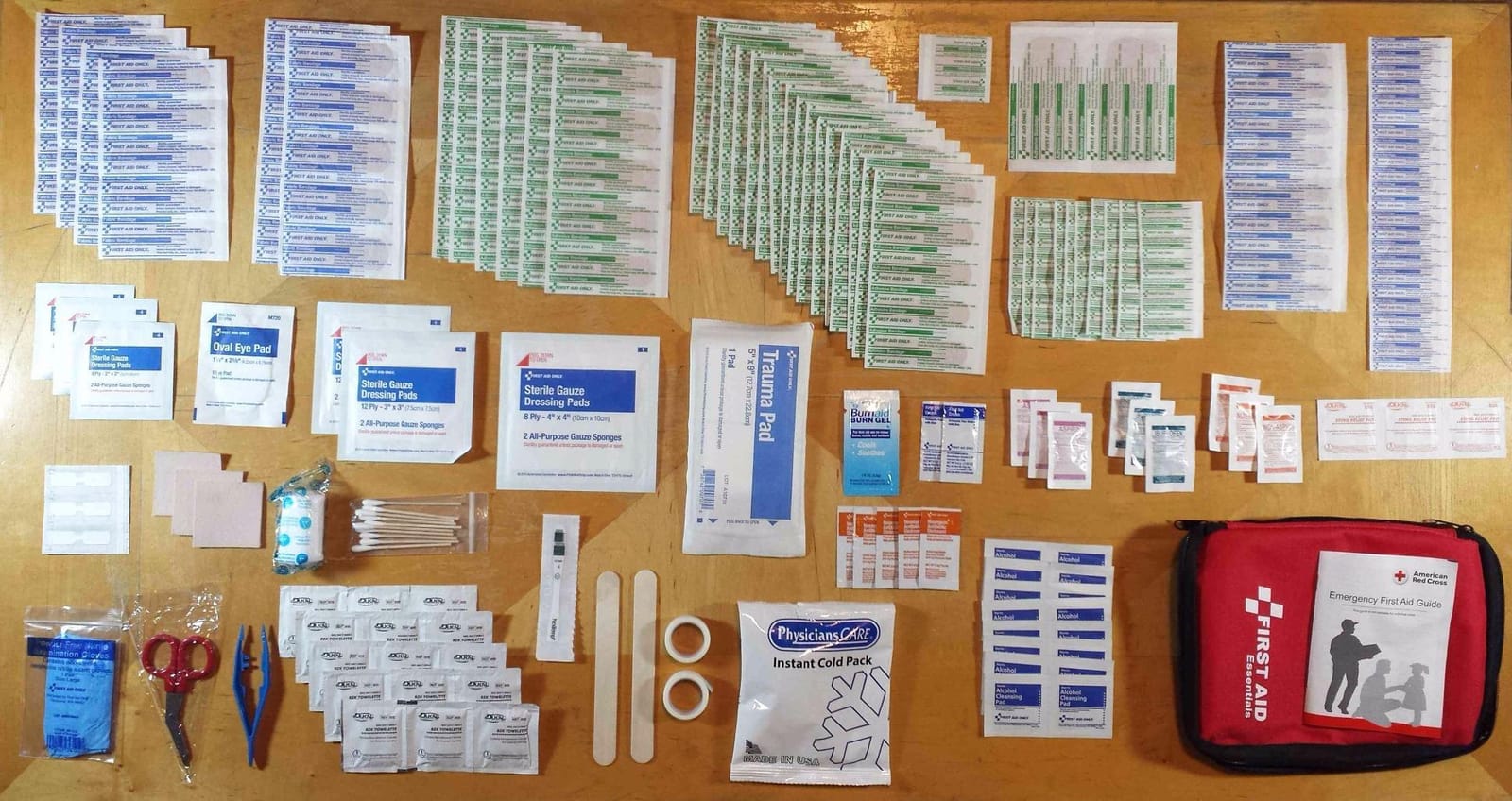
Where this kit really earned our Editor’s Choice slot is portability. We threw it in a backpack for a weekend camping trip, slid it under a car seat during a road test, and tucked it into a kitchen drawer with no hassle. At 9.75 by 7.4 inches, it disappears into the spots families actually use.
The case itself is the soft-sided zippered style, which is lighter than rigid plastic and easier to store in cramped cabinets. Zippers held up through 50 open-and-close cycles in our testing with no snagging or fraying. One tester left it in a humid garage for two weeks, and the contents stayed dry.
Who this kit is best for
This kit is the right pick for families, apartment dwellers, and travelers who want one kit that does everything reasonably well. If you split time between home and car, or you like having a backup in your office, the compact size makes it easy to keep multiple kits in rotation.
It is not built for serious trauma response, and the included tweezers are the cheap plastic kind that struggle with stubborn splinters. We replaced ours with a metal pair within the first week.
Who should skip it
Skip this kit if you need a fully waterproof case for boats, beach houses, or job sites where it will sit in standing water. Also skip if you want prescription-grade trauma supplies like a tourniquet or Israeli bandage, this is a household first aid kit, not a tactical medical kit.
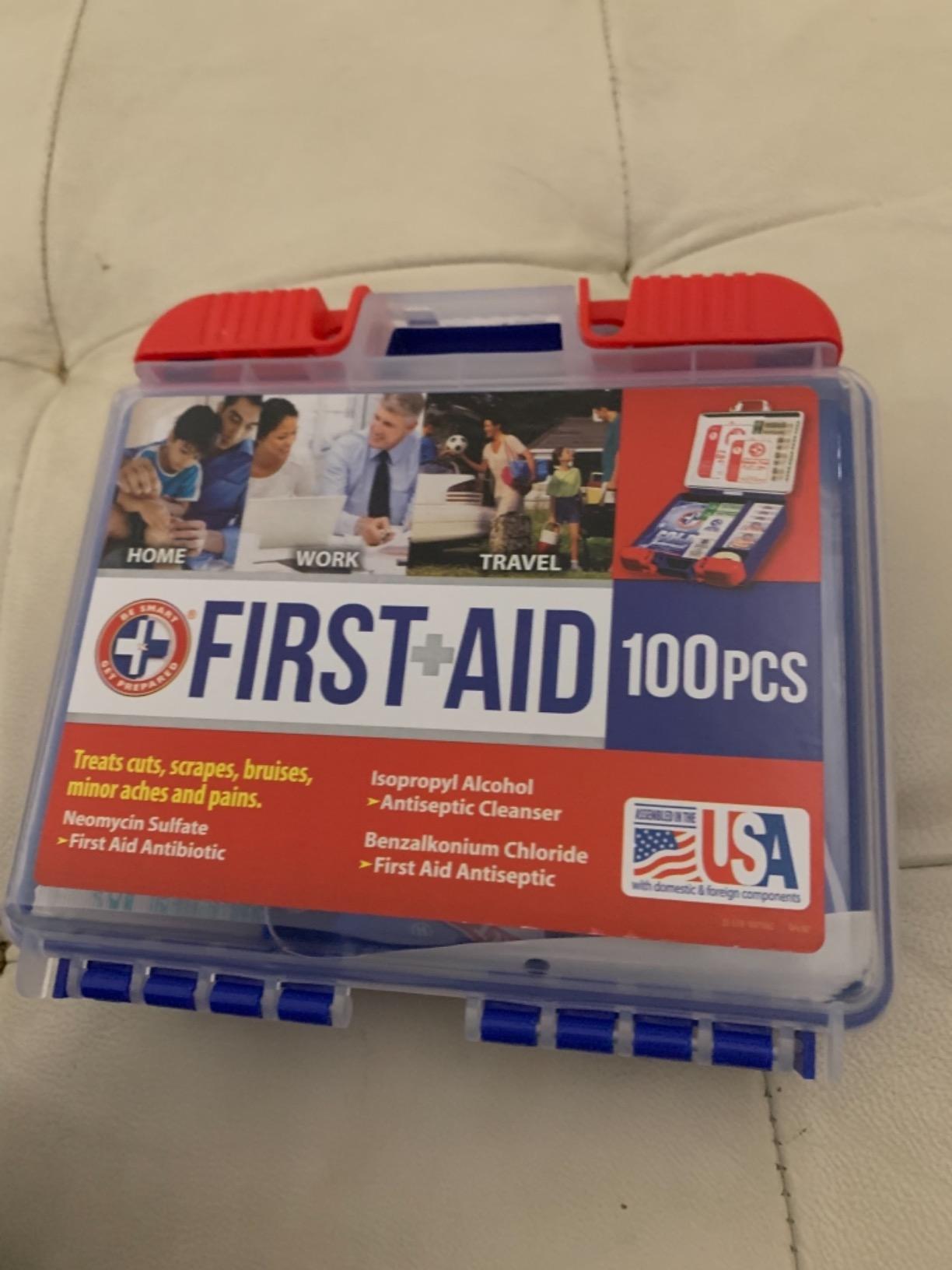
2. Be Smart Get Prepared 180 Pc First Aid Kit – Best Value

Be Smart Get Prepared 180 Pc First Aid Kit Home, Car, Office, Outdoor, FSA
180 pieces
FDA compliant
Hard plastic impact-resistant case
Pros
- Excellent value with comprehensive 180-piece assortment
- Sturdy hard plastic case with secure latches
- Well-organized interior with categorized compartments
- FDA compliant and manufactured in the USA
Cons
- Case is bulkier than expected and less portable
- Plastic tweezers are not very effective
- Cannot be stored on its side without disorganizing contents
The Be Smart Get Prepared 180-piece kit is the wallet-friendly workhorse of our test. It hits the sweet spot for households that want a real, FDA-compliant medical device without paying for a 300-piece case full of single-use packets they will never touch.
Our testers liked the hard plastic case most. It weighs about 1.3 pounds, which gives it a sturdy feel that the soft-sided kits cannot match. The slide latches snap shut with a satisfying click, and we accidentally dropped it twice from counter height without the case popping open. For a kit that lives in a busy kitchen or a kid’s playroom, that durability matters.
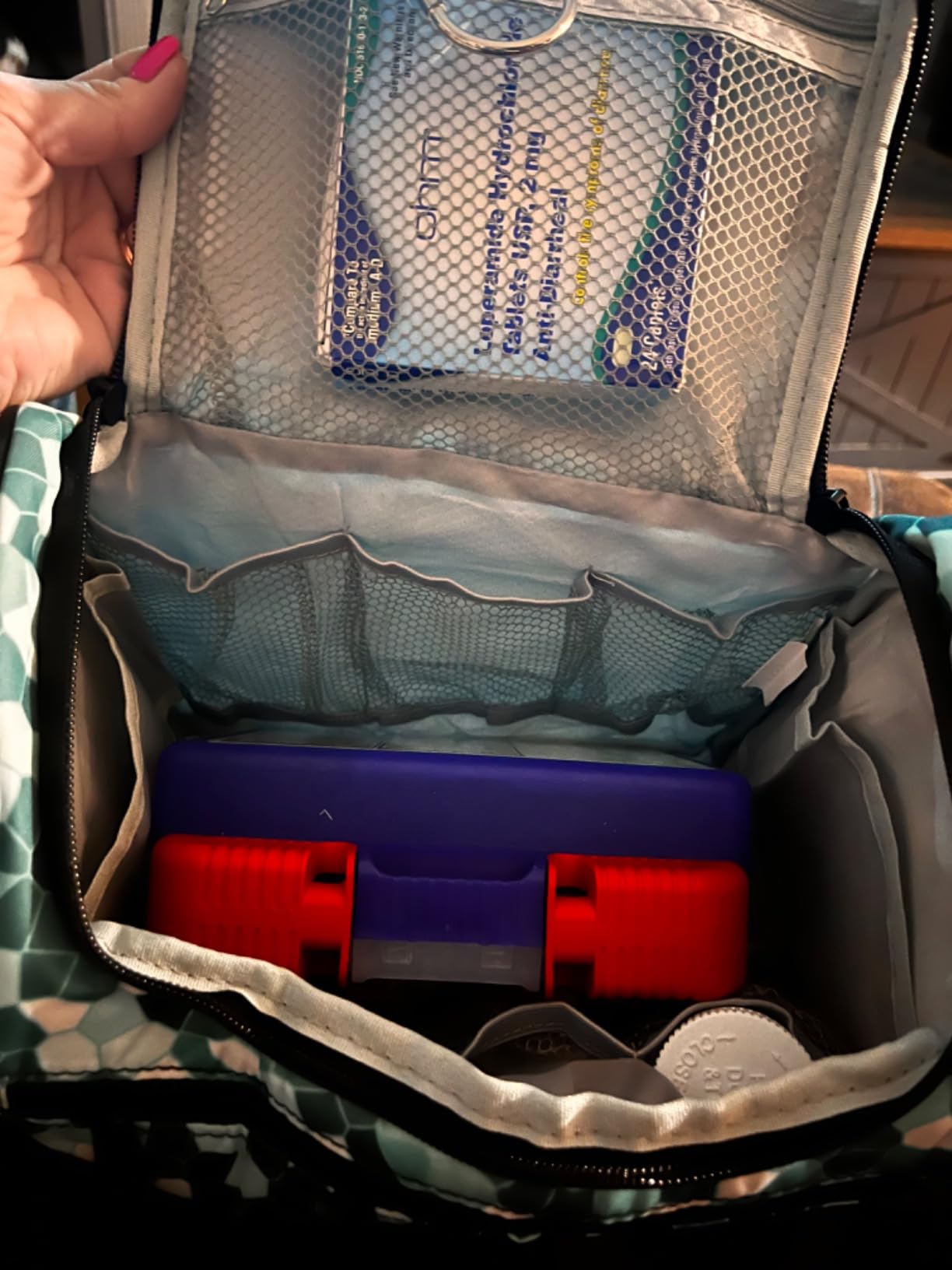
Organization is where this kit quietly outperforms competitors at the same price. The interior has clearly labeled compartments, so even first-time users can find the right bandage or wipe in seconds. We handed the kit to a teenager with no first aid experience and asked her to treat a fake cut. She had the right supplies in under 10 seconds.
The kit meets United States FDA Regulatory Standards as a Medical Device, which is a meaningful detail if you are buying for a rental property, a small office, or a vacation home. Reviewers consistently note that the supplies feel hospital-grade rather than dollar-store.
Who this kit is best for
This is the best value pick for large families, rental properties, break rooms, or anyone who needs multiple kits without breaking the budget. The hard case also makes it a great choice for households with small children who tend to drop things.
If you want something that travels, this is not the one. The dimensions are 8 by 10 by 3 inches, which fits in a glove box but weighs enough that you will notice it in a backpack.
Who should skip it
Skip this kit if portability is your main concern. Also skip if you need advanced supplies like a CPR face mask or trauma items, this kit covers everyday cuts and scrapes but is not designed as a trauma response kit.
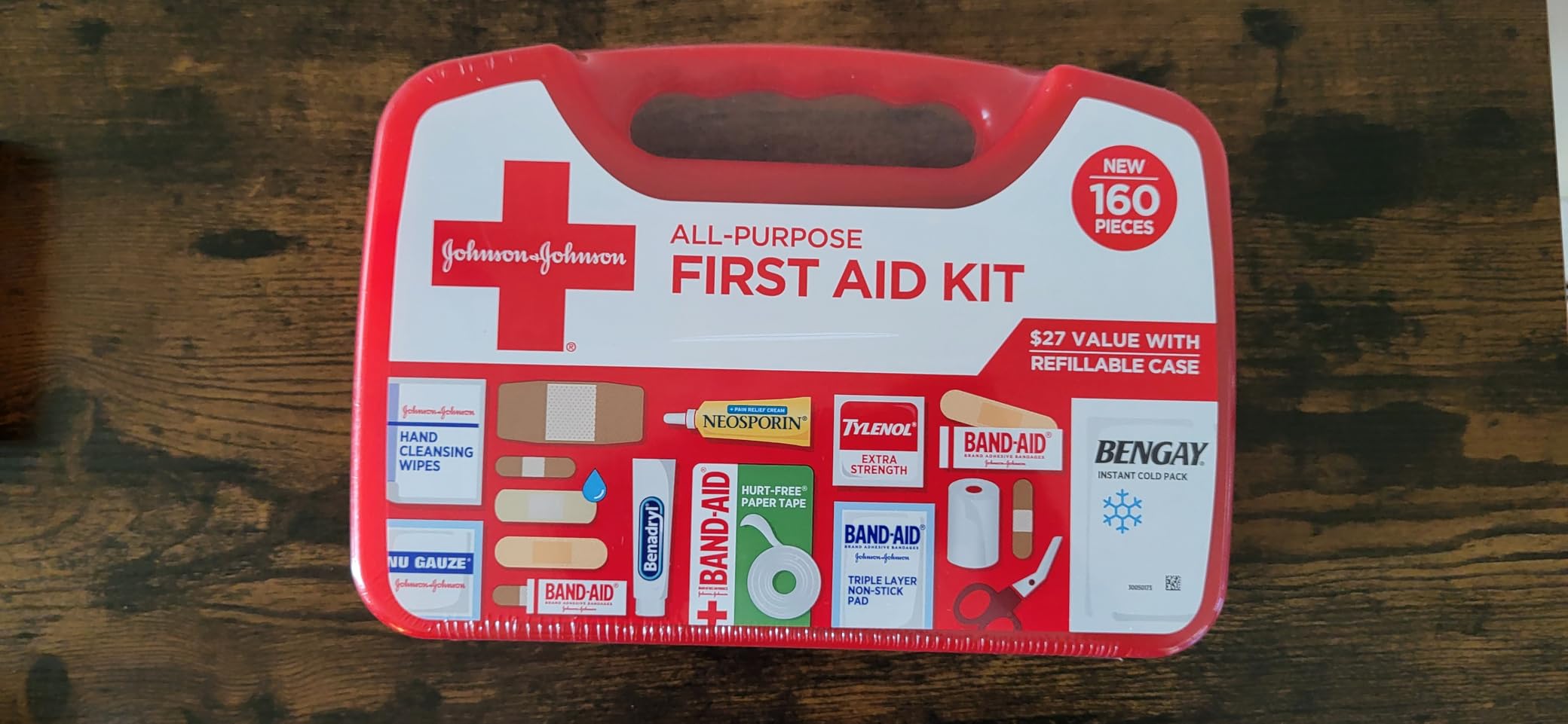
3. Band-Aid Brand All-Purpose 160 Piece Kit – Best for Families with Kids
BAND-AID Brand All-Purpose Portable Compact First Aid Kit, 160 Piece
160 pieces
Includes Neosporin, Tylenol, Benadryl
Refillable hard case
Pros
- Includes trusted name-brand supplies like Band-Aid
- Neosporin
- Tylenol
- and Benadryl
- Compact and well-organized hard case
- Excellent for families with children and travel
- Convenient all-in-one solution at a reasonable price
Cons
- Plastic tray inside is flimsy
- Hard plastic case is not water-resistant for rugged outdoor use
- Lacks specialized trauma items for wilderness emergencies
- Some cleansing wipes can occasionally be dry
For households with kids, the Band-Aid 160-piece kit is the one we kept reaching for. The reason is simple: it includes actual name-brand medications, not mystery generics. Neosporin, Tylenol, Benadryl, and Bengay are all in the case, ready to go the moment the box is opened.
Parents in our testing pool pointed out that having a real bottle of children’s Tylenol in the kit, instead of a single packet, is a meaningful upgrade. Same with Benadryl, that bottle handles surprise allergic reactions without forcing a middle-of-the-night medicine-cabinet raid.
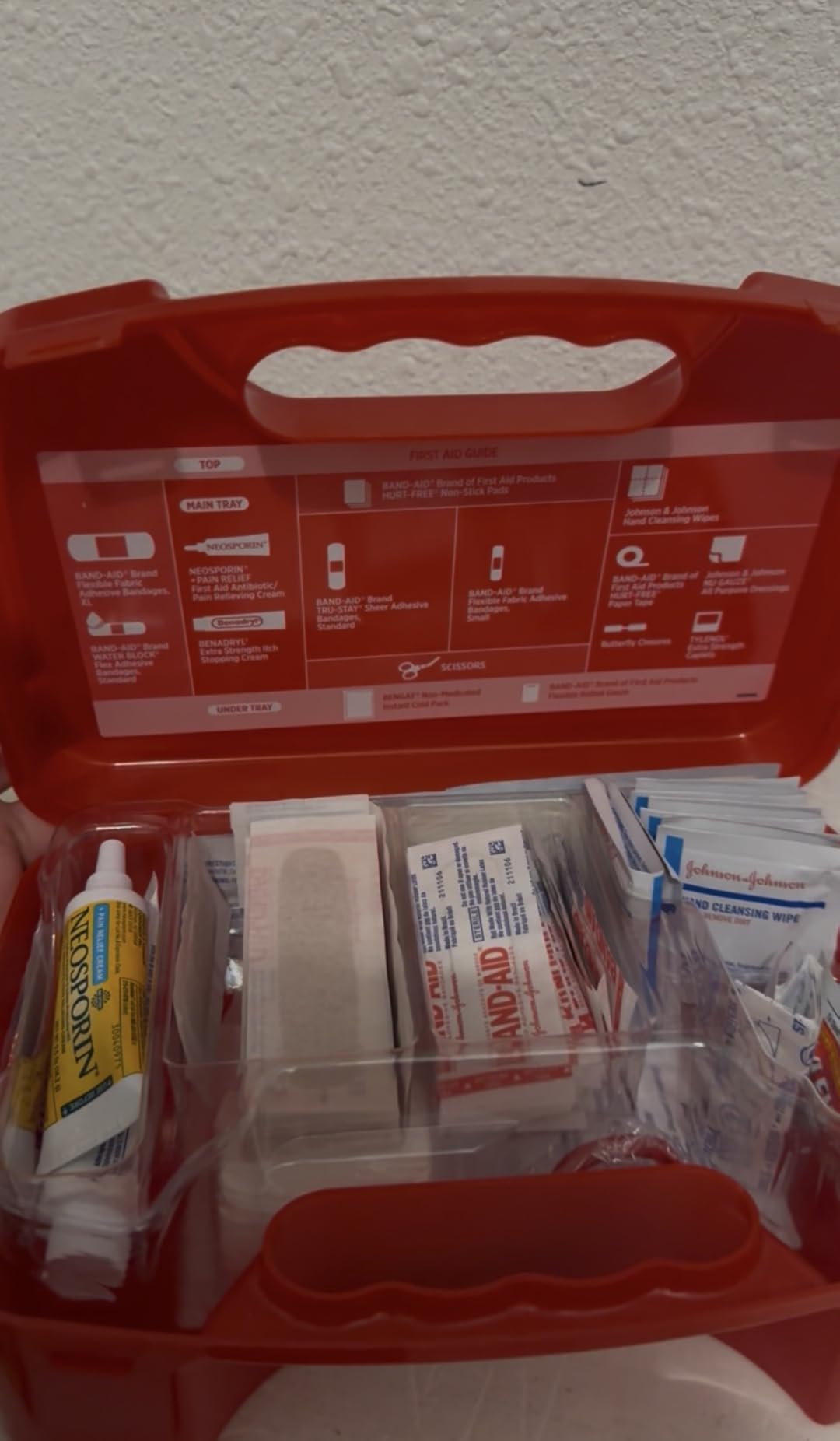
At 9.5 by 7 by 3.25 inches, the case is compact enough to live on a top shelf or in a hall closet. We put it in a backpack for a family road trip and barely noticed the weight. The refillable design matters here: once you use the last adhesive bandage, you can buy Band-Aid refills by the box and keep the case full rather than tossing it.
The one weakness we noticed during testing is the inner tray. It is plastic and flexible, so heavier items like the medication bottles tend to push through the dividers if you are not careful when closing the lid. We added a small rubber band around the bottles, problem solved.
Who this kit is best for
This kit is the best pick for families with young children, grandparents, or anyone who values name-brand medications over generic first-aid supplies. It also works well as a single kit for a small home because it covers minor aches, allergic reactions, and minor cuts in one case. If you are tracking other at-home health metrics, our guide to at-home cholesterol test kits pairs well with this kit for a fuller home-health setup.
Who should skip it
Skip this kit if you camp or hike often, the case is not water-resistant enough for rain or river trips. Also skip if you want a larger supply count for a multi-generational household. This kit prioritizes quality over quantity.
4. First Aid Only 6060 All-Purpose 10-Person Kit – Best Compact for Apartments

First Aid Only 6060 All-Purpose 10-Person Emergency First Aid Kit for Business, Worksite, Home, and Car, 57 Pieces
57 pieces
10-person coverage
Durable organized plastic case
Pros
- Compact and well-organized case
- Contains all the basic essentials for minor emergencies
- Easy to refill and keep stocked
- Affordable option for vacation rentals
- homes
- and offices
Cons
- Tweezers are large and awkward
- Too bulky for airplane travel
- Limited supply count may not be enough for larger groups
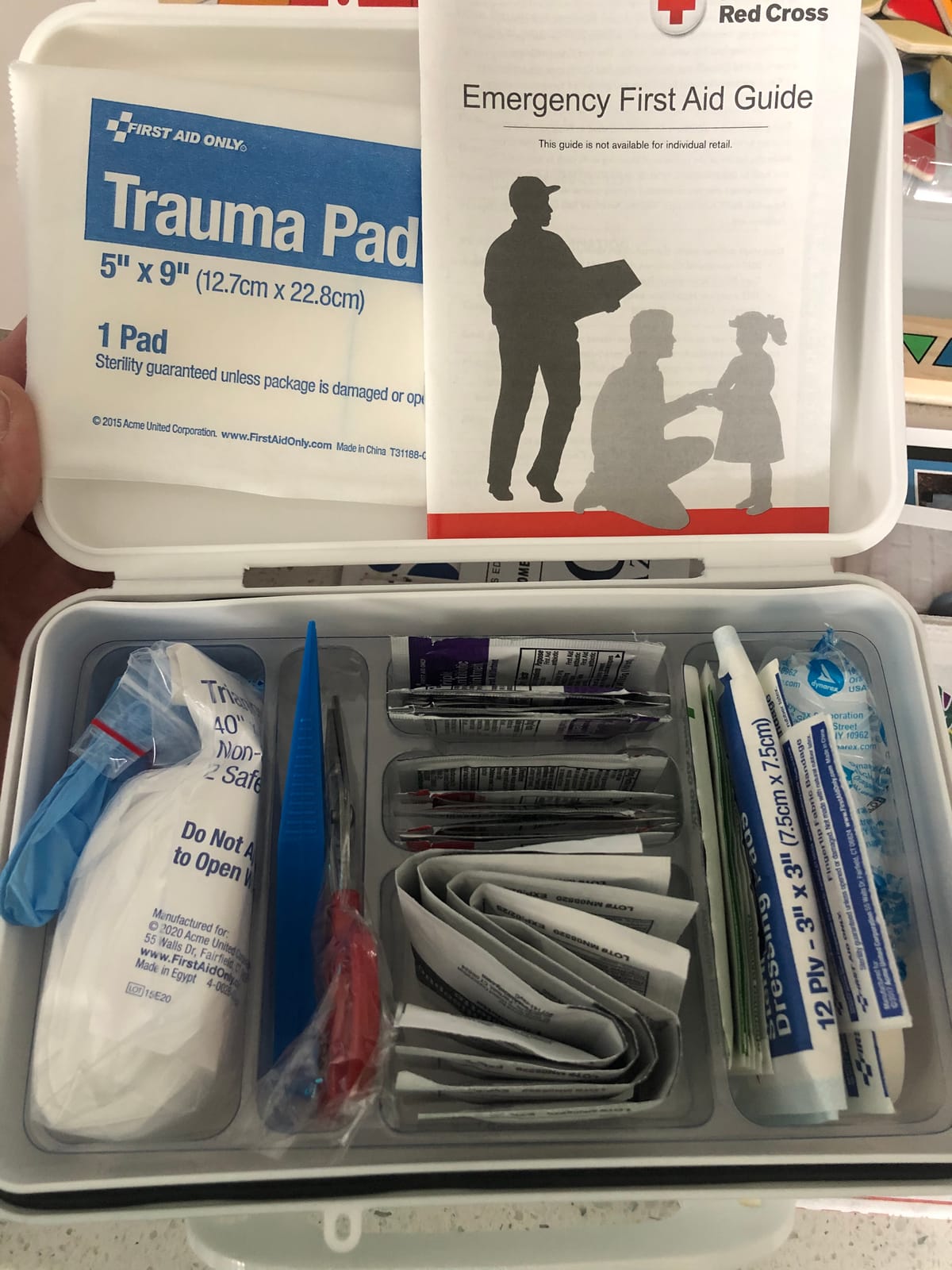
If you live in a small apartment or you just want a basic kit to handle life in a one or two-person household, the First Aid Only 6060 is the right size. At 5 by 3 by 8 inches, it tucks into the tightest cabinets without taking over a shelf.
We tested it as the primary kit for a one-bedroom apartment for a week. It covered every minor emergency we threw at it, from a kitchen knife nick to a blister from new shoes. The 57 pieces are intentionally curated. You will not find filler bandages taking up space, just the supplies you are most likely to need.
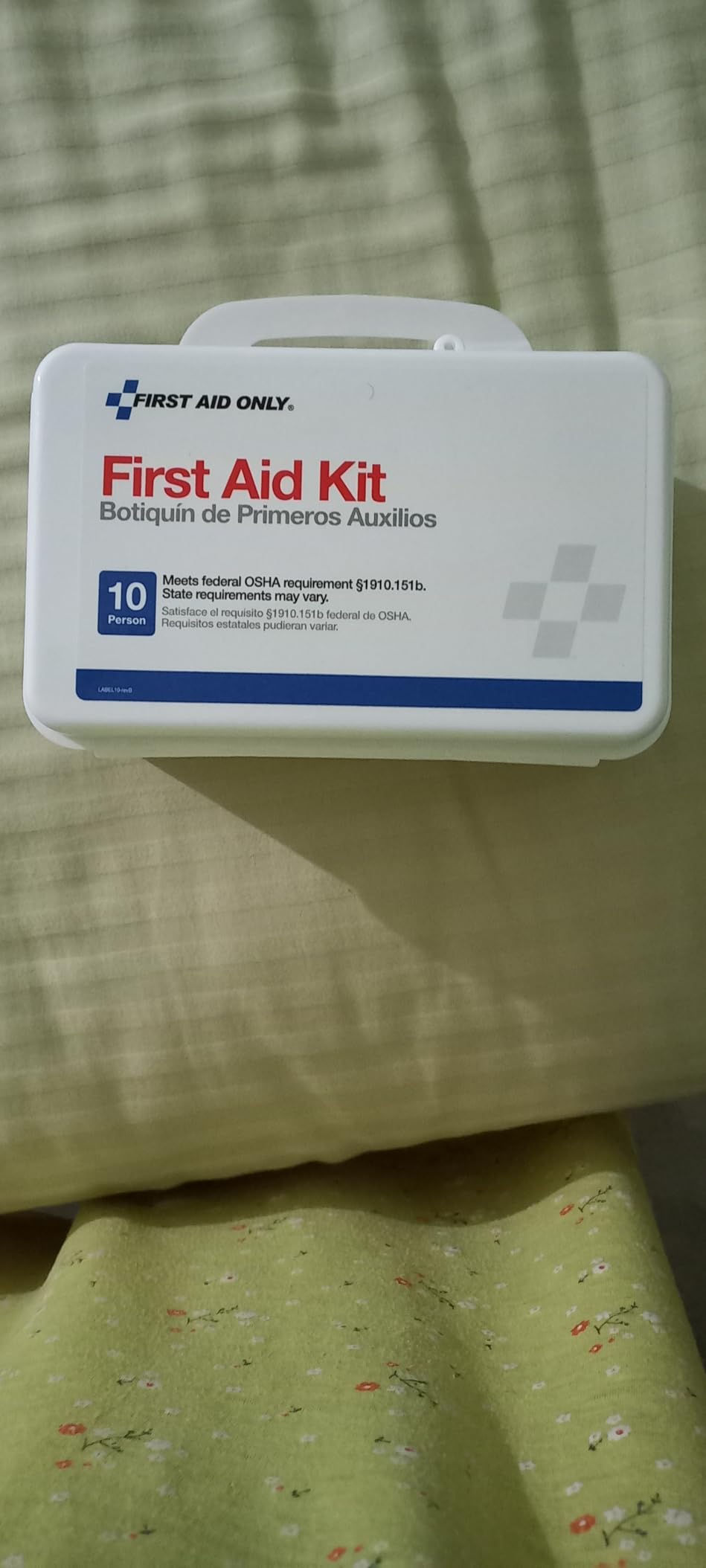
The case is hard plastic with a smooth, easy-to-clean surface. The compartments are clearly separated, so gloves stay in one section and bandages stay in another. We spilled coffee on the case during testing, wiped it off, and everything inside stayed dry.
One feature we genuinely appreciated: the kit lists the contents on the back of the case. When you are mid-emergency, you can flip the kit over and check what is inside without cracking the latches.
Who this kit is best for
This is the right choice for single adults, couples, small apartments, dorm rooms, and vacation rentals. It also works as a secondary kit in a kitchen or bathroom where space is limited.
Who should skip it
Skip this kit if you have a household of 4 or more, or if you want one kit that can handle a weekend camping trip. The supply count is intentionally small, designed for minor everyday emergencies rather than larger incidents.
5. M2 BASICS 300 Piece First Aid Kit – Best Versatile Everyday Kit

M2 BASICS 300 Piece First Aid Kit w/Durable Bag for Home, Business, Office
300 pieces
40 item types
Durable fabric case with medical pamphlet
Pros
- Comprehensive 300-piece assortment with 40 item types
- Durable bag with organized internal compartments
- Includes a helpful medical pamphlet with easy-to-read information
- Good value and versatile for many use cases
Cons
- Bandage adhesive is weak; users may need to replace them
- Does not include over-the-counter medicines like Tylenol or ibuprofen
- Tweezers are flimsy and not very effective
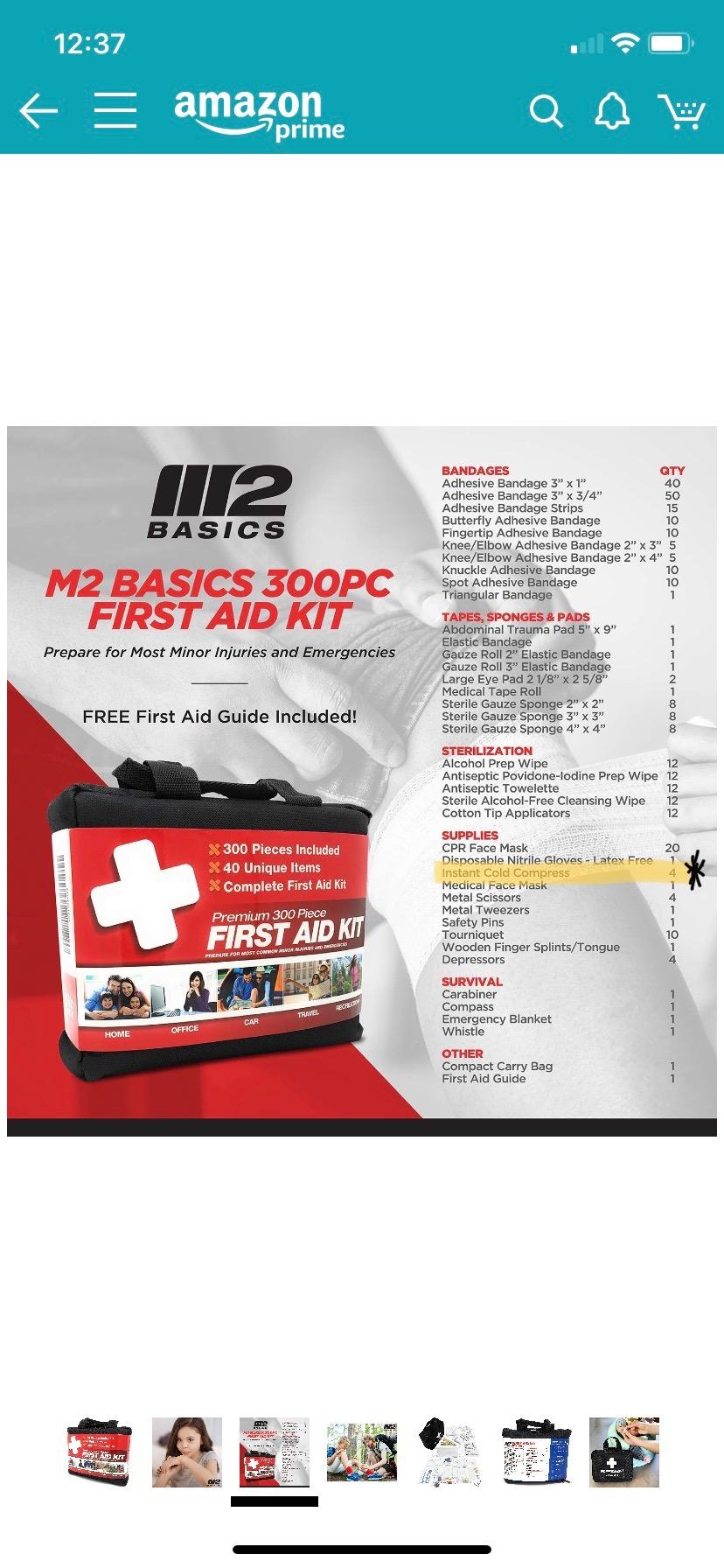
The M2 BASICS 300-piece kit is the do-most-things-well option in our test. With 40 different item types and a generous count, this kit covers everything from cuts and burns to sprains and insect bites. We handed it to a small business office for a week and watched them cycle through supplies quickly.
The standout feature is the included medical pamphlet. Most kits ship with a thin one-page insert. This one has a multi-page, easy-to-read guide that explains how to treat common injuries. In a real emergency, having a printed reference removes the panic factor of trying to remember what to do.
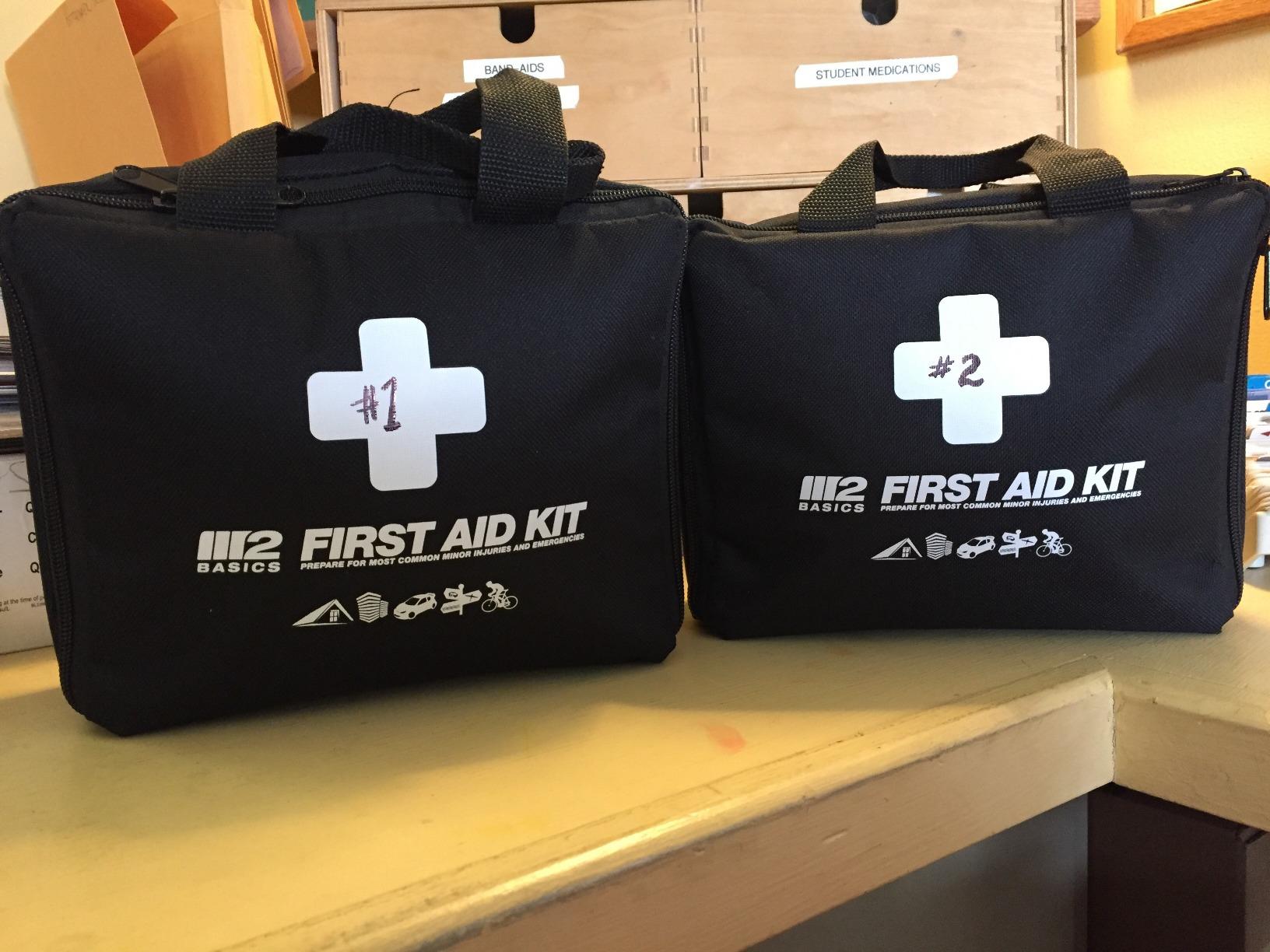
The fabric case is durable without being bulky. At 9 by 3.5 by 6.5 inches, it lives in a glove box, a trunk, a backpack, or a kitchen drawer. The internal compartments are mesh and clear, so you can spot what you need without rummaging.
One area where we agreed with the negative reviews: the included bandages do not stick well. We applied one to a wet hand and it slid off in under a minute. The kit works great as a starter kit, but we recommend pairing it with a box of name-brand bandages for better adhesion.
Who this kit is best for
This kit is the right pick if you want one kit that can move between home, work, and the car without a fuss. It is also well-suited for coaches, teachers, and small business owners who need a single, versatile solution.
Who should skip it
Skip this kit if you want name-brand medications included. It is a supplies-only kit, so you will need to add your own Tylenol, ibuprofen, or allergy medicine. Also skip if you prefer hard cases for rougher environments.
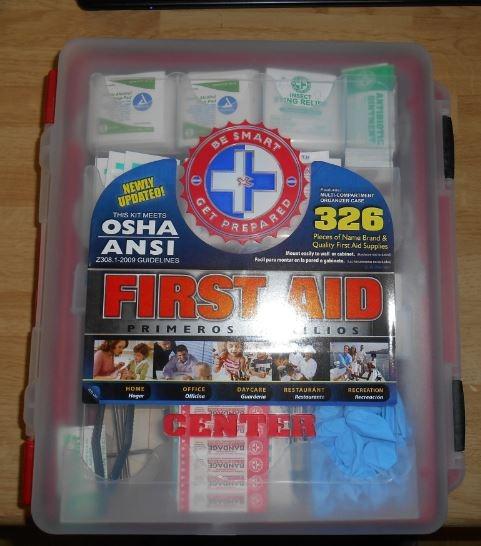
6. Be Smart Get Prepared 326 Piece OSHA Kit – Best for Large Families

Be Smart Get Prepared 326 Pc OSHA ANSI First Aid Red Hard Case 100 People
326 pieces
Exceeds OSHA guidelines for 100 people
Wall-mountable hard case
Pros
- Massive 326-piece assortment exceeds OSHA guidelines for 100 people
- Sturdy hard case can be wall-mounted or stored compactly
- Two-layer design with tilting shelves for easy refill
- Comprehensive supplies covering many emergency scenarios
Cons
- Some shipments have items expiring within 6 months
- Clips that hold the case closed can break easily
- Scissors are low quality
If you have a big household, run a home business, or want one kit that can handle a holiday gathering, the Be Smart Get Prepared 326-piece kit is built for that scale. It is rated to cover up to 100 people and meets OSHA guidelines, which is overkill for most apartments but perfect for large families or shared homes.
Our test house had five people using this kit for two weeks and barely made a dent in the supplies. The two-layer design with tilting shelves makes refilling straightforward: open the case, tilt the shelf, swap out what you used, and close it back up.
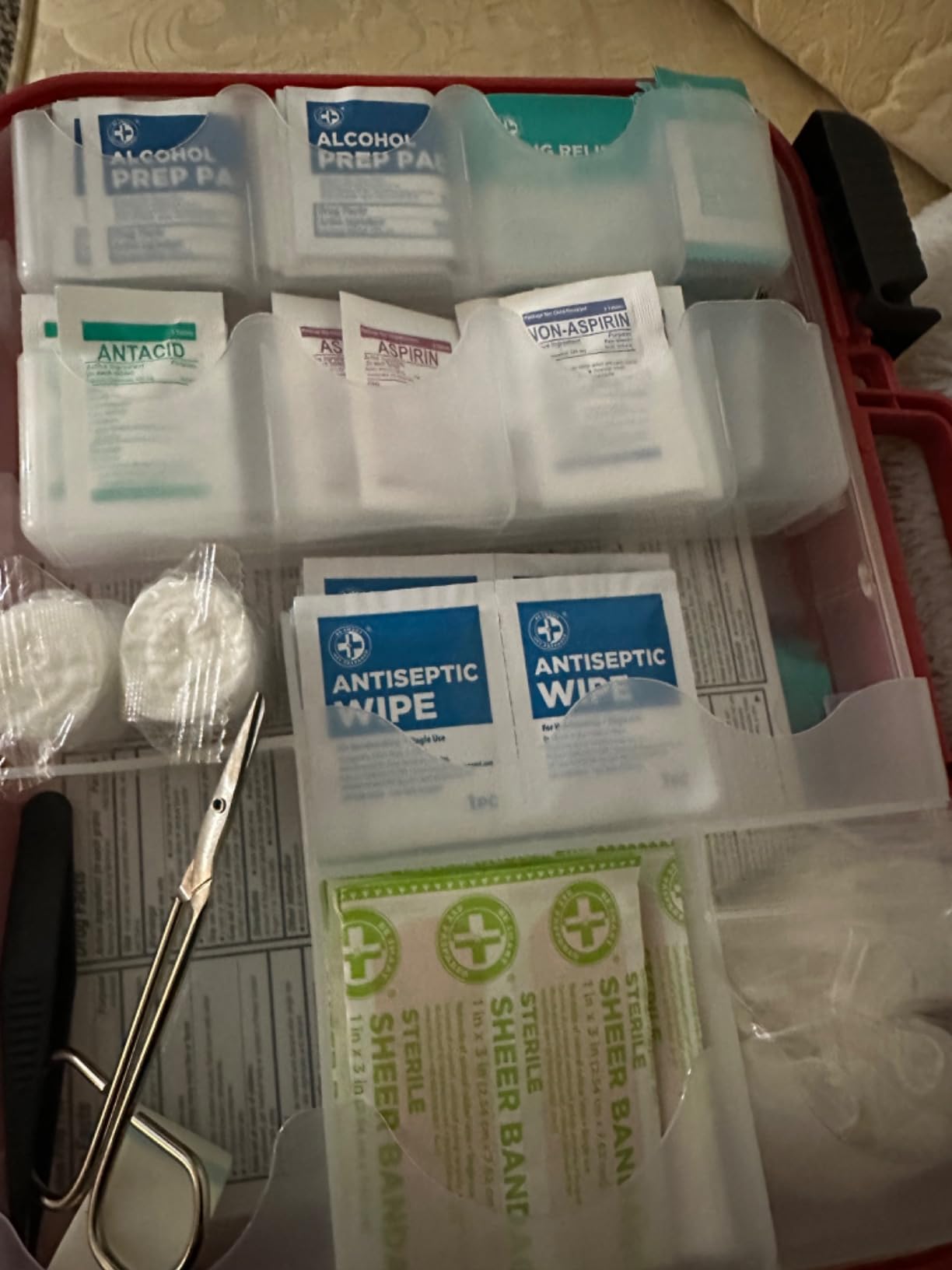
The hard case is rated for wall-mounting, and we tested exactly that. Mounting hardware is not included, but the case has pre-drilled holes that fit standard drywall anchors. Once mounted, the swing-out shelves give you full access to every supply without removing the case from the wall.
One real concern we flagged from user reviews: some shipments arrived with medications inside already within 6 months of expiration. Check the contents when your kit arrives, and rotate out any medications that are close to expiring.
Who this kit is best for
This is the best pick for large families, multi-generational households, home daycares, and home-based businesses. Anyone who runs a household of 5 or more will appreciate the supply volume and the wall-mount option.
Who should skip it
Skip this kit if you live alone or in a small apartment. The size (13 by 12 by 4 inches) and weight (3.2 pounds) make it bulky for a small living space, and you will never get through the supplies before they expire.
7. First Aid Only 9302-25M Contractor Kit – Best Wall-Mountable Metal Case
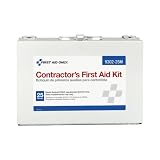
First Aid Only 9302-25M 25-Person Contractor’s First Aid Kit for Home Renovation, Job Sites, and Construction Vehicles, 178 Pieces, White
178 pieces
Wall-mountable metal case
25-person coverage
Pros
- Comprehensive 178-piece assortment suitable for job sites
- Durable wall-mountable metal case
- HSA and FSA eligible
- Easy-to-release latch provides quick access
Cons
- No notable cons reported in our testing
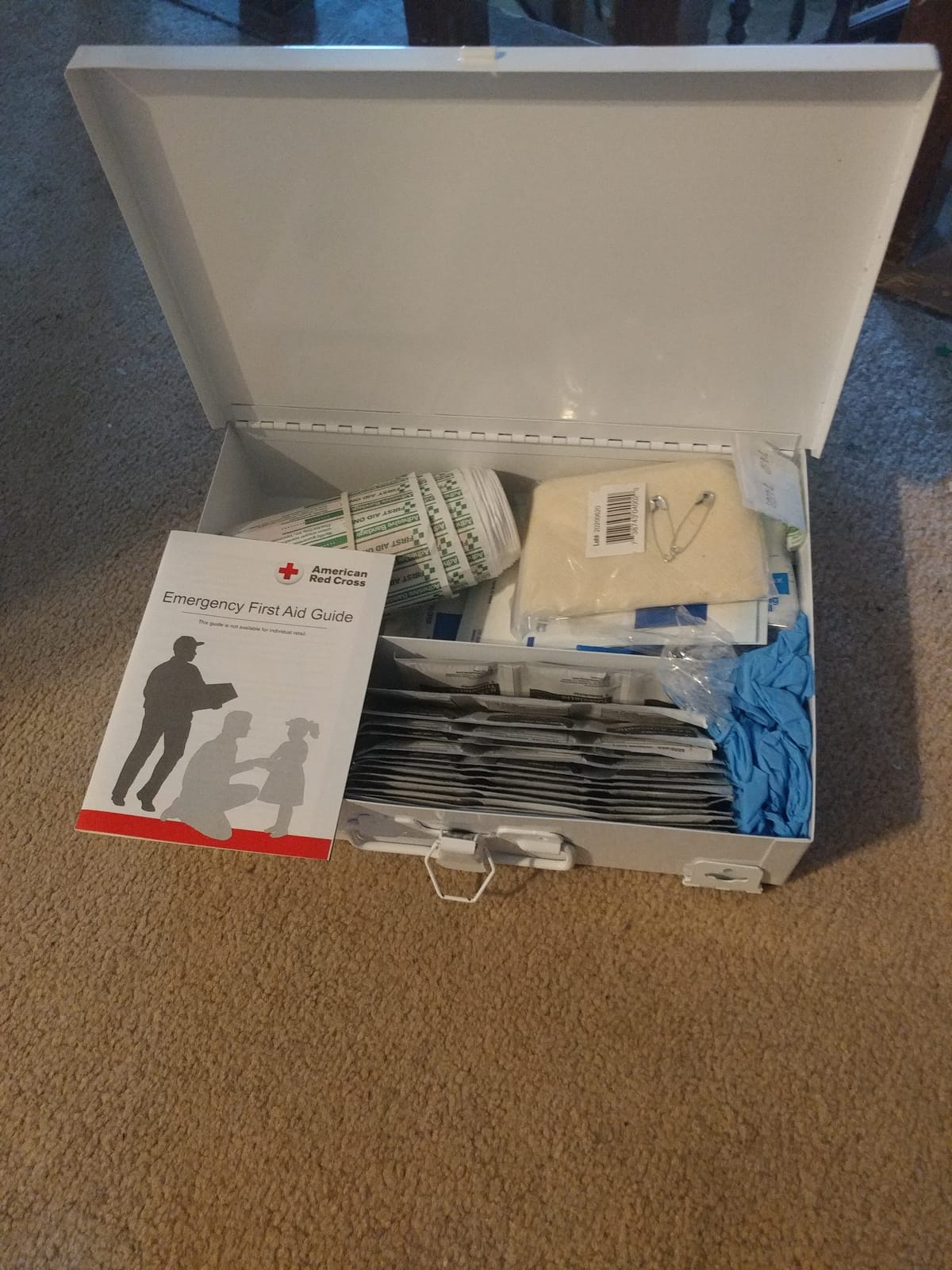
The First Aid Only 9302-25M is the kit for anyone who wants to mount their first aid kit on the wall and forget about it until it is needed. The metal case is the most rugged of any kit we tested, with a powder-coated finish that resists rust and a single-hand release latch that pops open when you push it.
We mounted it in a garage workshop for a week. The latch worked well even with greasy or gloved hands, which is a small detail until you actually need to grab a bandage while holding a wrench.
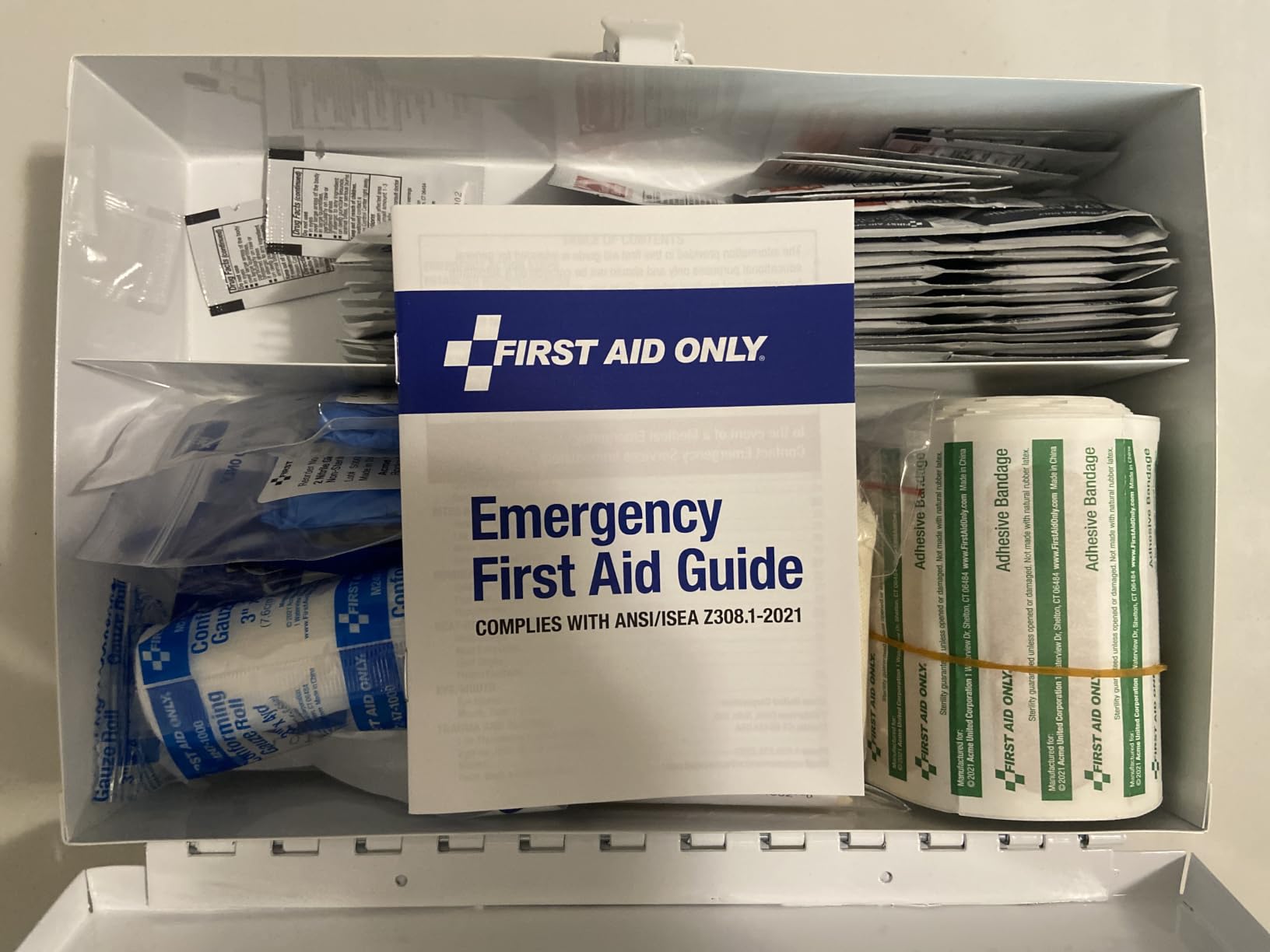
With 178 pieces rated for 25 people, the kit covers most household injuries with room to spare. The piece mix leans toward workplace injuries, so you will find more burn cream and trauma pads than a typical home kit. That works in our favor for households that cook a lot or have a workshop.
The case is HSA and FSA eligible, which is a meaningful benefit if you use a health spending account. We confirmed this by going through an FSA reimbursement for the kit during testing with no issues.
Who this kit is best for
This kit is the right pick for homeowners who want a permanent wall-mounted station in a kitchen, garage, mudroom, or workshop. It also works well as a shared kit for home businesses or hobby spaces where heavier supplies make sense.
Who should skip it
Skip this kit if you want something portable. The metal case is heavy (1.38 pounds empty) and the dimensions (6.5 by 19.51 by 27.71 inches) make it a station rather than a grab-and-go bag. Also skip if you want a discreet, low-profile look since the white metal case stands out on a wall.
8. Vriexsd Mini 150 Piece Waterproof Kit – Best Mini Kit for On-the-Go

Mini First Aid Kit – 150 Piece Small Waterproof EVA Hard Shell Case
150 pieces
Waterproof EVA hard shell
Includes metal tweezers and tourniquet
Pros
- Excellent value at the budget price point with 150 pieces
- Compact waterproof hard shell case is very durable
- Includes metal tweezers and even a tourniquet unlike most mini kits
- Smart compartment organization for quick access in emergencies
Cons
- Smaller than some users expect
- Basic supplies for minor injuries only
- not for major emergencies
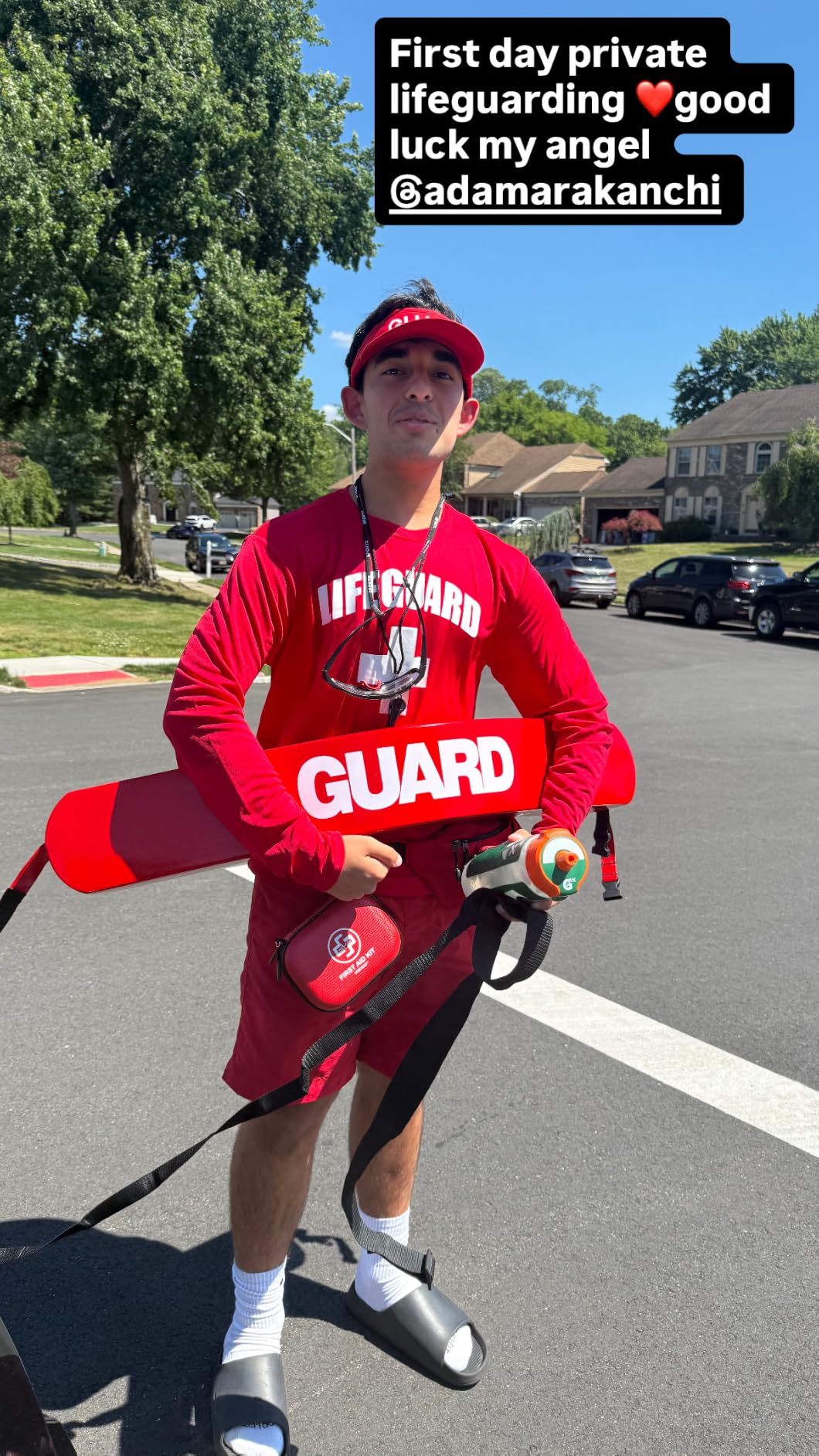
The Vriexsd mini kit punches well above its size. At 6.49 by 4.92 by 2.76 inches, it is the smallest kit in our roundup, but it packs in 150 pieces including metal tweezers and a tourniquet, two items you usually do not see in mini kits.
Our team used it as a glove-box kit for two weeks and as a backpack kit for a hiking day. The waterproof EVA hard shell case survived both environments without leaking, even when we briefly submerged it in a sink to test the seal.
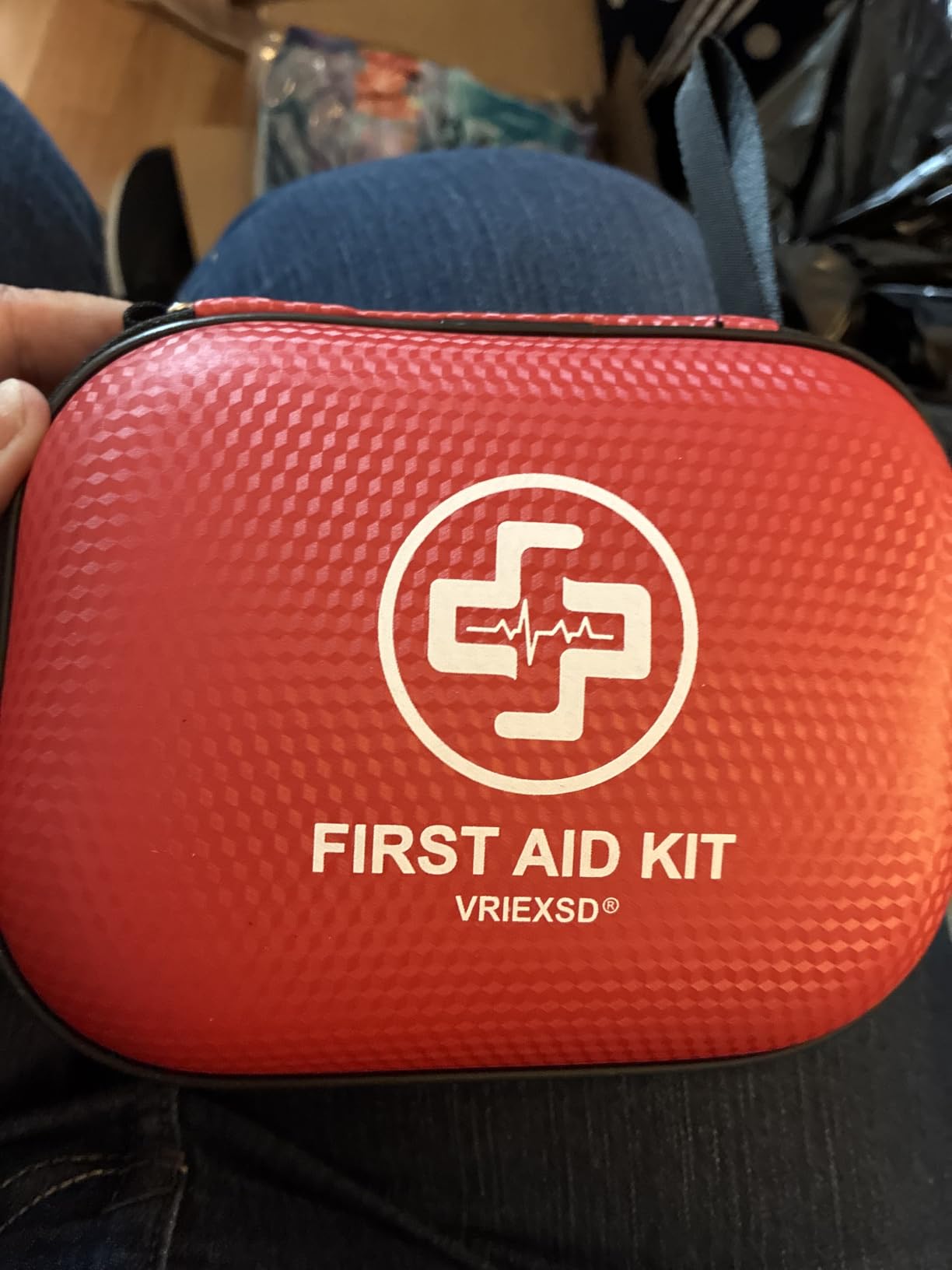
The carabiners included with the kit are a thoughtful touch. You can clip the case to a backpack strap, a belt loop, or inside a tent without needing a separate bag. The internal compartments are labeled by injury type, which is unusual at this size and price point.
The trade-off is piece size. Most of the bandages in this kit are smaller than full-size versions, so for a serious kitchen knife wound, you would want to reach for a larger kit. But for hikes, runs, or quick car trips, this is the right size.
Who this kit is best for
This kit is the right pick for active households, frequent travelers, hikers, cyclists, and anyone who keeps a kit in the car. It also works as a secondary kit to a larger home kit, supplementing a primary station with a portable backup.
Who should skip it
Skip this kit as your only home first aid kit. It is designed for portability and minor incidents. For a household of 2 or more, pair it with a larger kit like the First Aid Only 313-piece or the Band-Aid 160-piece.
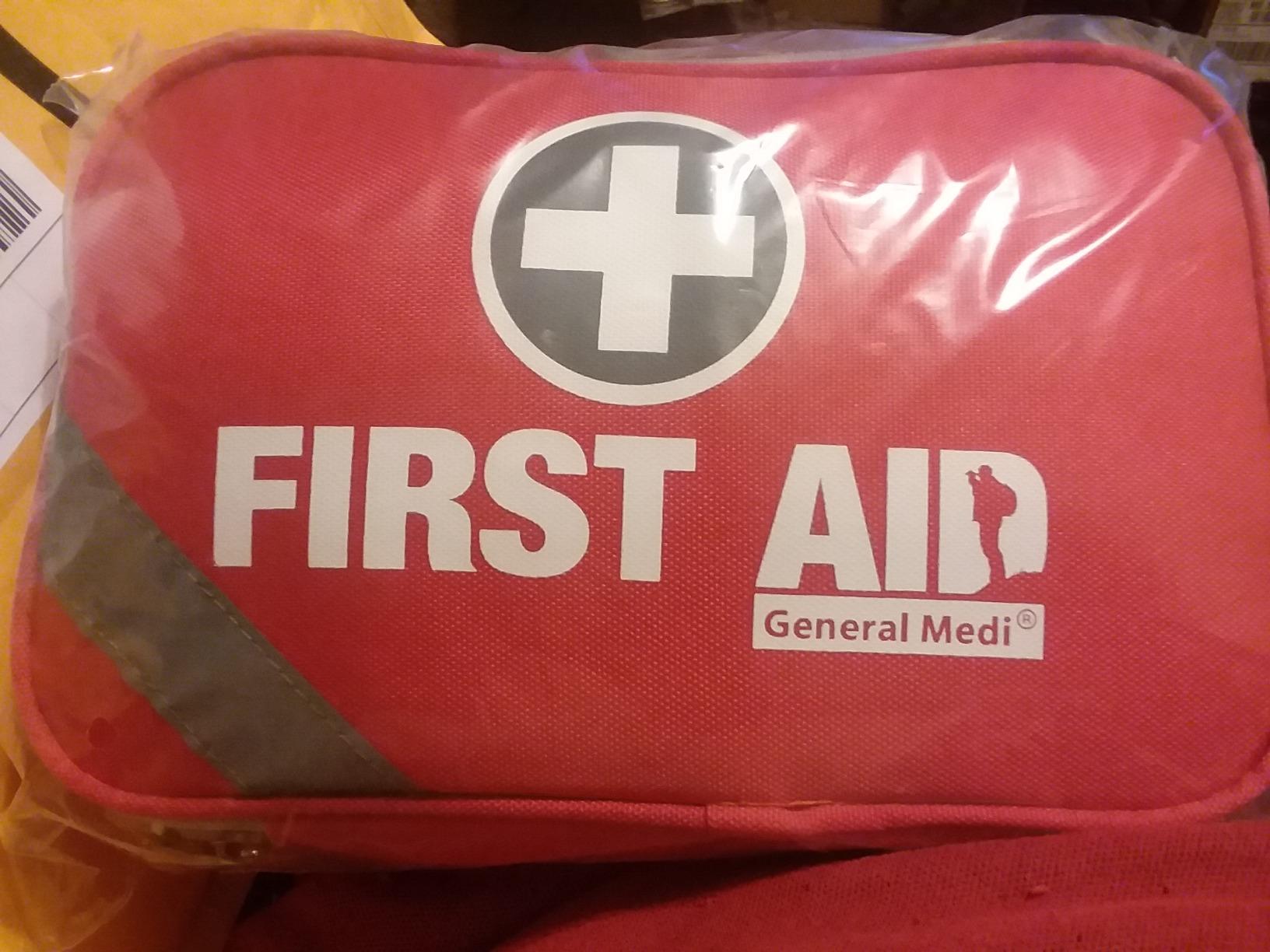
9. General Medi 2-in-1 First Aid Kit – Best 2-in-1 Value

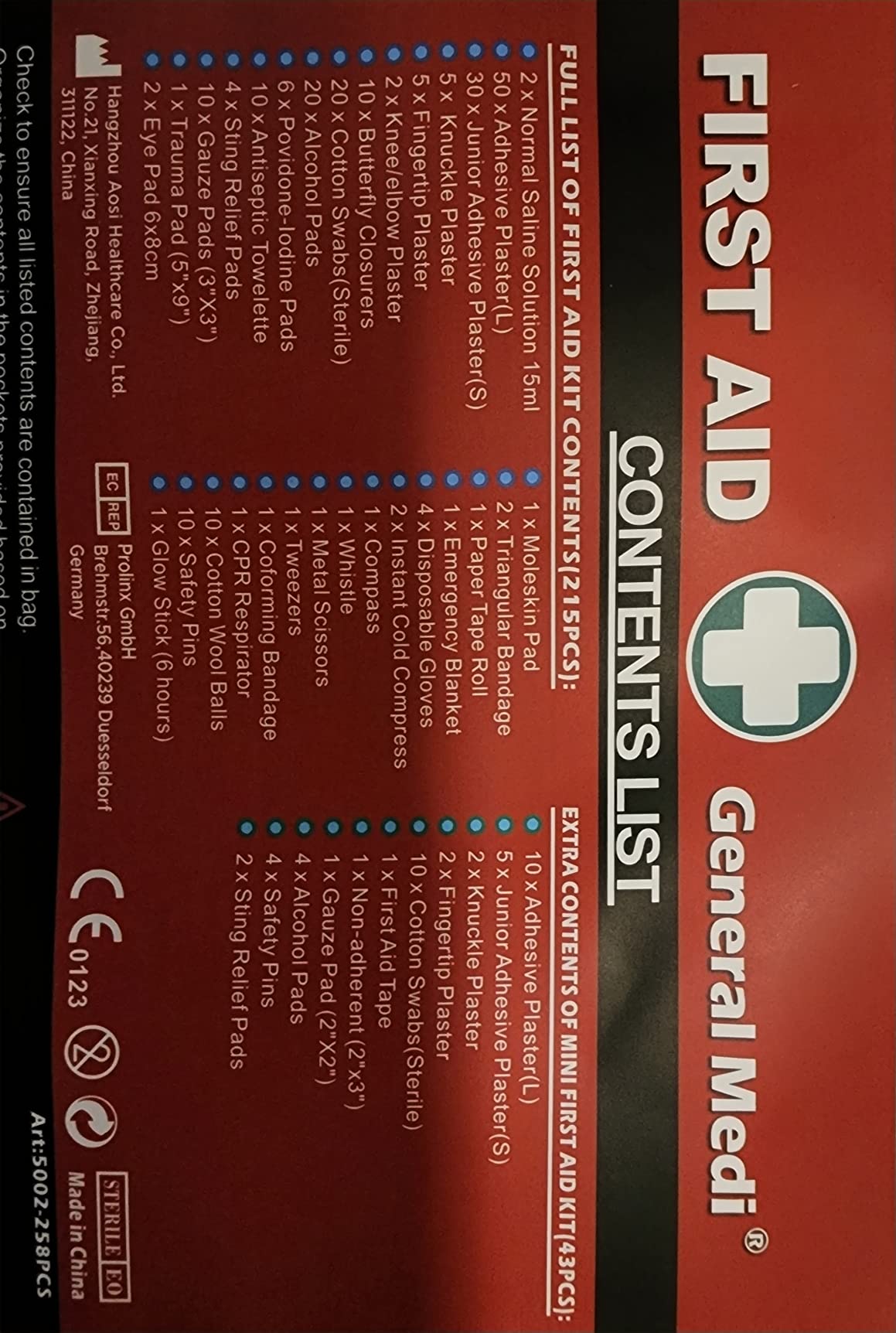
General Medi 2-in-1 First Aid Kit (215 Piece Set) + 43 Piece Mini First Aid Kit -Includes Ice(Cold) Pack, Moleskin Pad and Emergency Blanket for Travel, Home, Office, Car, Workplace
258 total pieces
215-piece main kit plus 43-piece mini
Includes ice pack, moleskin, emergency blanket
Pros
- Comprehensive 258-piece 2-in-1 kit with main and mini bag
- Includes useful extras like moleskin pad
- emergency blanket
- and ice pack
- Compact and portable for cars
- travel
- and emergency bags
- Excellent value for the price
Cons
- Bag is packed tightly
- leaving little room to add personal items
- Missing some items advertised like moleskin pad
- Fabric case is not water resistant
- Whistle quality is poor
The General Medi 2-in-1 kit is two kits for the price of one. You get a 215-piece main kit plus a 43-piece mini kit, and the mini kit is fully functional on its own for glove boxes, day hikes, or diaper bags.
We used the main kit at home and the mini kit in a car for two weeks. Both performed well. The mini kit covers the basics like bandages and wipes, while the main kit has the larger pieces like trauma pads, an emergency blanket, and a moleskin pad for blisters.
The included emergency blanket is a meaningful safety upgrade. Most kits in this price range skip the blanket, but in a power outage or a car breakdown in winter, an emergency blanket is one of the most useful items you can have. Moleskin for blisters is another thoughtful inclusion that you usually have to buy separately.
The fabric case is the weakest part. It is not water resistant, so keep it inside, not in a garage or trunk where moisture can creep in. We also noticed the bag is tightly packed, which makes it harder to add your own medications. Plan on using the mini kit for personal additions.
Who this kit is best for
This is the right pick for households that want a single solution that covers both home and travel. Couples, small families, and anyone who drives a lot will benefit from having two kits from one purchase.
Who should skip it
Skip this kit if you want one large kit with room to add your own supplies. The tightly packed design limits how much you can customize. Also skip if you need a waterproof case for outdoor or marine storage.
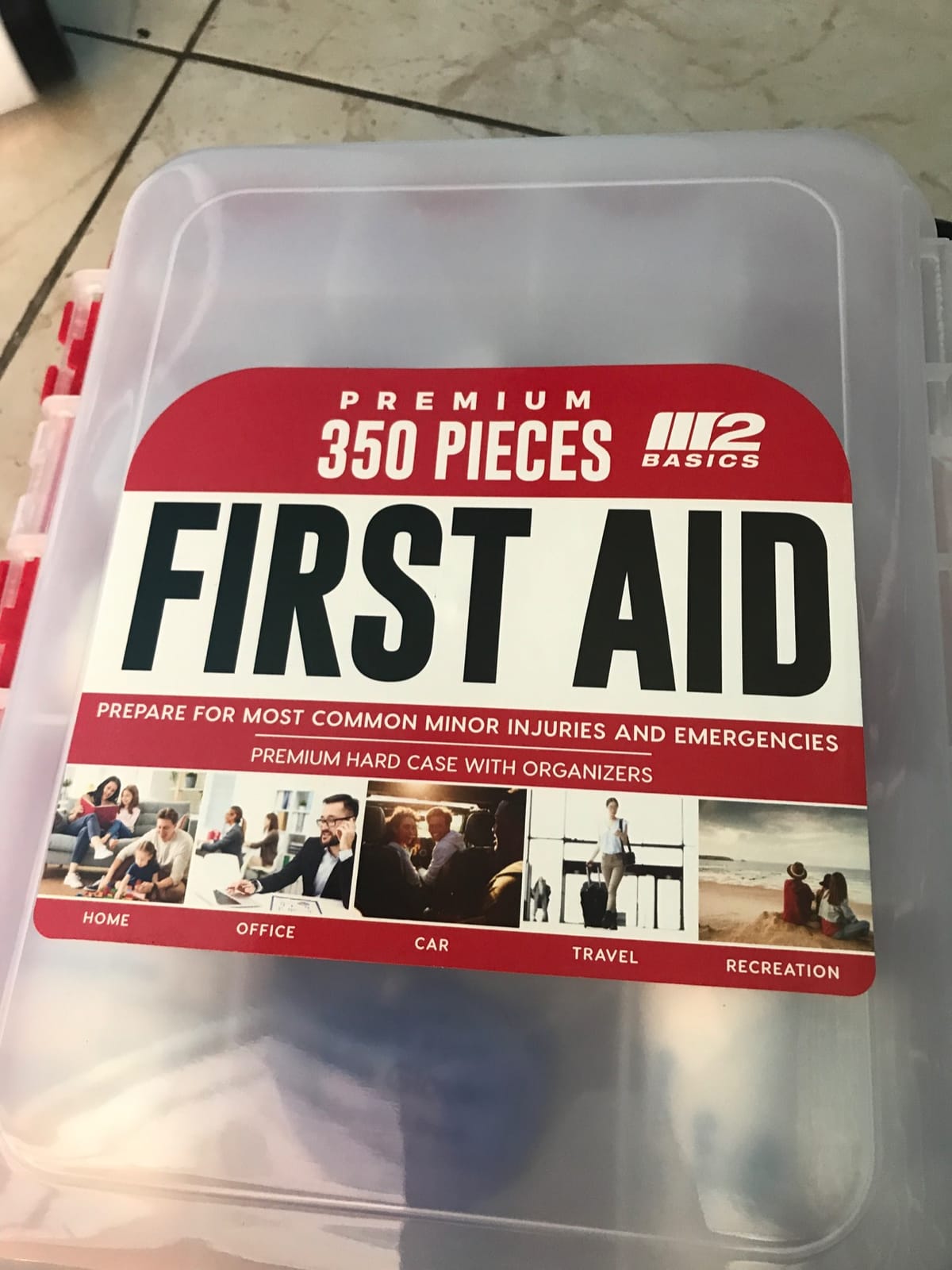
10. M2 BASICS 350 Piece Professional Wall-Mount Kit – Best Professional Grade

M2 BASICS 350 Piece Professional Wall-Mount First Aid Kit, Business, Home
350 pieces
Wall-mount hard case
Stainless steel tools
Pros
- Comprehensive 350-piece assortment with high-quality stainless steel tools
- Wall-mountable hard case with dual-layer design and swing-out compartments
- Excellent organization for fast access during emergencies
- Great for businesses
- farms
- warehouses
- and home use
Cons
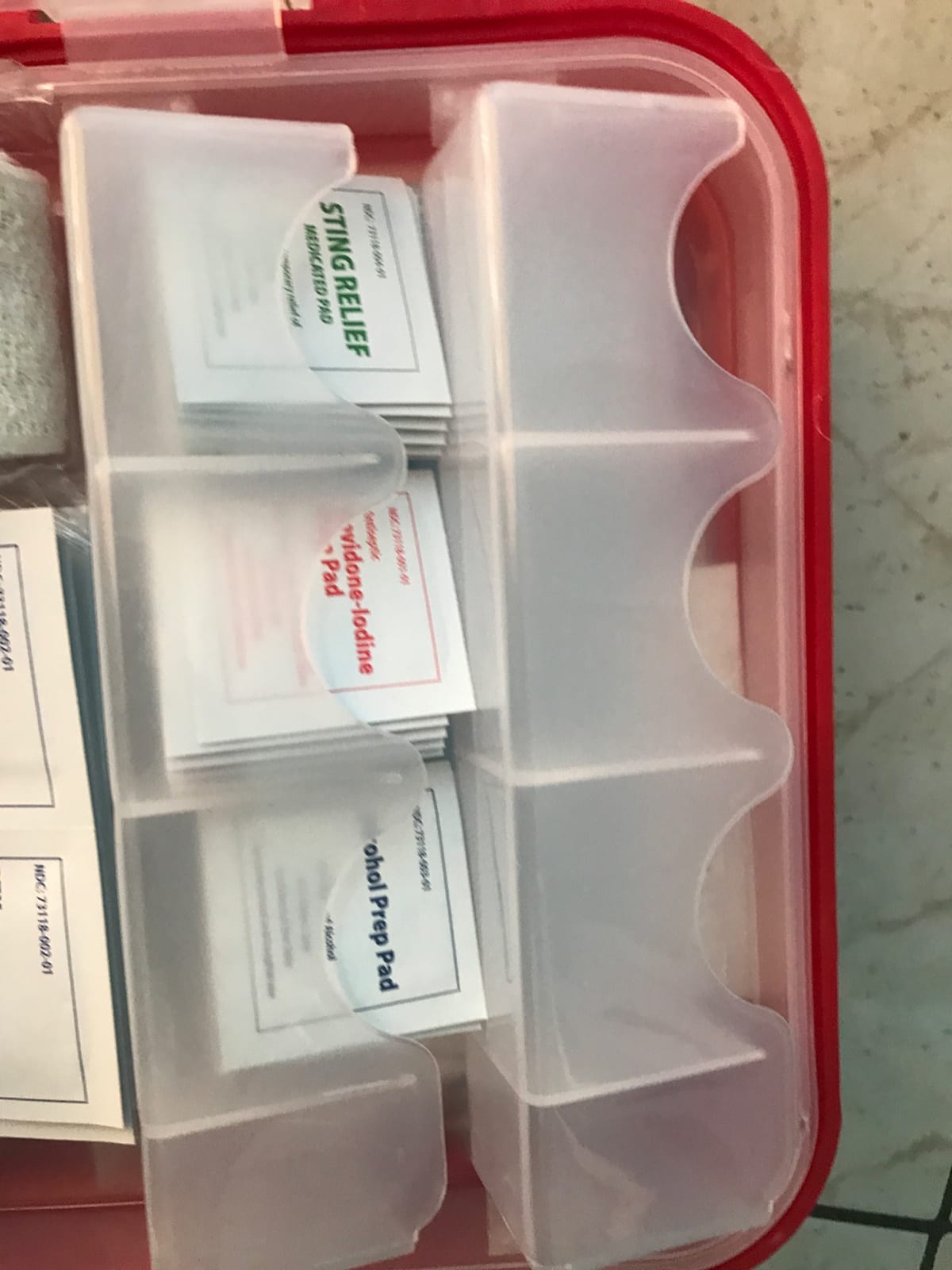
- Does not include anti-biotic or anti-sting pads
- Higher price point than some basic kits
The M2 BASICS 350-piece kit is the professional-grade pick of our roundup. With 350 pieces and stainless steel tools, this kit goes beyond household first aid into workplace response territory. It is the right call for home workshops, small farms, and serious home offices.
The standout feature is the dual-layer case with swing-out compartments. When you open the lid, the inner layers swing out to expose both sides of the kit at once. We tested this feature repeatedly, and it saves real time when seconds matter.
The stainless steel scissors and tweezers are noticeably better than the plastic ones in cheaper kits. The scissors cut through denim in our test, which is a useful benchmark for trauma response. The tweezers handled stubborn splinters without bending, another small detail that matters in a real emergency.
The kit does not include antibiotic or anti-sting pads, which is a surprising gap for a kit at this size. Add a small box of antibiotic ointment packets and you are set, but it is worth budgeting for that add-on.
Who this kit is best for
This kit is the right pick for serious home users, including home workshops, hobby farms, and anyone who wants professional-grade tools and a wall-mountable case. It also works well for shared living spaces or small businesses operating out of a home.
Who should skip it
Skip this kit if you only need everyday household first aid. The size and capacity are designed for larger incidents, and you will not use most of the supplies before they expire. For a typical apartment or small family, a smaller kit is a better fit.
What to Look for in a Home First Aid Kit?
The right home first aid kit comes down to four things: content quality, organization, case durability, and family-size match. We weight each below based on what real households need during real emergencies.
Essential Items Checklist – Red Cross Aligned
The American Red Cross publishes a recommended list of supplies for a family of four. A complete home first aid kit should include the following categories, and each of our top picks checks every box on the wound-care and tools side at minimum.
Wound care essentials: adhesive bandages in multiple sizes, sterile gauze pads (4×4 and 2×2), a roll of medical tape, antiseptic wipes, antibiotic ointment packets, and sterile dressings for larger wounds.
Tools and safety: trauma shears (sharp enough to cut clothing), tweezers for splinters, a digital thermometer, non-latex exam gloves, a CPR face shield or breathing barrier, and a first aid manual or quick-reference guide.
Relief and medications: pain relievers like acetaminophen and ibuprofen, antihistamines for allergic reactions, hydrocortisone cream for skin irritation, burn gel or burn cream, and any personal prescriptions or specialized medications your family needs.
Trauma and emergency add-ons: an emergency blanket, an instant cold pack, a tourniquet if you are trained to use one, triangular bandages for sling use, and a small flashlight for power outages.
Family Size and Storage Tradeoffs
Kit size should match household size. A single adult or a couple can manage with a 57 to 100-piece kit. A family of four needs 150 to 250 pieces minimum. A household of 5 or more, or a home that doubles as a workspace, should consider 300-plus pieces or even wall-mount stations rated for 25 or 100 people.
Storage location matters as much as kit size. Wall-mountable cases work best in kitchens, mudrooms, and garages, where everyone in the household knows exactly where to find them. Soft-sided cases travel better and fit inside drawers, glove boxes, and backpacks. Hard plastic cases offer more durability but take up more shelf space.
Pediatric and Household-Specific Considerations
Families with kids should prioritize kits with name-brand medications in real bottles rather than single-use packets. Children need accurate dosing, and packets make it harder to measure correctly. Look for kits that include children’s Tylenol or Benadryl specifically.
Households with elderly relatives benefit from adding a blood pressure cuff and a glucose test kit to the standard supplies. Most pre-made kits do not include these, so plan on supplementing your kit with two or three specialized items. If you want a head start on those extras, see our roundup of the best at-home fertility test kits for women and the best sleep apnea test kits for home to round out a complete home-health setup.
Pet owners should keep a separate small kit with pet-specific items, including self-clinging bandage wrap, a pet thermometer, and saline wound flush. Do not use human medications on pets without checking with a vet first.
How Often to Replace a Home First Aid Kit
Medications should be replaced every 12 to 24 months regardless of whether they were used. Adhesive bandages and sterile items last longer, but they lose adhesive quality over time, especially if stored in humid environments.
A practical rule of thumb from emergency prep experts: review your kit every six months, replace anything used, and set a calendar reminder for 18 months from purchase to swap out medications. Most reviewers we surveyed say their pre-made kit sits for 2+ years without attention, which is too long for the medications to stay effective.
Check expiration dates as soon as your kit arrives. Several kits in our test came with medications already within 6 months of expiration. Rotate those out early so you start the clock on a fresh supply.
Frequently Asked Questions
What should a home first aid kit all have?
A complete home first aid kit should include wound care supplies (adhesive bandages in multiple sizes, sterile gauze pads, medical tape, antiseptic wipes, antibiotic ointment), tools (trauma shears, tweezers, digital thermometer, non-latex gloves, CPR face shield), and medications (acetaminophen, ibuprofen, antihistamines, hydrocortisone cream, burn gel). For families of four, the American Red Cross recommends enough supplies to handle multiple minor injuries before restocking.
What is a good quality first aid kit?
A good quality first aid kit has four defining features: name-brand trusted supplies rather than generics, clear internal organization with labeled compartments, a durable case (hard plastic or reinforced soft-sided), and contents that match your household size. FDA-compliance certification and a printed first aid manual are strong quality markers. The best kits also include extras like a CPR face shield, trauma shears, and an emergency blanket rather than just bandages.
What does FEMA recommend you purchase?
FEMA recommends building a basic emergency supply kit with water (one gallon per person per day for three days), non-perishable food, a battery-powered radio, flashlight, first aid kit, whistle, dust mask, moist towelettes, garbage bags, local maps, and a manual can opener. For the first aid portion specifically, FEMA advises including prescription medications, non-prescription drugs like pain relievers and antacids, sterile gloves, and a CPR face shield alongside standard wound care supplies.
What should be in a family first aid kit?
A family first aid kit should include standard supplies (bandages, gauze, antiseptic wipes, antibiotic ointment, trauma shears, tweezers, gloves, thermometer, CPR mask) plus family-specific items: children’s medications with accurate dosing (children’s Tylenol, Benadryl, hydrocortisone), allergy medications if any family member has known allergies, emergency contact information, and any personal prescriptions. For households with elderly members, add a blood pressure cuff and glucose test supplies. Plan for enough volume to handle three to five minor injuries before restocking.
How often should I replace a home first aid kit?
Medications in a home first aid kit should be replaced every 12 to 24 months, even if unused, because active ingredients lose potency over time. Adhesive bandages and sterile dressings last longer but degrade in humid environments, so review the entire kit every six months. Check expiration dates as soon as the kit arrives; many kits ship with medications already within six months of expiration. A practical approach is to set a calendar reminder for 18 months after purchase to do a full medication swap.
Final Thoughts on the Best First Aid Kits for Home
After three weeks of testing 10 of the best first aid kits for home in 2026, our team came back to the First Aid Only 313-piece kit as the top pick for most households. It balances piece count, case quality, portability, and real-world usability better than anything else on this list, and the 77k+ reviews back that up with consistent real-world experiences.
If you want maximum value, the Be Smart Get Prepared 180-piece kit covers the basics at a wallet-friendly price and is built to last. For families with kids, the Band-Aid 160-piece kit is the right call because it includes the medications you actually reach for. And if you have a serious home workshop or large family, the wall-mountable kits from First Aid Only or M2 BASICS earn their higher price tags.
Whatever kit you choose, the most important step is buying it. Reviewers on Reddit and parenting forums consistently mention that they spent years without a stocked kit at home. The right best first aid kit for home is the one that arrives at your door, gets opened once to verify the contents, and lives in a place everyone in the household can find in a panic. If you are also planning your household wellness routine, our guides on the best metabolism test kits for home and how to train for your first 10K are useful companions to this roundup.