
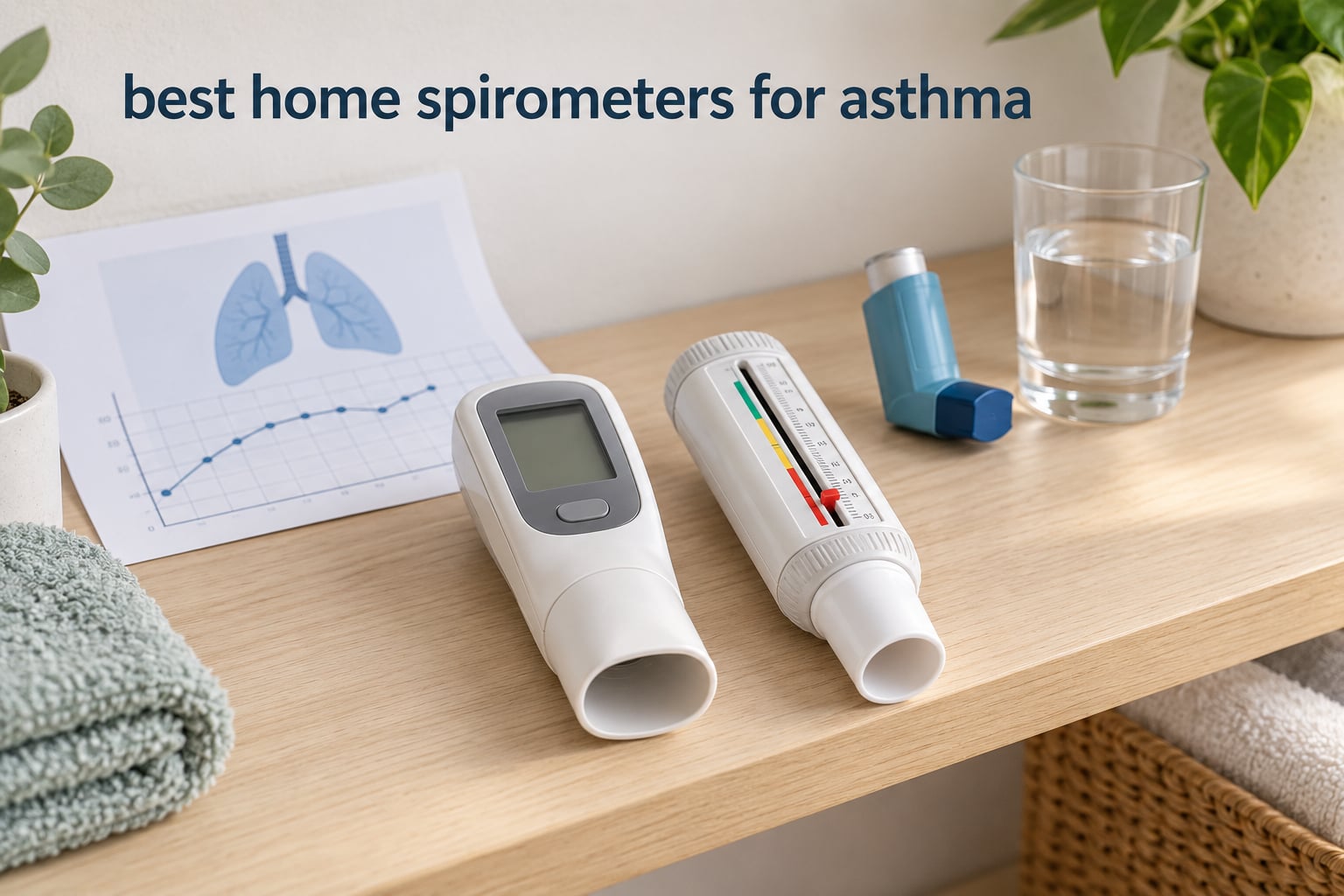
If your asthma is well controlled, it can feel invisible. Then a cough starts at the supermarket, a flight gets bumpy, or a chest cold lingers three weeks longer than it should, and you have no idea whether your lungs have actually changed. A home spirometer turns that guesswork into a number you can write on a chart and show your doctor.
Our team has been sorting through home lung function meters for weeks, reading spec sheets, weighing reviews and comparing what each device actually outputs. The short version: the best home spirometers for asthma are the ones that report both PEF and FEV1, store your readings so a trend is visible, and survive a daily routine without becoming a chore.
That last point matters more than most spec sheets suggest. People on r/Asthma and similar forums describe the same pattern repeatedly: the novelty lasts about a month, then daily testing quietly stops. Devices that require a fiddly setup, a cable, or a paper diary usually lose. Devices that log themselves and put a plain number on screen tend to stick.
What follows covers six meters, from a mechanical pocket model with no electronics at all to an app-based unit that charts your lung function on a phone. We also explain the difference between a peak flow meter and a true spirometer, because that single distinction explains most of the disappointment in this category.
Table of Contents
Top 3 Home Spirometers for Asthma Right Now (October 2026)
Three stood out once we lined up measurement capability, storage and the daily friction of use. The Microlife PF 100 takes the overall slot for the sheer completeness of its kit, the MIR Smart One for people who want their charts on a phone, and the Nascool meter for anyone who wants a digital PEF and FEV1 readout without paying for app hardware.

Microlife PF 100
- PEF and FEV1 in one blow
- 240 readings stored on device
- Free Windows and Mac software
- Three mouthpieces and carry case

MIR Smart One
- PEF and FEV1 measurement
- Included iOS and Android app
- Trends and shares results with a clinician
- No prescription needed

Nascool Peak Flow Meter
- Digital PEF and FEV1 readout
- Built to ATS ERS Wright standards
- Reusable mouthpiece needs no calibration
- Ages 6 and above
All 6 Home Spirometers for Asthma Compared in 2026
Everything in this roundup reports peak expiratory flow, and every device except the two mechanical meters also reports FEV1. The table below gives you the measurement capability and the practical details that decide whether you will still be using the device in month three.
| Product | Specs | Action |
|---|---|---|
| Microlife PF 100 Digital Peak Flow Meter |
|
Check Latest Price |
| MIR Smart One Digital Meter |
|
Check Latest Price |
| Nascool Digital Peak Flow Meter |
|
Check Latest Price |
 Holdly Mechanical Peak Flow Meter Holdly Mechanical Peak Flow Meter |
|
Check Latest Price |
 Sonmol Digital Peak Flow Meter Sonmol Digital Peak Flow Meter |
|
Check Latest Price |
 Navnihaal Breath-O-Meter Navnihaal Breath-O-Meter |
|
Check Latest Price |
1. Microlife PF 100 Digital Peak Flow Meter – The Most Complete Kit
Microlife (Deluxe Kit) Digital Peak Flow Meter Tests PEF / FEV1 / Early Detection of Asthma Attacks | Spirometer for Kids & Adults | Perfect for Monitoring Asthma, COPD & other Lung Conditions at Home
PEF and FEV1 in one blow
240 on-device readings
USB software included
Pros
- Reports PEF and FEV1 together and stores 240 readings on the meter
- Traffic-light zones can be set to your own baseline or a clinician's number
- Free desktop software exports charts as PDF or CSV for appointments
- Two-tier case
- three mouthpieces and batteries in the box
- Vertical mouthpiece angle reported as more accurate than angled designs
Cons
- Date and time setup is fiddly and uses a paperclip-style button
- Bundled PC software looks dated and is slower on newer Windows versions
- Needs practice to master the press-then-blow sequence
The Microlife PF 100 is the meter we recommend first, and the reason is simple: nothing else in this roundup arrives with everything you need to keep logging. You get the unit, three mouthpieces, two AAA batteries and a two-tier case that keeps the tube and mouthpiece apart. Nothing extra to order before your first test.
In daily use it behaves like a proper piece of home medical equipment rather than a gadget. The blow gives you PEF and FEV1 together, the meter holds 240 readings internally, and the traffic-light indicator on the front turns amber or red when a reading drops into a zone you configured. That zone setting is the part most people underrate, because you can set it against your own personal best instead of a generic chart.
The measurements come from a differential-pressure style tube rather than a mechanical scale, which removes the reading error you get when the piston sticks. Reviewers frequently single out the vertical mouthpiece angle as more accurate than angled competing designs, and the accuracy claim is tied to American Thoracic Society standards.
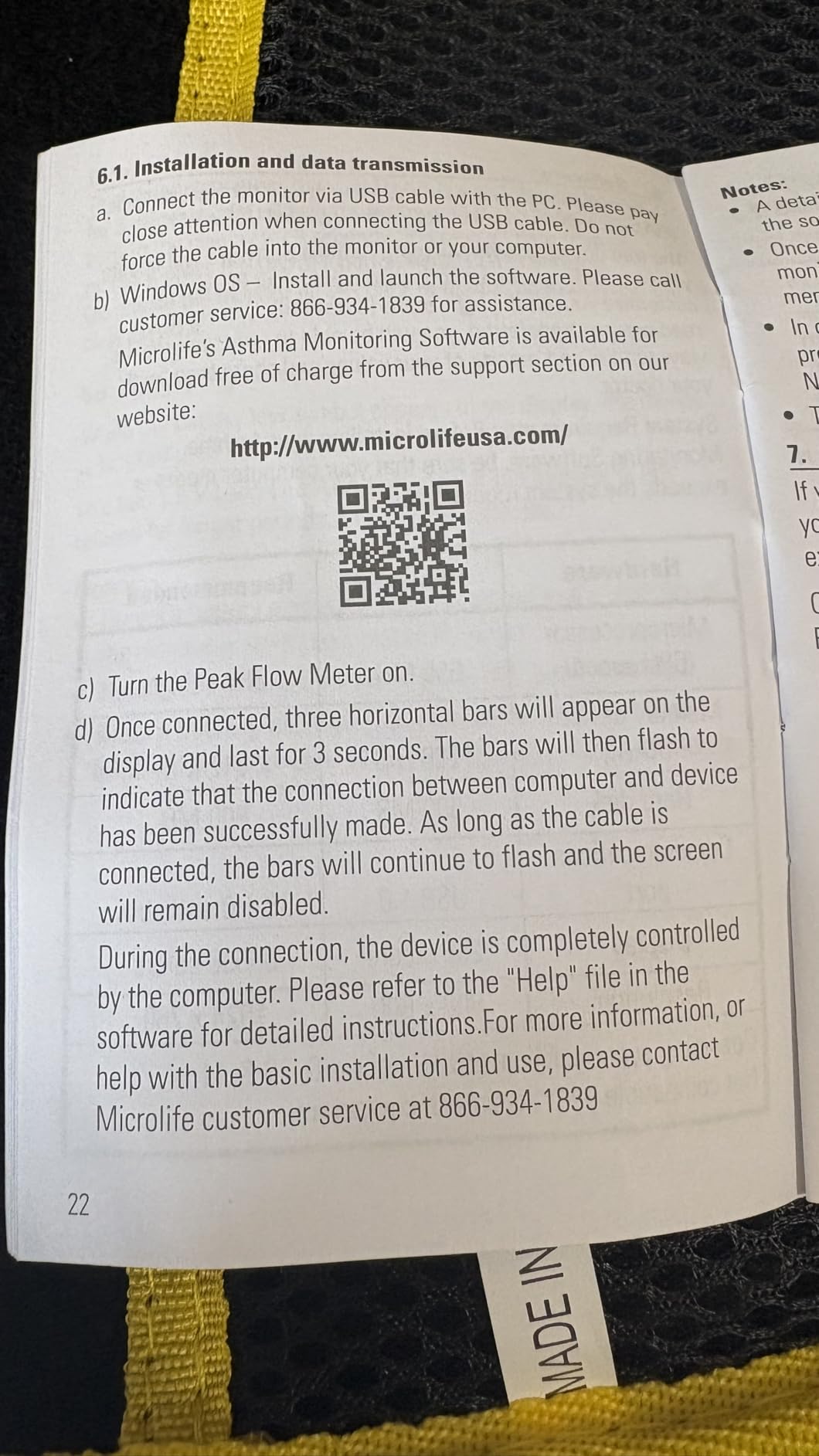
Data comes off the device over USB into the Microlife Asthma Analyzer, which works on Windows and Mac and exports charts as PDF or CSV. Parents of asthmatic children tell us those printable charts are the real payoff, because they hand a pulmonologist a month of objective data instead of a memory of how the week felt.
What the readings mean for your action plan
Because the meter stores 240 readings, you can compare today against a month ago without writing anything down. That is what turns a single number into a trend, and a trend is what tells you whether a change in medication is working before your symptoms fully respond.
The export options matter for telehealth. If you do virtual follow-ups, you can send a chart file ahead of the appointment so your clinician is looking at the same data you are instead of talking from memory.
Where the friction actually is
Setting the clock is the single most common complaint, and it is real: the paperclip-style button is genuinely annoying to press. Set the date once, correctly, and you will not touch it again for months.
The desktop software is the other sticking point. It works and it is free, but the interface looks like it was designed a decade ago and reviewers report it running slowly on newer Windows machines. If you are comfortable with a phone app instead, that is not a dealbreaker, just a step down in polish.
Treat readings as tracking data rather than a diagnosis. Reviewers describe results as in the ballpark of clinic equipment, which is exactly what you want for spotting change between visits. You would still go in for formal testing when your doctor asks for it.
2. MIR Smart One – Best App-Based Tracking
MIR Smart One | Personal Pocket App-Based Digital Peak Flow Meter | PEF and FEV1 | Designed in Italy
PEF and FEV1 measurement
Included iOS and Android app
No prescription needed
Pros
- App-based trending makes results easy to review and pass to a doctor
- Pocket-sized handset-style form factor that travels easily
- Measures PEF and FEV1 with no prescription required
- App included at no extra cost
Cons
- The highest price point among the home meters in this roundup
- Relies entirely on the paired app for anything beyond the raw reading
- Discussion and independent review volume is thinner than entry-level meters
The MIR Smart One is the smallest device here at a little over two ounces, and it looks more like a slim handset than a medical instrument. It measures PEF and FEV1, then hands the numbers to a companion app on your phone or tablet that is included at no extra charge for iOS and Android.
That app is the reason to buy this meter. It trends your results over time and lets you send a summary straight to your healthcare provider, which turns a reading into something you can act on between appointments. No prescription is required, so you do not need a clinician to authorise the purchase.
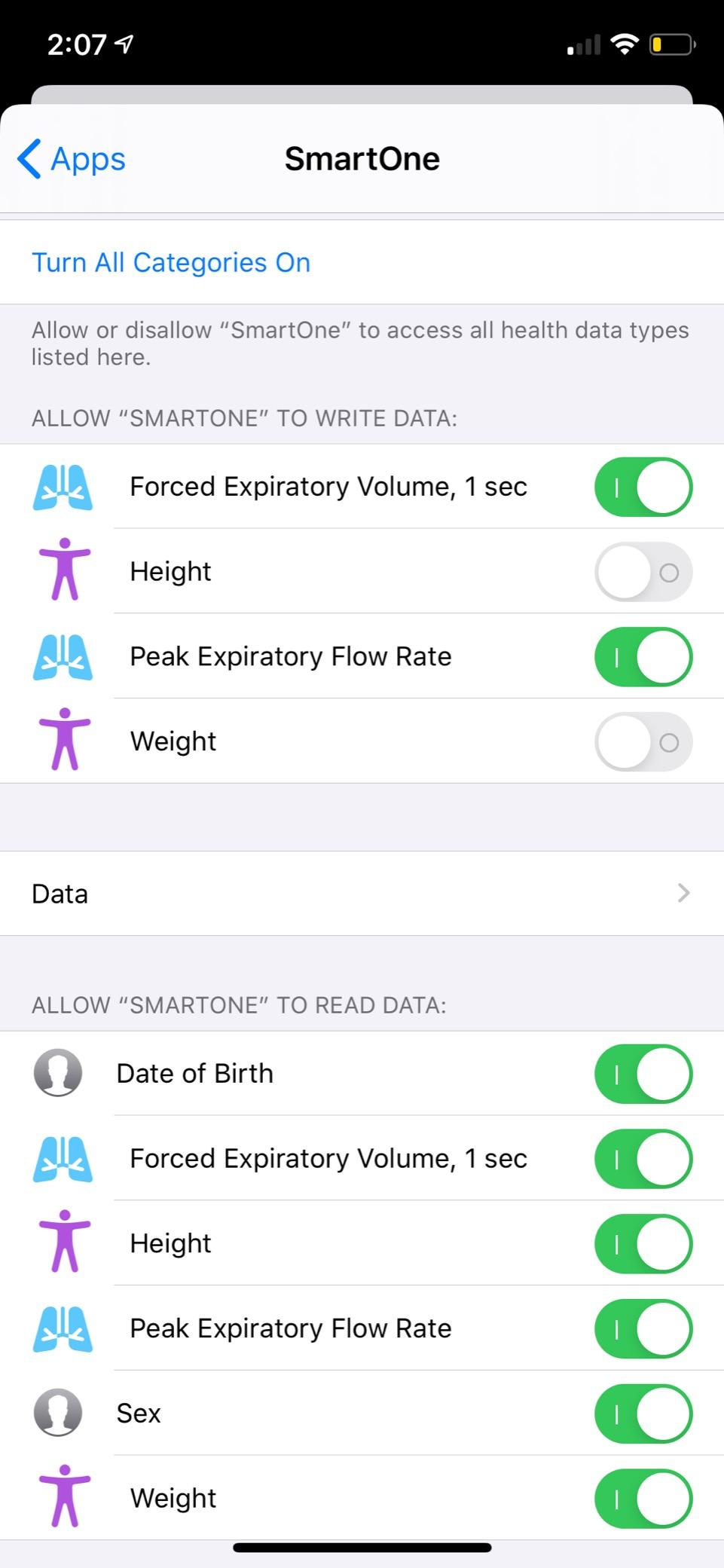
It runs on a single AA battery, which is included. The whole unit fits in a coat pocket, which matters if you are checking your lungs at the gym, before a cold-weather walk, or whenever a symptom shows up away from home.
Forum discussions about home asthma monitoring single out the Smart One specifically for app connectivity and trend tracking, and that matches what we found in the reviews. Buyers treat it as a premium, buy-it-once option, and the reservations tend to be about cost rather than function.
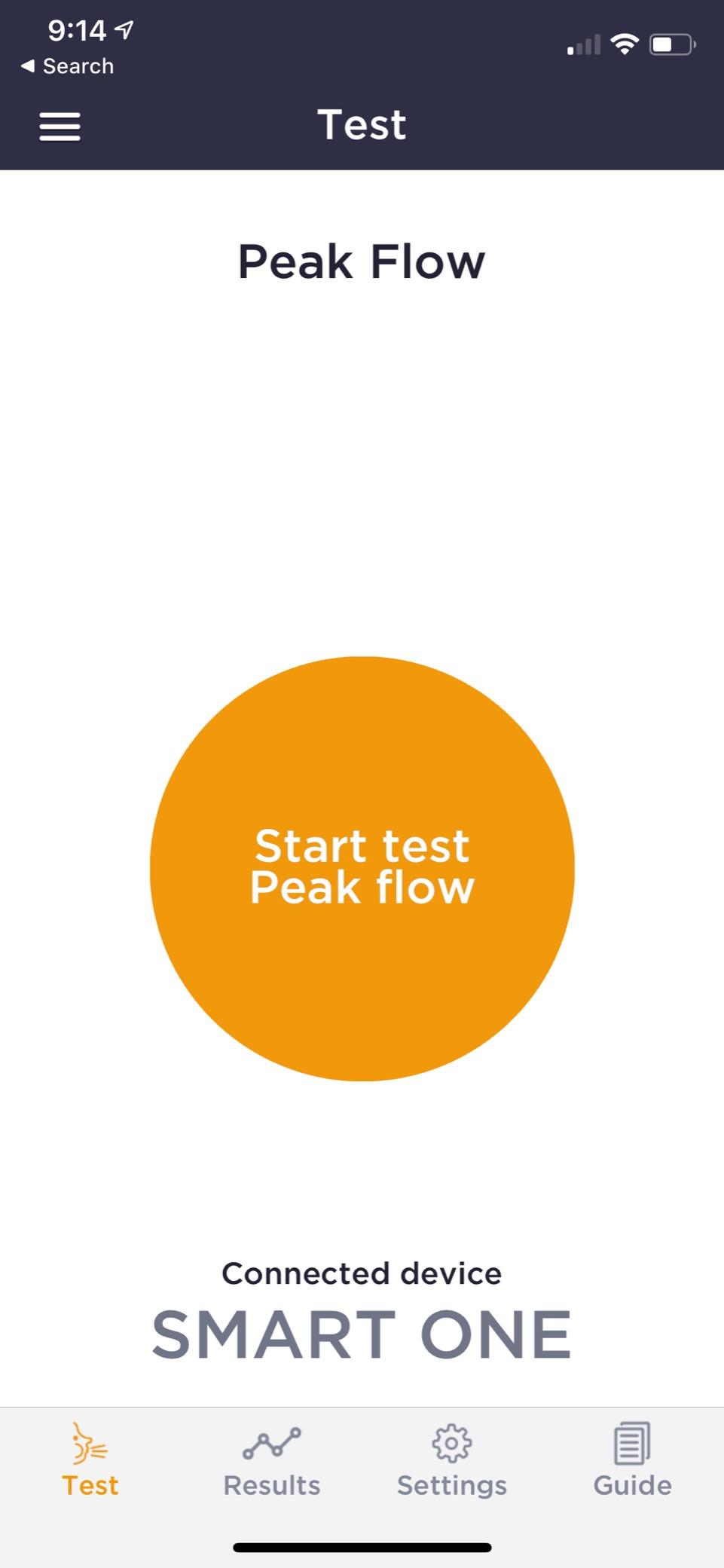
Who this suits and who will find it frustrating
It suits people who already live in their phone’s health ecosystem and want readings to land in one place automatically. If your asthma doctor works through a telehealth portal, the share function shortens the conversation because the data is already organised.
It frustrates people who do not want to depend on a phone. If the device itself is the only place a reading exists, and the phone is elsewhere, the raw number is limited to what you saw at that moment.
What to check before you commit
Look at your app ecosystem first. The app covers iOS and Android, but if you have already switched to a different phone platform, confirm the pairing works with your setup before ordering.
Also weigh the ownership picture honestly. This is the most expensive meter in the roundup, and for a device you may use for years, the spending only makes sense if you will genuinely look at the trend graphs.
One practical note: check your readings against a clinic test once, so you know how your personal numbers relate to formal spirometry before you rely on them.
3. Nascool Digital Peak Flow Meter – Best Value Digital Option
Nascool Peak Flow Meter for Adults & Kids
Digital PEF and FEV1 readout
ATS ERS Wright standards
No calibration needed
Pros
- Compact
- no-moving-parts design suited to home
- travel and school
- Digital PEF and FEV1 read out quickly and are easier to track than a mechanical scale
- No calibration and no disposable mouthpieces to buy
- Bought on a doctor's recommendation and used for virtual follow-up visits
- Suitable for adults and children aged 6 and above
Cons
- Bluetooth does not sync on this hand-held variant and readings must be typed in by hand
- The red yellow green markings printed on the device are decorative only
- Some buyers report readings they consider inconsistent
The Nascool is the most straightforward digital meter here. A pressure differential sensor measures your blow and displays both PEF and FEV1 on a small screen in seconds, with no moving parts to jam and no calibration needed after manufacture.
It is built to ATS ERS Wright standards, which is the reference specification for peak flow assessment, and it ranks first in its category on Amazon, so the volume of real-world use is substantial. Buyers report picking it up on a clinician’s recommendation and then using the readings during doctor-approved virtual follow-up visits.
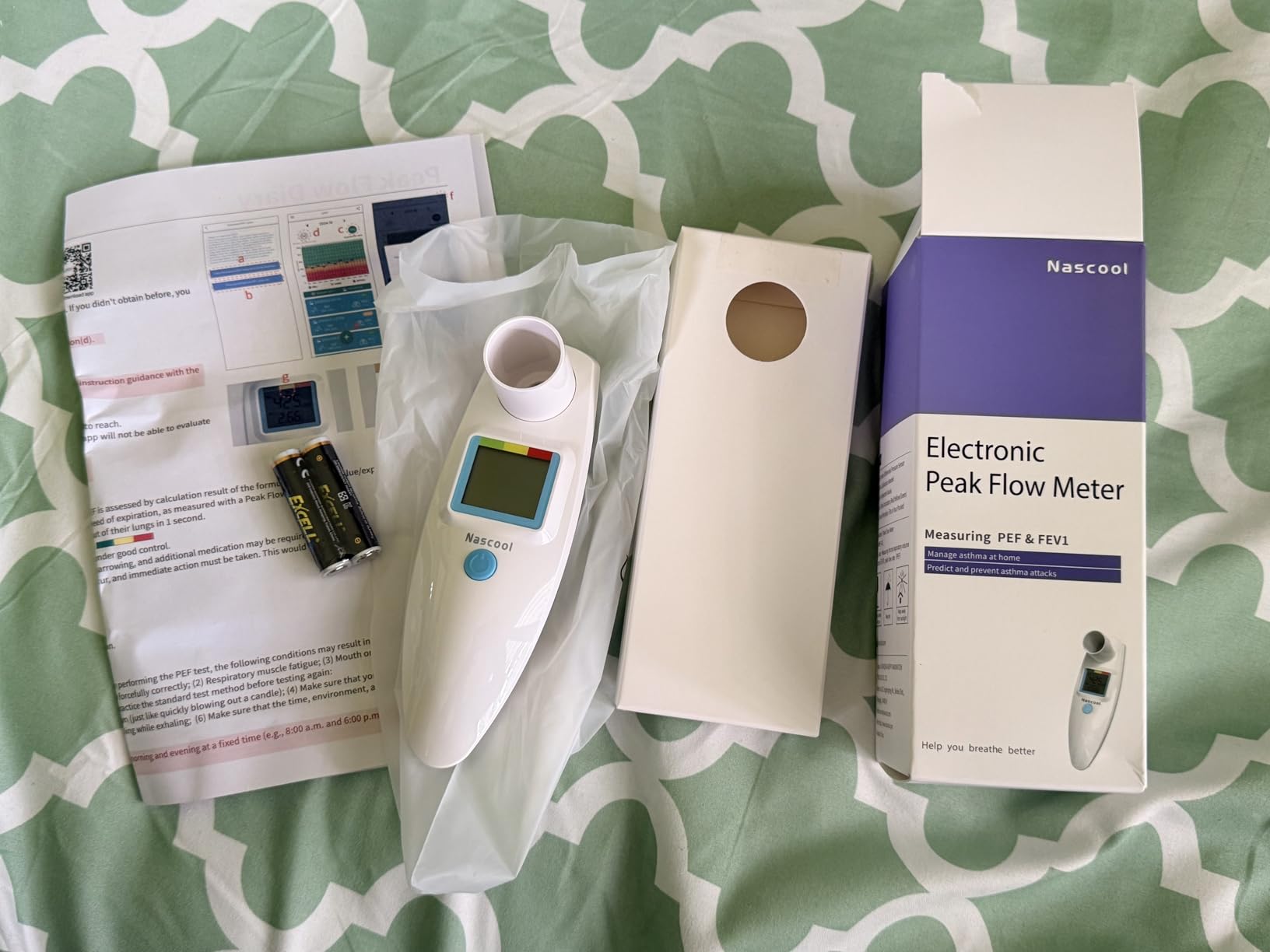
The mouthpiece is reusable rather than disposable, which quietly removes an ongoing cost. You rinse it, you disinfect it, and you keep using it. For a family with two asthmatic members, one device works for both.
A paper asthma diary is included for recording triggers, symptoms and what medication you reached for. It sounds old-fashioned next to an app, and in practice most people end up typing into a phone notes file instead, but it does no harm.
The Bluetooth question, answered
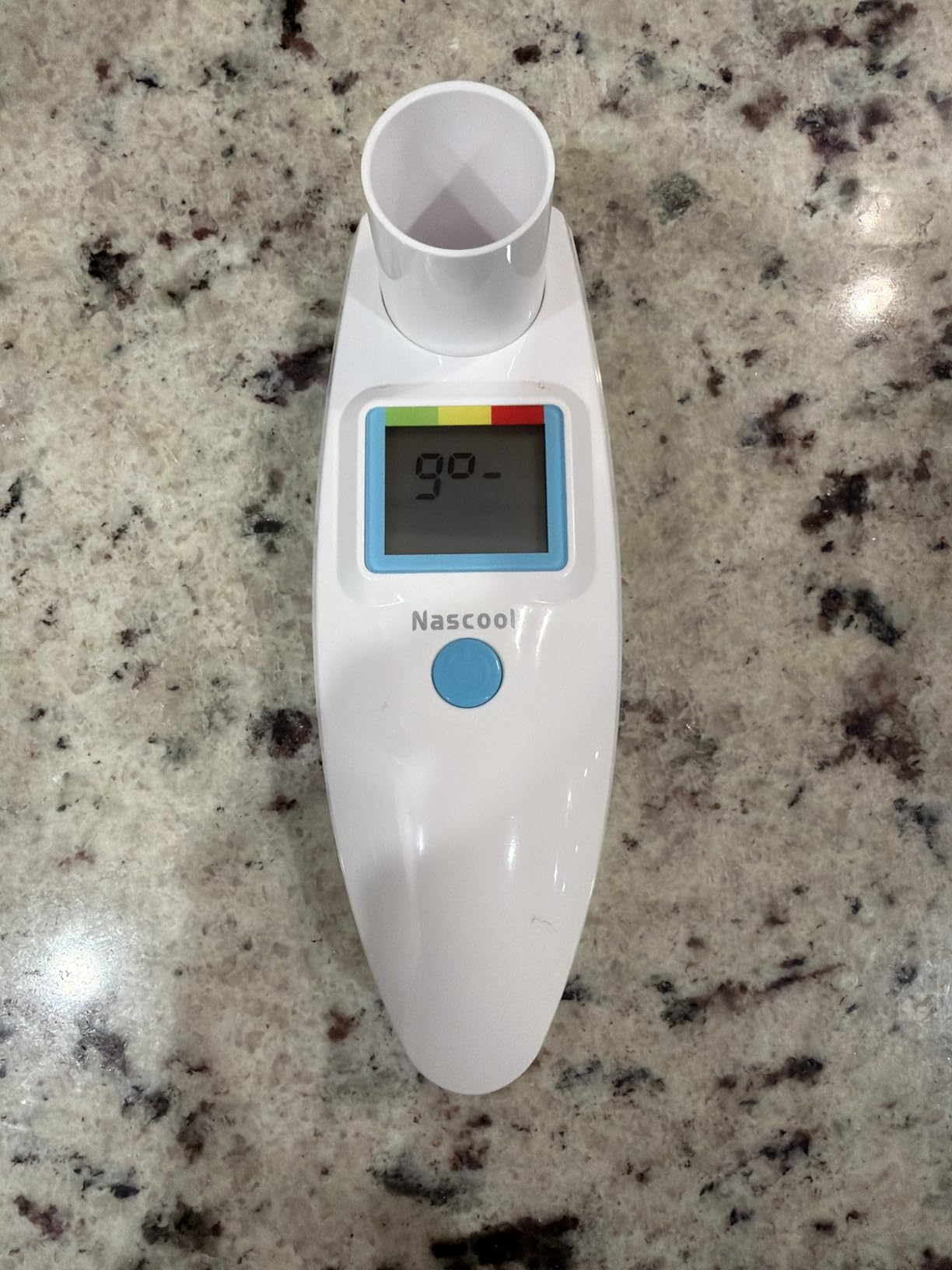
Listings for this meter advertise Bluetooth, and on this hand-held variant the pairing does not actually work. You type the numbers into the companion app by hand. That is the loudest complaint in the reviews and it is worth knowing before you buy, because automatic sync is the thing many buyers expected.
The second surprise is the colour zones. The red, yellow and green markings printed on the body are decoration. They do not respond to your reading. For an action plan, you set your own thresholds based on your personal best rather than trusting the printed colours.
Best for children and shared family use
The manufacturer rates it for anyone aged 6 and above, and it works for adults, smokers, athletes and anyone tracking respiratory health. Because there is nothing to log in to and no account to create, a child can do the test themselves once an adult has shown them the technique.
If you already own a peak flow meter and want numbers you can actually record, our [peak flow meter roundup](/best-peak-flow-meters-for-asthma/) covers where a simple mechanical scale still makes sense.
4. Holdly Mechanical Peak Flow Meter – Battery-Free Tracking
Mechanical Peak Flow Meter | PEF Tester – Track & Monitor Peak Expiratory Flow Changes
Mechanical PEF only
No batteries or electronics
Washable detachable mouthpiece
Pros
- No batteries
- no charging and no electronics that can fail
- Lightweight and pocket-sized for on-the-go monitoring
- Detachable washable mouthpiece makes repeated cleaning simple
- Colour markers give a quick traffic-light read of the scale
Cons
- Reports PEF only with no FEV1 measurement
- No data storage so readings must be written down by hand
- Accuracy depends heavily on blowing technique and the mechanical scale is harder to read
The Holdly is the no-fuss option. It is a mechanical peak flow meter with a sliding scale, three adjustable colour markers and no electronics at all, so there is no battery to die, no cable and no app to install. You blow into it and a pointer moves.
That simplicity is genuinely useful in specific situations. If you are monitoring a child who will not tolerate a screen, or you want something that still works after months in a drawer, or you simply refuse to own another device with a battery in it, this solves the problem completely.
The body is ABS plastic and the mouthpiece detaches for washing. The whole meter weighs under two ounces, which makes it the easiest item here to carry in a coat pocket or a school bag.
Setting up your own traffic light
The three arrow-shaped markers slide along the scale so you can set personal red, yellow and green boundaries based on your own best reading. Owners like that this makes a basic zone plan easy to follow without any software.
It suits adults and children from age 5. For a child with asthma, a physical scale with three colours is often easier to act on than a number that requires an adult to interpret it.
What you give up without electronics
This meter reports PEF only. There is no FEV1, which is the measurement that forum users with subtle, hard-to-sense asthma symptoms say matters most to them. If your symptoms do not move your peak flow, this device will not show it.
Nothing is stored. Every result goes onto paper or into a phone notes file, and if you skip a week of logging you have a gap rather than a curve. Accuracy also depends more on technique than with a digital meter, because you are reading a moving pointer rather than a settled number.
Use it as a fast daily screen and confirm important changes at your next appointment. Our [spirometer reviews for general lung health](/best-home-spirometers-for-lung-health/) go deeper on when a PEF-only meter is enough.
5. Sonmol Digital Peak Flow Meter – Best for Children
Sonmol Digital Peak Flow Meter PEF FEV1 Tester with Color Indicators
PEF and FEV1 from one blow
On-screen risk arrow with colour zones
QR setup
Pros
- Single-blow PEF and FEV1 readings with an instant colour-zone arrow on the screen
- QR code setup calculates a personalised expected value so the zones mean something
- Open-pipe airflow path is easy to rinse and sanitise
- Aged 5 and above with a clear visual readout
- AAA batteries rated for up to a year of daily use
Cons
- The risk indicator does nothing until the expected value is configured
- No app and no data logging so readings must be recorded separately
- Small review base so long-term reliability evidence is thin
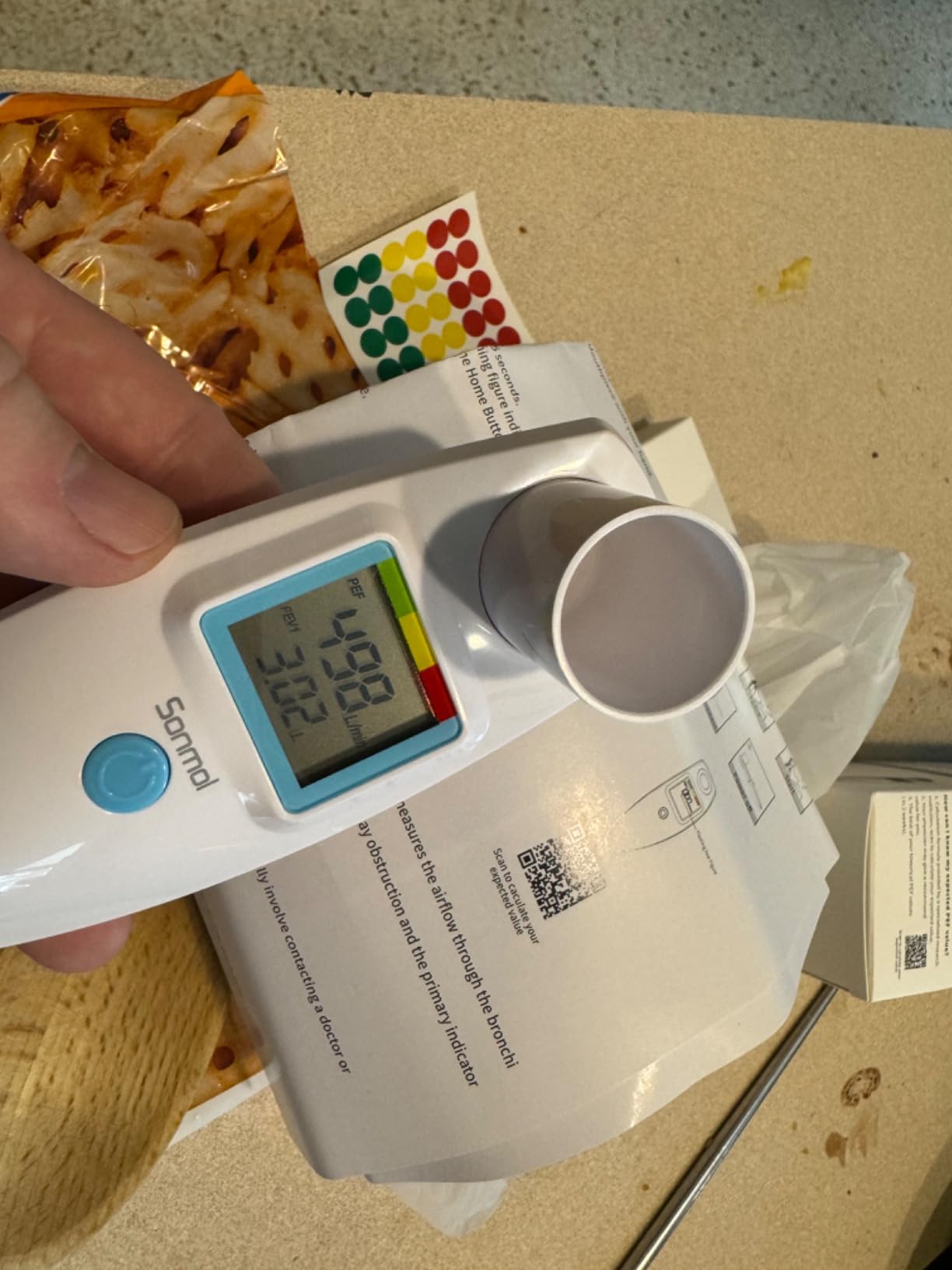
The Sonmol carries the highest average rating in this group, with a large share of five-star reviews. The reason is the display: the LCD shows your PEF and FEV1, and an on-screen arrow points directly at the red, yellow or green bar on the housing so you read your zone at a glance without doing arithmetic.
That arrow only works after setup. You scan the on-device QR code, which calculates a personalised expected value based on age, sex, height and weight, and until that value is entered the risk indicator stays inactive. Do this on day one rather than discovering the gap a month in.
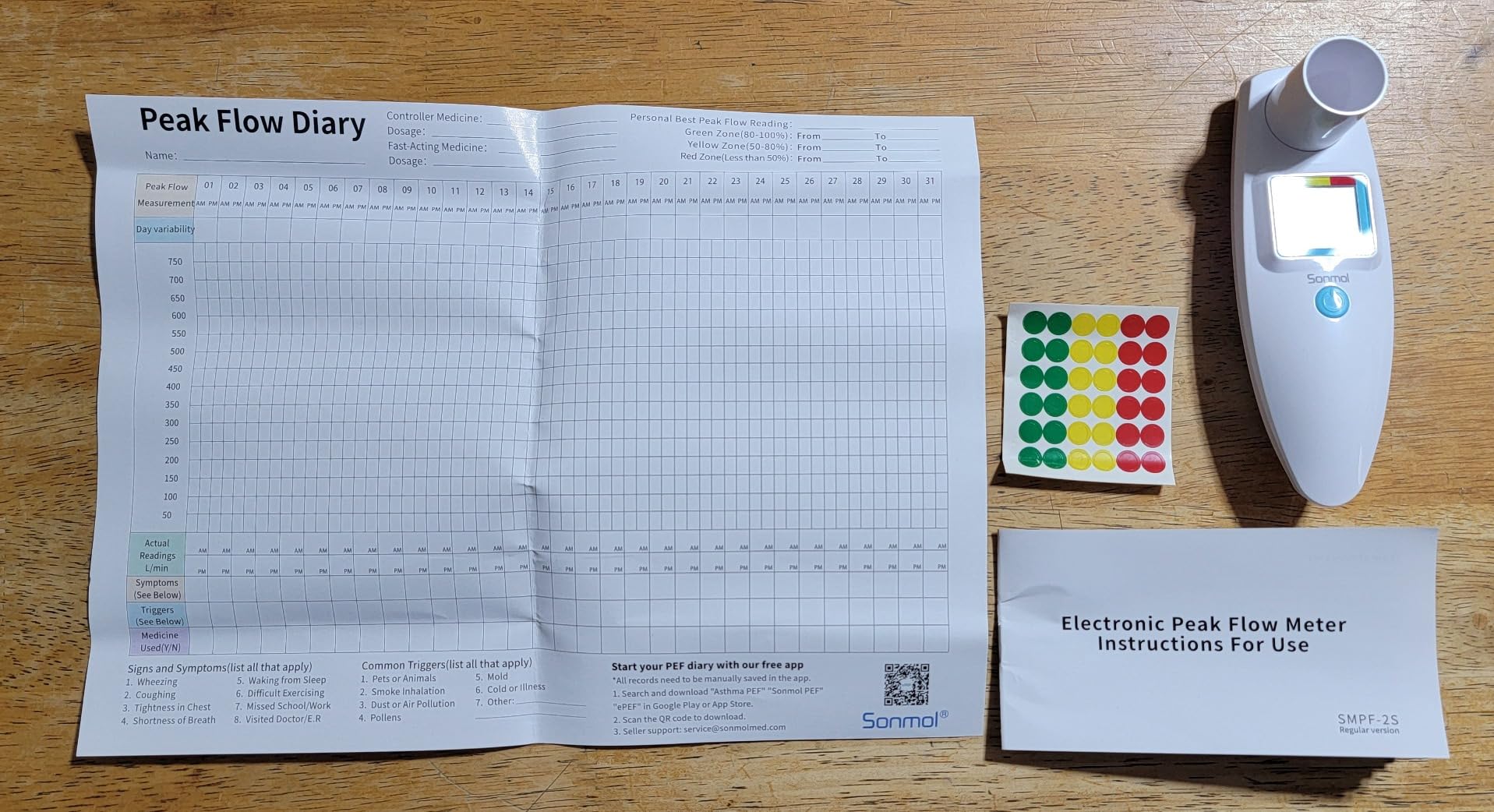
Unlike the other digital meters here, there is no cable and no app. You blow, you read, you record the number yourself. For a child aged 5 or above that simplicity is a genuine advantage, because there is nothing to pair and no screen besides the meter itself.
The open-pipe airflow path keeps breathing resistance low and means the tube and mouthpiece rinse clean in seconds. It is the easiest device in this roundup to keep hygienic between users.
When a child can use it independently
Rated for ages 5 and above, the Sonmol works well for a child who has already been taught the technique at a clinic appointment. Practice the blow sitting down first, aim for a hard fast effort rather than a gentle one, and repeat twice if the first result looks like an accident.
Colour coding is the useful part for families. Green means the day is normal, amber means follow the plan your doctor gave you, red means act on the emergency steps, and the arrow removes the need to compare against a chart.
Limitations worth weighing
There is no history function, so a good month and a bad month look identical unless you write the numbers down. Parents tracking a child through a medication change will want to keep a simple log.
The review base is small, which cuts both ways. Eighty percent five-star feedback is encouraging, but 60 reviews is thin evidence for a device intended for daily long-term use. Our wider [home spirometer roundup](/best-home-spirometers-for-lung-health/) covers devices with much larger review histories.
Two AAA batteries are rated at up to a year of daily use, which removes battery anxiety from the equation. The body is 6 inches long and fits in a pocket.
6. Navnihaal Breath-O-Meter – Smallest Mechanical Option
Navnihaal™ Breath-O-Meter Peak Flow Meter, White
Mechanical PEF scale
Colour-coded reading
No calibration required
Pros
- Simple
- clear colour-coded scale that is easy to read at home
- Lightweight and compact enough to carry in a bag or pocket
- No calibration required and no electronics to maintain
- Durable enough for daily use
Cons
- Measures PEF only with no FEV1
- digital readout or data storage
- Very small review base so independent performance evidence is limited
The Navnihaal Breath-O-Meter is the most minimal device here. It is a mechanical peak flow meter with a colour-coded face, and that is the entire concept. No battery, no charging, no calibration schedule, nothing to maintain.
What you get is a PEF number read against a printed scale, with colour bands that make the reading interpretable without a chart. It weighs 2.4 ounces, so it disappears into a jacket pocket or a handbag, which is why it earns a place in this roundup despite its short feature list.
It is built for daily home and travel use, and the durable construction is what reviewers respond to. Feedback on the existing reviews is positive on ease of use, though the conversation is brief simply because 30 reviews is a small pool.
When a plain scale is the right answer
This meter fits people who want a fast daily screen and nothing more. If your action plan uses peak flow zones, if you travel regularly and want something that survives a bag, or if you are adding a device for a second family member who needs something dead simple, it does that job without friction.
Colour coding does the interpreting for you. You look, you see which band the pointer sits in, and you follow the plan your clinician gave you for that band.
What it cannot tell you
There is no FEV1 here, no digital readout and no storage. Every value has to be written down, and if your asthma shows up as reduced FEV1 rather than reduced peak flow, this scale will look reassuringly normal.
That is a real limitation described repeatedly in asthma forums, where people with subtle symptoms report peak flow holding steady while FEV1 moved. If that pattern sounds familiar, choose a digital model from this roundup instead.
If indoor air quality is part of your asthma picture, our [air purifier reviews for asthma](/best-air-purifiers-for-asthma/) cover the other half of the home routine.
How to Choose a Home Spirometer for Asthma?
Most of the wrong purchases in this category come down to one misunderstanding. A peak flow meter and a spirometer are different instruments, and only one of them measures FEV1. Everything else in the buying decision follows from that.
PEF alone, or PEF plus FEV1
Peak expiratory flow measures the fastest speed you can push air out. It is quick, forgiving and useful as a daily screen. FEV1, the volume you can force out in the first second of that blow, is the number clinicians track for airflow obstruction. Asthma patients whose symptoms are subtle often see FEV1 fall while peak flow stays flat.
Our advice is to buy a device that reports both. If you already use a simple PEF meter and feel well controlled, you may not need to change anything, but if you have ever been unsure whether a reading really changed, the missing number is FEV1.
Mechanical, digital or app-based
Mechanical meters give you a number on a scale. They cost nothing to run, never fail because of electronics, and suit children and travel. The trade-off is manual recording and technique-dependent accuracy.
Digital meters give a settled number you can compare day to day. They are the sensible middle ground for most adults who want a clear trend without an app.
App-based meters add automatic charting and sharing with a clinician. They suit people who already track health data on a phone. Be honest with yourself about whether you will open the app, because the hardware is only worth its price if the graphs get looked at.
Accuracy standards and what they really mean
Look for ATS standards or ATS ERS Wright standards. That tells you the device was tested against an accepted reference method, not that it matches a clinic machine blow for blow. Reviewers consistently describe home readings as being in the ballpark of clinic results, which is the right expectation for trend tracking.
Before you trust the numbers, do one comparison test at your next clinic visit. Blow into your home device and then into the clinic equipment, and note the gap. That single session removes most of the doubt people carry around.
Mouthpieces, cleaning and shared use
Disposable mouthpieces are a recurring cost and a recurring decision. Reusable mouthpieces, like the one on the Nascool and the Holdly, cut that out of your routine and only require rinsing and disinfecting.
If two people in the house will use the device, check the minimum age rating before you buy. Ages 5 and 6 are common thresholds in this roundup, and a reusable mouthpiece is what makes one device workable for a whole family.
Long-term ownership costs
Add up what a device costs you over years, not weeks. Mechanical meters need nothing beyond occasional cleaning. Digital meters need batteries, though the Sonmol’s AAA pair is rated for up to a year of daily use. App-based meters add the hidden cost of replacement mouthpieces and the phone time needed to review trends.
None of these factors is a purchase decision on its own, but together they favour a meter you will keep using. Compliance fatigue is the most common complaint in asthma communities, and the device that stays in the bathroom cupboard gets used more than the more capable one that ends up in a drawer.
Data export and telehealth fit
If you do virtual appointments, ask what a session produces. The Microlife exports PDF and CSV charts from desktop software. The MIR Smart One sends trends from its app. The remaining digital meters rely on you reading numbers off a screen or typing them in yourself.
For people whose care is fully remote, that difference decides how useful your readings are at the appointment. For everyone else, it is a convenience rather than a requirement.
Frequently Asked Questions
Will a spirometer help with asthma?
Yes, mainly because it turns your symptoms into a number you can track over time. A home spirometer measures PEF and, on most models here, FEV1, so you can see a change in lung function days before your breathing feels different. That early signal lets you follow your written asthma action plan sooner, and the trend charts give your doctor objective data at follow-up. It does not diagnose asthma and it does not replace clinic testing.
Are home spirometers accurate?
They are accurate enough for tracking changes, which is what you need them for. Devices built to ATS or ATS ERS Wright standards are tested against accepted reference methods, and reviewers describe home readings as being in the ballpark of clinic equipment. Technique matters more than the brand, so practice your blow and take the best of three attempts. If you want certainty, do one comparison test at your next clinic appointment.
What is the best spirometer for use at home?
The Microlife PF 100 is our top pick because it reports PEF and FEV1, stores 240 readings on the device and includes free software for Windows and Mac. For app-based charting on a phone, the MIR Smart One is the strongest option. For a digital PEF and FEV1 readout without app hardware, the Nascool meter is the best value. If you want zero electronics, the Holdly mechanical meter needs no batteries at all.
Which brand of spirometer is the best to buy online?
MIR builds the most app-focused device in this roundup, with a pocket form factor and an included smartphone app. Microlife makes the most complete home kit, adding three mouthpieces, batteries and a two-tier case. Sonmol produces the best-rated digital meter for children aged 5 and above, and the Holdly and Navnihaal mechanical meters suit anyone who wants no electronics and no maintenance. Match the brand to how you want your data handled rather than to a logo preference.
What are the downsides of using a spirometer at home?
The main downsides are technique, data management and expectations. A poor blow produces a misleading number, so practice matters. Mechanical meters record nothing, so you must log values by hand, and some app-based meters need a phone nearby to be useful. Readings are close to clinic results rather than identical, so they show trends but not diagnosis. Finally, tracking fatigue is common: the novelty fades and people stop testing within a month or two.
Which Home Spirometer Should You Buy?
If you want one device that covers both numbers and stores your history, buy the Microlife PF 100. It reports PEF and FEV1, keeps 240 readings on the meter, and the free software turns them into charts you can hand to a doctor. It is the most complete kit in the 2026 roundup and the one we recommend to most people.
If your care is remote and you want charts on your phone without opening a laptop, the MIR Smart One is the smarter buy. If you want a digital PEF and FEV1 readout and nothing more, the Nascool meter is the best balance of capability and simplicity. For children, the Sonmol gets the best rating and the clearest colour zones.
Whichever you choose, the deciding factor is whether you will still be using it in three months. Pick the device you will actually blow into every day, set your zone thresholds once, and bring the trend to your next appointment.