
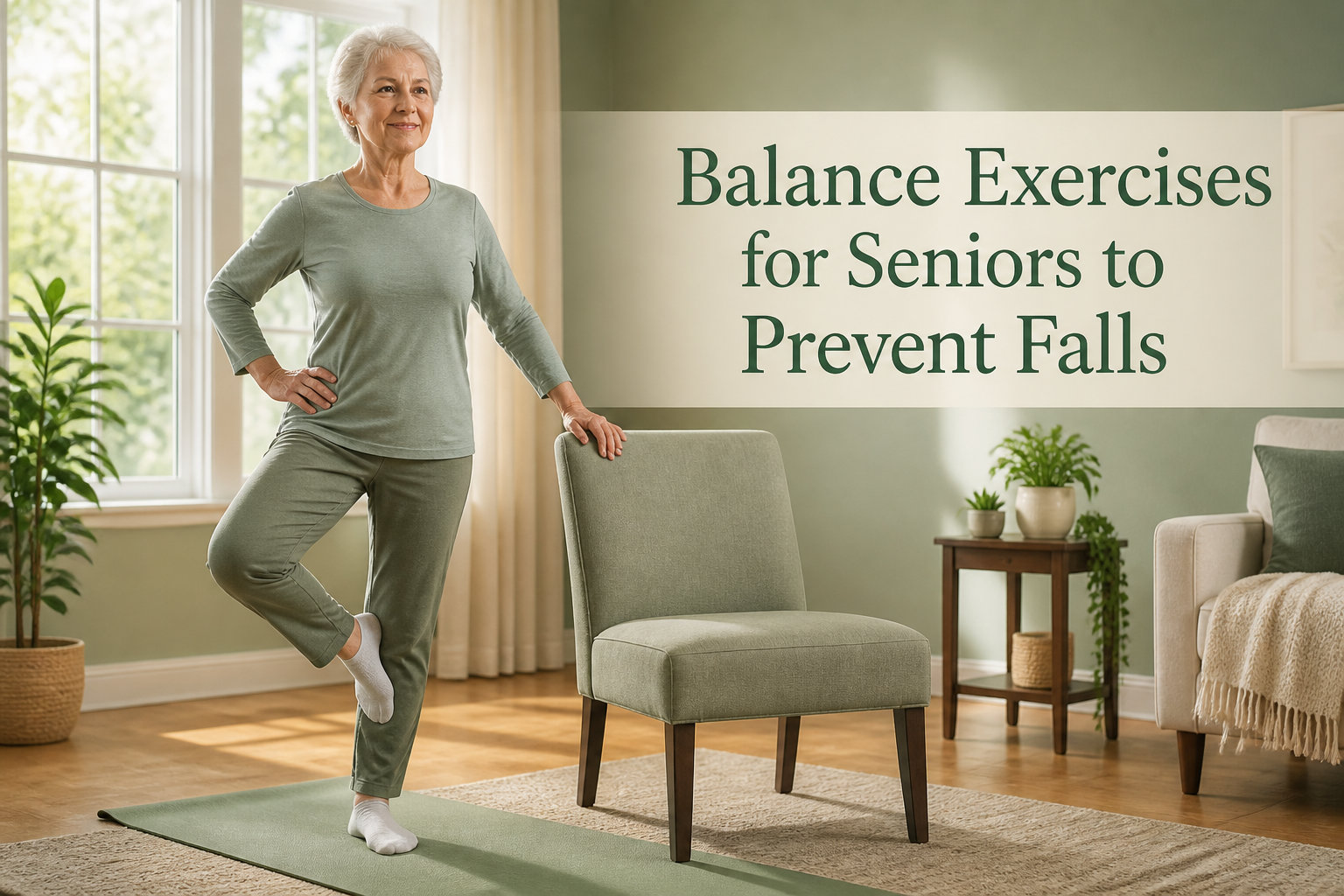
One in four adults aged 65 and older falls each year. Every 11 seconds, an older adult visits an emergency room because of a fall-related injury. These numbers from the CDC paint a sobering picture. The good news? Falls are not an inevitable part of aging.
Balance exercises for seniors to prevent falls are one of the most effective ways to reduce that risk. Our team reviewed the medical literature, physical therapy guidelines, and what seniors themselves report as most helpful. We also looked at how the CDC STEADI program, Johns Hopkins, and the NHS structure their fall-prevention recommendations.
In this guide, you will learn ten simple exercises you can do at home, with step-by-step instructions, safety tips, and clear progression goals. You will also learn when to ask a doctor or physical therapist for help. Most of these movements require no equipment beyond a sturdy chair.
Whether you have already had a fall or simply want to stay steady and independent, this guide gives you a practical starting point.
Table of Contents
Why Balance Declines With Age
Balance involves three body systems working together: your vision, your inner ear (vestibular system), and proprioception, which is your body’s sense of where it is in space. All three of these systems change as we get older.
Inner-ear problems like vestibular disorders become more common with age. Reduced blood pressure responses, called orthostatic hypotension, can make you lightheaded when you stand. Medications for blood pressure, sleep, anxiety, and other conditions can affect alertness and stability.
Muscle loss is the other major factor. Adults lose 3 to 8 percent of muscle mass per decade after age 30, and that rate accelerates after 60. The gluteal muscles, calves, and core muscles become weaker, which makes it harder to recover from a stumble.
Vision changes also play a role. Reduced depth perception, slower light adaptation, and conditions like cataracts or glaucoma all affect how well you judge distances and stairs.
The fear of falling is its own risk factor. After one fall, many older adults limit their activity, which weakens muscles further and increases the chance of another fall. Breaking this cycle is one of the biggest reasons balance training matters.
Who should pay attention? Any senior who has fallen in the past year, feels unsteady when walking, takes four or more medications, or worries about falling should consider a structured balance program.
How to Prepare for Balance Exercises Safely
Before you start any exercise, set up your environment. Clear the floor of rugs, cords, and clutter. Wear flat, supportive shoes with non-slip soles, or do the seated exercises barefoot if that feels steadier.
Place a sturdy chair with a back next to you for support. Position it near a wall or counter so you have something to grab. Do not use a chair with wheels.
Do these exercises when you feel rested, ideally in the morning or early afternoon. Avoid exercising right after meals or when you feel dizzy, tired, or dehydrated.
If you have had a recent fall, surgery, hospitalization, or new symptoms like dizziness or numbness, talk with your doctor before starting. A physical therapist can do a fall risk assessment and customize a program for you.
Balance Exercises for Seniors to Prevent Falls: Ten Step-by-Step Movements
The following ten exercises form a complete fall-prevention routine. They are organized from easiest to more advanced. You do not need to do all of them every day. Aim for five to seven movements, three to five times per week.
Start each session with two minutes of slow walking in place to warm up. Breathe normally throughout. Never hold your breath during any exercise.
Below is a helpful video demonstrating proper form for several of these exercises.
1. Sit-to-Stand (Chair Squat)
This exercise builds the leg and glute strength you need to get up from chairs, toilets, and beds safely. Physical therapists consistently rank it among the most functional movements for older adults.
How to do it:
Step 1: Sit toward the front edge of a sturdy chair with your feet flat on the floor, hip-width apart.
Step 2: Lean your torso slightly forward and place your hands on your thighs or crossed at your chest.
Step 3: Press through your heels and stand up slowly, using your leg muscles rather than pushing off with your hands.
Step 4: Pause for one second with your weight balanced over both feet.
Step 5: Slowly lower yourself back down to the seat, controlling the descent.
Goal: 10 to 15 repetitions. Progress by lowering the chair height or holding light weights at your chest.
2. Single-Leg Stance
Single-leg stance is the most widely recommended static balance exercise for seniors. It directly improves the stability you need when walking, climbing stairs, and changing direction.
How to do it:
Step 1: Stand behind a sturdy chair with both hands on the back.
Step 2: Shift your weight onto your right foot and slowly lift your left foot a few inches off the floor.
Step 3: Hold the position for 10 seconds, keeping your torso tall and your standing leg slightly soft at the knee.
Step 4: Lower your foot back down and repeat on the other side.
Goal: Build to 30 seconds on each leg. To progress, use one hand, then fingertips, then no hands, and finally try it with your eyes closed.
3. Heel-to-Toe Walk (Tandem Walk)
This walking drill trains your body to stay balanced on a narrow base of support, which improves your gait and helps you walk more confidently on uneven surfaces.
How to do it:
Step 1: Stand next to a wall or counter for support.
Step 2: Place your right foot directly in front of your left foot so that the heel of the front foot touches the toes of the back foot.
Step 3: Hold this position for two to three seconds.
Step 4: Step forward with your back foot, placing its heel against the toes of your front foot.
Step 5: Continue for 20 steps, looking straight ahead rather than down.
Goal: Walk 20 steps without losing balance. Progress by walking without support nearby.
4. Heel Raises (Calf Raises)
Strong calf muscles help you push off when walking and recover quickly if you start to stumble. Heel raises are simple but very effective.
How to do it:
Step 1: Stand behind a chair, resting both hands lightly on the back.
Step 2: Press through the balls of your feet and rise onto your toes as high as comfortable.
Step 3: Hold for one to two seconds at the top.
Step 4: Lower your heels slowly back to the floor over two seconds.
Goal: 10 to 15 repetitions. Progress by using one hand, then fingertips, then no hands.
5. Side Leg Raises
The hip muscles on the outside of your leg (the hip abductors) keep your pelvis level when you walk. Weakness here is a major contributor to sideways falls.
How to do it:
Step 1: Stand behind a chair, holding the back with one or both hands.
Step 2: Shift your weight onto your left foot and lift your right foot slightly off the floor.
Step 3: Keeping your right leg straight, raise it out to the side about 12 to 18 inches.
Step 4: Hold for one second, then slowly lower the leg.
Goal: 10 to 15 repetitions on each leg. Keep your standing leg straight and your toes pointing forward.
6. Marching in Place
Marching builds coordination, hip flexibility, and the ability to lift your feet over curbs and thresholds. It also improves proprioception because you constantly shift your weight from one leg to the other.
How to do it:
Step 1: Stand behind a chair with your hands resting lightly on the back.
Step 2: Slowly lift your right knee to hip height, or as high as comfortable.
Step 3: Lower the foot and repeat with the left knee.
Step 4: Continue alternating legs at a steady, controlled pace.
Goal: 20 to 30 steps (10 to 15 per side). Progress by increasing to 60 steps, then removing hand support.
Here is a short video demonstration of several of these movements from a licensed physical therapist.
7. Weight Shifts
Weight shifts teach your body to move its center of gravity safely. They are an excellent starting point for anyone who feels very unsteady or has not exercised in a while.
How to do it:
Step 1: Stand with your feet shoulder-width apart, behind a chair for support if needed.
Step 2: Slowly shift your weight to your right foot without lifting your left foot off the floor.
Step 3: Hold for two to three seconds, feeling your right leg support you.
Step 4: Shift your weight to your left foot and hold.
Goal: 10 to 15 shifts to each side. Progress by bringing your feet closer together, eventually touching.
8. Sideways Walking (Grapevine)
This lateral movement strengthens the muscles on the sides of your hips and improves your ability to move sideways, which is something we rarely practice in daily life.
How to do it:
Step 1: Stand with your feet together, near a wall for support if needed.
Step 2: Step sideways with your right foot, crossing it in front of your left foot.
Step 3: Step sideways with your left foot to bring your feet back together.
Step 4: Continue for 10 steps to the right, then 10 steps to the left.
Goal: 20 steps in each direction. Progress by crossing your foot behind instead of in front (the full grapevine pattern).
9. Toe Stands (Toe Raises)
This is the mirror image of heel raises. It strengthens the muscles on the front of your lower leg, which lift your toes and prevent tripping over carpets, thresholds, and curbs.
How to do it:
Step 1: Sit in a chair with your feet flat on the floor.
Step 2: Keeping your heels on the floor, lift your toes and the fronts of your feet toward the ceiling.
Step 3: Hold for two seconds at the top.
Step 4: Lower slowly back to the floor.
Goal: 10 to 15 repetitions. To progress, do the same exercise standing while holding a chair for support.
10. Standing Hip Circles
This movement improves hip mobility, which is essential for picking up your feet properly when you walk. Stiff hips are a hidden cause of shuffling steps and tripping.
How to do it:
Step 1: Stand behind a chair with both hands on the back.
Step 2: Shift your weight onto your left foot and lift your right knee slightly.
Step 3: Slowly circle your right knee outward to the side, then back to the front, making a smooth, controlled circle with your hip.
Step 4: Complete 10 circles in one direction, then reverse for 10 circles.
Step 5: Repeat with your left hip.
Goal: 10 circles in each direction per leg. Keep the movement small and pain-free.
Building a Weekly Balance Routine
You do not need to do every exercise every day. A simple, effective weekly structure looks like this.
Do balance exercises three to five days per week. Each session should take 10 to 20 minutes. Pick five to seven exercises from the list above and rotate through them.
Here is a sample starter routine you can do at home.
Day 1 and 3: Sit-to-stand, single-leg stance, heel raises, marching in place, weight shifts.
Day 2 and 4: Side leg raises, heel-to-toe walk, sideways walking, toe stands, hip circles.
Day 5: Pick your five favorite movements from either day.
Rest on the remaining days, or do a short walk for general fitness. Add strength training with light weights or resistance bands two days per week for even better results.
Track your progress in a notebook or on a calendar. Note how long you can hold the single-leg stance each week. Improvement usually shows up as an extra two to three seconds of hold time per week.
Safety Tips for Fall Prevention Exercises
Safety comes first. These guidelines apply to every exercise in this guide.
Always have a support surface nearby. A sturdy chair, a wall, or a counter should be within arm’s reach during every standing exercise. Grabbing something quickly is far better than falling.
Start at the easiest version. Every exercise includes progressions. Begin with two hands on the chair, move to one hand, then fingertips, then no support. Do not rush this progression.
Breathe normally. Never hold your breath during any movement. Holding your breath raises blood pressure and can make you dizzy.
Stop if you feel pain, dizziness, or chest tightness. Mild muscle fatigue is normal and expected. Sharp pain, dizziness, shortness of breath, or palpitations are not. Sit down immediately and rest.
Wear the right footwear. Flat shoes with thin, non-slip soles give you the best ground feel. Avoid slippers, socks alone, or thick, soft-soled shoes that can catch on carpets.
Stay hydrated. Dehydration lowers blood pressure and increases dizziness. Drink water before and after your routine, especially in warm weather.
Review your medications with your doctor or pharmacist. Some blood pressure drugs, sleeping pills, antidepressants, and pain medications can affect balance. A yearly medication review is a smart fall-prevention step.
Get your vision and hearing checked annually. Both senses contribute directly to balance. Uncorrected vision and untreated hearing loss are linked to higher fall rates.
When to Consult a Doctor or Physical Therapist
Talk with your doctor before starting any new exercise program if any of the following apply to you.
You have fallen in the past six months. You have had a hip fracture, joint replacement, or recent surgery. You experience dizziness, vertigo, or lightheadedness regularly. You have peripheral neuropathy, Parkinson’s disease, arthritis that limits your movement, or another neurological condition.
You take four or more prescription medications, which raises fall risk on its own. You feel unsteady when standing up from a chair or getting out of bed.
A physical therapist can perform a fall risk assessment using validated tools like the CDC STEADI algorithm, the Timed Up and Go test, or the Berg Balance Scale. Based on the results, they will design a program that matches your abilities and addresses your specific weaknesses.
Many insurance plans, including Medicare, cover physical therapy for fall prevention with a doctor’s referral. Some communities also offer free or low-cost fall-prevention classes through senior centers, the YMCA, and Area Agencies on Aging.
Programs like A Matter of Balance, Tai Chi for Arthritis, and the Otago Exercise Program have been studied extensively and shown to reduce falls by 30 to 40 percent in older adults.
Simple Home Safety Tips to Reduce Fall Risks
Exercise is only half of fall prevention. The other half is removing hazards around your home. Here is a quick checklist.
Remove loose throw rugs or secure them with double-sided tape. Keep walkways and stairs free of clutter, cords, and objects. Install grab bars in the bathroom near the toilet and inside and outside the shower.
Use non-slip mats in the bathtub and on the bathroom floor. Make sure stairways have secure handrails on both sides. Improve lighting in hallways, stairwells, and entryways, and put nightlights in the bedroom and bathroom.
Keep frequently used items on lower shelves so you do not need a step stool. If you must reach something high, use a sturdy step stool with a handrail, never a chair.
Wear well-fitting shoes indoors, not just socks or floppy slippers. Consider a medical alert device if you live alone.
Frequently Asked Questions
What is the number one exercise to increase balance in seniors?
The single-leg stance is widely considered the most effective balance exercise for older adults. Stand behind a sturdy chair, shift your weight to one foot, and lift the other foot a few inches off the floor. Hold for 10 to 30 seconds on each side. Physical therapists recommend it because it directly trains the stability you need for walking, stairs, and recovering from a stumble.
What is the best exercise to prevent falls in the elderly?
The sit-to-stand exercise is one of the best fall-prevention movements because it strengthens the legs and glutes you use every time you get up from a chair, bed, or toilet. Sit at the front edge of a sturdy chair, lean forward slightly, press through your heels, and stand up without pushing off with your hands. Aim for 10 to 15 repetitions. Combining sit-to-stand with single-leg stance and heel raises gives you a strong fall-prevention routine.
How long should a 70 year old be able to balance on one foot?
A healthy adult in their 70s should aim to balance on one foot for at least 10 seconds with eyes open and hand support nearby. With regular practice, the goal is 20 to 30 seconds per leg. Research suggests that adults who cannot hold a one-leg stance for at least 5 seconds have a significantly higher risk of falling. If you cannot currently hold for 5 seconds, start with hand support and build gradually.
What are 5 exercises for balance?
Five effective balance exercises for seniors are: 1) Single-leg stance, 2) Heel-to-toe walk (tandem walk), 3) Sit-to-stand, 4) Heel raises (calf raises), and 5) Marching in place. Do each exercise three to five days per week, starting with support from a chair or wall and progressing to hands-free as your balance improves. Together, these movements strengthen the legs, core, and ankles while training proprioception.
Staying Steady for the Long Term
Balance exercises for seniors to prevent falls work best when you do them consistently. Even ten minutes a day, three to five times a week, can significantly reduce your fall risk over a few months.
Start where you are. If two-handed support feels right today, use it. Progress only when a movement feels easy. Small, steady gains add up to real stability.
Combine your exercise routine with home safety changes, regular vision and hearing checks, and a yearly medication review with your doctor or pharmacist. If you have fallen recently or have specific health concerns, ask for a referral to a physical therapist for a personalized program.
The goal is not perfection. It is confidence. Every session you complete is an investment in staying active, independent, and steady on your feet for years to come.
1 thought on “Balance Exercises for Seniors to Prevent Falls (October 2026)”