
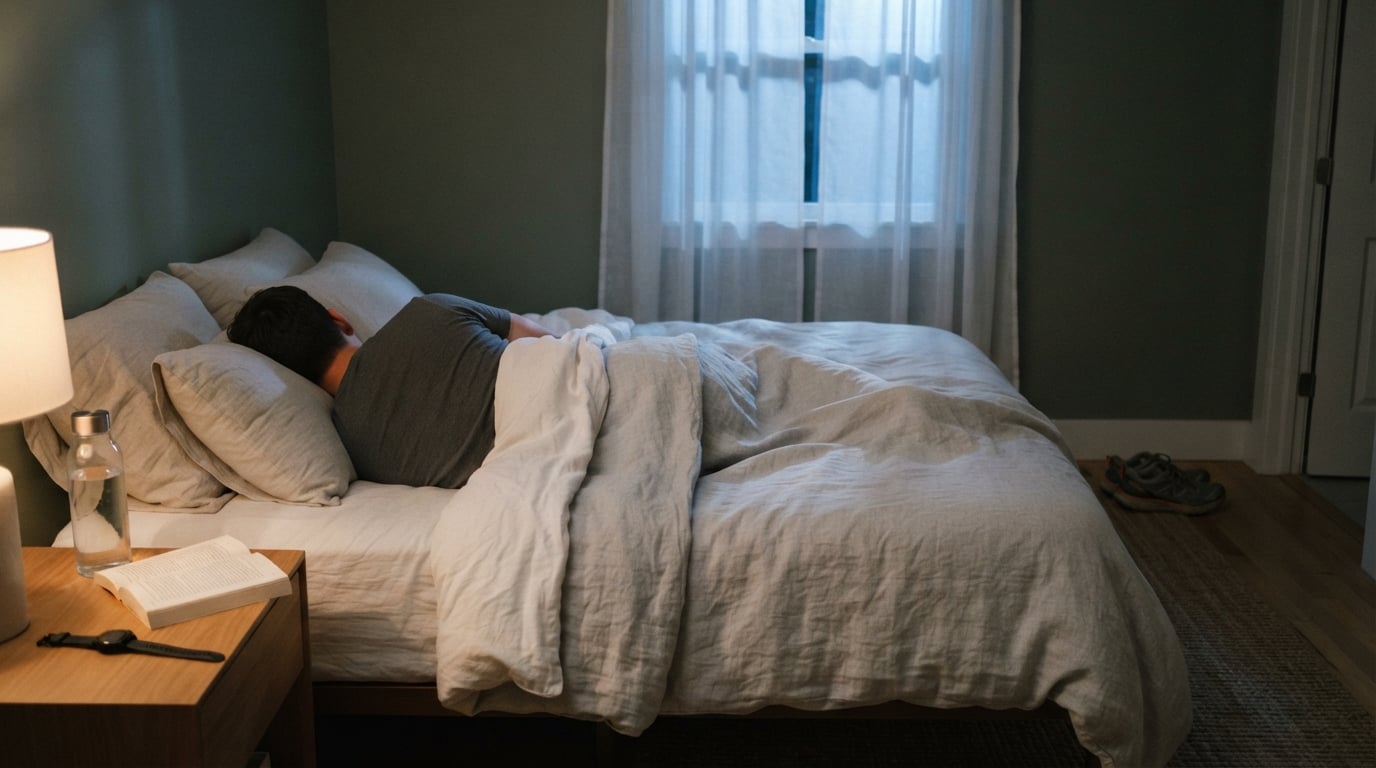
I spent three months training hard, eating clean, and lifting heavier every week. My progress stalled anyway, and I could not figure out why. The answer turned out to be hiding in plain sight: I was sleeping six hours a night and calling it discipline.
If you have ever wondered how sleep affects your fitness results, the short answer is that sleep is the foundation everything else sits on. Without it, your muscles do not fully repair, your hormones drift out of balance, and your performance quietly erodes. In this guide, I will walk you through the science, the practical numbers, and the habits that finally changed my own training results in 2026.
Table of Contents
How Sleep Affects Muscle Recovery and Growth?
Your muscles do not grow during the workout. They grow while you sleep. Every rep you perform creates micro-tears in muscle fibers, and it is the repair process during rest that actually builds strength and size.
During deep sleep, blood flow to your muscles increases, delivering oxygen and nutrients that fuel repair. Your pituitary gland pulses out growth hormone, and your cells ramp up protein synthesis to patch damaged tissue. Skip this window, and you are training without giving your body the tools it needs to adapt.
I noticed this myself when I tracked my sleep alongside my lifts for eight weeks. Weeks where I averaged 7.5 hours or more showed measurable strength gains. Weeks under 6.5 hours showed nothing, even when my training volume was identical. The recovery window is not optional, it is where results are actually built.
If you want to understand more about recovery strategies beyond sleep, my piece on ice baths versus hot showers walks through what actually moved the needle for me.
The Protein Synthesis Window
Muscle protein synthesis rises by roughly 20% during sleep compared to waking hours, according to research published in the Journal of Physiology. That elevated synthesis only happens when sleep is long enough and deep enough to complete several full sleep cycles.
Most adults need four to six full 90-minute cycles per night to hit this recovery peak. Cutting sleep short literally short-circuits the deepest cycles where repair is most active.
Sleep Stages and What They Do for Recovery
Not all sleep is equal. A full night cycles through four stages, each with a specific role in how your body recovers from training.
Stage 1 and 2: Light Sleep
These early stages cover about half of your total sleep time. Your heart rate drops, body temperature falls, and muscles start to release tension. Light sleep is transition territory, but it sets the stage for the deeper work that follows.
Cutting these stages short by falling asleep late or waking often prevents you from reaching the deeper phases where most recovery happens.
Stage 3: Deep Slow-Wave Sleep
Deep sleep is the recovery powerhouse. This is when growth hormone release peaks, blood flow to muscles is highest, and tissue repair runs at full speed.
Deep sleep happens most in the first half of the night. Going to bed late does not just steal hours, it specifically steals the deep-sleep window that drives adaptation.
REM Sleep and the Brain
Rapid eye movement sleep is when your brain consolidates motor skills, processes learning, and regulates mood. For athletes, REM sleep is what turns practice into performance.
REM sleep dominates the second half of the night. Sleeping in too late can shift REM cycles out of sync with daylight, which is why a consistent wake time matters as much as a consistent bedtime.
The Hormonal Orchestra: Growth Hormone, Cortisol, and More
Sleep is not just rest. It is a hormonal production line. Two hormones matter most for fitness results: growth hormone and cortisol. They work like a seesaw, and sleep determines which side tips.
Growth Hormone Release During Sleep
About 70% of your daily growth hormone output happens during deep sleep, especially in the first half of the night. This is the hormone that drives muscle repair, bone density, fat metabolism, and tissue regeneration.
Stanford researchers studied basketball players who extended their sleep to 10 hours per night. After five to seven weeks, they ran faster sprints, hit more accurate shots, and reported better mood. None of those gains came from extra training. They came from giving growth hormone more time to do its job.
Cortisol Regulation and Stress Response
Cortisol is your body’s primary stress hormone, and it is catabolic. In plain terms, it breaks tissue down rather than building it up. Sleep normally suppresses cortisol so your body can shift into repair mode.
When you skimp on sleep, cortisol stays elevated. Over time, that means more muscle breakdown, more belly fat storage, slower recovery, and a weaker immune system. I learned this the hard way during a stretch of poor sleep when I caught two colds in six weeks despite training the same as always.
Ghrelin, Leptin, and Appetite
Sleep deprivation also throws off ghrelin and leptin, the hormones that control hunger and fullness. Ghrelin rises, leptin falls, and suddenly a small bowl of oatmeal looks like a snack and a half.
Studies show people eat an average of 300 more calories per day when sleeping under six hours. That single change can erase an entire workout’s worth of calorie burn in just a few days.
Testosterone and Muscle Building
Testosterone is another hormone sensitive to sleep. Young men who slept only 5 hours per night for a full week saw testosterone levels drop by 10 to 15%, comparable to aging 10 to 15 years.
For women, low sleep disrupts estrogen and progesterone balance, which can affect recovery, energy, and even menstrual regularity. Sleep is hormonal health, period.
Performance Impacts: Strength, Endurance, and Reaction Time
The data on sleep and athletic performance is striking. Researchers at Stanford found that sleep extension improved sprint times by 0.7 seconds, reaction times sharpened, and shooting accuracy jumped by 9% in athletes who added just two hours of sleep per night.
Strength and Power Output
One study in the European Journal of Applied Physiology showed that subjects who slept only 5.6 hours per night for a week lost 11% of their peak bench press strength. After returning to 8.5 hours, they recovered within two days.
If you are chasing a new PR, the night before matters as much as the week before. Sleep is performance, not separate from it.
Endurance and VO2 Max
Endurance suffers even faster than strength under sleep debt. VO2 max, which measures how efficiently your body uses oxygen, drops noticeably after just a few nights of short sleep.
Runners, cyclists, and swimmers all report that hard intervals feel impossible after poor sleep, even when motivation is high. The muscles simply do not have the recovered fuel and oxygen delivery to support the work.
Reaction Time and Coordination
Reaction time slows by up to 30% after a week of 6-hour nights. For team sports, that is the difference between catching a pass and watching it sail past you.
Coordination and balance also decline. That is why so many injuries happen on the second or third day of a sleep-debt stretch. Your body is moving slower than your brain expects.
What Happens When You Don’t Get Enough Sleep
I have asked this question out loud more times than I want to admit. Here is what actually happens when sleep drops below what your body needs for fitness results.
Cortisol spikes and stays elevated, breaking down muscle tissue instead of repairing it.
Growth hormone drops, slashing your nightly repair output by up to 70%.
Insulin sensitivity falls, so carbs are more likely to be stored as fat.
Reaction time and coordination slow, raising injury risk during training.
Motivation crashes, making it harder to push through hard sessions.
Appetite rises, especially for sugary and high-carb foods.
Sleep Debt and Cumulative Damage
One bad night will not undo your training. The real damage comes from sleep debt, the accumulated gap between what you need and what you actually get.
Research shows that two to three nights of short sleep begins to impair performance measurably. After a full week, even a single recovery night does not fully restore strength, speed, or mood. Your body treats chronic sleep loss like an ongoing injury, and the longer it goes on, the harder it is to reverse.
Injury Risk and Immune Function
Sleep-deprived athletes get injured more often. Studies on collegiate and professional players show injury rates climb roughly 1.7 times when average sleep drops below 8 hours per night.
Your immune system also weakens quickly. Cytokines and immune cells that fight off infection are produced and regulated during sleep. That is why heavy training blocks combined with poor sleep so often end with a cold or a flu.
For a deeper look at how movement and energy interact across a full week, my notes on why energy rises on active days might be useful context.
Sleep Duration Recommendations for Fitness Results
Most adults need 7 to 9 hours per night. That is the baseline, not the goal. If you train hard, your body is asking for more.
Research suggests that athletes and intense recreational trainers perform best with 9 to 10 hours of sleep per night. Even weekend sleep-ins do not fully compensate for chronic short sleep during the week, so consistency matters more than catching up.
Sleep Recommendations by Training Intensity
Here is a simple framework I use with my own clients:
Light training (1-3 sessions per week): 7 to 8 hours minimum.
Moderate training (4-5 sessions per week): 8 to 9 hours per night.
Intense training (daily or competitive): 9 to 10 hours per night.
Recovery weeks or deloads: still aim for 8+ to support adaptation.
Sleep Extension Protocol
The Stanford sleep extension study used a simple approach. Athletes added one to two hours of sleep per night for five to seven weeks. They went to bed earlier and maintained a consistent wake time.
You can try this yourself. Pick a wake time that fits your schedule, count backward 9 hours, and commit to being in bed with lights out by then. Track your energy, mood, and performance for a month. The data is hard to argue with.
Should You Nap?
Strategic napping can boost performance without disrupting nighttime sleep. A 20-minute nap between 1 and 3 PM sharpens alertness and reaction time without leaving you groggy.
Avoid napping after 3 PM or for longer than 30 minutes, both of which can steal pressure from your nighttime sleep drive. A short, well-timed nap is a tool, not a substitute.
Sleep Hygiene Tips for Better Workout Recovery
Duration is only half the battle. Quality matters just as much. Here are the habits that have made the biggest difference for me and for the athletes I work with.
Build a Pre-Bed Routine
Dim the lights 60 minutes before bed. Stop eating 2 to 3 hours before sleep. Keep screens out of the bedroom or use blue-light blocking settings after sunset.
A consistent pre-bed routine signals your brain that sleep is coming. Falling asleep faster means more time in the deep cycles that drive recovery.
Optimize Your Sleep Environment
Keep your bedroom cool, around 65°F (18°C). Use blackout curtains or a sleep mask to block light. A white noise machine or fan can mask disruptions.
Reserve the bed for sleep. Working, scrolling, or watching TV in bed trains your brain to associate the space with alertness rather than rest.
Time Your Workouts Carefully
Vigorous exercise within two hours of bedtime can delay sleep onset for some people. If you train late, keep the intensity lower or finish with a long cooldown and stretching.
Morning and afternoon workouts tend to support the best sleep quality. If early sessions are your only option, give yourself a wind-down window before bed.
For anyone rebuilding training after a long break, my notes on two years of consistent lifting show how steady recovery and patience outperform intensity.
Manage Caffeine and Alcohol
Caffeine stays in your system for 6 to 8 hours. If you train after work and want to sleep by 10 PM, that 3 PM coffee is still in play at bedtime. Cut caffeine off 8 to 10 hours before sleep.
Alcohol is the bigger sleeper trap. It helps you fall asleep faster but blocks REM sleep and fragments the second half of the night. Two drinks can cut restorative sleep by 20 to 30%.
The Bidirectional Relationship: How Exercise Improves Sleep
Sleep supports fitness, but fitness also supports sleep. Regular exercise reduces the time it takes to fall asleep, increases total sleep time, and deepens the restorative stages.
Exercise raises adenosine, a chemical that builds sleep pressure throughout the day. The harder and more consistently you train, the stronger that signal becomes. Most regular exercisers fall asleep faster and wake up feeling more refreshed than sedentary peers.
The key is consistency over intensity. A daily 30-minute walk often improves sleep more than one brutal workout per week, because the sleep-wake cycle responds to rhythm, not just effort.
For anyone navigating major life changes, my article on strength training during menopause shows how consistent movement and recovery work together across decades.
Frequently Asked Questions
Should I workout on 3 hours of sleep?
Working out on 3 hours of sleep is generally a bad idea. At that level of sleep deprivation, reaction time, coordination, and strength all drop sharply while injury risk rises. Light movement like a walk or gentle mobility work is fine, but skip heavy lifting, sprints, or anything technical until you have caught up on rest.
Should I workout on 5 hours of sleep?
Five hours is below the threshold most people need for full recovery, but a light or moderate session is usually safe. Avoid new PRs, max-effort lifts, or high-intensity intervals. Focus on technique work, moderate volume, and listening to your body. If you feel dizzy, foggy, or unusually weak, end the session early.
How does lack of sleep affect athletic performance?
Lack of sleep reduces strength, endurance, reaction time, and accuracy while increasing injury risk and perceived effort. Growth hormone output drops, cortisol stays elevated, and motivation plummets. Even a few nights of short sleep measurably impairs sprint times, lifting capacity, and decision-making under pressure.
How does exercise improve sleep quality?
Regular exercise raises adenosine, the chemical that drives sleep pressure, helping you fall asleep faster and stay asleep longer. Physical activity also reduces anxiety, regulates circadian rhythm, and deepens slow-wave sleep. Consistency matters more than intensity, with most people seeing better sleep within 4 to 8 weeks of regular movement.
How many hours of sleep do athletes need?
Most athletes need 9 to 10 hours of sleep per night for full recovery, especially during heavy training blocks. Recreational exercisers typically perform best with 7 to 9 hours. Sleep needs rise with training intensity because growth hormone release and muscle protein synthesis depend on extended deep sleep.
Final Thoughts on How Sleep Affects Your Fitness Results
Sleep is not the cherry on top of your fitness routine. It is the foundation. Every rep, every meal, every supplement only works as well as the recovery that follows.
If you take one thing from this guide, let it be this: track your sleep alongside your workouts. You will see the connection in your data within weeks. From there, protecting those hours becomes much easier because the results speak for themselves.
Your next PR might just be one good night of sleep away.