
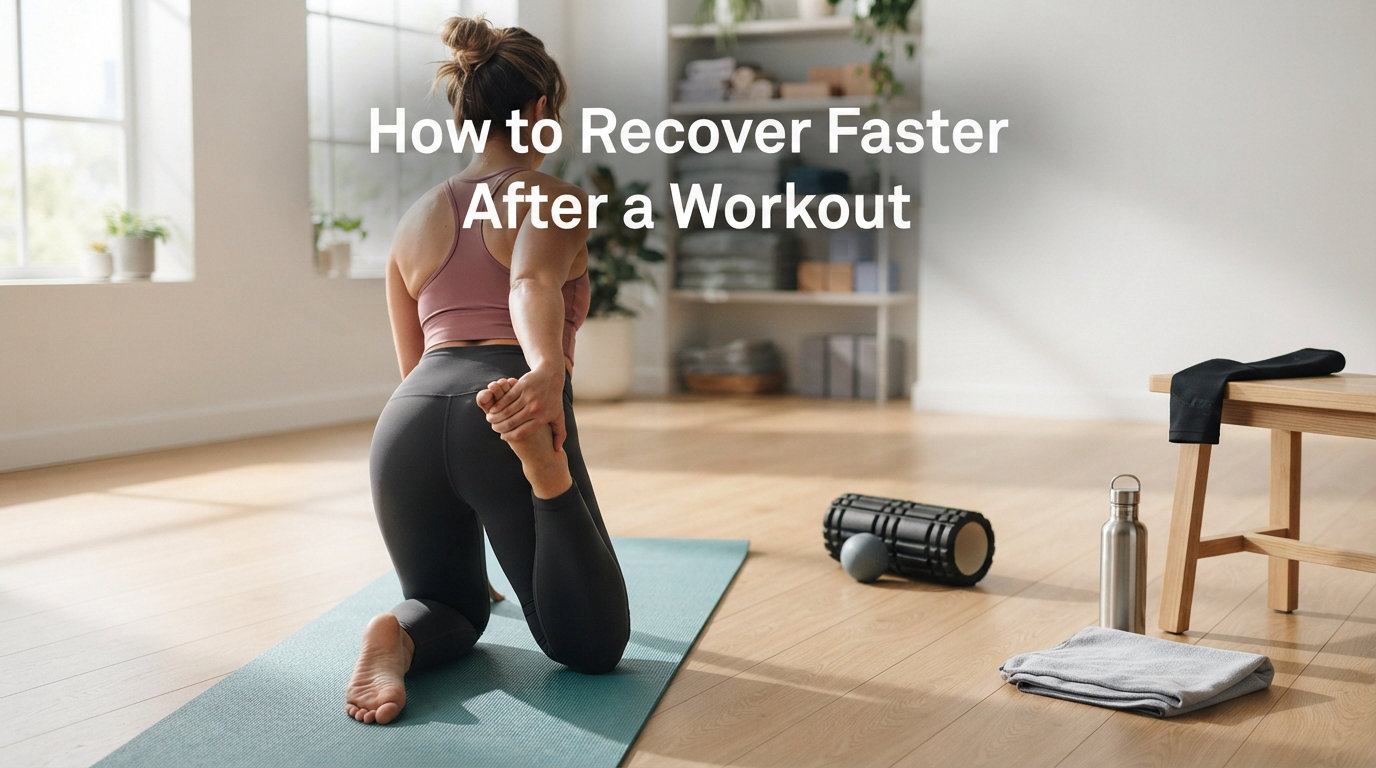
If you finish a workout and feel like you’ve been hit by a truck the next morning, you’re not alone. I used to dread leg day because the soreness would wreck me for three full days. Then I learned that my recovery, not my training, was holding me back.
Recovery is where your body actually adapts and gets stronger. The workout only breaks your muscles down. Everything that happens after, the sleep, the food, the water, the gentle movement, decides whether you build back better or stay stuck in a cycle of soreness, fatigue, and stalled progress.
This guide pulls together what I’ve learned from training for years, what current research shows, and what real people report on forums like r/Fitness and r/WeightTraining. By the end, you’ll know exactly how to recover faster after a workout, what to eat, when to sleep, and which habits are quietly slowing you down.
Table of Contents
How to Recover Faster After a Workout: 10 Evidence-Based Strategies?
If you only have 30 seconds, here’s what actually speeds recovery. These are the 10 strategies I’ll explain in detail throughout this guide.
Eat 20 to 40 grams of protein within 60 minutes of your workout to trigger muscle protein synthesis.
Replenish glycogen with 30 to 60 grams of fast-digesting carbs in the same window.
Drink at least 16 to 24 ounces of fluid for every pound of weight lost during exercise.
Sleep 7 to 9 hours, ideally with consistent bed and wake times, to maximize growth hormone release.
Take a 48 hour break between training the same muscle group.
Do light movement on rest days, like walking, swimming, or easy cycling, to increase blood flow.
Spend 5 to 10 minutes stretching or foam rolling the muscles you just trained.
Use cold water, heat, or contrast therapy if it helps your soreness, but don’t expect miracles.
Consider creatine monohydrate, whey protein, and electrolytes if your diet is missing them.
Watch for warning signs like chronic fatigue, poor sleep, and dropping performance, and rest when you see them.
Now let’s break down why each of these works and how to actually do them.
The Science: What Happens to Your Body During Recovery
When you train hard, you create tiny tears in your muscle fibers. This sounds bad, but it’s the trigger for growth. During recovery, your body repairs these micro-tears and builds them back slightly stronger than before.
Three major things happen during this repair window. First, muscle protein synthesis ramps up, using amino acids from protein to rebuild tissue. Second, your body refills glycogen, the stored carbohydrate your muscles burned for fuel. Third, growth hormone and testosterone levels rise, especially during deep sleep, to support repair.
Delayed onset muscle soreness (DOMS) is a side effect of this process, not the goal. It usually peaks 24 to 72 hours after your workout and fades on its own. The trick is supporting the recovery process so DOMS doesn’t derail your next session.
Post-Workout Nutrition: Protein, Carbs, and Timing
Nutrition is the single biggest lever you can pull for faster recovery. Get this right and everything else becomes easier.
Protein: The Building Block
Aim for 20 to 40 grams of high quality protein within 60 minutes of finishing your workout. Whey protein, chicken, eggs, Greek yogurt, and tofu all work. Research shows this dose is enough to maximally stimulate muscle protein synthesis in most people. Larger amounts don’t speed things up further and just burn as fuel.
Spread your protein across the day too. Your muscles recover from every meal that contains enough leucine, an essential amino acid that flips the recovery switch. Three to four protein rich meals daily works better than one huge post-workout shake.
Carbohydrates: Refuel the Tank
Your muscles store glycogen from carbs and burn it during exercise. Refilling that tank speeds recovery and helps your next workout feel stronger. Eat 30 to 60 grams of carbs within the same 60 minute window if your training was hard.
Good options include white rice, bananas, oats, potatoes, and fruit. After light sessions you can skip the fast carbs and rely on your next meal. After long endurance work or heavy lifting, this becomes much more important.
What About the Anabolic Window?
The old “30 minute window” myth has been mostly debunked. What matters more is total daily protein and eating a solid meal within a few hours of training. If you train fasted, eat something soon after. If you had lunch an hour before, you have more flexibility.
Hydration Strategies That Speed Up Muscle Recovery
Dehydration slows down every part of the recovery process. It impairs protein synthesis, raises cortisol, and makes soreness feel worse.
Start hydrating before you feel thirsty. Drink 16 to 24 ounces of fluid in the two hours before your workout. During exercise, aim for 7 to 10 ounces every 20 minutes, more in heat or humidity.
After your workout, replace what you lost. Weigh yourself before and after if you want exact numbers. Every pound lost equals about 16 to 24 ounces of fluid to drink back. Add electrolytes if your session was longer than 60 minutes or you sweated heavily. Plain water works fine for shorter sessions.
Urine color is a quick check. Pale yellow like lemonade means you’re hydrated. Dark yellow means drink more. Clear can mean you’re overdoing it.
Sleep: The Most Powerful Recovery Tool You Have
If I had to pick one recovery habit, it would be sleep. It’s when growth hormone peaks and your muscles do most of their repair work. One study found that sleeping 5 to 6 hours instead of 8 reduced muscle protein synthesis by 18 percent.
Target 7 to 9 hours per night on a consistent schedule. Going to bed and waking up at the same time, even on weekends, matters more than total hours for some recovery markers.
Make your room cool, around 65 to 68 degrees Fahrenheit, and dark. Limit screens an hour before bed if you can. If soreness keeps you awake, try a warm shower 90 minutes before bed. It raises then drops your body temperature, which signals sleep.
I noticed the biggest jump in my recovery when I committed to a fixed bedtime for two months. My one rep max went up without changing my training. That was my proof that sleep was the missing piece.
Active Recovery and Rest Day Activities
Rest days don’t mean lying on the couch all day. Active recovery means doing light movement that increases blood flow without creating more damage.
Walking is the simplest and most underrated form. A 20 to 30 minute walk on your off days clears out metabolic waste and brings fresh nutrients to tired muscles. Some lifters notice their soreness drops by 30 to 40 percent on days they walk versus days they sit.
Other good options include easy swimming, light cycling, yoga, and mobility flows. Keep your heart rate under 70 percent of max. You should be able to hold a conversation the whole time.
If you want to read more about how light movement boosts recovery and energy, I wrote about noticing higher energy on days I move more in another post. It changed how I plan my week.
Stretching, Foam Rolling, and Mobility Work
Foam rolling and stretching don’t build muscle, but they reduce perceived soreness and improve range of motion. That means you can train with better form on your next session.
Spend 5 to 10 minutes after your workout rolling the muscles you trained. Go slow, breathe, and stop on tender spots for 20 to 30 seconds. Don’t roll so hard you bruise yourself.
Dynamic stretching fits best before workouts. Static stretching is fine after. Hold each stretch for 30 seconds without bouncing. Focus on the muscles you actually trained that day.
For endurance athletes dealing with long recovery cycles, I shared what I learned about running longer but not faster and how mobility work fits into that puzzle.
Cold, Heat, and Contrast Therapy
Ice baths, cold plunges, saunas, and contrast showers all have a place, but the science is mixed. Some studies show reduced soreness, others show no change. The biggest benefit seems to be psychological: you feel better and can move more comfortably.
If you want to try cold exposure, keep sessions short. 10 to 15 minutes at 50 to 59 degrees Fahrenheit is enough. Skip the cold plunge immediately after strength training if your goal is muscle growth. Some research suggests it can blunt adaptation.
Heat works well before activity to loosen muscles. Contrast therapy, alternating hot and cold, may help blood flow and is popular with athletes.
I tried both for 60 days and wrote up my ice bath vs hot shower comparison so you can see which one actually moved the needle for me.
Supplements That Actually Help Recovery
Most supplements are marketing. A few have real evidence. Let’s focus on those.
Creatine monohydrate. Five grams daily improves recovery between sets and supports muscle repair. It’s the most researched supplement in existence and very safe.
Whey protein. Convenient way to hit your protein target. Not magic, just food in powder form. Skip it if you already eat enough protein from meals.
Electrolytes. Sodium, potassium, and magnesium matter for hydration and muscle function. Many people, especially on low carb diets, don’t get enough. Add magnesium glycinate before bed to support sleep and muscle relaxation.
Omega-3 fatty acids. Two to three grams daily may reduce inflammation and speed recovery from intense training.
Skip BCAAs, most recovery drinks, and exotic blends. They cost more than the same nutrients from real food.
Recovery Timeline: How Long Each Muscle Group Needs
The 48 hour rule is a good starting point. Most studies show muscle protein synthesis returns to baseline in 24 to 48 hours after intense training. Smaller muscles recover faster than larger ones.
Here’s a rough guide based on current research:
Forearms, calves, abs: 24 hours is often enough
Biceps, triceps, shoulders: 36 to 48 hours
Chest, back, quads: 48 to 72 hours
Hamstrings, glutes, lower back: 48 to 72 hours for full recovery
Age changes these numbers. Recovery slows as you get older. I found this firsthand and wrote about what finally worked for me during menopause, which is one example of how recovery needs shift over time.
Beginners often need more recovery because their bodies are adapting to new stress. Intermediates can usually train each muscle group twice a week. Advanced lifters often rotate intensity, training the same muscle group 2 to 3 times weekly with varied loads.
Common Mistakes That Slow Down Your Recovery
You can do everything right and still recover poorly if you keep making these mistakes.
Training hard on poor sleep. Sleep is when growth happens. Cut your workout short if you slept poorly the night before.
Eating too little protein. Under 1.6 grams per kilogram of body weight per day keeps you stuck. Aim for 1.6 to 2.2 grams if you’re training hard.
Skipping rest days. More work is not always better. Your body needs recovery time to adapt.
Drinking alcohol after training. Even moderate drinking impairs muscle protein synthesis by up to 24 percent.
Ignoring mental fatigue. Stress at work, poor sleep, and life pressure all raise cortisol and slow physical recovery.
Pushing through pain. Sharp pain is a warning sign. Soreness you can work around is fine. Sharp joint pain is not.
Signs You’re Overtraining
More is not always better. Watch for these warning signs that you need more recovery, not more work.
Persistent fatigue that doesn’t go away with rest. Dropping performance despite consistent training. Poor sleep even when you have time to sleep. Loss of motivation and the dreaded “weightlifting blues” that some lifters describe. Frequent illness, since overtraining weakens immunity.
If you notice two or more of these for more than a week, take a full deload week. Reduce your training volume by 40 to 50 percent and focus on sleep, nutrition, and stress management. You won’t lose strength. You’ll come back stronger.
FAQ: Quick Answers to Common Recovery Questions
How can I speed up my recovery after working out?
Focus on the basics: eat 20-40g of protein within 60 minutes, drink enough water to replace what you lost, sleep 7-9 hours, take 48 hours between training the same muscle group, and do light movement on rest days. These five habits cover about 80 percent of recovery gains.
What is the 3 3 3 rule for working out?
The 3-3-3 rule means training three days a week with three full-body sessions, alternating between strength days and conditioning days. It leaves built-in recovery time and works well for beginners. The structure helps you avoid the most common beginner mistake of training too often without enough rest.
Can muscles recover in 24 hours?
Smaller muscles like forearms, calves, and abs can recover in roughly 24 hours. Larger muscle groups like quads, hamstrings, chest, and back usually need 48 to 72 hours for full recovery. Your fitness level, sleep, nutrition, and training intensity all affect the exact window.
What muscles recover the fastest?
Smaller muscles with less damage recover fastest. Forearms, calves, and abs often recover in 24 hours. Recovery speed depends on training intensity, your fitness level, sleep quality, and nutrition. Better sleep and higher protein intake shorten recovery for all muscle groups.
The Bottom Line on Faster Workout Recovery
Learning how to recover faster after a workout is not about fancy gadgets or expensive supplements. The biggest wins come from the basics done consistently: enough protein, enough water, real sleep, and smart rest days.
If I had to pick just three changes to start with, I’d choose a 20 to 40 gram post-workout protein shake, a fixed bedtime that gives you 7 to 9 hours, and a 20 minute walk on every rest day. These three small habits build the foundation for everything else.
Stick with them for 30 days. Track your soreness, your energy, and your performance. You’ll start noticing that recovery is no longer the bottleneck. If you want inspiration for the long game, I wrote about what a year of regular exercise changed for me beyond just the scale. That’s the kind of compounding return that good recovery unlocks.