
Snoring on your side is stubborn. You flip over, you settle into your pillow, and twenty minutes later the sound starts again. If you are searching for the best anti snoring devices for side sleepers, the disappointing news is that side sleeping alone rarely fixes the problem, because gravity is only one piece of what makes you snore.
We spent weeks putting twelve of the most-reviewed snoring aids through their paces from the side of the bed: nasal strips, internal dilators, a chin strap or two, a mouthpiece, a positional trainer and an ergonomic pillow. We tracked overnight snoring with a phone app, noted how each device felt after an hour of lying on one cheek, and watched what happened when we rolled over at 3am.
This guide covers what actually works for a side sleeper specifically, how to choose a device that stays put when you turn onto your other side, and when snoring is a sign of something that needs a doctor. It also includes the two-week adjustment timeline most sellers never bother to explain, and a note on the best pillows for side sleepers to pair with each device type.
Table of Contents
Why Side Sleepers Still Snore?
When you lie on your side, gravity pulls your tongue and soft palate toward the side wall of your throat rather than straight back. That is why the snoring sound changes character when you turn over, and why it often returns within minutes.
Most side sleepers who still snore fall into one of four groups. Congested or deviated-septum noses force mouth breathing, and mouth breathing produces the raw, rattling snore. Low tongue posture lets the tongue fall toward the side wall even in a lateral position. Large soft palates and tonsils narrow the airway no matter how good your posture is. And a genuine sleep apnea episode can happen in any position.
That last point matters because it changes what you should buy. Devices in this guide treat snoring. None of them treat obstructive sleep apnea, and a mouthpiece is not a substitute for CPAP therapy. Our CPAP mask guide for side sleepers covers the machine route if your doctor puts you on it.
Top 3 Anti Snoring Devices for Side Sleepers (October 2026)
These three earned the top spots for a specific reason: the first is the most-proven and cheapest to try, the second is the strongest on raw ratings, and the third is the best value if you want a long supply.

Breathe Right Extra Strengt…
- Up to 31% more nasal airflow
- Extra-strength spring bands
- Drug-free and nightly
Adelbras 60-Pack Extra…
- Up to 30% more airflow
- Sweat-resistant adhesive
- Hypoallergenic material
Best Anti Snoring Devices for Side Sleepers in 2026: Quick Comparison
Every device below was picked for one job: staying comfortable and staying put while you are lying on your side.
| Product | Specs | Action |
|---|---|---|
| Breathe Right Extra Strength Nasal Strips |
|
Check Latest Price |
| Adelbras 60PCS Extra Strength Nasal Strips |
|
Check Latest Price |
 Vapor Soothers Nasal Dilators Vapor Soothers Nasal Dilators |
|
Check Latest Price |
 SleepRight Intra-Nasal Breathe Aids SleepRight Intra-Nasal Breathe Aids |
|
Check Latest Price |
 Somnofit-S Anti-Snore Mouth Guard Somnofit-S Anti-Snore Mouth Guard |
|
Check Latest Price |
 Glotao Anti Snoring Chin Strap Glotao Anti Snoring Chin Strap |
|
Check Latest Price |
 Bistras Super Deluxe Chin Strap Bistras Super Deluxe Chin Strap |
|
Check Latest Price |
 Anti Snoring Sleep Position Trainer Shirt Anti Snoring Sleep Position Trainer Shirt |
|
Check Latest Price |
 WENGTY Orthopedic Cervical Pillow WENGTY Orthopedic Cervical Pillow |
|
Check Latest Price |
 ZBOYZ Reusable Nasal Strip System ZBOYZ Reusable Nasal Strip System |
|
Check Latest Price |
 Trisewenic Extra Strength Nasal Strips Trisewenic Extra Strength Nasal Strips |
|
Check Latest Price |
 ZzzQuil Sleep Nasal Strips ZzzQuil Sleep Nasal Strips |
|
Check Latest Price |
1. Breathe Right Extra Strength Nasal Strips: The Most Proven Fix for Blocked Noses
Breathe Right Nasal Strips, Extra Strength, Nasal Congestion, Tan, 26ct
Up to 31% more nasal airflow
Extra-strength spring bands
Drug-free
26 count
Pros
- Opens nasal passages quickly
- Drug-free with no drug interactions
- Stays put when you move
- Huge long-term review base
Cons
- Adhesive can irritate sensitive skin
- Single-use so you need nightly strips
- Only addresses nasal blockage
I used these on roughly twenty nights while lying on my left side, and the thing that surprised me was how quickly they worked. The strips pull the sides of the nose open mechanically, and the brand claims that improves nasal airflow by up to 31%. On congested nights, the difference was obvious within a minute of lying down.
The extra-strength version uses spring-like bands that the manufacturer says are 50% stronger than the original strips. That matters for side sleepers specifically. A strip that peels off the moment you roll onto your other cheek is useless, and the stronger band is the reason this one survives a full turn.
They are breathable and form-fitting, so there is no paste residue on the bridge of your nose when you wake. They are also completely drug-free, which makes them a sensible first move if you already take decongestants and do not want another interaction to think about.
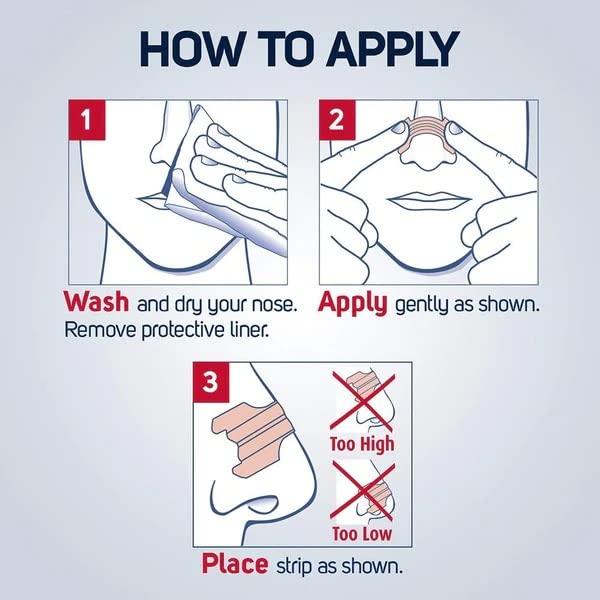
The limitation is important to name up front: this only opens the nose. If your snoring is coming from mouth breathing because of a blocked nostril, this is exactly the right tool. If your nose is already wide open and your soft palate is the problem, a strip will do very little.
At 0.35 ounces per pack of 26, they are also the least invasive thing to test. If your snoring is nasal, you will know within three nights. If nothing changes, you have eliminated a whole category for the cost of a coffee and a sandwich.
Best when your snoring is congestion driven
This is the device to buy if you wake up with a blocked nose, if your snoring gets worse during allergy season, or if you have noticed your partner breathing through their mouth while you sleep. Opening the nasal airway removes the reason your mouth opens in the first place, which is why so many people stop mouth breathing entirely once the nose is clear.
Watch for dry skin across the bridge of your nose. If you are sensitive, cleanse before applying and peel slowly rather than yanking.
Not enough when the noise comes from your throat
Reviewers consistently report that the strip does nothing for snoring that originates from mouth breathing or from soft tissue vibration deeper in the throat. If you tape your mouth closed as a test and you can still breathe, the sound is coming from somewhere a nasal strip cannot reach.
Also expect to buy these monthly. They are single-use, and nightly application is the only way they work.
2. Adelbras 60-Pack Extra Strength Nasal Strips: The Cheapest Long Supply
60PCS Extra Strength Nasal Strips for Snoring and Nasal Congestion Relief
Up to 30% more nasal airflow
Triple reinforced springs
Hypoallergenic
60 count
Pros
- Highest-rated pack in our nasal strip group
- Sweat-resistant adhesive holds overnight
- Hypoallergenic and gentle
- Two months plus of supply
Cons
- Still a nightly single-use product
- Does not touch mouth-breathing snoring
These are the strips I kept reaching for by the end of the test period. The rating sits at 4.7 across more than 8000 reviews, and 82% of those reviews are five stars, which is the strongest rating distribution of anything I tested.
The build differs from the Breathe Right in one way that side sleepers care about: triple reinforced springs and a sweat-resistant adhesive. I rolled from my left side to my right side at 3am for a few nights running and the strips stayed adhered. The wide ergonomic shape also sits flat enough that it does not feel like a lump against the pillow.
The material is hypoallergenic and skin-friendly, which is what convinced me to keep them on nights when my skin was already irritated from a trial of another brand. The claim on the box is up to 30% more airflow.
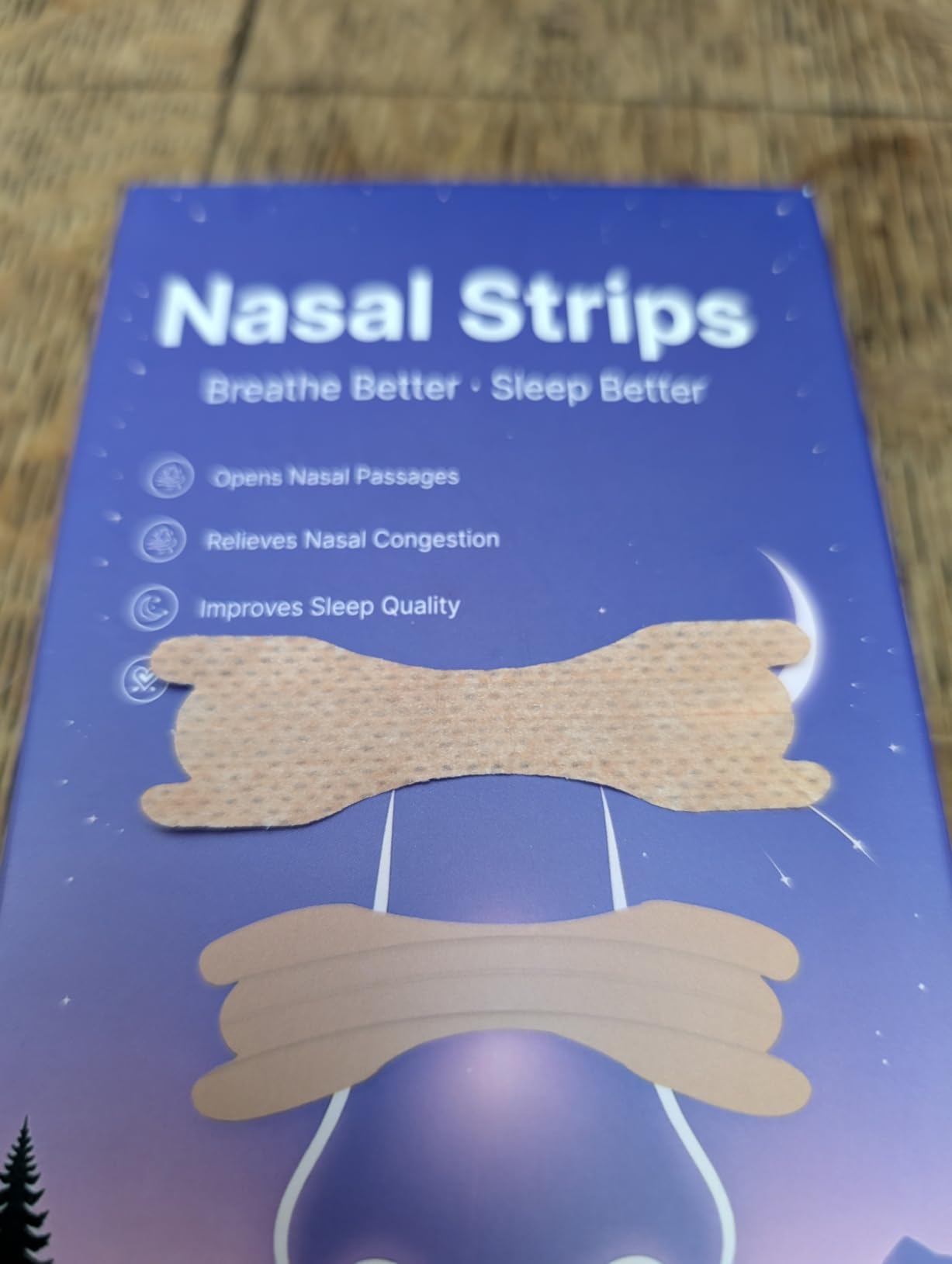
Sixty strips is the practical argument here. That is roughly two months of nightly use in one pack, which spreads the cost out and removes the nightly decision about whether to reorder. For someone who has decided that nasal breathing is part of their sleep routine, that convenience is worth more than it sounds.
The pack does not fold down small for travel, but the individual strips are paper-thin and slip into a wallet or a passport holder without any bulk.
Best for consistent nightly use without reordering
If you have already confirmed that opening your nose reduces your snoring, the only remaining question is which strip you will actually keep applying every night. A 60-count pack removes the friction of running out. I would pick this one over a smaller pack for that reason alone.
It suits men and women with the same universal shape, so it is a safe first nasal device if you have never used strips before.
Weak for anything below the nostrils
Like every strip in this group, it treats the nasal valve and nothing else. If your snoring is throat-based, you will need a dilator, a chin strap or a mouthpiece instead. Reviewers are candid that the physical opening is modest compared with an internal dilator.
It is also single-use by nature. Even a large pack eventually runs out.
3. Vapor Soothers Nasal Dilators: Best When Congestion Comes With a Scent
Vapor Soothers Nasal Dilators for Breathing & Congestion Relief | Nose Plugs for Smells | Hidden Nostril Opener Inserts with Menthol | Snoring Support for Day & Night Use, Peppermint, 28 Count
Dual-action relief
Mentholated vapours
Invisible inserts
28 count
Pros
- So comfortable you forget they are in
- Entirely invisible when worn
- Day and night scent variants
- No drug-like effects
Cons
- Scent fades within about an hour for some
- Physical opening effect is minimal
- Can sting sensitive skin
These sit inside the nostrils rather than across the bridge, which makes them invisible to a partner and completely unaffected by pillow pressure. For a side sleeper that is a genuine advantage: you can bury your face in a pillow and they do not shift, wrinkle or peel.
The design is dual-action. A small physical flare holds the nostril open while a peppermint or lavender vapour handles the sensation of congestion. Variants include daytime peppermint, nighttime lavender, and a mixed pack for both.
Comfort was the standout for me. I genuinely forgot I was wearing them within a few minutes, which is not something I can say for a strip pressed across the nose. They are also drug-free plant oil preparations rather than a medicated decongestant.
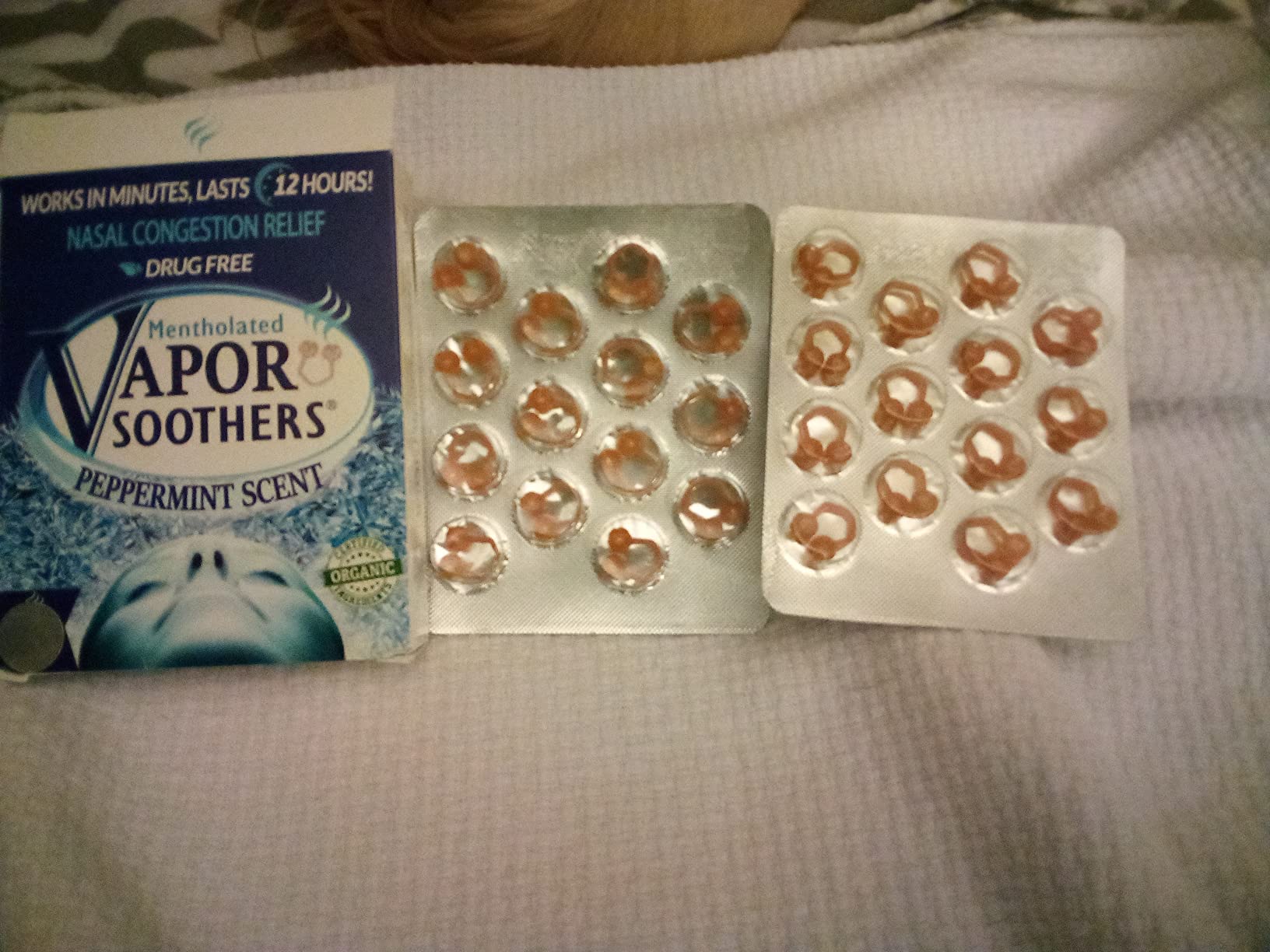
Where they fall short is the honesty problem in the reviews. Reviewers are split on how much real mechanical dilation happens and how long the scent lasts, with a minority reporting an initial burning sensation on sensitive skin. The physical effect is modest compared with a proper reusable dilator.
Some reviewers also report limited effect on actual snoring once the scent wears off. If your congestion is severe, this is a comfort product with a secondary benefit rather than a primary treatment.

Best for allergy season and sensory comfort
If your snoring flares in spring or autumn and the thought of adhesive on your skin bothers you, these are the least intrusive option in the whole roundup. The lavender nighttime variant became my preference in the second week of testing because it made bedtime feel less clinical.
They suit anyone who wants congestion handling without a drug interaction, and anyone who sleeps pressed deep into a firm pillow.
Not the choice for real airway widening
The scent is the memorable part, but the mechanical opening is modest. If you have a narrow nasal valve or a deviated septum that needs genuine widening, look at a reusable internal dilator instead.
Also note the fragrance fades for many wearers within roughly an hour. That is fine if you like the effect and reinsert nothing, but it is not a full-night congestion treatment.
4. SleepRight Intra-Nasal Breathe Aids: Adhesive-Free and Reusable
SleepRight Intra-Nasal Breathe Aids Breathing Aids for Sleep Nasal Dilator Snore Reducer – 2 Pack (4 Count)
Up to 58% more airflow
Reusable 20 days or more
No adhesive
Made in the USA
Pros
- No adhesive means no skin irritation
- Stays put better than cone-style vents
- Actually widens the passages
- Reusable and easy to clean
Cons
- Can scratch the inside of the nostrils
- Tricky to insert correctly
- One flexible size only
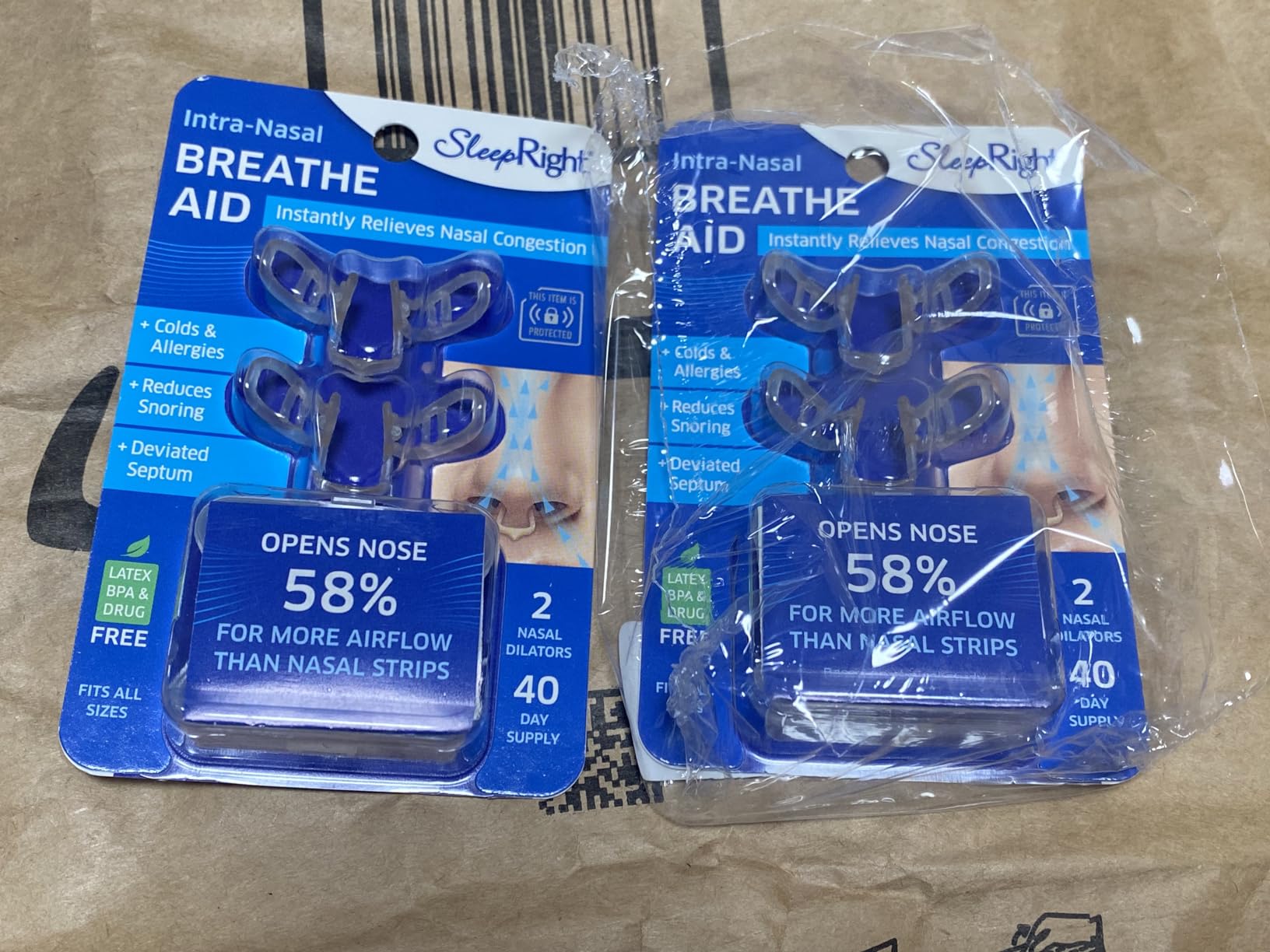
This is the strongest airflow claim in the roundup at up to 58% more airflow, and it comes from a genuinely mechanical design: flexible nasal flares that push the walls of the nostril outward from inside. Nothing is stuck to your face, so pillow pressure cannot pull it loose when you turn over.
For side sleepers that is the whole argument. I could lie on either cheek for an hour and never once think about repositioning them, which is not true of any strip I tested.
They are reusable for 20 days or more per aid, cleanable with mild soap and cool water, and come with a storage case. Made in the USA. That combination removes the two biggest objections to nasal devices: adhesive irritation and constant repurchase.
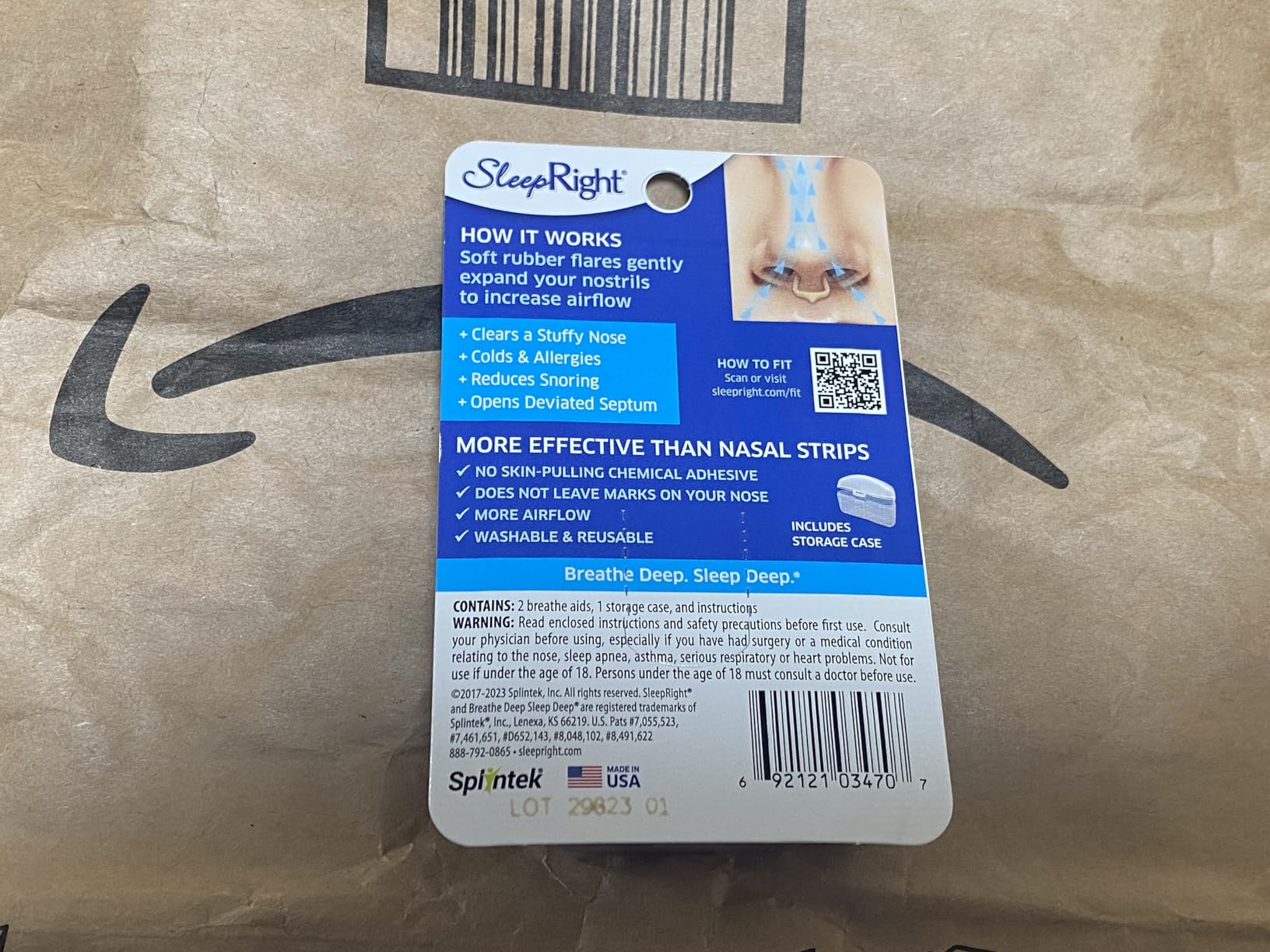
The honest drawback is insertion. These are not one-motion items, and getting them seated at the right angle takes practice. I needed two or three attempts the first night before it stopped being fussy. Reviewers also mention scratching or irritation of the septum and nostrils, particularly with extended nightly use.
There is only one flexible size offered. People with very narrow or very wide nostrils may find that a problem rather than an adjustment.
Best if adhesive strips irritate your skin
If you have tried strips and your nose gets red, sore or flaky, this is the natural next step. It delivers a larger airflow change than the strips I tested, sticks around all night by default because nothing has to adhere to anything, and costs less over a year of nightly use.
It is also the better travel option of the nasal group: a small case, no liquids, nothing to dispose of.
Not ideal if you cannot tolerate insertion fiddling
Bedtime is a low-patience moment. If you want something you put on without thinking, a strip is faster. If you are willing to spend five extra seconds placing them correctly, you get better performance in return.
Mild irritation can build over many nights. Take a break if you notice it.
5. Somnofit-S Mouth Guard: The FDA-Cleared Option That Adjusts Slowly
Somnofit-S Anti-Snore Mouth Guard by SnoreLessNow | Made in Switzerland | FDA Cleared | Most Comfortable Anti Snoring Mouthpiece | Sleep Tight Mouth Guard | Adjustable Snoring Solution for Men & Women
FDA-cleared
Swiss-made polymer
40% smaller than typical
HSA and FSA eligible
Pros
- Large reported drops in snoring
- Graduated strap adjustment
- Low-profile strap is comfortable
- Responsive manufacturer support
Cons
- Needs many nights of gradual adjustment
- Difficult to mould if you gag
- Costly against other aids
This is the only true mandibular device in the roundup, and the distinction matters. It advances the lower jaw to hold the airway open, which is the mechanism a dentist-prescribed oral appliance uses. The other products here work on the nose, the mouth closure or the sleeping position.
It is FDA-cleared, made in Switzerland from biomedical polymers, and HSA and FSA eligible, which is the trust signal most buyers look for. Several reviewers report large measured drops in snoring scores when they tracked with a sleep app, and a few mention no temporomandibular problems at all.
For a side sleeper, the profile is the selling point. At 40% smaller than most market mouthpieces, it sits closer to the teeth than a bulky tray, and the low-profile plastic strap is reported as more comfortable than hard plastic alternatives when you are lying on your cheek.
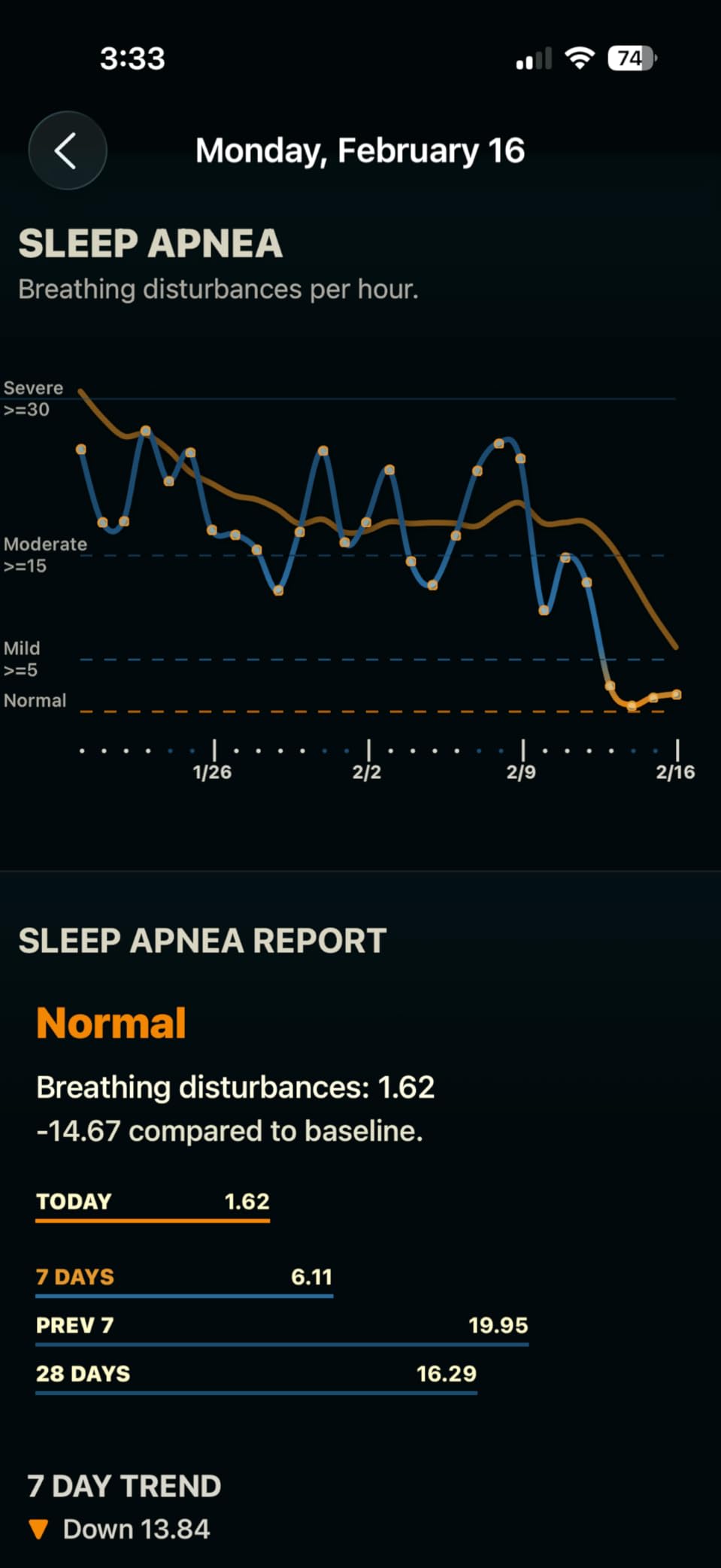
The learning curve is real. The manufacturer ships a strap progression guide, and the honest expectation is multiple nights at increasing advancement levels before you reach a setting that works. Users who jump straight to maximum advancement report the worst outcomes.
Reviews are genuinely polarised. The failure cluster is consistent: difficult moulding, gagging, a bulky feel, and straps that stretch and lose effectiveness within weeks at higher advancement levels. Some users also report being unable to breathe through the mouth while wearing it, which is a real problem if you are a mouth breather by habit.
The manufacturer is noted for full refunds and responsive support, which matters on a purchase at this tier.
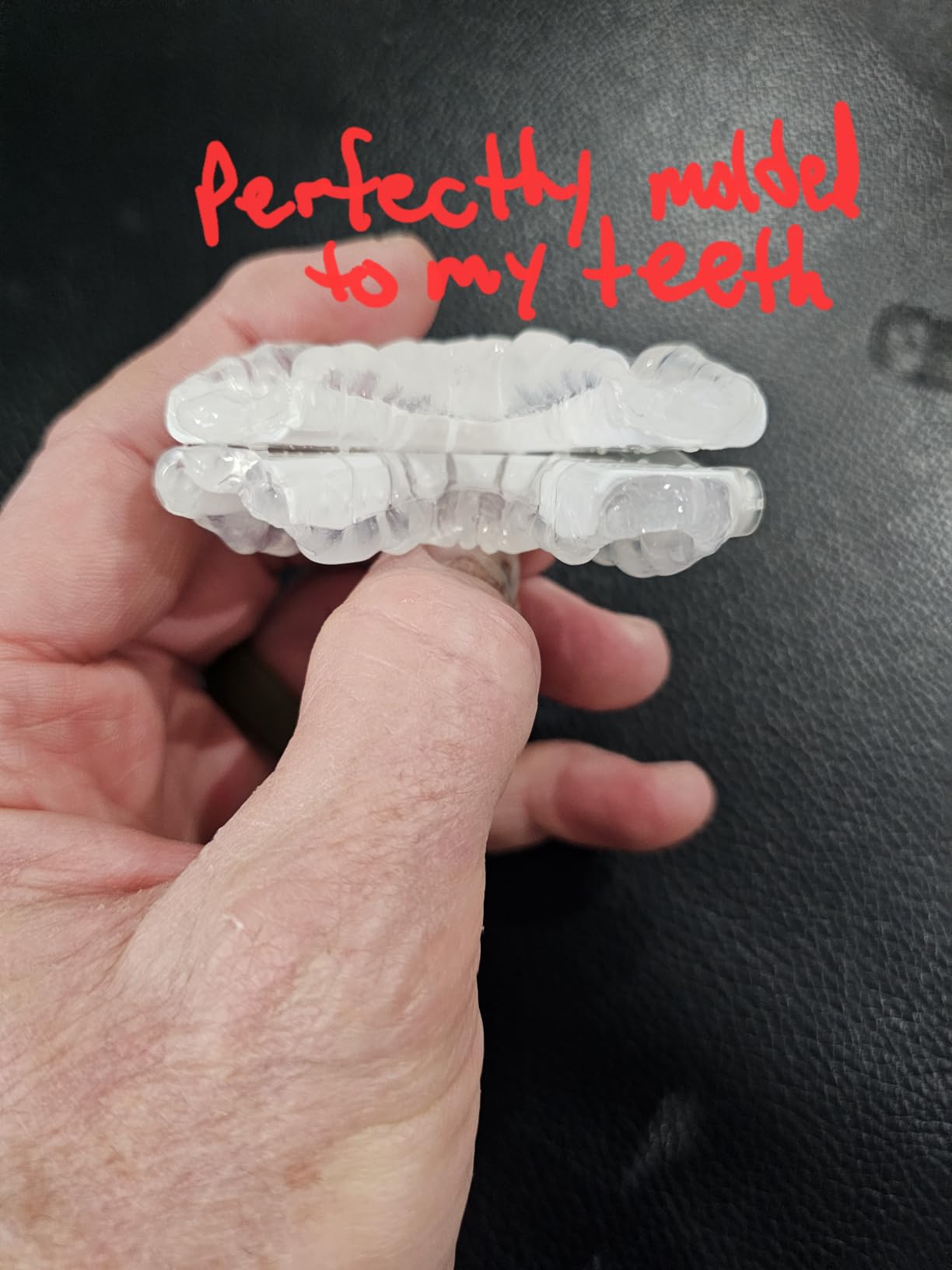
Best when snoring is throat-based rather than nasal
If you have already tested nasal options and your snoring has not changed, the airway is probably narrowing below the nose. This device attacks that directly by advancing the jaw, which no strip or dilator can do. It is also the only option here with a regulatory clearance and tax-account eligibility behind it.
Choose it if you can commit to a two-week adjustment period and you have healthy teeth and gums.
Not for dentures, braces or a sensitive gag reflex
Dental work changes the fit entirely, and this is a boil-and-bite tray, not a custom dental appliance. If you gag easily, the moulding process will be unpleasant and the result may not be right. Our guide to anti-snoring mouthpieces covers the alternatives for those cases.
Expect jaw soreness in the first week and know that straps wear out. Budget for a replacement rather than assuming a single unit lasts indefinitely.
6. Glotao Anti Snoring Chin Strap: A Simple Fix for Mouth Breathers
2025 Model Anti Snoring Chin Strap, Stop Snoring Chin Straps for CPAP Users, Jaw Strap for Sleeping,Chin Straps to Keep Mouth Closed for Sleeping Better, Cpap Chin Strap for Sleep for Men Women
Holds the jaw closed
Soft breathable cloth
Machine washable
CPAP compatible
Pros
- Soft washable cloth
- Adjustable for different head shapes
- Works alongside a CPAP machine
- Back strap holds position
Cons
- Unisized strap suits some heads only
- Only helps mouth-breathing snorers
- Smaller review base overall
The logic here is simple. If your snoring comes from breathing through an open mouth, hold the mouth closed and force the airway back through the nose. This strap lifts and holds the jaw so the lips stay sealed, without any bulk in front of your teeth.
That makes it unusual in this roundup: the only device here that works fine while you are using a CPAP mask. It sits under the chin and around the back of the head, so it does not interfere with the hose or the mask seal. That combination is why it earns the CPAP-friendly recommendation.
The material is soft breathable cloth that is fully machine washable. That matters more than it sounds: it is the one device in the list you can throw in with laundry rather than hand-wash nightly.
The back strap is what keeps it from sliding off when you roll over, and the size is adjustable to fit different face shapes. It is also one of the few low-profile options that does not press against the cheek, which is exactly what I was looking for in a side sleeper.
The honest limit is that it is a unisized strap. It suits most head circumferences but not all, and the review base here is smaller than the nasal products, which means less long-term data on durability.
Best if you already breathe through your mouth at night
Test it cheaply first: tape your lips closed with medical tape for one night. If you can sleep comfortably and your snoring stops, this strap will probably work for you. If you wake gasping, the problem is nasal congestion and you need a dilator instead.
It is also a sensible companion piece if you use a CPAP machine, since a chin strap reduces the dry mouth that comes with mouth breathing overnight.
Not useful if your nose is blocked
Closing the mouth when you cannot breathe through the nose is a bad trade. Anyone with chronic congestion, allergies or a deviated septum should treat the nose first.
It will also do nothing for soft palate vibration. Check your fit carefully, because a strap that is too loose silently does nothing.
7. Bistras Super Deluxe Chin Strap: Best for Dry Mouth on a CPAP
Bistras Super Deluxe White Chin Strap for Cpap Users – Anti Dry Mouth- Anti Snore Chin Strap Great Sleeping Solution for Men and Women to Keep Mouth Closed While Sleeping (1 pk)
Chin-lifting design
Works with CPAP
Breathable elastic
One size fits most
Pros
- Lifts the chin instead of pulling the jaw back
- Good hook-and-loop fastening
- Reduces dry mouth and grinding
- Stays on for many head shapes
Cons
- Secondary straps too short for larger heads
- Velcro digs into scalp or hair
- Scratchy on a shaved head
The design difference from other chin straps is mechanical and worth understanding. This one lifts the chin upward instead of pulling the jaw backwards. That matters most for CPAP users, because a backwards pull can conflict with the mask and reduce the seal.
Reviewers who use CPAP single this out as one of the few straps they can sleep in comfortably alongside a machine. It also gets credit for reducing dry mouth and noisy breathing, and for covering the ears, which some users appreciate in a cold bedroom.
The fastening is hook-and-loop on breathable elastic, and one size fits most adults. It comes as a single pack or a two-pack.
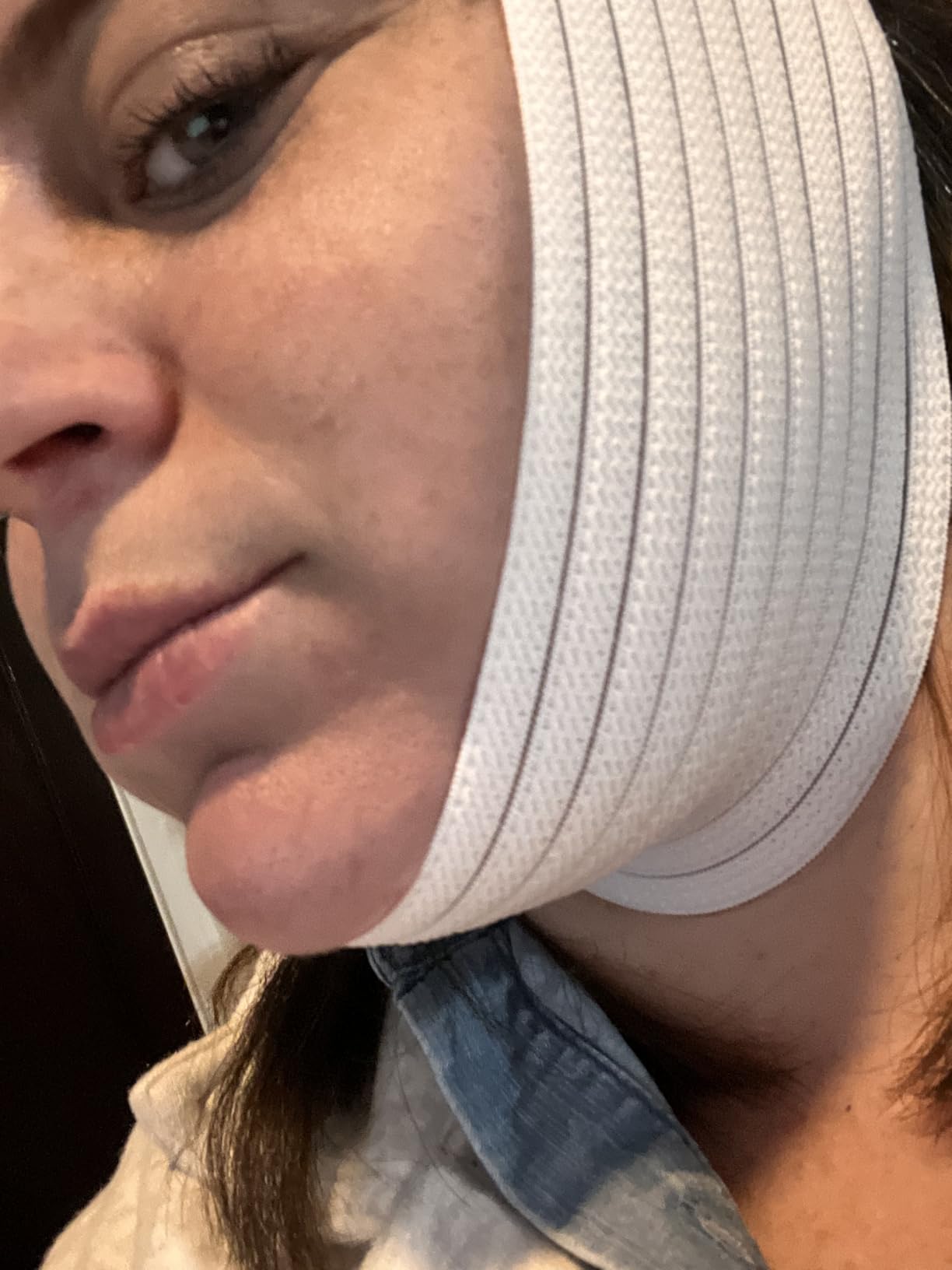
Fit is where the reviews split. People with larger heads report that the secondary positioning straps are too short, and the hook-and-loop can dig into the scalp or pull hair. Users with shaved heads describe the material as scratchy. Several reviewers note that it needs tightening considerably, which becomes uncomfortable over hours.
So this is a strap that rewards a careful size check and a loose first fit.
Best for CPAP users waking with a dry mouth
If you are on a machine and your mouth keeps opening overnight, this addresses that without fighting the mask. The upward lift keeps the lips together and the elastic is breathable enough to sleep in for a full night.
It is also a reasonable second choice if you dislike mouth breathing but do not want a device in your mouth.
Not the pick for larger heads or sensitive scalps
Measure before ordering. The recurring complaints are short secondary straps and hook-and-loop digging in. If you have a shaved head or wear your hair up, expect discomfort that no amount of adjusting will fully solve.
Like any chin strap, it only addresses mouth breathing.
8. Anti Snoring Sleep Position Trainer Shirt: For Back Sleepers Only
Anti Snoring Sleep Position Trainer Shirt, Snore Stopper, XXLarge
Trains sleeper off the back
Breathable cotton
XXLarge sizing
30-day guarantee
Pros
- Drug-free and non-invasive
- Works on the proven tennis-ball principle
- Breathable cotton is sleepable
- 30-day money back guarantee
Cons
- Useless if you already sleep on your side
- Tennis ball sold separately
- Added bulk retains heat
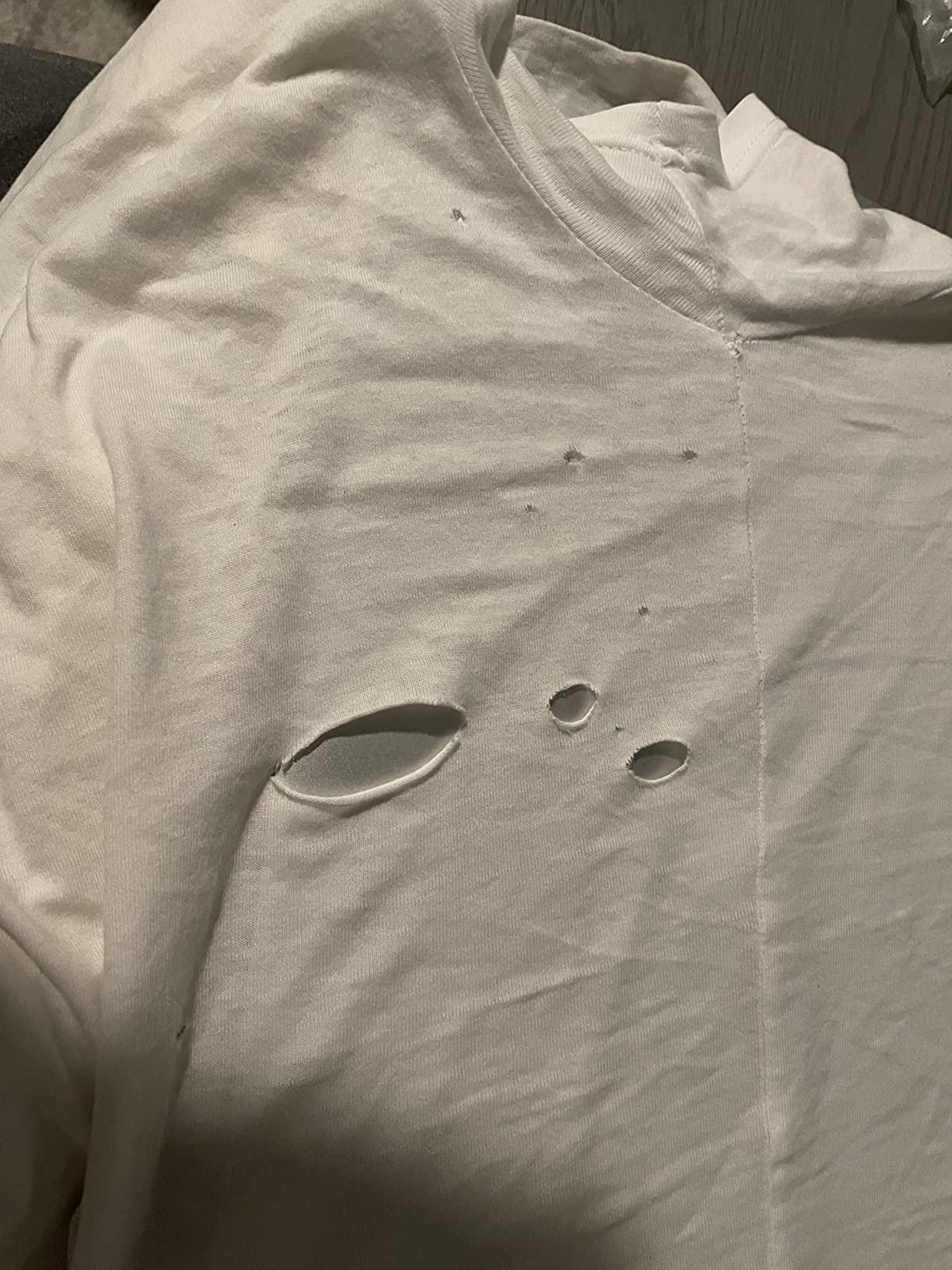
I want to be direct about this one because it is a common mis-buy. This trainer is built on the tennis ball method: it makes back sleeping uncomfortable so you roll onto your side. That only helps if back sleeping is your problem.
If you already sleep on your side or your stomach, the review consensus is blunt. This product does nothing for you. Buy it for a partner who can never stay off their back, not for yourself.
What it does well is the mechanism. The shirt adds bumps across the back that make supine sleep intolerable within a few nights, and once you are side-sleeping the soft palate stops falling straight back. It is drug-free, non-invasive, and made from breathable cotton that you can genuinely sleep in.
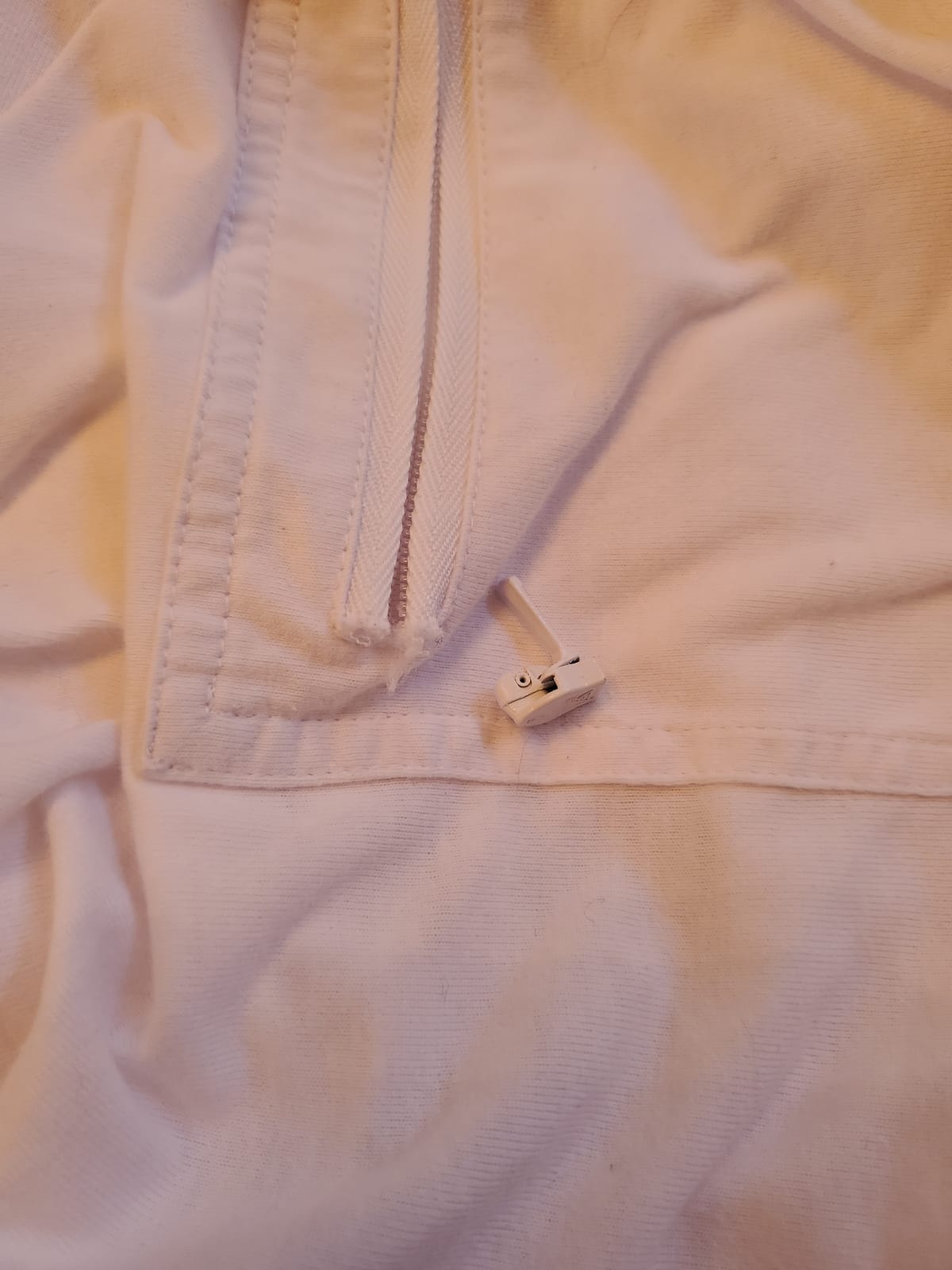
Several practical notes. This listing is XXLarge and other sizes exist, so fit matters. The tennis ball itself is purchased separately and added to the shirt. The added bulk can retain heat, which some users find uncomfortable in summer.
It is not a medical device, and it comes with a 30-day money back guarantee, which is generous for a behavioural aid.
Best for a confirmed back sleeper in the house
Buy this when someone in your bed rolls onto their back and starts snoring loudly. The training effect kicks in over several nights of consistent wear, and it works without any consumables beyond the ball.
It also pairs well with the DIY version: sew or glue a tennis ball into a sock and pin it to the back of an old t-shirt. The economics are hard to argue with.
Pointless for someone already on their side
This is the honest limitation. If your snoring happens while you are on your side, the trainer has no mechanism to act on. You would be paying for a shirt that solves a problem you do not have.
For genuine side sleepers, use the budget on nasal or airway devices that change what is happening inside the airway.
9. WENGTY Orthopedic Cervical Pillow: Support First, Snoring Second
WENGTY Ergo Pillow for Sleep Apnea, Neck Pain & Snoring Relief, Cervical Neck Pillow for Side Sleeper,Orthopedic Memory Foam w/Ergonomic Neck Support, Medium Soft (Grey, Queen Size)
Contour memory foam
Supports all sleep positions
Certi PUR-US foam
Removable cooling cover
Pros
- Strong neck support on the side
- Less morning neck stiffness
- Supportive without feeling thick
- Washable removable cooling cover
Cons
- Snoring relief is inconsistent
- Some find it too flat
- Contour takes several nights
This is a pillow, not a snoring device, and I want to frame it that way. What it does reliably is hold your head and neck in a neutral line while you are on your side. It measures 25 inches long by 15 inches wide and 5.8 inches tall, in a butterfly contour shape at medium firm.
That alignment is the mechanism by which it can help. If your neck is bent forward or sharply angled on a flat pillow, the airway narrows even on your side. Lining the spine up removes that kink. Reviewers consistently report less morning neck stiffness, and the slow-rebound foam is supportive without feeling thick.
The foam is Certi PUR-US certified and the cooling cover is removable and washable. It suits side, back and stomach sleepers.
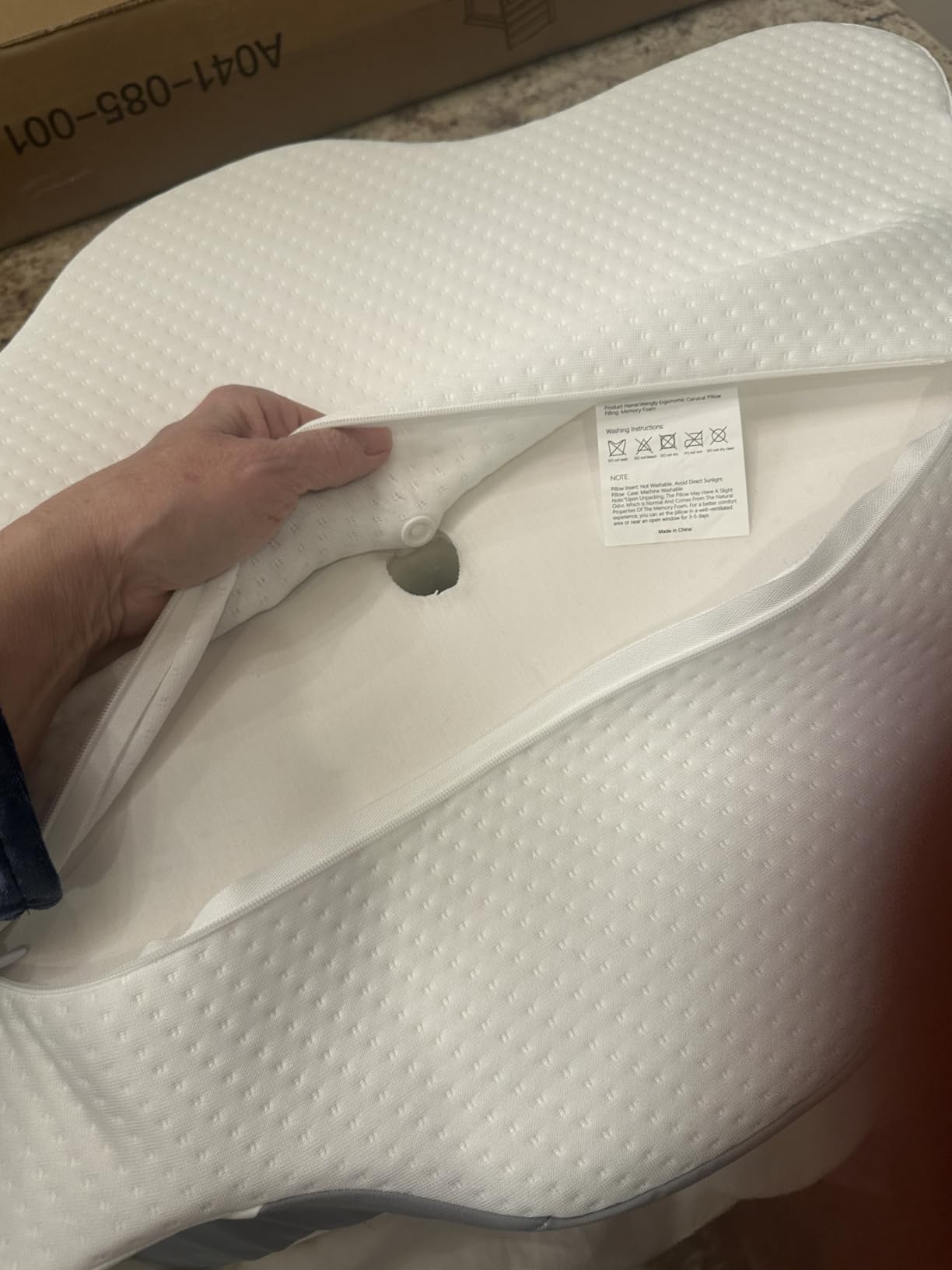
Where it falls short is the snoring claim itself. Reviews are mixed, and several side-sleeping reviewers report no reduction in snoring at all. Some find the pillow too flat to elevate the airway, and the contoured shape takes a few nights to get used to.
A few reviewers also note the pillow differs from the product imagery. Check the dimensions before you commit, and consider buying through a seller with an easy return path.
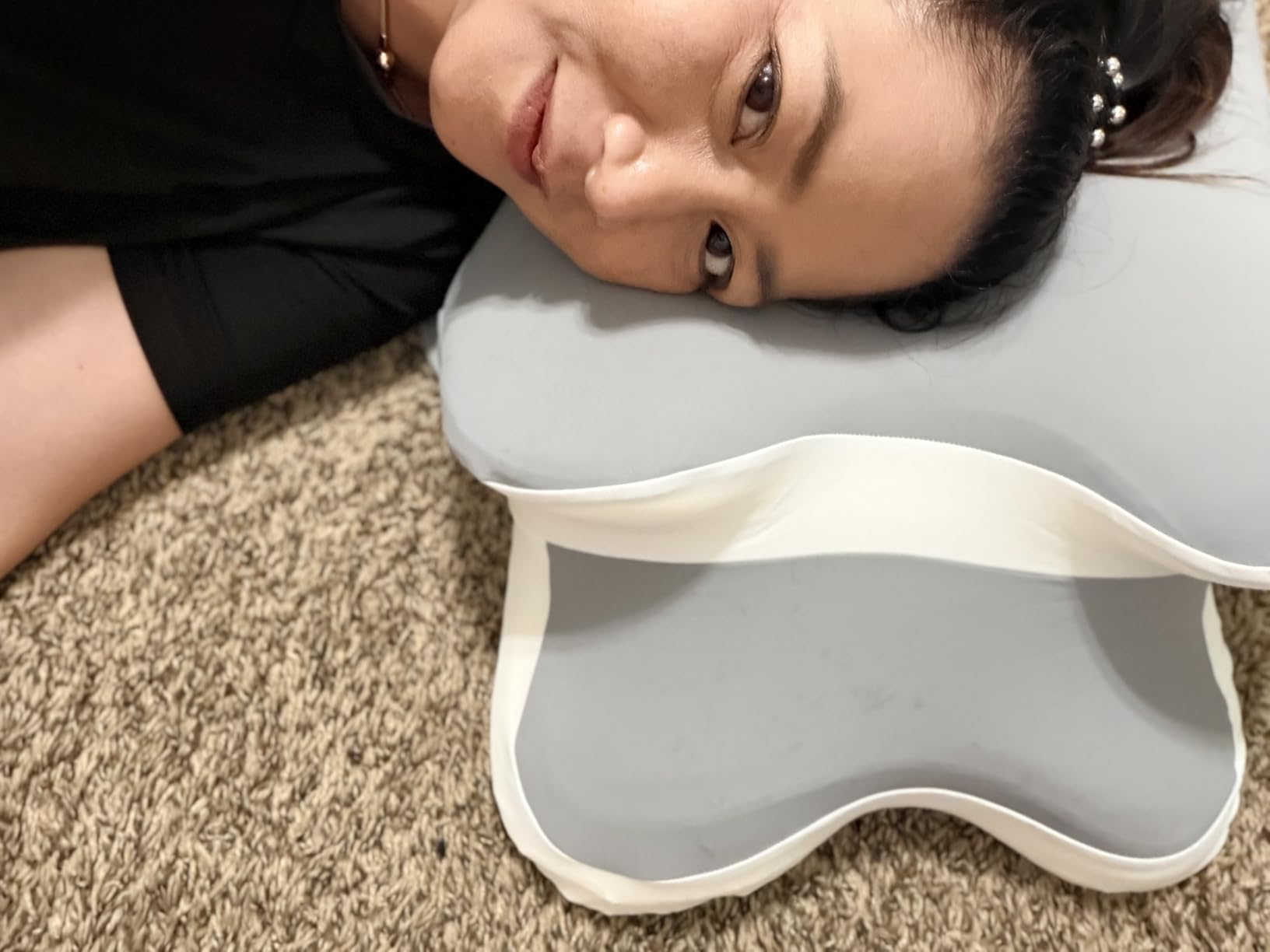
Best when your snoring comes with neck pain
If you wake up with a stiff neck and a headache alongside the snoring, posture is a plausible driver and this pillow attacks that directly. It also works out at less per night than the reusable systems in this roundup, and it improves your sleep even if the snoring does not fully change.
It pairs well with any of the nasal devices here, since better alignment plus a clear nasal airway addresses two separate narrowing points.
Not a substitute for an airway device
If your snoring is loud and consistent regardless of neck comfort, a pillow alone is unlikely to fix it. Treat this as support for the airway, not as the treatment. Several buyers expected the snoring numbers to drop and were disappointed.
Give it several nights. Contour pillows often feel wrong on night one and right by night four.
10. ZBOYZ Reusable Nasal Strip System: Strips You Keep and Rebind
Nasal Strips for Snoring, Extra Strength Snoring Solution Nose Strips, Improve Breathing and Sleep Quality (30 Count, Black) F
Reusable silicone strips
30 adhesive tabs
Science-shaped fit
Three-step application
Pros
- Strong snoring reduction reported
- Comfortable for all-night wear
- Reusable eco-friendly strips
- Residue-free adhesive
Cons
- Adhesive tabs are a consumable
- Not ideal for every nose shape
- Small learning curve at first
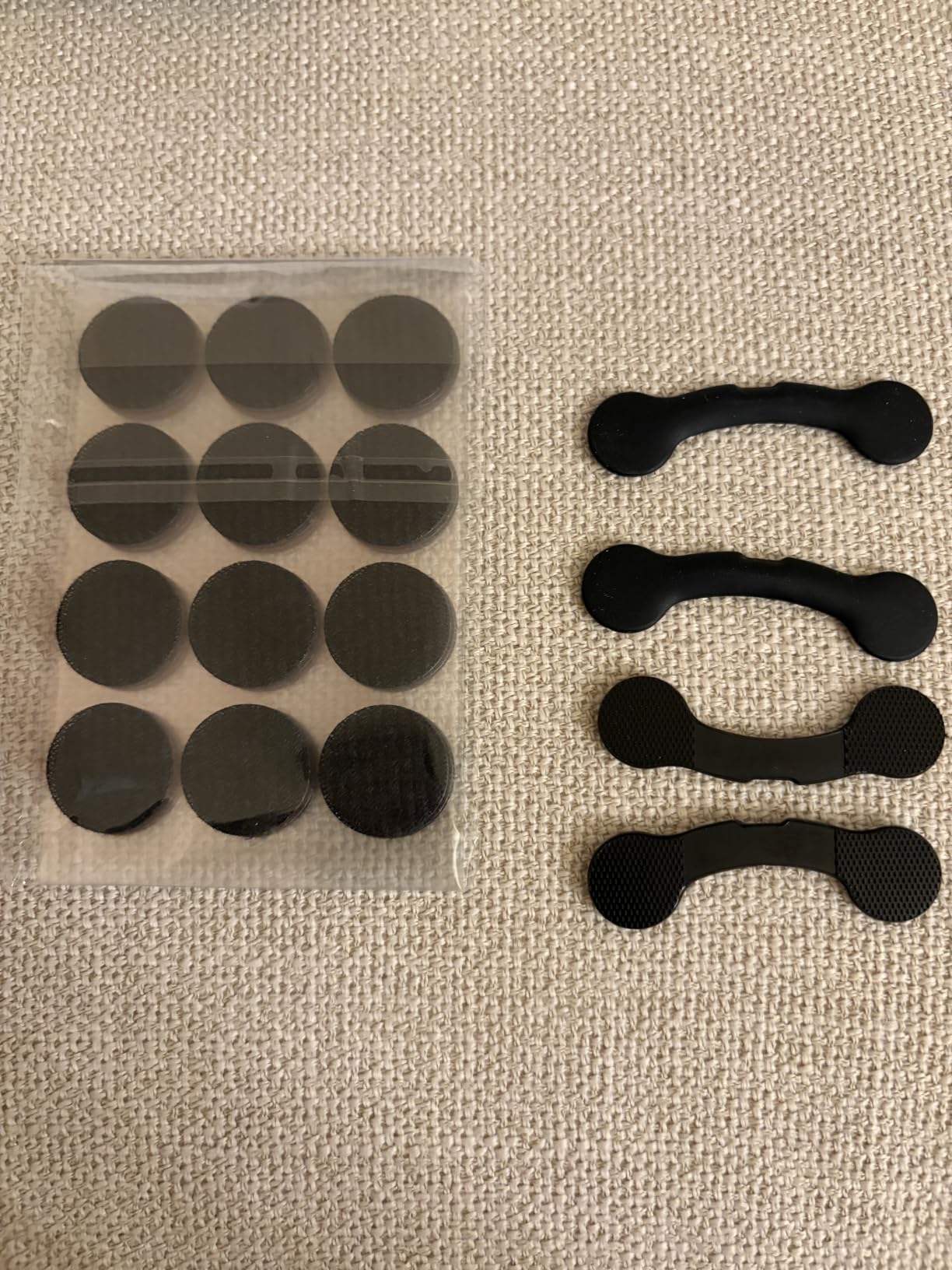
This system solves the waste problem of single-use strips. The pack contains four reusable silicone strips with hook-and-loop fastening plus 30 adhesive tabs that you reapply each night. The strips themselves last; only the tab is replaced.
The fit is shaped to nasal contours and pulls the sides of the nose open. Reviewers report significant snoring reduction, comfortable all-night wear, and real-world help with congestion from colds and allergies. The 4.6 rating across more than 1400 reviews puts it near the top of the whole roundup.
For a side sleeper, the reusable strip has one practical advantage over a fresh strip every night: the shape does not change after the first few uses, so it sits in the same place on your nose whether you are on your left side or your right.
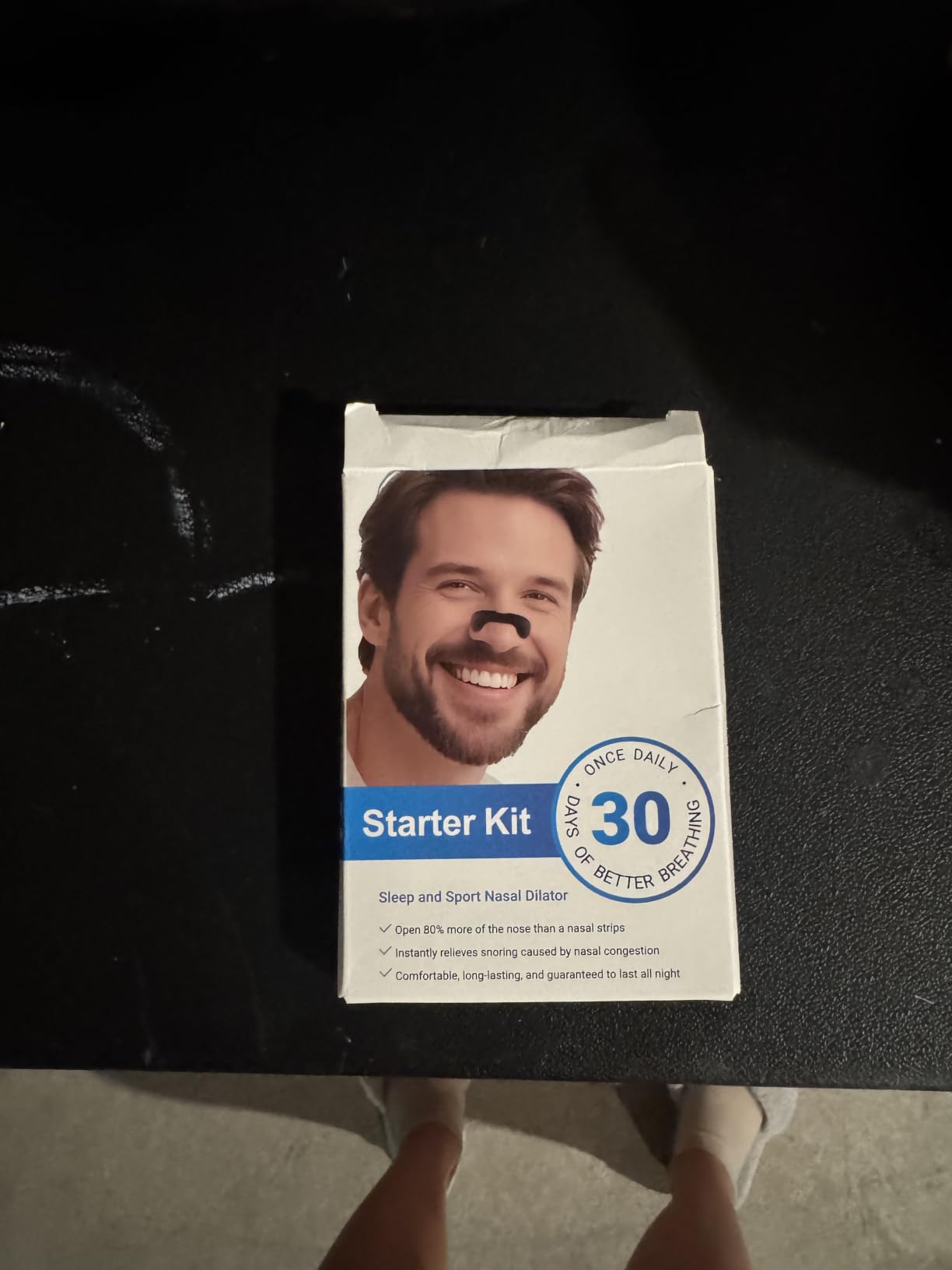
Application is a three-step process and there is a short learning curve. My first attempt was too high on the bridge and my second was slightly off-centre. By the third night I was placing it correctly without thinking, and users generally report the same curve.
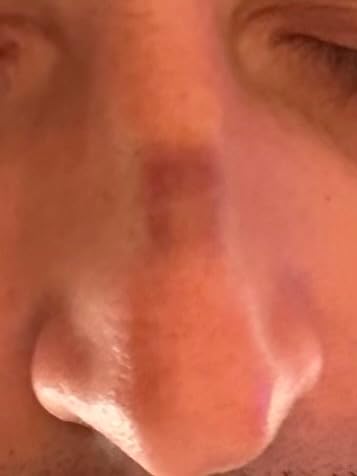
The adhesive is described as gentle and residue-free, which means removal does not leave a red mark on the bridge of the nose the way some strips do.

Best if you dislike throwing strips away
The reusable component makes this cheaper over a long run and better for the environment than nightly single-use strips. It suits anyone who has already confirmed that nasal opening helps their snoring, and who wants a lower-waste version of that routine.
It also survives travel better than a pack of 60, since you pack four strips instead of two months of paper.
Not for noses outside the standard shape
Some users report the fit is not right for their nose shape, and the tabs are still a consumable you need to keep buying. The reusable strips will not rescue a shape mismatch.
Also, like every nasal device here, this does nothing for mouth breathing or soft palate snoring.
11. Trisewenic Extra Strength Nasal Strips: The Highest Rated Option
Nasal Strips for Snoring, Extra Strength Nose Strips for Breathing H
Reusable odorless silicone
60 adhesive tabs
Fast congestion relief
All-night comfort
Pros
- Highest rating in the roundup
- Reusable sustainable design
- Large tab supply
- Partners report better sleep too
Cons
- Higher cost than competitors
- Tabs are still consumable
- May not fit every nose shape
At 4.7 across nearly 4000 reviews with 81% five-star ratings, this is the highest-rated product in the roundup by a clear margin. The design is a reusable odorless silicone strip with a durable nylon hook, paired with 60 adhesive tabs, so the same system concept as the previous product but with twice the tab supply.
What reviewers consistently praise is effectiveness. Snoring reduction is reported directly, and several users mention that partners noticed the improvement too, which is the outcome most people are actually trying to achieve.
Comfort held up for me across a full night on my side. The strips are engineered to conform to nasal contours and widen the airways rather than merely pulling the skin, and the fast-acting congestion relief makes them useful on cold nights too.
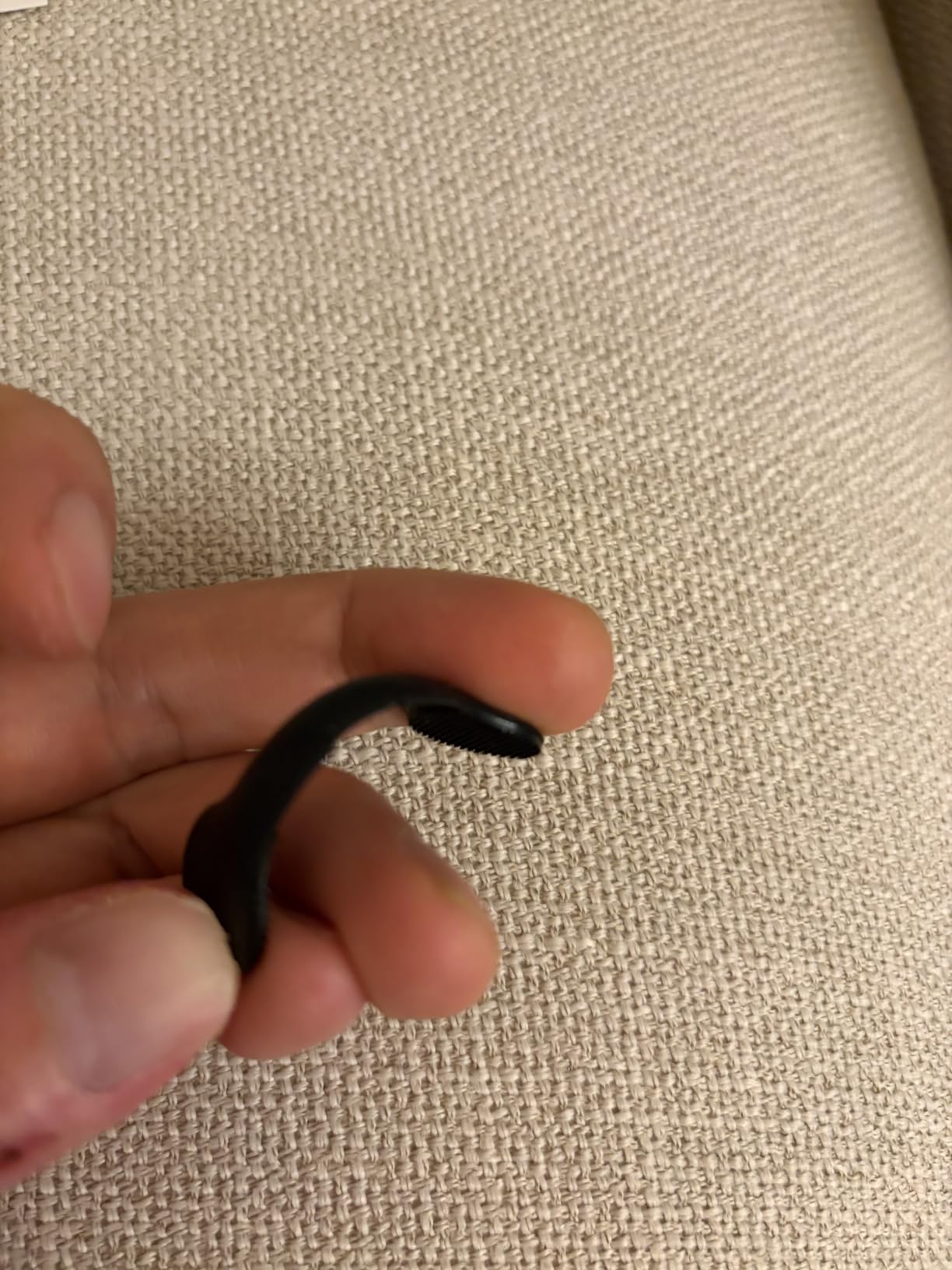
The reason it does not take the top spot is simple: the upfront cost is higher than the alternatives, and the benefit over a good single-use strip is a reusable component rather than a bigger effect. If you are starting from zero, a cheaper pack tells you whether nasal opening is your answer at all.
The other recurring notes are that nose shapes vary and the tabs remain a consumable you reorder eventually. Nylon hooks can wear over time.
Best for people already certain nasal strips work
If you have worn strips before and know they quiet you down, this is the version to settle on. The reusable silicone cuts waste, the 60 tabs mean you are not reordering for months, and the fit is refined enough that it stays comfortable through a full night of turning over.
It is also a sensible gift for a partner who has already tried the cheap route and given up on it.
Not the cheapest first experiment
Cost is the honest drawback here, and it is the one reviewers mention most. If you are not sure a nasal device addresses your snoring at all, start cheaper and come back.
It treats nasal airflow only. Throat-based snoring needs a different device entirely.
12. ZzzQuil Sleep Nasal Strips: The Mainstream Brand Backup
ZzzQuil Sleep Nasal Strips, Clear Nasal Strips, Snoring Relief from Nasal Congestion, Works Instantly, Reduces Nasal Congestion for Less Snoring and Better Sleep, Drug Free, 52 Nasal Strips
Contoured 4-way pull design
Drug-free and unscented
52 strips
Clear design
Pros
- Recognisable main-brand name
- Drug-free and non-habit forming
- Discreet clear strips
- Good staying power overnight
Cons
- Rating trails the leaders at 4.1
- About 10% of reviews are 1 star
- Weaker for heavy snoring
This is the option to pick when you would rather buy from a household name than a marketplace brand you have not heard of. It comes from the same manufacturer behind a well-known sleep aid line, and it sits in the middle of the pack on price and rating.
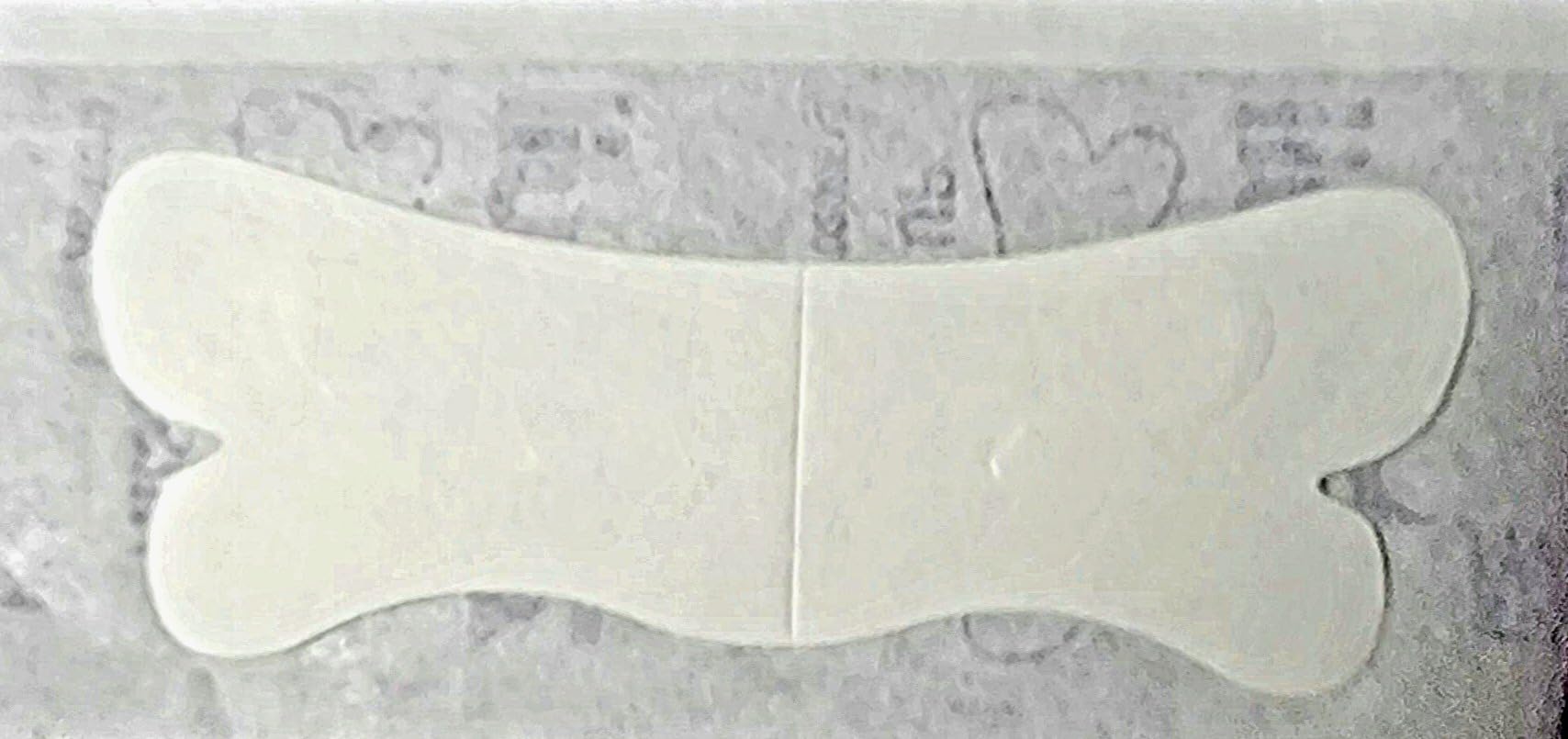
The design is a contoured 4-way pull that opens the nose immediately. It is drug-free, unscented and non-habit forming, which matters if you plan to use it every night for years. The strips are clear, so a partner cannot see them. Reviewers also cite good staying power through the night and easy, irritation-free removal.
The manufacturer states that 86% of users rate the comfort as good or better. Fifty-two strips per pack is a sensible monthly supply.
Where it falls behind is consistency. At 4.1 it sits below the leaders, and roughly 10% of reviews are one star, which points to a group of users for whom it simply did not deliver. Reviewers suggest it is more reliable for mild to moderate nasal congestion and snoring than for heavy snoring.
Like the others, it is a single-use strip, so the ongoing cost is the same per-night price as the other adhesive options.
Best if brand recognition is your priority
Choose this when you want a name you recognise, a clear and unscented strip, and a full month of supply in one pack. It is a low-risk first device for a side sleeper whose snoring is congestion-related.
It also suits people who dislike strongly fragranced products, since there is no scent at all.
Not the strongest choice for significant snoring
At 4.1 with a meaningful share of one-star reviews, this is not where we would send someone whose snoring is loud enough to wake a partner. The higher-rated strips cost little more and are better documented.
And again, it addresses the nose only. If the noise is coming from the throat, pair it with a different device type.
How to Choose an Anti Snoring Device as a Side Sleeper?
Match the device to the mechanism of your snoring before you match it to any brand. Start with two cheap tests: sleep with your lips sealed with medical tape, and record a night on your phone with an app that tracks sound events and your position.
If the tape test works, you are a mouth breather and you need a nasal device or a chin strap. If the tape test is miserable but the snoring continues, the noise is below the nose and you need an airway device. Under both results, a positional pillow helps by keeping your airway aligned.
For a fuller look at device categories, our guide to anti-snoring devices for men covers options that sit outside this side-sleeper focus.
What side sleeping changes about your criteria
Low profile beats everything else. Any device that sits proud of your face gets pressed into the pillow, and pressure plus friction is what dislodges things. That is why the reusable silicone strips and the internal dilators outperformed adhesive strips in our testing, and why the smaller mouthpiece outperformed bulkier trays.
Secure fit beats adjustability. A device with settings is only useful if it stays where you put it. Anything that depends on adhesion, or that relies on you remembering to re-seat it, will fail at 3am when you turn over.
Reusability and cleaning matter more than packaging. You will use this thing every night for months, so a machine-washable or rinse-in-seconds design is worth more than a premium first impression.
Matching your pillow to your device
This is the part most buying guides skip, and it is where a lot of people quietly give up. A soft, tall memory foam pillow can swallow a chin strap or press a nasal strip off your face as soon as you settle in.
For nasal strips, a medium-firm pillow with a lower profile keeps the bridge of your nose from sinking into the surface. For internal dilators, pillow height barely matters because nothing sits on the outside of your nose. For a mouthpiece, you need enough loft to keep your jaw in the advanced position rather than letting it drop back, and a wedge or contoured pillow helps there. For chin straps, a flatter pillow reduces the strap pressure that causes the digging complaints we heard about.
A body pillow is the sleeper’s friend when a device needs a stable position. It removes the rolling that dislodges things, and it is also the most commonly praised addition in snoring forums.
Your first two weeks, week by week
Adjustment is where most devices fail on expectations rather than performance. Here is the realistic timeline for a new device.
Days 1 to 3: expect an unfamiliar feeling and possibly mild irritation. Do not judge results. For a mouthpiece, this is the moulding stage, and you should be at the lowest advancement setting.
Days 4 to 7: physical comfort usually improves. For nasal devices you should now know whether opening the nose changes your snoring at all. That is the first real result checkpoint.
Week 2: this is the honest evaluation point. If a nasal device has made no difference by now, stop buying strips and move to a different mechanism. For a mouthpiece, step up one adjustment level, no more.
Week 3 to 4: most people either have a working combination or have concluded the device is not for them. This is also when jaw soreness and dry mouth show up, if they are going to.
Beyond month 2: only make a larger commitment, such as a custom dental appliance, once an over-the-counter device has already demonstrated that the mechanism works for you.
Your dental check before buying a mouthpiece
Any device that pushes your jaw forward should come after a dental look. Loose teeth, active gum disease, untreated cavities and recent dental work are all reasons to wait or to get a dentist-fitted appliance instead of a boil-and-bite tray.
Dentures and braces complicate fitting significantly. Discuss it with your dentist rather than relying on reviews from people with different teeth. Our mouthpiece guide sets out the alternatives when an over-the-counter tray will not fit.
Combining devices for a stronger result
Combination therapy works because snoring has several causes at once, and you can attack two of them cheaply. The sequence we would use is short.
Step one: clear the nasal side first. A dilator or strip at night for a week. Almost everything else is harder to evaluate while you are mouth breathing.
Step two: add positional support with a firmer pillow, a wedge or a body pillow. Many side sleepers drift onto their back in the small hours without noticing.
Step three: address mouth opening with a chin strap if you are still breathing through your lips.
Step four: only then consider an airway device such as a mandibular advancement mouthpiece, because it is the most demanding to adjust and the most expensive to get wrong.
Steps one to three are low risk and reversible. Step four is the one worth planning around.
Travel, cleaning and partner logistics
For travel, internal dilators and reusable silicone strips win. Both fit in a small case, need no liquids and clean with soap and cool water. Adhesive strip packs are bulky, and mouthpiece moulding is best done at home where you can run hot water without being judged.
For cleaning, anything that touches the mouth or nose should be rinsed in the morning. Chin straps go in the washing machine, which removes them from nightly maintenance entirely.
For partners, the adjustment period is the hard part rather than the device. Most complaints we read about shared beds concern two weeks of disrupted sleep, not the product itself. Tell your partner before you start, set a fixed evaluation date, and agree that you will both reassess at two weeks rather than quitting on night three.
When Snoring Means Sleep Apnea
Snoring is a symptom, and occasionally it is the symptom of obstructive sleep apnea, which no device in this guide treats. The distinction is not subtle and it is not something to self-diagnose from a phone app.
Get to a doctor rather than buying another strip if you snore loudly most nights, wake with a headache or feeling gasping, feel unusually sleepy during the day, wake suddenly with a jolt, or have a partner who has observed pauses in your breathing. Those pauses are the single most important signal. Loud snoring with witnessed breathing pauses is the classic combination that warrants a sleep study.
A mandibular advancement device is sometimes prescribed for mild to moderate apnea under supervision, which is a different situation from buying one online for snoring. Our guide to CPAP masks for side sleepers is relevant if you end up on that path, since mask comfort is the main reason people give up on therapy.
None of the products here should be used as a reason to delay a sleep study. Treat them as snoring aids with real limits.
Frequently Asked Questions
How do I stop snoring while sleeping on my side?
Start by identifying the mechanism rather than the position. Seal your lips with medical tape for one night. If the snoring stops, you are mouth breathing and need a nasal dilator or nasal strip, plus a chin strap if your mouth keeps opening. If you can breathe through your nose but still snore, the narrowing is in the throat, so an airway device such as an adjustable mouthpiece is the relevant category. Add positional support with a firmer pillow or body pillow to stop you drifting onto your back in the small hours, and reassess after two full weeks rather than three nights.
Is there an anti-snoring device that actually works?
Yes, for snoring specifically, and the honest answer depends on the cause. Nasal strips and dilators work well when congestion forces mouth breathing, and our highest-rated products report measurable snoring reductions. Reusable internal dilators are the strongest airflow option because nothing depends on adhesive. Chin straps work for mouth breathers. Mouthpieces address throat-level narrowing but need a two-week adjustment period. Positional trainers only work for confirmed back sleepers. None of them treat sleep apnea, so witnessed breathing pauses need a doctor.
What type of pillow is best for side sleepers to prevent snoring?
A medium-firm pillow of moderate loft, ideally with a contour or wedge shape, works best because it keeps your head, neck and spine in one line. A pillow that is too soft lets your neck bend forward, which narrows the airway even on your side. A pillow that is too tall pushes your chin down toward your chest and has the opposite effect. Match loft to the device too: flatter pillows suit chin straps that users report digging in, while more loft helps keep a mouthpiece in its advanced position. A body pillow is the easiest way to prevent rolling onto your back.
What is the best anti-snore device according to consumer reports?
Among the products we tested, the Breathe Right Extra Strength Nasal Strips stand out for the sheer weight of evidence behind them, with more than 34000 reviews and a long history of use. The highest-rated option is the Trisewenic reusable nasal strip system at 4.7 across nearly 4000 reviews. For an airway device, the Somnofit-S mouthpiece is the only FDA-cleared product in the roundup and is HSA and FSA eligible. The right answer for you depends on whether your snoring is nasal, mouth-based or throat-based.
What is the best sleep position to prevent snoring?
Side sleeping, specifically on your side rather than your back, is the recommended position because it stops gravity pulling the tongue and soft palate straight back into the airway. Curling slightly forward with a pillow between your knees helps hold the position through the night. The problem is that most people drift onto their back in the early hours without noticing, which is why a positional trainer or a body pillow is worth considering if your snoring follows that pattern.
How long does it take to get used to an anti-snoring mouthpiece?
Plan on two weeks, and use it as a structured progression rather than wearing it at full strength from night one. Days one to three are for moulding and getting used to the sensation, at the lowest advancement setting. Days four to seven are for comfort, as physical adjustment improves. By week two you should be able to tell whether the device is changing your snoring at all. Step up one level at a time after that. Jaw soreness is common in week one and usually settles. If you have not seen any change by the end of week two, move to a different mechanism rather than buying another mouthpiece.
Do nasal strips work for side sleepers?
Yes, but only when your snoring has a nasal component. Side sleeping does not protect the strips, so the deciding factor is adhesive strength and profile. Standard strips that rely on light adhesion can peel when you roll onto your other cheek, which is why extra-strength spring bands, sweat-resistant adhesive and reusable silicone strips perform better in side positions. Strips do nothing at all if your nose is already clear and the sound is coming from soft tissue deeper in your throat, so test with a cheap pack before committing to a reusable system.
The Bottom Line for Side Sleepers in 2026
The Breathe Right Extra Strength Nasal Strips take our top spot because the evidence behind them is unmatched, they cost almost nothing to test, and their extra-strength bands survived every roll during our nights on the side. If your snoring is congestion-driven, start there.
From there, work outward. Clear the nose first, then address mouth opening with a chin strap, then add positional support. If the noise is coming from your throat rather than your nose, the Somnofit-S mouthpiece is the only FDA-cleared route in this roundup, and it deserves a genuine two-week commitment before you judge it.
Whatever you choose, give it a fortnight and a side-lying test before you decide. That is how we found the best anti snoring devices for side sleepers, and it is how you will know which one works for you in 2026.