
Every large aquarium runs on one small piece of hardware that most owners buy once and then think about never again. That is exactly the problem. A 200-gallon tank holds roughly 1,450 pounds of water, and the temperature of that volume can swing from comfortable to fatal in a single night if the heating element behaves badly. We spent weeks going through the specs, owner reports and failure patterns behind every high-wattage unit currently on the market to build this list of the best aquarium heaters for large tanks in 2026.
The short version: for tanks past roughly 90 gallons, the element material and the controller matter far more than the brand badge. Glass tubes crack, quartz tubes survive more abuse, and titanium tubes basically refuse to break. An external digital controller with its own probe gives you an audible alarm and a way to cut power without reaching into the water. Nine of the ten heaters below come with one already built in, or are designed to pair with one.
We ranked them on the things that actually decide whether a heater survives a year in a big tank: verified wattage for the tank sizes they claim, element construction, whether the controller is separate from the wet side, the failure reports in the reviews, and whether the accuracy claim matches reality. Prices change constantly, so we use the buttons rather than quoting figures.
Table of Contents
What Makes an Aquarium Heater Large-Tank Rated?
A large-tank aquarium heater is a 300W to 1000W heating unit built with a titanium or reinforced quartz element instead of a thin borosilicate glass tube, and paired with an external digital controller so it can be powered down independently if it fails. For 90 to 300 gallon systems, that combination is not a luxury.
There are four things to check. First, wattage against actual volume rather than nominal tank size. Second, element material. Third, whether the controller sits outside the tank on a dry probe. Fourth, protection features: over-temperature cutoff, low-water cutoff, and a memory function that restores your setpoint after a power outage.
On reef and monster-fish systems, add a fifth: how far the probe sits from the heater. A controller reading a warm stratum while the rest of the tank is cooler is the most common reason a large tank “won’t hold temperature” even when the heater is oversized.
Top 3 Best Aquarium Heaters for Large Tanks (October 2026)
These three cover the widest spread of real setups, from a 75-gallon planted display to a 250-gallon reef.
Orlushy 500W Submersible Heater
- 2mm thickened quartz glass
- Adjustable 68-89F dial
- Auto shutoff at setpoint
- Fresh and saltwater

HiTauing 500W with Digital Controller
- External digital controller
- Water sensor auto cutoff
- 63-94F range
- Quartz glass tube

azw 800W Triple Auto-Shutoff Heater
- Rated 110-250 gallons
- Triple protection system
- Memory function
- Plus or minus 1F accuracy
Best Aquarium Heaters for Large Tanks in 2026
All ten units below, with the numbers that matter for sizing and safety. Every one is a submersible unit rated from 20 gallons upward, and the list spans budget quartz tubes through 1000W titanium rods.
| Product | Specs | Action |
|---|---|---|
| Orlushy 500W Submersible Heater |
|
Check Latest Price |
| HiTauing 500W Submersible Heater |
|
Check Latest Price |
 hygger 300W-1000W Quartz Heater hygger 300W-1000W Quartz Heater |
|
Check Latest Price |
 HITOP 600W Titanium Heater HITOP 600W Titanium Heater |
|
Check Latest Price |
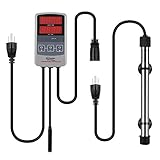 hygger Pinpoint 500W Titanium Heater hygger Pinpoint 500W Titanium Heater |
|
Check Latest Price |
| azw 800W Heater Triple Auto-Shutoff |
|
Check Latest Price |
 HITOP 1000W Titanium Heater HITOP 1000W Titanium Heater |
|
Check Latest Price |
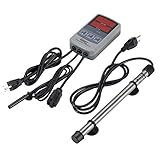 hygger 500W Titanium Heater hygger 500W Titanium Heater |
|
Check Latest Price |
 ZHGSERVU 500W Quartz Sleeve Heater ZHGSERVU 500W Quartz Sleeve Heater |
|
Check Latest Price |
 MantaMaze 300W-1000W Dual Tube Heater MantaMaze 300W-1000W Dual Tube Heater |
|
Check Latest Price |
1. Orlushy 500W Submersible Heater – the Most Proven Workhorse
Orlushy Submersible Aquarium Heater,500W Fish Tahk Heater with Adjust Knob Thermostat 2 Suction Cups and Free Thermometer Suitable for Marine Saltwater and Freshwater (500W)
500W for 40-75 gallons
2mm thickened quartz glass
Dial 68-89F
6ft cord
Pros
- Proven track record across thousands of owner reports
- Adjustable dial thermostat
- 2mm explosion-proof quartz glass
- Ships with a thermometer
- Works in fresh and salt water
Cons
- Dial needs occasional recalibration
- Suction cups weaken over time
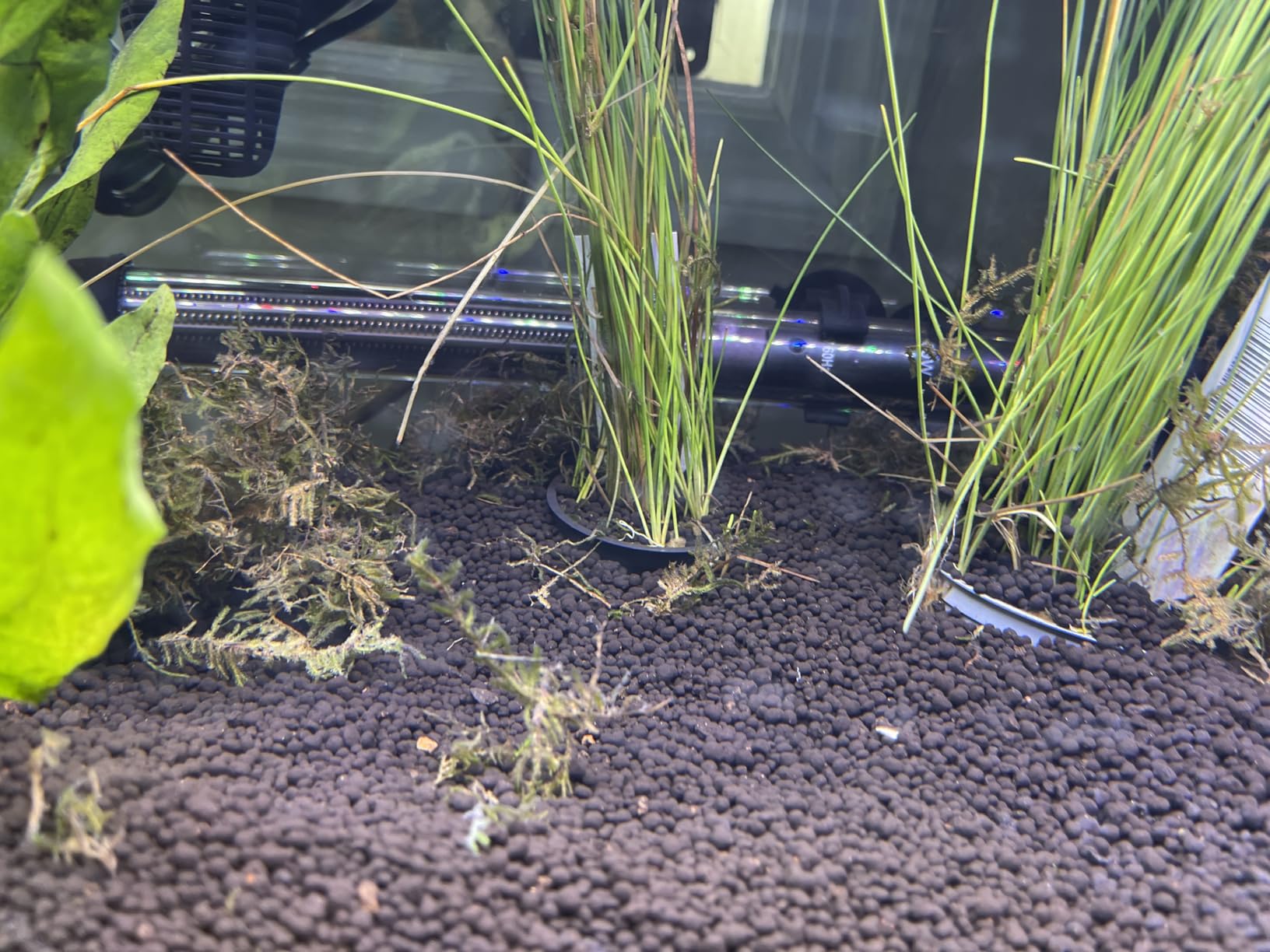
We have put a lot of 500W quartz heaters through large tanks over the years, and this is the one that keeps showing up in the tanks still running years later. The tube is 2mm thickened quartz glass rather than the wafer-thin borosilicate used on entry-level units, and the thermostat is a straightforward mechanical dial covering 68 to 89 degrees. Nothing about it is clever. That is the appeal.
Owner reports describe the temperature control as steady, with the automatic shutoff engaging cleanly at setpoint, and the included thermometer lets you sanity-check the dial without buying a second gauge. At 40 to 75 gallons of rated capacity, the correct use in a 100-gallon tank is as one half of a split pair.
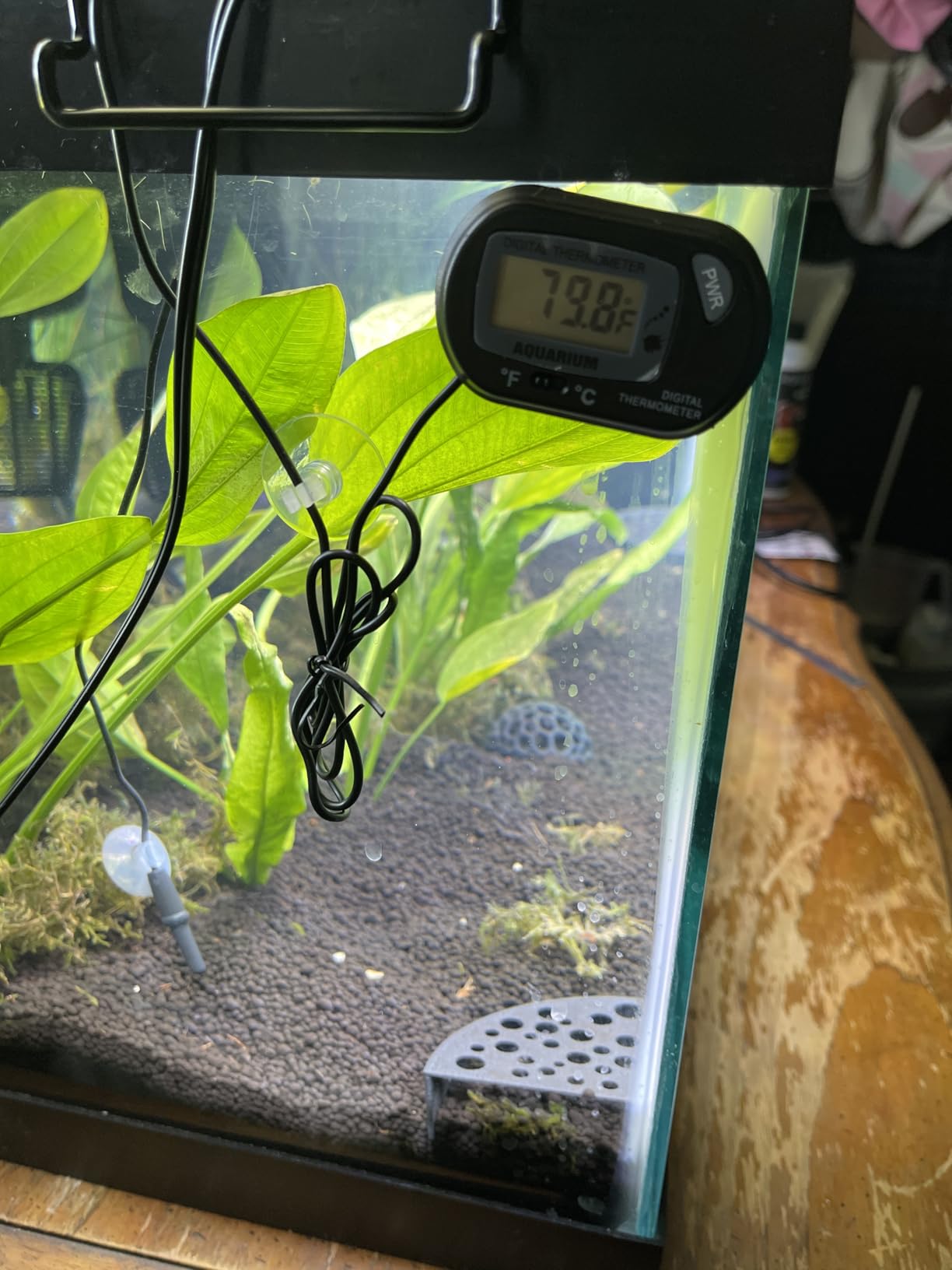
The two recurring complaints are both fixable. Thermostat calibration drifts slightly and needs a nudge back toward true, and the suction cups are the weak point once a year of algae scrubbing has pushed on them. Neither issue threatens livestock. Both are the kind of thing a five-minute maintenance visit absorbs.
What it does not have is an external controller. If your tank holds fish worth more than the equipment, pair this unit with a probe-based controller and treat the built-in dial as a backup layer rather than your primary control.
Why it holds up in a big tank
The thicker quartz wall is the entire story. Standard glass heaters fail at the seal where the element wire meets the glass end cap, and a 1mm wall leaves almost no margin. Doubling that thickness gives the thermal expansion cycle somewhere to go, and this model draws far fewer leak reports than its review count and rating would suggest for a glass unit.
For a 100 to 150 gallon display, run two of these at a lower setting rather than one oversized unit. Each covers a zone, and if one fails the tank still has heat.
Where it falls short
Mechanical dials are not precision instruments, and the accuracy you get depends on ambient room temperature more than most owners expect. In a cold room the tank sits noticeably below setpoint, which is exactly the scenario where a large tank needs more wattage rather than a better dial.
It is also a 500W unit. Anything past roughly 150 gallons needs a bigger heater or a second one, and the rating on the box is the number to plan around.
2. HiTauing 500W Submersible Heater with Digital Controller
HiTauing Aquarium Heater, 50W/100W/200W/300W/500W Submersible Fish Tank Heater with Over-Temperature Protection and Automatic Power-Off When Leaving Water for Saltwater and Freshwater
500W quartz glass
External digital controller
63-94F range
Automatic power-off out of water
Pros
- External digital controller with F to C toggle
- Intelligent water sensor with auto shutoff
- Over-temperature protection
- Available from 50W to 500W
- Nickel-chromium wire with silicon carbide conduction
Cons
- Controller durability reports over time
- Probe reading can need calibration
This is the pick we recommend to anyone building a large freshwater tank who wants controller features without moving up to titanium. The controller is a genuinely separate wall-mounted box with a digital display, a Fahrenheit to Celsius toggle, and its own sensor sitting in the water. The heater tube itself is explosion-proof quartz glass with nickel-chromium wire and silicon carbide conduction between them.
Two protections matter at this scale. The water sensor cuts power when the heater is out of the water, which stops the dry-burn scenario that ruins most glass tubes. Over-temperature protection adds a second ceiling independent of your setpoint. The 63 to 94 degree range is wide enough for a cold room or a warm room without swapping units.
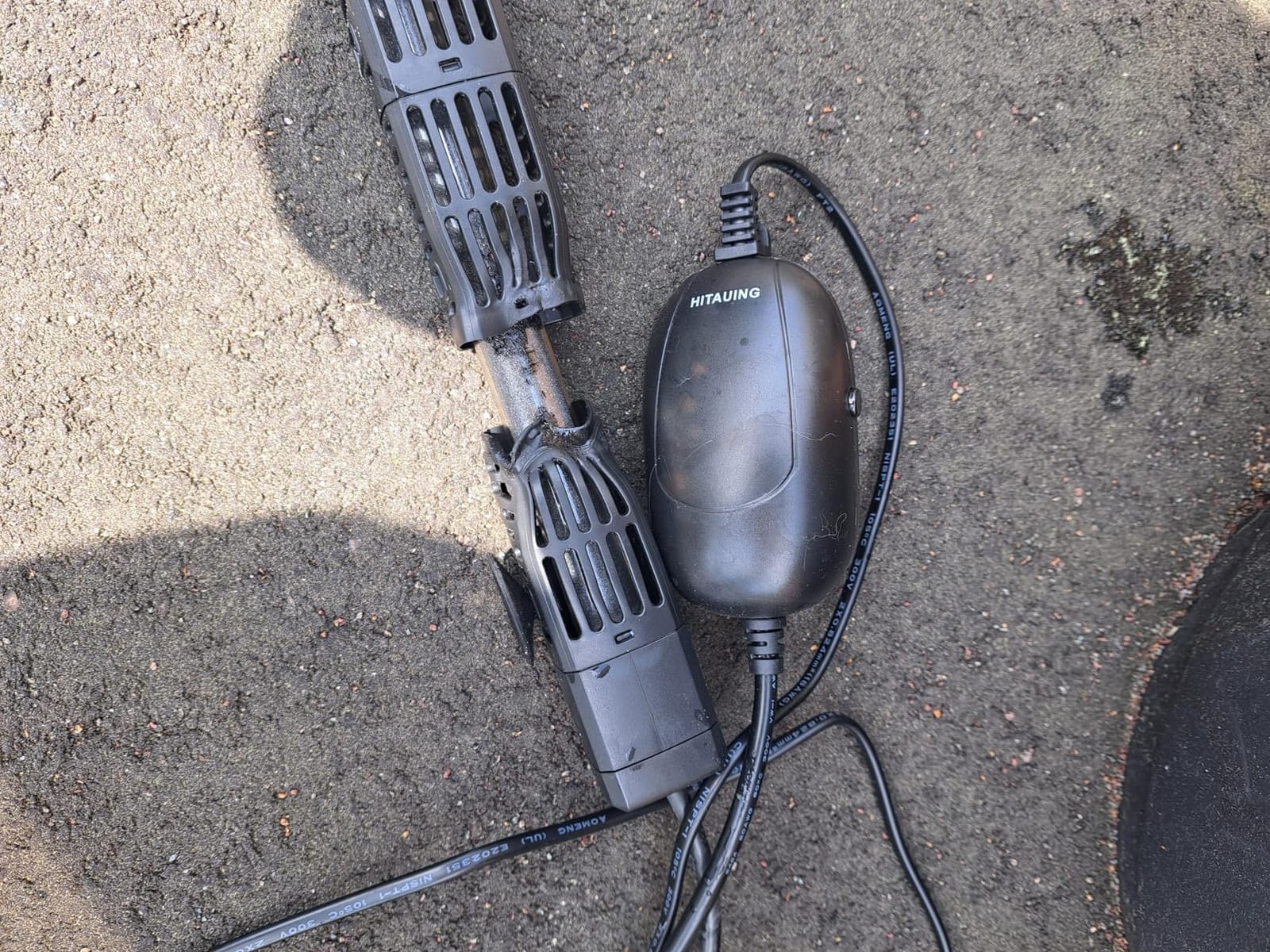
Owners consistently like the digital readout because it means you are not leaning over the rim of a 125-gallon tank to check a dial. The temperature range spans 50W through 500W in the same line, so a 60-gallon display and a 90-gallon tank can use identical hardware.
The honest weakness is the controller box. A number of owners report controller problems developing over time, and the probe reading occasionally needs calibration against a known thermometer. The heater body itself draws far fewer complaints than the electronics attached to it.
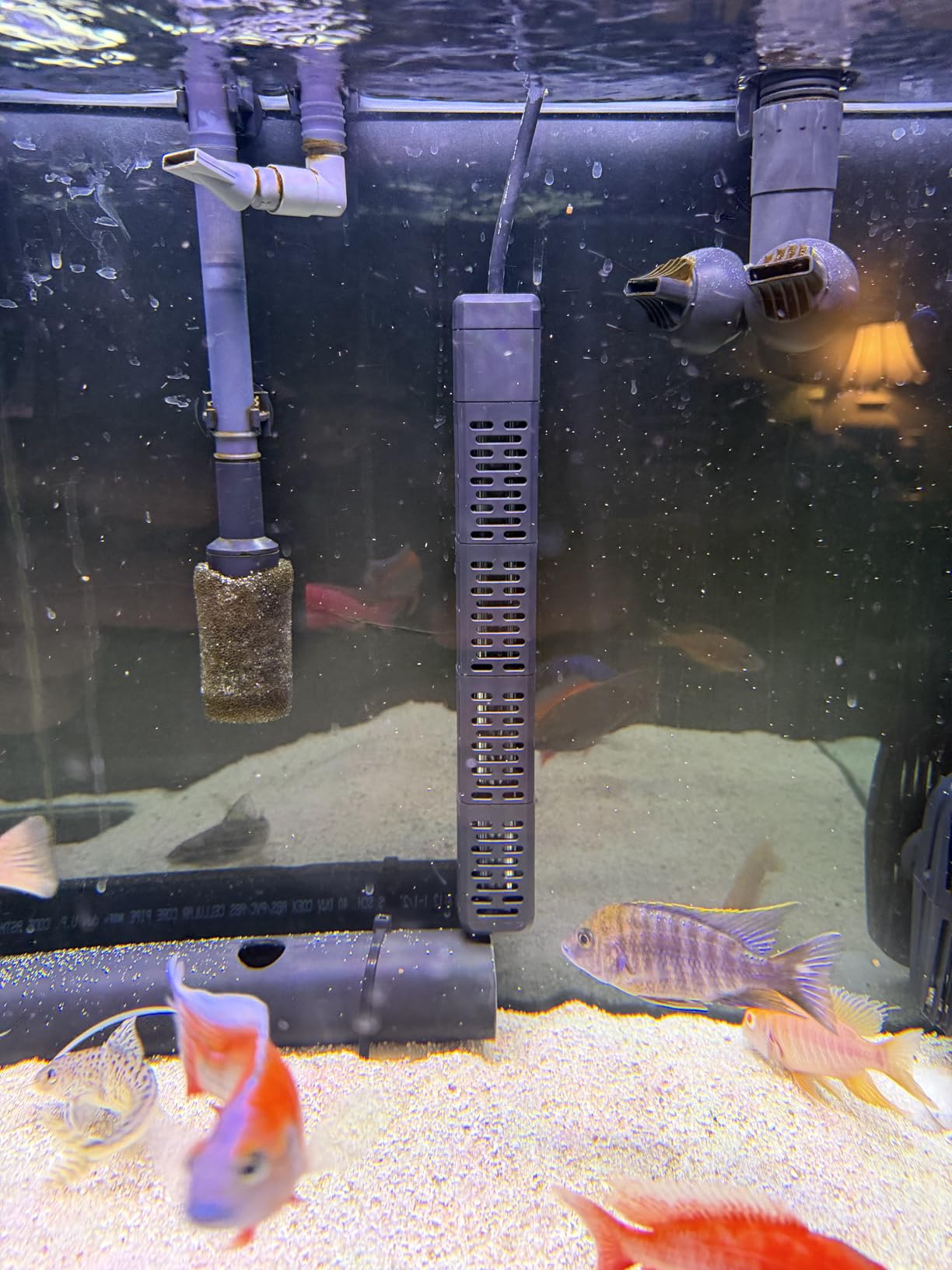
Best value for a 100 to 125 gallon tank
The 500W version is rated for the middle of that range with a real margin, and the external controller means you get an alarm without buying a second device. In practice that combination normally costs more than a dial heater and less than a titanium unit, which is why it lands here rather than in the titanium section.
Keep the controller mounted above the waterline on a wall or cabinet face where you can hear it, and route the probe into the far corner from the heater.
Where it falls short
Quartz glass is still glass. In a tank with large aggressive fish, an arowana or an oscar that routinely rams the glass, a titanium element is the safer long-term choice no matter how good the quartz is.
The controller is not waterproof either, so it needs a dry mounting spot away from the sump splash zone.
3. hygger 300W-1000W Quartz Heater with LED Controller
hygger Aquarium Heater 300W/500W/800W/1000W, Submersible Fish Tank Heater
300W rated 40-80 gallons
Up to 1000W variants
LED controller 59-93F
HH and LL error codes
Pros
- Wattage ladder covers 300W to 1000W in one family
- HH overheat and LL low-water error codes
- External controller with mounting bracket
- PC plastic heater guard included
- 10.1 foot power cord
Cons
- Non-modular design means full replacement
- Controller is not waterproof
- Some units show temperature spikes
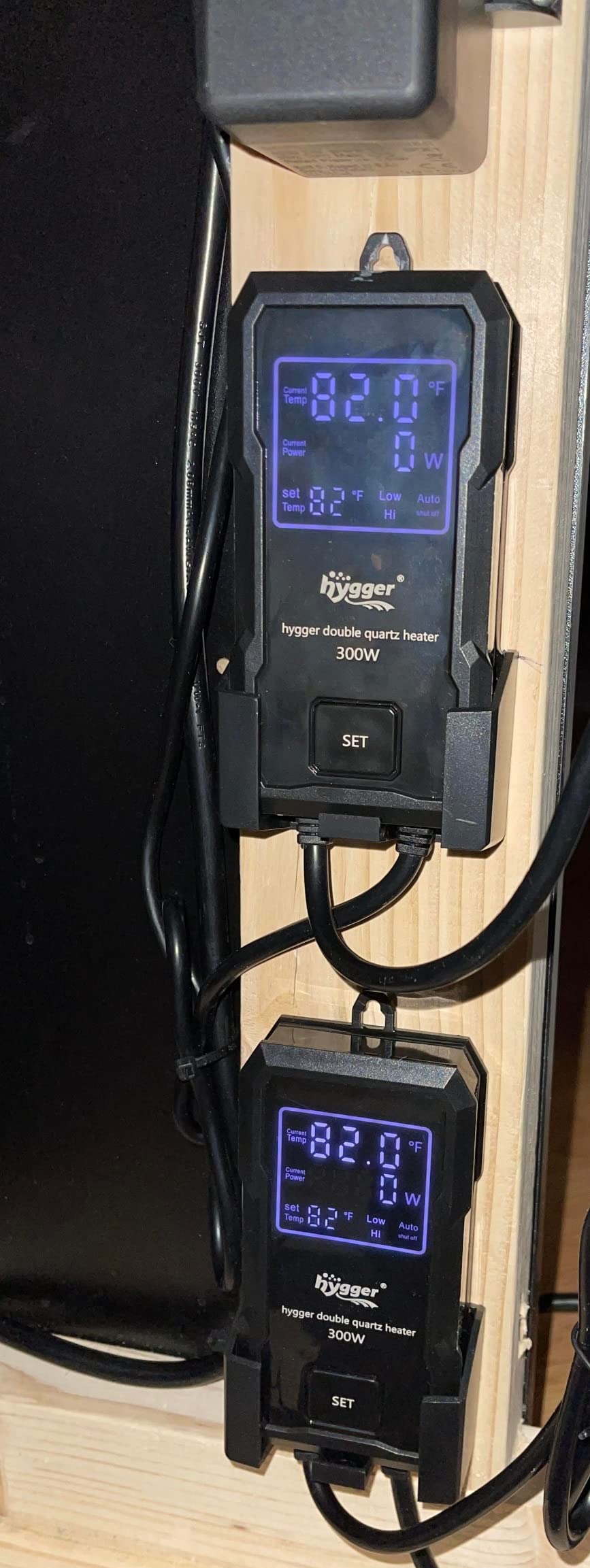
The reason this one is on the list is the ladder. The same product family covers 300W through 1000W, so the controller, the bracket and the error behaviour stay identical as you move up in size. The 300W version is rated for 40 to 80 gallons, and the 500W and 800W versions climb from there.
The error codes are the feature we care about most. HH flags an over-temperature condition, LL and AUTO flag the heater being out of the water or the probe reading nonsense. On a large tank, a controller that tells you why it stopped heating is worth more than one with a prettier display, because you can act on it before the livestock does.
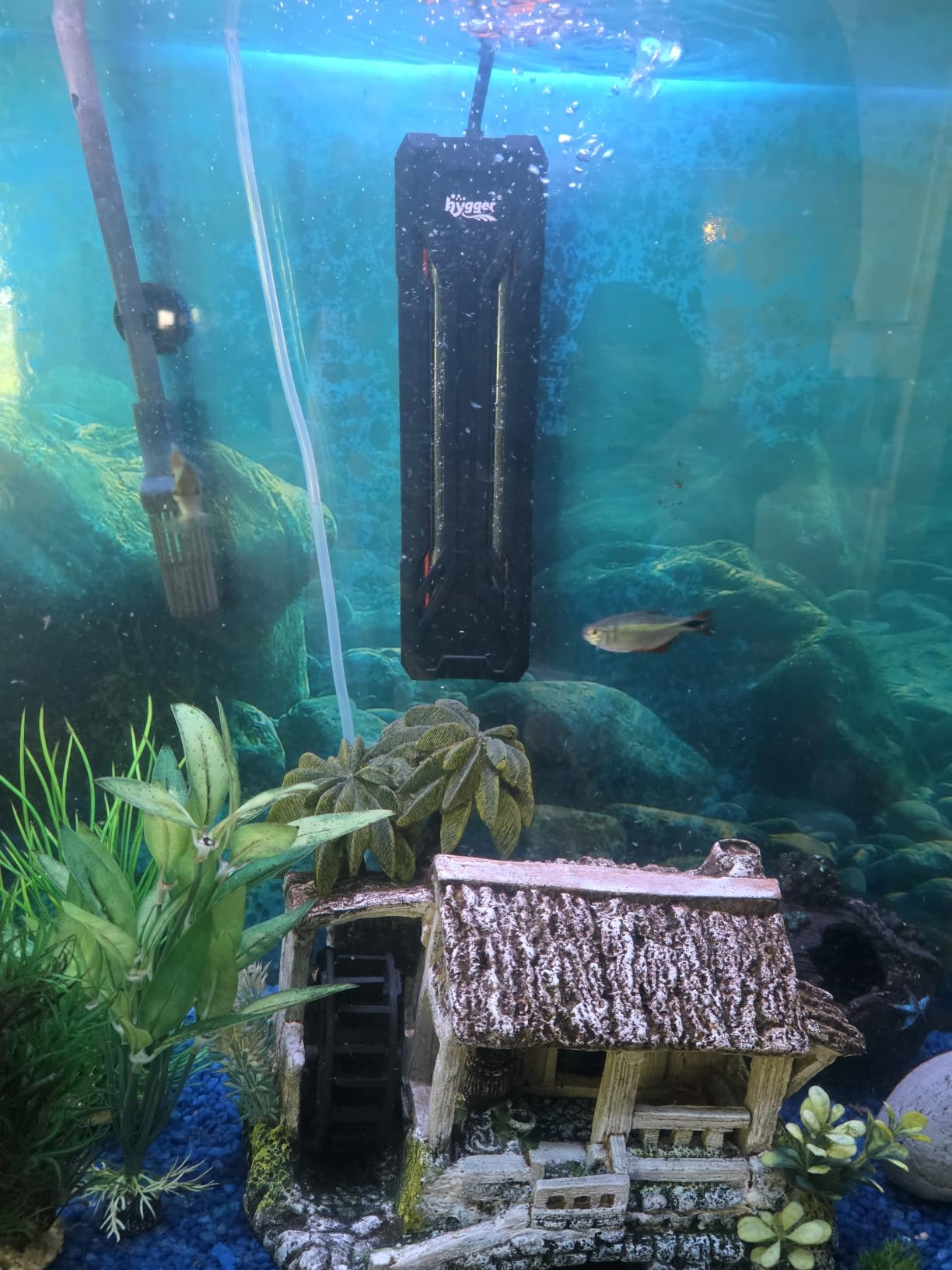
The heater body is explosion-proof quartz glass with a PC plastic guard, and the 10.1 foot cord gives you real placement freedom in a long display. The LED controller reads 59 to 93 degrees with plus or minus 1 degree accuracy, which is honest for a probe at this price point.
Durability reports are mixed, and the review pattern is bimodal: some owners have units running for years, while others see failure between six and twelve months. The 14 percent one-star rate is the highest among the picks we recommend, and it tracks to controller and sensor failures rather than tube failures.
Why the error codes matter more than the wattage
When a 100-gallon tank drops two degrees, the first question is whether the heater stopped or the controller lost its mind. HH, LL and AUTO codes answer that in seconds. Without them you are guessing with a thermometer and a multimeter at midnight, which is a bad way to find out whether a 250-gallon tank is still heating.
For that reason alone, this family is a strong second unit for redundancy. Two identical controllers mean one troubleshooting manual and one error vocabulary.
Where it falls short
Nothing is modular. When the controller or probe fails, the whole heater is replaced rather than just the electronics, so keep the receipt and the model number. Reef2reef threads also flag that hygger accuracy claims tend to run ahead of what owners measure with an independent thermometer, so verify before you trust a setpoint.
Warranty is one year, which is the shortest in this category. That is the trade for the wide error-code vocabulary.
4. HITOP 600W Titanium Heater for 75-180 Gallon Tanks
HITOP 600W Titanium Aquarium Heater – Digital Fish Heater with LED Temp Display and External Controller, for Large Fish Tank 75~180Gallon
600W rated 75-180 gallons
Titanium alloy element
Dual temperature display
External controller 64-93F
Pros
- Titanium element will not shatter
- Rated up to 180 gallon tanks
- External controller with mounting bracket
- Dual probe design
- Protective cage included
Cons
- Display accuracy reported 6-10F low
- Needs a separate thermometer to verify
- Controller is not waterproof
This is the unit we point at when someone asks about a 150-gallon display and wants an unbreakable element. Six hundred watts is rated for 75 to 180 gallons, which covers a very common large-tank size, and the element is titanium alloy rather than glass, so a large fish that hits the rod does not create a leak path.
The controller shows two temperatures at once, current and setpoint, across a 64 to 93 degree range, and the heater uses a dual probe design for detection. Overheating protection triggers at 93 degrees. An impact-resistant cover wraps the element, which matters when the heater sits in open water in a display rather than behind a sump panel.
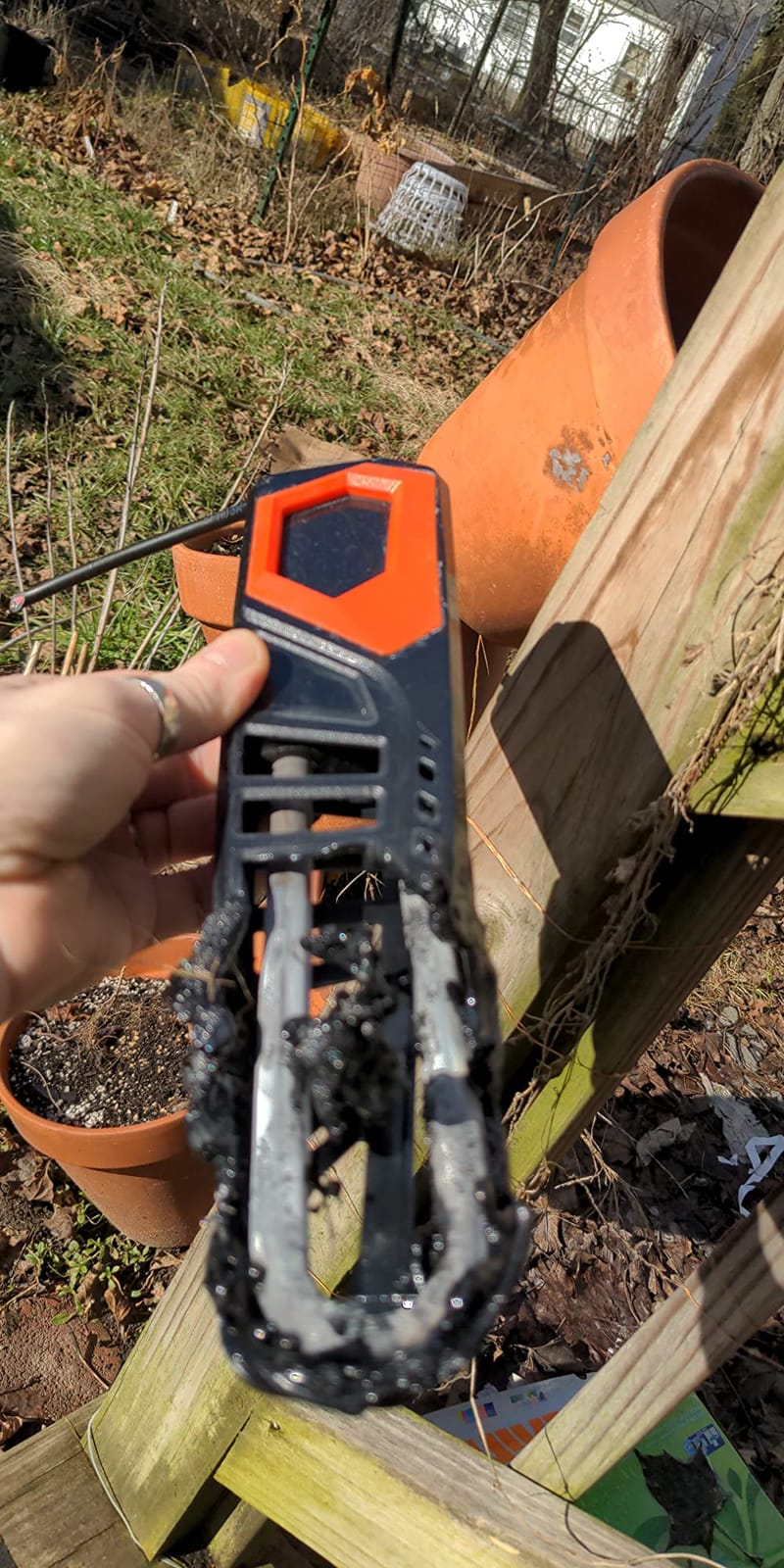
That display accuracy complaint is the thing to plan around. Owners frequently report the screen reading several degrees below the true water temperature, which means the controller can be cycling the heater before the tank is warm enough. The fix is simple and takes five minutes: check with a separate thermometer, then apply a permanent offset in the controller.
There is also a small number of reports of overheating malfunctions. We mention it because you will find it, and because it is the reason we rate this fourth rather than higher despite the strong feature set.
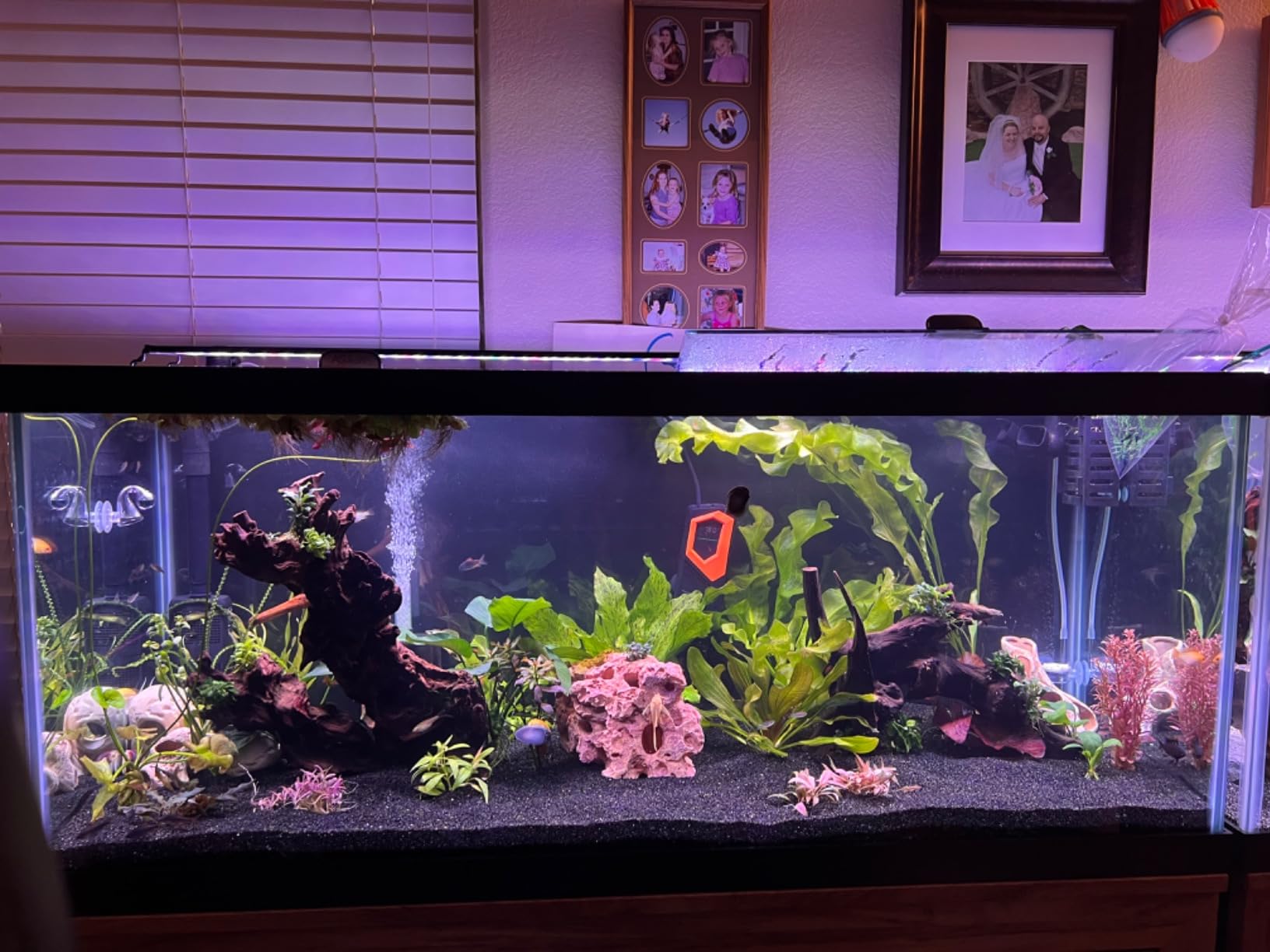
Best titanium option for a 150-gallon display
Titanium changes the risk profile for open-display tanks. Glass tubes fail from impact, from seal fatigue or from a dry burn. A titanium element removes the impact and dry-burn failure modes almost entirely, and the realistic end-of-life here is slow corrosion in salt water.
Warranty is 12 months, which is standard for the titanium category rather than generous.
Where it falls short
The accuracy offset is non-negotiable to configure. If you skip it, you will either run the tank cold or fight the controller all winter. Budget twenty minutes with a reference thermometer before you trust the display.
It is also a single-element design, so if you are protecting a reef you still want a second unit on a separate controller.
5. hygger Pinpoint 500W Titanium Heater for Reef and Saltwater
hygger Pinpoint Saltwater Aquarium Heater with Digital Thermostat IC Temp Controller, Titanium Tube Submersible Fish Tank Heater for Coral Reef 500 Watt
500W rated 60-120 gallons
Shatterproof titanium tube
Precision plus or minus 0.5C
12 inch rod
Pros
- Titanium tube with no glass to shatter
- Dual LCD shows current and set temperature
- Wide 32-104F range
- Can be mounted horizontally
- Fully automatic shutoff at setpoint
Cons
- Narrowest tank coverage among the titanium picks
- Controller and sensor failures reported at 4-8 months
- Suction cups may need replacing
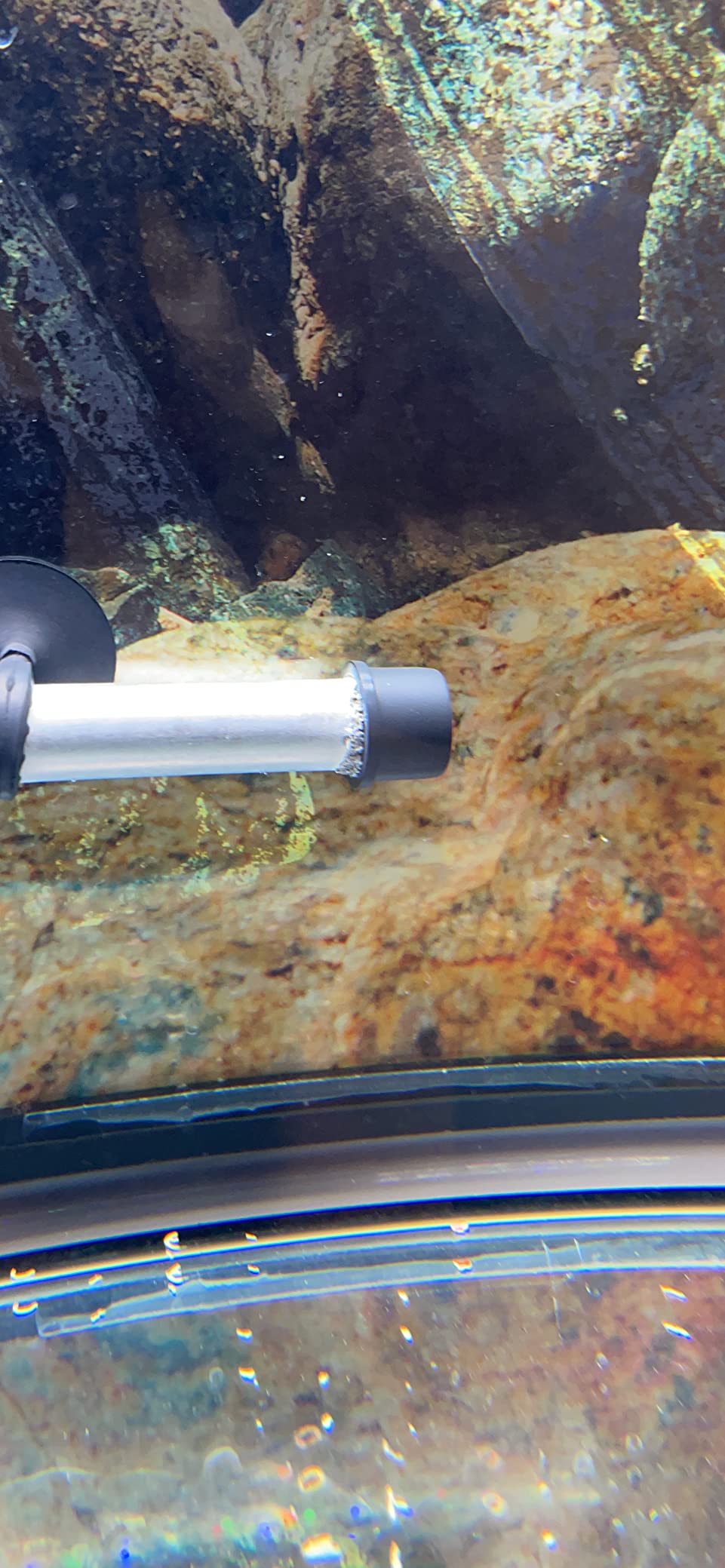
Salt water is corrosive and reef keepers are unforgiving about swings, which is why this one is built the way it is. The tube is titanium with no glass anywhere, and the external IC thermostat controller carries a dual LCD display showing water temperature and set temperature at the same time. Control accuracy is stated at plus or minus 0.5 degrees Celsius, a tighter figure than the plus or minus 1 degree claim most heaters here make.
It can be mounted horizontally, which is unusual and genuinely useful. In a long shallow display where vertical placement is impossible, a submersible horizontal mount gets the element into moving water instead of a stagnant corner. The 32 to 104 degree range covers everything from a cool room to a warm one.
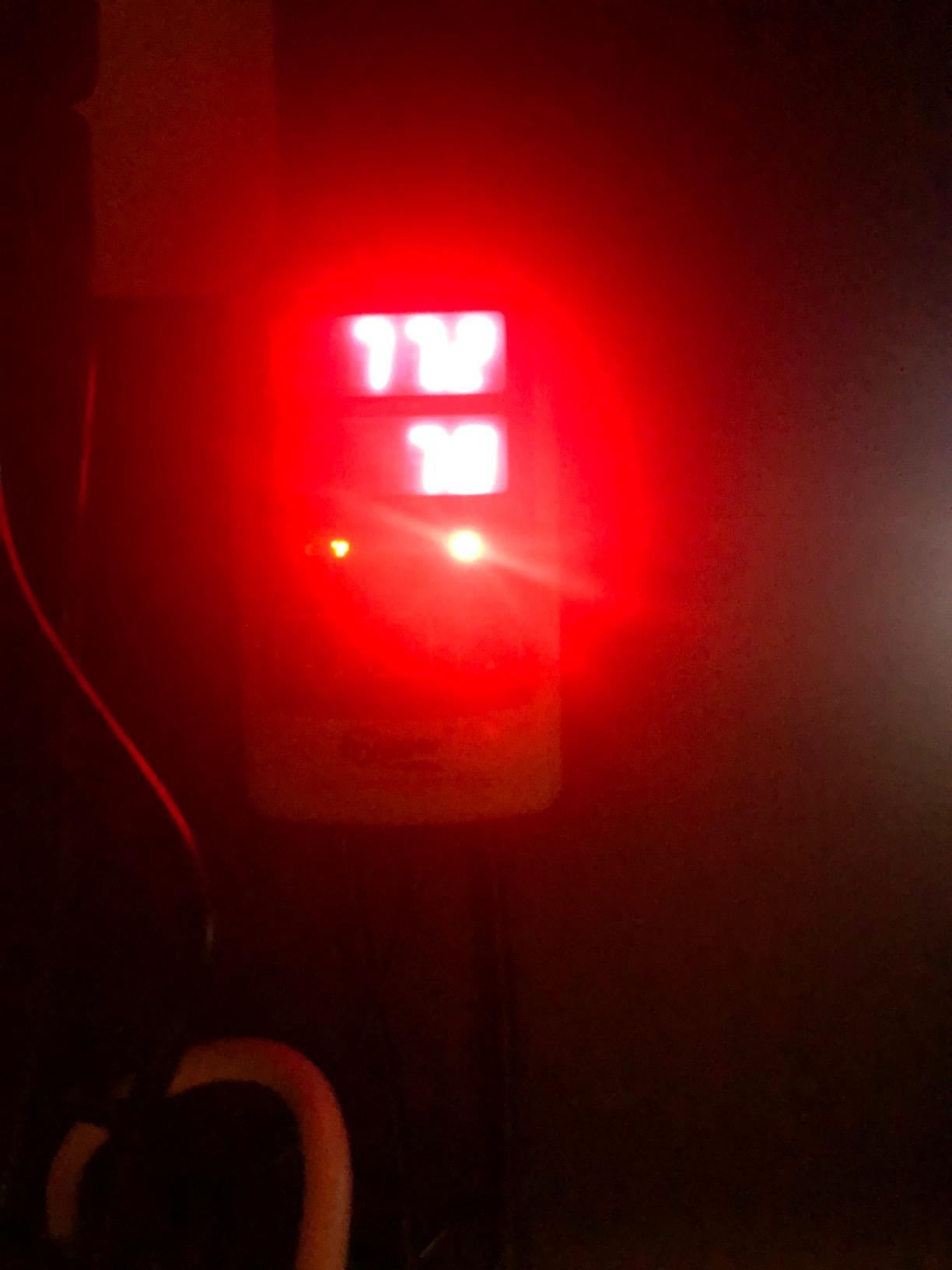
At 60 to 120 gallons for the 500W version, this is a unit for a 100-gallon reef rather than a 200-gallon display. Beyond 120 gallons you would want two of them, and the 12 inch rod is compact enough that hiding it behind rockwork is straightforward.
Owners praise the build and the precision while working. The recurring negative is longevity of the electronics rather than the element, with controller and sensor failures clustering between four and eight months. Customer service has been responsive about replacements, which softens that considerably.
Best for a 100-gallon reef
The plus or minus 0.5C control figure is the reason this lands on a reef shortlist. Corals and many soft-bodied invertebrates respond to temperature change faster than fish do, and a tighter control band means less swing between day and night. The wide range also means the same unit works if you later move the tank into a cooler room.
Keep the probe away from the heater body and in the far end of the tank, and the readout becomes genuinely representative of the whole system.
Where it falls short
The wattage ceiling is the real limitation. At 500W for 60 to 120 gallons, this cannot heat a 200-gallon tank on its own without running at a very high duty cycle, and a 300-gallon display is entirely out of range.
Plan to replace the controller around the eight-month mark as maintenance rather than waiting for a failure, and keep spare suction cups.
6. azw 800W Heater with Triple Auto-Shutoff
azw 800W Aquarium Heater for 110‑250 Gal, Triple Auto‑Shutoff Safety
800W rated 110-250 gallons
Double quartz glass tubes
Plus or minus 1F accuracy
12 months after-sale service
Pros
- Rated up to 250 gallons
- Triple protection with off-water warning and anti-boiling
- Memory function restores settings after power loss
- Two heating modes for precision or energy saving
- Double explosion-proof quartz glass
Cons
- Newer design with limited long-term data
- Some owners find the alarm overly sensitive
- Controller is not waterproof
Eight hundred watts is a genuinely large number for a home aquarium heater, and this one is rated for 110 to 250 gallons. That rating is the whole reason it is here: it is one of the few units on the market that legitimately covers a 200-gallon display without running at a duty cycle that would wear the element out.
The construction is double explosion-proof quartz glass with nickel-chromium wire and quartz sand conduction, wrapped in a V0-rated flame retardant plastic shell. Three protections run independently: an off-water warning, over-temperature cutoff, and an anti-boiling function that stops it driving water past boiling-equivalent in normal tank conditions.
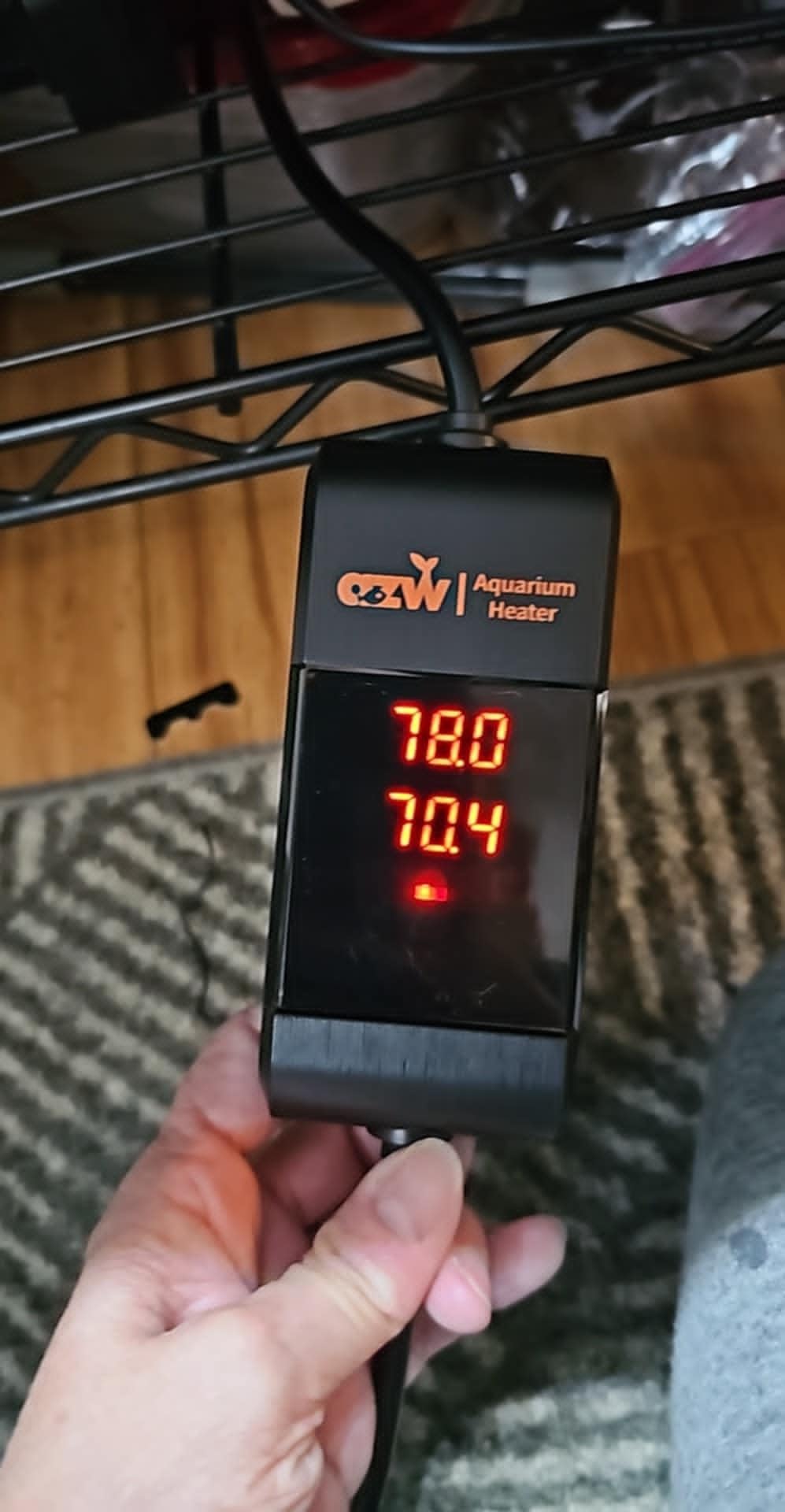
Two modes let you choose between precision cycling and energy saving, and the memory function restores your setpoint after a power outage instead of defaulting to a cold tank. Accuracy is stated at plus or minus 1 degree, which matches what most owners report.
The caveat is straightforward: this design arrived in 2024, so the long-term record does not exist yet. Early reviews are strong at 79 percent five-star, and the service commitment is 12 months after-sale, but judge it on build quality now and revisit after a year.
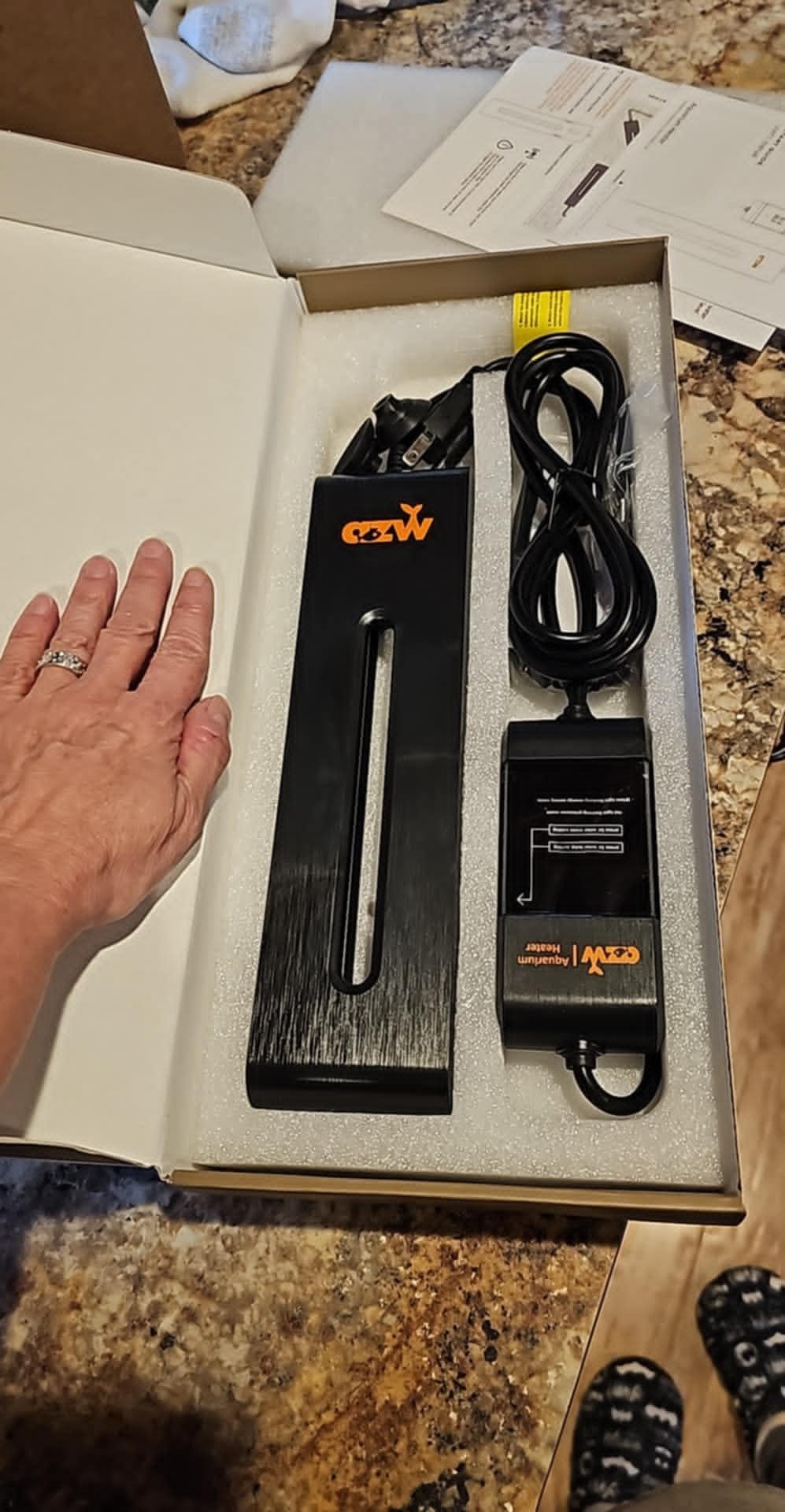
Best single unit for a 200-gallon tank
For someone who wants one heater rather than two, this is the pick. The 110 to 250 gallon rating means a 200-gallon tank sits in the comfortable middle of the range rather than at the ceiling, so the duty cycle stays sane and the tube has a long life.
The memory function deserves more attention than it gets. After a winter power cut, most heaters forget their setpoint and a controller default can leave a large tank running cold until you notice. This one resumes where it left off.
Where it falls short
With under 200 reviews, you are buying on a short track record. That is a real consideration when a tank holds valuable livestock, and it is the main argument for spending more on an older design with a longer service history.
Some owners also find the alarm overly sensitive, which on a large display with surface agitation can be annoying.
7. HITOP 1000W Titanium Heater for 130-300 Gallon Tanks
HITOP 1000W Digital Aquarium Heater: Titanium Fish Tank Heater with Temperature Control Device, Submersible Heater for Freshwater/seawater up to 300 Gallon
1000W rated 130-300 gallons
Titanium alloy heating tube
External control box with power readout
64-93F range
Pros
- Only titanium element rated to 300 gallons
- Real-time temperature and power display
- Fast heating for large water volumes
- Protective cover with even heat dissipation
- Suction cups and thermometer sticker included
Cons
- Long rod needs height to place
- Reports of error codes and early failure
- No smart home integration
- One year warranty
At a thousand watts, this is the most powerful single unit here and the only titanium element rated all the way to 300 gallons. If you have a 250 or 300 gallon display and you want one heater rather than a pair, this is the shortlist. The element is a titanium alloy tube, anti-shattering and corrosion resistant, with a protective cover drilled for even heat dissipation.
The external control box is unusual in a good way. It shows real-time water temperature and real-time power draw, so you can watch the duty cycle directly rather than guessing. Knowing that your heater is running at 40 percent instead of 100 percent tells you whether your wattage is correctly sized.
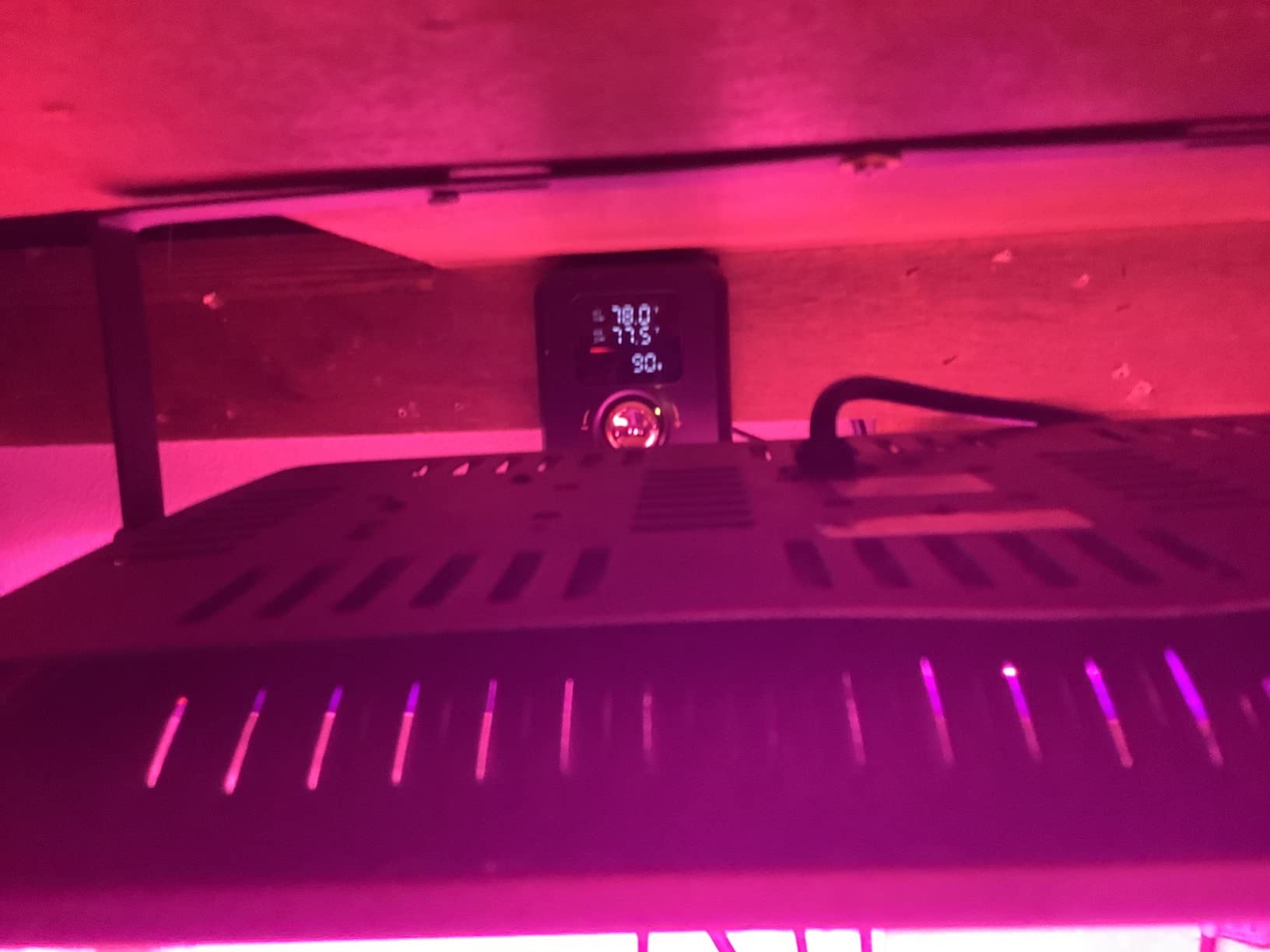
Measured against the ratings, this one covers 130 to 300 gallons, so a 200-gallon tank has genuine headroom and a 300-gallon tank is at the top of the range rather than past it. The 64 to 93 degree setpoint range and a 6 foot cord round out a sensible package.
Where it loses points is the physical rod and the electronics. Owners mention the long element as a placement problem in tanks under about 24 inches tall, and the control box draws complaints about feeling cheap. There are also reports of error codes and premature failure, and at 108 reviews the record is thin.
When a 1000W single unit makes sense
A thousand watts is a lot of heat to concentrate in one element, and if it fails stuck-on it heats 300 gallons fast. That is the argument for splitting. But if your tank is deep, your room is warm, and you want a single point of control, this is the unit that covers the volume without oversizing past its rating.
It is also the pick for anyone moving up from a 150-gallon system who does not want to re-plan their plumbing for a second heater.
Where it falls short
Measure your tank height before buying. A long titanium rod in a shallow display either sits proud of the waterline or crowds the substrate, and both look bad. The 4.1 rating is the second lowest among the heaters we recommend, driven mostly by controller complaints rather than heating performance.
Budget for a controller failure. One year of warranty is the shortest here, and there is no Wi-Fi integration if you run the rest of your equipment on a controller.
8. hygger 500W Titanium Heater with Separate Precision Thermometer
hygger 500W Titanium Aquarium Heater for Salt Water and Fresh Water, Digital Submersible Heater with External IC Thermostat Controller and Thermometer, for Fish Tank 60-120 Gallon
500W rated 60-120 gallons
12.3 inch titanium rod
Separate 0.2F thermometer
32-104F with 1F precision
Pros
- Titanium tube rated for three year service life
- Includes a separate high-precision thermometer
- Digital display shows water and set temperature together
- Temperature memory retains settings
- Controller has wall-mount holes
Cons
- Controller and sensor failures at 4-12 months
- Some units swing wildly before failing
- Not recommended for sump use
- Suction cups may need upgrading
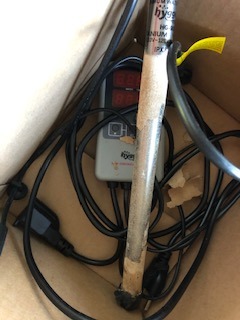
The detail that separates this from the other hygger titanium unit is the second thermometer in the box. It runs from minus 68 to 140 degrees with 0.2 degree accuracy and has its own 4.4 foot cord, so you can put a real reference reading in the far corner of a large tank and compare it against the controller display. That comparison is the only way to know whether your heater is actually holding setpoint.
The heater itself is a 500W titanium tube rated for 60 to 120 gallons, with a 12.3 inch rod and a 32 to 104 degree range at 1 degree precision. The controller mounts on a wall with holes rather than relying only on suction cups, and the temperature memory function restores your setting after a power cut.
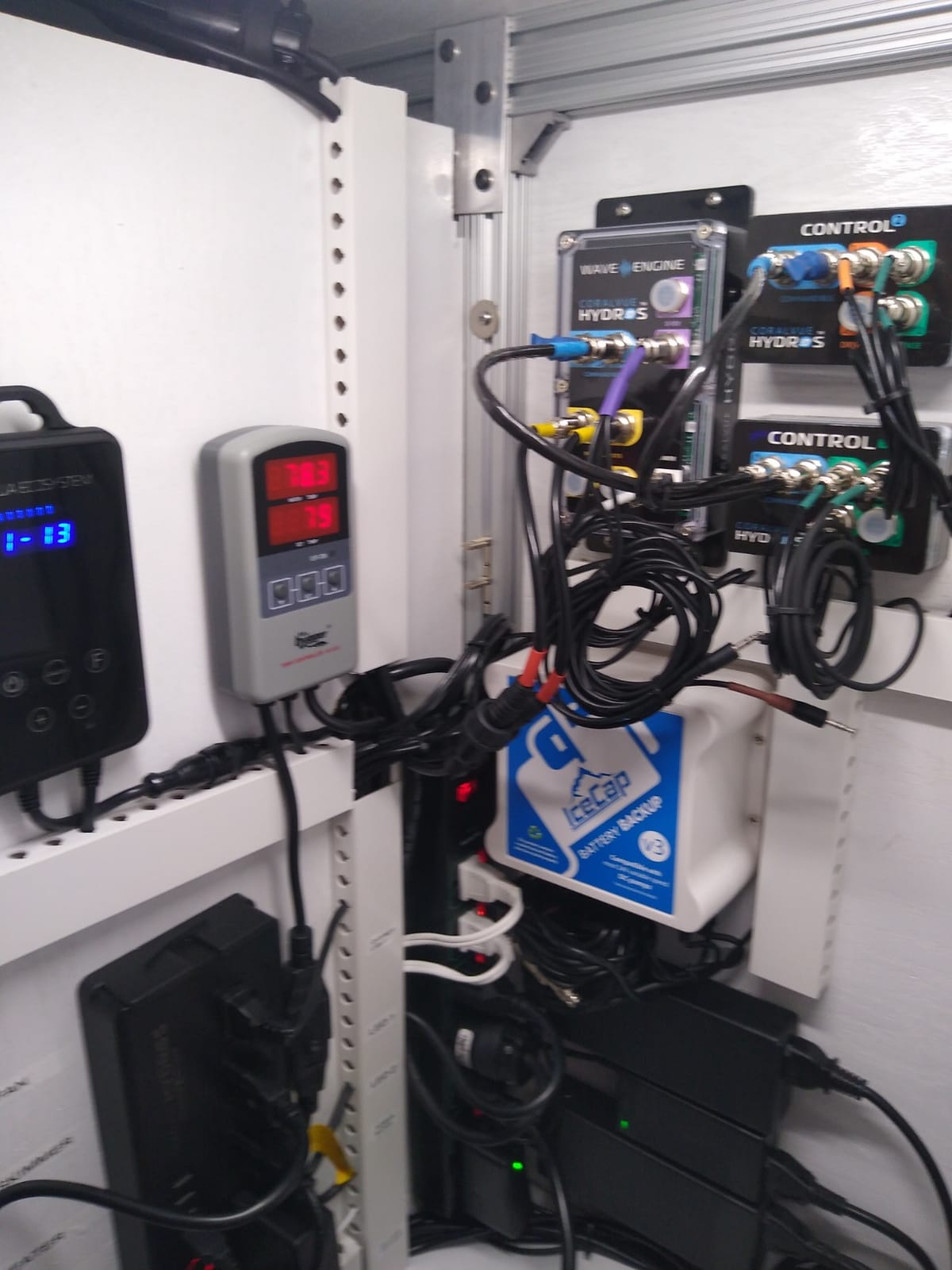
Owners report genuinely excellent stability while the unit is working, and the titanium tube is specified for three or more years of service life in salt water. Customer service has been strong about replacements, which matters given the electronics pattern below.
Against the other titanium models here, the meaningful difference is measurement rather than heating. Where the 600W and 1000W units give you a display you may need to offset, this one hands you a second independent sensor so the question of accuracy is settled with two readings instead of an assumption.
It is also the tidier install. Wall-mount holes in the controller, a long power cord and a rod length that clears a standard 24 inch display mean fewer improvised mounting solutions, which is where most installation regret comes from on units this size.
Best for verifying your own controller
Every accuracy claim in this category is a number printed by a manufacturer. This is the only heater here that ships with an independent calibrated sensor in the box, which makes it the natural choice for anyone who wants to check the truth about their own setup.
Place the reference thermometer in the far end of the tank from the heater. If the two readings agree within a degree, your controller and probe are doing their job.
Where it falls short
There is a consistent pattern of controller and sensor failure between four and twelve months, sometimes preceded by wide temperature swings. Owners have also noted it is not recommended for sump use, which rules it out if you were planning to hide it behind a weir.
Treat the controller as a consumable and replace it on schedule rather than waiting.
9. ZHGSERVU 500W Quartz Heater with Protective Sleeve
ZHGSERVU 100W/300W/500W Aquarium Heater 500 Watt Fish Tank Heater Submersible Auto Thermostat Turtle Tank Heater 40-90 Gallon with Protective Sleeve and 3 Suckers
500W rated 50-90 gallons
Protective outer sleeve
3 suction cups
68-94F thermostat
Pros
- Protective sleeve improves shatter resistance
- Three suction cups for a more secure mount
- Works in freshwater and marine tanks
- Suitable for turtle tanks and terrariums
- Multiple wattage options from 100W to 500W
Cons
- Reports of thermostat failing to shut off
- Overheating incidents in the reviews
- Sleeve can deform with heat
- Needs a backup thermostat
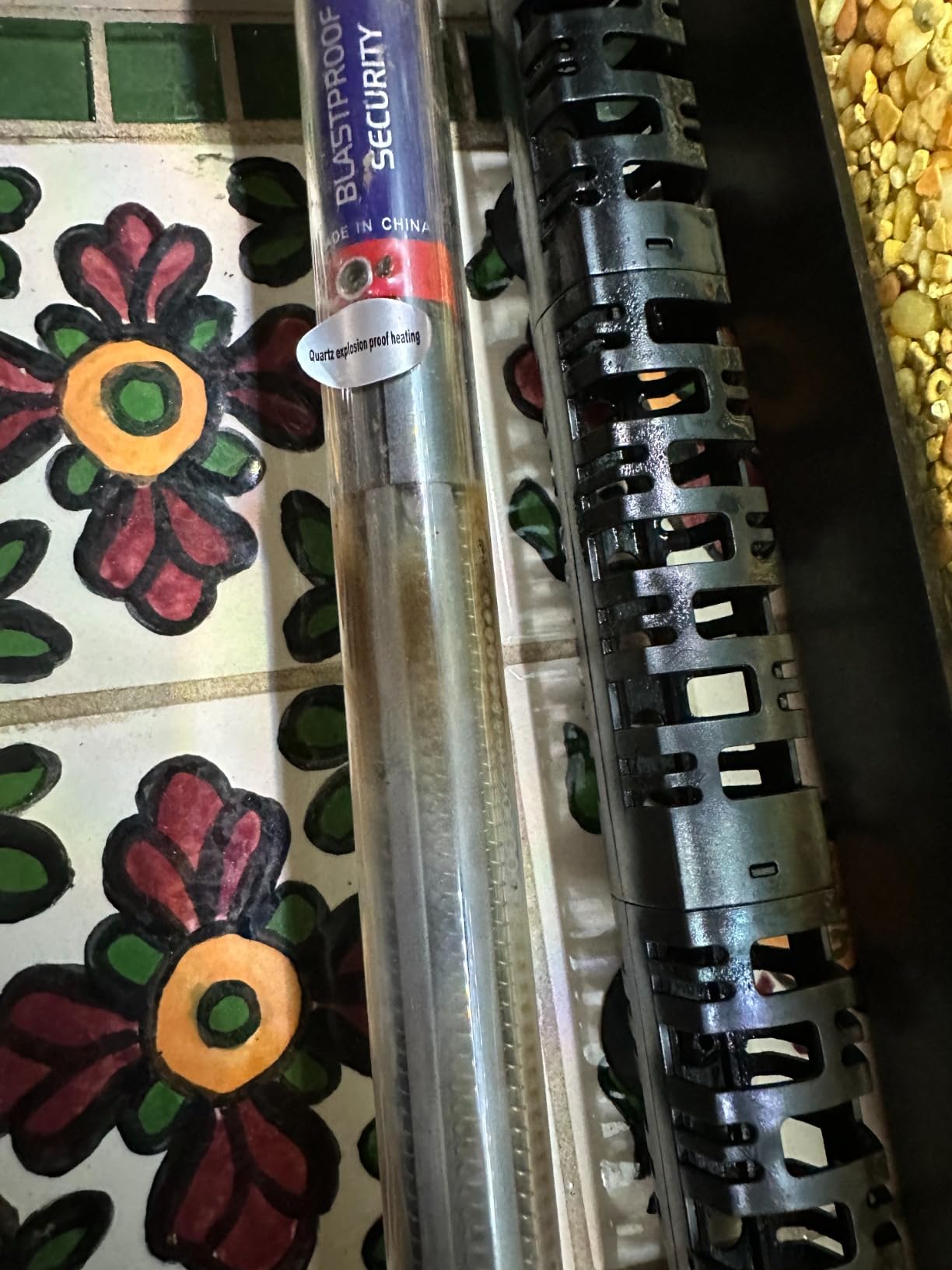
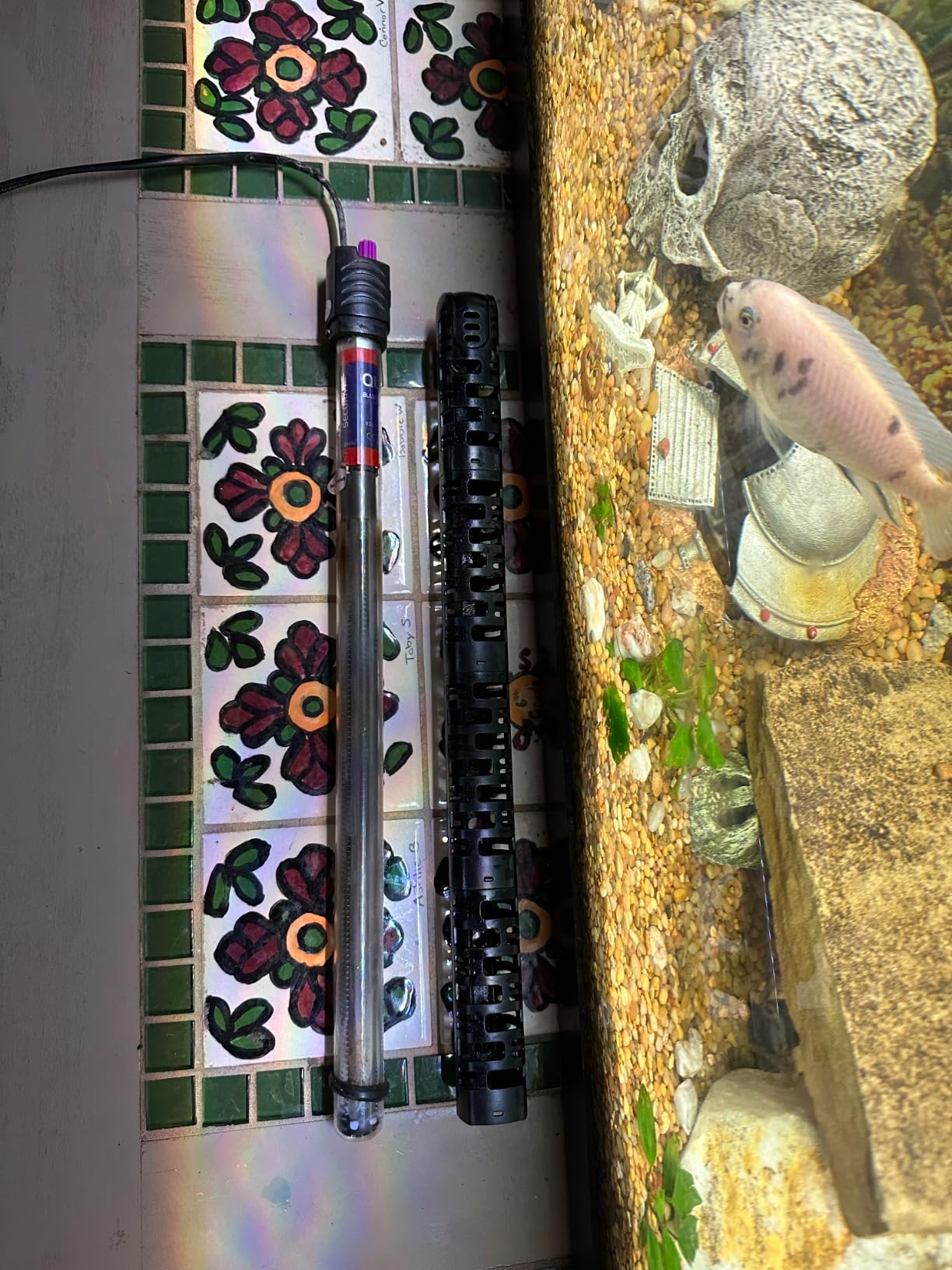
We include this one because budget is a legitimate constraint for a 90-gallon tank, but we want to be direct about the trade. The 500W version is rated for 50 to 90 gallons, uses a fully submersible quartz glass tube, and comes with a protective outer sleeve and three suction cups rather than one or two. The dial runs 68 to 94 degrees with an auto thermostat on top.
Customer service is responsive, with replacement units sent when heaters fail, and the sleeve is a genuine improvement over bare glass for tanks with turtles or terrarium setups where impact is likely.
The reason it sits last is the safety record in the reviews. Thirteen percent one-star, and the reports describe thermostats failing to shut off, with tank temperatures reaching the mid to high 90s and fish losses following. A protective sleeve reduces shatter risk but does nothing for a thermostat that will not open the circuit.
Where a budget heater is defensible
If the tank is 50 to 90 gallons, the livestock is inexpensive and replaceable, and you run an independent controller with its own probe and alarm, then a budget quartz tube is a reasonable trade. The controller provides the safety layer the internal thermostat lacks, and the sleeve covers the mechanical impact case.
Set the controller to cut power at a lower temperature than the heater’s own ceiling, so if one fails the other catches it.
Where it falls short
Do not run this as the only protection in a tank with valuable fish. The failure mode is fail-on, which is the one that kills, and the 61 percent five-star share does not tell you the 13 percent one-star stories are not the same stories.
The outer housing can deform with prolonged heat exposure, and the temperature dial is hard to calibrate. On a 90-gallon tank, spend a little more and the problem disappears.
10. MantaMaze 300W-1000W Dual Quartz Tube Heater
MantaMaze Submersible Aquarium Heater,300W/500W/800W/1000W Fish Tank Heater
300W rated 20-80 gallons
Dual quartz glass tubes
Low-water cutoff with alarm
63-94F at plus or minus 1F
Pros
- Two heating tubes give faster and more even warming
- Low-water protection two inches above the surface
- Audible alarm on error conditions
- Memory function retains settings
- Flame retardant V0 rated shell
Cons
- Released in 2024 with limited long-term data
- One report of a heater exploding in a tank
- Alarm sensitivity complaints
- Controller is not waterproof
The interesting idea here is two heating tubes rather than one. The 300W version is rated for 20 to 80 gallons, and the family climbs through 500W, 800W and 1000W. Two tubes warm the water faster and spread the load across the tank, which means a shorter duty cycle per element and a longer working life for both.
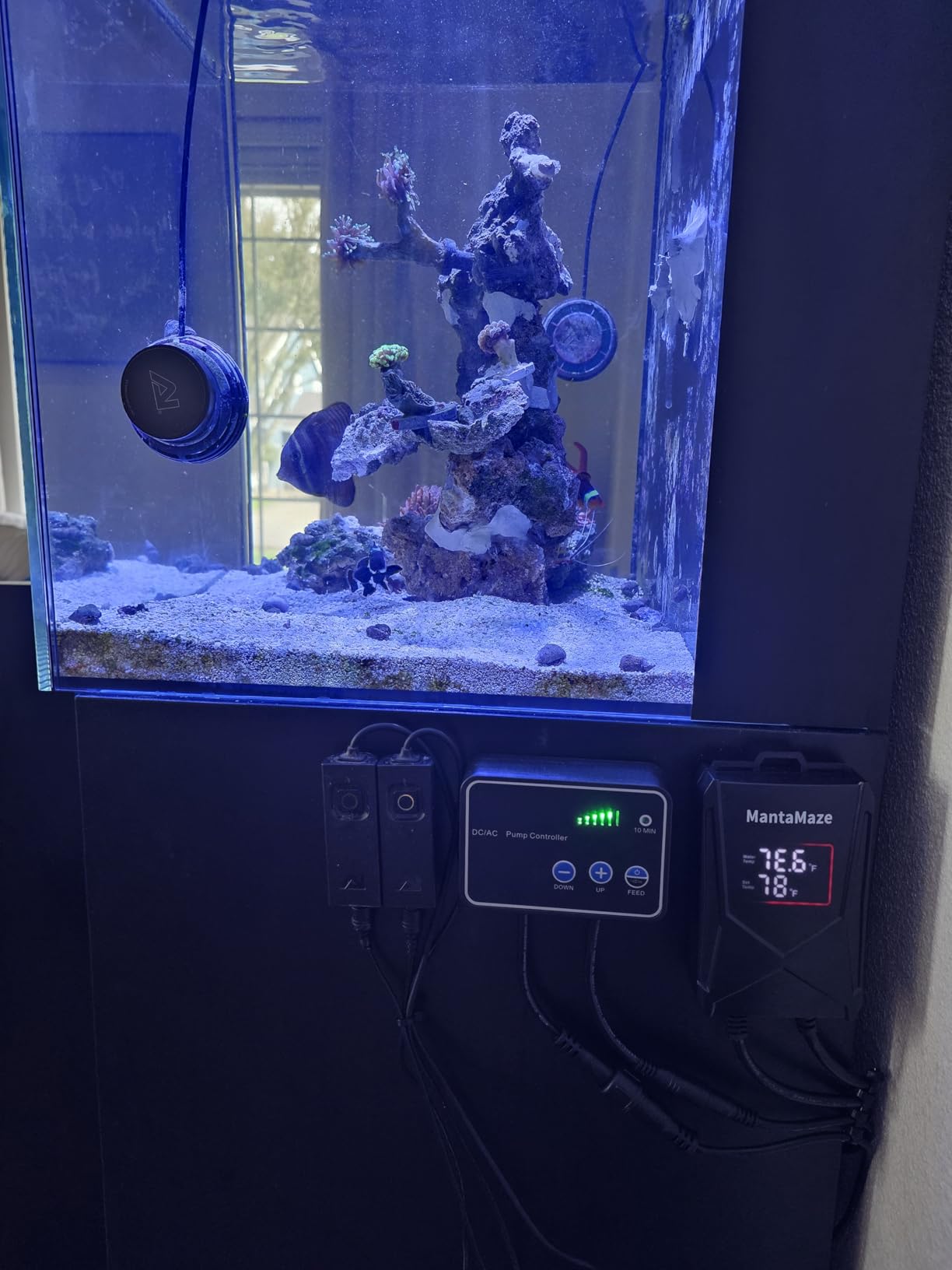
The safety set is unusually complete. Over-temperature protection trips at 94 degrees, low-water protection triggers when the water level drops to two inches above the heater surface, and an audible alarm covers both. A 63 to 94 degree range with a Fahrenheit to Celsius toggle and plus or minus 1 degree accuracy is honest and matches owner reports.
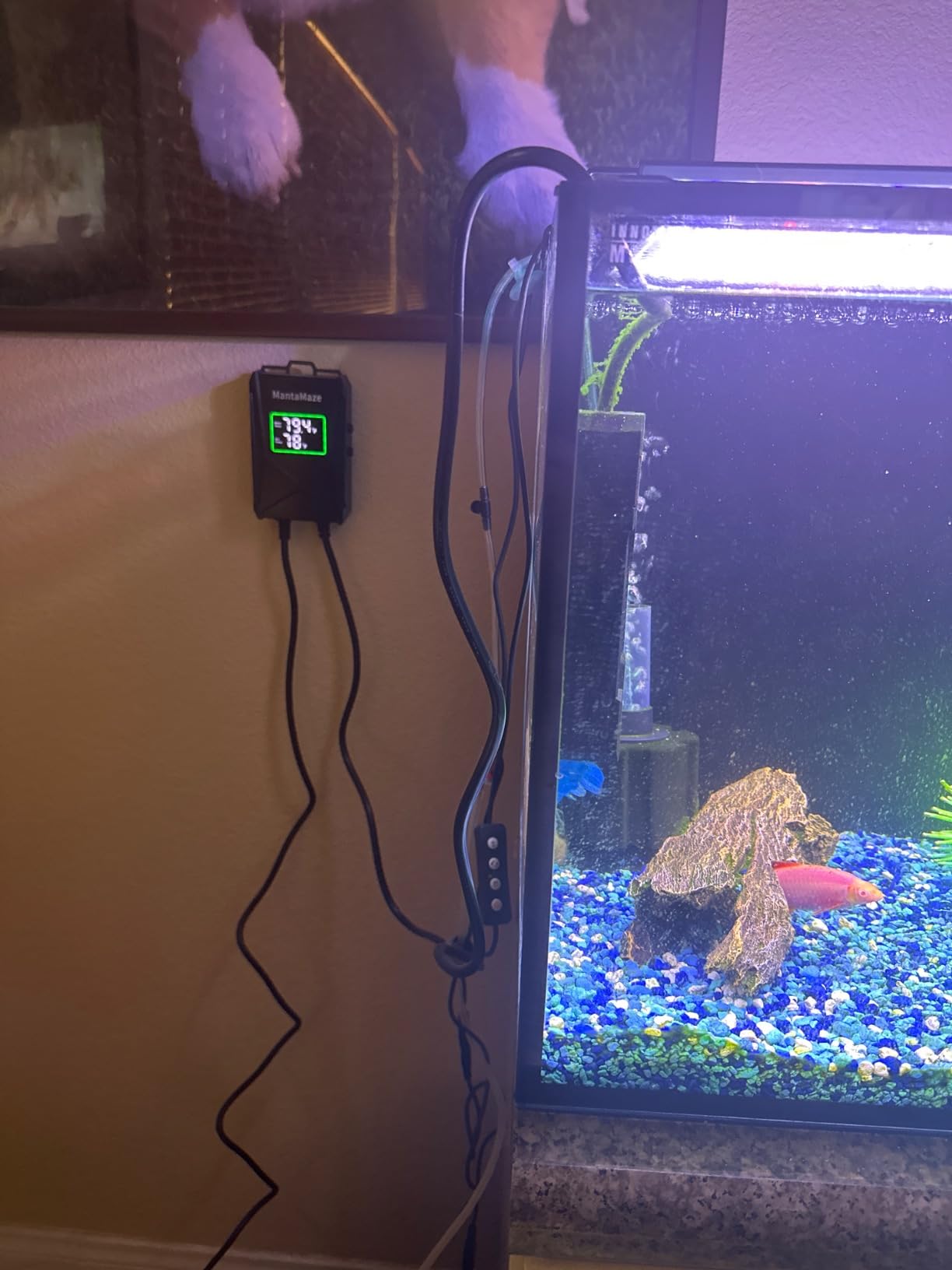
The V0-rated flame retardant shell around the quartz tubes is worth noting, because it is the same material specification used in the azw unit and it is not standard on budget heaters. Memory function restores your setpoint after an outage, and the digital controller mounts outside the tank.
Early reviews are 74 percent five-star, but this design only arrived in 2024 and there is one report of a heater exploding in a tank. One report is not a pattern, and the low-water protection is precisely the feature designed to prevent it, but it is why we place this tenth rather than higher.
Why two tubes beat one big element
Heating physics favours it. Two smaller elements put their output into more of the water column rather than one concentrated rod, so the tank reaches temperature faster and each element cycles less. In a 200-gallon display that translates to shorter run times and a longer service life, which is the actual goal of sizing correctly.
It also mirrors the split-wattage advice below: two moderate heaters, two controllers, two independent failure paths.
Where it falls short
There is no long-term data. A design released in 2024 cannot yet tell you whether the controllers survive three years, and the electronics are the weak point on most heaters in this category rather than the tubes.
Some owners find the alarm too sensitive for a tank with heavy surface agitation, which trains you to ignore it. Test it before you need it.
How Many Watts Do You Need for a Large Tank?
Measure your real water volume rather than trusting the tank’s advertised capacity. Subtract substrate, rock and equipment, then apply three watts per gallon of water in a normally heated room, or five if the room is cold or the tank sits in a basement. This is the standard rule that most forums and retailers converge on.
A 90 gallon tank holds roughly 80 gallons of water, so 240 watts of minimum capacity, or 400 watts in a cold room. A 120 gallon tank holds about 105 gallons, needing 315 watts, or 525 in the cold. A 180 gallon tank holds around 160 gallons, so 480 watts, or 800 in a cold room.
For 200 to 250 gallons you are looking at 540 to 675 watts of minimum capacity, and for a 300 gallon display around 810 watts, rising to 1,350 watts in a cold room. Every manufacturer rate on this list is well below those figures, which tells you the ratings are conservative. Conservative is what you want when a heater is the only thing between your livestock and a temperature crash.
Match those numbers against the certifications above. The 500W units here are rated from 40 up to 120 gallons, the 600W and 800W from 75 to 250 gallons, and only the 1,000W titanium unit claims 300. If your calculation lands near the top of a unit’s rating, split the wattage across two heaters rather than running one at its ceiling all winter.
If the tank runs in a cold room or a garage, move up a full step rather than a fraction. Cold ambient temperature is the case where the watts-per-gallon debate matters most. If you want a comparison of how other heating equipment handles cold rooms and fixed output, our baseboard heater guide covers the same fixed-output versus modulated-control distinction.
Why Split the Wattage Across Two Heaters
Two undersized heaters beat one oversized heater, and this is the single most repeated piece of advice in aquarium forums. r/Aquariums regulars make the same point from the safety side: run the heater weaker than its rating so a stuck-on failure cannot reach a lethal temperature. A 500W failure heats a 200-gallon tank slowly. A 2,000W failure heats it fast.
The redundancy argument is stronger still. Reef keepers on reef2reef describe running two heaters per tank on separate controllers specifically because they stopped trusting single-element setups. If one controller dies, the other is still holding setpoint, and you find out from an alarm rather than from dead livestock.
There is a practical version of the same principle if you want a comparison of how fixed-output versus controlled heating is approached in other home equipment categories, our guide to tankless water heaters covers the sizing-versus-control tradeoff from a different angle.
Set it up like this: two heaters at roughly half your total wattage each, on two separate controllers, with the probes in different parts of the tank. If your room is cold enough that a single unit would otherwise be oversized, this arrangement still works, because the duty cycle is high enough to recover temperature.
Do You Need an External Controller With a Large Tank Heater?
For anything past 90 gallons, yes. An external controller gives you three things the built-in thermostat cannot: an audible alarm, a remote cutoff, and a probe you can position away from the heater so the reading reflects the whole tank.
Probe placement is where most large tanks go wrong. A probe clipped next to the heater reads warmer than the far end of the tank, so the controller stops calling for heat while the livestock are cold. Put the probe at the far end, in moving water, and check the reading against a second thermometer once a month.
One technique worth stealing: set the controller two degrees above your target and let the heater run two degrees below the controller reading. If a controller fails, the system errs cool rather than hot, which is the direction you want.
Keep controller boxes dry and above the sump waterline. Most of the units here note that the controller itself is not waterproof, and a splash during a water change is the most common way they die.
Electrical Planning for 500W and 1000W Setups
This is the part of large-tank heating that almost nobody covers, and it is a real purchasing constraint. A 1,000W heater draws about 8.3 amps on a 120V circuit. Two of them on one 15-amp circuit is 16.6 amps, which exceeds what the circuit is rated for, and that is where tripped breakers and nuisance GFCI shutdowns come from.
Run one high-wattage heater per circuit, use a dedicated outlet for each, and keep both on GFCI protection. If your panel does not have two spare circuits near the tank, that is a job to price before you buy the heaters, not after.
Extension cords and power strips are the exception. A 6 foot heater cord plus a 10 foot controller cord is the intended installation, and stretching either with an extension introduces a connection that can heat up under load.
For very large volumes, controlling the room as well as the water changes the math. Moving the whole room a few degrees is far cheaper than doubling the wattage in the tank, which is the same logic behind modulating home heating rather than running a fixed-output element constantly. Where the tank lives in a garage or workshop, our kerosene heater guide covers the practical limits of portable room heat in that kind of space.
How to Hide a Large Heater in a Display Tank
Length is the constraint. Long titanium rods and 12 inch quartz tubes are hard to disguise in a 24 inch tall display, and the usual answer is to place them vertically behind a rock or a piece of driftwood in a rear corner with the cable run down the back.
Flow matters more than aesthetics. Put the heater in a high-flow area near a return, not in a dead corner, because a heater in still water cycles against a local hot spot and the probe reads the warm layer rather than the tank. Vertical placement pushes heat down where the volume is; horizontal placement works in shallow displays.
Sump installations solve the appearance problem entirely. Mount the heater in the sump where there is no one to see it, on the far side from the return so the water has already been circulated past it. Note that the 500W hygger unit is specifically not recommended for sump use, so check before you plan around it.
Whichever way you place it, keep the suction cups on solid glass rather than on silicone seams, and leave enough room above the element to lift it out for cleaning without draining the tank.
Frequently Asked Questions
What size heater do I need for a 200 gallon fish tank?
A 200 gallon tank holds roughly 175 gallons of water, so about 525 watts of heating capacity at three watts per gallon, or 875 watts in a cold room. Most owners stay with a single 800W or 1000W unit for a 200-gallon display, or split the load across two smaller heaters on separate controllers.
What size heater do I need for a 120 gallon aquarium?
A 120 gallon tank holds roughly 105 gallons of water, which works out to about 315 watts at three watts per gallon, or 525 watts in a cold room. The 500W and 600W heaters on this list both cover that range with headroom, and a pair of 500W units gives you redundancy.
What size heater do I need for a 90 gallon aquarium?
A 90 gallon tank holds close to 80 gallons of water and needs about 240 watts at three watts per gallon, rising to 400 watts in a cold room. A single 500W heater covers it comfortably, and two 500W units on separate controllers is the safer configuration for valuable livestock.
What is the best aquarium heater for a large aquarium?
The best large aquarium heater combines a titanium or reinforced quartz element with a separate external digital controller. Our top pick is the Orlushy 500W quartz heater for proven long-term reliability, while the azw 800W covers 110 to 250 gallons and the HITOP 1000W titanium unit reaches 300 gallons.
Is it better to use one big heater or two small heaters?
Two smaller heaters are better for a large tank. Splitting the wattage means a stuck-on failure heats the water slowly instead of fast, and two units on separate controllers give you redundancy if one controller fails. Run each heater at about half your total wattage requirement and place the probes in different parts of the tank.
Final Verdict on the Best Aquarium Heaters for Large Tanks
The Orlushy 500W quartz heater is our pick for the best aquarium heaters for large tanks, because a thickened glass wall and the deepest pool of owner reports on the page beat a longer feature list. For a 100 to 125 gallon tank on a tighter budget, the HiTauing unit adds an external controller and real safety cutoffs for very little more. Past 180 gallons, step up to the azw 800W or the HITOP 1000W titanium heater, and check the tank height before committing to a long element.
Whatever you choose, run two of them on separate controllers, place the probes at opposite ends of the tank, and put a replacement heater on your annual maintenance list. That last habit does more for your livestock than any single feature on any of these pages.