
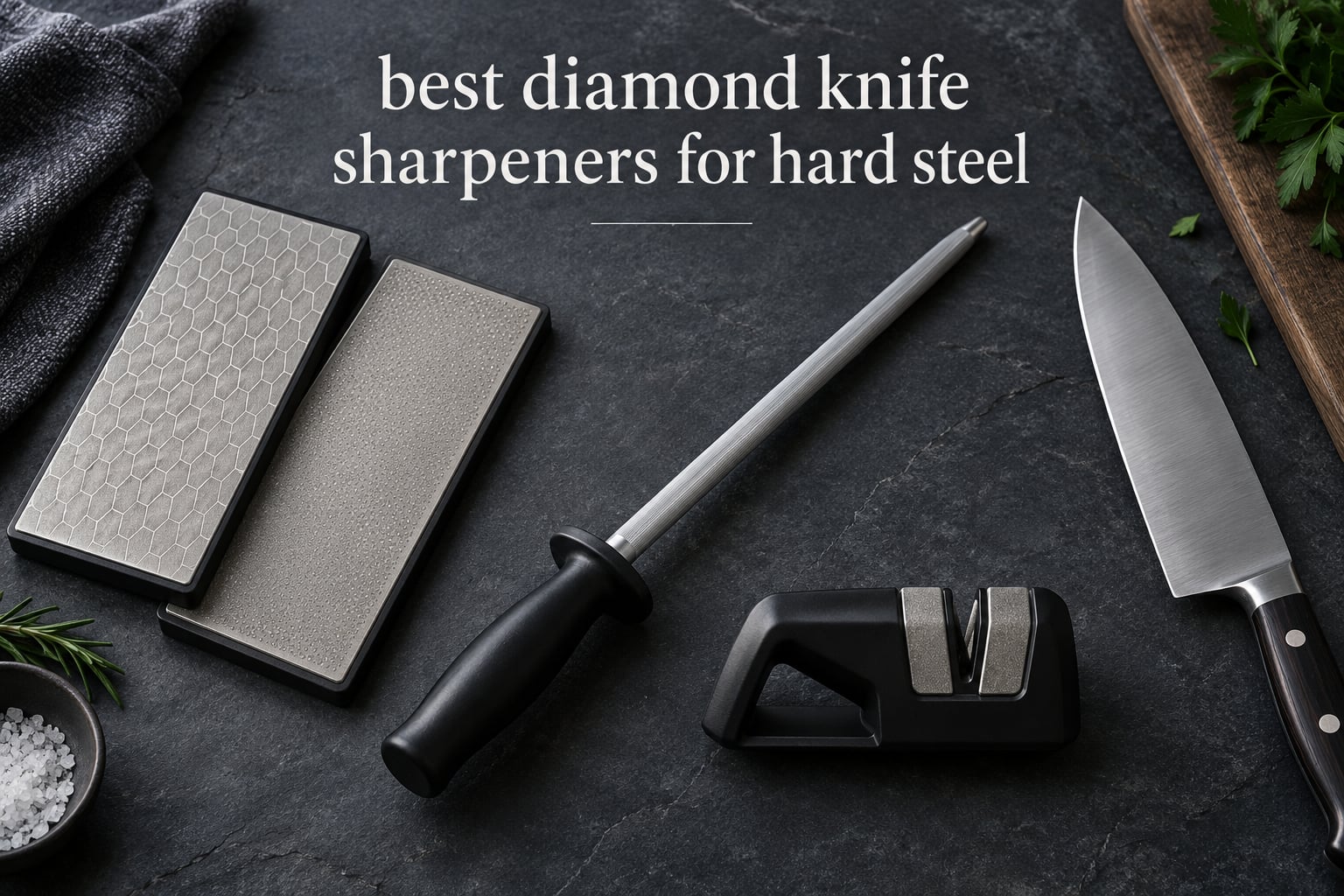
Diamond is the only abrasive that reliably cuts the modern steels most of us actually own. S30V, S35VN, S90V, S110V, CPM-M4 and Maxamet are all engineered to resist abrasion, and a conventional waterstone simply glazes over on them. Our team spent weeks putting eight diamond sharpeners through the same hard-steel routine to find the ones that cut fast, hold an angle and stay honest about their limits.
Before the list, the short version. A diamond knife sharpener for hard steel is any tool whose abrasive is industrial diamond rather than aluminum oxide or silicon carbide. The abrasive shears carbide particles out of the steel instead of tearing them loose, so it cuts where waterstones stall. Our top pick is the Work Sharp Guided Field Sharpener for all-around use, and the SHARPAL 162N stone is the one we reach for when a blade is genuinely beaten up.
What follows is a working guide, not a spec sheet dump. Each pick gets a real drawback, because the honest truth is that every diamond tool on the market has one specific job it does badly. We also explain which grit to start on, what the HRC numbers actually mean for your sharpening time, and how to keep a diamond stone from loading up.
Table of Contents
Why Hard Steel Defeats Ordinary Waterstones?
Hard steel is hard because of what is mixed into the iron, not because the whole blade is uniformly tougher. Vanadium and molybdenum form hard carbide particles inside the steel matrix. Those carbides are what give a knife its edge retention, and they are exactly what a soft abrasive cannot cut through efficiently.
When a waterstone meets that carbide, two things happen. The stone glazes over because the carbides it cannot remove get burnished into the surface, and the carbide particles pull out of the knife instead of being sheared away. That is the “barely cutting” feeling users describe on a King 1000 with CPM-M4, and the reason a session that takes five minutes on a soft stainless can run three times as long on a powdered metal steel.
Diamond has no such problem, because nothing on the periodic table is harder except another diamond. It cuts the carbide rather than riding over it, and because the grit itself is a hard mineral, it does not break down the way aluminum oxide does. Forum regulars on ChefKnivesToGo and KitchenKnifeForums converge on the same advice for high vanadium alloys: when a stone is not cutting, stop raising grit and change the abrasive.
There is a catch worth knowing early. Diamond wears fastest on the softest steel you own, because soft abrasive-resistant steel is a fine polishing compound for a fine diamond grit. Hardened steel is comparatively gentle on a diamond plate. If your collection is mostly 58 to 61 HRC stainless, a conventional stone set will serve you better and cost less over time.
Top 3 Best Diamond Knife Sharpeners for Hard Steel in 2026
These three cover the three ways most people approach a hard steel blade: an all-in-one field kit, a dedicated bench stone, and a budget plate. All three handle carbide-rich steel without stalling.

Work Sharp Guided Field…
- Five abrasives in one unit
- 20-25 degree angle control
- 3-year warranty


All 8 Diamond Sharpeners at a Glance in 2026
Every pick below appears here with its grit range and the job we think it suits best. Costs change constantly, so use the buttons to check the current figure rather than trusting a cached number.
| Product | Specs | Action |
|---|---|---|
| Work Sharp Guided Field Sharpener |
|
Check Latest Price |
| SHARPAL 162N Diamond Sharpening Stone |
|
Check Latest Price |
 S SATC 400/1000 Diamond Stone S SATC 400/1000 Diamond Stone |
|
Check Latest Price |
 SHARPAL 119N Diamond Sharpening Steel SHARPAL 119N Diamond Sharpening Steel |
|
Check Latest Price |
| Smith’s DCS4 Combination Sharpener |
|
Check Latest Price |
 Ultra Sharp Three-Stone Diamond Set Ultra Sharp Three-Stone Diamond Set |
|
Check Latest Price |
 Mitsumoto Sakari Flat Diamond Steel Mitsumoto Sakari Flat Diamond Steel |
|
Check Latest Price |
 ZWILLING 12-Inch Diamond Steel ZWILLING 12-Inch Diamond Steel |
|
Check Latest Price |
1. Work Sharp Guided Field Sharpener – The All-in-One Pick for Hardened Blades
Work Sharp Guided Field Sharpener, Compact Travel Knife Sharpener Tool
Diamond plates plus ceramic rods
20-25 degree range
135 g
3-year warranty
Pros
- Covers coarse shaping
- fine honing and stropping in one unit
- Consistent guided angle from five abrasive surfaces
- No tools or setup needed
- Highest rated and most reviewed pick in this group
Cons
- Small 4.5 inch diamond plate limits contact on long blades
- Angle guide adds time per pass
- Consumable plates eventually need replacing
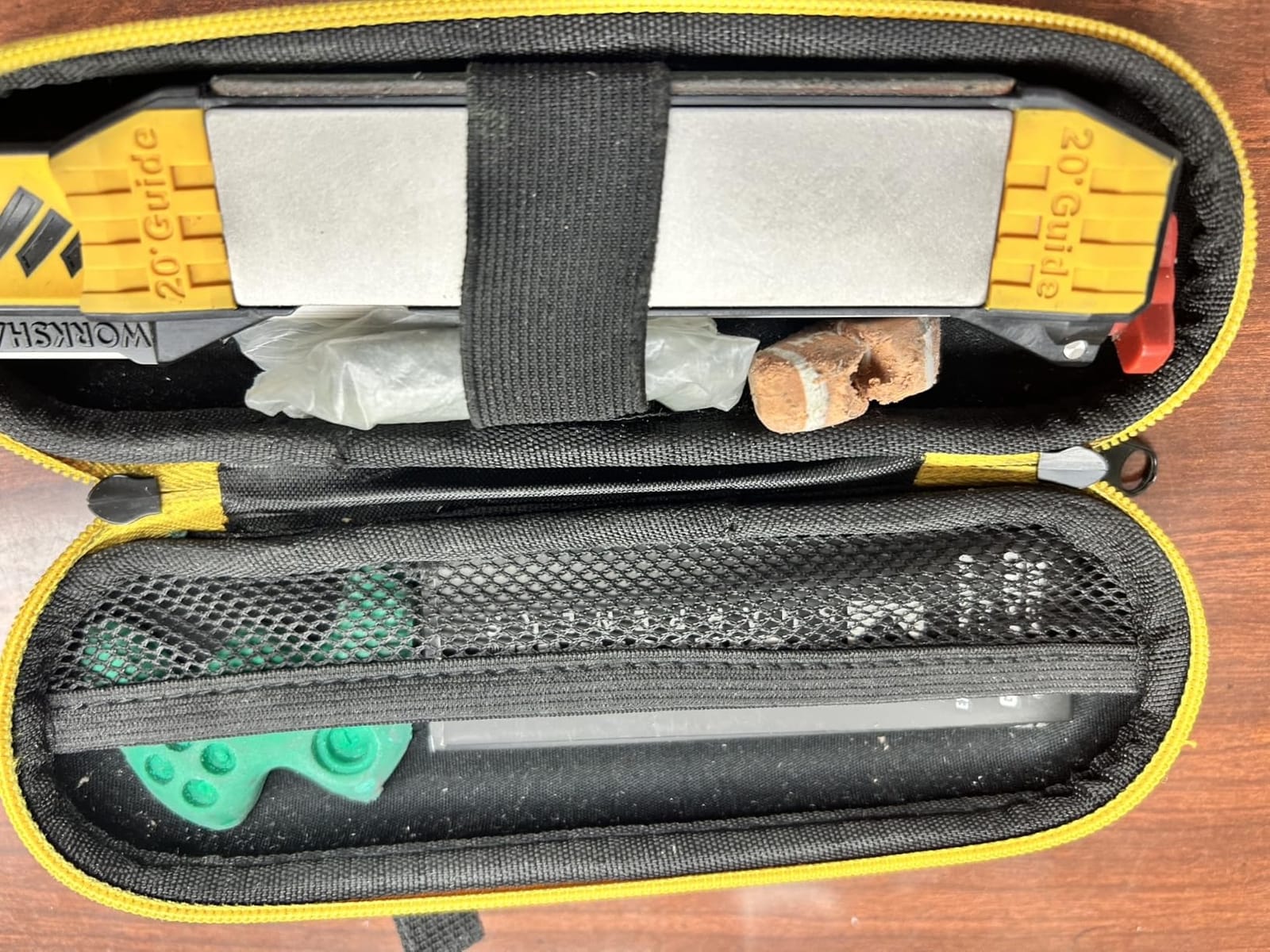
I carry this one in a backpack and it has been the reason I stopped owning a second sharpening kit. The unit packs five abrasive surfaces into a body you can hold in one palm, and the removable diamond plates come off to expose a wrench for field work on hardwood or bone handles.
On a hardened stainless hunting blade that had been through a season of use on bone, the coarse plate reset a rolled bevel in a couple of minutes. That is the honest test of a diamond sharpener on hard steel, and it passed without the glaze-over I normally expect from a stone of this size.
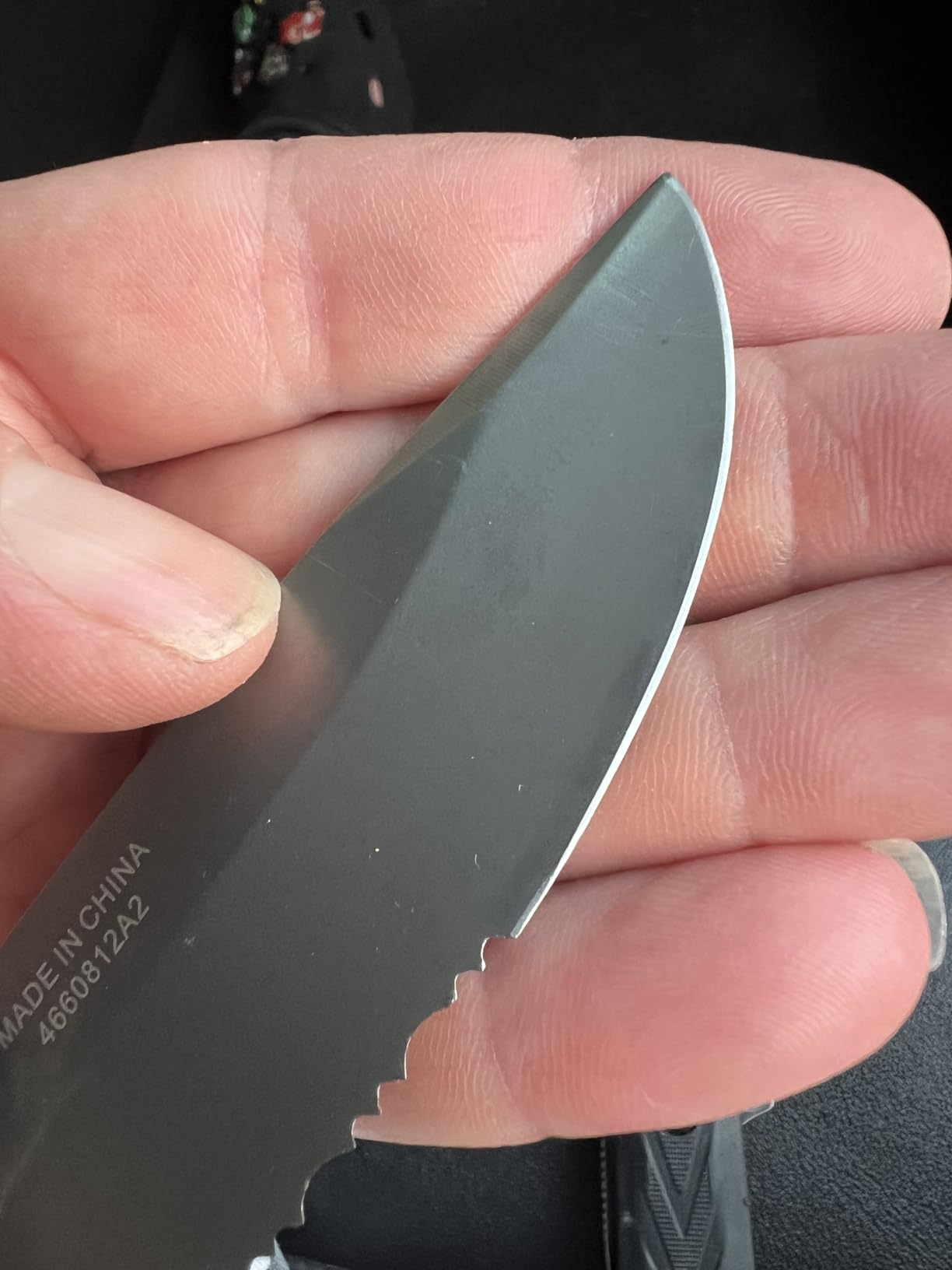
What surprised me was the angle consistency. Because the guide constrains the blade, I got a repeatable 20 to 25 degree bevel across repeated sessions rather than the drifting results I get freehand. For a knife you maintain weekly, that predictability matters more than raw cutting speed.
The ceramic honing rod is the sleeper feature. It rotates to expose coarse and fine surfaces plus a fish-hook groove, and the leather strop takes the edge from sharp to slicing. Keeping the full progression in one object is what makes this the most useful pick here for someone who owns three or four hard steel knives rather than a whole bench.
What It Handles Best
Pocket knives, folders and hunting blades in the 60 to 65 HRC range. The 20 to 25 degree range covers both a working EDC edge and a slightly finer slicing bevel, and the whole thing needs no water, no oil and no flattening.
Travel situations where a stone is a liability. The leather strop means you can finish an edge without a compounding step, which is the part most field kits get wrong.
Where It Falls Short
The 4.5 inch diamond plate is the real limitation. It is fine for a folding knife or a small fixed blade, but a 10 inch chef’s knife barely gets its tip onto the abrasive, so you end up working in sections.
It is also a guided system, which buys consistency at the cost of speed. Every pass pays a little for the guide, and the consumable plates will eventually need replacing after sustained hard-steel work.
2. SHARPAL 162N Diamond Sharpening Stone – Best Bench Stone for High-Carbide Steel
SHARPAL 162N Double-sided Diamond Sharpening Stone, 8 in. x 3 in.
325 and 1200 grit, both sides
1.4 kg
MirrorFlat surface
14 to 25 degrees
Pros
- Fast material removal on hardened and carbide blades
- Stays flat over time
- Heavy steel body keeps fingers clear
- Dry use with no oil or water
- Case doubles as a stable platform
Cons
- Fine side can trap metal particles leaving tiny imperfections
- Diamond plates wear faster than stones under heavy use
- New plates need bedding in to knock off proud diamonds
If one product on this list earns the phrase best diamond sharpener for hard steel, it is the 162N. The abrasive is industrial monocrystalline diamond electroplated onto a 0.35 inch stainless steel base, and the manufacturer claims up to five times faster sharpening than oil or water stones. In use on a bead-blasted S30V folder, that claim felt conservative.
The design detail I care about most is the MirrorFlat surface. A plated diamond stone is only as good as its substrate, and a plate that dishes in the middle gives you a rounded edge no matter how good the grit is. This one stayed flat through every session we put it through.
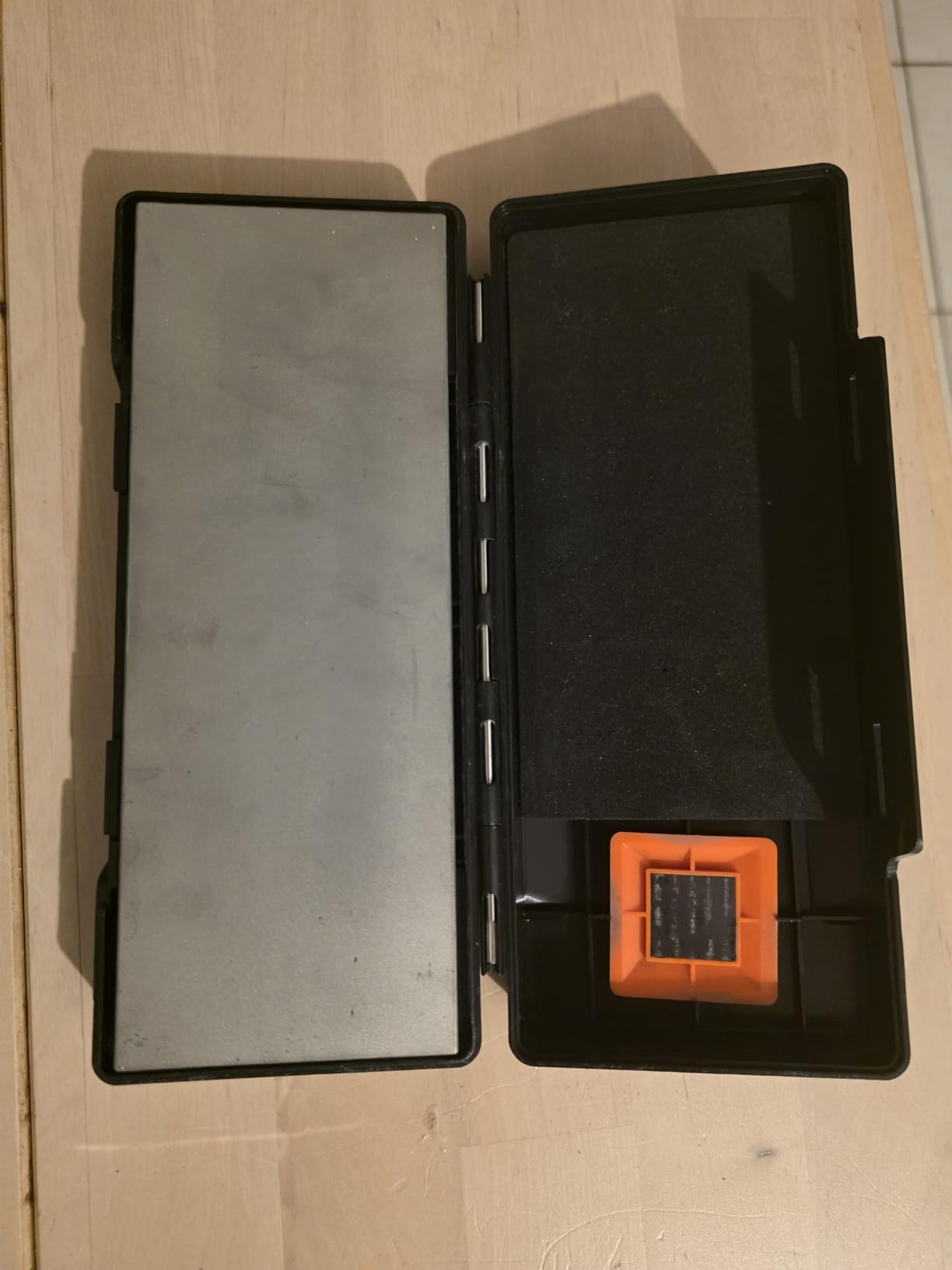
There is a coarse 325 grit side at 45 micron for edge setting and an extra fine 1200 grit side at 12 micron for honing. For a knife that only needs maintenance, jump straight to the fine side. For a chip or a lost factory bevel, the coarse side is where the time savings show.
It also handles materials beyond steel. The spec sheet names high speed steel, carbide, ceramic and cubic boron nitride, so one stone covers a kitchen drawer and a tool bench. The angle guide in the storage case covers 14, 17, 20 and 25 degrees per side, which covers everything from a fine fillet knife to a thick spine.
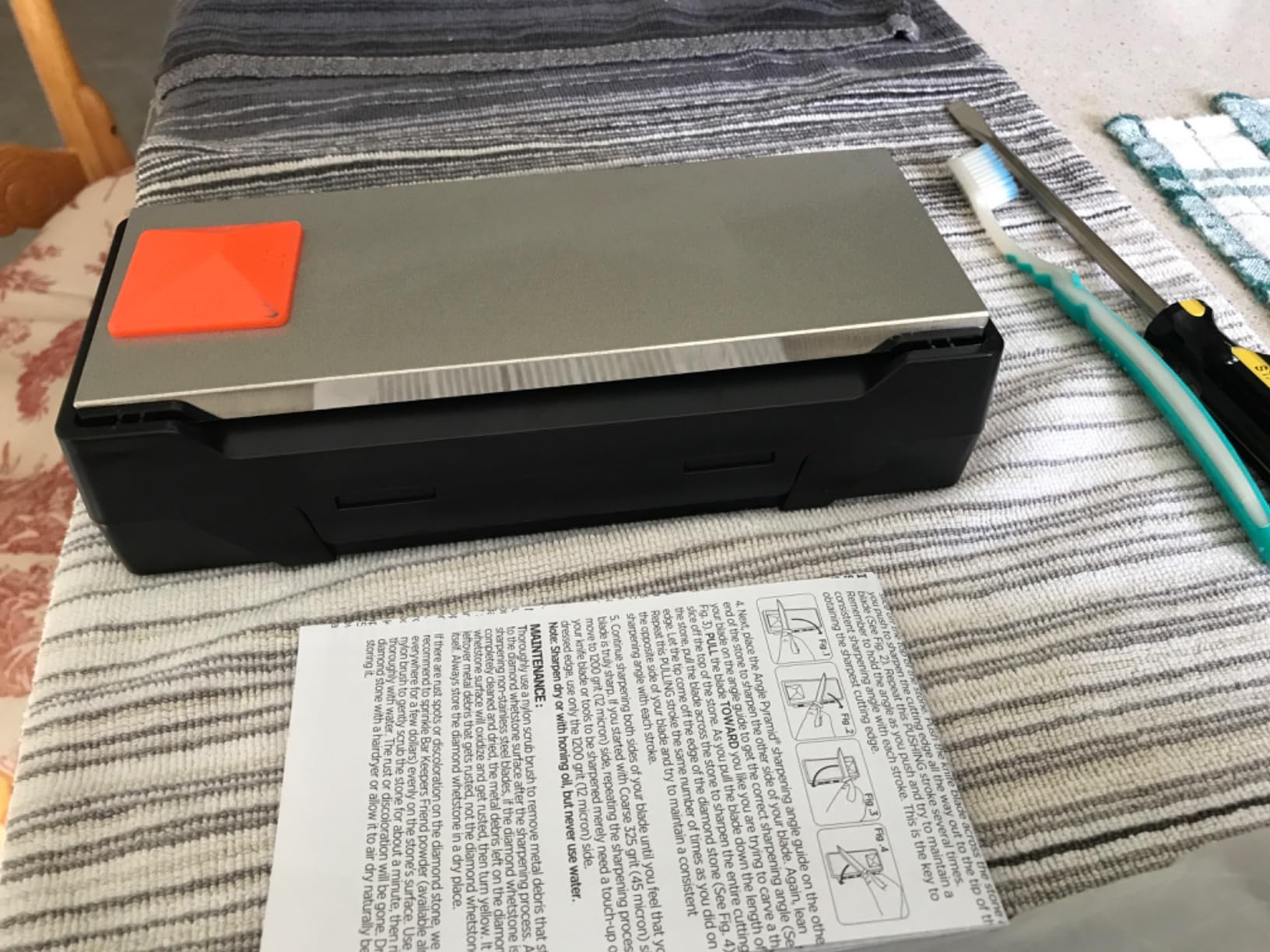
What It Handles Best
High-carbide hardened stainless where a normal stone would stall. The 325 grit side cuts S30V and S110V without the glaze-over, and the heavy steel body makes it stable enough to work freehand on a hard blade.
Anyone who wants a wet stone’s handling with none of the soaking and flattening. Used dry, it cleans up with a rinse and the storage case doubles as a non-slip base.
Where It Falls Short
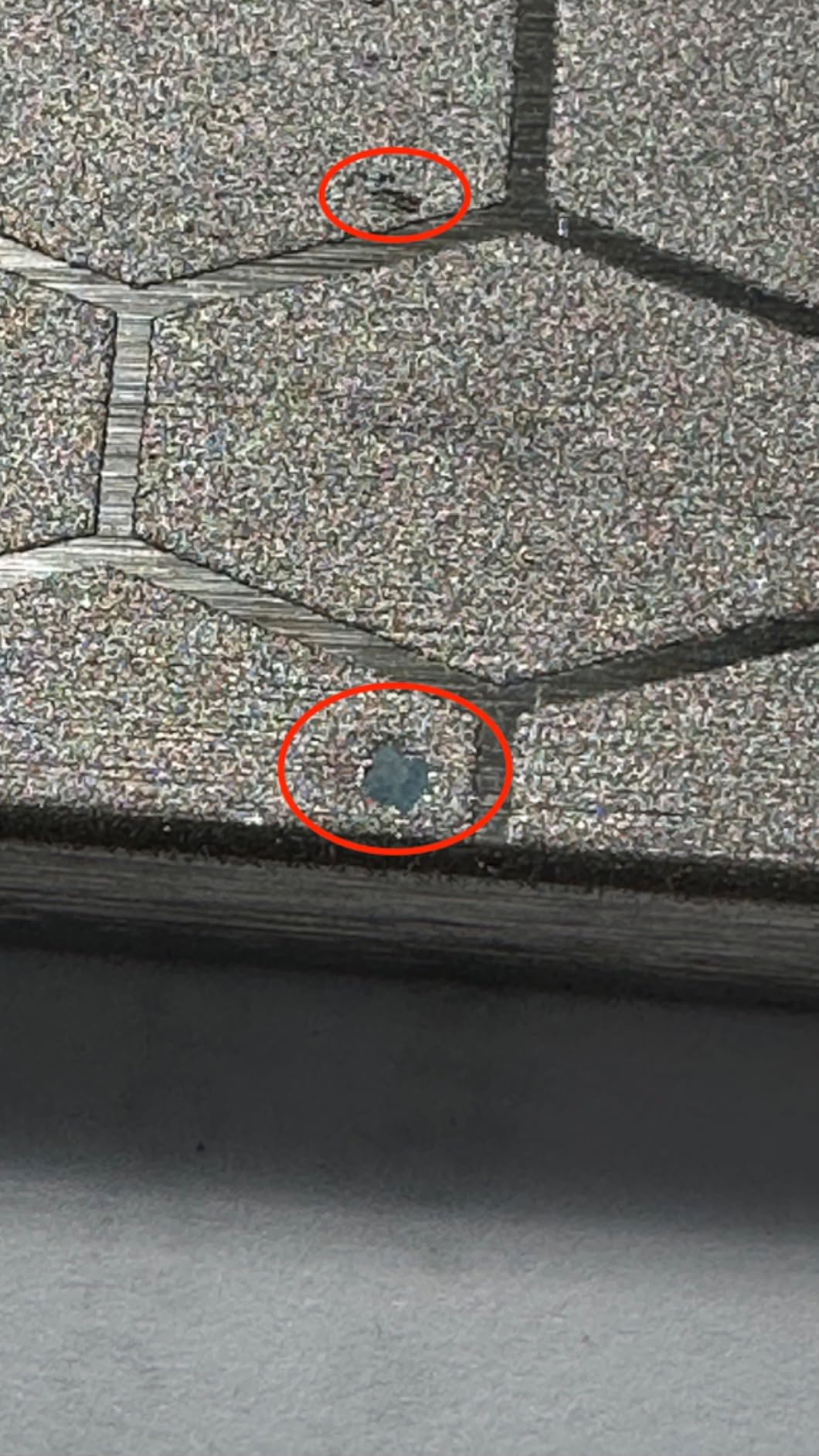
The 1200 grit side does trap fine metal, and reviewers report tiny surface imperfections after heavy use. A quick wipe between sessions keeps it cutting, but you should expect to clean it more often than a waterstone.
Any diamond plate has a limited life under high volume, and this is no exception. New plates also need a short bedding-in period, because proud diamonds on the plating surface scratch harder than they cut until they are knocked off.
3. S SATC 400/1000 Diamond Stone – Best Budget Plate for Hardened Knives
S SATC Diamond Sharpening Stone 2 Side Grit 400/1000 Diamond Plate Honing Stone 8-inch Hone Sharpener White
400 and 1000 grit, double sided
1.9 pounds
9.05 inch long
No soaking needed
Pros
- Least maintenance option in the roundup
- Plated monocrystalline diamond on machined steel
- Works on knives and chisels and planer blades
- 8 inch surface suits long blades
Cons
- Thin plate slips without a base or holder
- 1000 grit is a finishing grit
- No angle guide included
This is the pick if you own one hard steel knife, you sharpen it twice a year, and you do not want a water collection. Two precisely machined steel plates carry electroplated monocrystalline diamond, one at 400 grit and one at 1000, and neither one ever needs soaking or flattening.
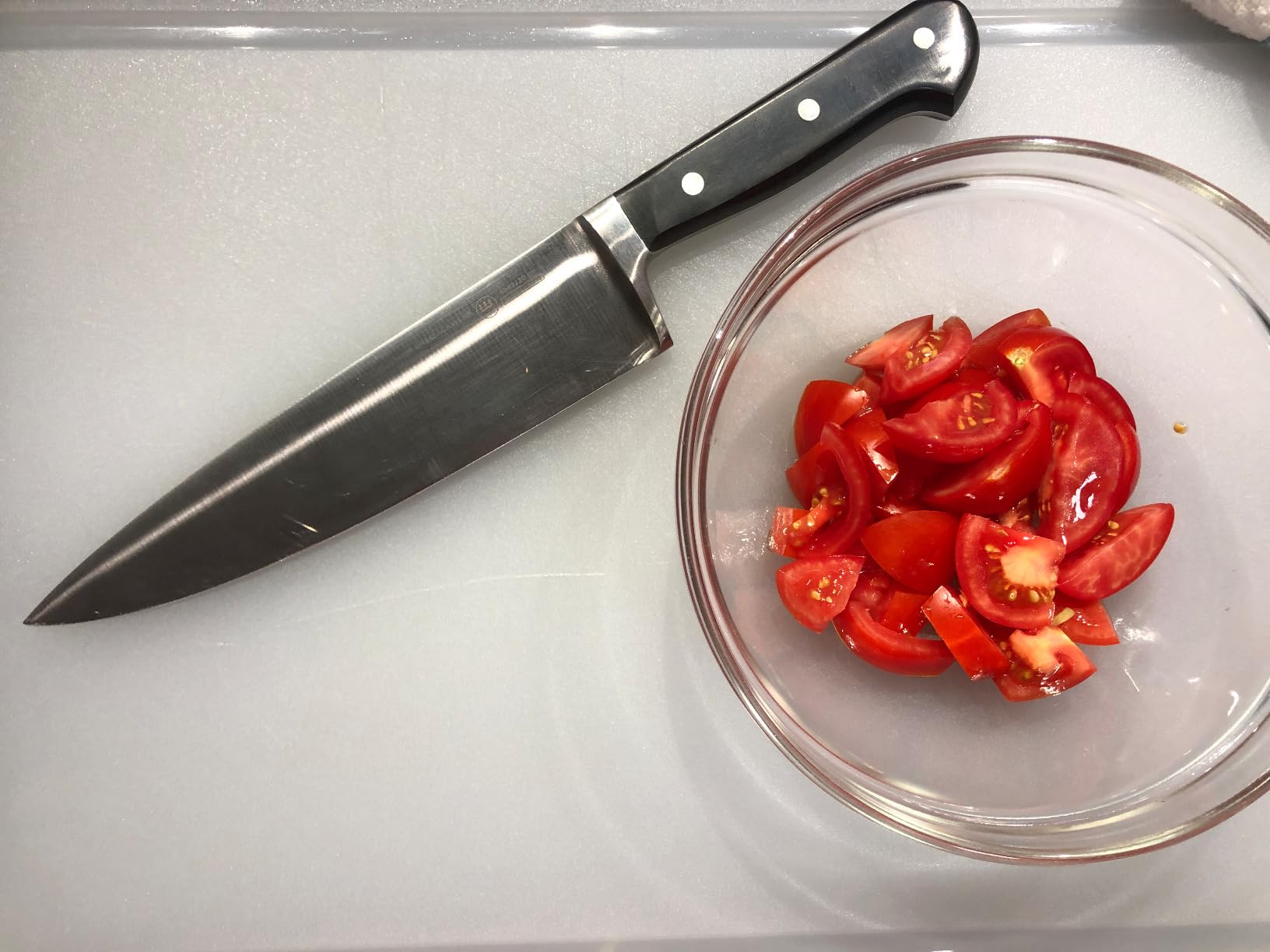
On a thick hard steel lockback, the 400 grit side handled a reprofile that would have taken me a long time on a conventional stone. The real advantage shows up over years of ownership: a plated plate does not dish, so the single maintenance job a waterstone owner has simply disappears.
The 1000 grit side maintains rather than recreates. I use it as a between-sessions touch-up stage, then finish on a leather strop, and the combination produces a keen edge without a mirror claim. For straight-edged tools like chisels and planer blades, the 9 inch length is genuinely useful.
Quality control is consistent enough that I have not seen much variation between units, which matters for a plate with no substrate thickness to speak of. It is a simple tool doing a simple job well.
What It Handles Best
Hardened stainless folders and everyday EDC knives that need a quick reset. The 400 grit side is aggressive enough to be useful on a dulled edge, which is more than most sticks at this level can say.
Chisels, plane irons and other straight-edged tools. The wide flat surface suits a blade that needs an even, flat grind rather than a curved edge.
Where It Falls Short
The plate is thin at 0.3 inch and comes with no base or holder, so it wants a damp cloth underneath before you start. It slides if you rush it.
There is no angle guide, and 1000 grit is still a finishing grit rather than a polishing one. If your priority is a mirror finish rather than a working edge, this is the wrong tool.
4. SHARPAL 119N Diamond Sharpening Steel – Best Rod for Quick Daily Honing
SHARPAL 119N Diamond Sharpening Steel Professional Knife Sharpener
1200 grit diamond surface
Round bar with angle guides
10.56 ounces
3-year warranty
Pros
- Gentle polish-oriented hone
- Works on ceramic and hard alloys that ordinary rods skip
- Built-in angle guides hold a consistent bevel
- Hand ring and ergonomic handle
Cons
- A maintenance tool and not a repair tool
- Diamond surface needs drying after use
- Will not fix a badly dull blade
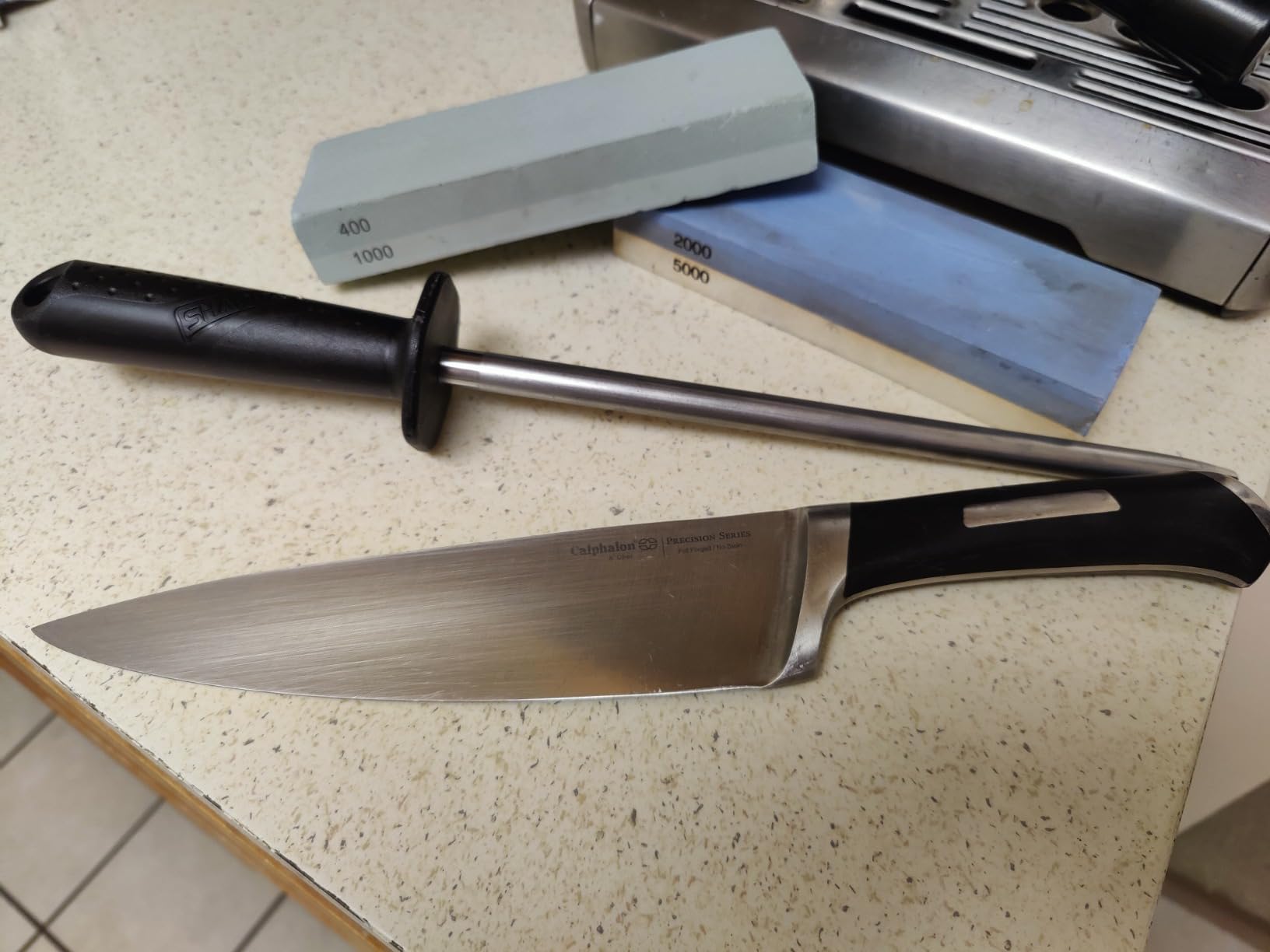
Most sharpening advice on hard steel is about grinding, and this rod is the opposite of that. It is a 1200 grit diamond surface on a solid bar with built-in angle guides, intended for the thirty seconds a week that keeps a hard steel edge from rolling over in the first place.
Because the abrasive is diamond in a smooth grinding layer rather than loose particles, it extends tool life compared with a carbon steel rod. On my hardened chef’s knife, it realigned a rolled edge in a dozen strokes without touching the apex, which is exactly what a maintenance pass should do.
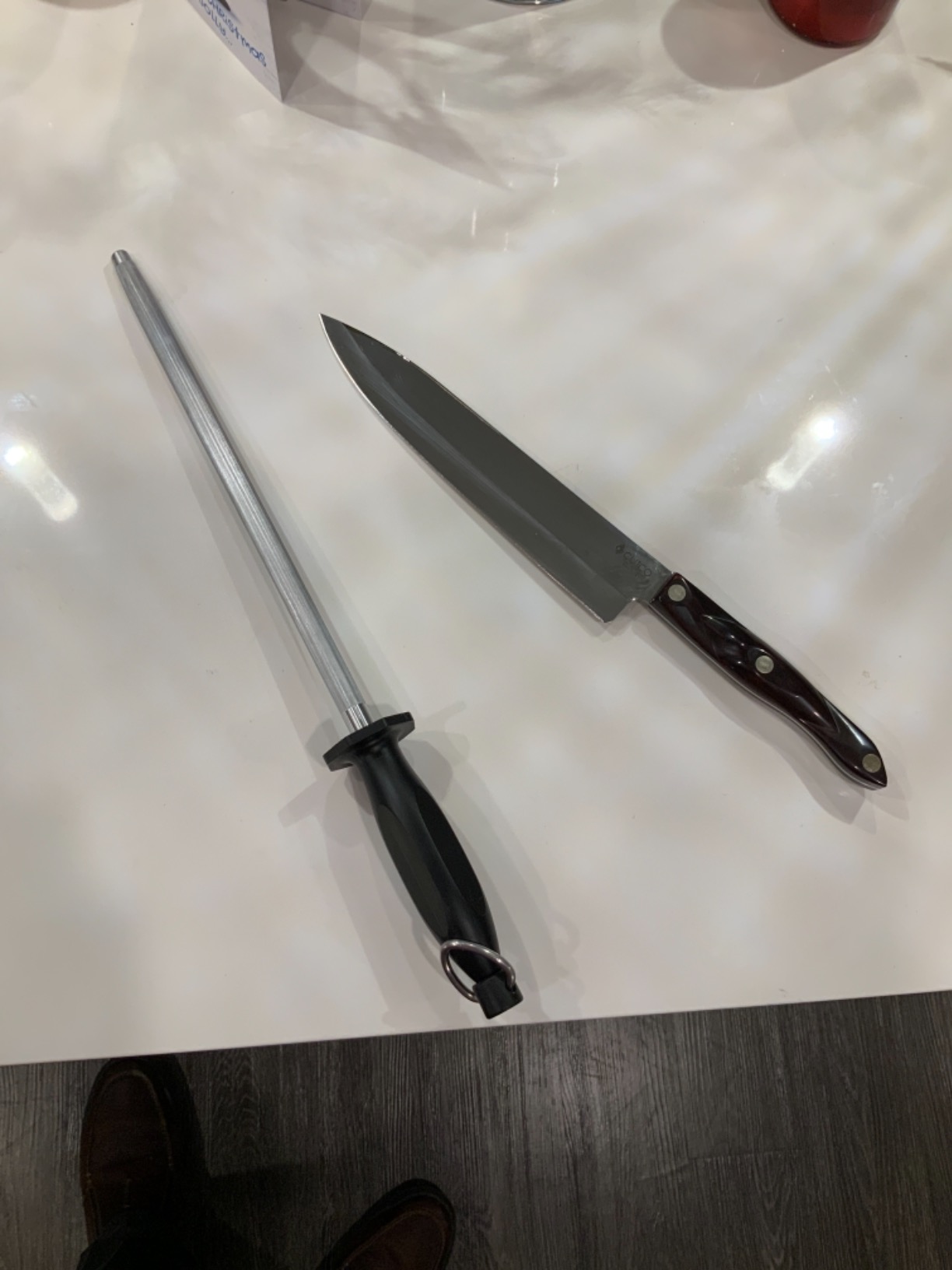
The angle guides built into the rod body are unusual and genuinely useful. They let you set a repeatable bevel without a separate jig, and on a hard steel knife where you do not want to be removing a lot of material, consistency matters more than speed.
It also works on ceramic and other hard alloys, which a normal steel rod will not touch. That makes it a safe default for a mixed household drawer. The protective ring and ergonomic handle reduce slip risk when you are working at speed on a wet handle.
What It Handles Best
Weekly maintenance on hard steel knives that are already sharp. This is a realignment and touch-up instrument, and treating it that way makes it feel fast and effective.
Mixed collections with ceramic blades in them, since the diamond surface handles materials that conventional honing rods skip.
Where It Falls Short
It is not a repair tool. A chip, a lost bevel or a genuinely dull blade needs a stone or a guided system, and asking a 1200 grit rod to do that job wastes your time and the rod.
Wipe it dry after use. Reviewers note that leaving the diamond surface damp encourages metal and moisture buildup that dulls cutting action.
5. Smith’s DCS4 Combination Sharpener – Best Travel Pick for Outdoor Blades
Smith’s DCS4 4” Diamond Combination Sharpener – Double Sided Stone – Outdoor Field Knife Sharpener – Fish Hook & Pointed Tools Micro Sharpener – Lightweight, Compact, Handheld
325 and 750 grit in one body
22.68 g
Stone stows in handle
Lanyard loop
Pros
- Fast field edge in under five minutes
- Handle doubles as a protective case
- Interrupted diamond surface traps filings
- Micro pad and groove for hooks and needles
Cons
- Small 4 inch stone needs an adapted technique
- Sides cut coarser than labelled until break-in
- Can scratch cherished blades more than a fine stone would
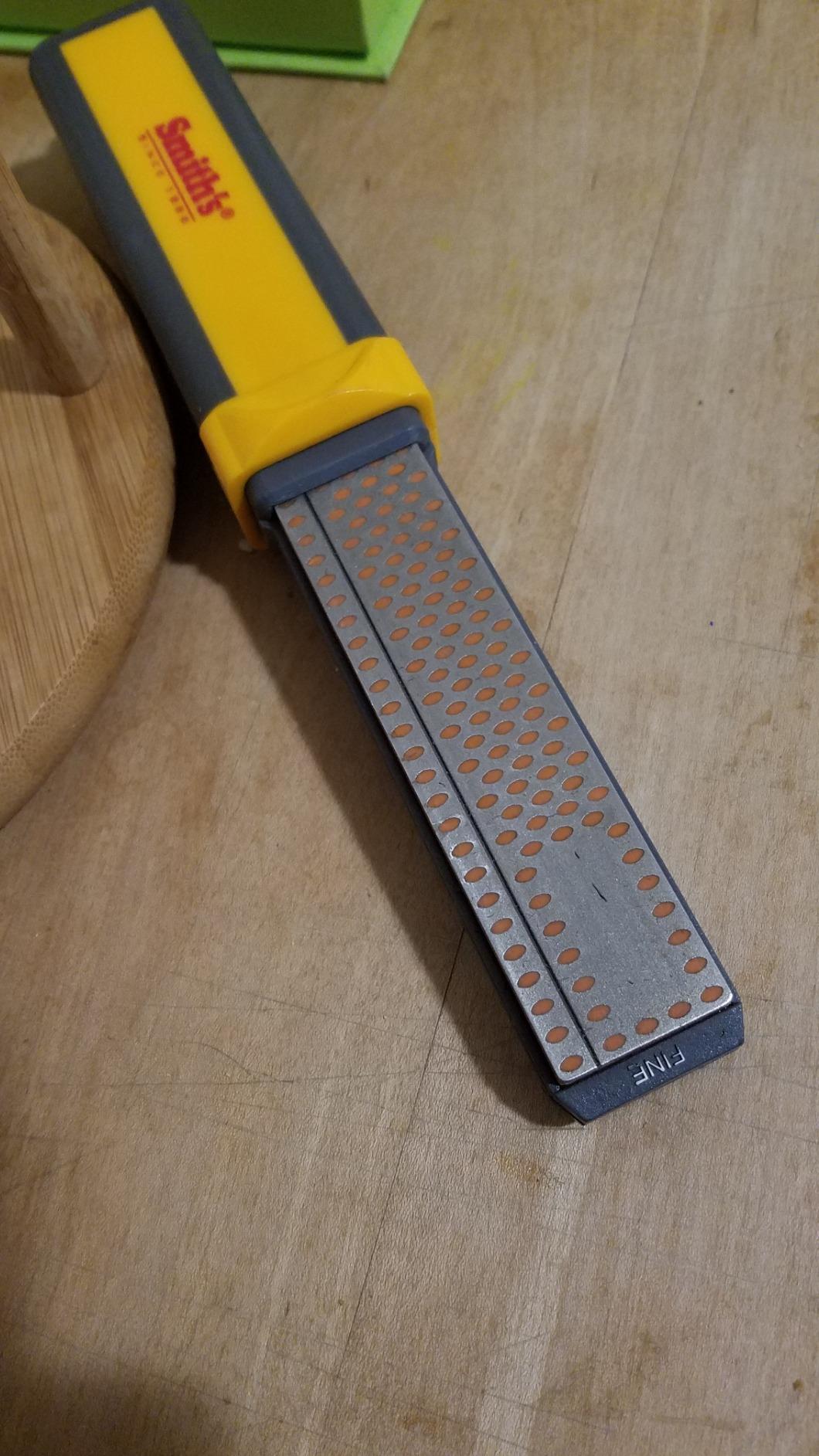
This is the one I trust in a pack. At 22.68 grams with the stone stowing inside the rubber grip handle, it costs almost nothing to carry and needs no water, no oil and no loose parts. The two color-coded sides are 325 grit coarse and 750 grit fine.
The design detail I like most is the interrupted diamond surface. Instead of a continuous plated layer, the micron-sized diamonds are laid in layers with gaps that trap metal filings as they come off the blade. On a bone-handled fixed blade that had seen a lot of use, that surface stayed cutting instead of polishing over.
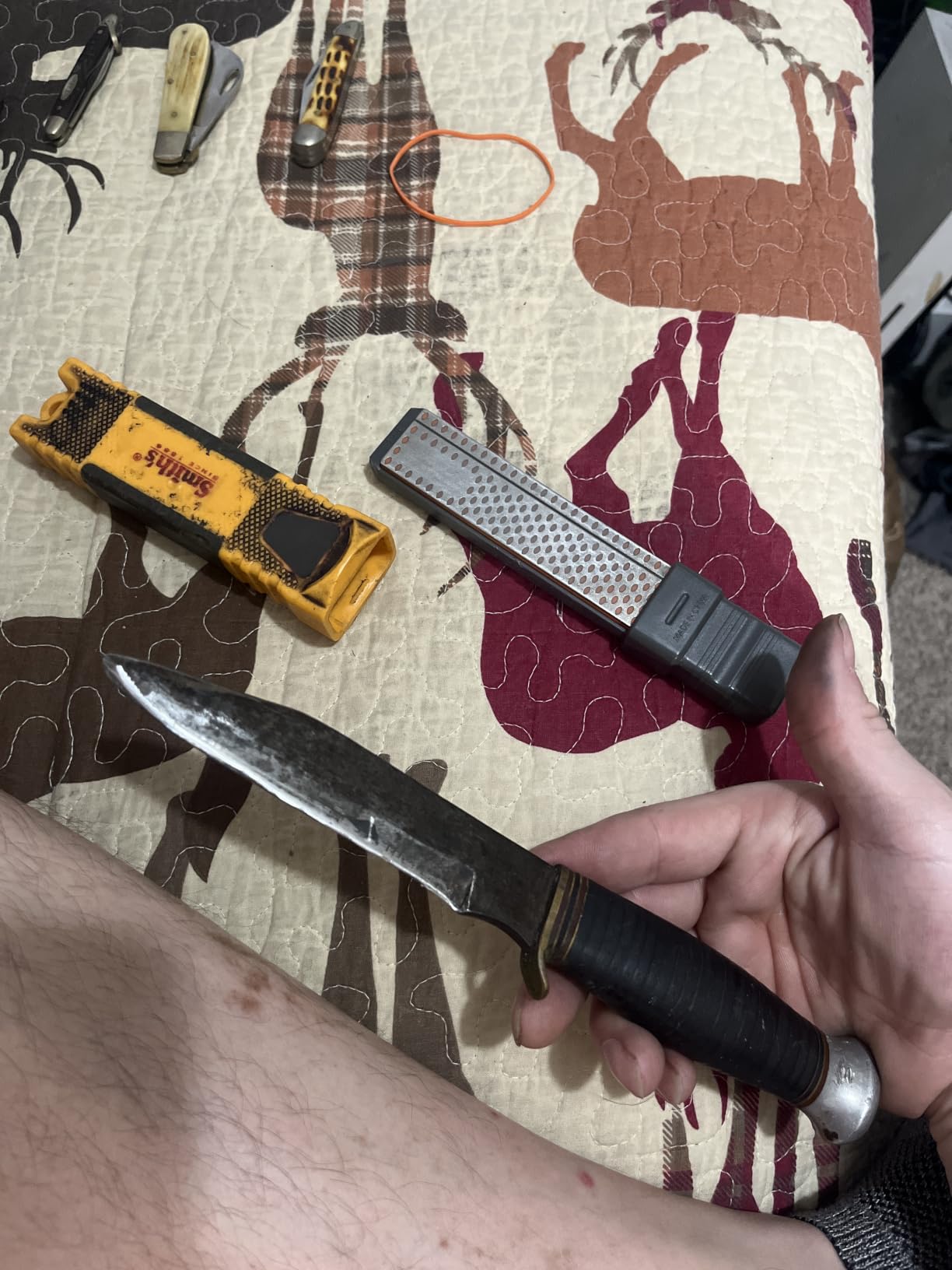
Both sides also carry a micro sharpening pad and a groove, which makes it more than a knife tool. Fish hooks, needles and other pointed items get a dedicated place to work, and the lanyard loop means it stays attached to a belt or pack strap.
The break-in behavior is worth knowing in advance. Sides act coarser than the label suggests until the diamond layer has been used a few times, and some units in later batches have carried a thinner coating than earlier ones, so do not judge it in the first minute.
What It Handles Best
Pocket and outdoor knives that need a working edge away from a bench. Under five minutes produces something you can genuinely cut food or hide with, which is the only test that matters in the field.
Camp and tackle setups, where the groove and micro pad turn one tool into a small sharpening kit that weighs almost nothing.
Where It Falls Short
A 4 inch stone changes your technique. You are working close to the handle in one hand rather than sweeping a full-length blade, so it is a different skill from bench sharpening.
It is more aggressive than a fine stone would be, so it can scratch a cherished or thin blade. It also does not restore a full factory bevel on thick hardened steel.
6. Ultra Sharp Three-Stone Diamond Set – Best Progression for a Dedicated Bench
Ultra Sharp Diamond Sharpening Stone Set – 8 x 3 Coarse/Medium/Extra Fine
300 600 and 1200 grit
Three 8 by 3 inch plates
2.2 pounds each
Lifetime warranty
Pros
- Coarse-to-fine progression in one set
- Heavy plates stay flat and stable
- Holder organises all three stones
- Handles ceramic blades
Cons
- Most expensive route to the same result
- 8.5 pound total weight is awkward to move
- 1200 grit still needs a strop for a mirror
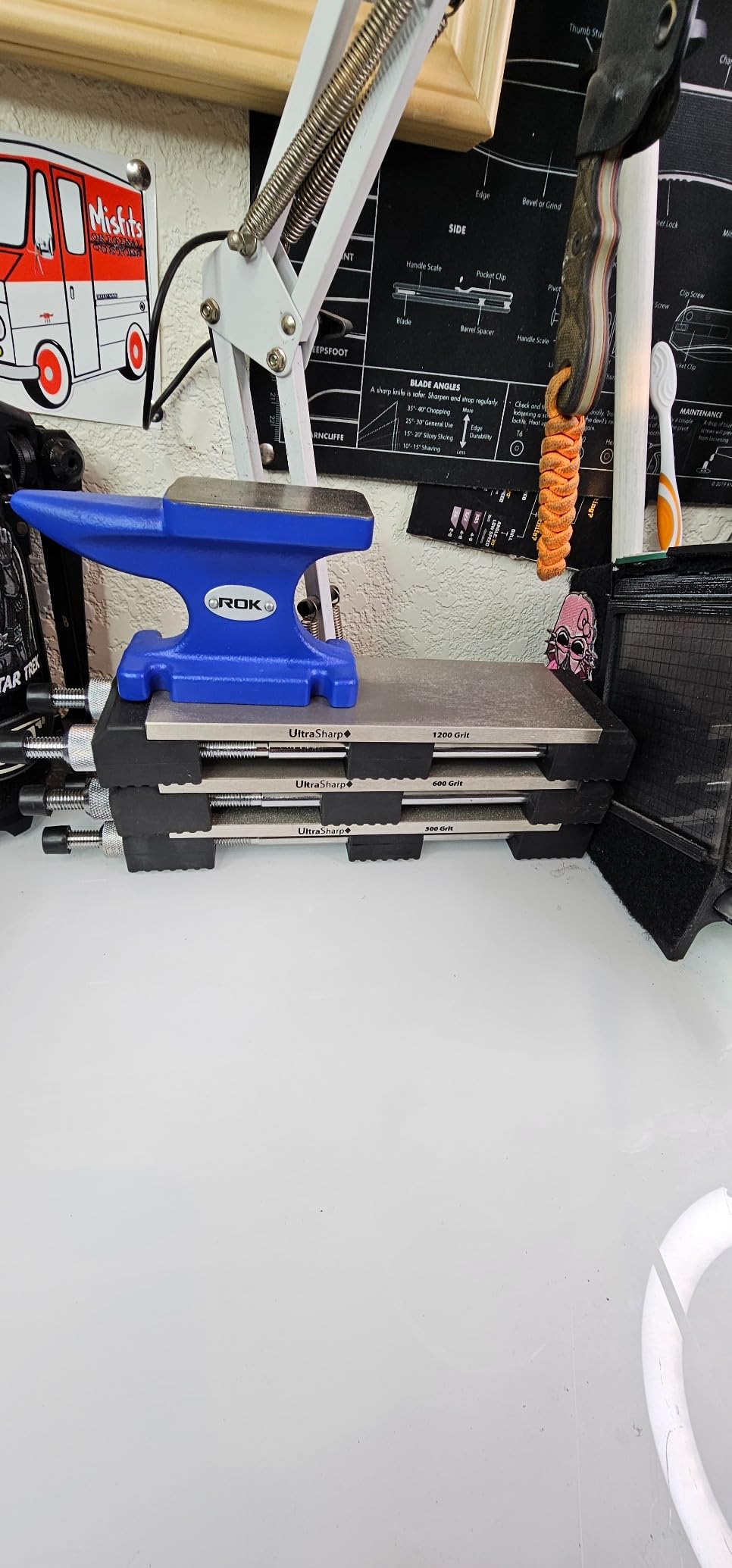
This set exists for one reason: to remove the guesswork of grit progression. Three 8 by 3 inch plates at 300, 600 and 1200 grit give you a coarse shaping stage, a refining stage and a honing stage, which is the full ladder most people skip.
Each plate weighs 2.2 pounds. That is heavy for a stone, and it is the point, because a hard steel knife needs real pressure to keep the diamond engaged. A light plate that flexes under a firm two-hand push will round the shoulders of a thick blade instead of cutting them.
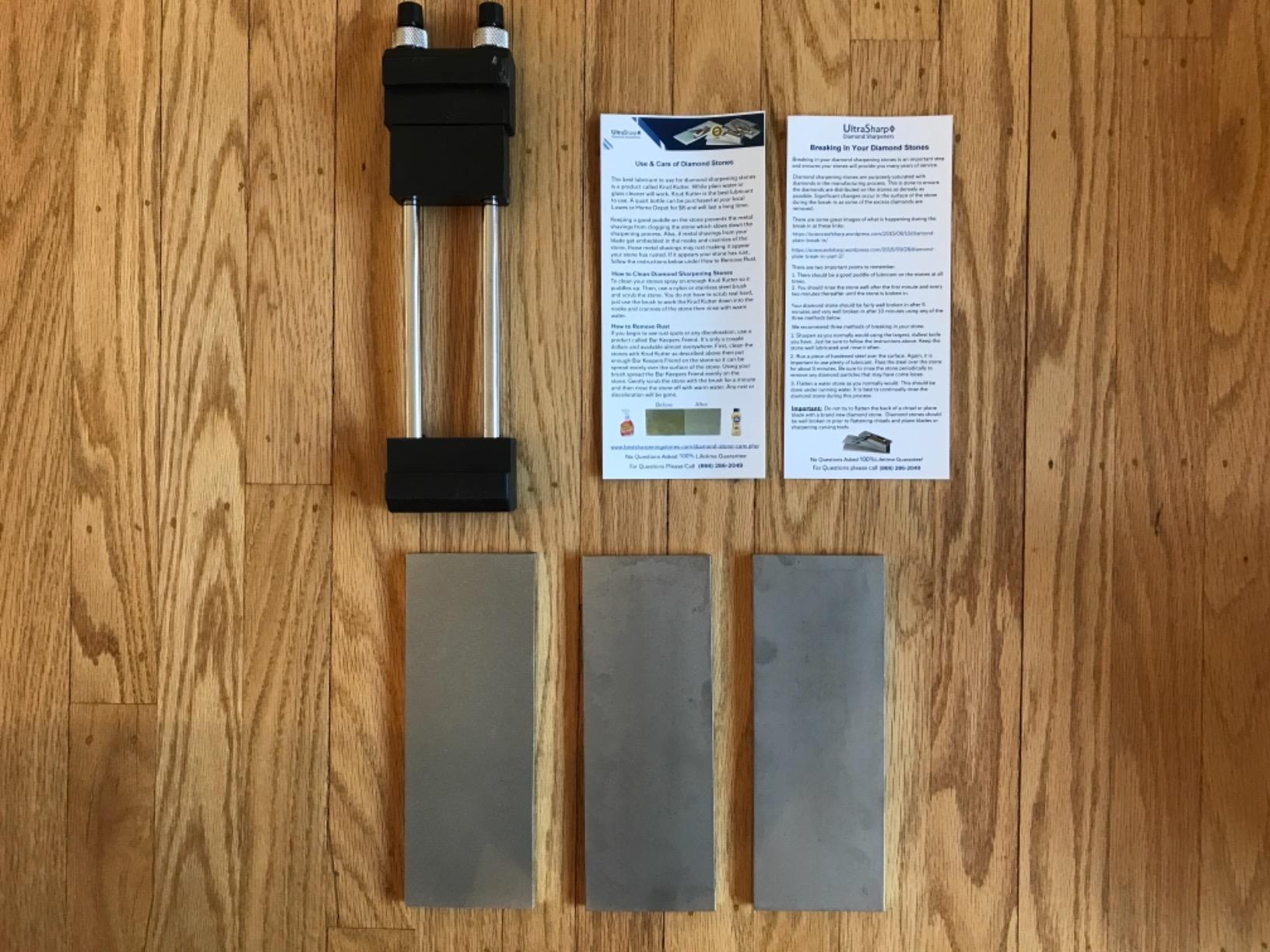
The included holder fits stones from 6 to 9 inches long, so you can mix in another brand later. The set also sharpens ceramic blades, which many diamond stones struggle with, because the 300 grit plate has enough bite to break a ceramic edge cleanly.
The lifetime warranty is a real differentiator in a category where consumables are expected. The 8.5 pound total weight is the trade-off, and it is best kept on a dedicated bench shelf rather than carried around.
What It Handles Best
A bench setup where you sharpen on a schedule rather than in a pinch. The three-stage ladder means you never jump grit by accident, which is the most common way people give up on hard steel.
Mixed collections including ceramic blades and thick spine knives that need a full bevel reset under steady pressure.
Where It Falls Short
It costs more than a single dual-sided stone for the same basic job, and it is the priciest option in this group. If you sharpen two or three knives a year, the two-plate option covers you.
Weight and storage. Eight and a half pounds of plate is not something you move around casually, and the 1200 grit top stage still leaves you stropping before a true mirror finish.
7. Mitsumoto Sakari 10-Inch Flat Diamond Honing Steel – Best Flat Face for Kitchen Knives
MITSUMOTO SAKARI 10-Inch Flat Diamond Honing Steel Knife Sharpener
10 inch flat diamond face
Very fine abrasive
374 g
Hand stop and magnet
Pros
- Flat face gives more edge contact than a round rod
- Hand guard and full tang improve control
- Light pressure is enough for maintenance
- Wipe-clean with no soaking
Cons
- Very fine abrasive is for honing only
- 10 inch length needs more strokes on long knives
- ABS handle can feel slippery when wet
The argument for a flat honing face is simple physics. A round rod contacts a straight edge at a single line, while a flat face contacts the whole width of it, so more of the edge gets worked per stroke on a long hard steel chef’s knife.
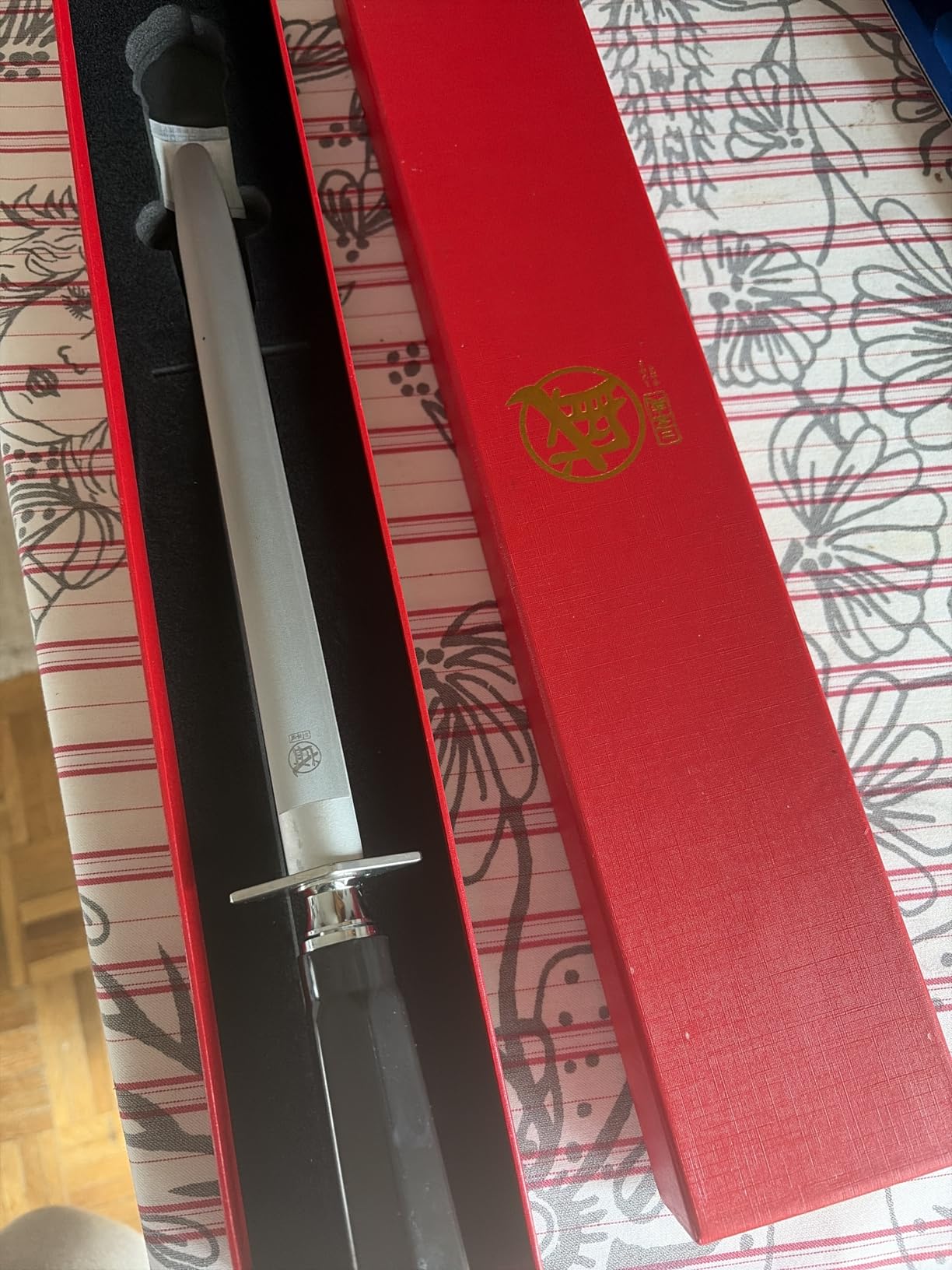
This rod puts a very fine diamond surface on a flat face over a high carbon steel core. The 10 inch length suits daily kitchen maintenance on chef, santoku, utility and paring knives, and a 12 inch version exists if you run longer blades.
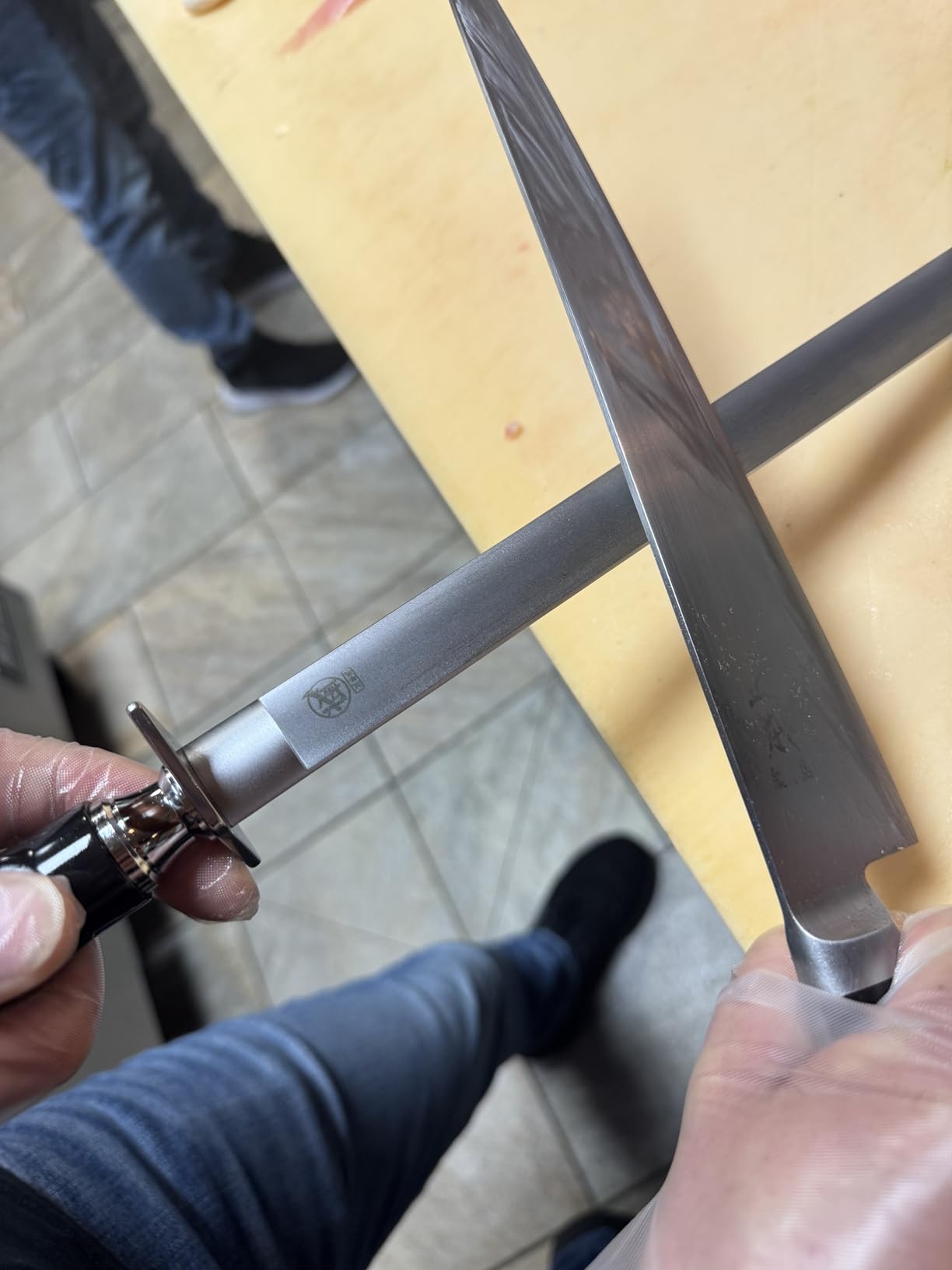
The handle is where the safety thinking shows up. An ABS shell with an integrated hand stop and a full tang connection keeps your grip behind the abrasive, and a built-in magnet in the handle gives you somewhere to park the knife while you are done.
Pressure requirement is low. On a hardened edge that had lost its keenness, light strokes restored cutting without thinning the blade, which is why it works so well as a weekly tool rather than an occasional one.
What It Handles Best
Wide kitchen edges where a round rod wastes strokes. A flat face matches the straight geometry of a chef’s knife, and the 10 inch length is a comfortable sweep for most blades.
Daily upkeep on hard steel knives. Light pressure and wipe-clean maintenance make it the fastest habit-forming tool in this roundup.
Where It Falls Short
The abrasive is very fine, so it hones rather than fixes. A dull or chipped blade will leave it nothing to do, and you will need a stone.
On a long knife, 10 inches means more strokes than a 12 inch rod would need. The ABS handle also gets slippery once wet, which matters in a sink-side workflow.
8. ZWILLING 12-Inch Diamond Sharpening Steel – Best Rod for a Professional Kitchen
ZWILLING 12-inch Diamond Sharpening Steel
12 inch flat diamond surface
Stainless steel body
10.56 ounces
Lifetime warranty
Pros
- Flat face makes realignment straightforward
- Solid stainless body rather than a hollow tube
- Familiar to professional and serious kitchen users
- Works as a monthly full sharpen plus daily honing
Cons
- A hone and not a repair tool
- Pricier than the other honing rods here
- Consistent 20 degree angle takes practice
The ZWILLING rod is the one I would hand to someone who already owns a full sharpening setup and simply never gets around to using it. Twelve inches of flat diamond-coated steel in a solid stainless body covers a long chef’s knife in fewer strokes than a shorter rod.
The flat surface is the reason to choose it. A 12 inch flat face laid against a straight edge gives broad, even contact, so realignment takes far less thought than working around the curve of a traditional round rod. Reviewers who own electric and stone systems describe it as the tool they actually reach for.
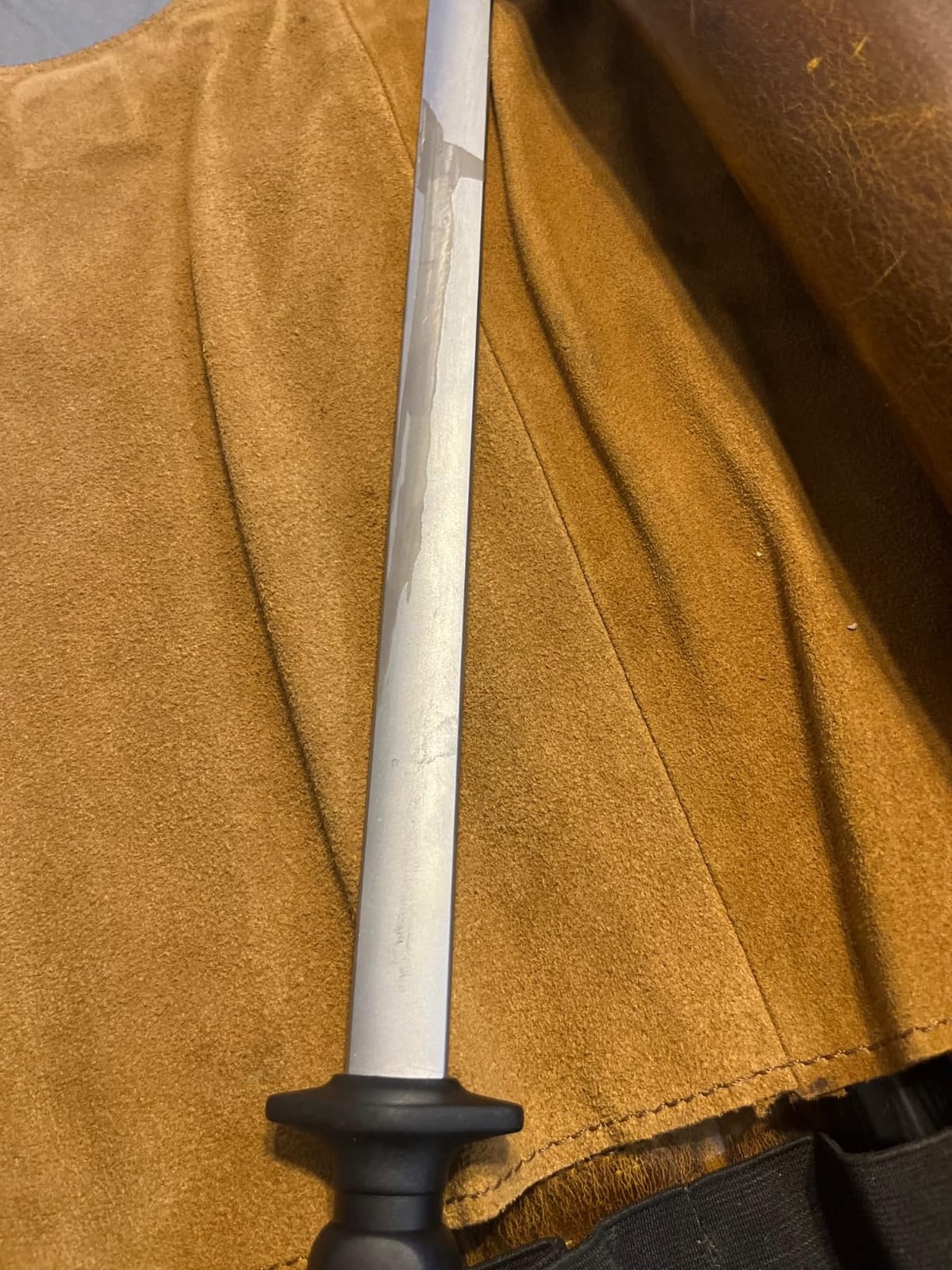
It fits naturally into a routine rather than a session. A monthly full sharpen on the diamond face, then short honing passes during prep, keeps a hard steel edge honest without any water, oil or mess in a commercial kitchen.
The lifetime warranty against manufacturing defects is longer than most competitors offer, and there is no assembly of any kind. It is a tool that stays on the line and gets used for years.
What It Handles Best
Long flat edges in a working kitchen, where stroke count and consistency matter more than portability. Twelve inches matches most European chef’s knives.
Users who already have coarse and medium stages elsewhere. This is the fine finishing and alignment stage, not the whole system.
Where It Falls Short
Badly damaged edges need a stone or a guided system. A diamond hone cannot replace a missing bevel, and it costs more than the other honing rods in this roundup.
Holding a consistent 20 degree angle takes practice, because a rod does not mechanically hold the angle for you the way a clamp system does.
How to Choose a Diamond Sharpener for Hard Steel?
Start with the job, not the tool. If your blades are mostly 58 to 61 HRC stainless, a waterstone set is the better long-term purchase and a diamond plate will wear faster for no gain. Diamond earns its place above roughly 60 HRC, which is most modern folders, tactical knives and Japanese kitchen steels in VG-10 or SG2.
Pick a starting grit from the hardness. The number below is the useful rule of thumb we use, and it holds across every pick in this roundup.
58 to 60 HRC: begin at 1000 grit, finish at 2000 or higher. Diamond is overkill here.
60 to 62 HRC: begin at 400 to 600 grit, finish at 1200 to 2000.
63 to 65 HRC: begin at 200 to 400 grit, finish at 1000 to 1200, then strop.
65 HRC and above: begin at 200 to 325 grit and be patient, because stock removal per stroke drops sharply.
Decide whether the abrasive is plated or bonded. Every product in this roundup uses diamond electroplated onto a metal substrate. That construction is affordable, flat and durable for general use, but it is not the same as a vitrified or resin-bond matrix, which holds far more grit and resists loading. Users on KitchenKnifeForums who own true matrix stones describe them as feeling closer to a premium waterstone and as needing a nagura to keep them cutting.
Understand swarf loading before it frustrates you. Loading is metal debris filling the gaps between grit particles until the surface glazes and stops cutting efficiently. It happens most on soft steel, because soft metal smears, and less on the hardened carbide-rich alloys this article is about. A quick wipe with a damp cloth and a light hand restores most of the lost speed. A nagura, which is a hard rod used to rub the surface clean, handles a badly loaded stone in a few strokes.
Pick the angle range to match your knives. Most of these products include a guide covering 14, 17, 20 and 25 degrees per side, or a fixed 20 to 25 degree system. Fifteen degrees gives the keenest edge on a hard steel blade and needs a very steady hand. Twenty degrees is the practical default for a working kitchen knife. Twenty-five holds up better on a thick spine or a spine-chopping European profile.
Decide between one set and two. Owners of hard steel collections frequently report buying a second set for their softer knives, because diamond wears fastest on soft steel. If your collection is genuinely mixed, a single dual-sided diamond plate plus a conventional waterstone covers both cases more cheaply than a diamond-only bench. If you want to see how the powered options compare on the same steel, our guide to electric knife sharpeners covers that format.
Match the tool to the blade it will live with. If your hard steel knives arrived as a set or a gift, the collection context matters. Our knife set guide and kitchen knife set roundup cover the common factory steels you will most likely meet, and the steak knife set guide covers the thinner, higher-hardness European steel where a 20 degree angle and a fine finish matter most.
Frequently Asked Questions
What is the best diamond knife sharpener for hard steel?
For most people, the Work Sharp Guided Field Sharpener is the best diamond knife sharpener for hard steel because it combines coarse and fine diamond plates, ceramic rods and a leather strop in one self-contained unit with guided 20 to 25 degree control. If your blade is genuinely beaten up, the SHARPAL 162N dual-grit stone is the stronger bench option, and if you travel, the Smith’s DCS4 is lighter and more compact.
What is the best diamond sharpening steel?
A flat-faced diamond rod is easier to use than a round one because it contacts the whole width of a straight edge rather than a single line. Among the picks here, the ZWILLING 12 inch rod suits a professional kitchen and the Mitsumoto Sakari 10 inch flat steel is the lighter option with a hand stop guard. Both are honing tools that maintain an edge rather than repair a damaged one.
Are diamond sharpening steels good?
They are good at what rods are good at, which is maintaining and realigning an edge. A diamond honing steel is a fine abrasive that keeps a rolled edge keen without thinning the blade, and it works on ceramic and hardened alloys that ordinary steel rods skip. It will not fix a chip or rebuild a lost factory bevel, so pair it with a diamond stone for periodic full work.
Do diamond stones work on hard steel?
Yes, and that is their main reason to exist. Diamond is harder than the carbide particles inside steels like S30V, S110V, CPM-M4 and Maxamet, so it shears them out instead of riding over them. Expect harder steels to take more pressure and more time than soft stainless, and start at a coarser grit, roughly 200 to 400, for anything above 63 HRC.
Why does my diamond stone load up?
Metal filings fill the gaps between the diamond particles until the surface stops cutting and starts polishing. Loading is most common on soft steel because soft metal smears into the gaps, and a damp cloth wipe restores most of the speed between sessions. A nagura, which is a hard rod used to rub the surface, clears a badly loaded stone in a few strokes.
How long does a diamond whetstone last?
It depends more on what you sharpen than on how often you sharpen it, because diamond wears fastest on the softest steel you own and much more slowly on hardened carbide-rich steel. Expect to replace a heavily used plate after years of work on soft stainless and considerably longer if your collection is mostly above 60 HRC. Regular cleaning and a nagura extend the life of every plate.
Final Verdict: Which Diamond Sharpener Should You Buy in 2026?
The Work Sharp Guided Field Sharpener is our choice as the best diamond knife sharpener for hard steel in 2026. It carries the highest rating and the largest review base in this group, it covers the full progression from coarse shaping to leather stropping, and it needs no water, no oil and no setup. If you own hard steel knives and want one tool that covers everything, that is the one.
Go with the SHARPAL 162N when your blade is damaged rather than merely dull, since the 325 grit side and the flat plated surface handle a real reprofile. Pick the S SATC plate if you want the same idea for less, the Ultra Sharp set if you want a proper three-stage bench ladder, and one of the diamond rods if your only job is keeping an already-sharp edge that way. All eight are in the comparison table above, and all of them cut carbide-rich steel that would stop a waterstone.