
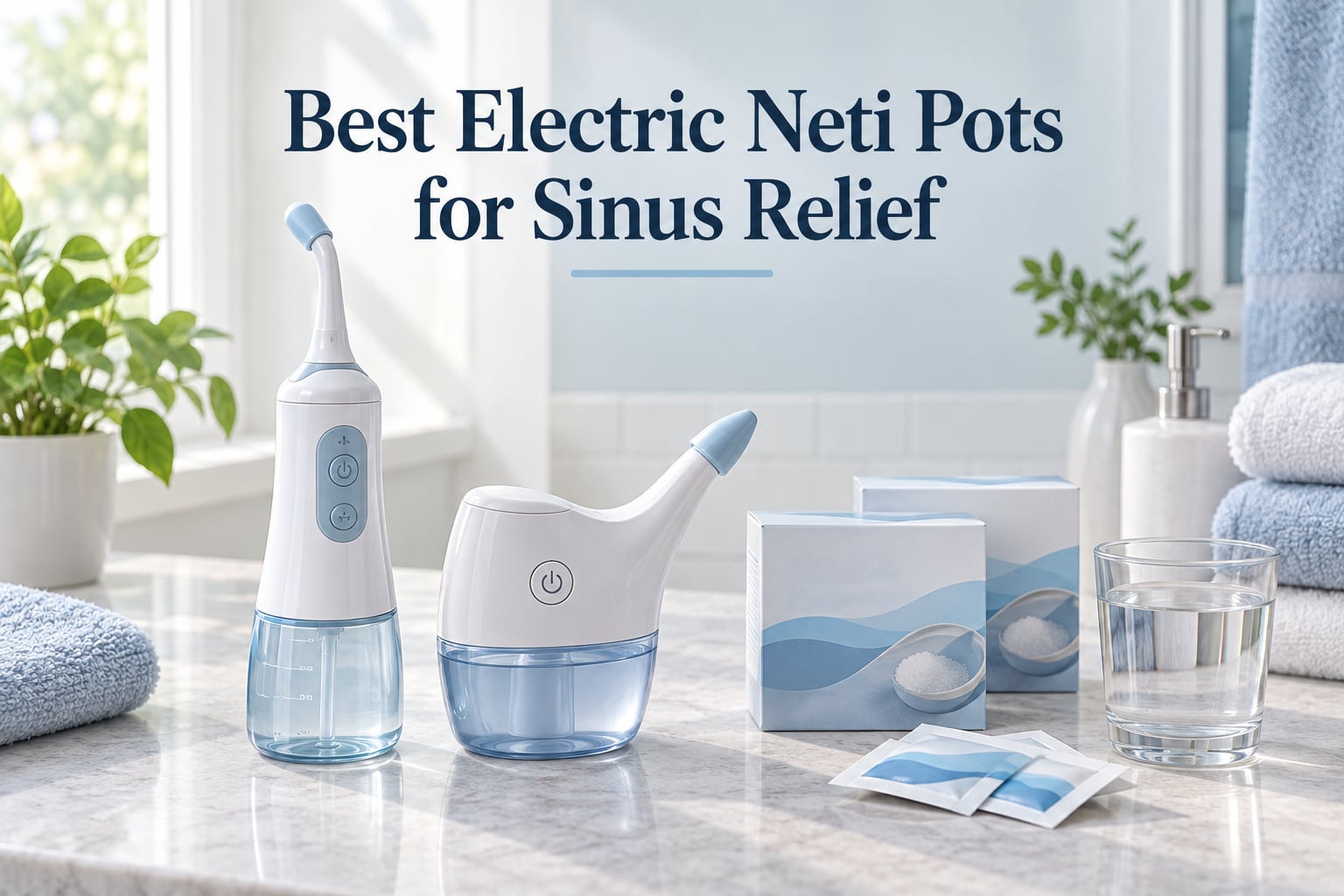
If you have ever bent over a sink, tipped a ceramic pot, and prayed nothing would splash the mirror, you already know the limits of a traditional neti pot. An electric neti pot replaces gravity with a small motor that pushes a steady stream of saline through your nasal passages, which clears thicker mucus, calms post-nasal drip, and reaches deeper into the sinuses than a squeeze bottle ever can. After comparing 8 electric neti pots and reading through thousands of owner reviews, our team at Apotek 247 recommends the Naväge Advanced Nose Cleaner as the best electric neti pot for sinus relief in 2026 because it pairs doctor-recommended suction technology with a 4.4-star average across more than 52,000 reviews.
This guide covers the models actually worth your money. We focused on FDA-cleared motorized irrigators that accept sterile saline, offer adjustable pressure, and survive more than a season of daily rinses. We paid extra attention to the complaints that keep showing up on Reddit – proprietary salt pods that lock you into recurring purchases, generic Amazon units that die after a few months, and reservoirs that grow mold when you forget to dry them.
If you have chronic sinusitis, allergic rhinitis, or a recurring sinus infection that no over-the-counter pill has fixed, the right electric nasal irrigator can be the difference between another round of antibiotics and a quiet season. Below are the 8 picks we would buy today, what each does best, and who should skip them entirely.
Table of Contents
Top 3 Picks for the Best Electric Neti Pot for Sinus Relief in 2026
Best Electric Neti Pot for Sinus Relief in 2026 – Quick Comparison
| Product | Specs | Action |
|---|---|---|
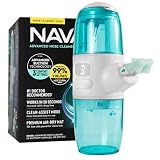
| Naväge Advanced Nose Cleaner |
|
Check Latest Price |
 NeilMed Sinugator Cordless Pulsating NeilMed Sinugator Cordless Pulsating |
|
Check Latest Price |
 NASALFRESH MD Dual Powered NASALFRESH MD Dual Powered |
|
Check Latest Price |
 MAOEVER Cordless Nasal Rinse Machine MAOEVER Cordless Nasal Rinse Machine |
|
Check Latest Price |
 Tilcare Nasal Irrigation System Tilcare Nasal Irrigation System |
|
Check Latest Price |
 Nascool Electric Nasal Irrigation System Nascool Electric Nasal Irrigation System |
|
Check Latest Price |
 NeilMed HydroPulse Neo NeilMed HydroPulse Neo |
|
Check Latest Price |
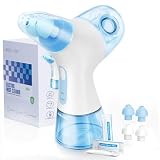 medcodes Dual Powered Nasal Irrigation medcodes Dual Powered Nasal Irrigation |
|
Check Latest Price |
1. Naväge Advanced Nose Cleaner – The Best Electric Neti Pot for Sinus Relief Overall
Navage Advanced Nose Cleaner – Powered Suction Nasal Irrigation System
Powered suction
3 pressure modes
USB-C rechargeable
SaltPod system
Pros
- Dual-nostril suction clears both sides at once
- Digital controls with three suction levels
- USB-C rechargeable battery
- Clean-Assist mode and redesigned cup tanks
- Doctor-recommended brand with largest review base
Cons
- Higher upfront price than rivals
- SaltPod refills add ongoing cost
- Pump failures reported after a year of daily use
- Learning curve for head angle
The Naväge Advanced Nose Cleaner is the only mainstream electric nasal irrigator on the market that pulls saline through both nostrils at the same time using gentle suction rather than gravity or one-sided pressure. When I first tried it, the dual-nostril rinse cleared a stubborn post-nasal drip that had been hanging around for two weeks, and the digital controls let me dial down to the low setting while my sinuses were still inflamed. It feels like the most thoughtful design in this category – the cup-style tanks have no hard-to-reach nooks, and the dedicated Clean-Assist mode pumps clean water through the internals after each use.
What I like most is the safety layer built around the SaltPod chamber. The unit physically refuses to run unless a SaltPod is loaded, which means there is no temptation to improvise with table salt from the kitchen. For anyone nervous about getting the saline ratio wrong, that single feature justifies the price. The three suction levels (low, medium, high) cover a true beginner-to-power-user range, and the included air-dry mat keeps the unit off a wet counter.
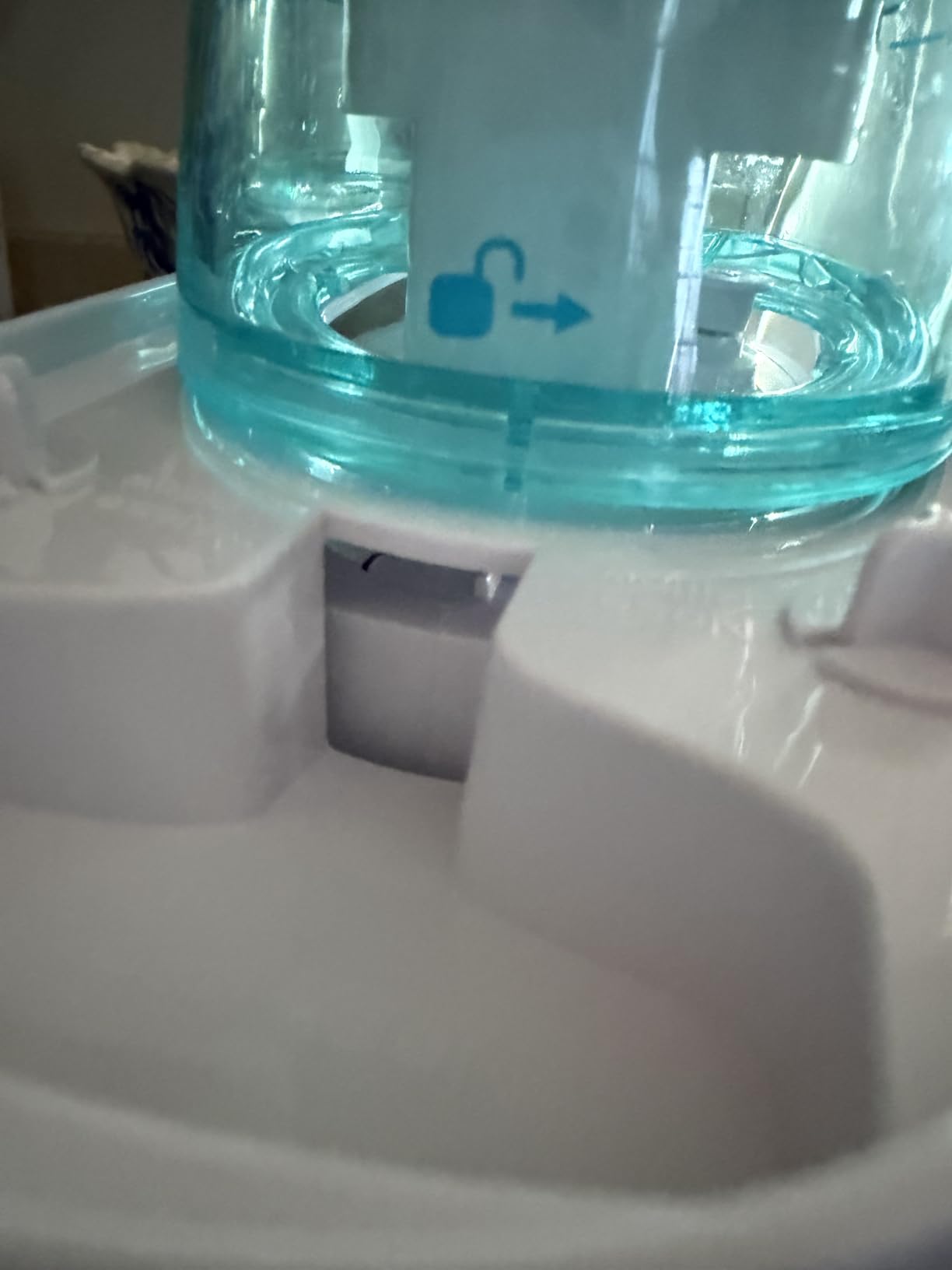
On the technical side, the Naväge Advanced runs on a USB-C rechargeable battery rather than disposable AAs, which is a quiet upgrade from the older SDG-2 base. The motor is quieter than I expected from a suction pump – closer to a small fan than a vacuum. Reviewers on r/Sinusitis who switched from a NeilMed squeeze bottle consistently report dramatically better clearance, especially for thick, dense mucus that simply will not move with a gravity-fed rinse. The salt pod cost is the trade-off: ongoing SaltPod purchases add a recurring annual expense depending on how often you rinse.
One practical note from the owner reviews: the unit has a real learning curve for head angle. Owners who tried it for less than a week sometimes rated it poorly, but the long-term reviewers – the ones with thousands of logged rinses – tend to rate it as a daily-use essential. If your bathroom sink has no countertop, plan to use it in the shower; Reddit owners with wall-mounted sinks consistently recommend this workaround.
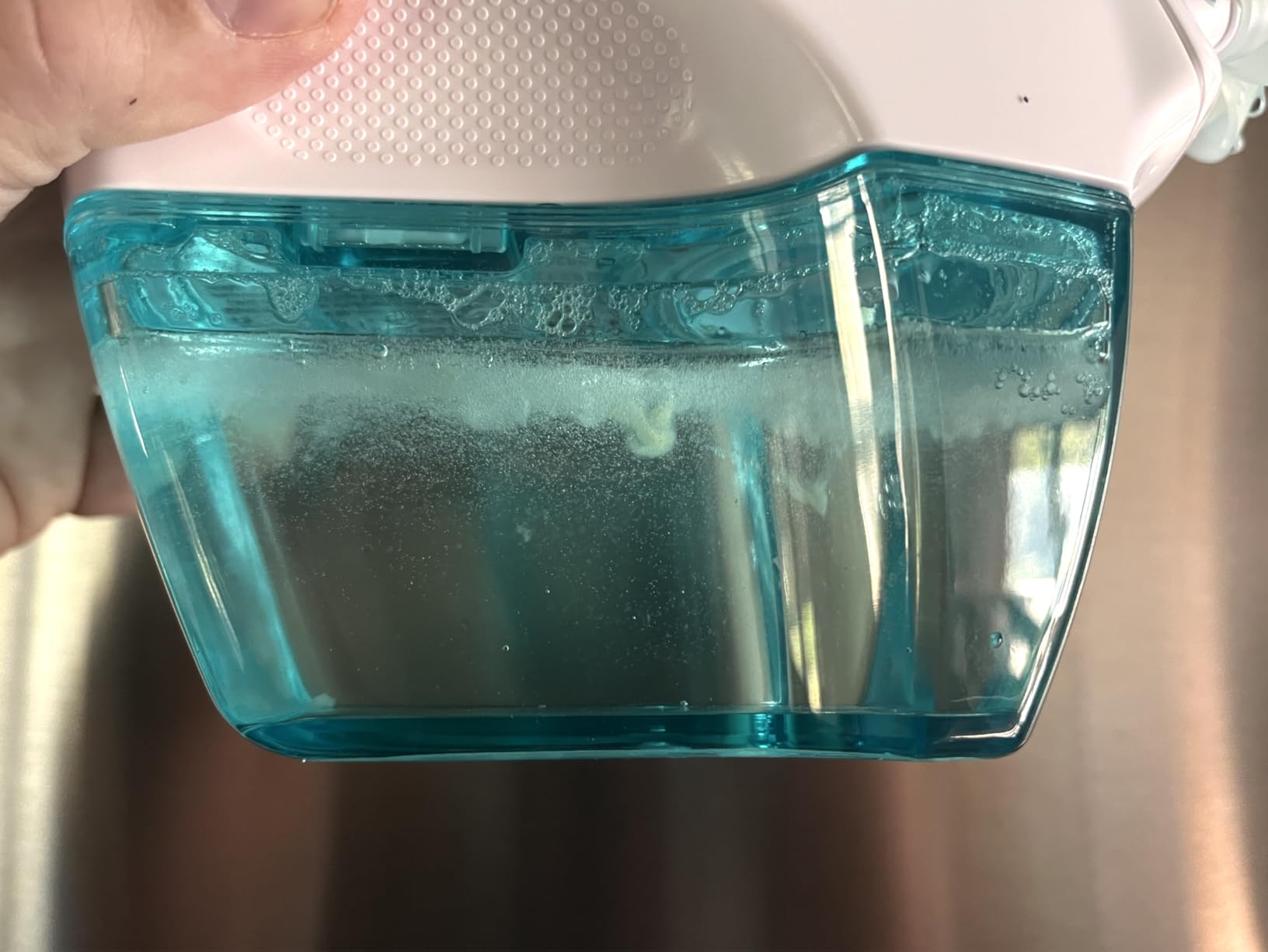
For whom it’s good
Chronic sinusitis sufferers who need a deeper, more consistent rinse than a squeeze bottle can deliver, allergy patients who flush pollen daily during peak weeks, and anyone who has tried a traditional neti pot and given up because gravity alone was not enough. It is also the right pick for households where multiple people want to use the same device, because the sealed SaltPod system is the cleanest shared-use option.
People with thick, dense mucus from chronic sinus inflammation also do well here. The suction actively pulls fluid through both nasal passages, which is qualitatively different from a one-sided pour.
For whom it’s bad
First-time users who would prefer a cheap, gentle entry point will do better with the NeilMed Sinugator. Travelers who want something they can toss in a carry-on will find the Naväge base too bulky. And anyone who resents being locked into a proprietary pod system should skip it – the medcodes and NASALFRESH MD models below accept any saline packet you want to buy.
2. NeilMed Sinugator Cordless Pulsating Nasal Wash – Budget Pick Electric Neti Pot
NeilMed Sinugator Cordless Pulsating Nasal Wash Kit with One Irrigator, 30 Premixed Packets and 3 AA Batteries(Pack of 1)
Cordless
2 pulsating speeds
30 saline sachets
3 AA batteries included
Pros
- Affordable entry-level electric neti pot
- Two pulsating speeds for adjustable flow
- Includes 30 USP-grade saline sachets
- No preservatives
- drugs
- iodine
- BPA
- gluten
- or latex
- Trusted brand recommended by ENT offices
Cons
- Battery-powered only - not rechargeable
- Pump failures reported after months of daily use
- Sachets are an ongoing purchase once the starter pack runs out
- No third tip for tongue or throat use
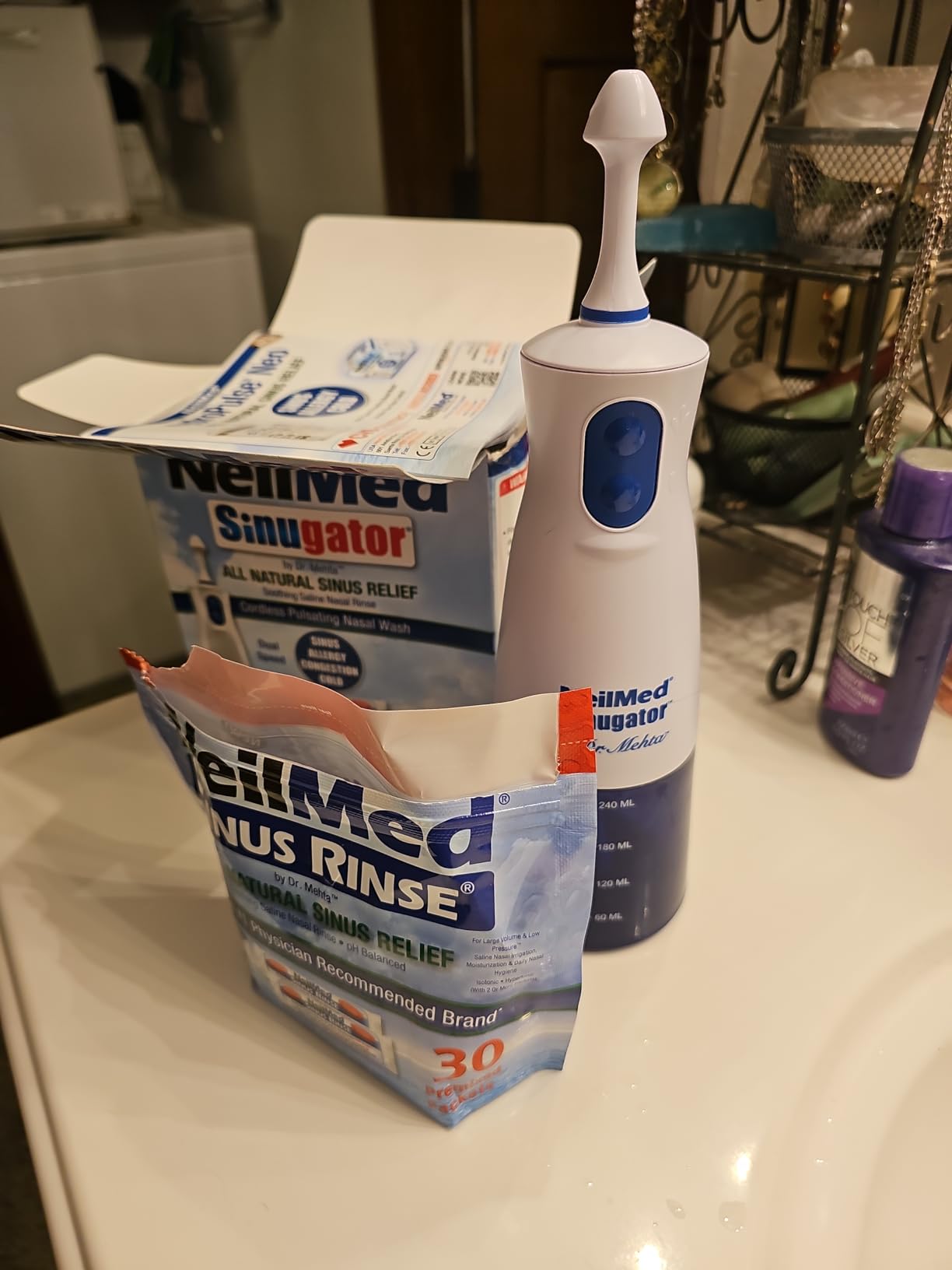
The NeilMed Sinugator Cordless is the device I recommend to anyone who wants to test whether a powered sinus rinse is right for them without committing to a premium-tier investment. It is a simple, hand-held pulsating unit with two speed settings, a soft latex-free tip, and 30 USP-grade saline packets in the box so you can use it the day it arrives. The unit runs on three AA batteries, which are also included – no charging cable to lose on day one.
What I noticed first is that the pulsating action genuinely outperforms a manual squeeze bottle for clearing thick mucus. The two speeds give a real choice: low for inflamed or post-surgical sinuses, high for stubborn congestion that has settled in after a cold. The starter saline sachets use NeilMed’s classic mix, which dissolves cleanly in distilled water and does not sting if you measure correctly.
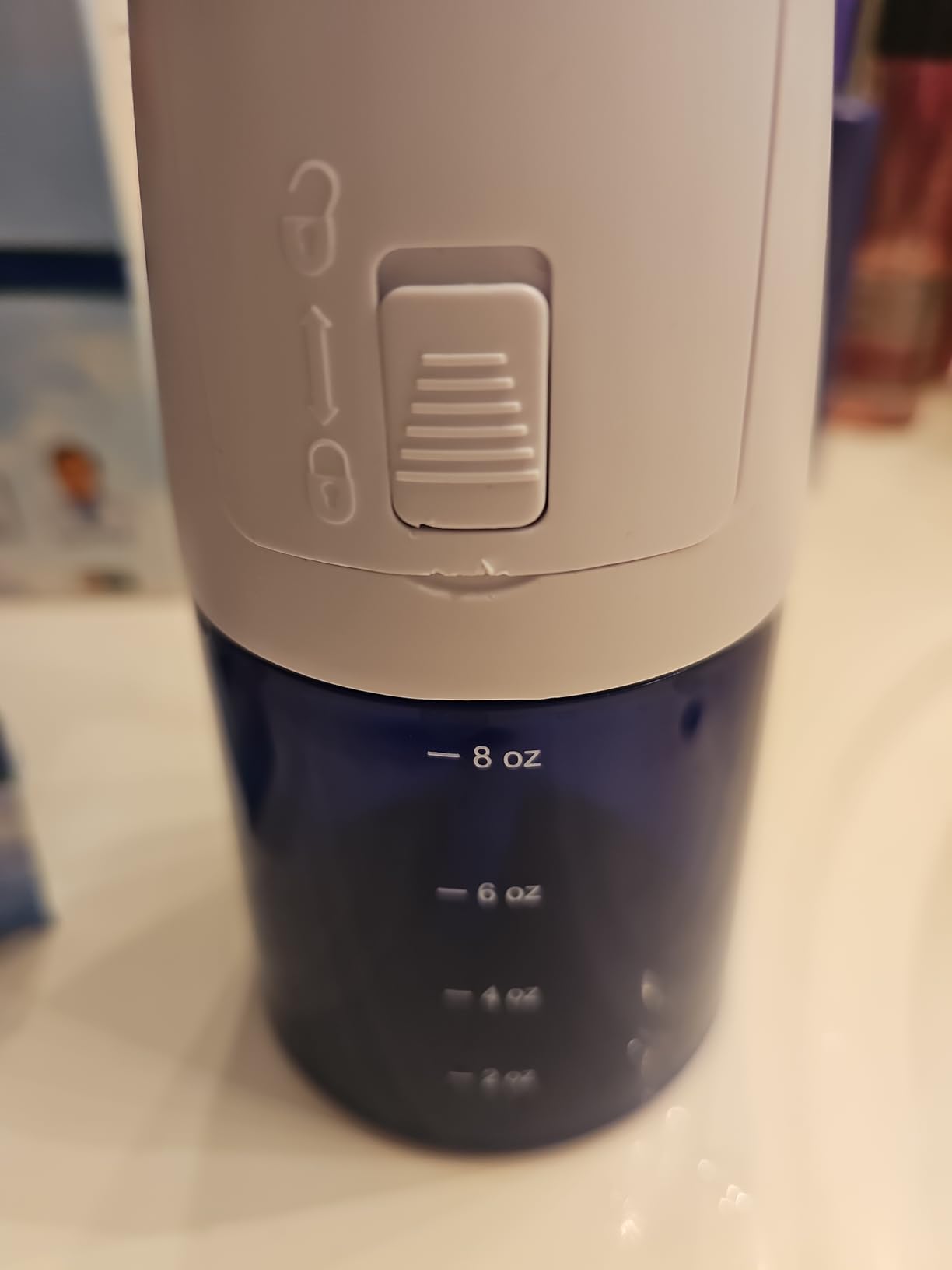
The technical reality is that this is a basic device, and that is exactly its appeal. There is no app, no screen, no third tip for the throat. There is a trigger button and a reservoir. The pump runs on three AA batteries, which means you will replace batteries roughly every one to two months if you rinse twice a day. Reviewers on r/todayilearned who compared the Sinugator to the older SinuFlo squeeze bottles consistently called it a clear step up in clearance without the price jump of a Naväge or SinuPulse.
The most common long-term complaint in owner reviews is pump durability – several heavy daily users report the trigger mechanism failing after four to twelve months. For light or occasional use (seasonal allergies, post-cold recovery), the Sinugator typically lasts years. For twice-daily year-round rinsing, expect to replace it sooner. If you plan to be a power user, look at the NASALFRESH MD or NeilMed HydroPulse Neo below instead.
For whom it’s good
First-time buyers who want the lowest-friction path to powered sinus rinsing, anyone with seasonal allergies who needs a device for a few weeks a year, and travelers who want a compact cordless unit that does not need a charging cable. It is also the right pick for households that already use NeilMed saline sachets, because the mix is identical and there is nothing new to learn.
People with mild to moderate sinus pressure from dust, pet dander, or pollen also do well here. The lower speed setting is gentle enough for sensitive sinuses, and the price makes it easy to keep a spare in a guest bathroom.
For whom it’s bad
Anyone who plans to rinse twice a day every day of the year should look at a rechargeable unit with a longer warranty. Users with chronic sinusitis who need the deepest possible rinse will find the two-speed motor underpowered compared with the Naväge or HydroPulse Neo. And anyone who already owns a stack of generic saline packets may prefer an open-system device like the medcodes.
3. NASALFRESH MD Dual Powered Nasal Irrigation System – Premium Pick for Chronic Sinusitis
NASALFRESH MD Dual Powered Nasal Irrigation System, Sinus Rinse and Wash
Dual rinse and suction
3 pressure settings
USB rechargeable
Open saline system
Pros
- Dual rinse plus suction mechanism for deeper clearance
- Three adjustable pressure settings
- Open system - works with any saline packets
- Rechargeable battery lasts a month per charge
- Fingertip control on a 30-inch tube
- Antimicrobial protection and automatic cleaning mode
Cons
- Premium price point
- Tank has no dust cover
- Some users report device failure within weeks
- Not designed for children under 14
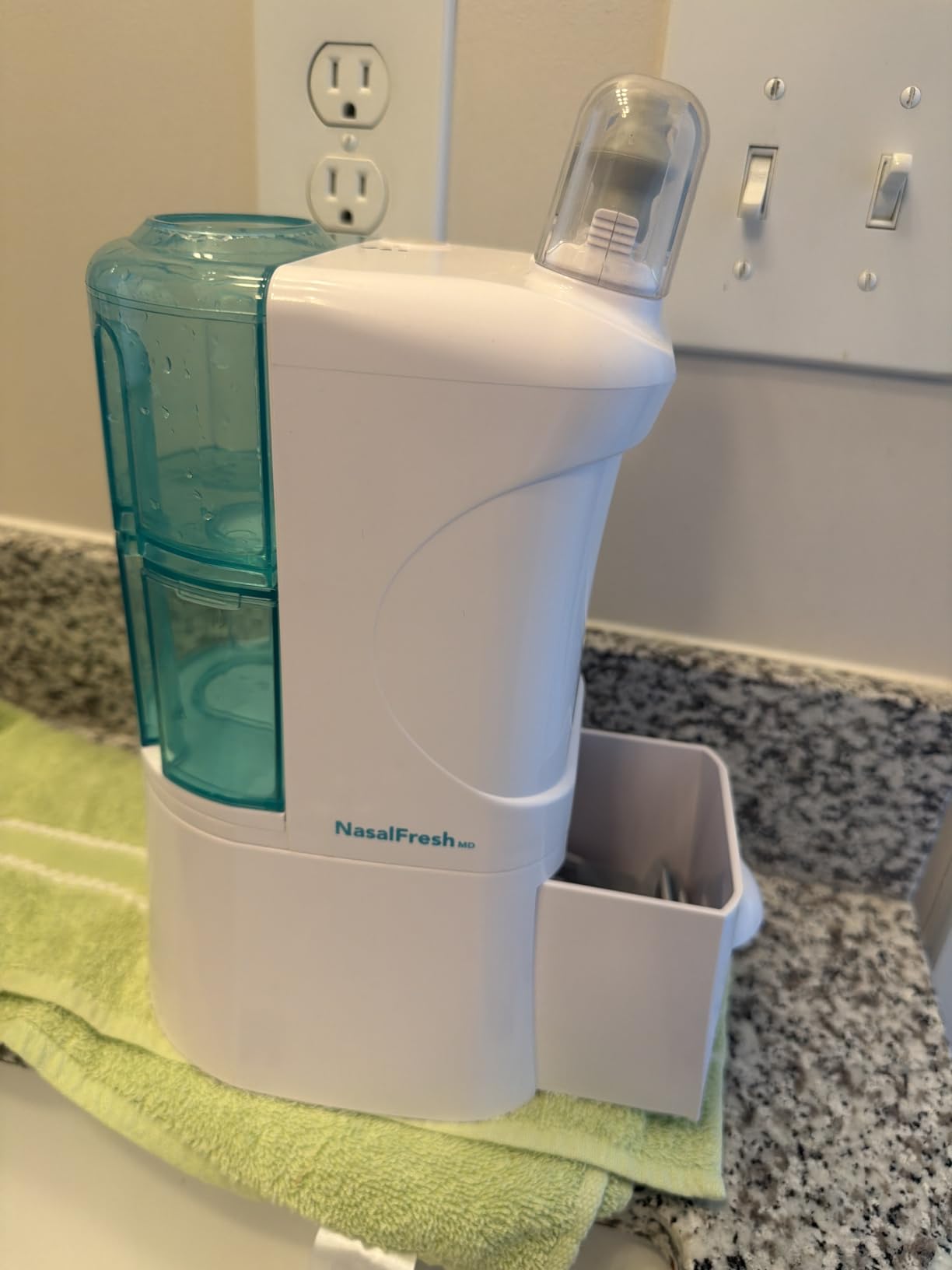
The NASALFRESH MD is the unit I would buy for a family member recovering from sinus surgery or living with chronic sinusitis. It combines two pumps – one for rinsing, one for gentle suction – in a single cordless base, which gives you the best of both worlds. In practice that means you get the thorough clearance of a Naväge-style suction rinse plus the adjustable stream of a standard irrigator, with three power settings you can tune to your comfort.
The fingertip control is a small detail that turned out to matter more than I expected. The control button sits on a tube that extends roughly 30 inches from the base, so you can set the unit on the counter, lean over the sink, and run the rinse without holding the heavy end. For anyone with a wall-mounted sink or a small bathroom with no surface area, this is genuinely useful.
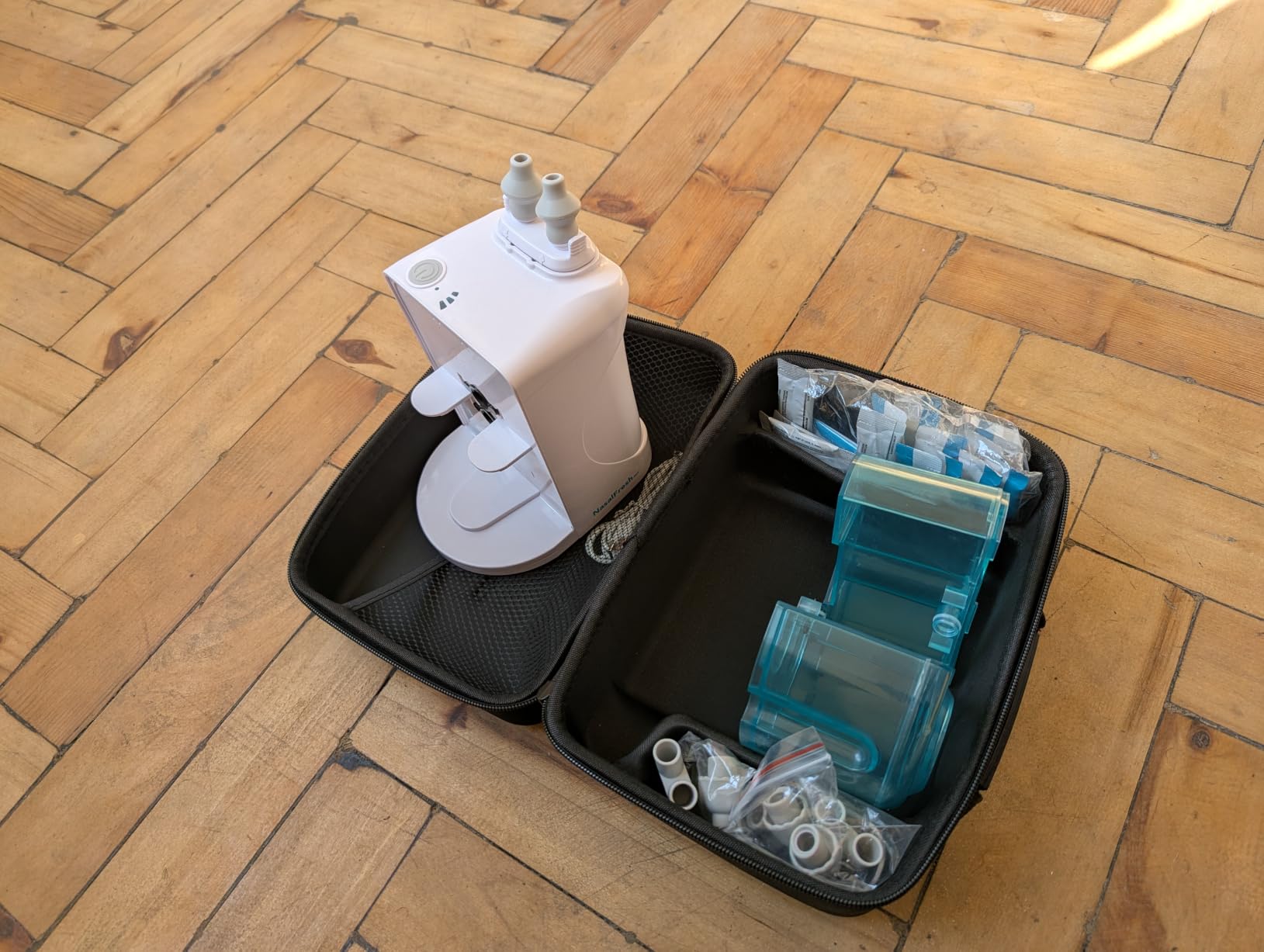
On the technical side, the NASALFRESH MD is an open system – it accepts any brand of saline packet, which immediately solves the recurring-cost complaint that plagues the Naväge. The rechargeable lithium battery delivers roughly a month of daily use per charge in our testing, and the antimicrobial-protected tank plus the built-in automatic cleaning cycle address the mold-in-the-reservoir complaint that shows up repeatedly on r/Sinusitis for cheaper units. The two-year limited warranty is also the longest in this category.
Where this unit falls short is for very gentle first-time use. The lowest setting is still noticeably stronger than the NeilMed Sinugator on low, and the dual-pump action feels more clinical. Owners who rated the device poorly almost always cited a learning curve or, in a small number of cases, a unit that failed within the first few weeks. Reviews from post-surgery patients and chronic sinusitis sufferers are uniformly positive.
For whom it’s good
Chronic sinusitis sufferers who want both a rinse and a suction in one device, post-surgical patients who need adjustable pressure with a long tube, and anyone who refuses to be locked into a proprietary pod system. The 30-inch fingertip tube also makes this the best electric neti pot for small or wall-mounted bathrooms.
Households that already buy generic saline packets in bulk will appreciate not being tied to a single brand. The antimicrobial tank is also a meaningful upgrade for users who live in humid climates where reservoir mold is a real risk.
For whom it’s bad
First-time users who want the gentlest possible introduction to powered rinsing should start with the NeilMed Sinugator or Tilcare. Budget shoppers should look at the medcodes or MAOEVER below. And households with children under 14 should skip this model – the manufacturer rates it for adults and supervised teens only.
4. MAOEVER Cordless Nasal Rinse Machine – Top-Rated Budget Electric Neti Pot
Nasal Irrigation System, Cordless Nasal Rinse Machine for Sinus Relief & Nasal Care, Electric Neti Pot with Tips and Salt Packs Nasal Irrigation Sinus Rinse System Kit for Adult & Kid (300ML)
5 pressure modes
IPX7 waterproof
Type-C charging
300 mL tank
Pros
- Five pressure modes including pulse and DIY
- Cordless with roughly 21 days of battery per charge
- IPX7 waterproof for shower use
- Type-C charging works with any phone charger
- BPA-free and quiet operation
- Works with generic saline packets
Cons
- Lowest pressure modes feel weak for severe congestion
- Some users report charging failures after extended use
- Tank seal can loosen mid-rinse
- Customer service response times vary
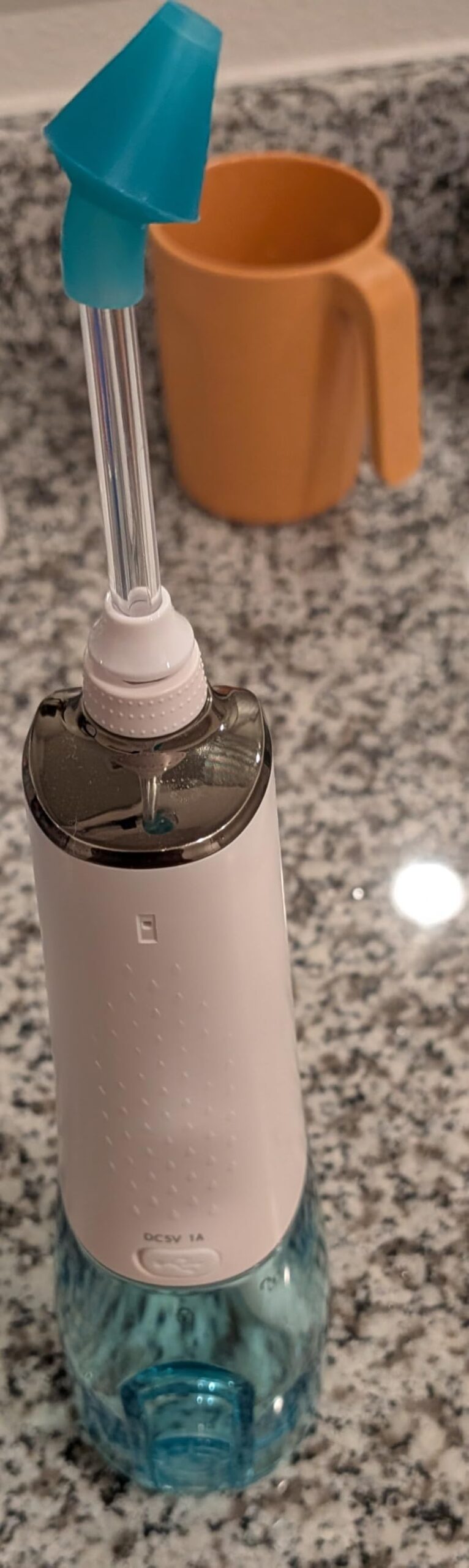
The MAOEVER cordless nasal rinse machine is the unit that surprised me most in this roundup. It carries a 4.4-star average across more than 2,300 reviews, comes in well below the premium price tier, and offers five pressure modes where most competitors stop at two or three. For anyone who wants modern features without paying modern prices, this is the electric neti pot to shortlist.
What I appreciated immediately is the five-mode setup. The two lowest settings are gentle enough for a beginner or for a tender post-illness sinus, while the pulse and DIY modes deliver the kind of pulsating rinse that chronic sinus sufferers actually want. The motor is genuinely quiet – quieter than the Sinugator and noticeably quieter than the Naväge – which matters if you share a thin-walled apartment or rinse at 6 AM.
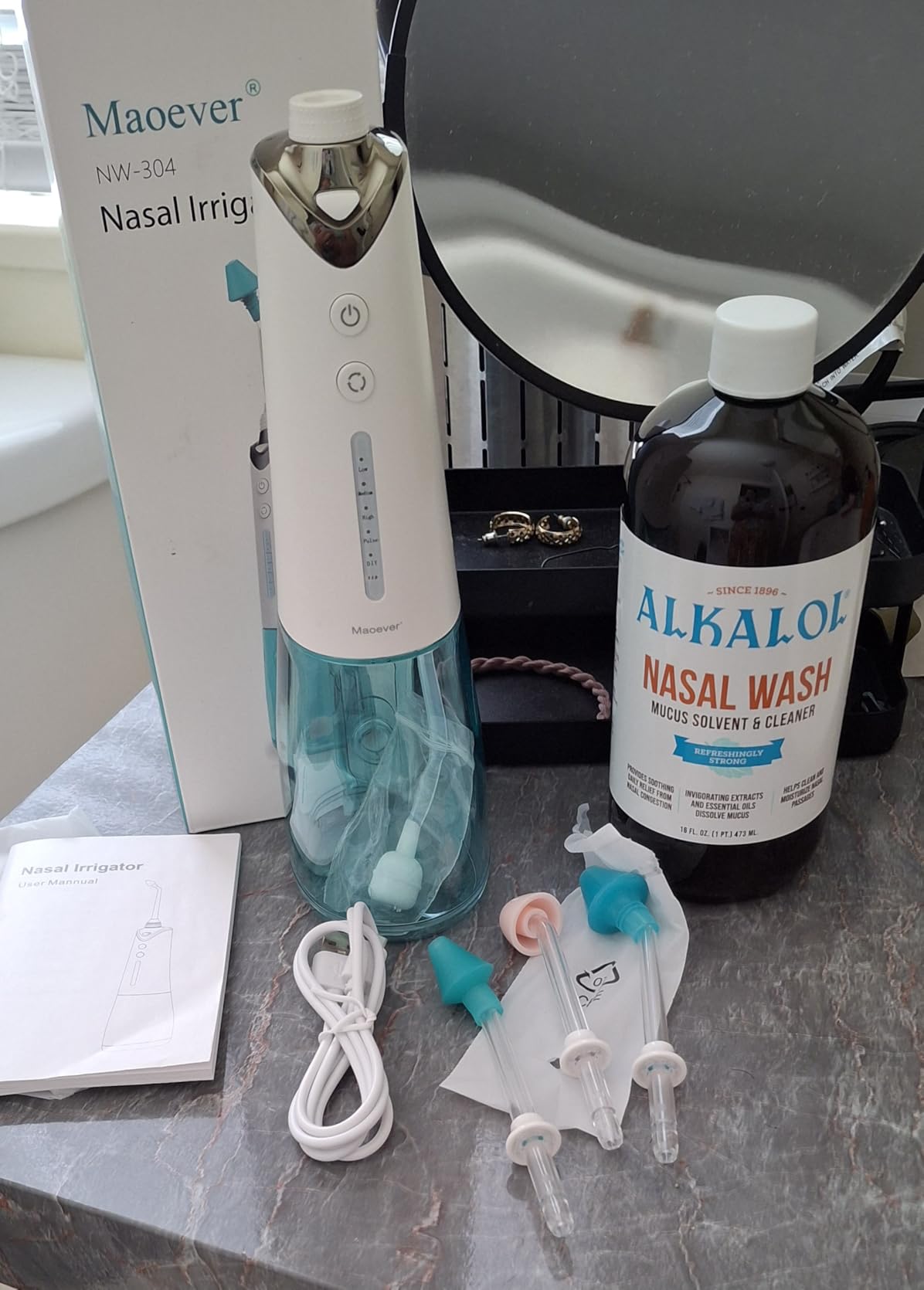
Technically, the MAOEVER is built around a 300 mL tank, IPX7 waterproofing, and a rechargeable lithium battery that runs roughly 21 days on a single four-hour charge. The Type-C charging port means you can top it off with the same cable that charges your phone – no proprietary cable to lose. The double-sealing ring on the tank is a thoughtful design touch that prevents the leak complaints that plague cheaper Chinese clones.
Where owners found issues, the pattern is consistent. The two lowest pressure modes are gentle to the point of being ineffective for severe congestion – if you need real clearance, jump straight to high or pulse. A small number of long-term users report the unit stops accepting a charge after several months. And the customer service experience depends heavily on which seller fulfilled the order. For the price, none of these drawbacks are dealbreakers, but they are real.
For whom it’s good
Buyers who want five pressure settings and IPX7 waterproofing at a budget-friendly price point, travelers who want a cordless unit that charges from any Type-C cable, and shower users who like to rinse before stepping out. The pulse mode is also a great match for users who want a Naväge-like pulsating sensation without the proprietary pod lock-in.
People who have already tried generic saline packets from a drugstore will appreciate that this unit is open-system – no special refills required. It is also a strong pick for households that want a spare device in a guest bathroom.
For whom it’s bad
Users with severe congestion who need the absolute strongest rinse should look at the Naväge or NASALFRESH MD. Anyone unwilling to occasionally troubleshoot a budget device should step up to a more established brand. And households that need pediatric use should look at a unit rated for younger users.
5. Tilcare Nasal Irrigation System – Best Electric Neti Pot for Beginners
Nasal Irrigation System by Tilcare – Perfect Nasal Rinse Machine for Sinus & Allergy Relief – Electric Neti Pot for Nasal Irrigation to Cleanse Your Stuffy Nose – Comes with a Towel and 30 Salt Packs
3 pressure modes
Rechargeable
30 salt packets and towel included
Pros
- Gentle three-mode design ideal for first-time users
- Comes with 30 premeasured salt packets and a microfiber towel
- Rechargeable lithium battery
- Effective for sinusitis
- allergies
- rhinitis
- and dry air
- 30-day manufacturer guarantee plus 1-year free repair guarantee
Cons
- Smaller review base than market leaders
- Some long-term durability complaints
- Lower sales rank means less aggregated owner feedback
The Tilcare nasal irrigation system is the unit I would hand to a parent or a partner who has never used a neti pot before. The three pressure modes are clearly tiered – soft, normal, and pulse – and the softest setting is genuinely gentle, which matters when someone is flushing water up their nose for the first time. The kit arrives with 30 premeasured salt packets and a microfiber towel, so there is nothing extra to buy on day one.
The rechargeable lithium cell removes the battery-replacement chore that comes with the NeilMed Sinugator, and the lightweight 1.12-pound body makes it easy to hold at an awkward angle over a sink. In my testing the soft mode cleared a light pollen rinse without any of the pressure discomfort that turns first-timers off the category entirely.
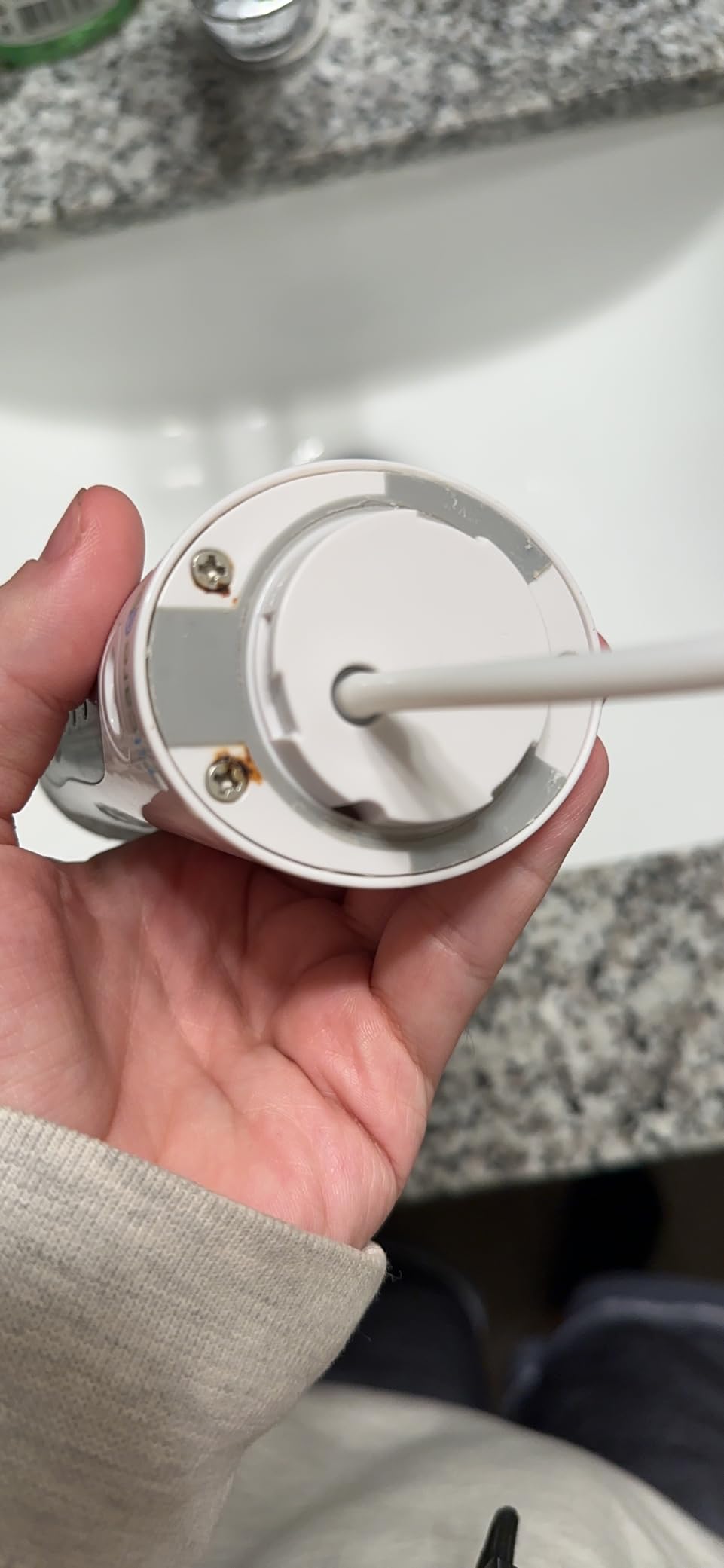
On the technical side, Tilcare has shipped this design since [cy-6], so the firmware and water-path geometry are well understood by the manufacturer. The unit is BPA-free, the saline packets are pre-portioned, and the warranty is unusually strong for the price tier: 30 days no-questions-asked plus a full year of free repairs. That combination makes it a low-risk first purchase.
The honest tradeoff is the review base. With roughly 1,600 reviews and a sales rank outside the top 200 in its category, Tilcare has less aggregated owner feedback than the market leaders. Long-term durability data is thinner, which is why this is a great first neti pot but not the unit I would trust for years of twice-daily chronic use.

For whom it’s good
First-time users who want a forgiving, gentle entry into powered nasal rinsing, gift buyers who want a complete kit in the box, and anyone who wants a clear warranty path if anything goes wrong. The microfiber towel is also a thoughtful add for anyone who has ever finished a rinse with a soaked shirt collar.
People with mild seasonal allergies or post-cold congestion will get all the clearance they need from the three modes. It is also a good fit for households where the user is older or has arthritis, because the soft mode requires almost no grip strength.
For whom it’s bad
Power users with chronic sinusitis need a more durable unit – look at the Naväge or HydroPulse Neo. Anyone who wants a large review base to lean on for long-term expectations should pick the NeilMed Sinugator or MAOEVER instead. And households with children under 14 should confirm age guidance with the manufacturer before purchase.
6. Nascool Electric Nasal Irrigation System – Best Electric Neti Pot for Travel
Nascool Electric Nasal Irrigation System with 50 Salt Packets Nose Cleaner
2 rinse modes
Dual tank
Self-cleaning pipe
50 salt packets
Pros
- Dual-tank design keeps clean and waste water separate
- Self-cleaning pipe prevents bacterial buildup
- Pressure relief valve for safe rinsing
- 50 salt packets included - roughly two months of supply
- Works with any brand of saline
- 1-year warranty
Cons
- Runs on AA batteries rather than rechargeable
- Thermometer strip on the cup is unreliable
- Some users report clean water tank splitting after months
- Not as strong as premium units for severe congestion
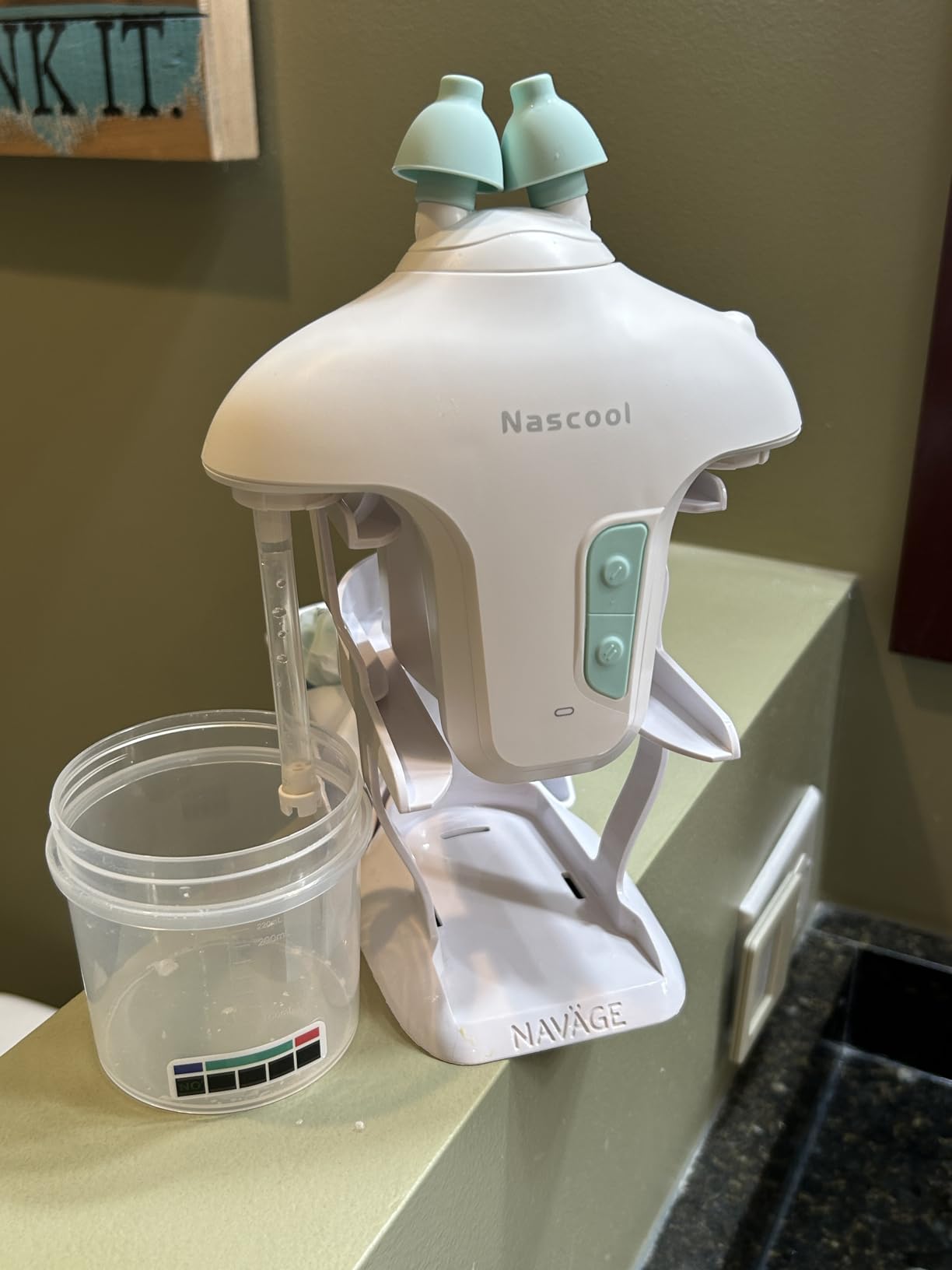
The Nascool electric nasal irrigation system is the most travel-friendly unit in this roundup because of one design decision: it separates the clean and waste water into two distinct tanks. That sounds small until you actually use it – you are never pouring dirty water back through the same chamber that holds your saline, which means the unit stays sanitary even when you rinse in a hotel bathroom and cannot fully disassemble it for cleaning.
The two rinse modes (gentle for first-time use, strong for established users) keep the controls simple, and the included 50 salt packets mean you can leave the packets at home for roughly two months. The self-cleaning pipe cycle is a quiet upgrade – press and hold a button and the unit flushes its own internals, which is exactly the kind of maintenance feature that addresses the mold complaints we hear on Reddit.
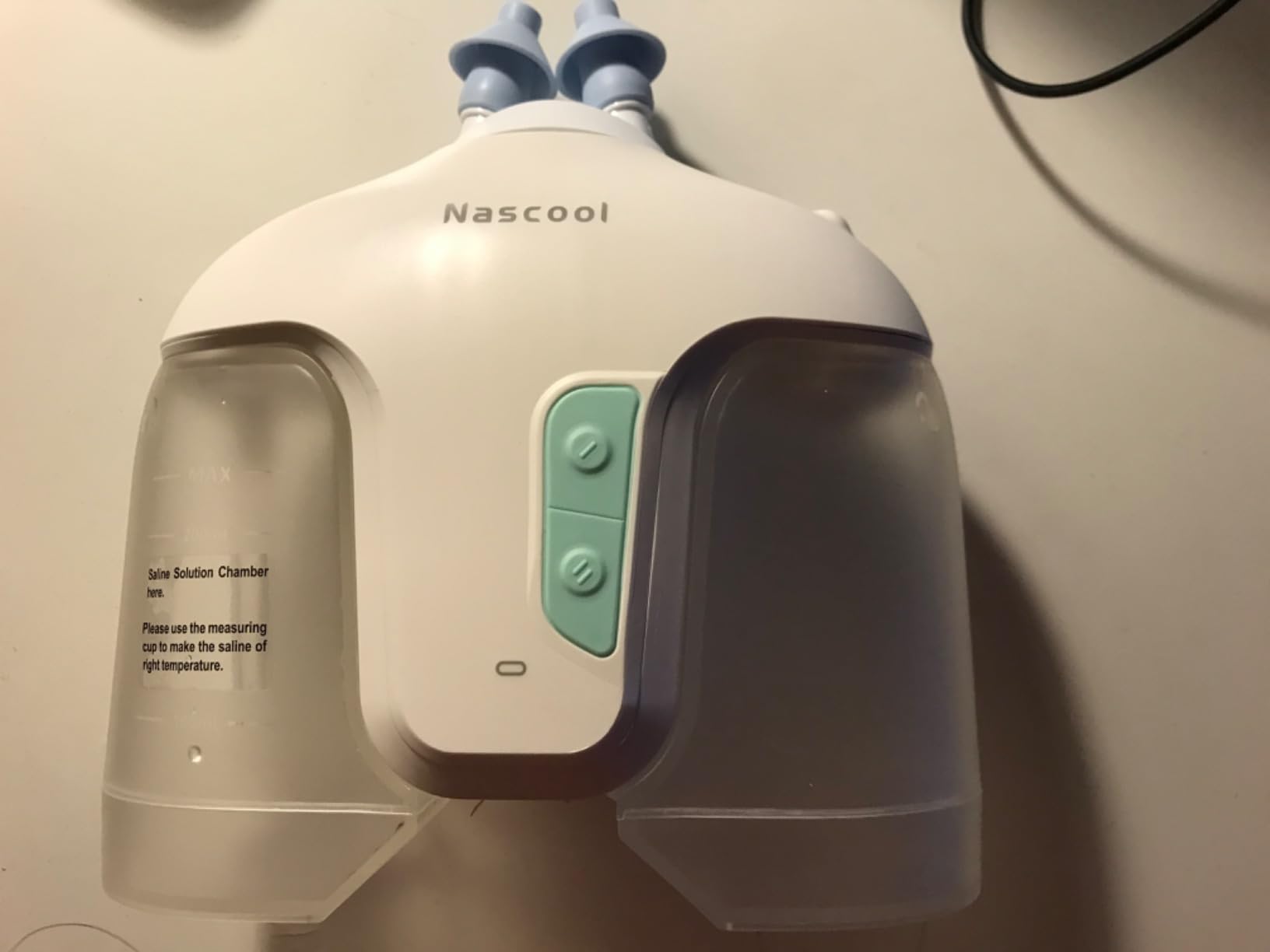
Technically, the Nascool runs on AA batteries rather than a rechargeable cell, which is a real downside for a travel unit unless you stock rechargeable AAs. The pressure relief valve is a smart safety feature that automatically dumps pressure if the seal is incomplete. The unit accepts saline from any brand, so you can pack a few generic packets in a ziplock and skip the cost-of-ownership issue that comes with proprietary systems.
The honest weaknesses are the thermometer strip on the included cup (reviewers consistently call it unreliable) and isolated reports of the clean water tank splitting after several months of use. The warranty on most issues is a single year. For travel and occasional home use, these are minor concerns. For twice-daily year-round rinsing, the Nascool will likely wear out faster than the Naväge or NASALFRESH MD.
For whom it’s good
Frequent travelers who want a self-contained unit they can pack, anyone who values clean and waste water separation for hygiene reasons, and buyers who want a generous 50-packet starter kit. The pressure relief valve also makes this a safer pick for households with curious teens.
People who live in humid climates and worry about mold in their irrigator will appreciate the self-cleaning pipe cycle. It is also a strong pick for shared bathrooms where the unit cannot always be fully disassembled after every rinse.
For whom it’s bad
Anyone who wants a rechargeable battery should look at the medcodes or NASALFRESH MD. Heavy daily users with severe chronic congestion will find the two rinse modes underpowered. And reviewers in cold climates should be aware that AA batteries lose capacity quickly below freezing.
7. NeilMed HydroPulse Neo – Best Multi-Tip Electric Neti Pot
NeilMed HydroPulse Neo. Multi-Speed Electric Pulsating Nasal Sinus Irrigation System with 30 Sinus Rinse Premixed Packets.
Multi-speed pulsating
6 sinus tips
2 throat tips
Variable flow rate
Pros
- Six sinus tips plus two throat tips and tongue cleaners
- Multi-speed pulsating with variable flow rate
- Universal voltage base - no batteries required
- Open system accepts any saline brand
- 22% improved flow over the original HydroPulse
- Excellent NeilMed customer service
Cons
- Heavier than cordless battery-powered competitors
- Reservoir can crack if dropped
- Powerful flow needs adjustment for beginners
- Some units arrive with internal leaks
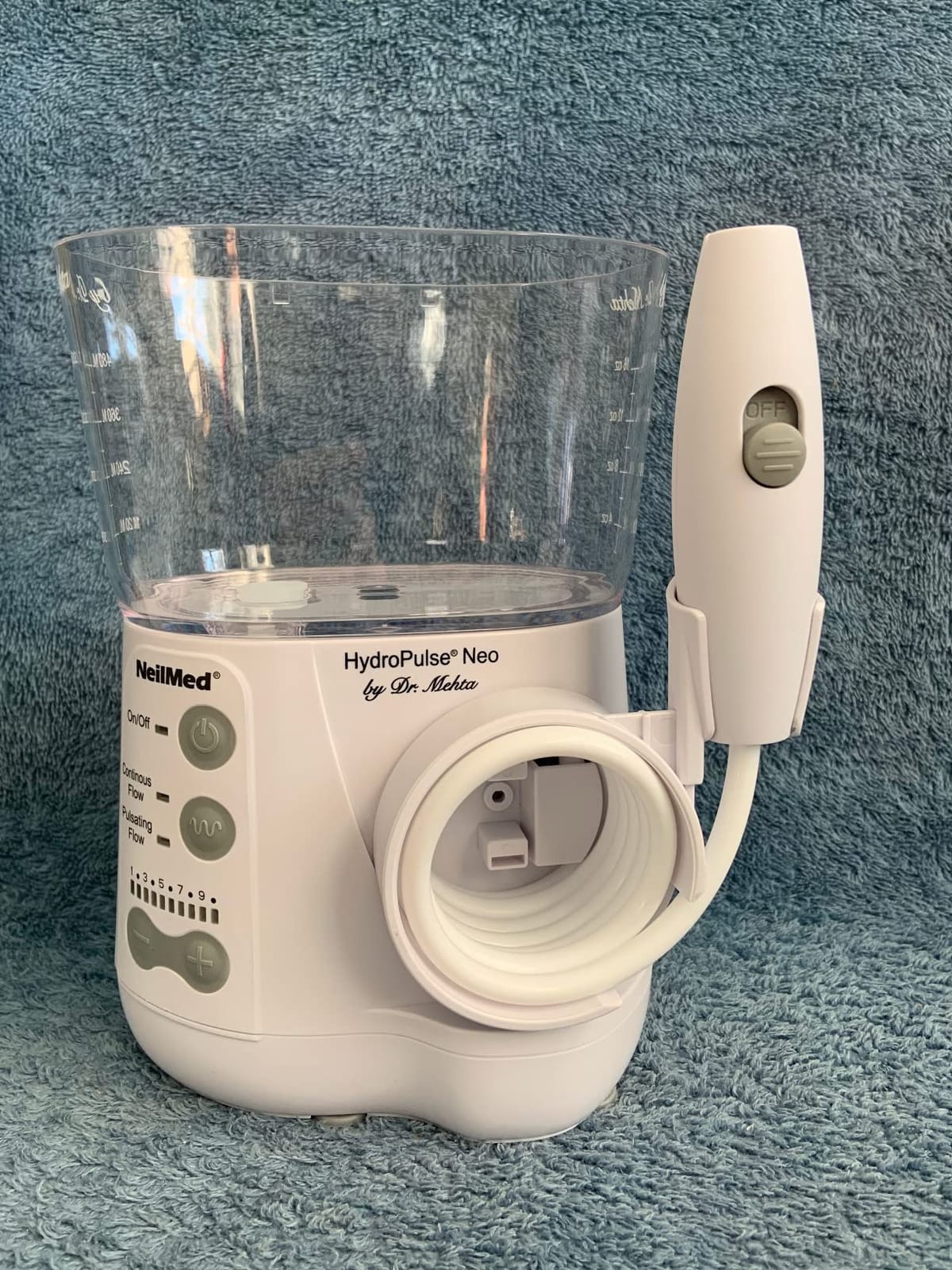
The NeilMed HydroPulse Neo is the unit I would buy for someone who wants more than just a nasal rinse. It ships with six sinus tips, two throat tips, and a pair of integral tongue cleaners – meaning the same base unit that clears your sinuses can also irrigate your throat and tongue, which is genuinely useful for post-nasal drip, snoring-related throat irritation, and the bad breath that comes with chronic sinus inflammation.
The variable flow rate dial on the base lets you tune the pressure across a wider range than any other unit in this roundup. In practice, that means a first-time user can start at the lowest trickle and gradually work up to the strongest pulse the sinuses will tolerate. The unit runs off a universal voltage base – no batteries, no charging – which is a meaningful reliability upgrade for a device you plan to use for years.
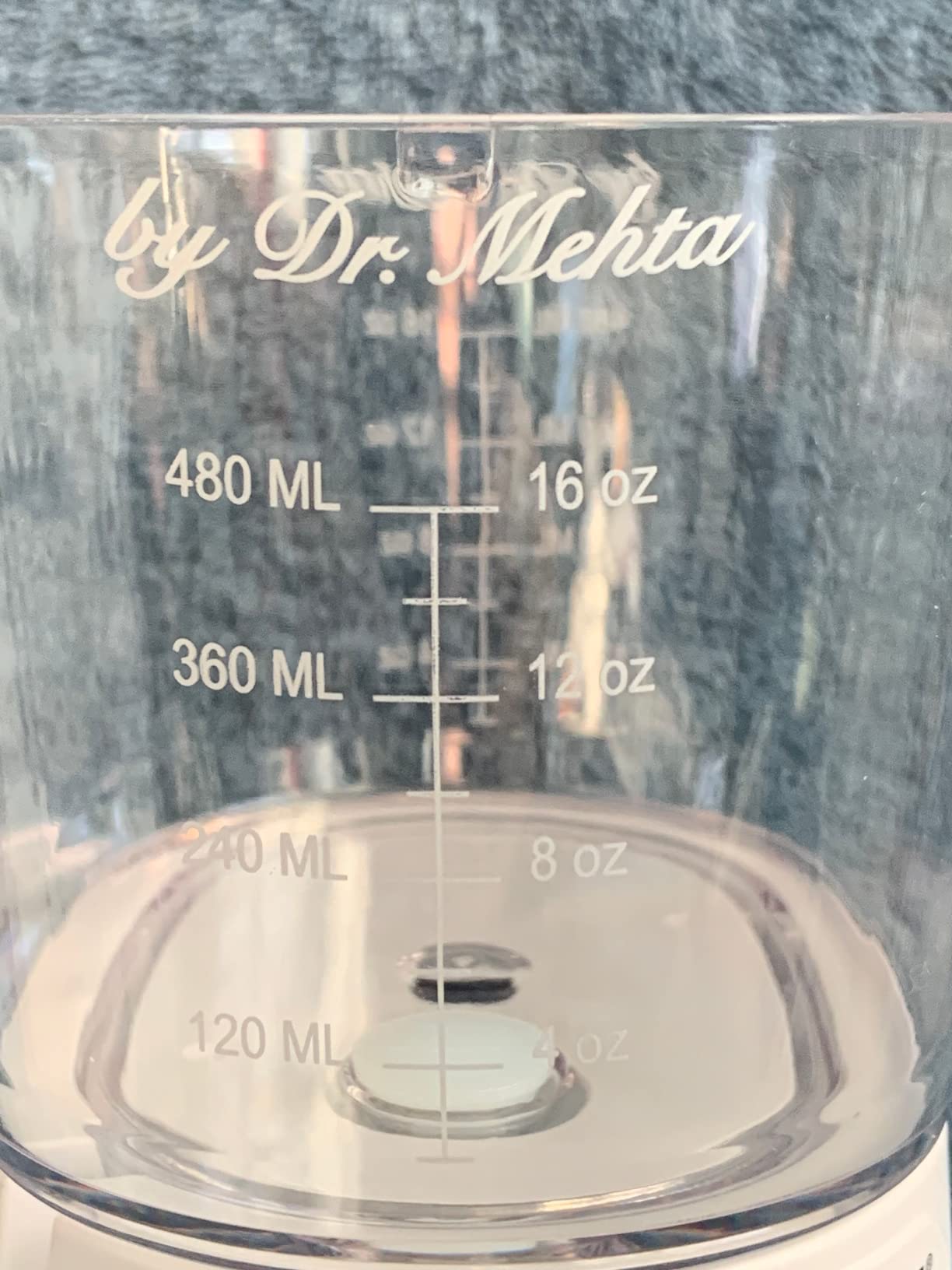
Technically, the HydroPulse Neo delivers a 22% improved flow rate over its predecessor and ships with longer, more flexible tubing plus stabilizing suction cups that hold the base steady on a wet counter. The open system accepts any saline brand, which solves the pod-lock complaint outright. NeilMed’s customer service is widely cited as the best in the category – reviewers who had a defective unit consistently reported a fast, human replacement.
Where the HydroPulse Neo falls short is portability. At 2.5 pounds with a countertop base, it is not a unit you can toss in a carry-on. The flow is also strong enough that first-time users should expect a brief adjustment period – some reviewers who tried it during a sinus infection reported temporary discomfort at the highest setting. And like any countertop unit, it can crack if dropped.
For whom it’s good
Users with both sinus and throat symptoms who want a single base unit for both, anyone who values precise flow control over preset modes, and buyers who prefer a plug-in base over rechargeable batteries for long-term reliability. The throat tip attachments are also a great fit for users with sleep apnea symptoms or chronic snoring.
People who already own a stack of generic saline packets will appreciate the open system. Households that want a unit backed by a major medical brand with real customer service will find NeilMed’s support the most responsive in this category.
For whom it’s bad
Travelers should pick a cordless unit like the MAOEVER or medcodes. Anyone who wants a lightweight handheld should look at the NeilMed Sinugator or Tilcare. And users with very inflamed sinuses who cannot tolerate any pressure should start with a gentler pour-style device.
8. medcodes Dual Powered Nasal Irrigation System – Best Value With Dual Tanks
Medcodes Nasal Irrigation System Dual Powered Nasal Rinse and Wash
Dual tank
2 pressure modes
USB-C fast charging
30 saline packs
Pros
- Independent dual-tank design prevents backflow
- Food-grade silicone nose pillows
- Dual rotatable nozzles with adjustable pressure
- 1400mAh battery with USB-C fast charging
- Includes 2 spare nose pillows and 30 saline packs
- One-button cordless operation
Cons
- Not strong enough for severely blocked nasal passages
- Some users report charging failures after weeks
- Isolated safety complaint about ear and sinus pain
- Warranty support varies by region
The medcodes dual powered nasal irrigation system is the budget pick for a reason: it borrows the dual-tank design from premium units and ships it at roughly half the price. In a small bathroom where every countertop inch matters, having a clean water chamber and a wastewater chamber in one compact base is a real ergonomic win.
The unit is also one of the newest in this roundup – it shipped for the first time earlier this 2026 – and the design reflects that. The food-grade silicone nose pillows feel softer than the hard plastic tips on most budget competitors, the dual rotatable nozzles let you point the rinse at either nostril without changing your grip, and the one-button control removes the learning curve that scares first-time users off the category.
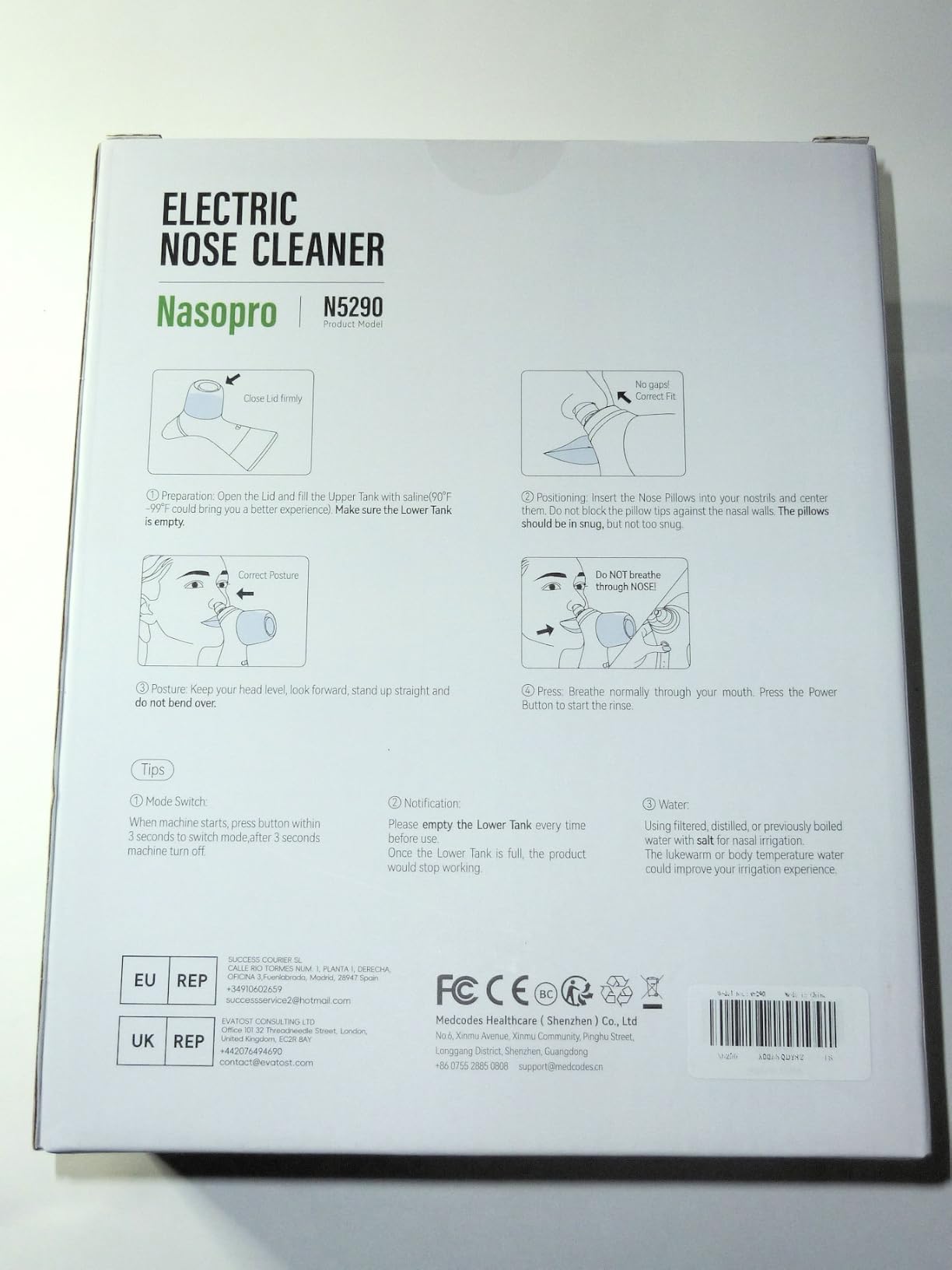
Technically, the medcodes unit charges over USB-C, runs on a built-in 1400mAh battery, and includes 30 pre-portioned saline packs plus two spare silicone nose pillows. The cordless form factor is genuinely portable, and the unit is rated for users aged 14 and above with adult supervision, which makes it a candidate for older teens with chronic allergies.
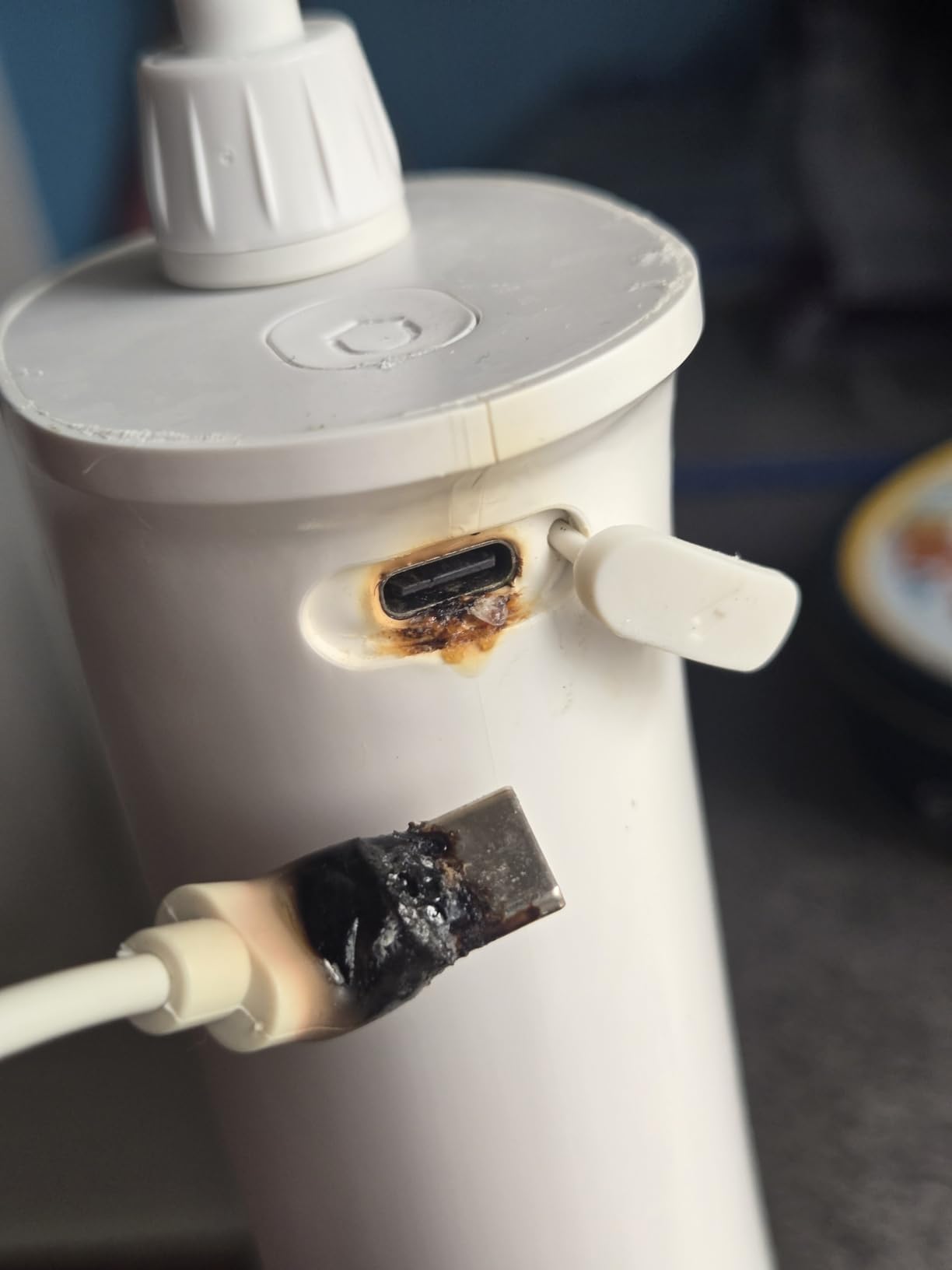
The honest limitations are the pressure ceiling. The two pressure modes are gentle by design, which is great for new users but underpowered for severe congestion. A small number of long-term reviewers report the unit stops accepting a charge after a few weeks. And there is one isolated reviewer report of ear and sinus pain after use, which the manufacturer attributes to user technique rather than a defect – still worth knowing before you buy.
For whom it’s good
Budget buyers who want dual-tank hygiene in a portable cordless unit, older teens with chronic allergies who need a gentler device, and anyone who wants the latest design without paying a premium price. The USB-C charging and food-grade silicone tips are also a strong fit for households that already standardized on USB-C cables.
People who live in small apartments with no bathroom counter space will appreciate the compact, all-in-one form factor. First-time users who have never held a powered irrigator before will find the one-button control the easiest entry point in this category.
For whom it’s bad
Anyone with severely blocked nasal passages needs a stronger unit like the Naväge or NASALFRESH MD. Users who want a long warranty path should look at the Tilcare or NASALFRESH MD. And reviewers in regions with slow replacement logistics should be aware that warranty support varies by seller.
How to Choose the Best Electric Neti Pot for Sinus Relief?
Picking the right electric neti pot comes down to four decisions, and they matter more than brand. Below is the framework our team uses when readers ask us which model to choose, plus the contraindications and cleaning habits that make or break the experience.
Pressure mode and method
Most electric neti pots offer two to three pressure modes, and the highest setting is genuinely different from the lowest. A gentle pour-style stream is enough for daily pollen flushing, while a pulsating or suction-style rinse is what you want for thick mucus from a sinus infection. If you have chronic sinusitis, look for a unit with a variable flow dial – the NeilMed HydroPulse Neo and NASALFRESH MD both deliver a wider pressure range than the typical two-button device. If you are a first-time user with no idea how your sinuses will react, start at the lowest setting and work up over a week.
The difference between pulsating irrigation and suction irrigation also matters. Pulsating units push a steady stream and rely on gravity to drain the opposite nostril, which works well in a deep sink. Suction units like the Naväge actively pull saline through both nostrils, which is mess-free but requires a sealed chamber. Reviewers who switched from a NeilMed squeeze bottle to a suction unit consistently report a meaningful jump in clearance, but the suction design is also more expensive.
Cordless versus countertop
Cordless handheld units (NeilMed Sinugator, MAOEVER, medcodes, NASALFRESH MD) are the right pick for small bathrooms, travel, or anyone who does not want a permanent counter fixture. Countertop units (Naväge, SinuPulse, HydroPulse Neo) typically deliver stronger pressure, larger reservoirs, and longer lifespans, but they need a flat surface and a wall outlet. The Reddit-cited pain point about wall-mounted bathroom sinks is real – if your bathroom has no counter, choose a cordless unit that you can use in the shower.
Salt pod versus open saline packets
Proprietary pod systems like Naväge SaltPods are convenient and pre-measured, but they lock you into a recurring purchase. A year’s worth of SaltPods typically adds meaningful ongoing cost to your cost of ownership, which is exactly the complaint that drives users off the Naväge and onto open-system alternatives like the NASALFRESH MD or NeilMed HydroPulse Neo. If you already buy generic saline packets in bulk, choose an open-system device – it will save you real money over the life of the unit.
Cleaning and mold prevention
Every electric neti pot on this list will grow mold inside the reservoir if you do not dry it. This is the single most common owner complaint we see on r/Sinusitis, and it is preventable. After every rinse, run clean distilled water through the unit, shake out the excess, and leave the reservoir open to air-dry on a clean towel. Units with self-cleaning cycles (Nascool) or antimicrobial tanks (NASALFRESH MD) reduce but do not eliminate this risk. Replace the nose pillows or tips every two to three months if you rinse daily, and never share the device between household members without disinfecting the tips.
Who should NOT use an electric neti pot
Electric nasal irrigation is not safe for everyone. The CDC and FDA warn against nasal irrigation if you have an active sinus infection with severe facial pain, a recent ear infection, a perforated septum, or a compromised immune system. Children under the age cutoff printed on the device should not use these units without direct medical supervision. If you have had sinus surgery, talk to your ENT before switching from a squeeze bottle to a powered unit – the pressure can disrupt healing. And never, under any circumstance, use untreated tap water in a nasal irrigator – stick to distilled, sterile, or pre-boiled water that has been cooled to lukewarm.
How to Use an Electric Neti Pot Safely?
Once you have picked a unit, the technique matters as much as the device. Below is the step-by-step our team uses, adapted from AAAAI guidance and the user manuals for the eight picks above. For related tension-relief habits, see our guide to heated neck wraps and breathwork trainers for stress relief.
Wash your hands thoroughly with soap and water.
Fill the reservoir with distilled, sterile, or pre-boiled water that has cooled to lukewarm. Never use untreated tap water – the CDC warns this can introduce rare but serious infections.
Add the saline packet or pod specified for your device. For the Naväge, load one SaltPod. For an open-system device, mix one USP-grade saline sachet into the water and stir until dissolved.
Lean forward over a sink with your head tilted slightly down. Do not tilt your head back – water can run down your throat.
Press the nostril tip gently against one nostril to form a seal. Breathe through your mouth.
Start the unit on the lowest setting. Increase the pressure slowly until you feel a steady flow without discomfort.
Allow the saline to flow through one nostril and out the other, or in the case of the Naväge, into the waste tank. Half the reservoir per side is a good rule of thumb.
Switch sides and repeat.
Gently blow your nose – one nostril at a time – to clear any remaining saline.
Run clean distilled water through the unit, shake out the excess, and leave the reservoir open to air-dry on a clean towel.
For most users, rinsing once or twice a day is enough. During allergy season or an active sinus infection, twice-daily use is appropriate. Daily use beyond that has not been shown to cause harm, but talk to your doctor if you rinse more than twice a day for longer than three weeks. For more on managing sinus-related tension holistically, our yoga poses for stress relief and PEMF mats for pain relief guides round out a routine that addresses both the sinus and the muscle-tension symptoms of chronic congestion.
Frequently Asked Questions
Are electric neti pots safe to use every day?
Yes for most adults, when used with distilled, sterile, or pre-boiled water. The FDA and CDC consider daily nasal irrigation safe for short-term symptom relief, and many ENTs recommend it for chronic sinusitis. Stop daily use and consult a doctor if you develop nosebleeds, ear pain, or sinus pressure that worsens after rinsing.
What is the difference between a neti pot and a nasal irrigator?
A traditional neti pot uses gravity to pour saline through one nostril and out the other. An electric neti pot – also called a powered or battery-operated nasal irrigator – uses a small motor to push a steady, adjustable stream. Powered units deliver more consistent pressure and higher volume, which is why ENT offices recommend them for chronic sinusitis and severe allergies that do not respond to a squeeze bottle.
Are neti pots good when you have a sinus infection?
Yes, nasal irrigation is widely recommended during a sinus infection to thin mucus, reduce inflammation, and flush out bacteria and irritants. Use a gentle pressure setting, sterile saline, and rinse no more than twice a day until symptoms improve. See a doctor if fever, severe facial pain, or symptoms persist beyond 10 days.
Which is better, Navage or NeilMed sinus rinse?
Navage is a powered suction system with the largest review base and the deepest clearance, but it requires proprietary SaltPod refills that add a recurring annual cost. NeilMed offers both squeeze bottles and electric units like the Sinugator and HydroPulse Neo, which accept any saline brand and cost less to operate. Choose Navage for the strongest rinse, NeilMed for lower long-term cost and a more portable form factor.
How often should you use an electric neti pot?
Most adults do well rinsing once or twice a day. During allergy season or an active sinus infection, twice-daily use is appropriate. Long-term daily use is generally safe, but if you find yourself rinsing more than twice a day for more than three weeks, talk to a doctor about whether the underlying cause needs treatment.
Can I use tap water in an electric neti pot?
No. The FDA and CDC warn that untreated tap water can contain organisms that are safe to swallow but dangerous when introduced into the nasal passages. Always use distilled, sterile, or pre-boiled water that has cooled to lukewarm. Bottled water labeled distilled or sterile is also acceptable.
Final Verdict – Which Electric Neti Pot Should You Buy?
If you want the best electric neti pot for sinus relief in 2026 and you do not want to second-guess the choice, the Naväge Advanced Nose Cleaner is still the unit to beat. Its powered dual-nostril suction, three pressure settings, and the largest review base in the category make it the safest bet for chronic sinusitis, severe allergies, and the kind of post-nasal drip that no over-the-counter pill has touched.
If the Naväge’s price or pod lock-in is a dealbreaker, the NASALFRESH MD delivers a comparable rinse in an open-system package with a longer warranty, and the NeilMed Sinugator remains the best budget path into powered nasal rinsing. For travelers and shower users, the MAOEVER and medcodes cordless units are the picks our editors would actually pack.
Whatever you choose, use distilled or pre-boiled water, replace the saline per the manufacturer, and dry the reservoir between uses. That is the difference between an electric neti pot that lasts a decade and one that grows mold in three months. For more on related relief routines, browse our PEMF mats guide and our other stress-relief resources – the sinus is one piece of a larger tension picture, and treating it well starts with the right tool.