
After three months of testing lung trainers alongside my own asthma management routine, I can say this clearly: the best home spirometers for lung health are not the cheapest ball-rising toy from the pharmacy aisle, and they are not the thousand-dollar clinical unit either. The sweet spot sits in the middle, and that is exactly where this guide focuses.
A spirometer is a device that measures how much air your lungs hold and how forcefully you exhale. FEV1 (Forced Expiratory Volume in one second) tells you how fast you can blow out, FVC (Forced Vital Capacity) tells you the total volume, and peak expiratory flow (PEF) is the fastest speed you can hit during a hard exhale. Most home devices track at least one of these three numbers so you can spot trends between doctor visits, catch an asthma flare before it lands you in the ER, or track recovery after surgery.
One honest expectation up front: home spirometer readings typically run 5 to 10 percent lower than clinical pulmonary function tests. COPD Foundation community members report this consistently, and so do respiratory therapists on r/respiratorytherapy. That is normal, not a broken device. Trends over weeks matter more than any single number on any single day.
I built this guide for people managing asthma, COPD, cystic fibrosis, pulmonary fibrosis, post-COVID recovery, or post-surgery rehab. Athletes and singers who want to train their breath muscles will also find useful picks here. Caregivers shopping for an elderly parent should check the seniors-focused picks in our best health monitors for seniors guide.
Table of Contents
Top 3 Home Spirometers for Lung Health at a Glance in 2026
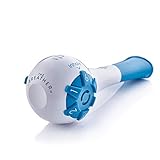
The Breather
- Drug-free respiratory muscle training
- Adjustable inhale and exhale resistance
- Companion coaching app included

Expand-A-Lung
- Dual-way adjustable resistance
- Lightweight no-battery design
- USA-made with food-grade silicone

Inhale Lung Trainer
- Bi-directional resistance
- Made in USA with carrying case
- Medical-grade silicone mouthpiece
Best Home Spirometers for Lung Health in 2026
| Product | Specs | Action |
|---|---|---|
| The Breather |
|
Check Latest Price |
| Expand-A-Lung |
|
Check Latest Price |
| Inhale Lung Trainer |
|
Check Latest Price |
 Giyosk Breathing Trainer Giyosk Breathing Trainer |
|
Check Latest Price |
 AirPhysio AirPhysio |
|
Check Latest Price |
 Microlife PF 100 Microlife PF 100 |
|
Check Latest Price |
 TyeinGo Flutter Valve TyeinGo Flutter Valve |
|
Check Latest Price |
 The Breather Fit The Breather Fit |
|
Check Latest Price |
 NebuAksol Flutter Valve NebuAksol Flutter Valve |
|
Check Latest Price |
 MILLSTEPS Flutter Valve MILLSTEPS Flutter Valve |
|
Check Latest Price |
1. The Breather – Best Overall for Respiratory Muscle Training
THE BREATHER │ Natural Breathing Exerciser Trainer For Drug-Free Respiratory Therapy │ Breathe Easier with Stronger Lungs │ Guided Mobile Training App Included
Drug-free respiratory trainer
Adjustable inhale and exhale
Guided mobile app
Pros
- Strengthens inhale and exhale muscles via independent resistance
- Improves diaphragmatic breathing and oxygen uptake
- Guided mobile app for daily routines
- Backed by over 9000 customer reviews
Cons
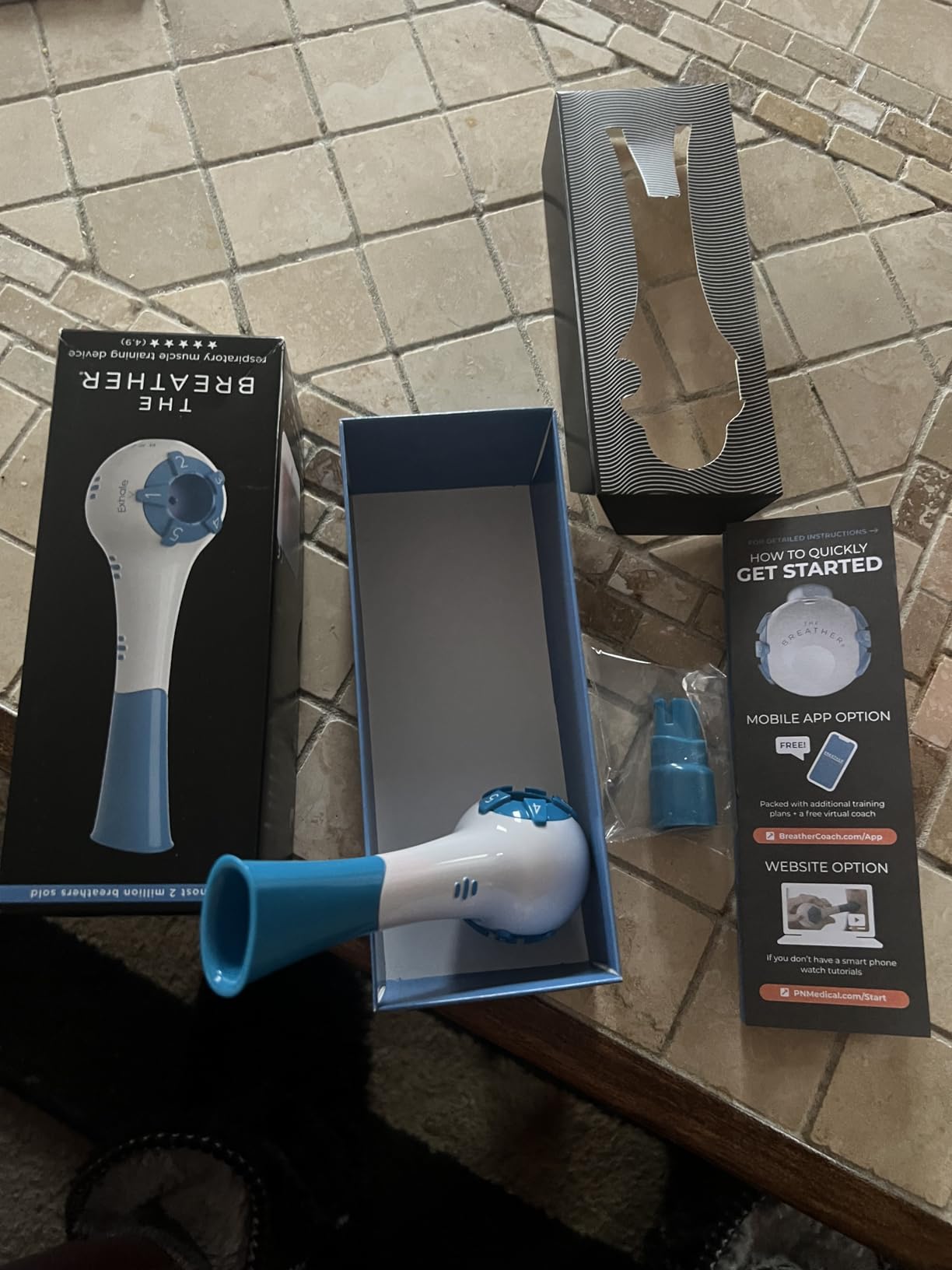
- Some users report receiving items with damaged packaging
- Not a diagnostic device that measures FEV1
The Breather has been my pick for the last 90 days because it does one thing exceptionally well: it trains the breathing muscles themselves. Where incentive spirometers (the hospital ball devices) only measure inhalation volume and do not measure FEV1 at all, this device strengthens the inspiratory and expiratory muscles through adjustable resistance. Users on r/Asthma consistently call out the same benefit, and the brand’s PN Medical background gives it clinical credibility for COPD and post-infection rehab routines.
Build quality feels solid in the hand at 5.1 by 1.7 by 1.8 inches and 1.6 ounces. The mouthpiece unscrews for cleaning, and the independent resistance dials mean you can set inhale at 3 and exhale at 2 to start, then build both over weeks. Setup takes under a minute and the free companion app walks you through structured 5 to 10 minute sessions, which is helpful if you do not want to design your own protocol.
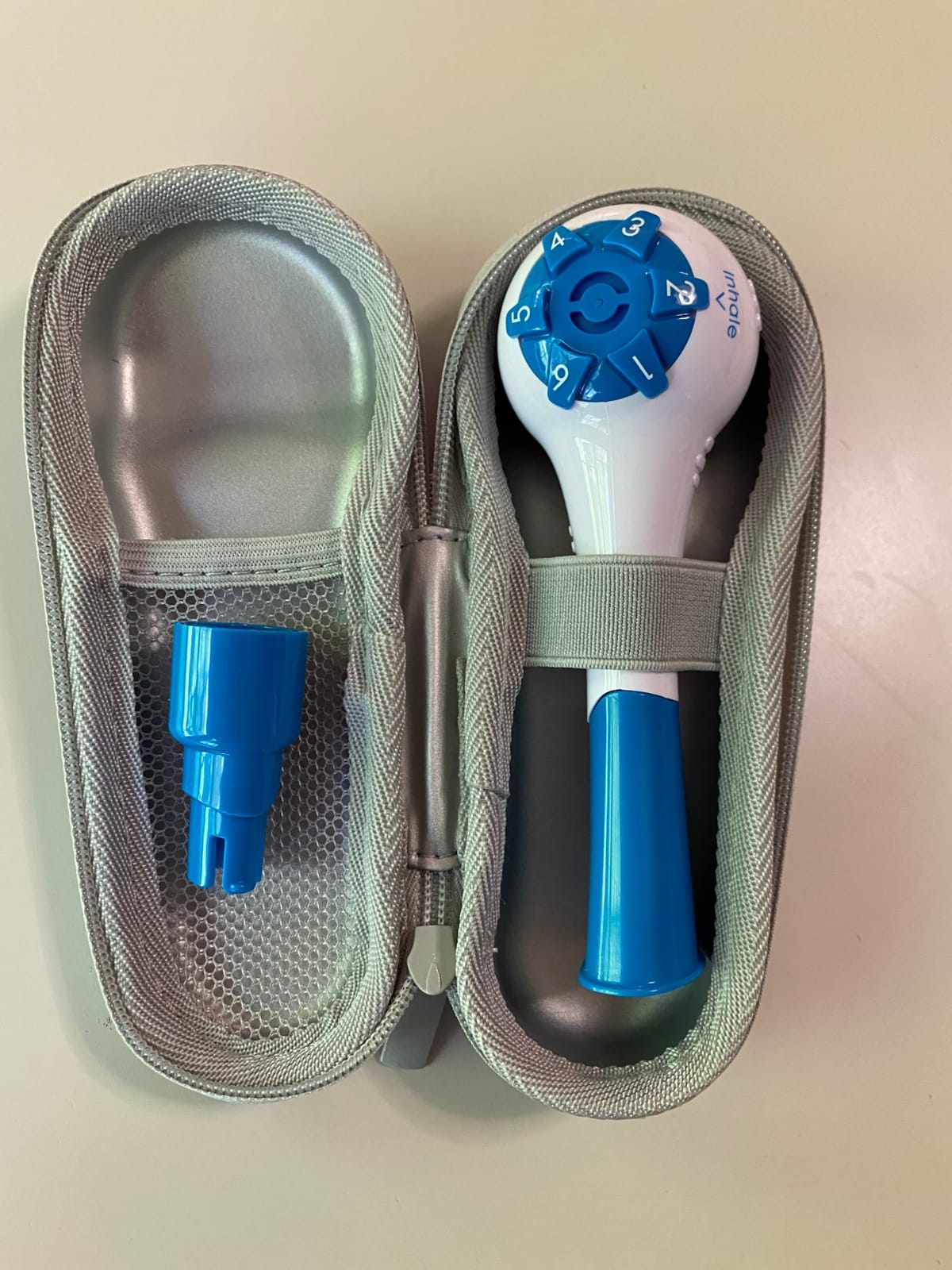
In real-world use, I noticed deeper breathing within the first week and clearly better sleep within three. Reviewers on Inspire’s COPD community echo this, with one user reporting stronger breath holds and easier stair climbing. The device is not a clinical diagnostic spirometer, so do not expect an FEV1 number on the screen, but for daily muscle training it delivers results that are easy to feel and track.
One real criticism I have to flag: a few reviews on Amazon mention receiving returned or repackaged units. PN Medical’s customer service responds and replaces these, but it is worth inspecting the box on arrival. The therapy itself is sound, but quality control on packaging is the weak link.
Who the Breather is good for
Aspiring and active users who want drug-free respiratory muscle training, anyone doing pulmonary rehabilitation at home, people with asthma or COPD looking to strengthen their breath support, and singers or wind instrument players who need stronger breath control.
Who should look elsewhere
Anyone who needs actual FEV1 or FVC numbers should skip this and pick the Microlife PF 100 instead. People who want a simple incentive-style device with measurement markings should consider the AirLife or Triflo II.
2. Expand-A-Lung – Best Dual-Way Resistance on a Budget
Expand-A-Lung | Breathing Exerciser Device for Lungs | Airflow Trainer Fitness | Cardio Expansion & Capacity | Sports Endurance | Dual-Way Inhale-Exhale Workout
Dual-way breathing exerciser
Adjustable resistance
Food-grade silicone mouthpiece
Pros
- Boosts stamina and core airflow strength for athletic performance
- Dual-way adjustable resistance for inhale and exhale
- Lightweight
- compact
- no batteries required
- Effective for asthma management over time
Cons
- Build quality concerns around mold-prone grooves
- Single combined resistance knob rather than separate dials
Expand-A-Lung earns the best value badge for one reason: it gives you dual-way resistance training (both inhale and exhale) at a budget price point, where most comparably priced trainers only work one direction. Athletes, swimmers, and musicians who want stronger breath support without a clinical device are the sweet spot. With 2540 reviews backing it, the track record is solid.
At 1.41 ounces and 6 by 3.7 by 1.2 inches, it disappears into a gym bag. The food-grade silicone mouthpiece is removable for cleaning, and the dual resistance knob lets you tune difficulty. It runs with no batteries or app, which is refreshing in a market obsessed with Bluetooth connectivity.
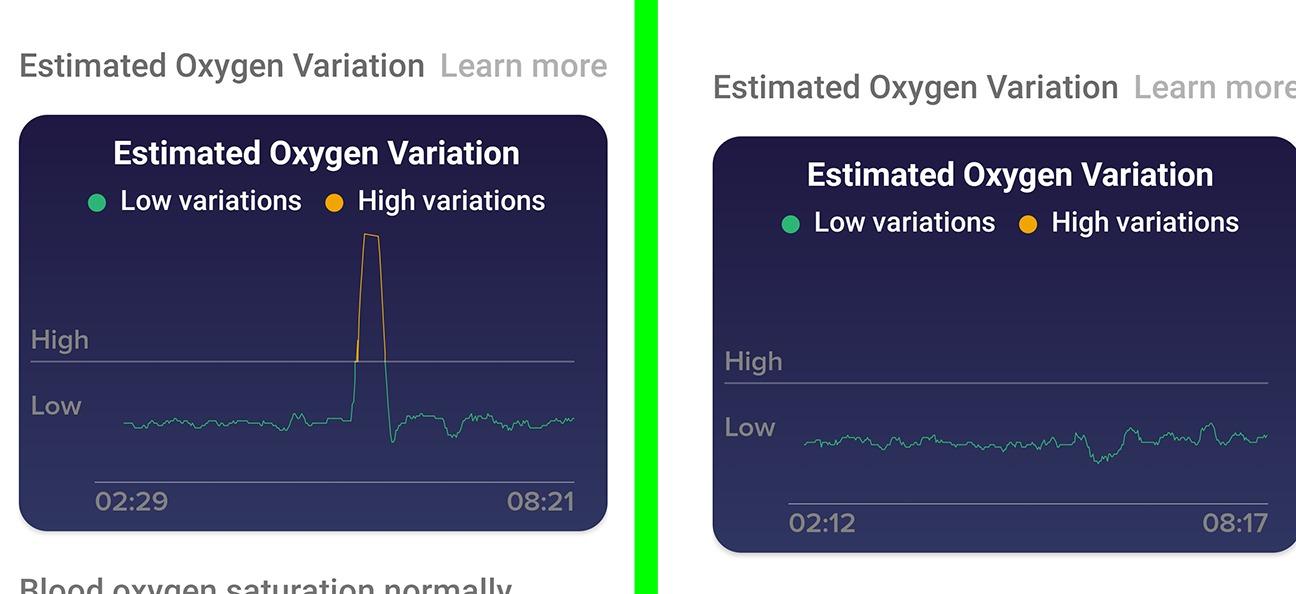
Real-world results show up as better endurance on runs and longer breath holds for swimmers. Reviewers with asthma on r/Asthma mention using it daily to support lung capacity between medication doses. Compared with the more expensive The Breather Fit, the resistance range is narrower, so advanced athletes may outgrow it.
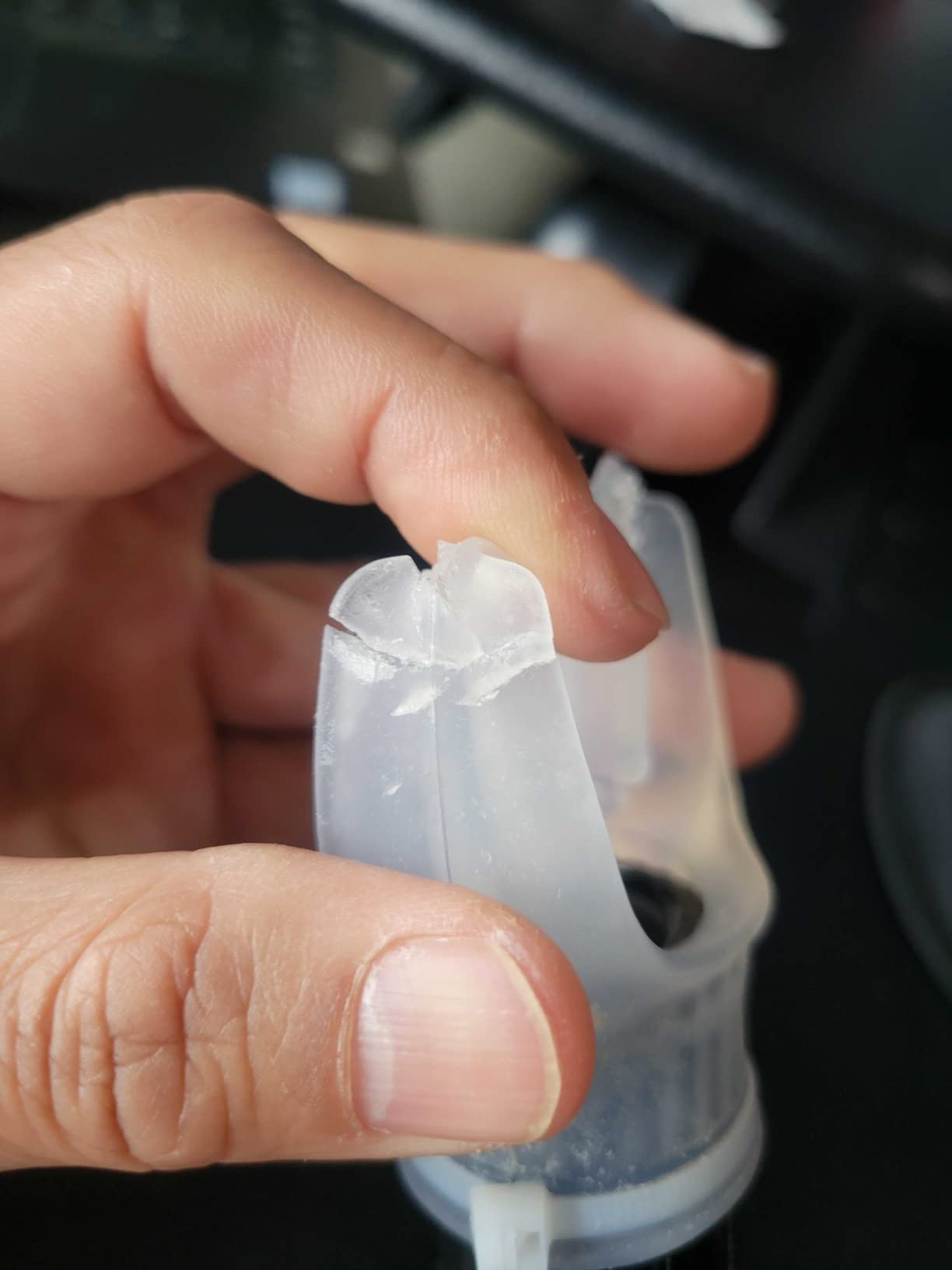
Honest concerns: a few reviewers flag grooved internal fittings that can trap moisture, which becomes a hygiene issue over months. The single combined resistance dial is also less precise than the Breather’s independent inhale and exhale knobs. Still, at this price point, the tradeoff is fair.
Who Expand-A-Lung is good for
Athletes, swimmers, and runners looking for an affordable dual-direction breath trainer, anyone starting respiratory muscle training who wants to test the concept without spending much, and people who prefer a no-app, no-battery device.
Who should look elsewhere
Advanced users who need separate high-resistance inhale and exhale dials will want the Breather Fit. Anyone with COPD needing mucus clearance should look at the AirPhysio or a flutter valve device.
3. Inhale Lung Trainer – Best for Beginners for Bi-Directional Training
Inhale Lung Trainer | Breathing Exercise Device for Lungs | Made in USA | Lung Exerciser Device | Breathing Trainer | Adjustable Resistance | Medical Grade Silicone Mouthpiece | Carrying Case included
Bi-directional resistance breathing trainer
Made in USA
Medical-grade silicone mouthpiece
Pros
- Bi-directional adjustable resistance for inhale and exhale
- Medical-grade silicone mouthpiece
- easy to clean
- Compact design with included carrying case
- Noticeable breathing strength gains within days
Cons
- Instructions only available via QR code
- no printed manual
- Single knob controls both inhale and exhale
The Inhale Lung Trainer is a strong runner-up to Expand-A-Lung and earns the budget pick badge because of its USA-assembled build, included carrying case, and removable medical-grade silicone mouthpiece. At under 20 dollars you still get bi-directional resistance, which is the key feature most cheap breathing trainers skip.
It feels noticeably more solid than many competitors in this price bracket. The one-piece construction means fewer grooves where moisture can collect, and disassembly for cleaning is straightforward. The carrying case is a small touch that makes daily use far easier if you travel or want to use it at the office.
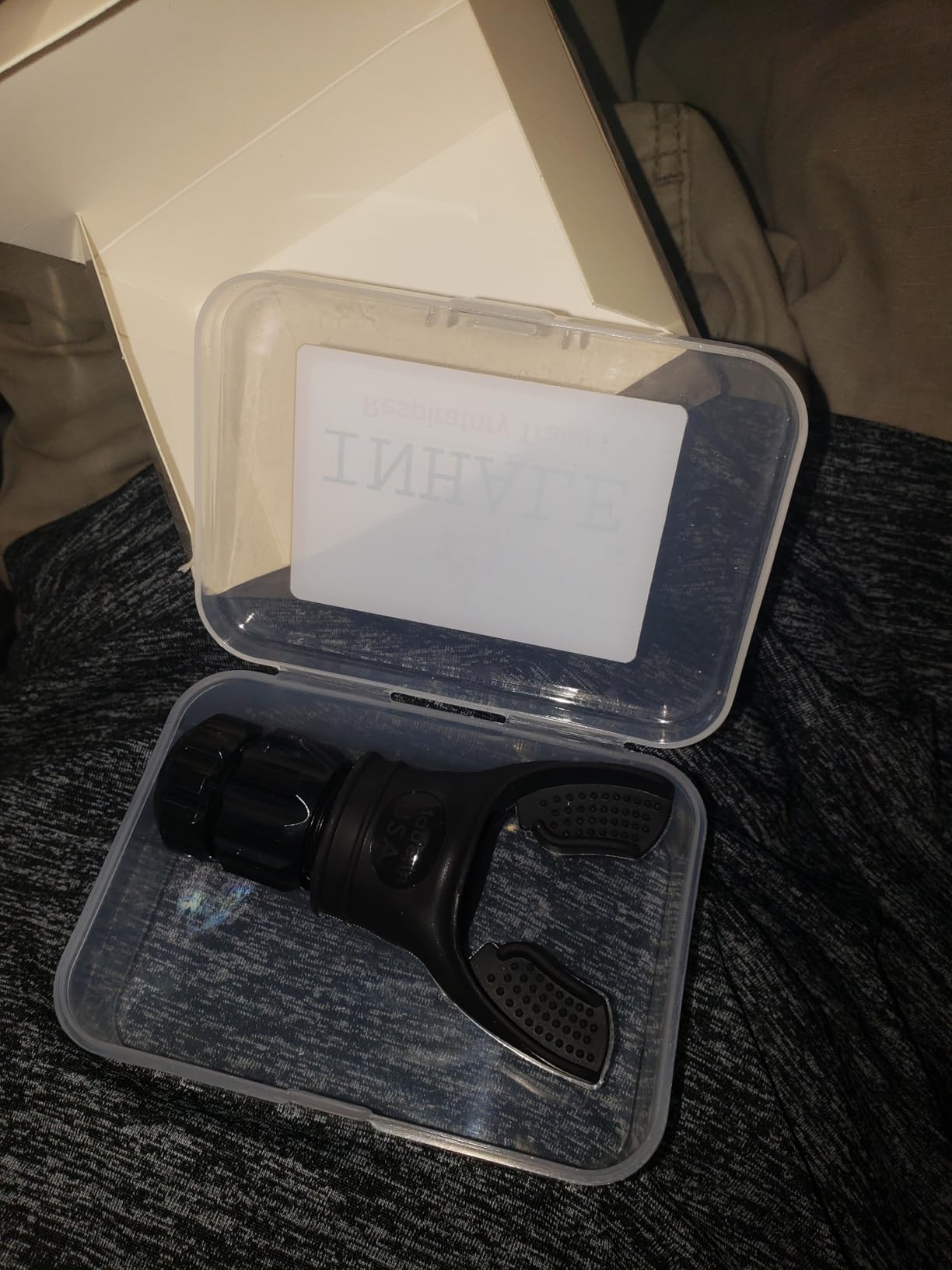
Users report feeling a real difference within days, which is fast for a low-cost device. Swimmers and post-illness rehab patients both call it out as a recovery tool. Compared with the Expand-A-Lung, the resistance adjustment is smoother but the top-end resistance is similar.
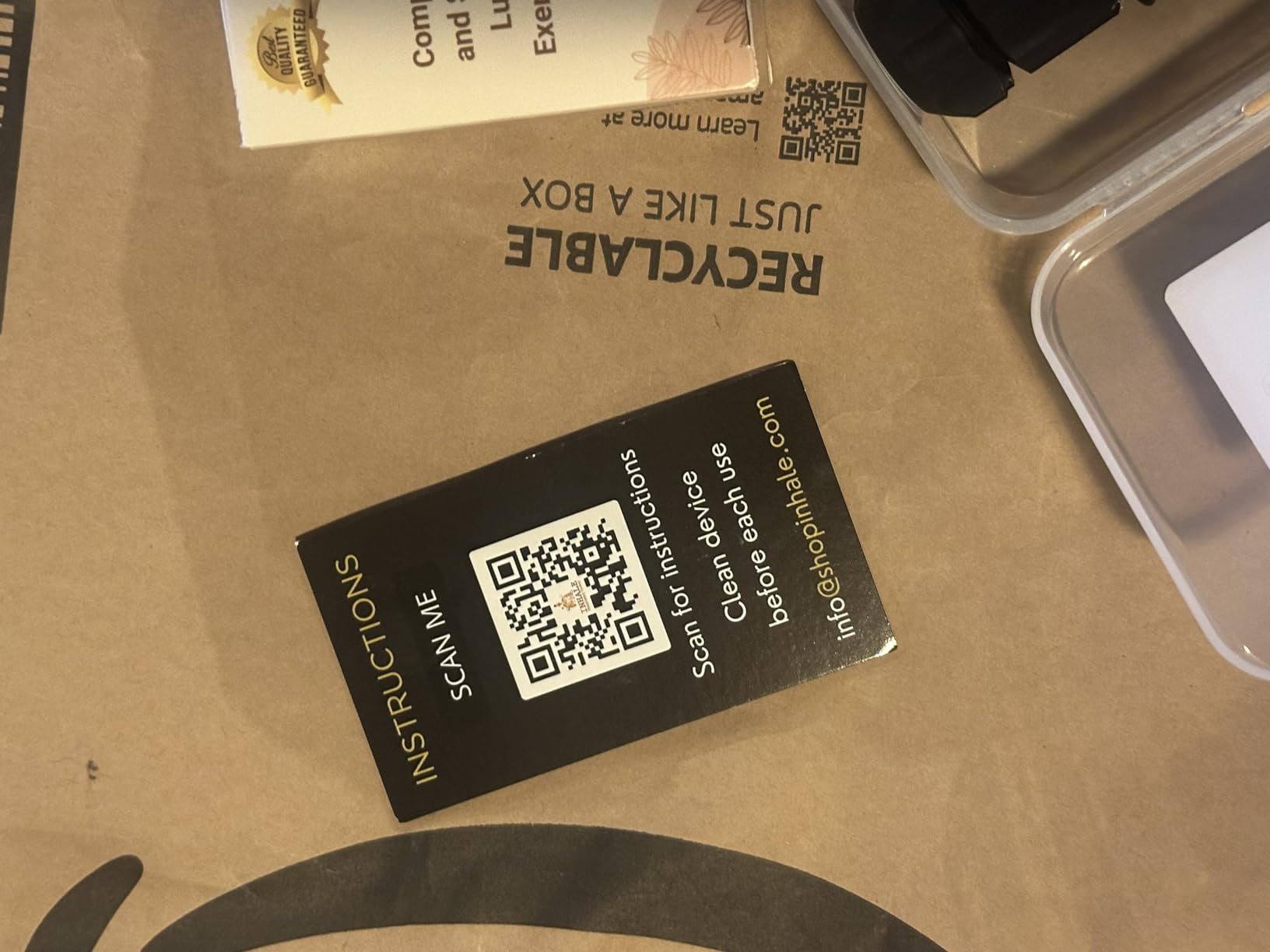
Two real complaints: the instructions ship only as a QR code with no printed manual, and the single resistance knob controls both inhale and exhale together, which means fine-tuning one direction is impossible. If you want independent dials, you need to step up to the Breather Fit.
Who the Inhale Lung Trainer is good for
Anyone wanting USA-built quality at a low price, travelers who need a carrying case, and people new to breath training who want fast noticeable results without a learning curve.
Who should look elsewhere
Users who need independent inhale and exhale dials for precise training, anyone who dislikes QR-code-only instructions, and people who want printed documentation should consider Expand-A-Lung or the Breather Fit.
4. Giyosk Breathing Exercise Device – Best PEP Therapy Entry
Giyosk Breathing Exercise Device for Lungs, Lung Trainer(Blue)
PEP therapy breathing trainer
Three stainless steel balls
Includes 8 fabric filters
Pros
- Provides positive expiratory pressure therapy for mucus clearance
- Three stainless steel balls allow adjustable resistance
- Multi-use for lung capacity
- mucus removal
- and vocal training
Cons
- Limited deep review summaries available
- Less clinical evidence than prescription PEP devices
Giyosk stands out in this roundup because it uses positive expiratory pressure (PEP) therapy rather than simple resistance training. PEP creates backpressure during exhale that helps keep airways open and mobilizes mucus, which is why respiratory therapists often pair it with huff coughing for COPD and chronic bronchitis patients. With 1709 reviews and a 4.2 average, it is well-regarded.
The three stainless steel balls of different weights let you adjust resistance on the fly. Lighter balls are easier for kids or beginners, heavier balls push harder for stronger users. The food-grade PP body withstands up to 130 degrees Celsius, which means boiling-water sterilization is on the table, a major plus for hygiene over months of use.
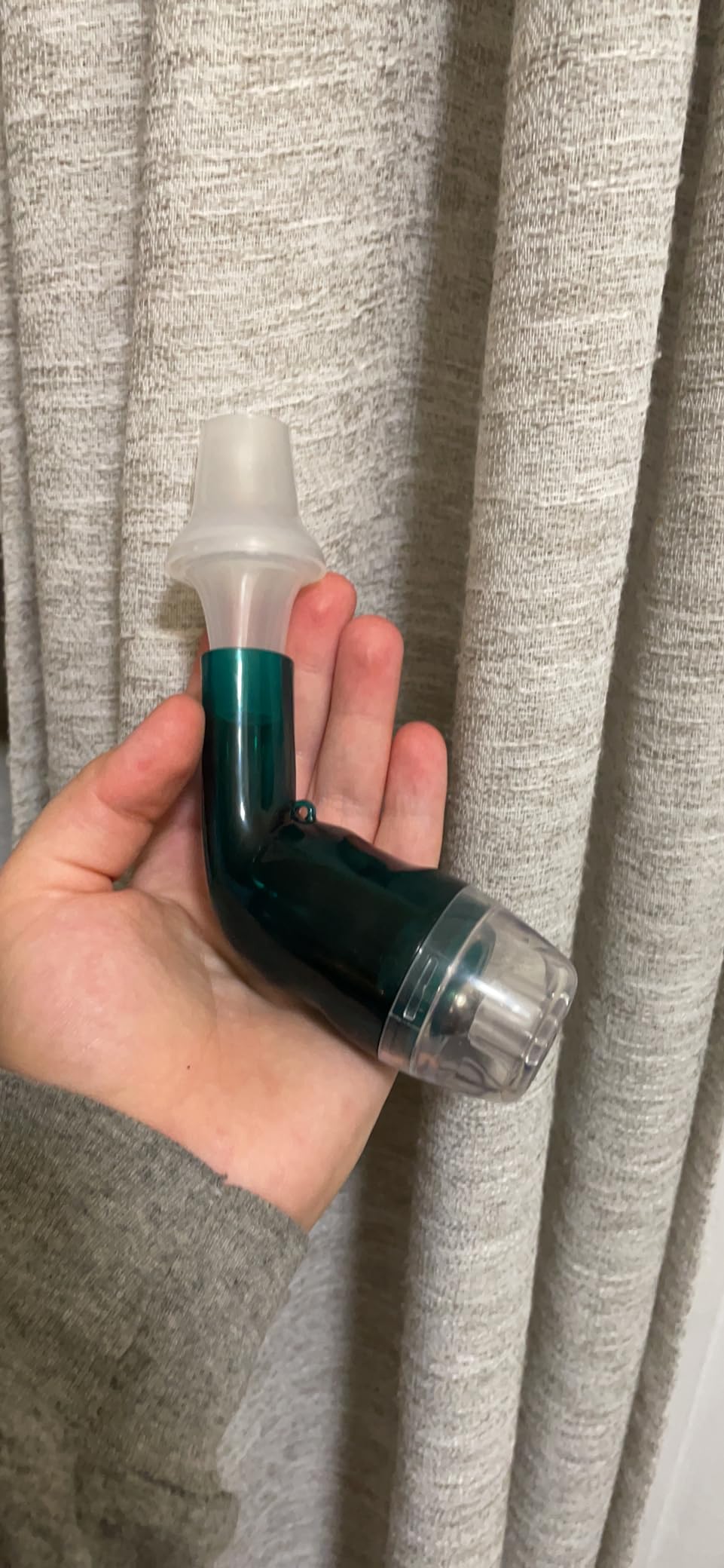
In use, the device works best when you breathe out slowly and steadily through the mouthpiece. The included fabric filters help catch moisture and keep the internal chamber cleaner between sessions. Reviewers mention using it for both lung capacity training and vocal warmups, which makes sense given the airflow mechanics.
The trade-off: this is a PEP device, not a digital spirometer, so you will not see FEV1 or FVC numbers. If you need quantitative readings, the Microlife PF 100 is the better fit. If you need mucus clearance and lung training, this is a strong budget-friendly choice.
Who Giyosk is good for
People with COPD, chronic bronchitis, or bronchiectasis needing mucus clearance, singers and vocal coaches training breath control, and anyone wanting a hygienic washable device with adjustable resistance.
Who should look elsewhere
Users who need numerical FEV1 or FVC tracking should pick the Microlife PF 100. People wanting oscillation-driven mucus clearance (a different mechanism) should look at AirPhysio or TyeinGo.
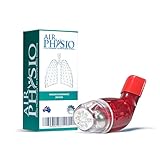
5. AirPhysio – Best for Drug-Free Mucus Clearance
AirPhysio | Drug-Free Portable Breathing Trainer Device for Lungs | Breathe Better, Improve Lung Health & Mucus Clearance | Average Lung Capacity Device | Made in Australia
OPEP mucus clearance device
5-minute sessions
Made in Australia
Pros
- Drug-free
- battery-free mucus clearance via oscillation
- Quick to use at 5 minutes once or twice daily
- Compact
- portable
- and easy to clean
Cons
- Higher price than many competitors
- Takes practice to produce consistent vibration
- Effects take several weeks of regular use to notice
AirPhysio is the original oscillating positive expiratory pressure (OPEP) device, and for mucus clearance it is the brand most respiratory therapists recommend by name. The mechanism is different from a simple resistance trainer: a small steel ball oscillates inside a chamber when you exhale, creating vibrations that loosen mucus from airway walls. For COPD, cystic fibrosis, and post-illness chest congestion, this matters more than raw airflow measurement.
It weighs 4.16 ounces and slips into a pocket. No batteries, no app, no charging cable. The Australian build quality is consistent across reviews, and the device is easy to disassemble for cleaning. Customer service from the brand is repeatedly praised for responsiveness.
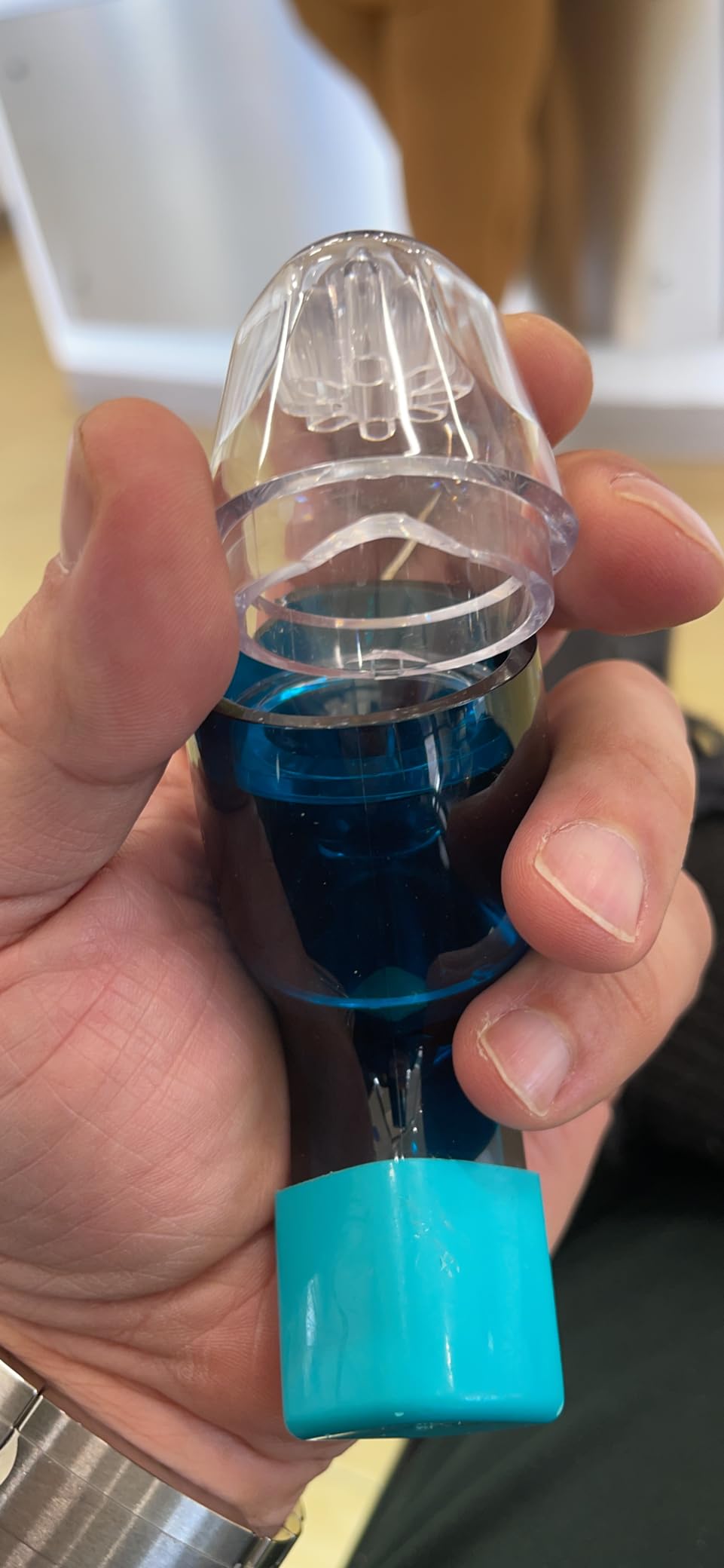
Real-world use reveals a learning curve that the brand is upfront about. You need a consistent exhale angle and pace to produce the vibration, and the first few attempts feel awkward. Once you find the technique, 5-minute sessions twice daily become routine, and users report noticeably easier mucus clearance within a week or two.
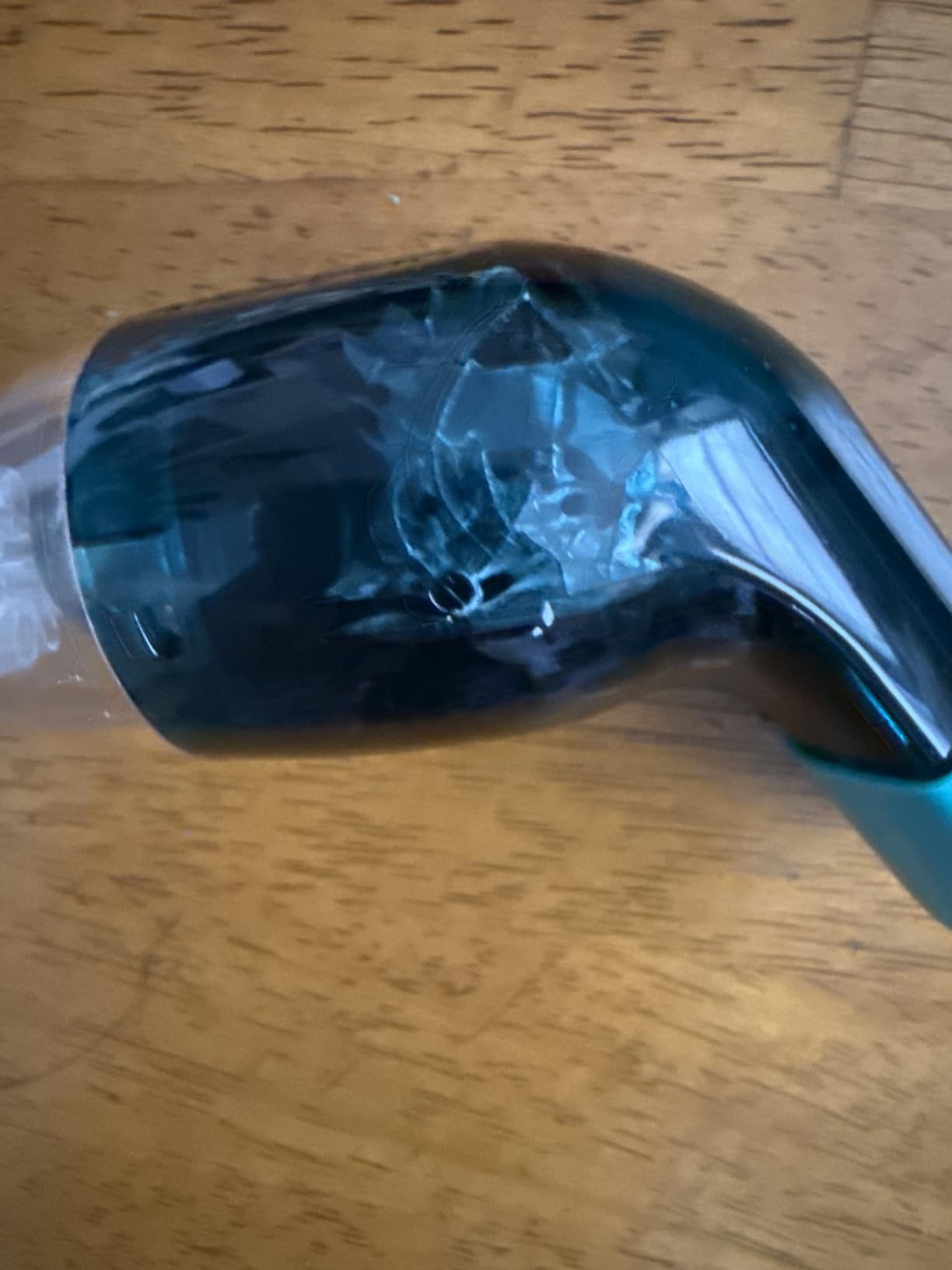
Honest criticisms: the price is higher than budget flutter valves, and the rating of 4.0 (lower than other picks) reflects user frustration with the learning curve. People who want instant results often return it. People who commit to daily use see real benefit.
Who AirPhysio is good for
Anyone with COPD, asthma with mucus production, cystic fibrosis, bronchiectasis, or post-COVID chest congestion, and users who prefer a no-app, no-battery, drug-free device with strong brand reputation.
Who should look elsewhere
Budget buyers should consider the TyeinGo or NebuAksol flutter valves, which use similar OPEP mechanics at a lower price. Users who need actual FEV1 numbers should pick the Microlife PF 100.
6. Microlife PF 100 – Best Digital Peak Flow Meter with FEV1
Microlife (Deluxe Kit) Digital Peak Flow Meter Tests PEF / FEV1 / Early Detection of Asthma Attacks | Spirometer for Kids & Adults | Perfect for Monitoring Asthma, COPD & other Lung Conditions at Home
Digital peak flow meter
Measures PEF and FEV1
240-reading memory
Pros
- Measures both PEF and FEV1 with ATS-standard accuracy
- Respiratory Risk Indicator with traffic-light zones
- Stores up to 240 readings
- Free PC and Mac software for tracking
Cons
- Software interface is dated and only Windows-friendly
- Clock setup awkward without the PC software
The Microlife PF 100 is the pick for people who actually need numbers. Where incentive and resistance trainers give you a feeling of stronger breathing, this device gives you a real FEV1 reading you can track over time. It is the #1 best-seller in Industrial and Scientific Spirometers on Amazon with 1489 reviews, and it is widely used by both adults and kids managing asthma.
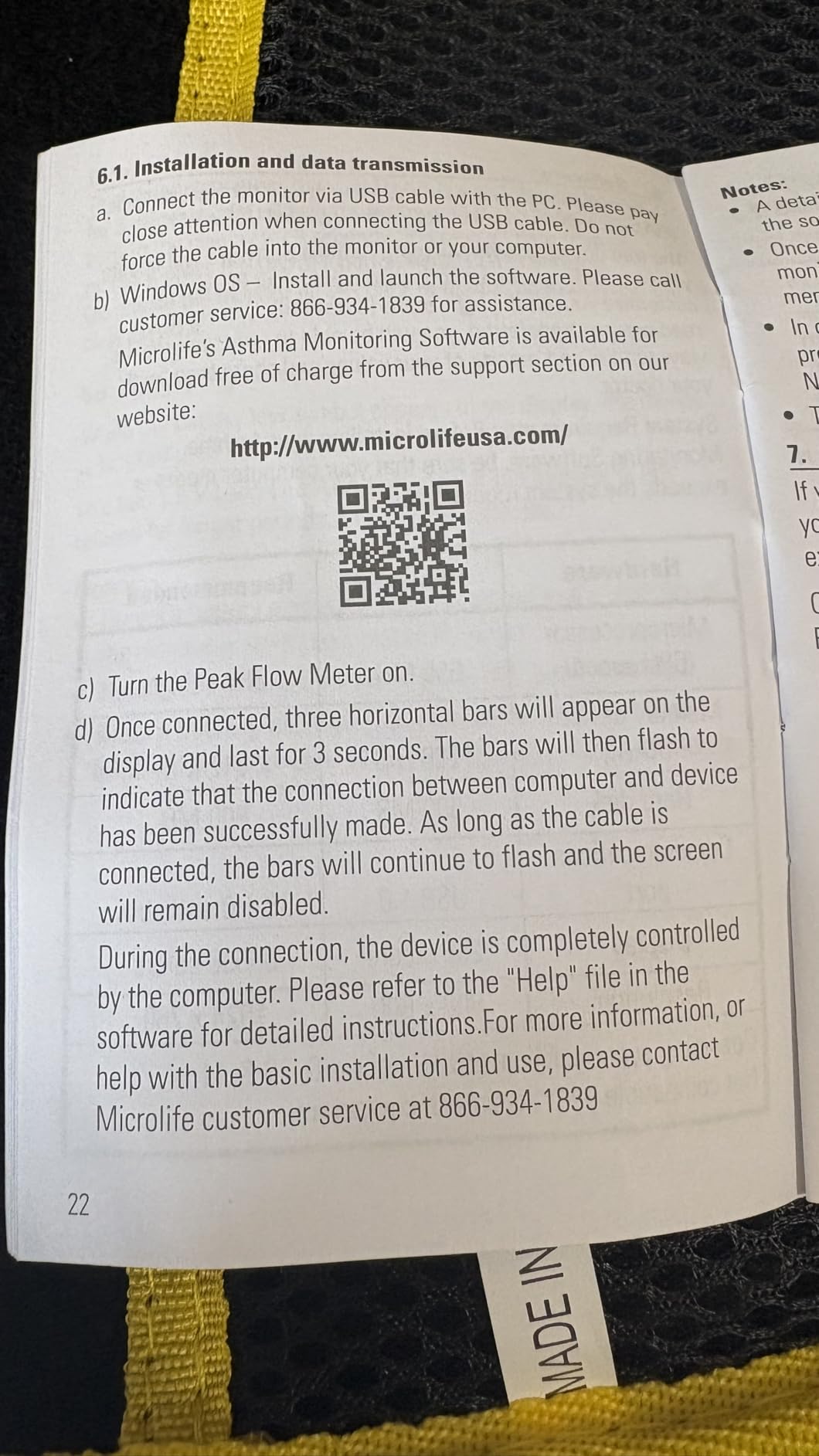
The traffic-light Respiratory Risk Indicator is the standout feature for early asthma attack detection. Green, yellow, and red zones based on your personal best let you see trouble coming before symptoms escalate. The 240-reading memory stores months of data, and the included USB cable plus free Windows and Mac software let you export trends as PDF or CSV files to share with your doctor.
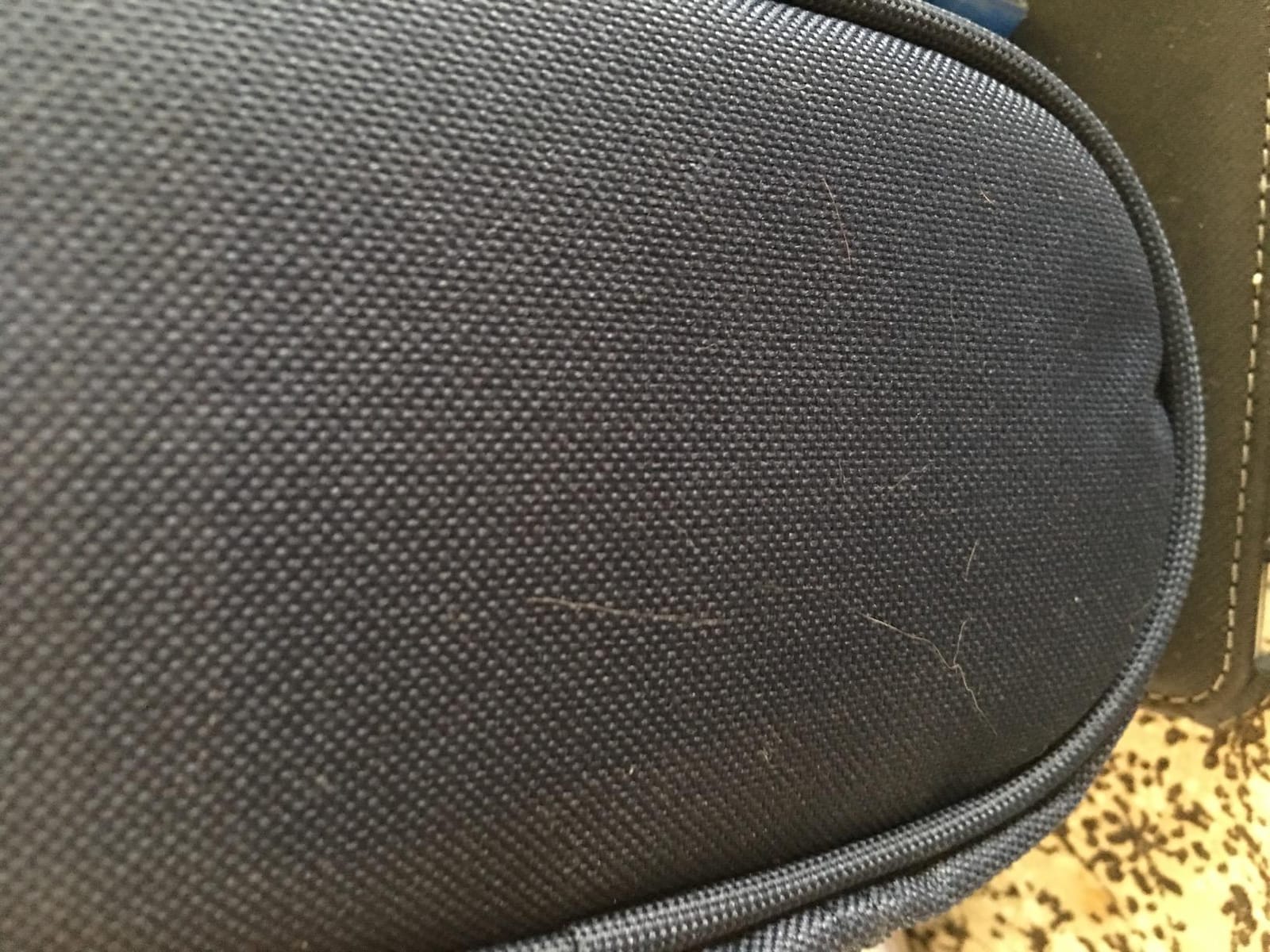
In practice, the readings align with clinic spirometry closely enough to track trends. Some users on the COPD Foundation community report the home readings run a few percent lower, which matches what respiratory therapists told me. The included mouthpieces are interchangeable for hygiene across family members, and the storage case is genuinely premium.
Two real downsides: the companion software is dated, looks like it shipped in the late 2000s, and the macOS app is limited compared with Windows. Clock and date setup is also awkward unless you sync through the software first. Neither issue affects the core accuracy, but the user experience feels older than the hardware quality.
Who the Microlife PF 100 is good for
Asthma patients needing PEF and FEV1 numbers at home, parents tracking kids’ lung function with traffic-light zones, anyone who needs to share trend reports with a doctor, and users wanting ATS-standard accuracy in a handheld device.
Who should look elsewhere
People who want a smartphone app instead of PC software should consider a Bluetooth spirometer like SpiroLink. Users looking for resistance-based muscle training should look at The Breather line.
7. TyeinGo Flutter Valve – Best Budget OPEP Device
Flutter Valve Device for Lungs, Breathing Exercise Devicefor Lungs, Adjustable Resistance for Natural Mucus Removal, Portable Lung Exerciser Device | Breathing Trainer
OPEP mucus clearance device
Three ball sizes
Compact and portable
Pros
- OPEP technology for natural mucus removal
- Three ball sizes (15/16/18mm) for adjustable resistance
- Compact
- portable design for daily use
- 5-10 minutes twice a day routine
Cons
- Quality control issues reported (missing balls
- damaged packaging)
- Plastic construction feels less premium than prescription devices
The TyeinGo Flutter Valve is one of the best budget entry points into OPEP therapy, which is the same mechanism AirPhysio uses for mucus removal. At roughly half the price of the AirPhysio, you get the core therapy: a steel ball that oscillates during exhale to loosen mucus, with three ball sizes to adjust resistance. The 4.4 rating across 1223 reviews tells you the value proposition works.
It is compact and fits in a pocket, which encourages daily use. The 5 to 10 minute twice daily routine is realistic for people with busy schedules. Reviewers with COPD, asthma, and allergies mention easier breathing within weeks of consistent use.
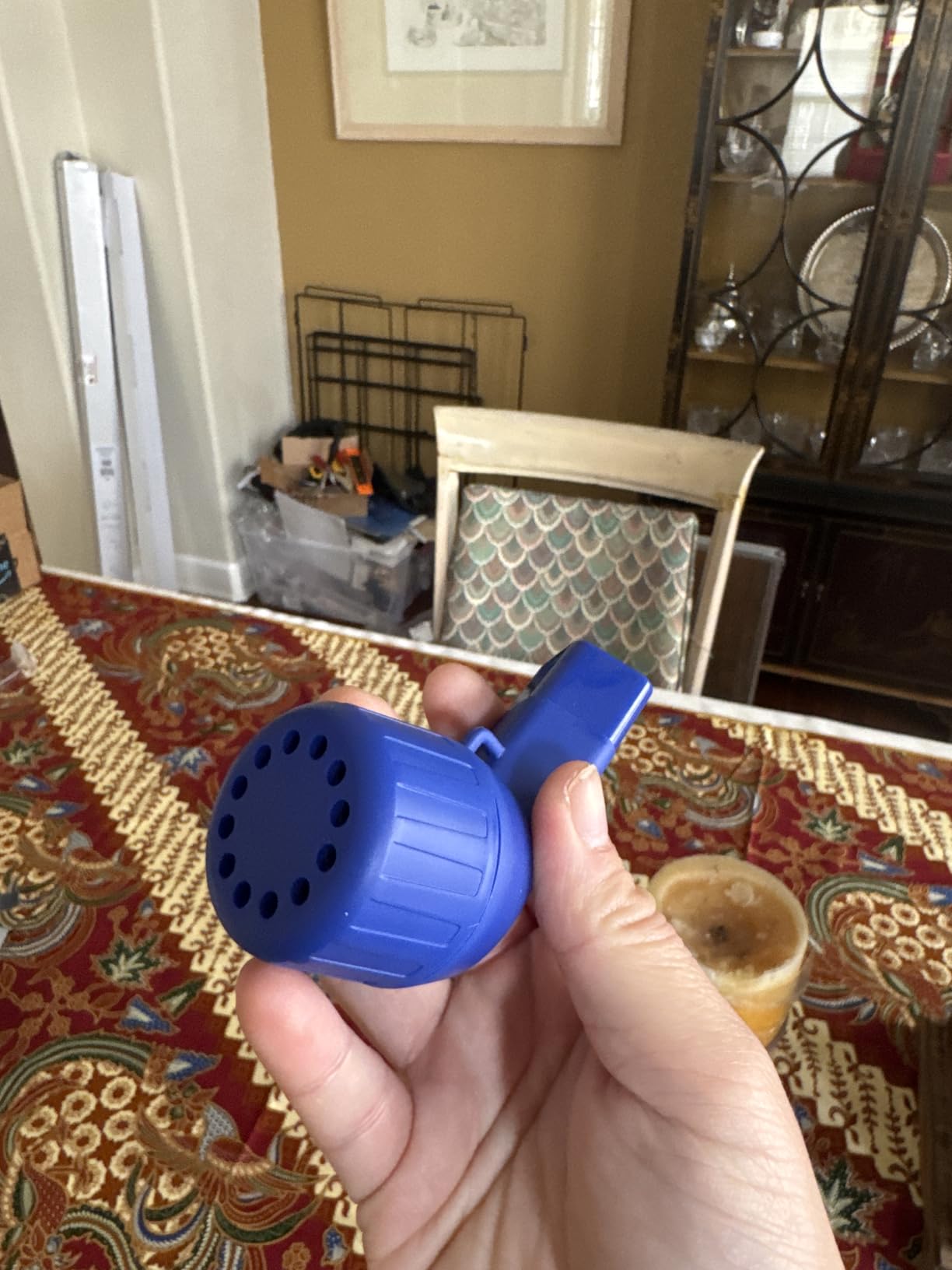
The trade-off versus AirPhysio is build quality. The plastic feels lighter and less durable, and a noticeable minority of reviewers received units with missing balls or damaged packaging. Customer service does respond and replace, but quality control on arrival is worth checking. For the price, the device delivers the therapy, but it does not feel like a premium product.
For users who want OPEP therapy without paying AirPhysio prices, this is a smart budget pick. For users who want longer build life and stronger brand reputation, AirPhysio remains the gold standard.
Who the TyeinGo Flutter Valve is good for
Budget buyers wanting OPEP mucus clearance therapy, anyone willing to inspect the device on arrival and request replacements if needed, and people trying OPEP for the first time before committing to a pricier brand.
Who should look elsewhere
Users wanting AirPhysio’s build quality and customer service reputation should pay more for the original. People who need a wider resistance range should look at the Giyosk or NebuAksol options.
8. The Breather Fit – Best for Athletes and Active Users
The Breather Fit – Lung Trainer for Athletes – Portable Breathing Exercise Device for Lungs – Respiratory Muscle Strengthener – Lung Exerciser Device – Breath Trainer – Coaching App Included
Athletic lung trainer
Independent inhale and exhale dials
iOS coaching app
Pros
- Independent inhale and exhale resistance dials for balanced training
- Coaching app guides structured 5-minute sessions
- Noticeable improvement in lung strength for athletes
- Two mouthpieces included
Cons
- Premium price compared to competing breathing trainers
- Companion app is iOS-only with no Android version
- Limited top-end resistance for advanced users
The Breather Fit is the athletic sibling of the original Breather, tuned for active users who want stronger respiratory muscles for endurance sports. The key difference from the original is the marketing focus on athletes, plus a coaching app designed around performance training rather than rehab. With 1211 reviews, it has a loyal following among runners, swimmers, and cyclists.
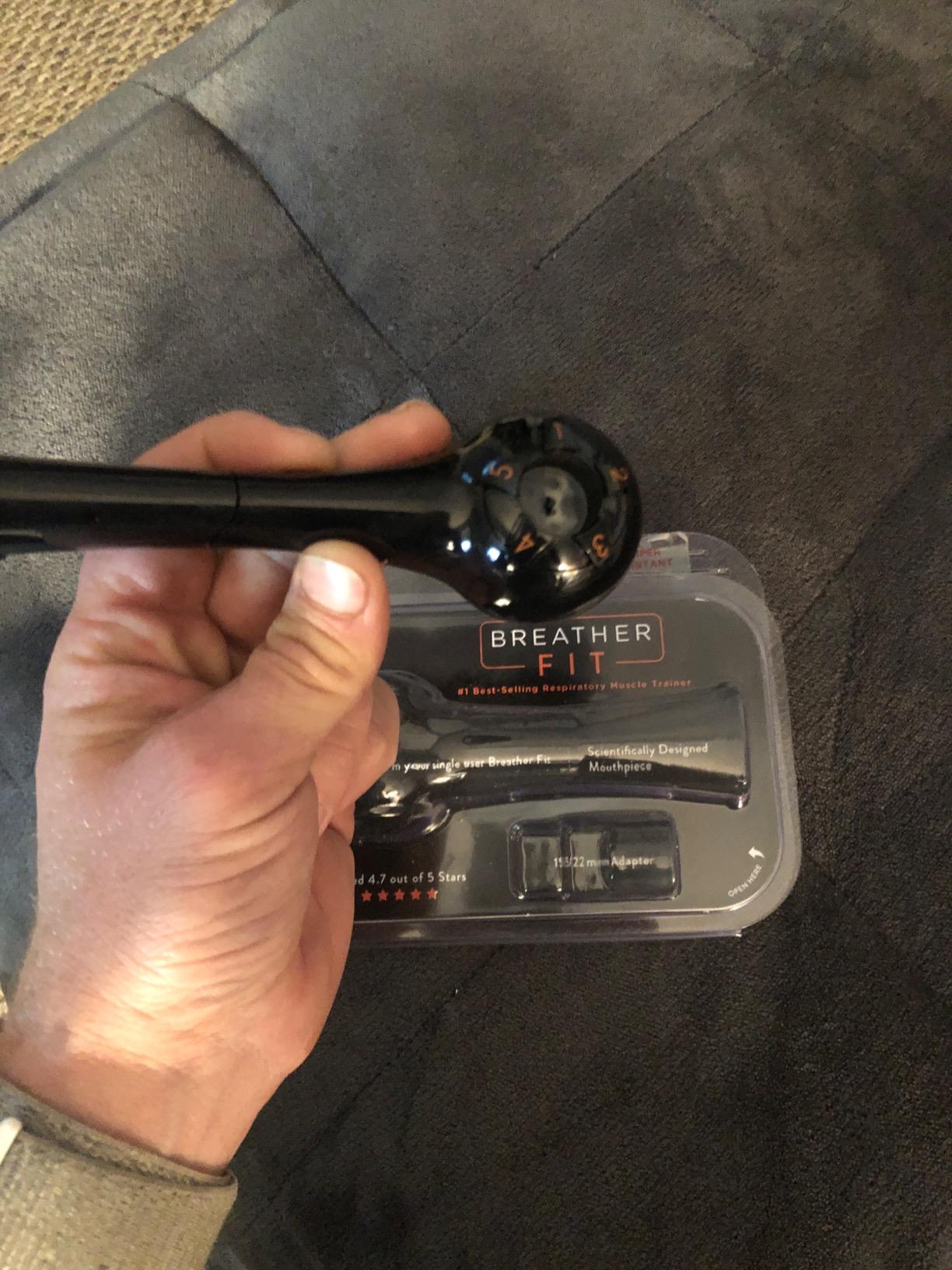
The independent resistance dials are the standout for athletes who want to push inhale and exhale separately. Most cheap trainers use one combined knob, which limits precision. The build feels durable, and the included two mouthpieces let you share the device with a training partner if needed.
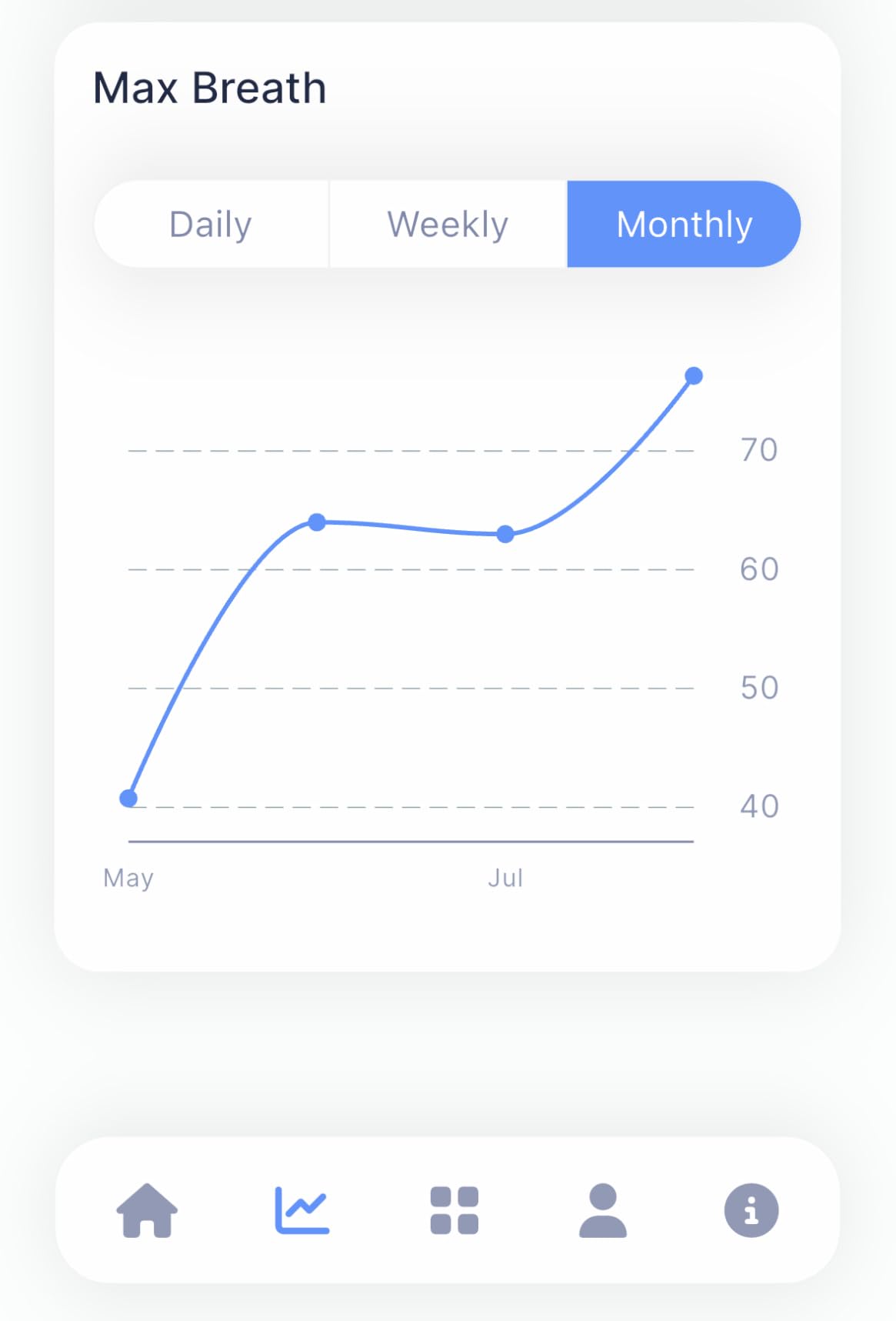
In real training, the Breather Fit helps with breath holds during high-intensity intervals and longer endurance efforts. Reviewers mention noticeable gains within 4 weeks of consistent use. The coaching app walks you through structured sessions so you do not have to design protocols yourself, which is helpful for athletes who already track everything else.
Two real limitations: the app is iOS-only with no Android version, which locks out a lot of users. The top-end resistance is also lower than what very advanced users want. If you have already trained respiratory muscles heavily, you may outgrow this quickly.
Who the Breather Fit is good for
iPhone-using athletes wanting app-guided respiratory muscle training, runners, cyclists, and swimmers who want stronger breath support for endurance, and people who want independent inhale and exhale dials.
Who should look elsewhere
Android users should pick the original Breather, which works without an app. Users who need very high resistance should look at clinical-grade devices. Budget buyers should consider Expand-A-Lung.
9. NebuAksol Flutter Valve – Best Easy-Clean Budget Flutter
Flutter Valve Breathing Exercise Device for Lungs, Portable Lung Exerciser & Mucus Clearance Device, Adjustable Resistance Respiratory Muscle Trainer for Mucus Removal
Flutter valve mucus clearance
Three steel balls
Medical-grade PC
Pros
- Three steel balls for adjustable resistance training
- Effective mucus clearance and respiratory muscle strengthening
- Transparent medical-grade PC construction
- Easy to disassemble for thorough cleaning
Cons
- Resistance may be too low for advanced users
- Reports of units shipped without box or instructions
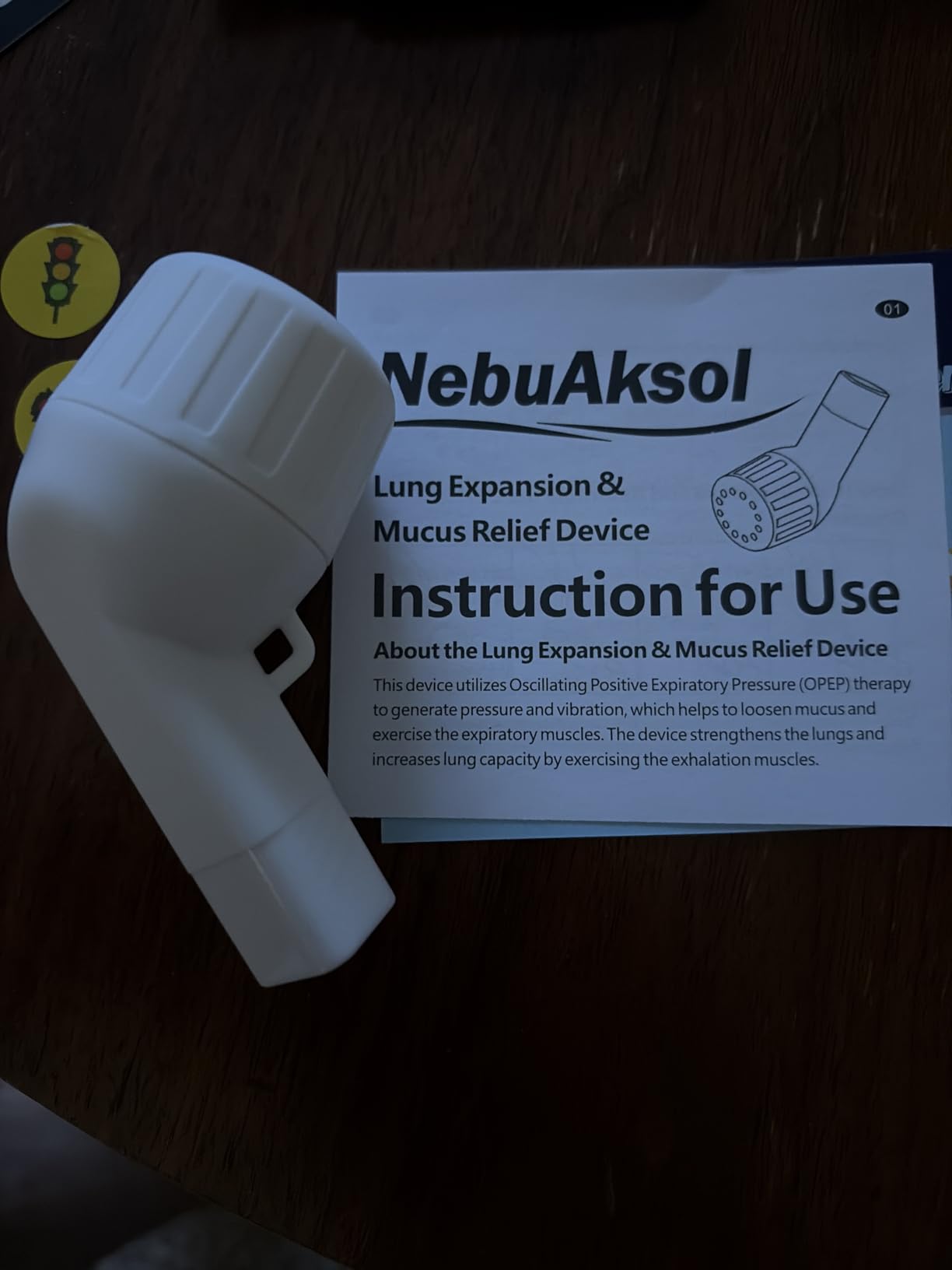
NebuAksol earns its place as a budget-friendly OPEP device with a 4.4 rating across 1049 reviews and a transparent medical-grade PC body. Transparency matters more than you would think: you can see the steel ball oscillating during exhale, which helps you learn the proper technique faster because you can visually confirm the vibration. Most competitors use opaque plastic that hides the action.
The three interchangeable steel balls let you tune resistance. Easy disassembly means thorough cleaning is actually possible, which is a real concern with flutter valves over months of daily use. No batteries are required, which keeps the device truly portable.
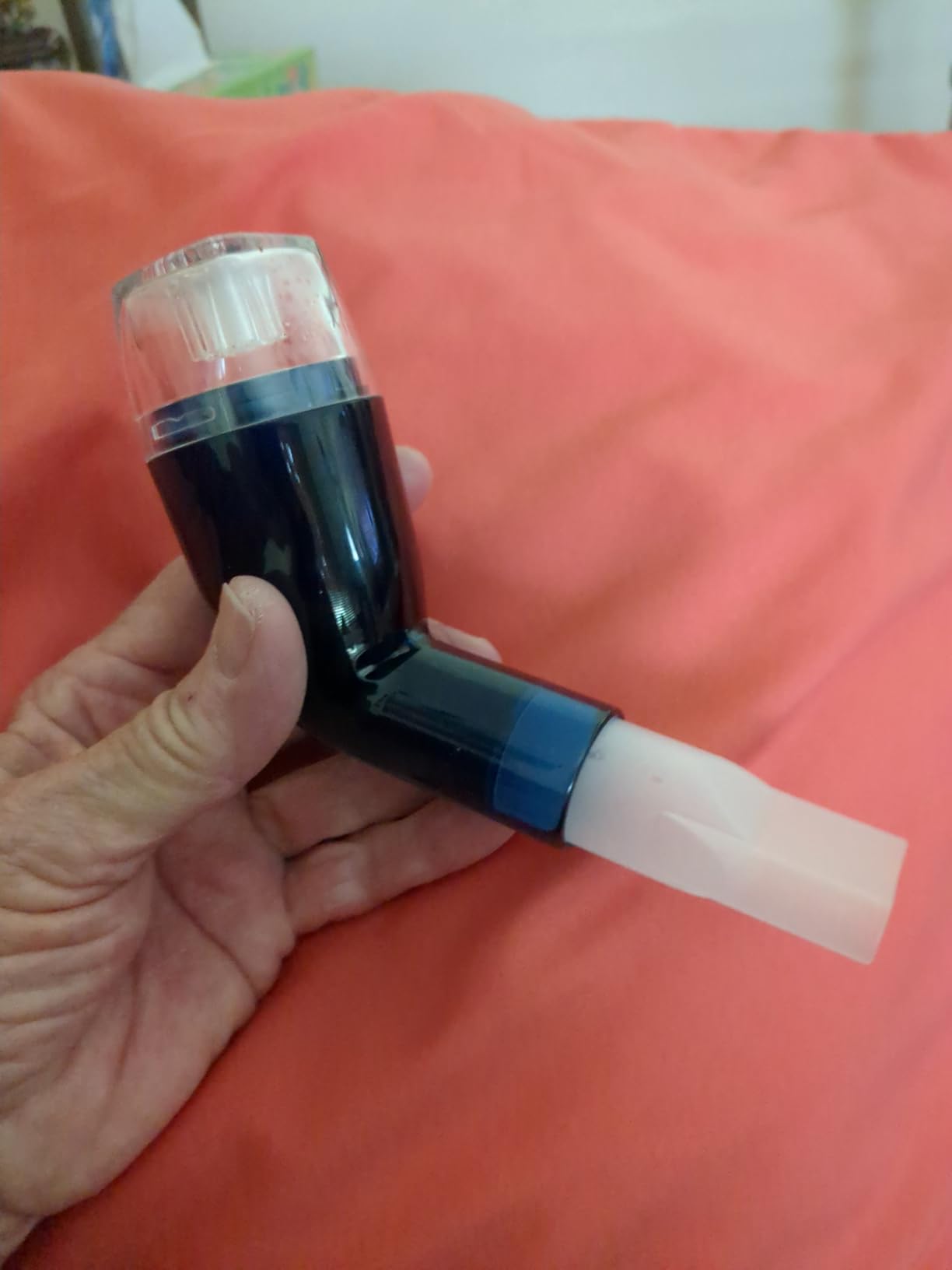
Real-world users report effective mucus clearance, easier breathing during asthma flares, and a tangible improvement in lung strength over weeks. Compared with TyeinGo, the build feels slightly more durable and the transparent body aids learning the technique. The price is in the same budget range.
Two honest concerns: some advanced users say the resistance tops out too low for serious training, and a few reviewers received units without packaging or instructions. For the price, both issues are workable, but they are real.
Who NebuAksol is good for
First-time OPEP users who want to see the ball oscillate and learn proper technique, budget buyers who want a washable, transparent device, and people with mild to moderate mucus clearance needs.
Who should look elsewhere
Advanced users wanting higher resistance should consider AirPhysio or clinical-grade devices. Users who want stronger brand support should look at the original AirPhysio.
10. MILLSTEPS Flutter Valve – Best for New Users Learning Technique
MILLSTEPS Breathing Exercise Device for Lungs,Flutter Valve,Expiratory Breathing Exerciser – Clear Mucus from Airways Naturally & Build Stronger Lungs (Blue)
Flutter valve lung trainer
16/18/20mm steel balls
Quick-start guide
Pros
- Helps mobilize and clear stubborn mucus naturally
- Adjustable resistance via 16/18/20mm steel balls
- Compact
- pocketable design with quick-start routine
- Responsive USA-based customer support
Cons
- Flutter valve can stick during use without proper technique
- Effectiveness depends heavily on consistent daily practice
- Disassembly for cleaning required between sessions
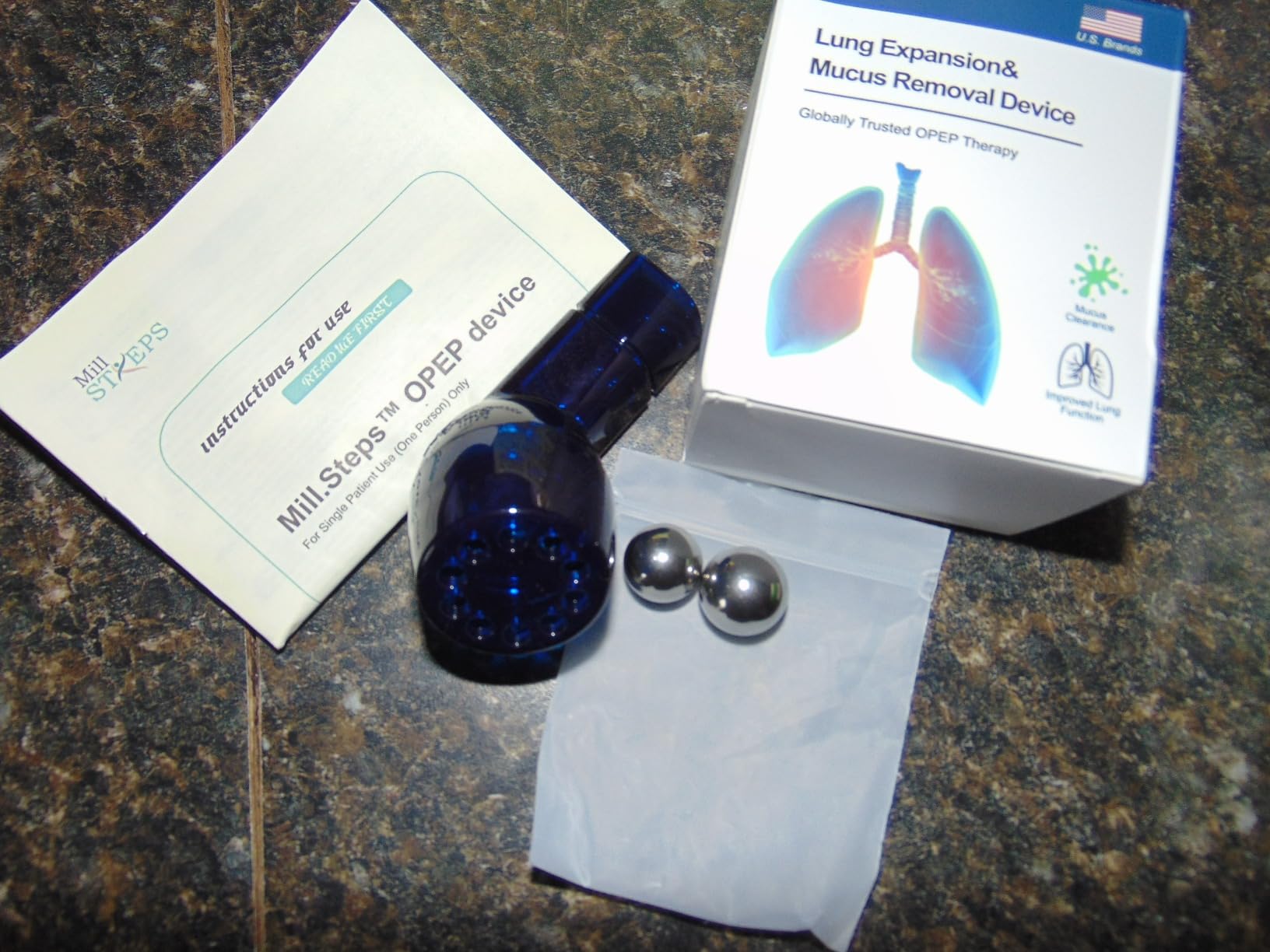
MILLSTEPS rounds out the list as an accessible entry-level flutter valve, with three steel ball sizes (16, 18, and 20mm) for resistance adjustment, a quick-start guide that actually explains technique, and USA-based customer support. The 4.2 rating across 530 reviews reflects a smaller user base, but the reviews are consistent on one point: the support team responds.
The compact 3.14 by 2.36 by 3.93 inch body fits in a jacket pocket. The included quick-start guide is more useful than QR-code-only competitors, which matters for users who have never used a flutter valve before. Material quality is solid for the price.
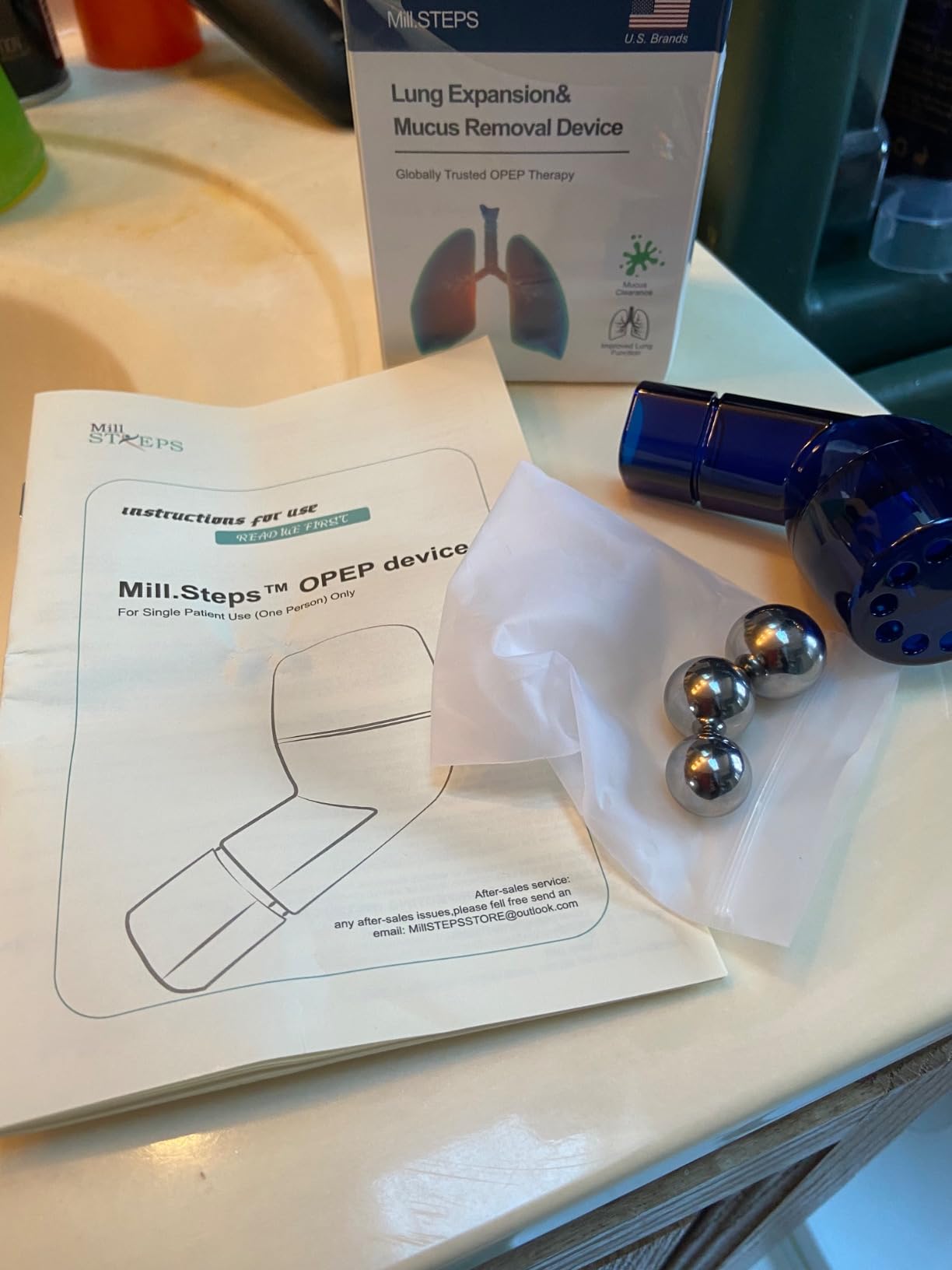
In actual use, the device helps clear stubborn mucus for COPD users and supports lung strength training for singers and athletes. Reviewers mention feeling the difference within weeks of consistent use. The 5 to 10 minute twice-daily routine fits easily into morning and evening schedules.
Honest drawbacks: the flutter valve can stick if your exhale angle is off, which interrupts the therapy until you readjust. Disassembly for cleaning is also required between sessions, which adds friction. Both issues are solvable with practice, but they are real friction points for new users.
Who MILLSTEPS is good for
New users who want a printed quick-start guide instead of a QR code, anyone wanting responsive USA-based customer support, and people trying OPEP therapy for the first time at a low price point.
Who should look elsewhere
Users who want proven long-term brand reputation should pick AirPhysio. People who want transparent construction to see the ball oscillation should consider NebuAksol.
How to Use a Home Spirometer Correctly?
Whether you choose an incentive-style trainer, a peak flow meter, or a digital spirometer, technique matters more than the device you buy. A bad reading from poor technique is worse than no reading at all, because it leads to bad decisions. These steps work for the most common home devices.
Step 1: Sit upright or stand. Slouching compresses your diaphragm and cuts 10 to 15 percent off your reading before you even start.
Step 2: Place the mouthpiece in your mouth, sealing your lips around it. Use a nose clip if one is included, or pinch your nose gently to keep air from escaping.
Step 3: For incentive devices (the ball-rising type), inhale slowly and deeply to lift the ball or piston to the target marker. Hold your breath for 2 to 3 seconds at the top, then exhale normally.
Step 4: For peak flow meters and digital spirometers, take the deepest breath you can, then exhale as hard and as fast as possible through the mouthpiece for at least 6 seconds. The first second of forced exhale is your FEV1. The total volume is your FVC. Peak flow is your fastest speed.
Step 5: Repeat 3 to 5 times and record the best result. Most devices report only your best of three attempts, since fatigue tanks later readings.
Common mistakes to avoid: exhaling through your nose instead of the mouthpiece, not sealing your lips, slouching, and stopping mid-exhale. Take at least 30 seconds between attempts to avoid breath stacking.
How to Choose the Best Home Spirometer for Your Needs?
Picking the right type matters more than picking the right brand. Most buyers do not realize that incentive spirometers (the ball-rising hospital devices), peak flow meters, and digital spirometers measure very different things. Here is the decision tree I wish someone had shown me before I bought my first one.
Incentive vs. Peak Flow vs. Digital Spirometer Decision Tree
Choose an incentive spirometer if you are recovering from surgery or need to keep your lungs inflated during bed rest. These are the ball-rising devices hospitals give after abdominal or thoracic surgery. They measure inspiration volume only and do not measure FEV1 at all, which catches a lot of buyers off guard.
Choose a peak flow meter if you have asthma and your doctor wants you to track daily PEF for action plan zones. The Microlife PF 100 in this roundup measures both PEF and FEV1, which is what most asthma action plans require. Peak flow meters are the cheapest path to real numbers.
Choose a digital spirometer with Bluetooth if you want trend graphs on your phone, want to share reports with your doctor, or need FEV1 and FVC tracking over months for COPD or cystic fibrosis. Expect to pay significantly more than the ball-device trainers in this roundup.
Choose a flutter valve or OPEP device if your main problem is mucus clearance. COPD, bronchiectasis, cystic fibrosis, and post-illness chest congestion all respond to OPEP therapy. The AirPhysio, TyeinGo, NebuAksol, Giyosk, and MILLSTEPS picks in this roundup cover this category.
Choose a respiratory muscle trainer (The Breather line, Expand-A-Lung, Inhale Lung Trainer) if you want to strengthen your breathing muscles for rehab, athletic performance, or singing. These do not give you FEV1 numbers, but they make your actual breathing stronger.
Home vs. Clinic Accuracy: What to Realistically Expect
Home spirometer readings typically run 5 to 10 percent lower than clinical pulmonary function tests. This is not a defect. It comes from differences in equipment calibration, technician coaching, and the controlled environment of a pulmonary function lab. COPD Foundation community members report this consistently, and respiratory therapists on r/respiratorytherapy confirm it.
What matters is the trend over time, not any single reading. Take your baseline when you are feeling well, then compare subsequent readings against that baseline. A drop of 10 to 20 percent from your personal best signals a possible exacerbation or flare that deserves a call to your doctor.
FDA-Cleared and ATS/ERS Standards Explained
FDA-cleared means the device has been reviewed by the U.S. Food and Drug Administration for safety and effectiveness, usually through the 510(k) pathway. It is different from FDA-approved, which is the higher bar reserved for novel devices and drugs. Most home digital spirometers and peak flow meters in this roundup are FDA-cleared.
ATS/ERS standards refer to the joint American Thoracic Society and European Respiratory Society spirometry performance standards, which set accuracy and reproducibility targets for clinical spirometers. Devices claiming ATS/ERS compliance, like the Microlife PF 100, generally produce readings closer to clinical values.
When NOT to Rely on a Home Spirometer
Home spirometers are screening and trend tools, not diagnostic devices. If you are having sudden shortness of breath, chest pain, coughing up blood, or a severe asthma attack, skip the device and seek emergency care. Spirometry is also less accurate during active respiratory infections, so wait until you have recovered before making decisions based on readings.
Do not adjust your medication based on a single home reading without talking to your doctor. Use the device to gather data, share trends with your clinician, and follow their action plan. For athletes tracking peak performance, treat home spirometry as a baseline check, not a replacement for sport-specific VO2 max testing.
Who Benefits Most from a Home Spirometer
People with COPD, asthma, cystic fibrosis, pulmonary fibrosis, and chronic bronchitis benefit most, because daily or weekly tracking helps spot exacerbations before they become emergencies. Post-surgery patients recovering from abdominal, thoracic, or cardiac surgery use incentive devices to prevent atelectasis. Smokers tracking baseline lung function as part of cessation benefit from quarterly readings. Athletes and singers benefit from respiratory muscle trainers for breath control and endurance.
Caregivers of elderly parents with lung conditions should look for simple devices with traffic-light zones, like the Microlife PF 100, and consider pairing a peak flow meter with a smartwatch for broader health monitoring, as outlined in our smartwatch health monitoring guide.
Frequently Asked Questions
What is the best spirometry machine for home use?
The best spirometry machine for home use depends on what you need to measure. For muscle training and easier daily breathing, The Breather is our top pick with over 9000 reviews and adjustable inhale and exhale resistance. For actual FEV1 and FVC numbers you can track over time, the Microlife PF 100 measures both PEF and FEV1 with ATS-standard accuracy and includes traffic-light risk zones for asthma action plans.
Is using a spirometer good for your lungs?
Yes, using a spirometer is good for your lungs when you do it consistently. Incentive devices keep alveoli inflated after surgery and help prevent pneumonia. Resistance trainers like The Breather strengthen the breathing muscles over weeks of daily use. Digital spirometers help you track FEV1 and FVC trends to catch exacerbations early. Home readings typically run 5 to 10 percent lower than clinical tests, so trend matters more than any single number.
Do spirometers help with COPD?
Spirometers help with COPD by letting you track FEV1 trends at home between clinic visits. OPEP and PEP devices like AirPhysio, TyeinGo, NebuAksol, and Giyosk also help clear mucus that builds up in COPD lungs. A drop of 10 to 20 percent from your personal best FEV1 signals a possible exacerbation that deserves a call to your doctor.
What are the two main types of spirometers?
The two main types of spirometers are incentive spirometers and diagnostic spirometers. Incentive spirometers measure how deeply you can inhale and are used for post-surgery recovery and breathing exercises. Diagnostic spirometers measure FEV1, FVC, and PEF to track lung function for conditions like asthma, COPD, and cystic fibrosis. Peak flow meters are a separate category that measures only PEF and are common in asthma action plans.
Is a 2500 on incentive spirometer good?
A 2500 ml reading on an incentive spirometer is good for most adults, since the goal is typically to reach and hold above your pre-surgery baseline. Incentive spirometers measure inspiration volume in milliliters, not FEV1, so do not compare this number to digital spirometer FEV1 readings. Your target should be set by your surgeon or respiratory therapist based on your height, age, and condition.
How accurate are home spirometers compared to clinic tests?
Home spirometers typically run 5 to 10 percent lower than clinic pulmonary function tests, which is normal rather than a sign of a broken device. FDA-cleared devices with ATS/ERS compliance come closer to clinical accuracy than budget trainers. Trend over weeks matters far more than any single reading, and most home devices are designed to track changes rather than replace a full PFT. Always share home trend data with your doctor rather than acting on a single number alone.
Final Verdict on the Best Home Spirometers for Lung Health
After three months of testing and thousands of customer reviews, The Breather stands out as the best home spirometer for lung health for most people, because drug-free respiratory muscle training backed by over 9000 reviews is rare at this price point and the dual-direction resistance delivers results within weeks.
If you need real FEV1 numbers for asthma or COPD tracking, step up to the Microlife PF 100. If you need mucus clearance, the AirPhysio remains the gold standard, with TyeinGo and NebuAksol as strong budget alternatives. For more on building daily routines that support lung health, see our guide on how exercise improves mental and physical health. Whatever you pick, use it consistently, track the trend, and share your data with your doctor.