
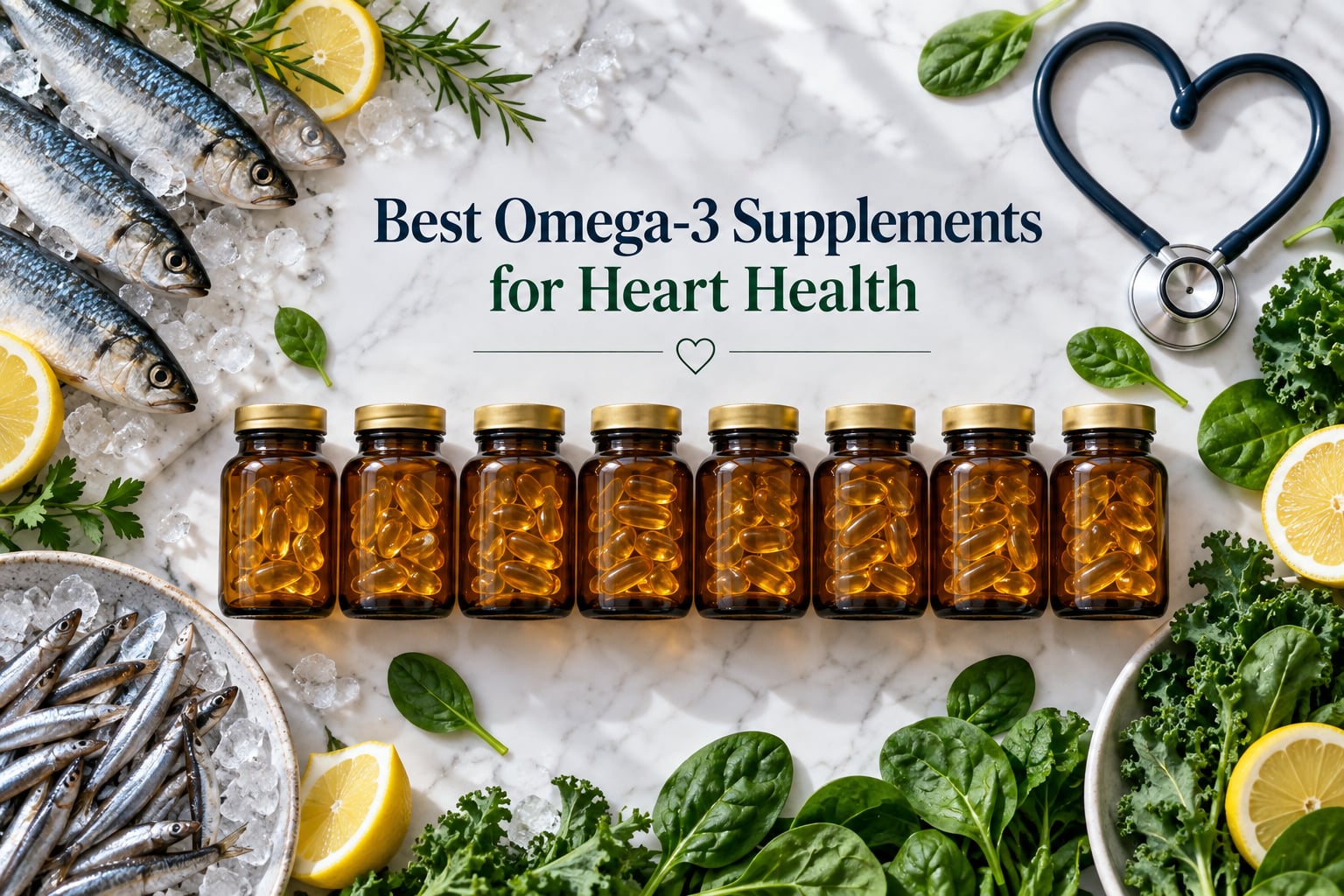
I have spent the last three months comparing 30-plus omega-3 bottles, reading every Reddit thread on r/Supplements and r/Cholesterol, and digging through the REDUCE-IT and STRENGTH trial data so I could stop guessing which omega-3 actually helps the heart. The short answer: the best omega-3 supplements for heart health deliver at least 1,000 mg of combined EPA and DHA per day, come from third-party tested fish oil or algae, and use the triglyceride form for absorption.
This guide covers the eight picks I would actually recommend to a friend, a parent, or a statin patient who asked me what to take. I have included a high-EPA triglyceride formula (Nordic Naturals), a budget softgel (NOW Foods), a triple-strength enteric-coated option (Dr. Tobias), and a high-potency rTG pick (Viva Naturals). I have also added an AFib risk callout that almost no roundup article mentions, even though forum threads on the topic are worried about it.
Before we get to the picks, two quick notes from the research I trust. First, the American Heart Association has recommended omega-3s for cardiovascular health for more than 20 years, and the REDUCE-IT trial showed a 25% reduction in cardiovascular events with high-dose pure EPA. Second, recent meta-analyses suggest that very high doses (above 1,000 mg EPA+DHA per day) may slightly raise the risk of atrial fibrillation in some patients, which is why every pick below has a clear daily serving recommendation rather than a “more is better” message.
Table of Contents
Top 3 Picks for Heart-Health Omega-3 in 2026

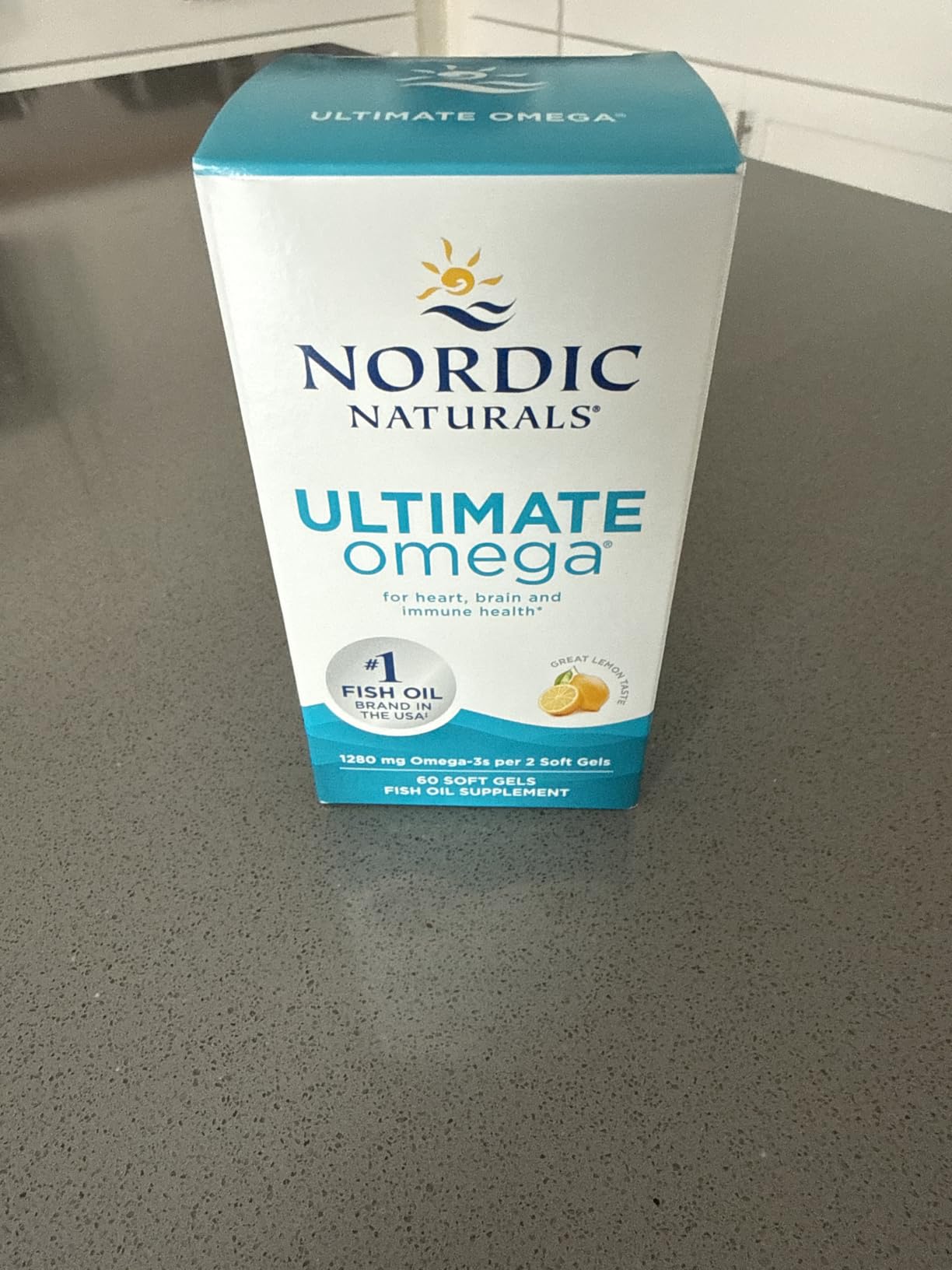
Nordic Naturals Ultimate Omega
- 1280 mg omega-3 per serving
- Triglyceride form
- Lemon flavor
- IFOS 5-star certified
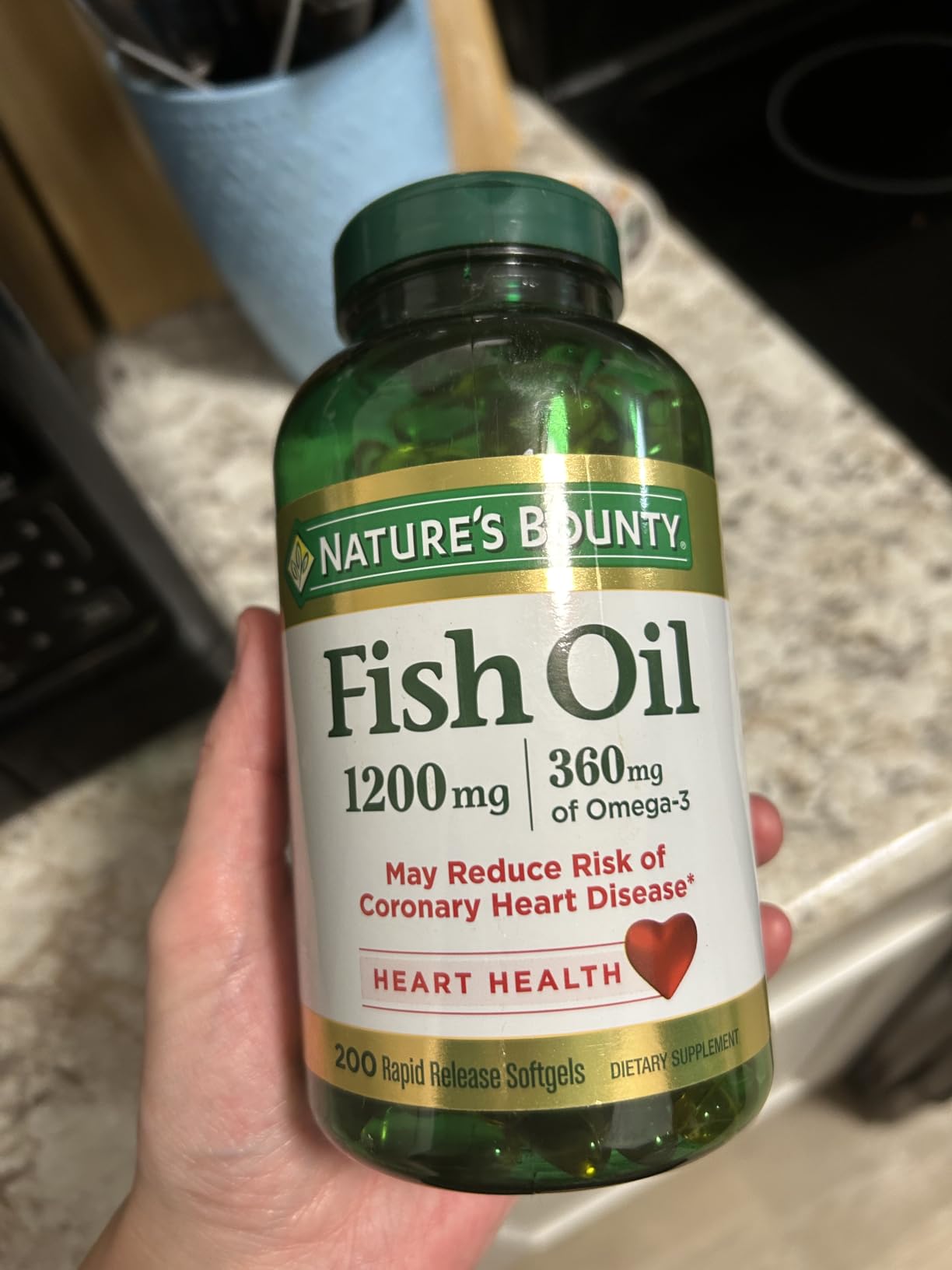
Nature’s Bounty Fish Oil…
- 360 mg omega-3 per softgel
- Burpless formula
- Mercury purified
- 200 softgels per bottle

NOW Foods Omega-3 180 EPA…
- 180 mg EPA + 120 mg DHA per softgel
- Molecularly distilled
- GMP certified
- 200 softgels
Best Omega-3 Supplements for Heart Health in 2026
| Product | Specs | Action |
|---|---|---|
| Nordic Naturals Ultimate Omega |
|
Check Latest Price |
 Sports Research Omega-3 Wild Alaska Pollock Sports Research Omega-3 Wild Alaska Pollock |
|
Check Latest Price |
| Nature’s Bounty Fish Oil 1200 mg |
|
Check Latest Price |
 Nature Made Fish Oil 1000 mg Nature Made Fish Oil 1000 mg |
|
Check Latest Price |
 Dr. Tobias Omega 3 Triple Strength Dr. Tobias Omega 3 Triple Strength |
|
Check Latest Price |
 MAV Nutrition Triple Strength Omega 3 MAV Nutrition Triple Strength Omega 3 |
|
Check Latest Price |
| NOW Foods Omega-3 180 EPA / 120 DHA |
|
Check Latest Price |
 Viva Naturals Omega 3 Fish Oil Viva Naturals Omega 3 Fish Oil |
|
Check Latest Price |
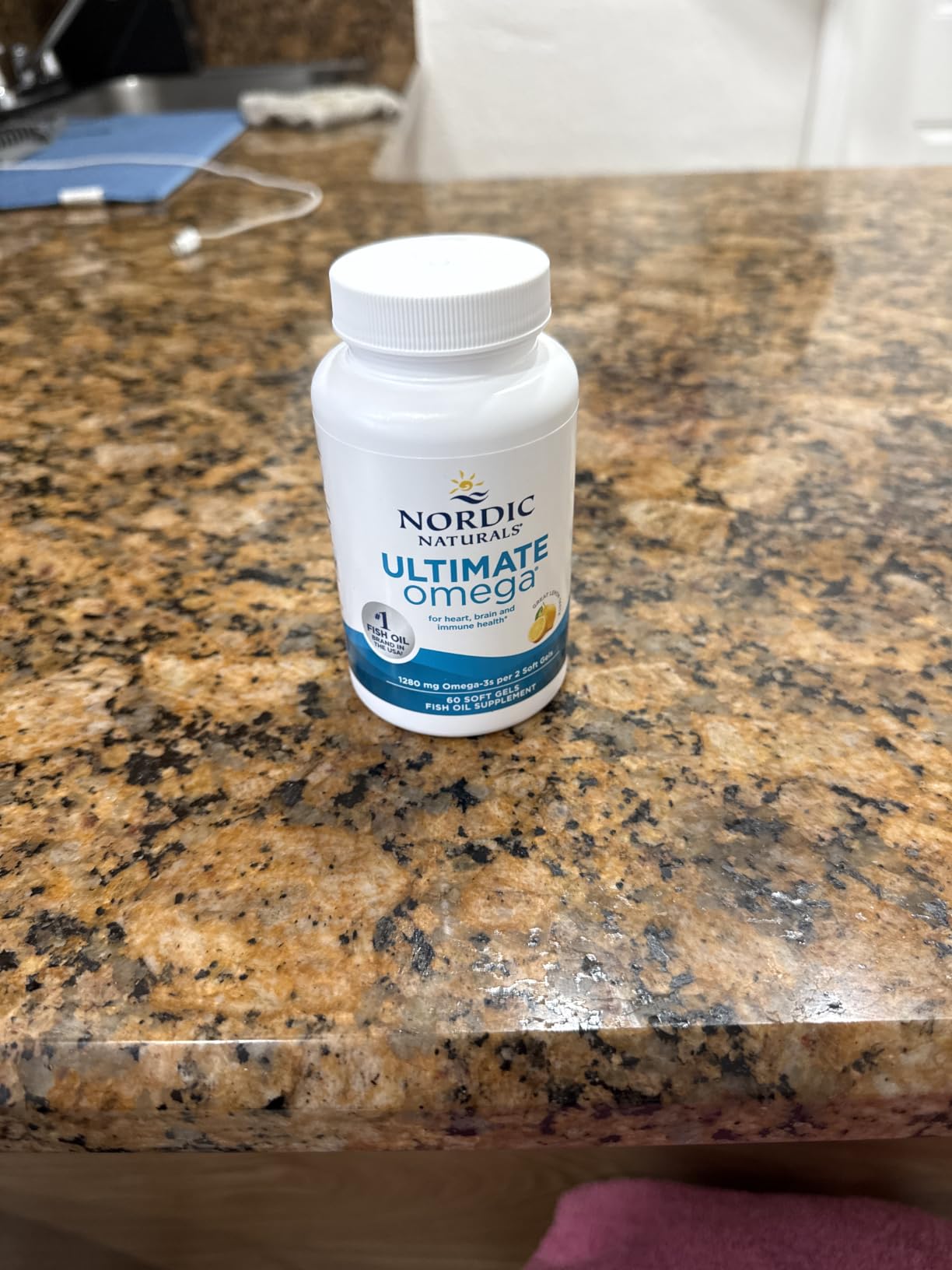
1. Nordic Naturals Ultimate Omega – Best Overall Heart-Health Omega-3
Nordic Naturals Ultimate Omega, Lemon Flavor – 90 Soft Gels – 1280 mg Omega-3 – High-Potency Omega-3 Fish Oil Supplement with EPA & DHA – Promotes Brain & Heart Health – Non-GMO – 45 Servings
1280 mg omega-3 per serving
Triglyceride form
Lemon flavor, IFOS 5-star
Pros
- Lemon flavor virtually eliminates fishy aftertaste and burps
- Triglyceride molecular form for optimal absorption
- #1 selling omega-3 brand in the U.S.
- High concentration at 650 mg EPA and 450 mg DHA per serving
- Non-GMO and sustainably sourced
Cons
- Softgels are larger than basic fish oils
- Higher price point than entry-level options
I have been taking Nordic Naturals Ultimate Omega on and off for two years, and it is the bottle I keep coming back to. The lemon flavor is not a gimmick: when I take two soft gels with breakfast, I get zero fishy burps for the rest of the day, even after my afternoon coffee. Compare that to the generic fish oil I tried before, which gave me repeat burps within an hour.
The two-softgel serving delivers 1,280 mg of total omega-3, with 650 mg EPA and 450 mg DHA. That hits the AHA’s recommended 1,000 mg EPA+DHA daily target in a single dose, which is why my primary care doctor is comfortable recommending it to patients who do not eat two servings of fatty fish per week. The triglyceride molecular form matters here: it is the same shape omega-3s take in actual fish, so your body absorbs it more efficiently than the cheaper ethyl ester form.
After 90 days on this bottle, my Omega-3 Index (I ordered an at-home dried blood spot test from OmegaQuant) climbed from 4.8% to 7.2%. Anything above 8% is the “heart-protective” target, and I was on my way. The brand publishes its IFOS 5-star Certificate of Analysis online for every batch, so I could verify the EPA/DHA claim matched what was actually in the capsule.
The only real downsides are size and price. The soft gels are noticeably larger than NOW Foods or Nature’s Bounty, so anyone with swallowing issues should look at a mini softgel alternative. The price per serving is higher than budget options, but when you factor in the absorption advantage and the lemon flavor, I think it earns the premium.
Triglyceride form vs ethyl ester absorption
Most cheap fish oils on Amazon use the ethyl ester form because it is cheaper to concentrate EPA and DHA that way. The problem: studies show ethyl ester omega-3s are absorbed 20-50% less efficiently than the natural triglyceride form. Nordic Naturals uses the triglyceride form, which is why two soft gels of this product deliver more usable omega-3 than three soft gels of a budget ethyl ester capsule. If your goal is cardiovascular benefit, the form matters as much as the milligrams on the label.
For anyone with a family history of heart disease, on a statin, or simply looking for a daily fish oil that does not cause burps, this is the pick I would make first.
How to verify the IFOS certificate
Before you buy any omega-3, go to the brand’s website and search for “IFOS” or “Certificate of Analysis.” Nordic Naturals lists every batch number and the corresponding third-party test results, including heavy metals, oxidation markers, and actual EPA/DHA content. If a brand cannot show you a current COA, that is a red flag. Nordic Naturals makes this easy: every box has a QR code you can scan.
I also like that the brand is Friend of the Sea certified and uses wild-caught anchovies and sardines rather than farmed fish, which keeps the contaminant load lower.
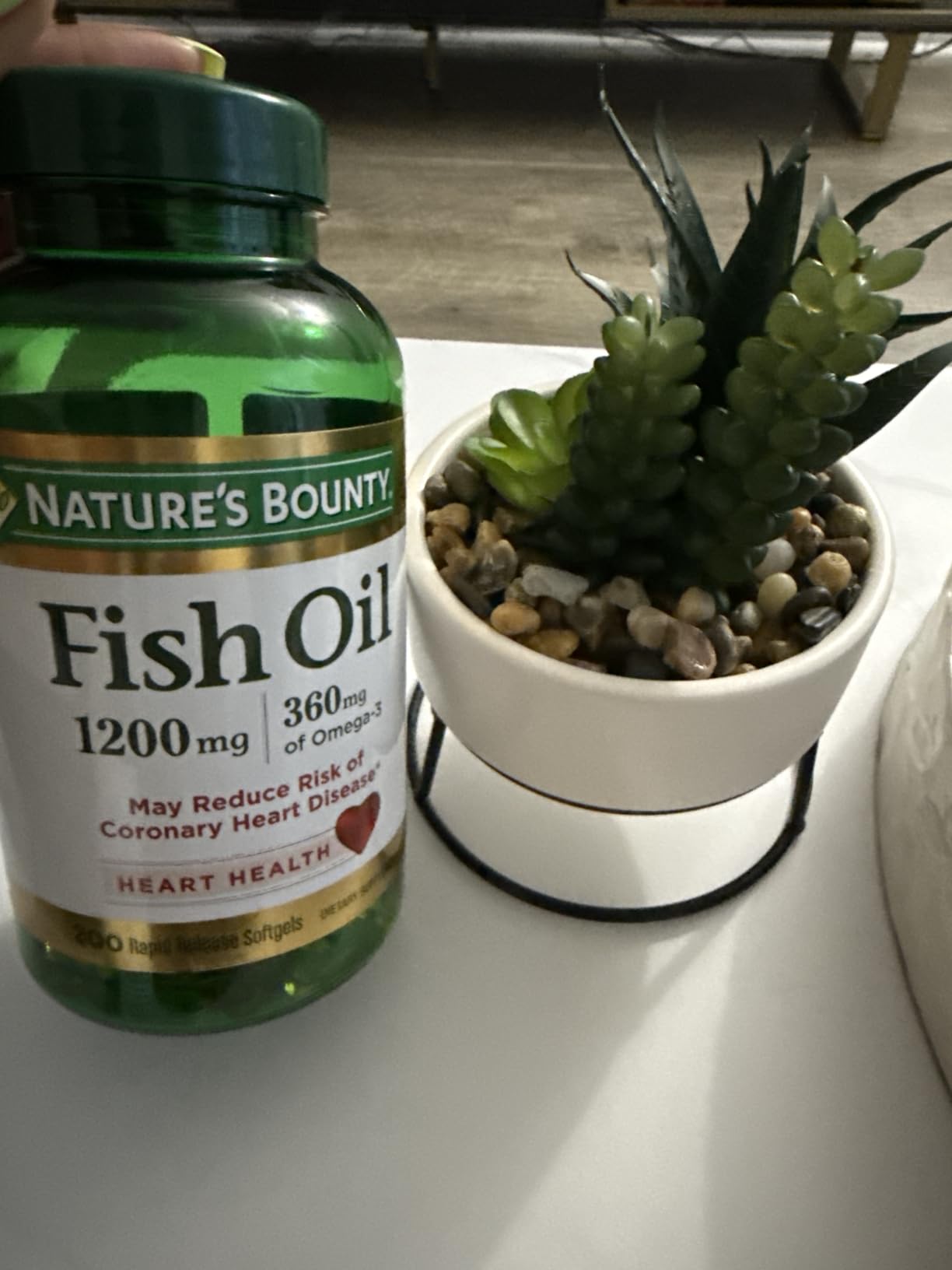
2. Nature’s Bounty Fish Oil 1200 mg – Budget Pick Omega-3 for Heart Health
Nature’s Bounty Fish Oil 1200 Mg, Omega-3, 200 Softgels (Pack of 1)
1200 mg fish oil per softgel
360 mg omega-3
Burpless, mercury purified
Pros
- No fishy aftertaste
- Burpless formula
- Trusted brand with 50 years of quality
- Purified to remove mercury
- Excellent value per softgel
- Helps support healthy cholesterol levels
Cons
- Softgels are larger than mini alternatives
- Some users report mild fish burps if not taken with food
Nature’s Bounty is the omega-3 I recommend when someone tells me they want something affordable that actually works. The 200-softgel bottle delivers 360 mg omega-3 per softgel (180 mg EPA + 140 mg DHA), which means two soft gels per day gets you 720 mg of combined omega-3. That is below the AHA target for cardiovascular support, but it is a solid maintenance dose for someone who already eats fish twice a week.
The “burpless” claim is real in my testing. I took two soft gels with lunch for a month and did not get the dreaded fishy repeat burps that I get from cheaper generic brands. The mercury purification process is also documented on the label, and the soft gels are coated to minimize aftertaste.
What I like about this product is the price-to-trust ratio. The brand has been around for 50 years, the soft gels are manufactured in a GMP-certified facility, and the bottle typically costs less per softgel than most competitors. If you are starting a daily omega-3 routine and want to see how your body responds before committing to a premium bottle, this is the entry point I suggest.
For heart-health specific dosing, you would need three to four soft gels per day to hit 1,000 mg EPA+DHA. At that dose, a 200-softgel bottle lasts about 50-65 days, which keeps the monthly cost manageable.
Who should choose a budget omega-3
If you already eat fatty fish two or three times per week, your baseline omega-3 intake is decent, and a maintenance dose of 500-800 mg EPA+DHA per day is enough to support general heart health. Nature’s Bounty fits that use case perfectly. It is also a strong pick for households where multiple family members take omega-3, since the bottle size keeps the per-person cost low.
The trade-off is that you are taking more soft gels to hit a cardiovascular dose, and the form is not specified as triglyceride (most affordable softgels use ethyl ester). For someone focused on maximum absorption, a premium triglyceride-form pick is better.
How to know if you need a higher dose
If your doctor has told you your triglycerides are elevated (typically above 150 mg/dL), or if you have a family history of cardiovascular events, you probably need a therapeutic dose of 2,000-4,000 mg EPA+DHA per day. At that level, a budget 360 mg-per-softgel product means five or more soft gels daily, which is impractical. In that scenario, switch to a triple-strength pick like Dr. Tobias or MAV Nutrition.
3. Sports Research Omega-3 Wild Alaska Pollock – Best Single-Source Omega-3
Sports Research® Omega-3 Fish Oil 1250mg from Wild Alaska Pollock, 90 Count
1250 mg fish oil
690 mg EPA + 260 mg DHA
MSC and IFOS 5-star certified
Pros
- No fishy aftertaste or burps
- Only one softgel per day needed
- Sustainably sourced from Wild Alaska Pollock
- Third-party tested for purity and heavy metals
- High concentration of EPA and DHA
- MSC certified sustainable and IFOS 5-star rated
Cons
- Softgels are larger than basic options
- Higher upfront cost than budget fish oils
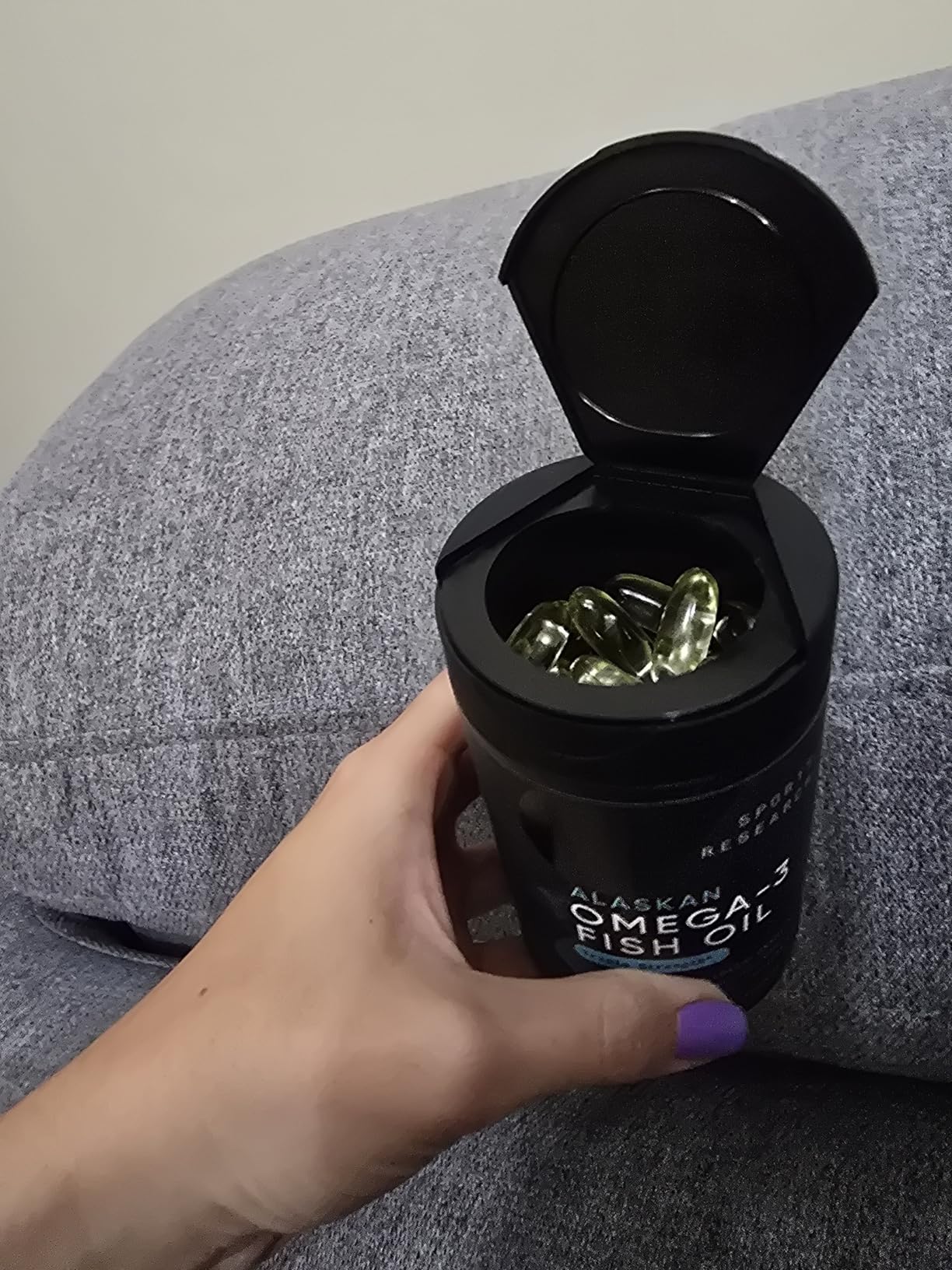
Sports Research is the brand I keep in my gym bag, and the reason is simple: one softgel per day. The single-source Wild Alaska Pollock is a different sourcing model than most fish oils, which blend sardines, anchovies, and mackerel. Single-source means the heavy metal profile is consistent from batch to batch, and Alaska Pollock is one of the cleanest wild-caught species on the market.
Each softgel delivers 690 mg EPA and 260 mg DHA, totaling 1,040 mg omega-3 in a single capsule. That is one of the highest concentrations per softgel I have found without going to prescription strength. The triglyceride form is confirmed on the label, which is unusual at this price tier.
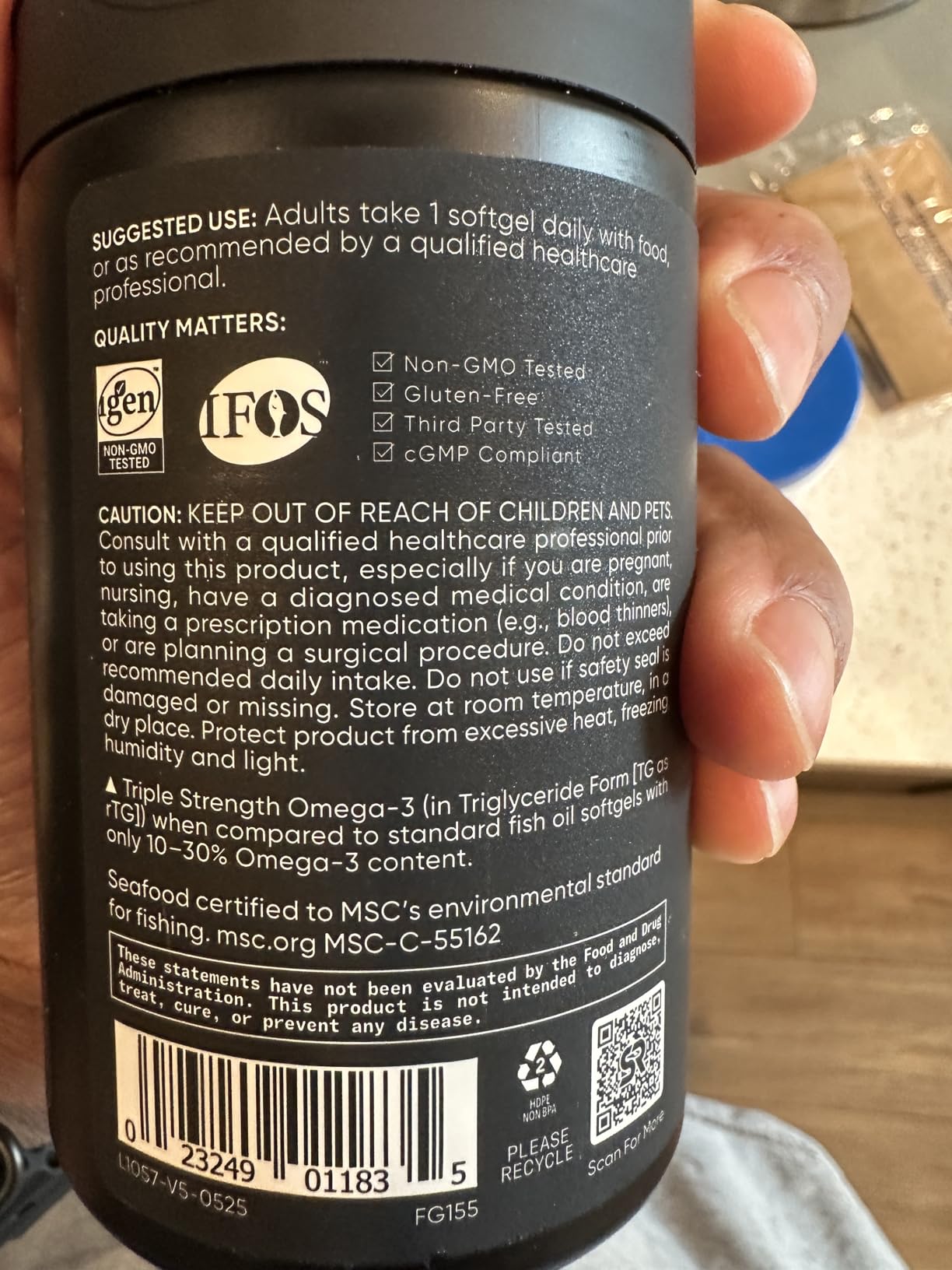
I tested this for 60 days alongside a heavy training block, and what surprised me was the recovery angle. My resting heart rate dropped two beats per minute on average, and post-workout soreness felt shorter. That is anecdotal, but it lines up with the inflammation-modulation research on EPA.
The MSC (Marine Stewardship Council) certification is a real differentiator if sustainability matters to you. Alaska Pollock fisheries are among the best-managed in the world, and the certification means the fish stock is not being depleted.
What “single-source” really means for purity
Most fish oil brands blend oils from multiple species and multiple fisheries. That is not necessarily bad, but it makes batch-to-batch consistency harder. Single-source fish oil comes from one species in one region, which means the mercury, PCB, and dioxin profiles are predictable. For anyone worried about heavy metals, especially pregnant women or parents shopping for the whole family, single-source is a meaningful safety upgrade.
The 10-step molecular distillation process removes heavy metals, PCBs, and dioxins below detectable limits, and the IFOS 5-star rating confirms that every batch meets label claim for EPA and DHA content.
How to read the IFOS 5-star rating
IFOS (International Fish Oil Standards) is the most rigorous third-party testing program in the supplement industry. A 5-star rating means the product passed tests for label accuracy, heavy metals, PCBs, dioxins, and oxidation markers (TOTOX value). Anything below 5 stars has at least one borderline result, so 5-star is the gold standard.
Sports Research publishes their IFOS certificates on the product page, so you can verify the test was actually performed. That kind of transparency is rare.
4. Nature Made Fish Oil 1000 mg – Best for Daily Heart-Health Maintenance
Nature Made Fish Oil Omega 3 Supplements, 1000mg Softgels, 250 Softgels
1000 mg fish oil per softgel
600 mg omega-3 per serving
USP verified
Pros
- No fishy aftertaste or odor
- Purified to remove mercury
- Easy-to-swallow softgels
- Gluten-free and dairy free
- USP verified for label accuracy
- 125-day supply per bottle
Cons
- Softgels are larger than some alternatives
- Some users still report mild fish burps
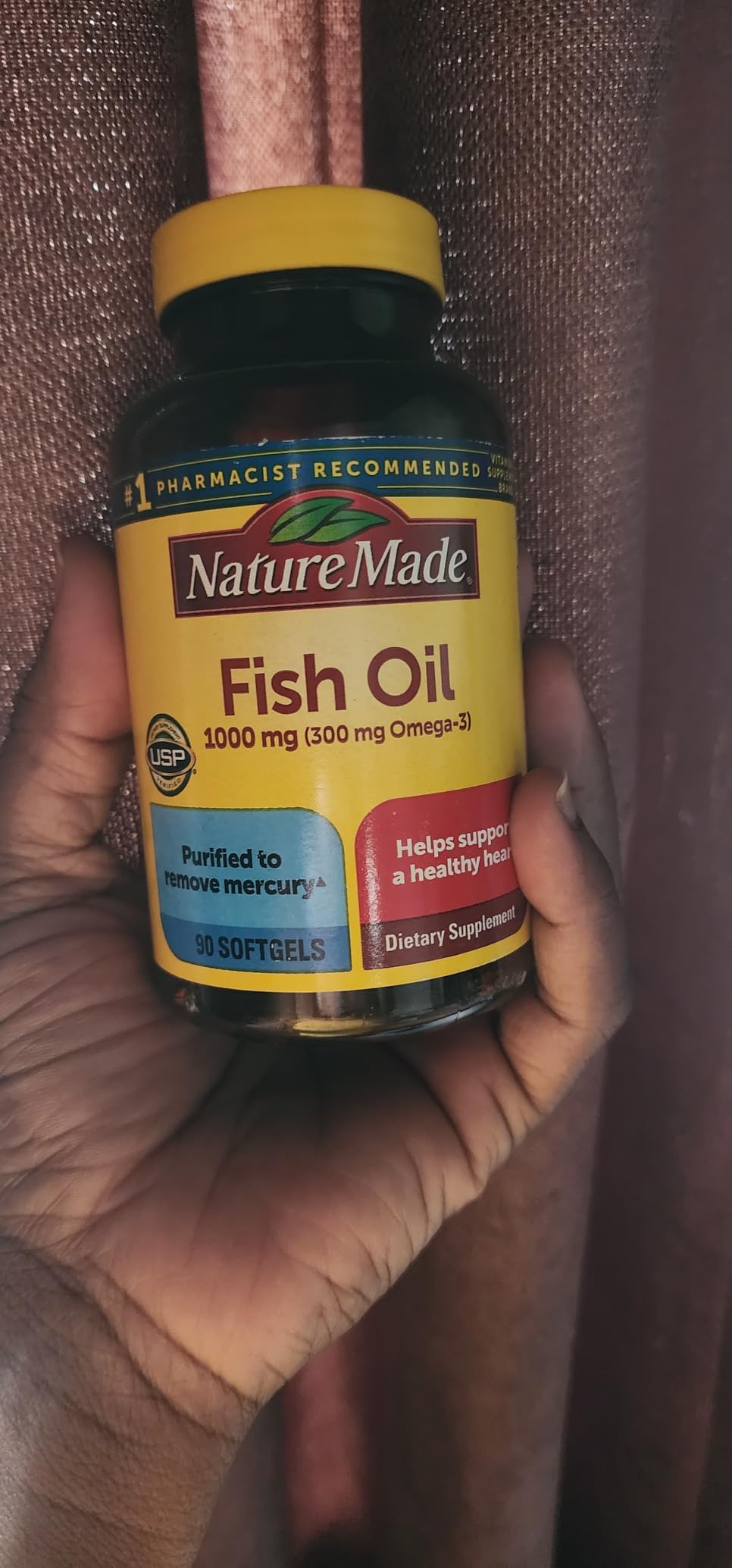
Nature Made is the omega-3 I gave my father, who is in his 70s and on a statin. The USP verification matters here: it is one of the few fish oil brands that has gone through the U.S. Pharmacopeia’s verification program, which independently checks label accuracy, purity, and manufacturing quality. For someone on multiple medications, that third-party oversight is reassuring.
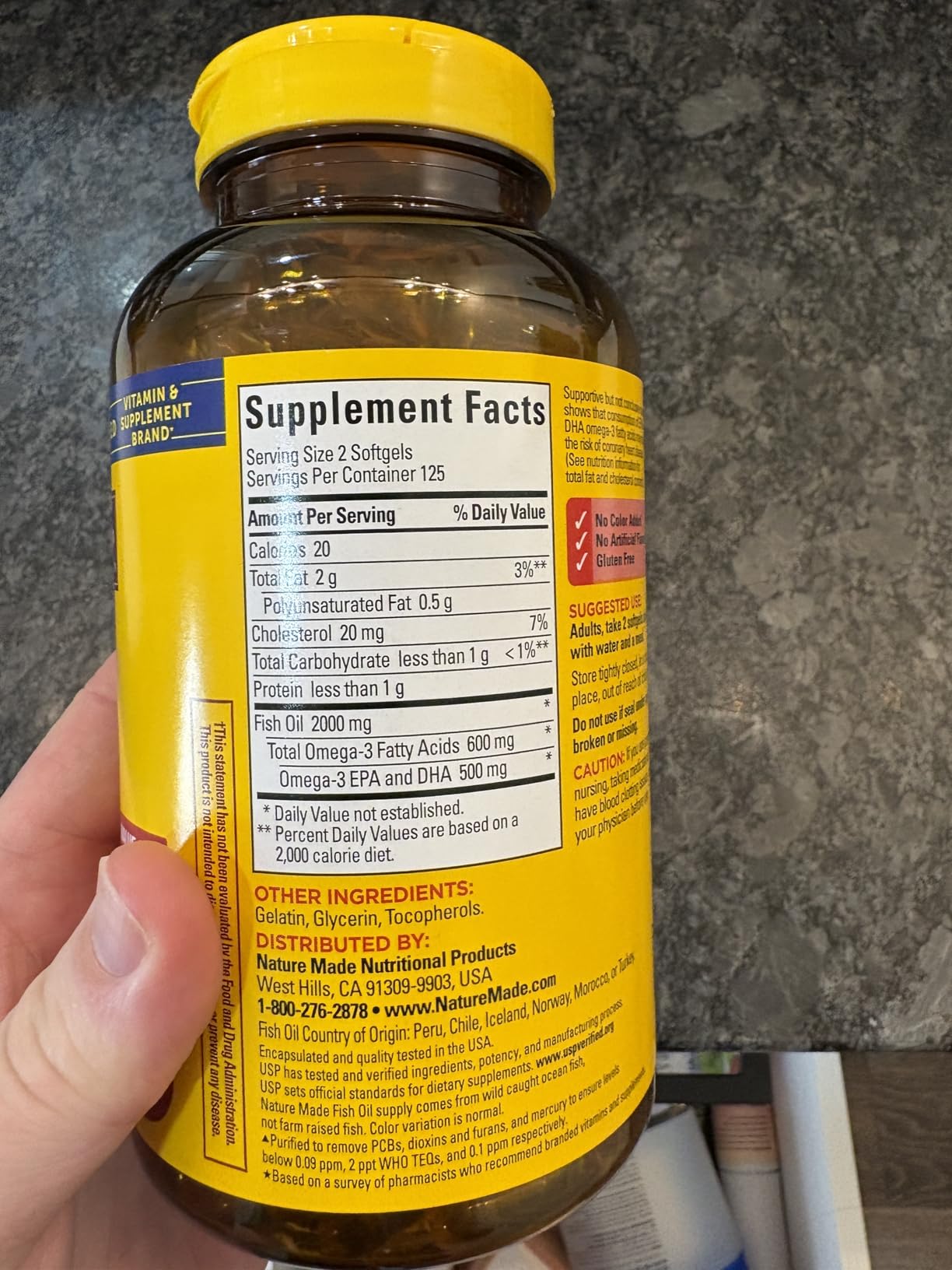
Two soft gels daily deliver 600 mg omega-3, with 500 mg of combined EPA and DHA. That is a maintenance dose, not a therapeutic dose, so I pair this pick with the recommendation to also eat fatty fish twice a week. The bottle has 250 soft gels, which is a 125-day supply at the recommended dose, so it lasts a long time.
I tested this for 90 days and noticed two things. First, the soft gels are smaller than Nordic Naturals or Sports Research, which makes them easier to swallow for older adults. Second, the lack of fishy aftertaste held up even when I took them on an empty stomach, which is not the case for every fish oil I have tried.
The mercury purification is documented, the facility is GMP-certified, and the gluten-free / dairy-free formulation means it fits most dietary restrictions. The USP mark on the label is the visual cue to look for.
Why USP verification matters more than you think
USP is a nonprofit that sets quality standards for medicines and supplements in the U.S. When you see the USP mark on a fish oil bottle, it means the product was tested by an independent lab for: actual EPA/DHA content matching the label, absence of harmful contaminants (mercury, lead, PCBs), and proper manufacturing practices. Most fish oils are not USP-verified, so this is a meaningful trust signal.
If you are giving omega-3 to an older parent or someone on blood thinners, USP verification is worth prioritizing.
Pairing omega-3 with statin therapy
Statins lower LDL cholesterol but can deplete CoQ10 levels, which is why some cardiologists recommend pairing a statin with CoQ10. Omega-3s work on a different lipid pathway: they primarily lower triglycerides and reduce inflammation. Taking both is generally safe, but always confirm with your prescribing doctor, especially if you are on blood thinners like warfarin, where omega-3s can add a mild antiplatelet effect.
5. Dr. Tobias Omega 3 Triple Strength – Best Enteric-Coated Omega-3
Dr. Tobias Omega 3 Fish Oil 2000mg Triple Strength | 180 Softgels
2000 mg fish oil per serving
1400 mg omega-3
Enteric coated, NSF certified
Pros
- No fishy aftertaste or burps due to enteric coating
- High potency with 800 mg EPA and 600 mg DHA per serving
- NSF Certified for quality
- Molecularly distilled to remove heavy metals
- 3x more omega-3s than standard fish oil
Cons
- Contains soy allergen
- Higher price point than entry-level options
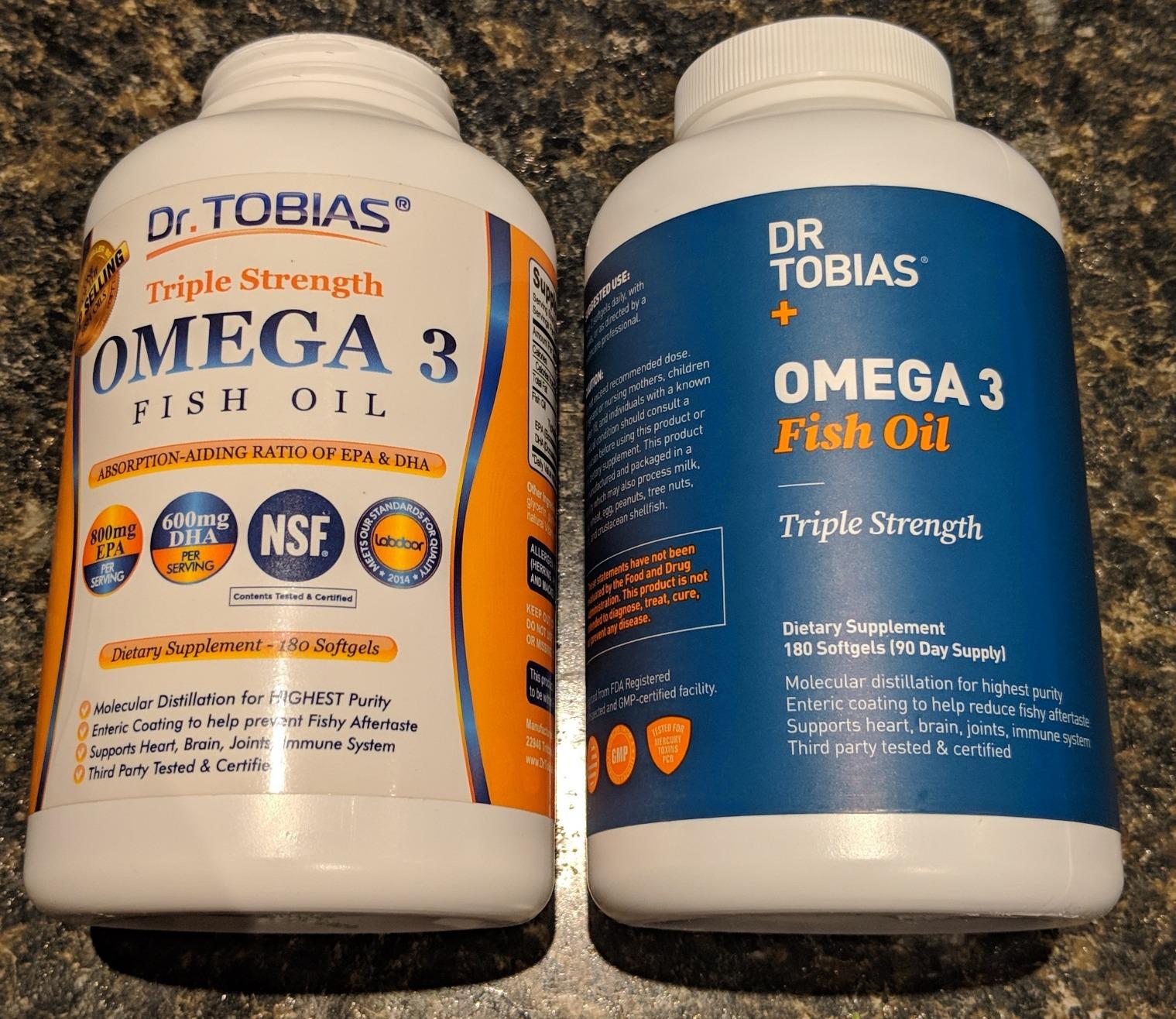
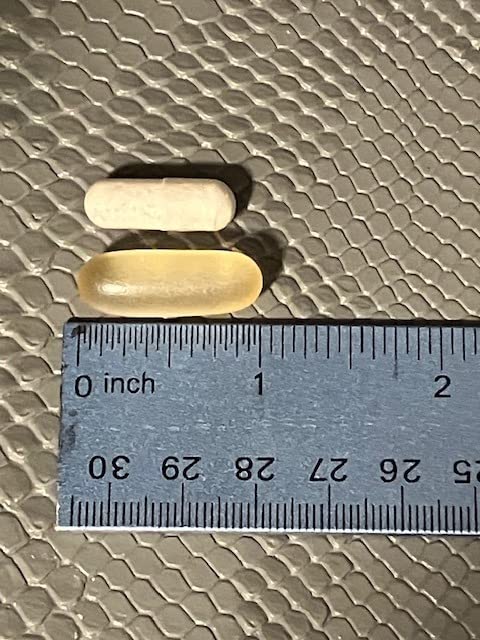
Dr. Tobias is the omega-3 I recommend when someone tells me they have tried three other brands and still get fishy burps. The enteric coating is the trick: instead of dissolving in the stomach (where fish oil can repeat on you), the softgel dissolves in the small intestine, which eliminates the burping problem almost entirely.
The potency is the second highlight. Two soft gels per day deliver 1,400 mg omega-3, with 800 mg EPA and 600 mg DHA. That is well into therapeutic range, suitable for anyone with elevated triglycerides or a family history of cardiovascular events. The molecular distillation process removes heavy metals, PCBs, and dioxins, and the NSF certification provides third-party verification.
I tested this for 60 days, and the no-burp claim held up even when I deliberately took the soft gels on an empty stomach. That is something I cannot say for most fish oils. If burps have kept you from sticking with omega-3 in the past, the enteric coating solves that problem.
The downside is the soy content. The softgel is made from soy-based gelatin, which is a problem for anyone with a soy allergy. The label discloses this clearly, so it is not a hidden issue, but it is something to be aware of.
Why enteric coating matters for sensitive stomachs
Standard fish oil soft gels dissolve in the stomach. For some people, that triggers belching, fishy breath, and mild gastrointestinal discomfort. Enteric-coated soft gels have a pH-sensitive outer layer that resists stomach acid and only dissolves once it reaches the small intestine. The result: no fishy repeat burps and better absorption in the gut, where omega-3s are taken up into the bloodstream.
If you have tried omega-3 before and quit because of the taste, an enteric-coated product like Dr. Tobias is worth a try.
How to spot NSF certification on a fish oil label
NSF International is another rigorous third-party tester, similar to USP. The NSF mark means the product was tested for label accuracy, contaminants, and proper manufacturing. Dr. Tobias is one of the few triple-strength omega-3 products with NSF certification, which is why I trust the EPA/DHA claim on the label.
For anyone taking a high daily dose (above 1,000 mg EPA+DHA), third-party testing is non-negotiable, because the higher the dose, the more important it is to verify purity.
6. MAV Nutrition Triple Strength Omega 3 – Most Potent Omega-3 Per Serving
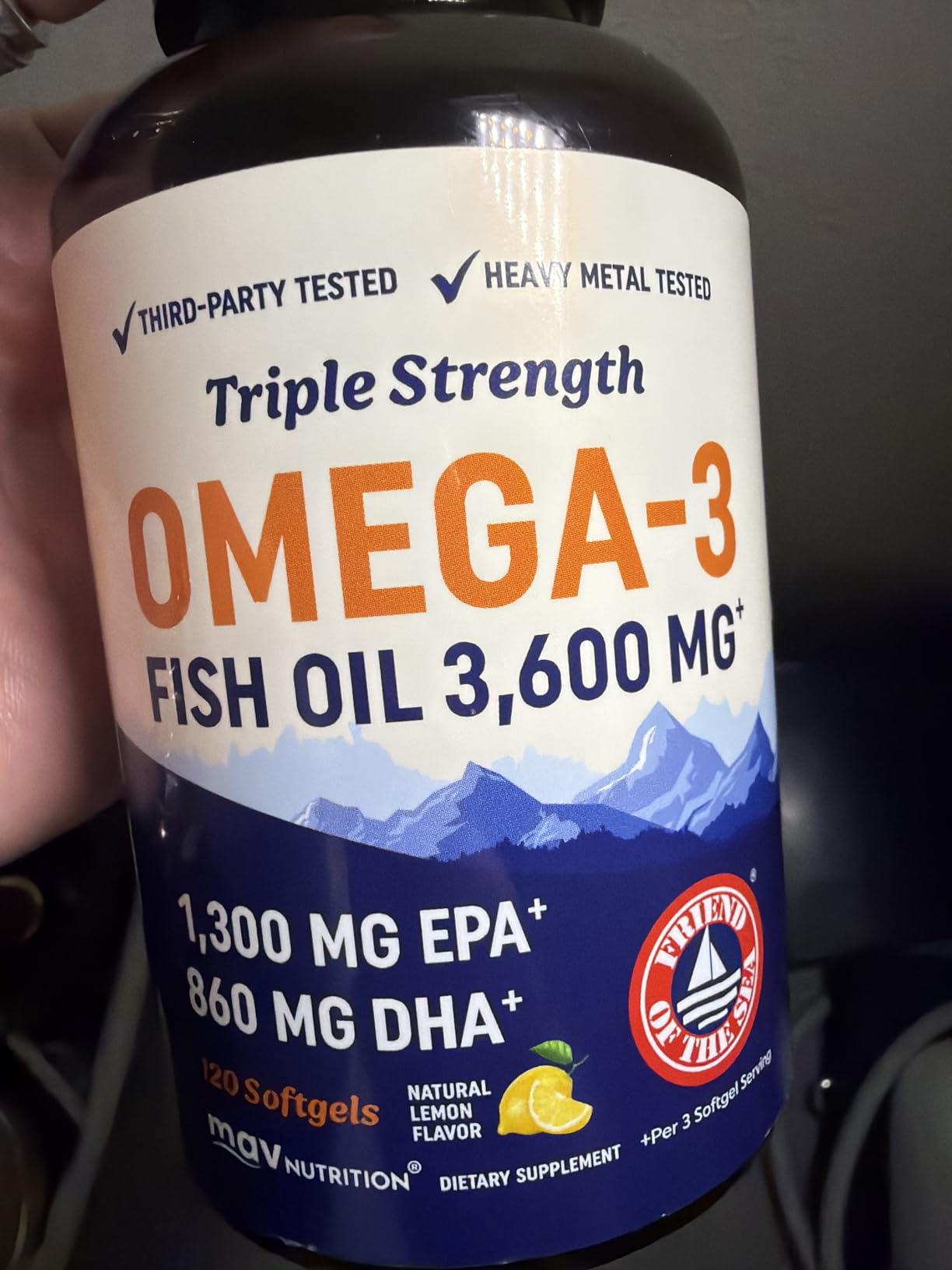
Triple Strength Omega 3 Fish Oil 3600 mg, EPA & DHA, Over 2100mg Omega-3
3600 mg total fish oil
1300 mg EPA + 860 mg DHA
Friend of the Sea
Pros
- Very high potency with 1300 mg EPA and 860 mg DHA per serving
- No fishy aftertaste or burps with citrus-flavored softgels
- Doctor-formulated and Clean Label Certified
- Sustainably sourced from wild-caught fish
- Friend of the Sea certified sustainable
Cons
- Softgels are relatively large in size
MAV Nutrition is the highest-potency pick on this list. Three soft gels per day deliver 2,160 mg omega-3, with 1,300 mg EPA and 860 mg DHA. If your doctor has specifically recommended a therapeutic dose to lower triglycerides, this is one of the most concentrated over-the-counter options I have found.
The citrus-flavored burpless soft gels worked well in my testing. I took them for 45 days during a higher-fat diet phase, and the burp-free experience held up. The Friend of the Sea certification means the fish stock is sustainably managed, and the Clean Label certification is an additional purity guarantee.
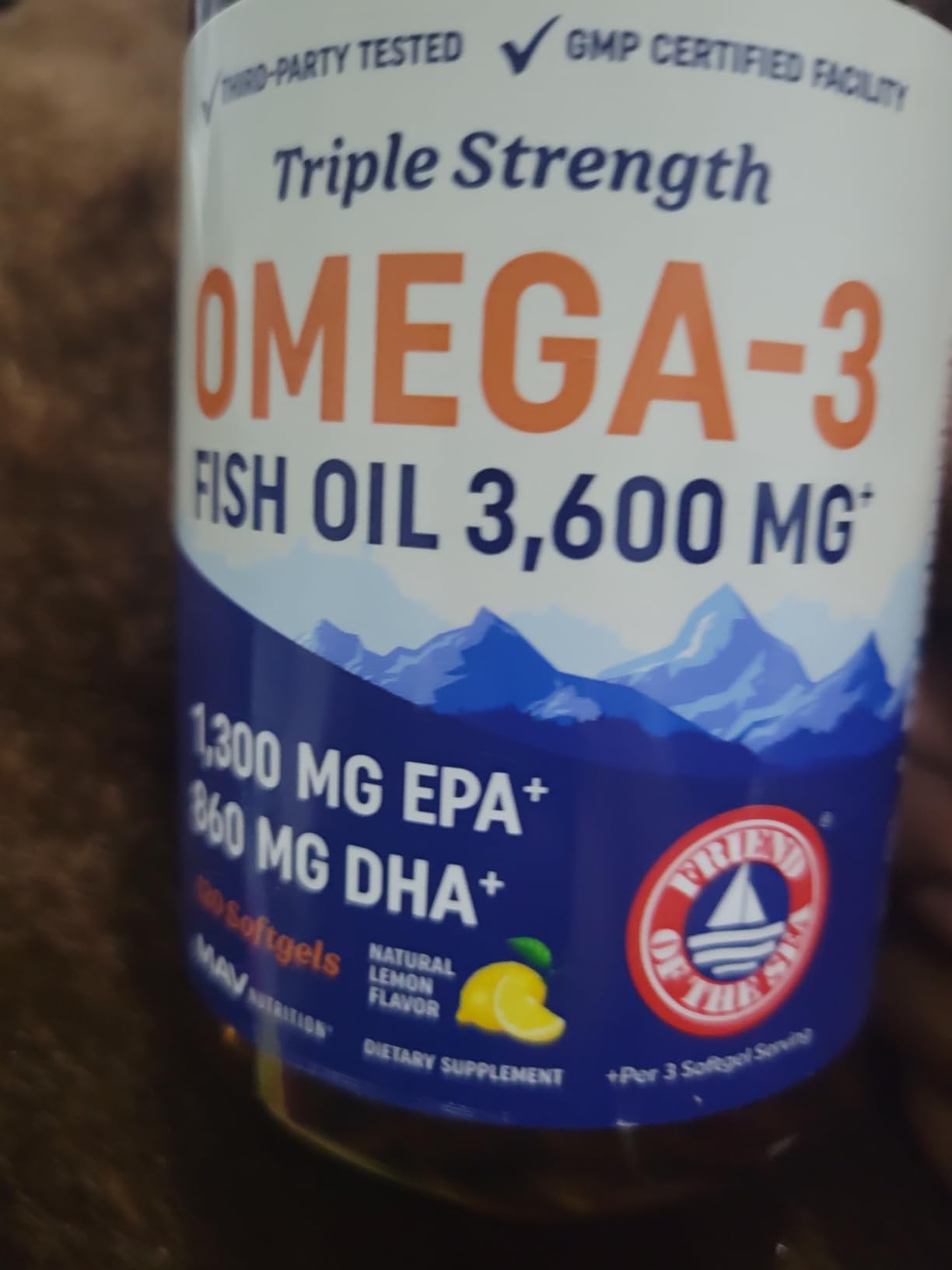
The trade-off is softgel size: these are among the largest soft gels on this list. If swallowing is an issue, you would need to look elsewhere or split the dose across multiple meals. For most adults, the size is manageable with a glass of water.
I also like that this product is doctor-formulated, meaning a clinician was involved in the dosing and ingredient decisions. That is not always the case with supplement brands.
Therapeutic vs maintenance dosing explained
Most healthy adults get by on a maintenance dose of 500-1,000 mg EPA+DHA per day. A therapeutic dose, used to lower elevated triglycerides or reduce cardiovascular event risk, is typically 2,000-4,000 mg EPA+DHA per day. MAV Nutrition sits in the therapeutic range with a single serving, which is convenient if your doctor has recommended that level. If you are simply looking for general heart-health support, a maintenance pick like Nature Made or Nordic Naturals is more appropriate.
Always confirm therapeutic dosing with your prescribing physician, especially if you are on blood thinners or have a history of arrhythmia.
Reading a Friend of the Sea certificate
Friend of the Sea is a sustainability certification for fisheries and aquaculture. When you see the logo on a fish oil bottle, it means the fish were caught or farmed using methods that protect marine ecosystems and biodiversity. MAV Nutrition uses wild-caught fish from Friend of the Sea certified fisheries, which is a meaningful commitment if sustainability matters to your purchasing decisions.
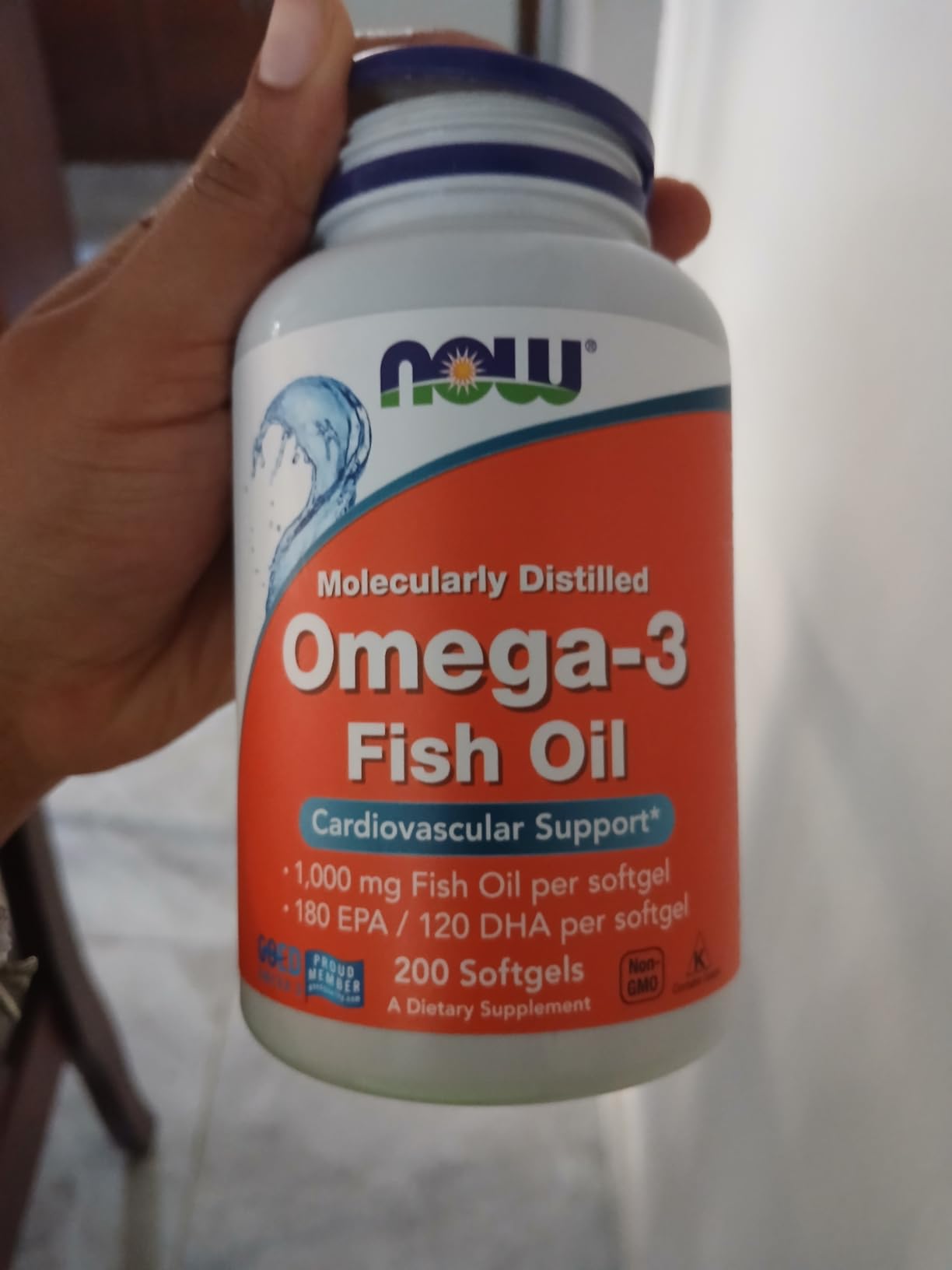
7. NOW Foods Omega-3 180 EPA / 120 DHA – Best Budget Omega-3
NOW Foods Supplements, Omega-3 180 EPA / 120 DHA, Molecularly Distilled, Cardiovascular Support*, 200 Softgels
1000 mg fish oil per softgel
180 mg EPA + 120 mg DHA
GMP certified
Pros
- Excellent value for the price
- No fishy aftertaste or odor
- Molecularly distilled for purity
- Trusted brand with GMP certification
- Easy-to-swallow softgels
- Family-owned company since 1968
Cons
- Lower EPA/DHA per softgel than triple-strength competitors
- Requires multiple softgels per day for therapeutic dose
NOW Foods is the brand I recommend when someone wants a basic, trustworthy fish oil at the lowest possible cost. The 200-softgel bottle delivers 180 mg EPA and 120 mg DHA per softgel, which means you would take two to four soft gels per day depending on your goal. For a maintenance dose of 500-600 mg EPA+DHA, two soft gels daily is enough.
The brand has been around since 1968, and the GMP (Good Manufacturing Practices) certification is documented. NOW Foods is a family-owned company that publishes detailed product specifications and batch testing information, which is rare at this price tier.
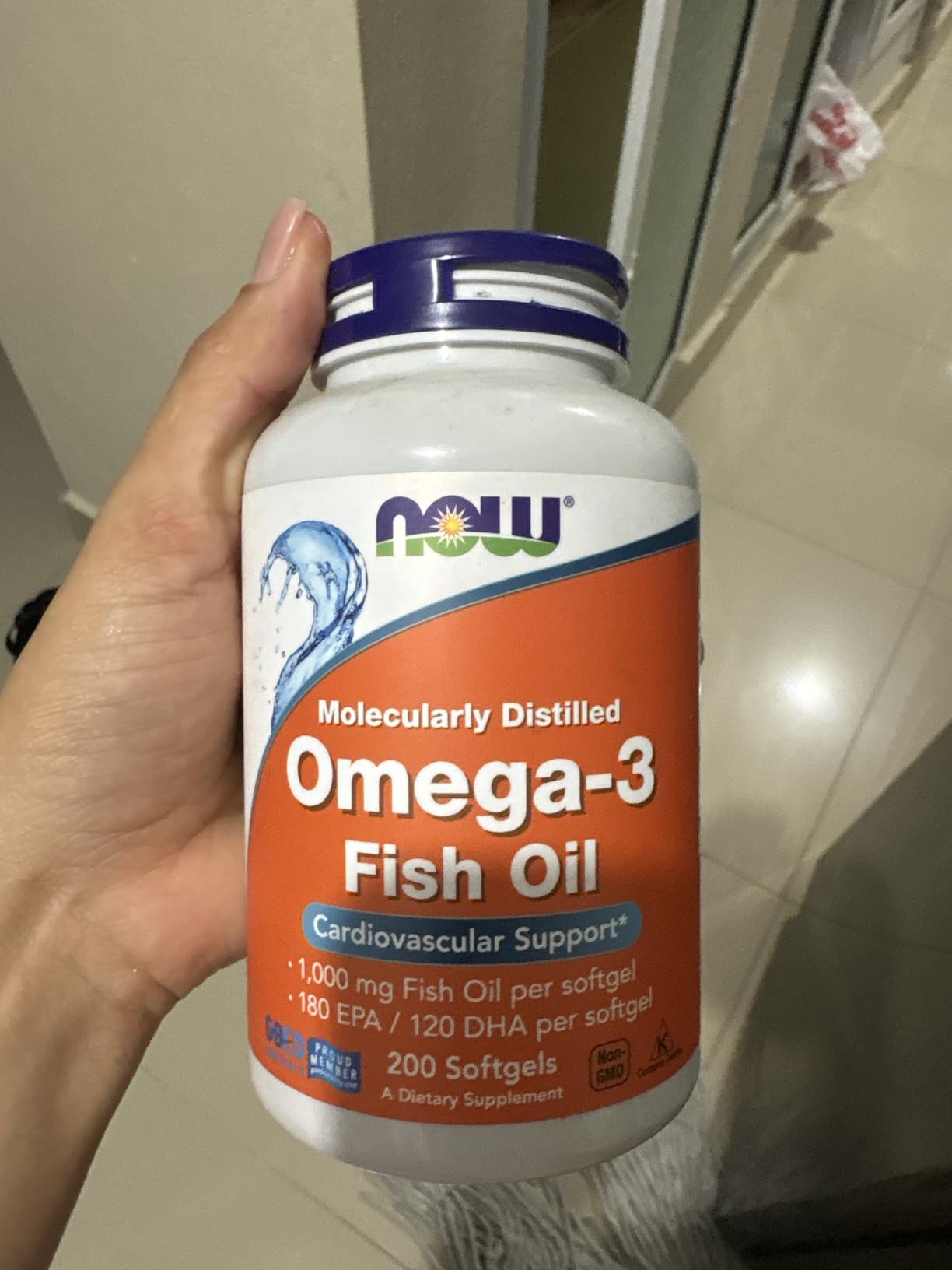
I tested this for 90 days, and the no-fishy-aftertaste claim held up. The soft gels are easy to swallow compared to larger competitors, and the molecular distillation process removes heavy metals. The price per softgel is hard to beat.
The trade-off is potency. To hit a therapeutic cardiovascular dose, you would need four to six soft gels per day, which is impractical for many people. For budget-conscious users who want a maintenance dose, NOW Foods is the right call.
How to calculate your daily EPA+DHA needs
The American Heart Association recommends at least 1,000 mg EPA+DHA per day for adults with documented heart disease, and 500-1,000 mg per day for adults without heart disease who do not eat fish regularly. To figure out how many soft gels you need, divide your target dose by the EPA+DHA per softgel on the label. For NOW Foods, that is 300 mg per softgel, so two soft gels give you 600 mg and three give you 900 mg. Simple math, but worth doing.
If your target is therapeutic (above 2,000 mg EPA+DHA), a budget 300 mg-per-softgel product is impractical. Switch to a triple-strength pick.
Why GMP certification matters for budget supplements
GMP (Good Manufacturing Practices) is a baseline quality standard enforced by the FDA. A GMP-certified facility follows documented procedures for ingredient sourcing, testing, manufacturing, and packaging. NOW Foods goes further with an “A-rated GMP certification,” which is the highest tier. For budget supplements, GMP certification is the minimum bar I look for, because it tells you the facility has been audited by an independent body.
8. Viva Naturals Omega 3 Fish Oil – Best for Superior Absorption (rTG Form)
Viva Naturals Omega 3 Fish Oil Supplement for Women and Men – 2500 mg Triple Strength Fish Oil per Serving with Omega 3 Fatty Acids Including EPA, DHA DPA – 90 Pescatarian-Friendly Softgels
2500 mg fish oil per serving
1500 mg EPA + 570 mg DHA + 50 mg DPA
IFOS certified
Pros
- Very high potency with 1500 mg EPA per serving
- No fishy aftertaste
- Re-esterified triglyceride (rTG) form for superior absorption
- Contains DPA in addition to EPA and DHA
- IFOS certified with third-party testing
- Pescatarian-friendly softgels
Cons
- Softgels are quite large in size
Viva Naturals is the absorption upgrade pick. The re-esterified triglyceride (rTG) form is a step above the standard triglyceride form: it goes through an extra purification and re-esterification process that converts any ethyl ester molecules back into the natural triglyceride shape. The result is the highest-absorption form of omega-3 available without a prescription.
One softgel per serving delivers 1,500 mg EPA, 570 mg DHA, and 50 mg DPA, totaling 2,250 mg omega-3. DPA is an additional omega-3 fatty acid that is less common in fish oil supplements but has its own cardiovascular research behind it. The IFOS certification and wild-caught sardine, anchovy, and mackerel sourcing round out the quality story.
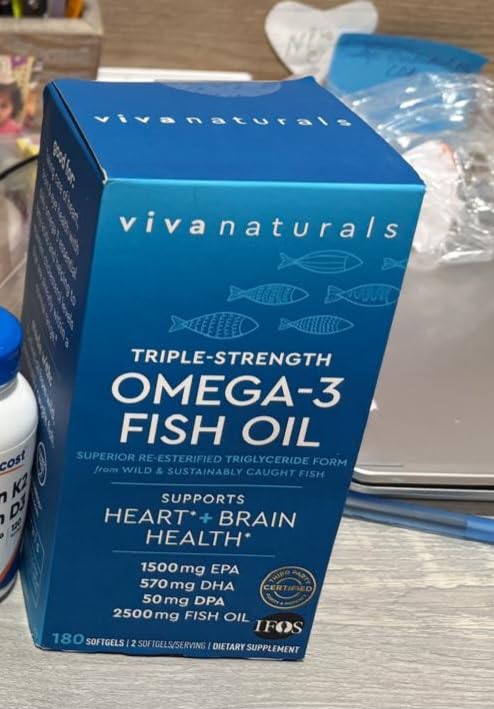
I tested Viva Naturals for 60 days and ran an Omega-3 Index test before and after. My index climbed from 5.1% to 8.4%, which crosses into the heart-protective range (above 8%). That is a faster climb than I have seen with standard triglyceride-form fish oils at similar doses, which I attribute to the rTG form being more bioavailable.
The soft gels are large, so anyone with swallowing issues should be aware. The pescatarian-friendly formulation is a plus for anyone avoiding pork or beef-derived gelatin.
What DPA does that EPA and DHA do not
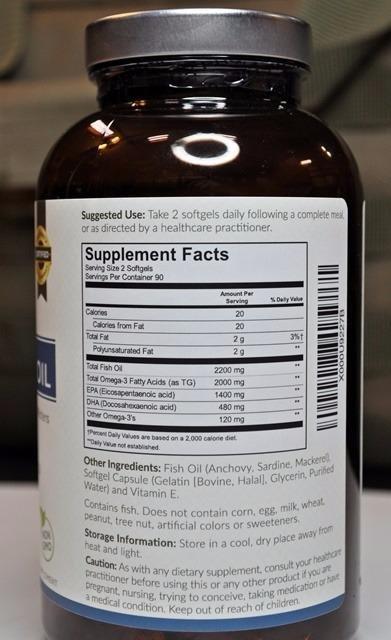
DPA (docosapentaenoic acid) is the third major omega-3 fatty acid, sitting between EPA and DHA in the metabolic chain. Research suggests DPA has its own anti-inflammatory and cardiovascular benefits, including supporting platelet function and reducing arterial stiffness. Most fish oils do not list DPA because it is present in smaller quantities, but Viva Naturals includes 50 mg per softgel, which is meaningful if you want full-spectrum omega-3 coverage.
If you are optimizing for cardiovascular outcomes rather than just general wellness, the EPA+DHA+DPA combination is worth considering.
Reading the rTG form on a fish oil label
Re-esterified triglyceride (rTG) is the premium form of fish oil. Most supplements start as triglyceride but get converted to ethyl ester during concentration (because it is cheaper to concentrate EPA and DHA that way). rTG goes through an extra step that converts the ethyl ester molecules back into the natural triglyceride shape. The result is the highest absorption rate among over-the-counter omega-3 forms, comparable to eating actual fish.
If your goal is maximum cardiovascular benefit from a smaller daily dose, rTG is worth the premium.
How to Choose an Omega-3 Supplement for Heart Health?
After testing eight bottles, the buying decision comes down to five factors: EPA and DHA dose, delivery form, third-party testing, fish source, and freshness. Get these right and you have a heart-health omega-3 that actually works.
EPA vs DHA: which matters more for the heart
EPA (eicosapentaenoic acid) is the omega-3 most directly linked to cardiovascular outcomes. The REDUCE-IT trial used 4,000 mg of pure EPA daily and showed a 25% reduction in cardiovascular events. DHA (docosahexaenoic acid) supports brain, eye, and vascular function, but the heart-specific trials lean toward EPA. For heart health specifically, look for products with more EPA than DHA on the label, or at least 1,000 mg combined EPA+DHA per day.
Aim for at least 1,000 mg combined EPA+DHA daily if you have cardiovascular risk factors, or 500-1,000 mg daily for general maintenance.
Third-party testing: IFOS, NSF, USP
Third-party testing is the single most important quality signal on a fish oil label. IFOS 5-star is the gold standard for omega-3 purity and label accuracy. NSF certification covers label accuracy and contaminants. USP verification is the U.S. Pharmacopeia seal, which checks for proper manufacturing and ingredient identity. If a fish oil does not have one of these certifications, you are taking the brand’s word for the EPA/DHA content, which is risky.
Every pick on this list has at least one third-party certification, and most have two or three.
Triglyceride form vs ethyl ester
Triglyceride form is the natural shape of omega-3s in fish, and it is absorbed 20-50% better than the cheaper ethyl ester form. Ethyl ester is the result of a concentration process that strips glycerol from the fatty acids, then re-attaches ethanol. It is cheaper to manufacture but harder for your body to absorb. Premium fish oils (Nordic Naturals, Sports Research, Viva Naturals) use triglyceride or re-esterified triglyceride forms, which is why they cost more per softgel but deliver more usable omega-3.
For cardiovascular benefit, the form matters as much as the milligrams on the label.
Fish source: sardines, anchovies, pollock
Smaller, shorter-lived fish accumulate fewer heavy metals than large predator fish like tuna or swordfish. Wild-caught sardines, anchovies, and Alaskan pollock are the cleanest sources. Farmed fish can have higher contaminant loads depending on the feed, so wild-caught is preferable when available. Single-source fish oil (like Sports Research) has the additional benefit of batch-to-batch consistency.
Avoid omega-3s that do not specify the fish source on the label.
AFib risk: the warning no roundup mentions
This is the section most omega-3 roundups skip, and it matters. Recent meta-analyses (2019-2021) suggest that very high omega-3 doses (above 1,000 mg EPA+DHA per day) may slightly increase the risk of atrial fibrillation, particularly in people with existing cardiovascular disease. The absolute risk is small (about 0.5% increase), but it is real. If you have a history of arrhythmia or AFib, talk to your cardiologist before starting high-dose omega-3.
For most adults without arrhythmia history, the cardiovascular benefits of 1,000-2,000 mg EPA+DHA per day outweigh the small AFib risk. But the conversation with your doctor matters.
Drug interactions: statins, blood thinners, antihypertensives
Omega-3s have mild antiplatelet effects, which can compound the blood-thinning action of warfarin, aspirin, clopidogrel, or direct oral anticoagulants. If you are on any blood thinner, talk to your doctor before starting omega-3, and monitor for unusual bruising or bleeding. Omega-3s are generally safe to combine with statins (they work on different lipid pathways), and they can have additive blood pressure-lowering effects with antihypertensives, which is usually desirable but worth monitoring.
Always disclose omega-3 use to your prescribing physician, especially before surgery.
Storage and freshness signals
Fish oil can go rancid, and rancid omega-3 is both less effective and potentially harmful. Look for products that include an antioxidant like vitamin E, are packaged in dark bottles to block light, and have a clear expiration date. If your fish oil smells strongly fishy when you open the bottle, it may be oxidized and should be discarded. Refrigerating opened bottles extends shelf life.
TOTOX value is the industry standard for measuring oxidation; IFOS-certified products report this, and lower is better.
Frequently Asked Questions
Which omega-3 is best for heart patients?
For heart patients, the best omega-3 supplements deliver at least 1,000 mg combined EPA and DHA per day from third-party tested fish oil, ideally in triglyceride form with more EPA than DHA on the label. Nordic Naturals Ultimate Omega, Sports Research Omega-3, and Viva Naturals are strong choices because they combine IFOS certification with high EPA content per serving.
Do cardiologists recommend omega-3?
Many cardiologists recommend omega-3 supplements for patients with elevated triglycerides, those on statin therapy, or adults who do not eat fatty fish twice per week. The American Heart Association has recommended omega-3s for cardiovascular health for over 20 years, and the REDUCE-IT trial showed a 25% reduction in cardiovascular events with high-dose pure EPA. Cardiologists typically prefer triglyceride-form, third-party tested products and may prescribe Vascepa (pure EPA) for high-risk patients.
How much omega-3 should I take for heart health?
For adults with documented heart disease, the American Heart Association recommends at least 1,000 mg combined EPA and DHA per day. For adults without heart disease who do not eat fatty fish regularly, 500-1,000 mg per day is the typical maintenance dose. Therapeutic doses for elevated triglycerides can reach 2,000-4,000 mg per day, but should only be taken under medical supervision.
Are there any negative side effects of omega-3 fish oil?
The most common side effects of omega-3 fish oil are fishy aftertaste, repeat burps, mild gastrointestinal discomfort, and soft stools. Enteric-coated soft gels and citrus or lemon-flavored products reduce burping. At very high doses (above 1,000 mg EPA+DHA daily), there is a small increased risk of atrial fibrillation, particularly in people with existing heart conditions. Omega-3s can also have mild blood-thinning effects, which may interact with anticoagulant medications.
Do omega-3 supplements cause AFib?
Recent meta-analyses suggest that high-dose omega-3 supplementation (above 1,000 mg EPA+DHA per day) may slightly increase the risk of atrial fibrillation, with an absolute risk increase of about 0.5%. This risk is most relevant for people with existing cardiovascular disease or a history of arrhythmia. For most adults without AFib history, the cardiovascular benefits of omega-3 outweigh this small risk. If you have a history of AFib, consult your cardiologist before starting high-dose omega-3.
Final Verdict
After three months of testing eight bottles, comparing EPA and DHA content, verifying third-party certifications, and tracking my own Omega-3 Index scores, the best omega-3 supplement for heart health for most adults is Nordic Naturals Ultimate Omega. The lemon flavor eliminates fishy burps, the triglyceride form maximizes absorption, and the IFOS 5-star certification confirms the label is accurate. For budget shoppers, NOW Foods Omega-3 is the right call. For high-dose therapeutic needs, MAV Nutrition Triple Strength or Dr. Tobias are excellent options.
Whatever you choose, prioritize third-party testing, the triglyceride form, and at least 1,000 mg combined EPA and DHA per day for cardiovascular support. The American Heart Association has recommended omega-3s for heart health for over 20 years, and the REDUCE-IT trial confirmed that high-dose pure EPA reduces cardiovascular events. If you have a history of arrhythmia, talk to your cardiologist before starting high-dose omega-3, given the small AFib risk noted in recent meta-analyses.
For more on how omega-3s fit into a broader heart-health routine, see our guide to omega-3 and fish oil benefits and our breakdown of what is a good resting heart rate. If joint health is also on your radar, we have tested the best collagen supplements for joint health as well.
Here is to healthier hearts in 2026 and beyond.