
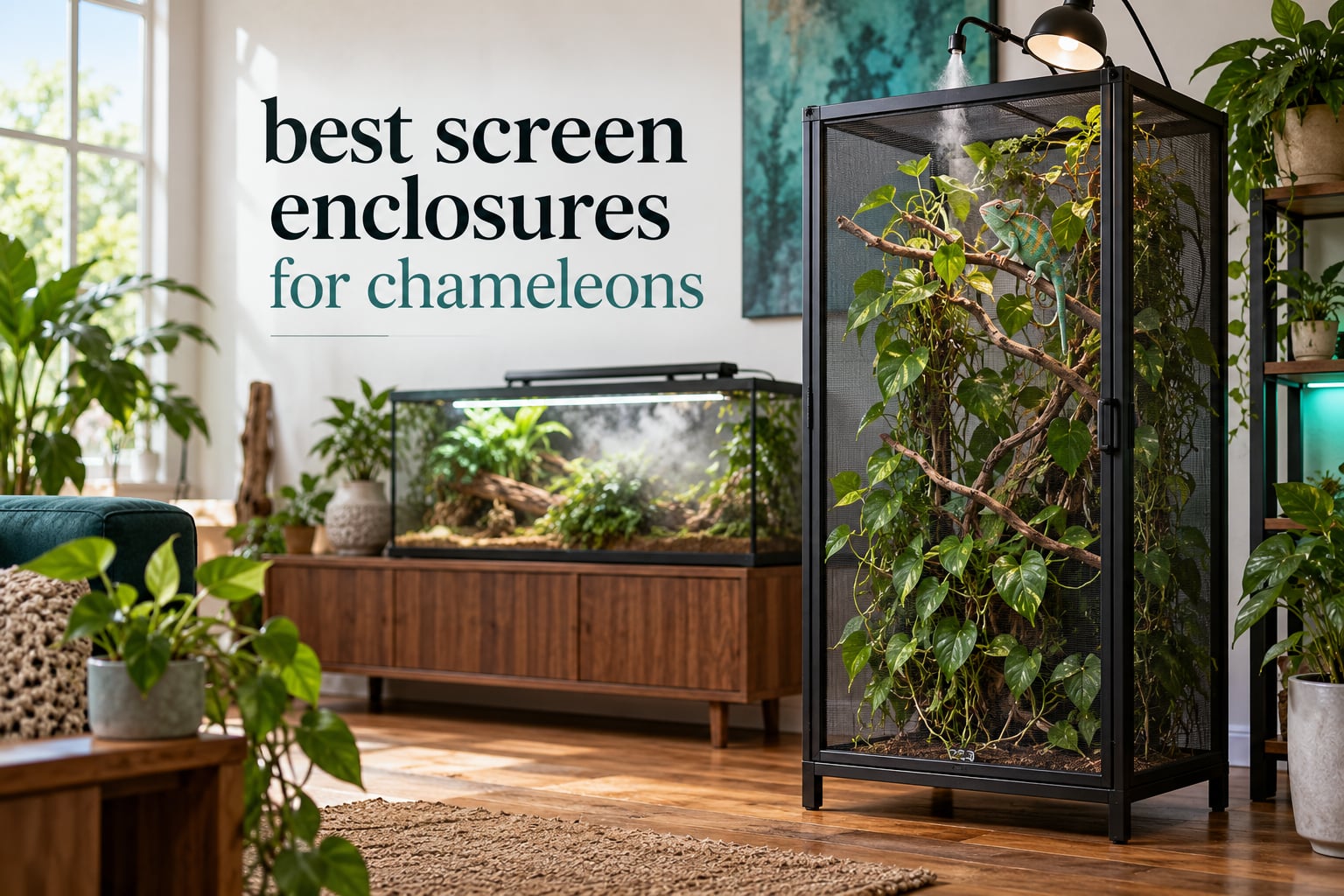
If you have ever watched a veiled or panther chameleon flatten against the corner of a glass tank and press its snout to the seam, you already know why this decision matters. The wrong enclosure does not just look wrong, it produces the exact conditions that lead to dehydration, stalled feeding, and respiratory infections. An adult veiled, panther, or Jackson’s chameleon needs an enclosure at least 24 x 24 x 48 inches (2 x 2 x 4 feet) tall and deep, with airflow strong enough to move air through the whole volume.
That is why screen enclosures dominate keeper setups. A mesh-sided cage in a black anodized aluminum frame throws warm humid air upward and out of the top, pulling cooler air in below and creating the chimney effect that keeps the enclosure from going stale. The trade-off is that all that airflow also bleeds humidity straight through the walls, so a screen cage demands a more committed misting or fogging routine than a solid-sided hybrid. Updated for 2026, we put eight genuinely ventilated cages through their paces, from a hatchling grow-out unit to a full-height premium habitat, and flagged exactly where each one fails.
We focused only on screen and mesh-forward enclosures, because the biggest gap on the search results pages is somebody answering this question honestly. Most roundups we found mix in sealed glass tanks and solid PVC cubes that are genuinely bad choices for an arboreal species. Nothing in this list is a sealed aquarium. What follows covers the quick picks, an all-eight comparison table, individual reviews with the real quality control problems, a screen versus glass versus hybrid explainer, keeper consensus from the forums, a buying guide, and answers to the questions people actually type.
Table of Contents
Top 3 Best Screen Enclosures for Chameleons in 2026
Our editor’s choice is the Zoo Med ReptiBreeze 24 x 24 x 48. It is the only full adult-size all-aluminum screen cage in this group with a deep review history, and it is the one we would put an adult male in on day one. The premium pick is the WACOOL 50 Gallon, which solves the humidity problem that screen creates but costs you 57 pounds of glass to move. The hatchling pick is the Zoo Med Nano Breeze, the standard first cage for a baby veiled chameleon.

Zoo Med ReptiBreeze 24x24x48
- Full adult size 2x2x4
- Black anodized aluminum frame
- Front door plus bottom door

WACOOL 50 Gallon Hybrid
- Configurable glass or mesh sides
- Tough screen top
- Waterproof 10 inch base

Zoo Med Nano Breeze
- 10x10x12 vertical format
- Lightweight 2.4 pound frame
- Removable bottom panel
All 8 Screen Enclosures Compared in 2026
Every cage below is ventilated on at least three sides or has a screen top. Dimensions are the manufacturer’s listed size, not the packed size, and the mesh column tells you whether the airflow is the real deal.
| Product | Specs | Action |
|---|---|---|
| Zoo Med ReptiBreeze 24x24x48 |
|
Check Latest Price |
| Zoo Med Nano Breeze 10x10x12 |
|
Check Latest Price |
 RunDuck 45 Gallon Foldable Mesh RunDuck 45 Gallon Foldable Mesh |
|
Check Latest Price |
 REPTI ZOO 18x18x36 Front Opening REPTI ZOO 18x18x36 Front Opening |
|
Check Latest Price |
 BINANO 33 Gallon All-Mesh BINANO 33 Gallon All-Mesh |
|
Check Latest Price |
 Zoo Med ReptiBreeze LED Deluxe Zoo Med ReptiBreeze LED Deluxe |
|
Check Latest Price |
 ToxiRium 12x12x18 PVC Hybrid ToxiRium 12x12x18 PVC Hybrid |
|
Check Latest Price |
| WACOOL 50 Gallon Hybrid |
|
Check Latest Price |
One note on reading that table. The two all-mesh magnetic units, the RunDuck and the BINANO, deliver the strongest airflow in the group but have mesh floors with no substrate lip, so fine soil falls straight through. The three aluminum screen cages are the ones that hold clips and vines properly. And the two units with solid PVC or glass panels, the ToxiRium and the WACOOL, are the only two here that will hold humidity without constant misting.
1. Zoo Med ReptiBreeze 24x24x48 Screen Cage — The Adult-Ready Standard
Zoo Med Reptibreeze Open Air Screen Cage 24x24x48
24 x 24 x 48 inches
Black anodized aluminum frame
Aluminum screen mesh
10 pounds
Pros
- Full adult size at 2 x 2 x 4 feet
- Front door plus a separate bottom door for substrate removal
- Corrosion resistant anodized aluminum frame
- All hardware included and assembles with a screwdriver only
Cons
- Listing dimensions read 24 x 24 x 24 in the spec block so verify the height
- All screen gives no privacy and no solid background surface
We have run this cage through more real-world setups than any other on this list, and it is still the one we hand to new keepers with an adult animal. The 24 x 24 x 48 footprint hits the adult minimum on every axis, and the four-foot vertical run gives the climbing height that panther and veiled chameleons actually use. Nothing else in this group at this size is a true all-aluminum screen frame.
The dual-door layout is the detail that separates it from cheaper cages. The front door opens full width for reaching in and repositioning live plants, and the separate bottom door means you can strip out a substrate layer or swap a paper towel floor without tilting a 10-pound frame onto your furniture. Reviewers consistently call out the corrosion-resistant anodized finish, which matters more than it sounds in a cage that gets sprayed several times a day for years.
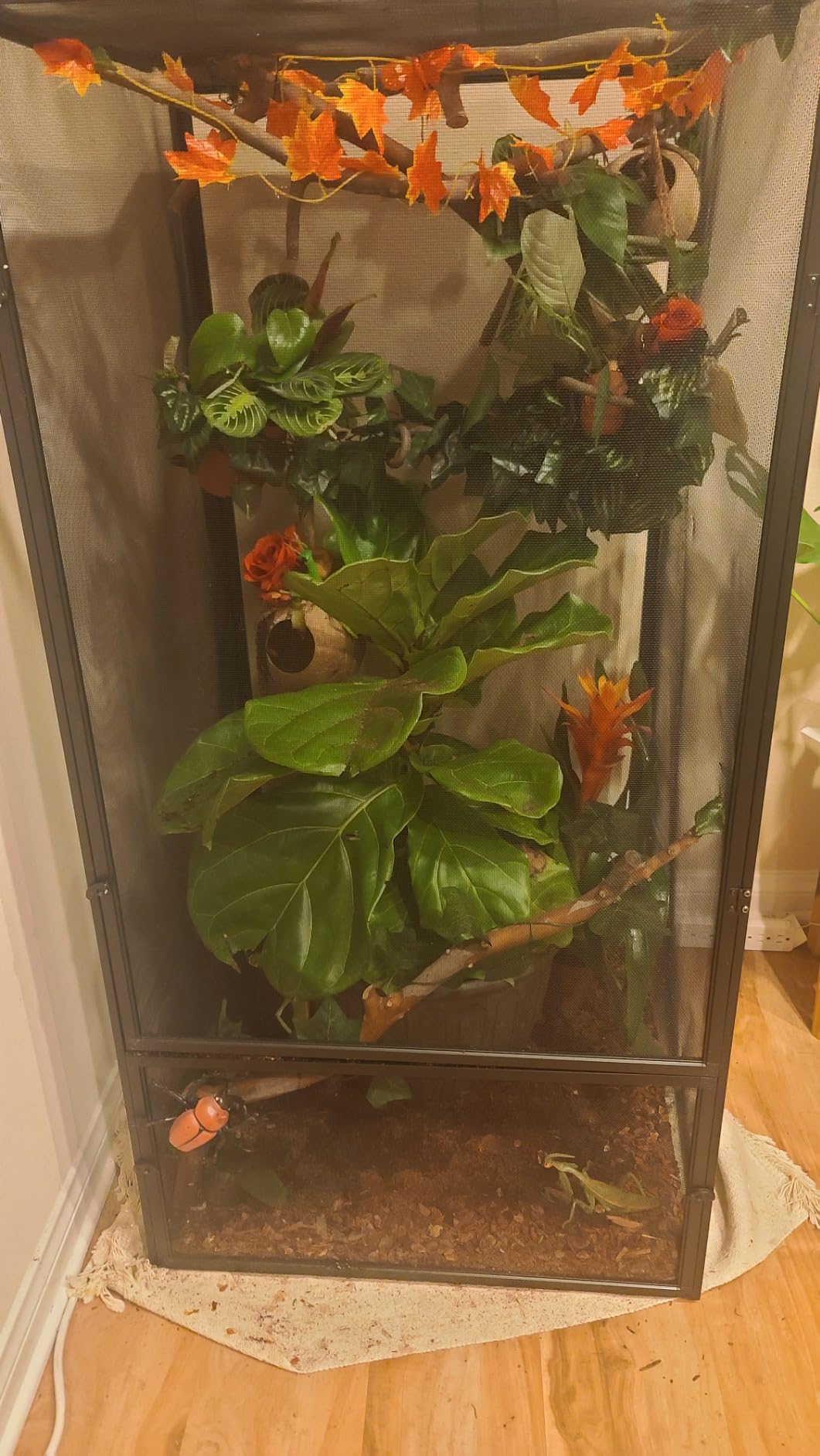
Assembly is genuinely a screwdriver job. The hardware is all in the box, the frame pieces are labeled, and our builds have gone from flat-packed panels to standing cage without a single missing screw. The mesh itself is aluminum rather than nylon, which is why clips, bendable vines, and light brackets hold properly instead of pulling out of a soft screen. For a bioactive or live-plant setup, that difference decides whether your plants stay put.
The real limitation is privacy. Every side is bare mesh, so there is no background surface out of the box and no visual barrier between your chameleon and the room, a television, or a second cage across the hall. Keepers on r/Chameleons describe covering a portion of the sides with window film or shower-curtain panels, or banding bendable vines across the mesh to create screened-off zones. That is a five-minute modification and it makes a noticeable difference in how settled an animal behaves.
Is 2 x 2 x 4 really the minimum, or should you go bigger?
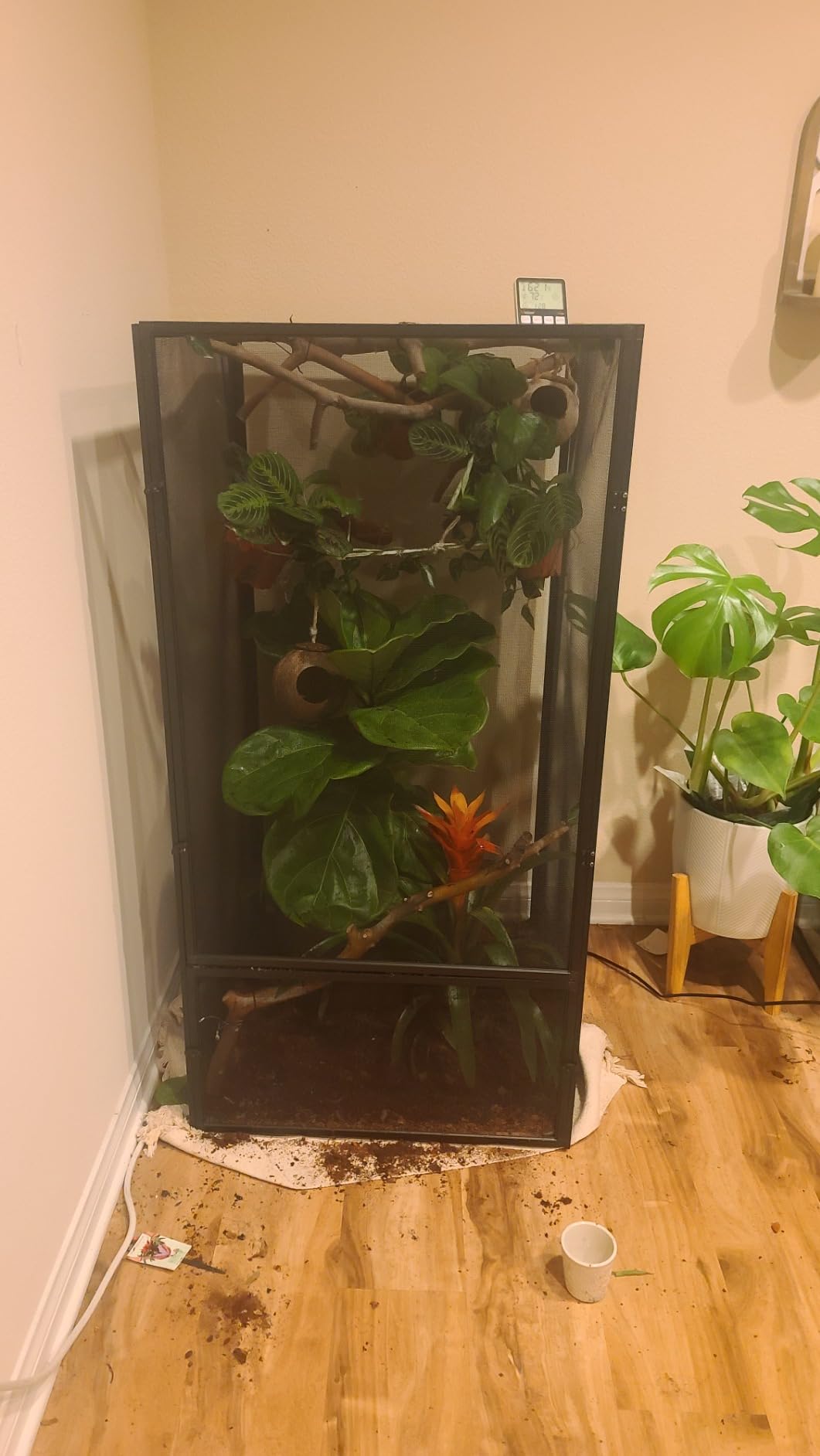
For an adult female veiled or a panther chameleon, 24 x 24 x 48 is the accepted floor, not a generous target. Large adult males, particularly veiled, will use every inch of it and many keepers step up to 24 x 48 x 48 for the biggest boys. If your budget stretches there, that extra vertical space pays for itself in climbing distance rather than in empty floor area.
Watch the listing carefully before you order, though. The specification block on this product still reads 24 x 24 x 24 while the variant offered is the 48-inch-tall frame, which is exactly the kind of detail that catches people out at checkout. Confirm the height in the variant selector, and check the assembled dimensions once it arrives, before you buy plants sized for it.
Who should skip this cage?
Skip it if your home is genuinely cold and dry, because a full aluminum screen wall in a low-humidity room means a constant humidity chase that no amount of misting fully solves. The same applies to homes with heavy central air conditioning running in summer. In those situations, budget for a solid-sided hybrid instead.
I would also skip it as a first cage for a hatchling, because a 2 x 2 x 4 footprint is enormous relative to a baby chameleon and makes misting coverage harder to keep even. Buy the small grow-out unit, then move up once your animal is a robust juvenile. And if you need a genuinely sealed or escape-proof enclosure for quarantine, bare mesh sides are the wrong construction. The anodized aluminum does eventually show frame wear at the corners after years of daily misting, but that is a decade-scale problem, not a reason to pass on it now.
2. Zoo Med Nano Breeze 10 x 10 x 12 — The Hatchling Grow-Out Cage
Zoo Med Labs Nano Breeze Alumuninum Screen Cage 10 x 10 x 12
10 x 10 x 12 inches
2.4 pounds
Mesh on three sides and top
Acrylic front panel
Pros
- Lightweight 2.4 pound frame is easy to move for feeding
- Acrylic front panel gives a clear viewing window
- Removable bottom panel plus a clean-out port
- Letter labeled panels speed up assembly
Cons
- Weak front door latch that does not reliably hold
- Very small print instructions that confuse first-time builders
- Optional slide-in tray leaves a gap where feeders hide
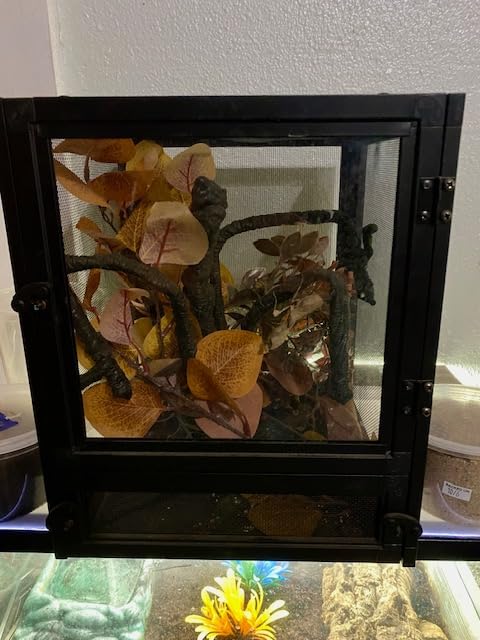
This is the cage most breeders hand to a hatchling veiled chameleon in its first weeks, and for that job it is genuinely hard to beat. At 2.4 pounds you can lift it with one hand to check on a baby at night, which matters far more than it sounds when you are checking a 30-gram animal that can go downhill fast. The vertical 10 x 10 x 12 format still gives climbing height rather than floor area.
Unlike the larger aluminum cages, the mesh here is on three sides and the top with a solid acrylic front panel, so you get an unobstructed view of your chameleon without reflections. Owners use it for caterpillars, mantids, and small invertebrates as much as for chameleons, and the removable floor panel plus bottom port make servicing a nursery quick when you are cleaning several at once.
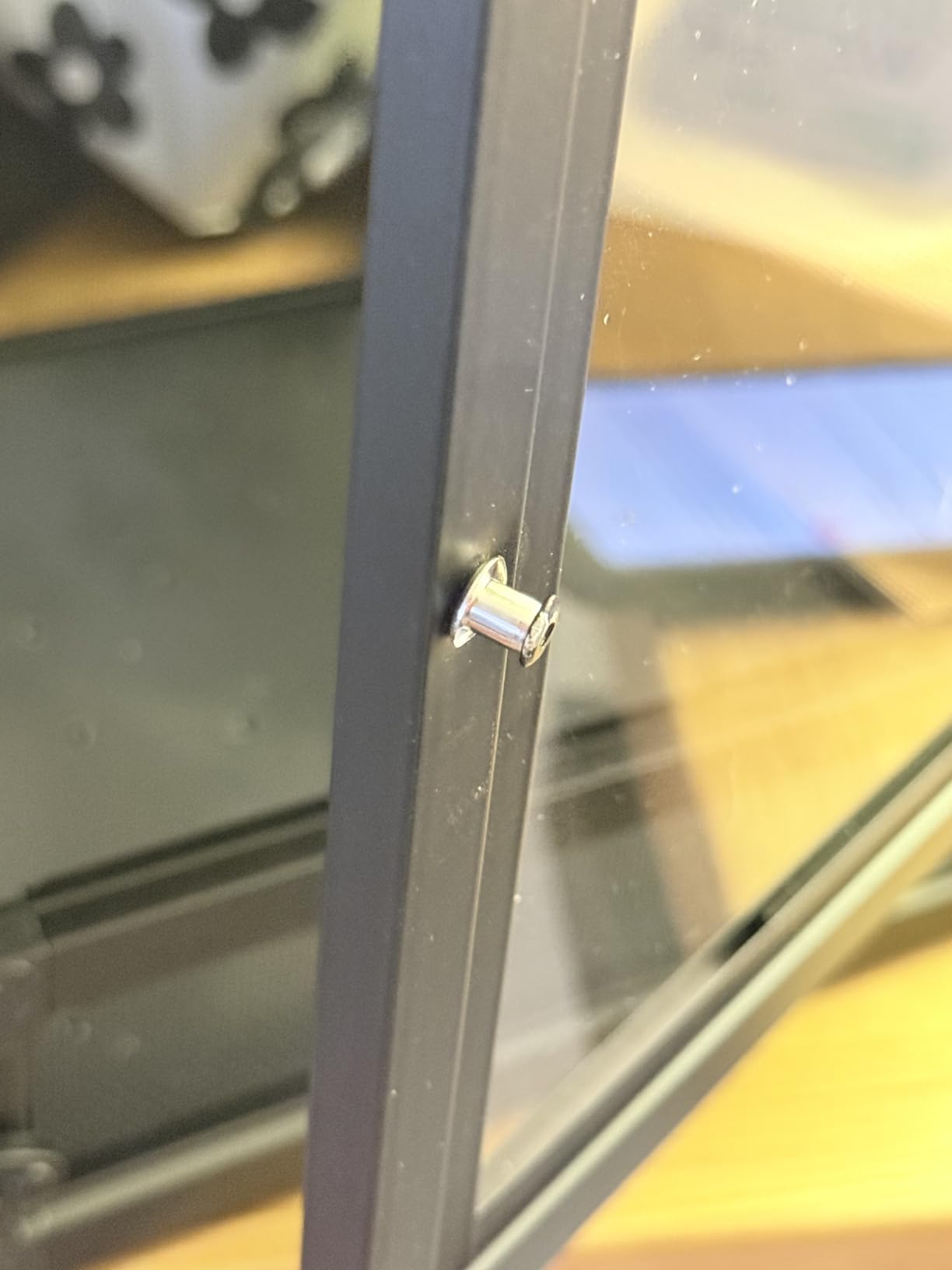
Two honest caveats. The front door latch is soft, and reviewers report it not holding reliably once a growing juvenile pushes against it, so we treat it as a supervision-required latch rather than a secure closure. The instructions also use very small print, but every panel is letter-labeled and once you match the letters the build is straightforward. Experienced keepers simply reassemble by matching labels rather than reading the booklet.
Be careful with the optional slide-in substrate tray. It seats slightly proud of the base and leaves a seam that crickets and small feeder insects hide in, so count your feeders before and after for the first few feeds until you know the number. The acrylic front also scratches, so keep your nails and any décor edges away from it.
How long does a hatchling cage actually last?
For a veiled chameleon, expect roughly three to five months in a unit this size, and considerably less for a faster-growing panther. The moment your animal can reach the top vent and hang there regularly, or the door latch starts giving way under its weight, the upgrade is due. Many keepers run the Nano Breeze alongside a larger cage and move the animal across on body condition rather than age.
One useful trick is to buy the grow-out unit now and the adult cage later in a sale period, so you are not upgrading under pressure. If you are buying for a juvenile already, skip this size and go straight to a mid-height screen cage, since you will outgrow the 10 x 10 x 12 in weeks rather than months.
Who should skip this cage?
Skip it for any adult animal, and skip it if you already know your chameleon will be large, because the width of 10 inches is the real constraint, not the height. It is also the wrong choice in a very dry room, since a tiny enclosure with three mesh sides loses humidity faster than you can realistically mist.
I would skip it if you are the sort of keeper who wants to walk up and look at their animal without opening the door, because the acrylic panel is small and the mesh limits the viewing angle. And if your home has a cat, do not assume the latch will save you. A determined cat plus a soft latch is how reptiles get lost, so a simple clip or latch upgrade is mandatory rather than optional.
3. RunDuck 45 Gallon Foldable Mesh Terrarium — Best for Moving Homes
RunDuck Foldable Reptile Terrarium Kit, 45 Gallon 32″x18″x18″
32 x 18 x 18 inches marketed
9.35 pounds
Metal mesh on all five sides
Magnetic tool-free assembly
Pros
- Metal mesh on all five sides gives 360 degree view and strong airflow
- Tool-free magnetic assembly that goes together quickly
- Collapses flat so it moves between homes in a car
- Front door with latch simplifies daily feeding
Cons
- Magnetic joints alone are not secure and the cage can come apart when knocked
- Base tray does not latch firmly to the frame
- Mesh floor with no substrate lip lets fine soil fall through
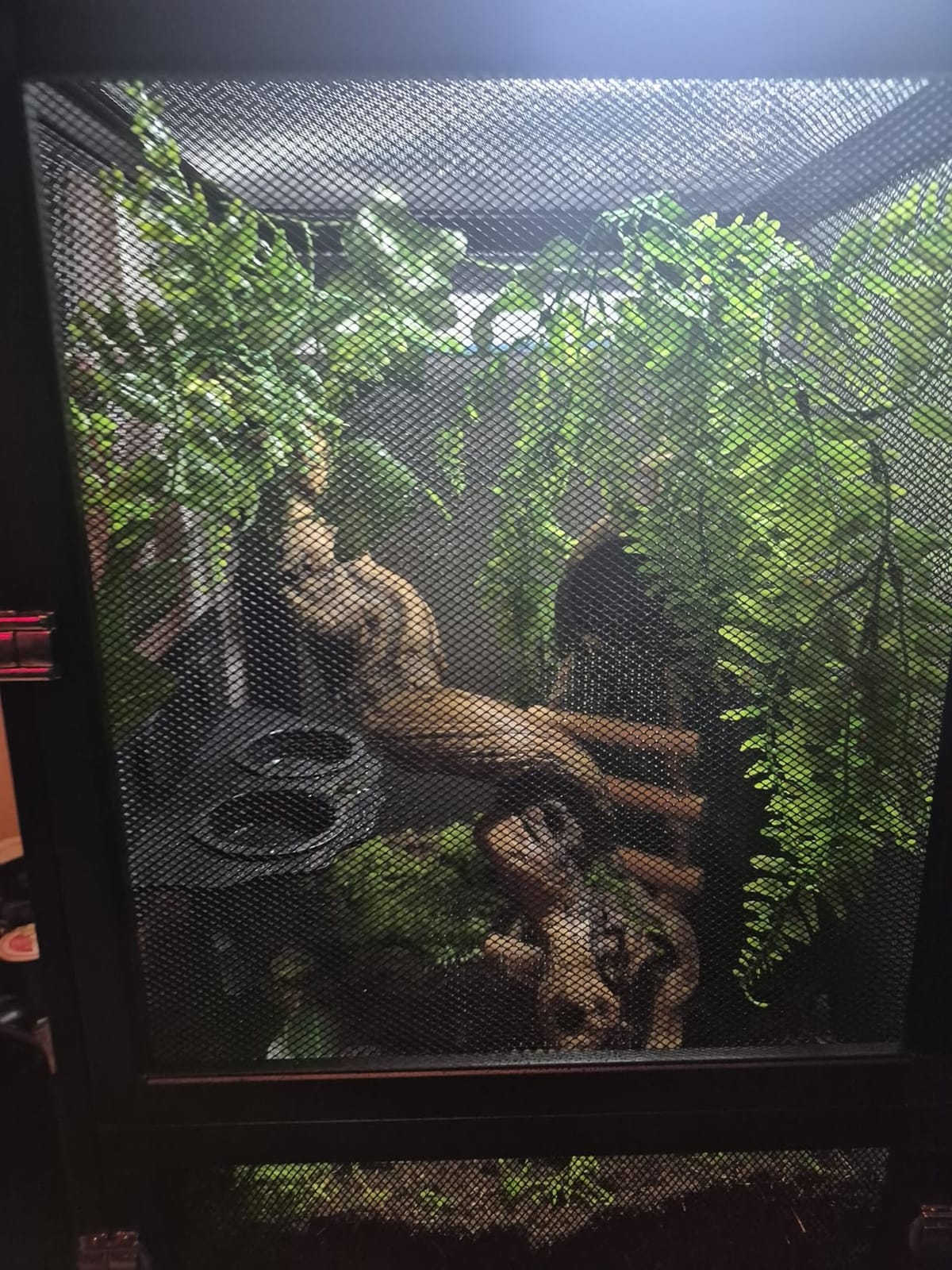
This is the only cage in the group that genuinely packs flat, and if you move homes, rent, or travel with your reptile that single feature outweighs a lot. The frame is magnetic with locks on the sides and top, it comes apart and reassembles in minutes with no tools, and at 9.35 pounds it is manageable for one person. That combination simply does not exist in the aluminum screen category.
Airflow is excellent. Metal mesh on all five sides means the air moves in any direction, which several owners point to as the reason the cage stays fresher than solid-sided units of similar volume. The 32 x 18 x 18 footprint is also unusually long for a screen cage, and the 360-degree view makes it easy to spot a chameleon that has wedged itself into a corner, which is a real risk with any tall enclosure.
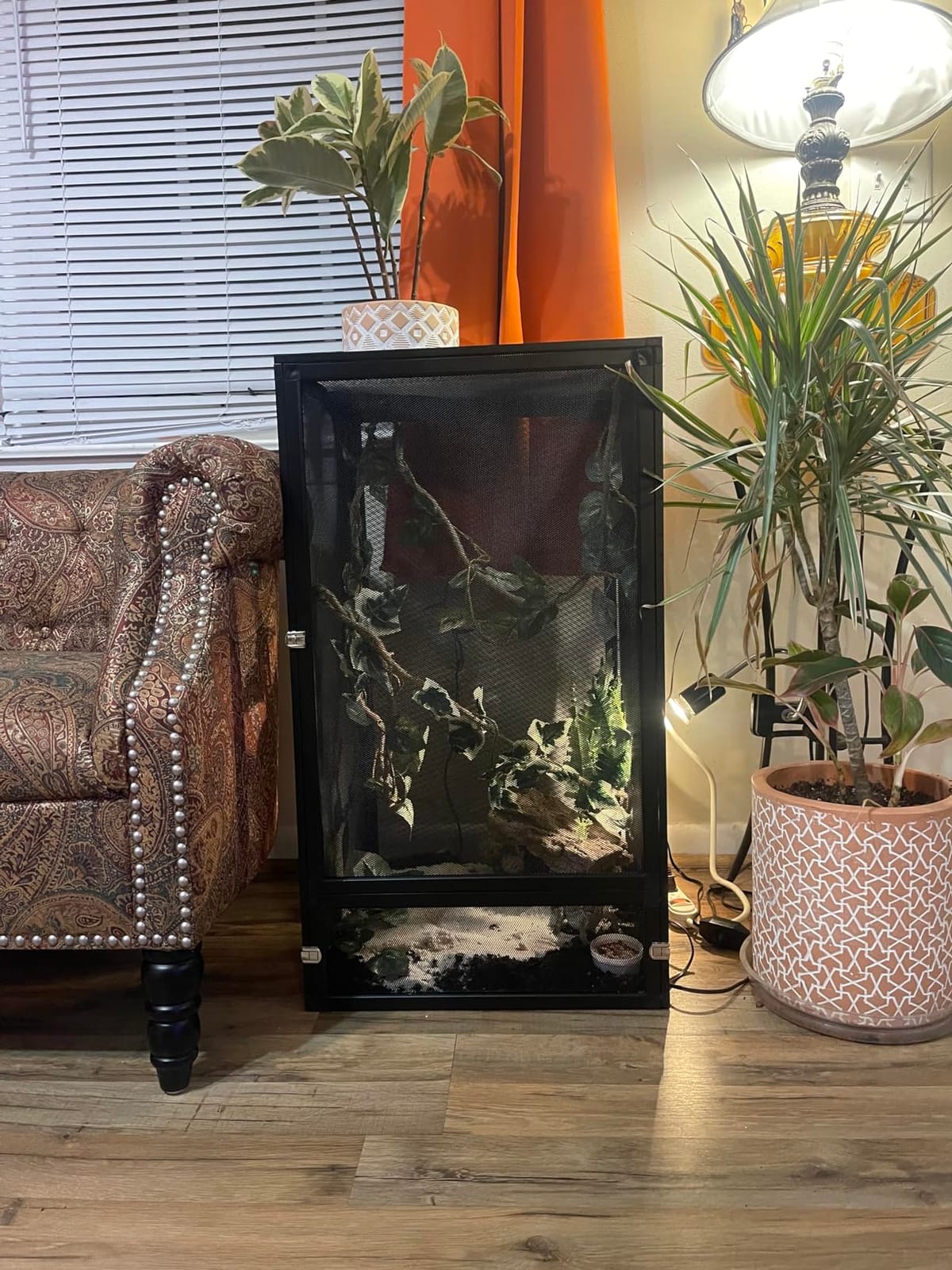
Here is the thing to understand about this cage. It is a generalist mesh habitat, and the marketing lists it for tree frogs, geckos, ball pythons, and similar species. That means the build is designed around short, low animals rather than a tall arboreal climber. For an adult chameleon we would treat it as a temporary or transport enclosure, or pair it with a proper vertical climbing structure, because the 18-inch height is well short of the 48 inches an adult needs.
Quarantine and hospital use is where this one really earns its place. A fold-flat cage that wipes down and packs away is exactly what you want when you bring a new animal home from a rescue or a pet store and need a separate space while the main enclosure gets a full clean and quarantine. Just remember the security issue below before you use it for anything that can climb.
How secure is a magnetic frame really?
Less secure than it looks, and this is the single most repeated caveat across owners of this cage and the similar BINANO design. The magnets hold well when the panels are seated correctly, but a knock, a bump from a cat, or a determined animal pressing repeatedly against a seam can separate them. The side and top locks help, but they are mechanical catches rather than a bonded frame.
Our advice is to treat the magnetic joints as needing a physical safeguard. Run a small bolt, a zip tie through the corner, or a strip of hook-and-loop tape across each seam after assembly, and always check the corners before you leave the room. Owners who report the cage coming apart are almost always describing a knock rather than a spontaneous failure, so anchoring it against a wall goes a long way.
Who should skip this cage?
Skip it for an adult chameleon as a permanent home. The 18-inch height is the deal breaker, and no amount of decoration fixes a short-and-wide footprint for an arboreal species. The mesh floor without a substrate lip is a second problem, because the fine soil and sand that bioactive setups need falls straight through and out the bottom.
I would also skip it if you have cats, small children, or a dog that can reach the cage, since a magnetic frame is exactly the construction those situations defeat. And skip it if humidity is your main struggle, because five-sided mesh is the least humidity-retentive construction in this entire guide. It is a superb portable and quarantine unit, and a mediocre permanent chameleon enclosure.
4. REPTI ZOO 18 x 18 x 36 Front Opening Chameleon Cage — Best Juvenile Grow-Out
REPTI ZOO 18″ x 18″ x 36″ Front Opening Chameleon Cage with 3-Sided Metal Mesh, 50 Gallon Screen Vertical Terrarium with Background Sticker, Tall Enclosure for Chameleon, Tree Frog, Arboreal Reptiles
18 x 18 x 36 inches
11 pounds
Fine metal mesh top and sides
Locking front door
Pros
- Tall vertical format suits arboreal chameleons and tree frogs
- Fine mesh openings keep crickets and feeder insects in
- Locking front door that opens fully for cleaning
- Background sticker and removable PVC tray included
Cons
- All screen retains very little humidity compared with solid-sided cages
- Background is a sticker rather than a full printed panel
The REPTI ZOO 18 x 18 x 36 sits in the gap between a hatchling cage and a full adult unit, and it fills that gap better than anything else in this roundup. Thirty-six inches of height is enough for a subadult veiled or panther to climb properly, while the 18 x 18 footprint keeps the misting volume small enough that humidity is achievable without a room humidifier.
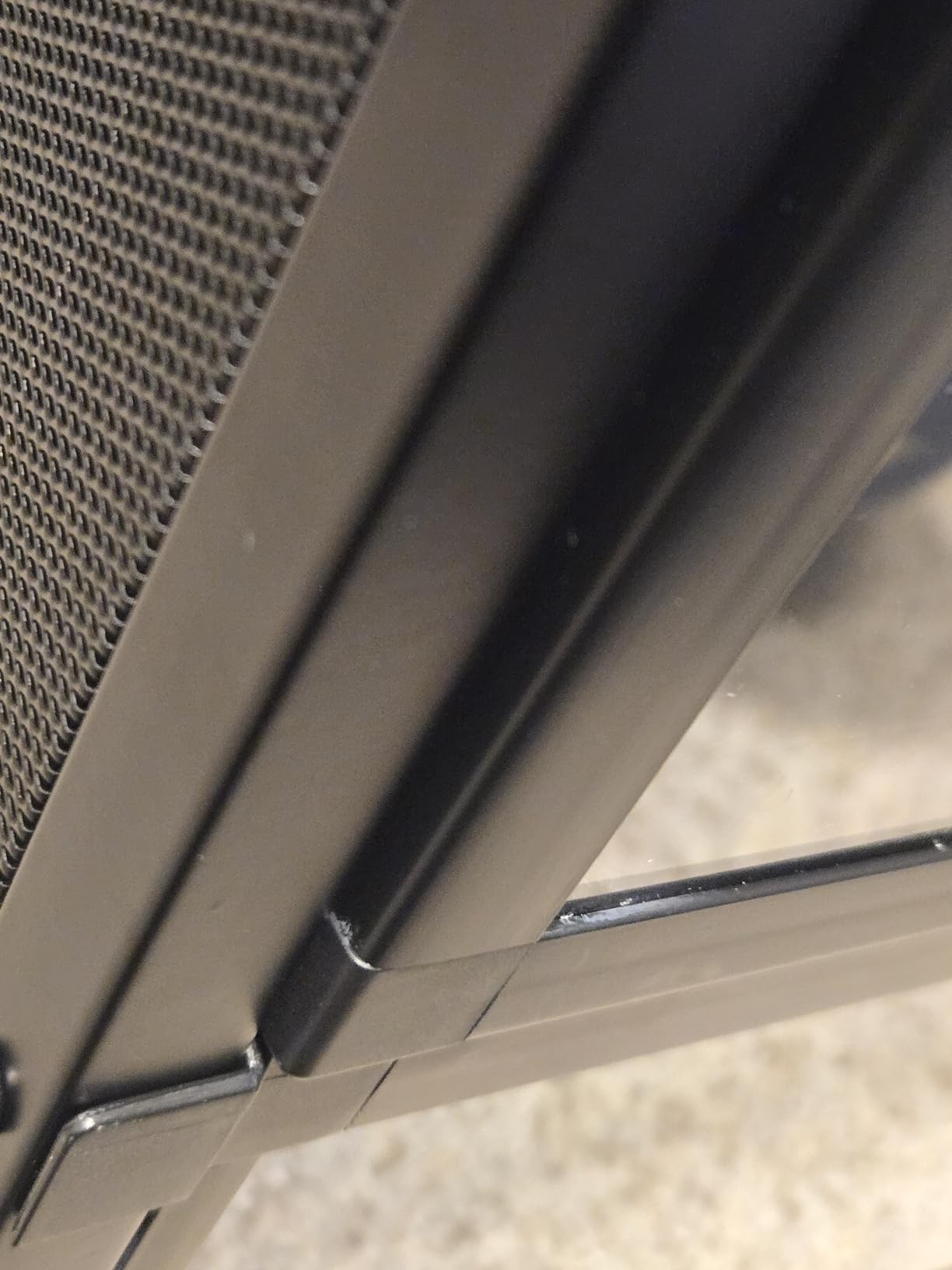
Two details make it better than a generic screen box. The fine metal mesh is tight enough to contain feeder insects, which is not true of coarser mesh, and the thickened rust-resistant frame is rated to take the weight of clips, vines, and light fixtures. The full-opening front door with a lock is a genuine upgrade over the small hinged doors on budget units, and the cable pass-through holes on the sides mean you can run misting lines and probe cables without leaving the door ajar.
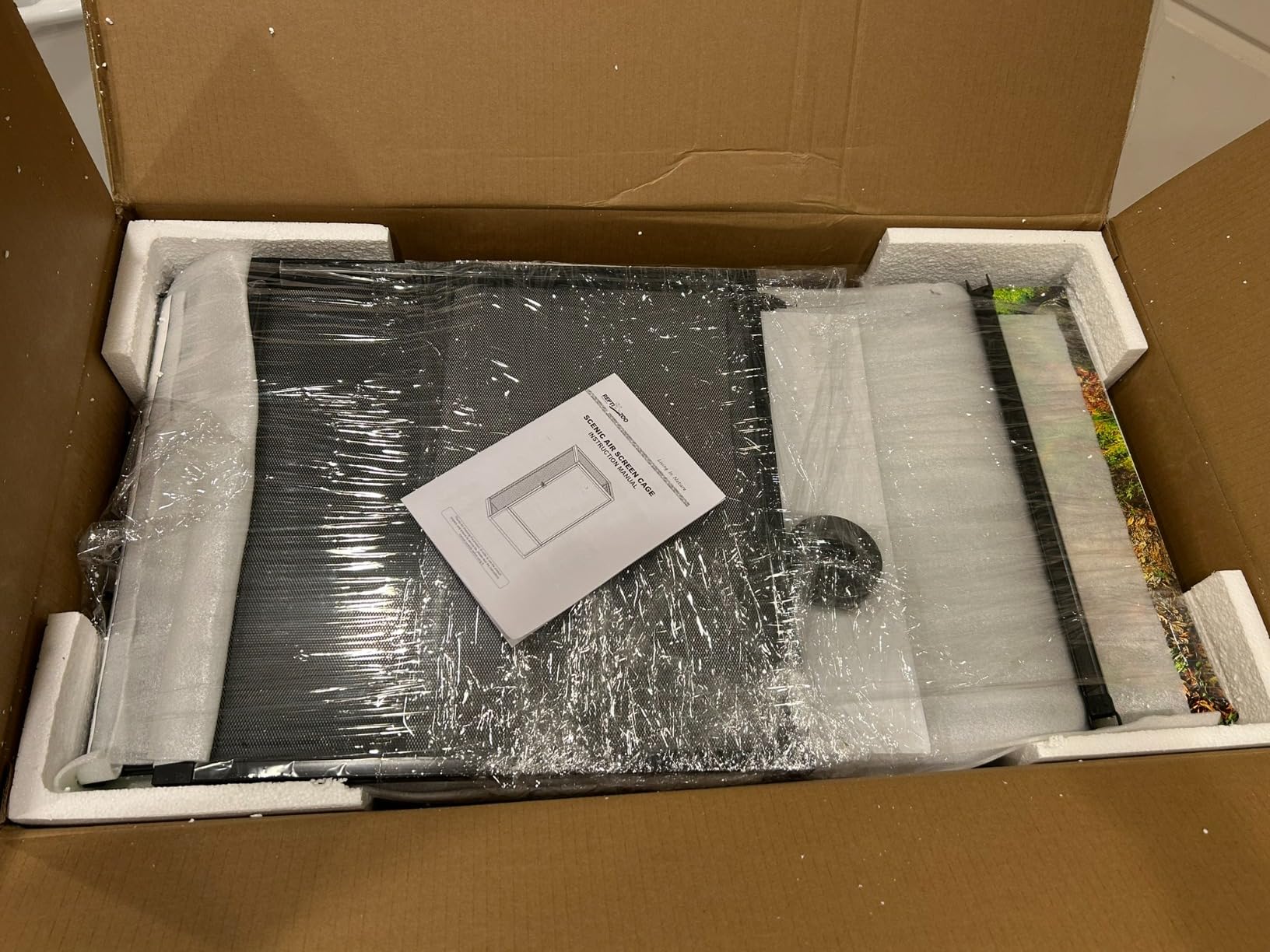
Assembly is genuinely a five-minute job with the included tools, and the frame knocks down just as fast if you need to move it. The removable PVC tray at the base is deeper than a paper towel floor and works fine as a drainage tray if you line it. Reviewers appreciate that the background sticker is included at all, since the enclosure is bare aluminum mesh on arrival and a chameleon staring at a room through four walls is a stressed animal.
The limitation is the obvious one. This is a full screen build, so it does almost nothing to retain humidity, and owners regularly note that it needs more frequent misting than a solid-sided cage of the same volume. In a hot and humid room that is a non-issue. In a dry or heated home, you will be chasing your target level every hour of the day, which is where a hybrid makes more sense.
Is 18 x 18 x 36 big enough for a chameleon?
It is big enough for a juvenile, and it is the minimum we would accept for a small adult female, though many specialists advise against pairing an adult with anything under 24 x 24 x 48. The 18-inch width is the constraint that limits how many branches and plant layers you can fit, so your animal has less horizontal room to move between a basking zone and a cool zone than it would in a 24-inch-wide cage.
Buying one of these is a reasonable strategy if you plan to keep the animal for a year or more and then move up, or if you are buying an adult female rather than a large male. Just budget for the second enclosure rather than pretending this is the final home. Note the variant selector also lists 18 x 18 x 24 and 16 x 16 x 30 options, so confirm you are ordering the 36-inch height.
Who should skip this cage?
Skip it for a large adult male veiled chameleon, which will need the full 24 x 24 x 48 or larger. Skip it if you live somewhere dry or cold, because the all-screen build is the least forgiving of a collapsing humidity level. And skip it if you plan to run a fully bioactive setup, since the fine mesh floor and the shallow PVC tray do not hold the depth of substrate these builds need.
I would also skip it if you need heavy privacy, because the background is a printed sticker on one surface and the rest is bare mesh. Covering two sides takes care of it, but plan on buying window insulation film or similar as an add-on. Everything else here is a well-built, honestly specified cage at a sensible size, and it is one of the few in this roundup that arrives with a usable background already in the box.
5. BINANO 33 Gallon All-Mesh Terrarium — Best Visibility and Airflow
BINANO 33 Gal Foldable Reptile Terrarium for Gecko & Dragon
All mesh on five sides
5 pounds
Locking magnetic joints
Lockable front door
Pros
- Five-sided metal mesh gives the best airflow and 360 degree view in this group
- Locking magnetic mechanisms resist wobble after assembly
- Lightest substantial mesh unit here at 5 pounds
- Tool-free assembly with no complicated steps
Cons
- Magnetic frame can still come apart under impact or from a cat
- Mesh floor with no substrate lip spills fine substrate
- Listed package dimensions do not make the interior footprint obvious
This is the best-rated enclosure we reviewed, holding a 4.5 average across 125 ratings with 76 percent five-star feedback. That number reflects owners who know exactly what they bought: a bright, light, extremely well-ventilated mesh habitat with an unobstructed view from every angle. For a chameleon, that visibility is not a luxury, because it lets you catch early signs of illness or a stuck shed you would otherwise miss behind a plant.
The locking magnetic joints are a step up from a plain magnet frame and they do not wobble once locked, which is where this design beats the simpler magnetic builds. At 5 pounds it is the lightest substantial unit here, and it assembles without tools or complicated steps. Owners use it as an anole, gecko, or small-arboreal nursery with good results.
The design is less tall than it is long. This is a low, wide, fully ventilated habitat, which is a sensible shape for anoles, small geckos, and juveniles, and a poor match for an adult chameleon that needs 48 inches of climbing height. The variant list includes 18 x 13 x 13 and 32 x 18 x 18 options, and the package dimensions in the listing do not make the interior footprint obvious, so confirm the actual assembled size against your animal before ordering.
As with all five-sided mesh, the floor is mesh with no substrate lip. That means fine soil, sand, and coco-fiber bedding fall through and out the bottom, which rules out a bioactive planted setup in the stock configuration. Adding a solid tray or a plastic liner is the usual modification, and several owners do exactly that. The airflow advantage is real, but you are giving up moisture retention to get it.
What mesh gauge do you actually need?
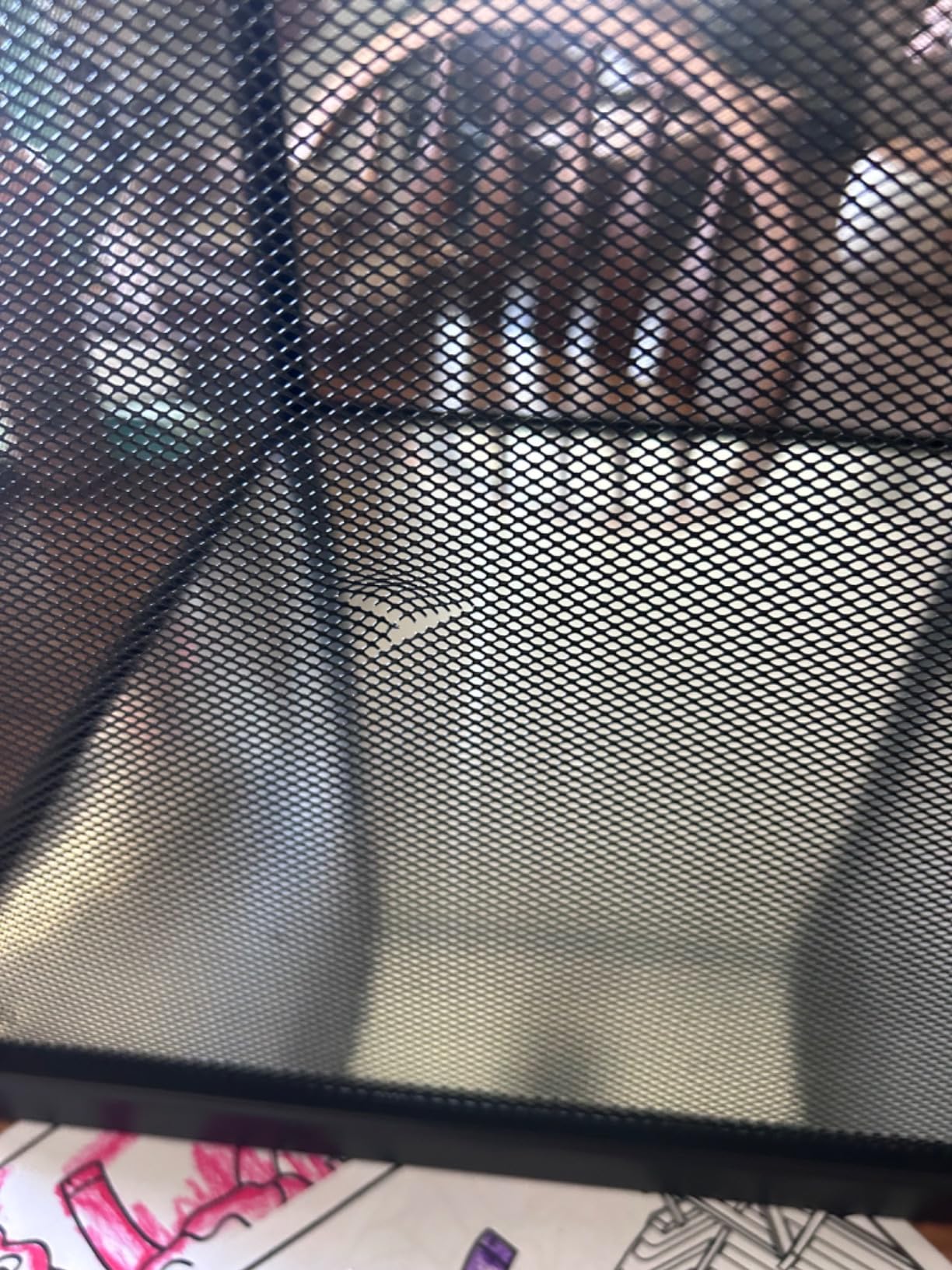
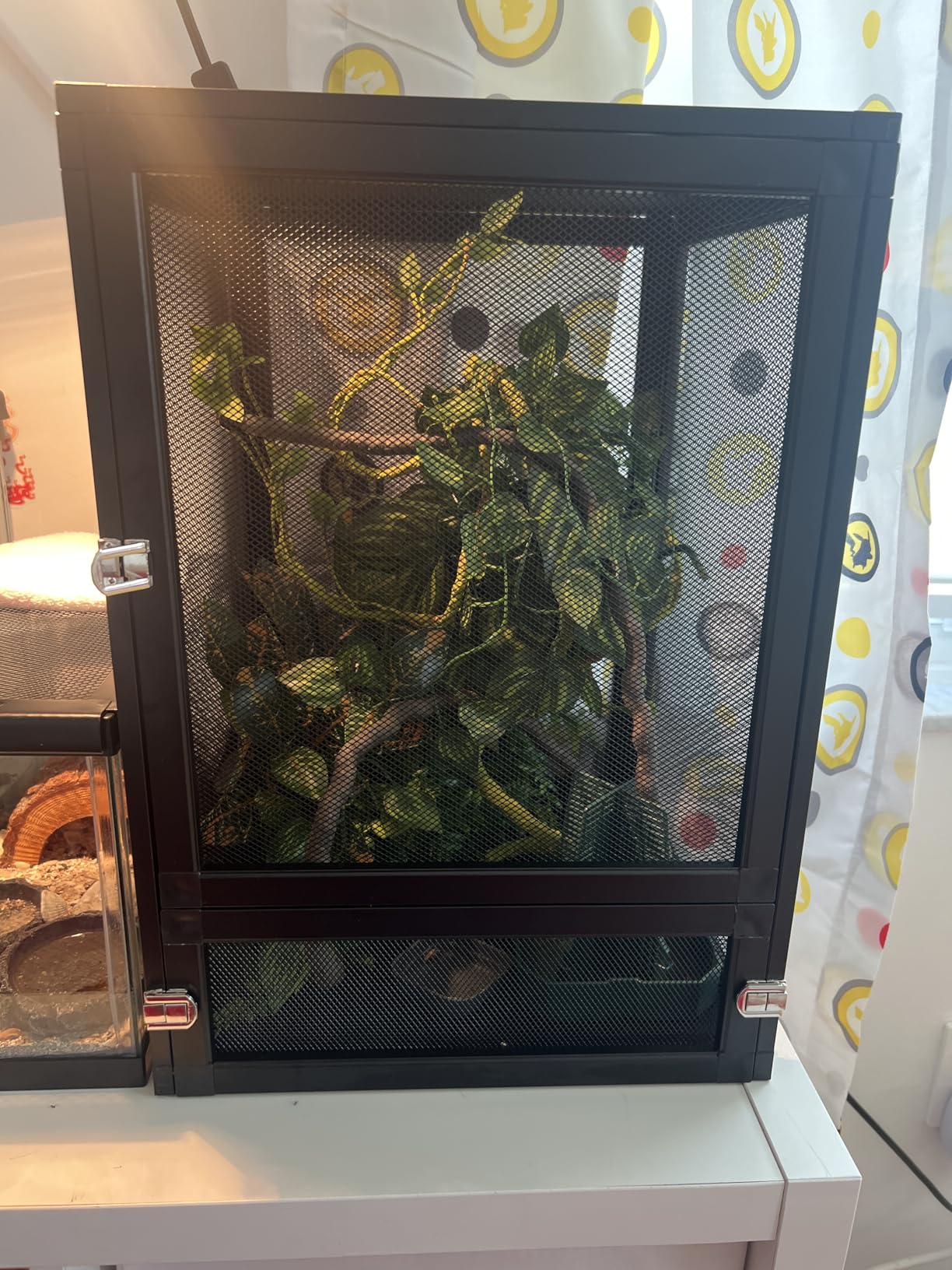
Fine mesh, roughly 1.2 mm openings, is what you want. Coarser mesh around 3 mm moves more air and is more durable, but it lets small feeder insects escape and lets a hatchling wedge its head or a toe into an opening. The REPTI ZOO and the Zoo Med aluminum cages use the finer option, which is why buyers of those units specifically mention cricket containment.
Mesh gauge also affects UVB. Coarser, heavier mesh scatters more of the lamp output before it reaches your chameleon, and because UVB is a non-visual wavelength you cannot tell by looking at your animal whether it is getting enough. This is why the usual practice is to place the UVB lamp inside the enclosure rather than through the top, and to test the levels with a meter rather than trusting lamp wattage. Fine mesh plus an inside-mounted lamp gives you the best of both.
Who should skip this cage?
Skip it for a permanent adult chameleon home, and the low, wide footprint is the reason. Skip it for a bioactive setup unless you plan to line the base. And skip it if humidity is difficult in your home, because this is the least moisture-retentive construction we reviewed, alongside the RunDuck.
The magnetic frame is a real concern in any home with cats, since the locking mechanisms resist a casual bump rather than a determined animal leaning into a seam. We would pair it with physical seam reinforcement before using it with any chameleon capable of pushing. It remains an excellent observation, nursery, and transitional cage, and the build quality for the money is the strongest we saw.
6. Zoo Med ReptiBreeze LED Deluxe 16 x 16 x 30 — Best With Built-In Lighting
Zoo Med ReptiBreeze LED Deluxe Open Air Aluminum Screen Habitat, Medium 16 L x 16 W x 30 H
16 x 16 x 30 inches
7.45 pounds
LED strip in frame
Acrylic door panels
Pros
- LED strip built into the frame adds useful ambient and plant light
- Assembles in under an hour with a screwdriver
- Plenty of room for live plants and climbing decor
- Zoo Med replaces damaged panels at no cost
Cons
- Acrylic door scratches and can crack under chameleon claws
- Opening the doors bows and warps the whole enclosure
- Nylon screen is too weak to hold climbing vines without modification
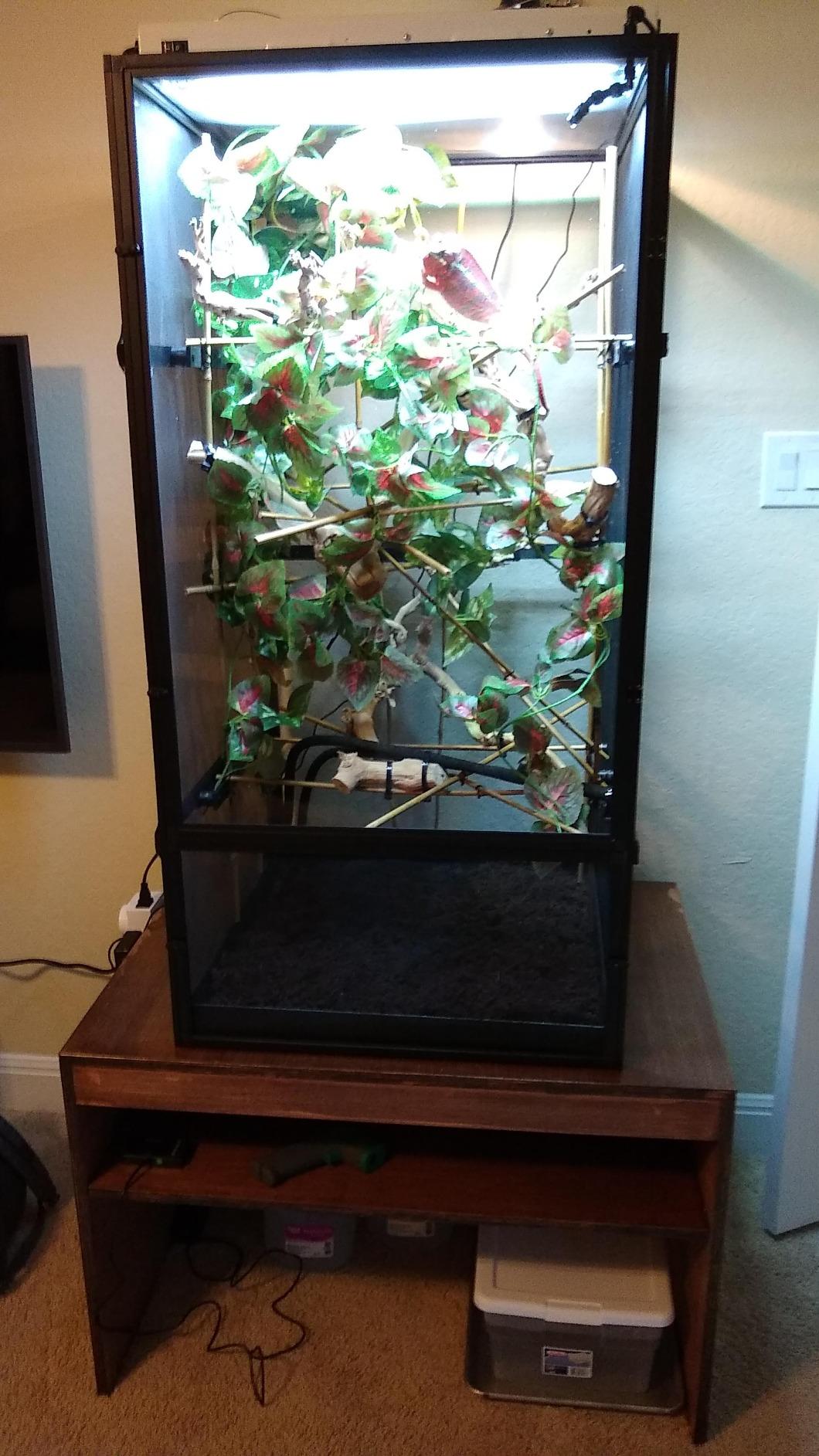
This is the deluxe version of the ReptiBreeze line with an LED strip mounted in the frame, and the idea is appealing: light without a separate fixture hanging inside the cage. The vertical 16 x 16 x 30 footprint is a genuine step up from a hatchling unit, it assembles in under an hour with the hardware included, and the frame gives you room to fit live plants and climbing decor. Zoo Med’s no-cost panel replacement is a real service that other brands in this roundup do not offer.
We want to be straight about the compromises, because this cage has the lowest rating of the three Zoo Med models here. The integrated LED is an ambient and plant light, not a UVB source, so you are still mounting a proper UVB lamp separately. Owners report strips failing within a few months, and the general verdict is that the lighting does not justify the premium over the plain ReptiBreeze at a similar size.
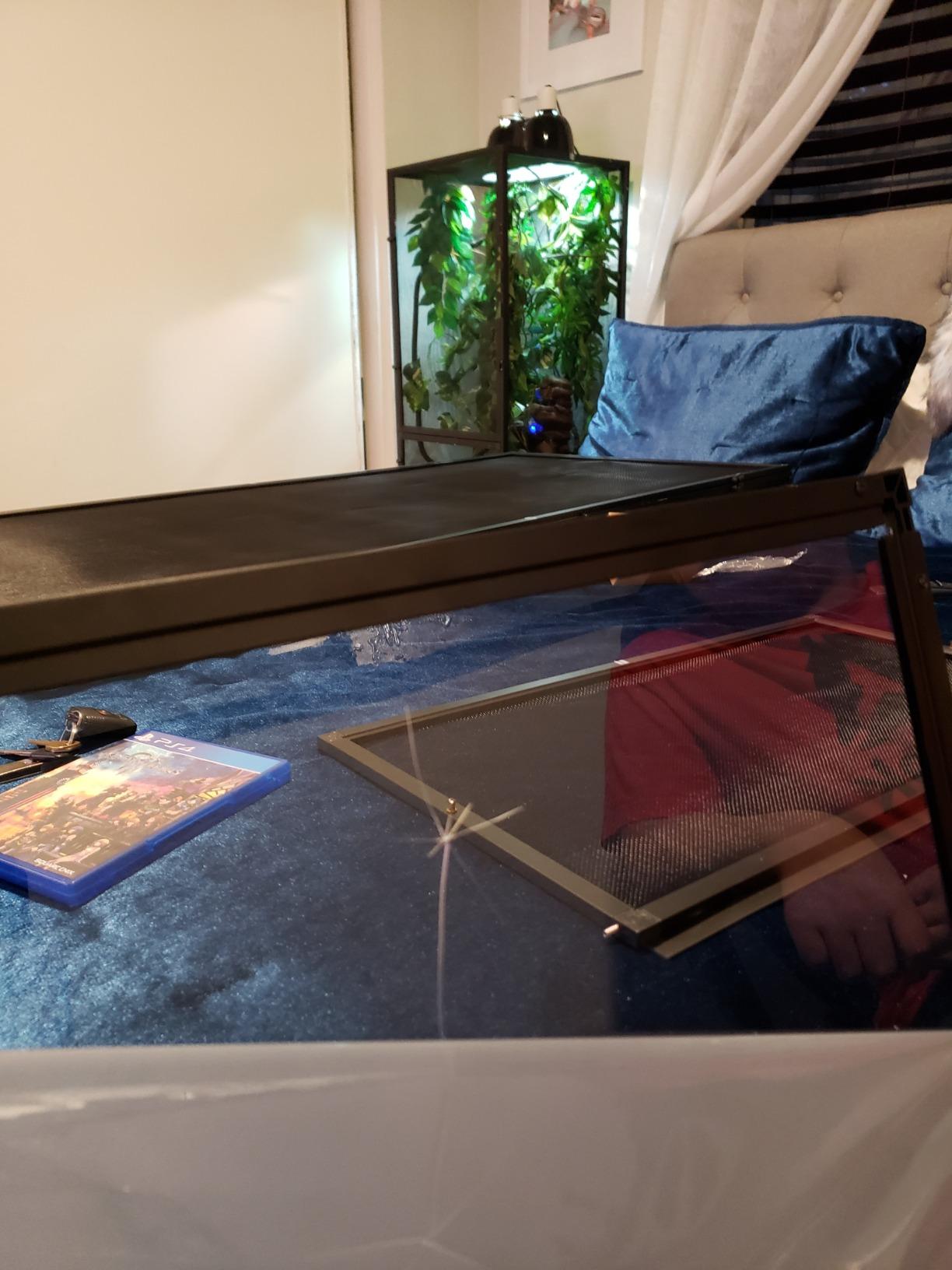
The door situation needs attention in any chameleon enclosure. These are acrylic door panels rather than glass, which means they scratch under sharp claws and can eventually craze or crack. Worse, reviewers report that opening the doors bows and warps the whole frame, which is a structural complaint you should take seriously in a tall unit that weighs 7.45 pounds and gets moved for cleaning.
The nylon screen is the other weak point. It is more flexible and forgiving than the aluminum mesh on the standard ReptiBreeze, but it will not hold heavy climbing vines, brackets, or a suspended planter without reinforcement. If you are decorating heavily, plan to band bendable vines across the frame or add a rigid plant rail. The floor is also a loose drop-in panel and the drip tray cannot be removed without lifting the cage, which makes water changes an awkward two-person job.
Is the built-in LED worth the extra cost?
Generally no, and we would buy the standard ReptiBreeze and add a proper light. The LED strip is useful for a plant light or gentle ambient glow, but it does not replace a UVB lamp or a basking light, so you are buying the enclosure plus one extra lighting you would have installed anyway. When the strip fails, as some owners report, the whole premium disappears while the frame keeps working perfectly.
There is one case where it makes sense. If you are setting up a temporary grow-out cage and want a self-contained, tidy unit with no fixtures hanging inside where they can injure an animal, the integrated strip keeps the interior clear. Just confirm the replacement policy and expect to add a clamp or hanging lamp for the actual heat and UVB.
Who should skip this cage?
Skip it for an adult chameleon, since 30 inches of height and a 16-inch width are both under the adult minimum. Skip it if your chameleon has sharp claws, which is most of them, because the acrylic doors will show scratches within months and the bowing issue gets worse with use. And skip it if you want a fully decorated or bioactive setup, because the nylon screen and the drop-in floor will not support either without modification.
We would also skip it if you plan to move the cage regularly, since the drip tray can only be removed by lifting the unit. This is a decent cage with a nice frame and good plant space, but the standard 24 x 24 x 48 ReptiBreeze in this same roundup is the version we would actually recommend, and this one is worth buying only when that size is beyond your space.
7. ToxiRium 12 x 12 x 18 PVC Hybrid Cage — Budget Hybrid, Enthusiast Assembly
Toxirium 12″x12″x18″ Reptile Terrarium, Hybrid Cage PVC Habitat Enclosure with Screen & Acrylic Doors, Ventilated Tank for Gecko,Chameleon, Snake, Frog, Easy Assembly, Front Dual Access
12 x 12 x 18 inches
7.2 pounds
Solid PVC sides and back
Swappable acrylic and screen doors
Pros
- Solid PVC sides and back hold heat and humidity far better than screen
- Two interchangeable doors
- one clear acrylic and one ventilated screen
- Tool-free slide-together build and removable bottom panel
Cons
- Not waterproof and gaps at the base and joints leak misting water unless sealed
- Assembly is fiddly and needs real force to slide panels together
- Mesh substrate barrier at the base makes granular substrate unusable
The reason to include this cage is structural, not decorative. It is the only budget unit here with solid PVC on the sides and back and a ventilated screen door option, which is the configuration specialists recommend in dry, cold, or heavily air-conditioned homes. Solid sides hold heat and humidity, and the interchangeable doors let you switch between a clear view for observation and a screen door for airflow depending on what your animal needs that day.
Panel thickness and build quality are also more serious than the entry-level price suggests. These are lightweight, stackable panels that slide together without tools, and the 18 x 18 x 36 variant is a genuinely tall, usable hybrid for the money on this list. If you are prepared to finish the job yourself, the core design is sound.
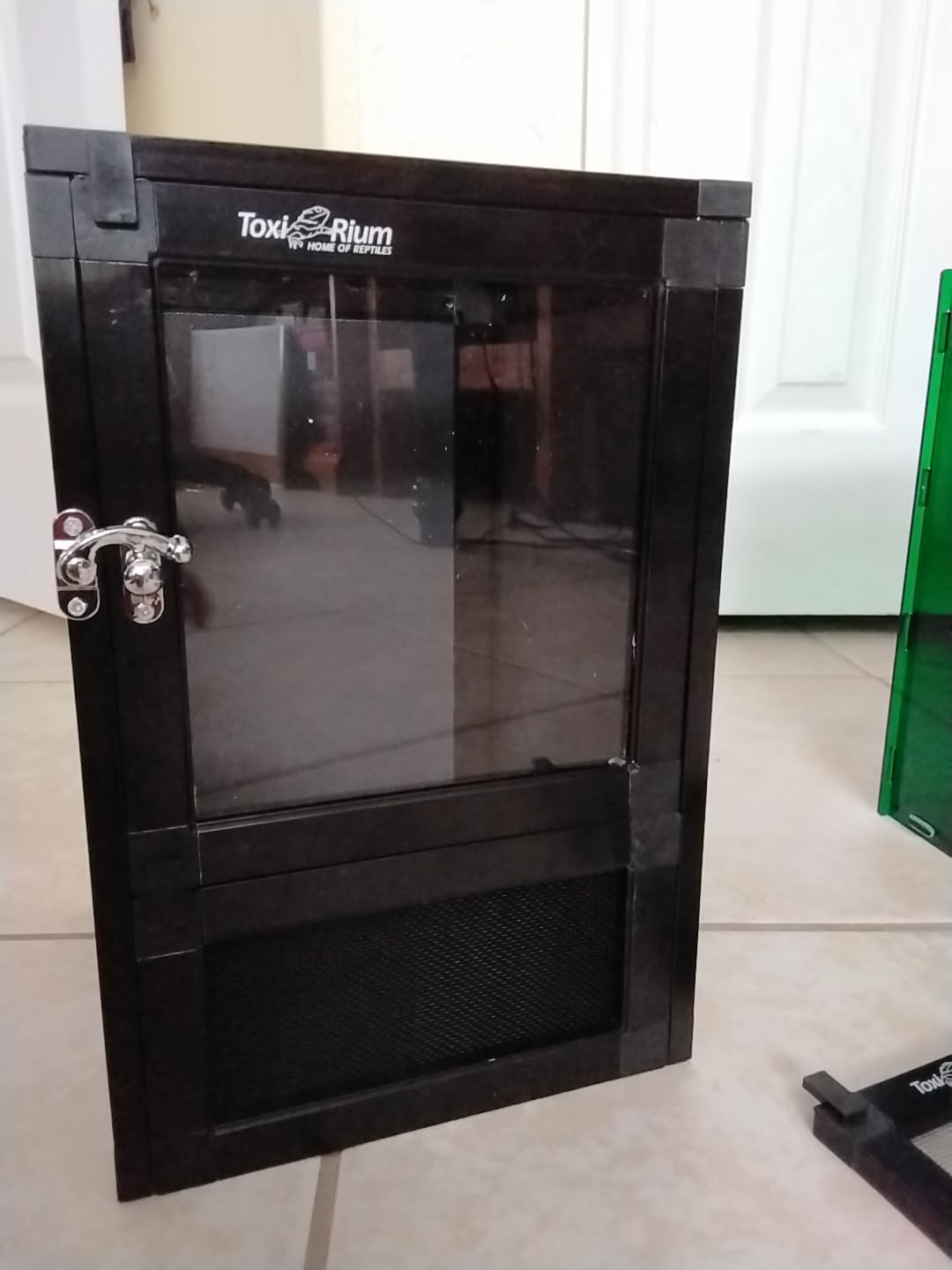
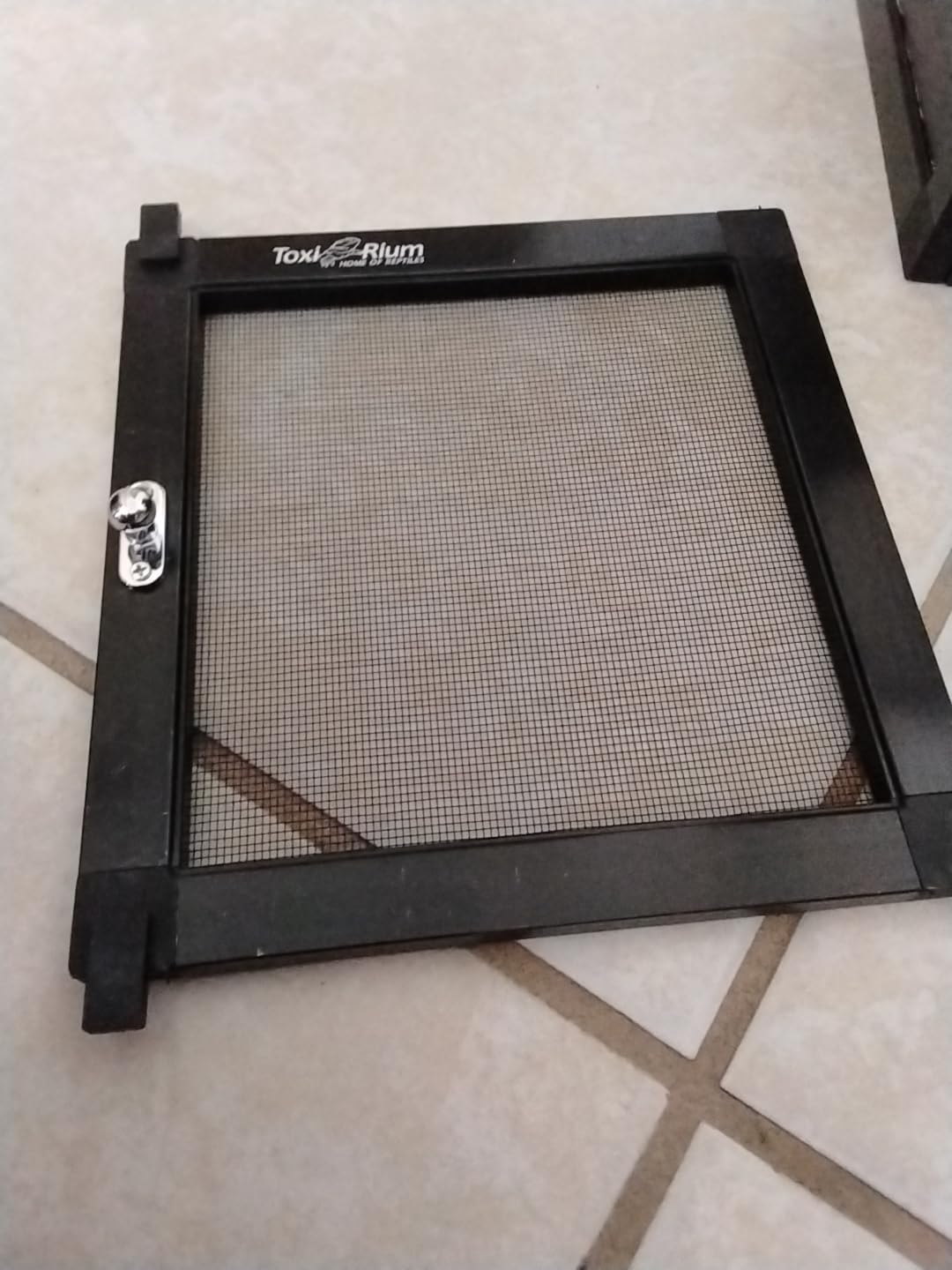
Be prepared for the assembly, though. Owners describe it as a DIY kit rather than a finished vivarium. The panels need real force to seat, the printed instructions and the video instructions disagree, and it is easy to end up with a slightly twisted frame. The single most important thing to know is that this cage is not waterproof. Gaps at the base and along the wall joints will leak misting water onto your floor and furniture unless you run a bead of aquarium silicone around the seams, and experienced keepers treat that sealing step as mandatory rather than optional.
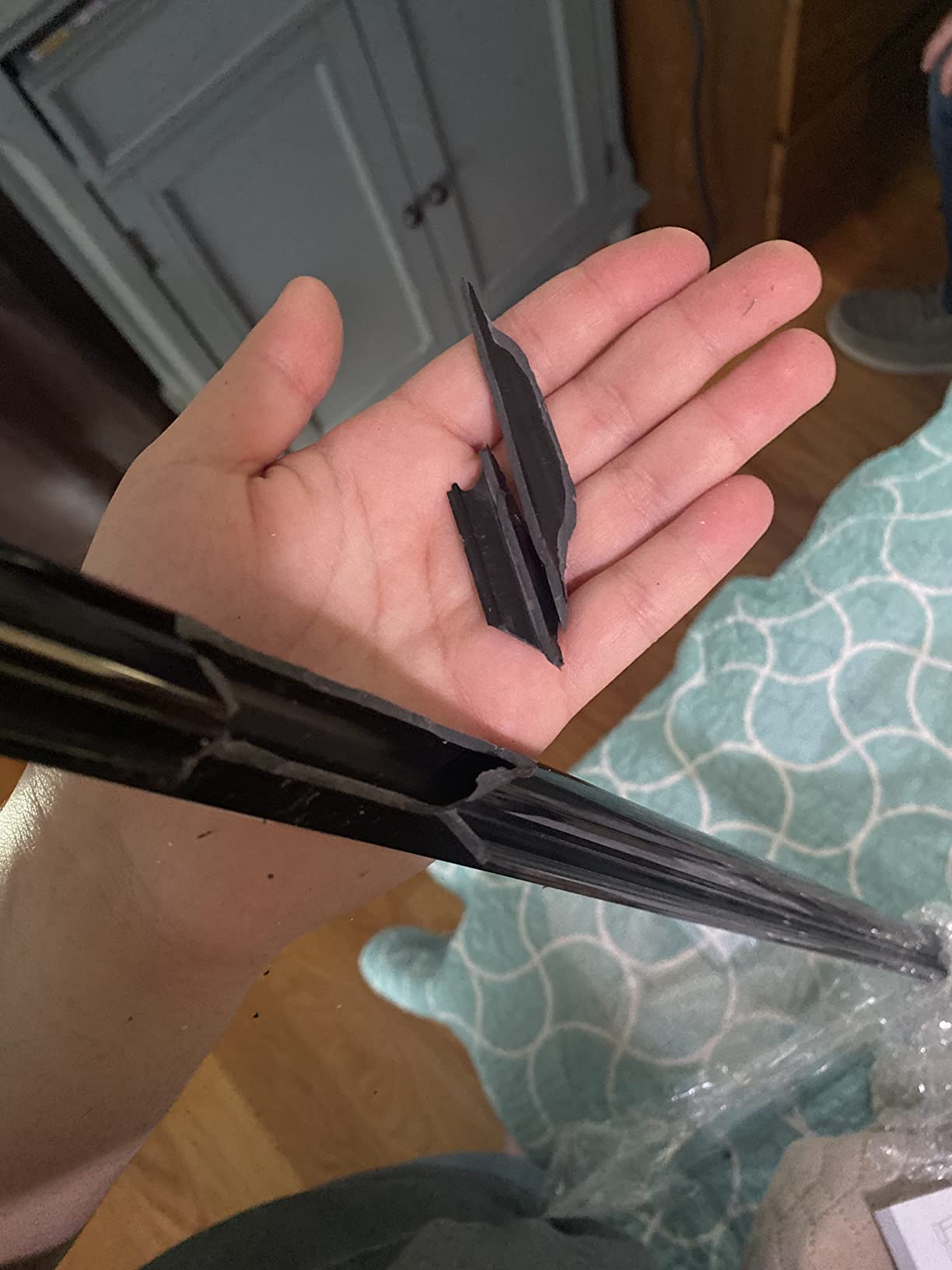
Two more real issues. The bottom panel sits inside the frame without attaching, leaving gaps that small reptiles and fruit flies can exploit, and the substrate barrier below the door is mesh, so granular substrate falls through unless you line it. Owners also report panels arriving scratched, dented, and dirty, and a door that does not close cleanly. The 3.4 average with 22 percent one-star feedback reflects exactly this pattern of a good idea that needs an afternoon of work.
Is a hybrid cage worth sealing and modifying?
Yes, if your home is the reason a plain screen cage will not work for you. Sealing the joints and adding a solid liner to the base converts a leaky panel kit into a genuinely useful humid enclosure, and both modifications are ordinary weekend tasks with silicone and a sheet of plastic. That transformation is what the design is for, and it is why we would recommend it in a dry climate rather than dismiss it.
What you are committing to is a maintenance-free-after-setup unit. Once sealed, it holds heat and moisture far better than anything else at this tier and costs much less than an equivalent glass hybrid. What you are not getting is a plug-and-play product, so if you dislike building and sealing, spend the difference on a finished enclosure and save yourself the afternoon.
Who should skip this cage?
Skip it if you want something that works perfectly on delivery, because the assembly and sealing steps are not optional in practice. Skip it if you plan a deep bioactive substrate, since the mesh barrier and unattached bottom panel will not hold it. And skip it if you are on a tight deadline and cannot wait for silicone to cure before the animal goes in.
We would also skip it for an adult chameleon in the 12 x 12 x 18 configuration, which is a quarantine, nursery, or juvenile unit, and we would skip it if you have any doubt about your own handiness with panels. At its tallest variant the enclosure is a strong option, but the 22 percent one-star feedback here is the highest in the roundup, and it comes from a design that needs work, not from a bad idea. Seal it, line it, and it does its job well.
8. WACOOL 50 Gallon Hybrid Chameleon Cage — Best Built Habitat, Heaviest
WACOOL 50 Gallon Reptile Tank, Front Opening Chameleon Cage 18″ x 18″x 36″, 3-in-1 Side Design (Glass or Mesh+Glass), Bio Deep Base 10″ Vertical Reptile Cage for Frog Iguana
18 x 18 x 36 inches
57 pounds
Configurable glass or mesh sides
Tough screen top
Pros
- 3-in-1 side design lets you set each panel to glass
- mesh or a mix
- Waterproof 10 inch deep base supports a bioactive build and substrate heater
- Tough screen top lets UVB and heat reach the animal properly
- Locking front doors and an anti-escape lid buckle
Cons
- Weighs 57 pounds so moving it needs two people
- Background is not included
- Costs more than screen or plastic cages of similar size
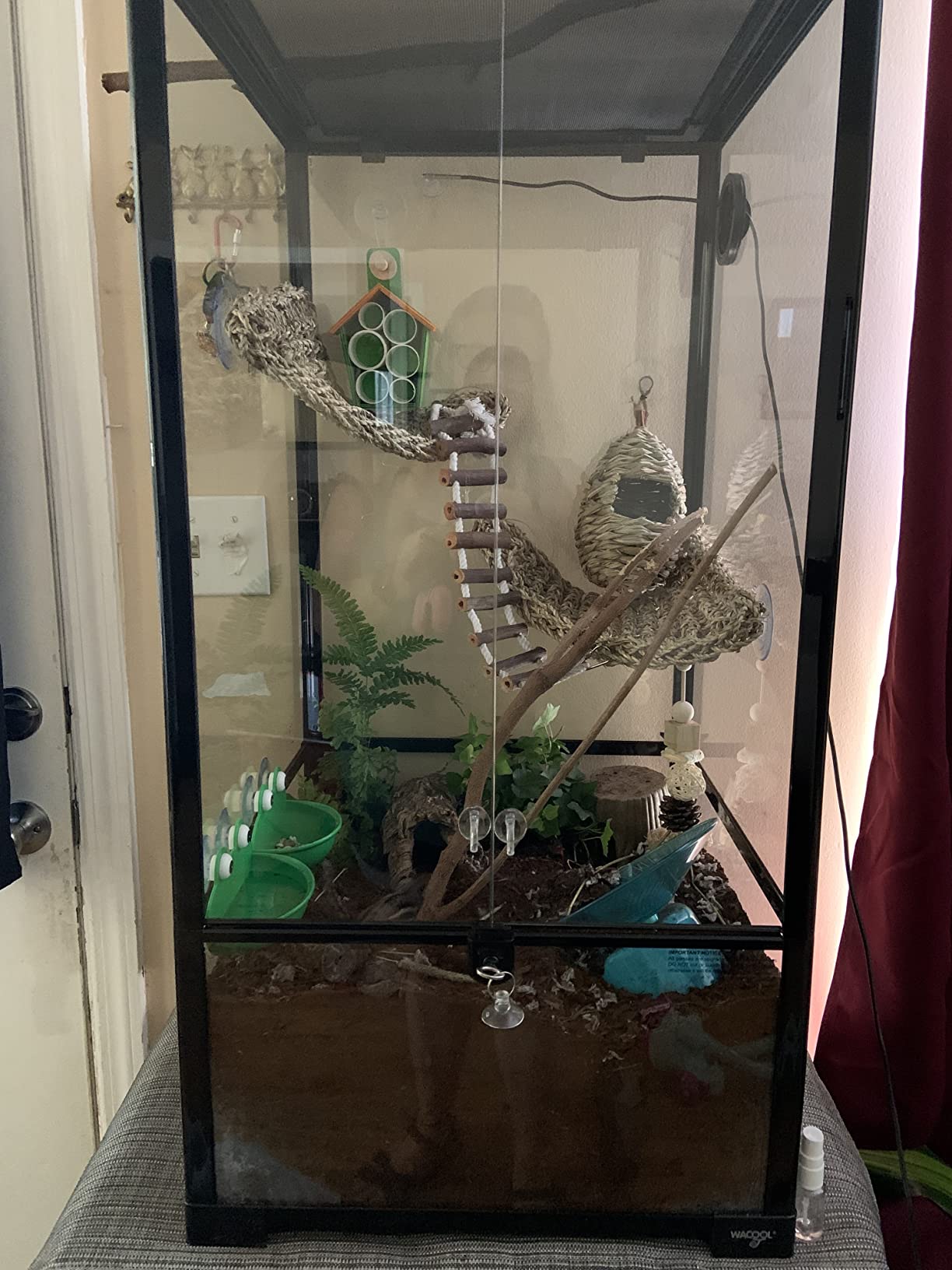
This is the most thoughtfully engineered enclosure in the roundup, and the only one that solves the humidity-versus-airflow problem properly instead of asking you to compromise. The 3-in-1 side design is the headline feature: each side panel can be configured as all glass, mesh plus glass, or mesh plus mesh, so you can dial the balance between humidity retention and airflow per wall rather than choosing one extreme for the whole cage.
The tough screen top is the detail that makes it work for chameleons specifically. Solid-side general reptile cages with no real top ventilation are the reason hybrids get blamed for respiratory problems, and a genuine screen top fixes that by letting warm air escape and letting UVA, UVB, and infrared reach the animal properly. Owners confirm the top does its job, which is the opposite of what a sealed glass top would do.
The waterproof deep base is the second feature that matters. It holds 10 inches of water, which supports a full bioactive setup with drainage layers, a substrate heater, and a properly planted enclosure that would be impossible in any of the screen cages in this list. Cable management is handled with closable wire inlets and an extra pass for up to four cables, so lighting, probes, and misting lines all route neatly without gaps. Assembly knocks down or rebuilds in about five minutes, and damaged parts are replaced free of charge.
Now the honest drawback, and it is a big one. At 57 pounds this is a two-person lift, and once the glass and the deep base are full of substrate and water, moving it means emptying it first. That is a real constraint in a small apartment where you might want to reposition the cage for a better light cycle or to clean behind it. Plan the final position before you set it up.
How do you configure the 3-in-1 sides?
The most useful configuration for a chameleon in a typical home is mesh plus glass on the two back sides, keeping humidity up against the wall where your misting overspray lands, and mesh plus mesh or all glass on the front and side that face the room. Keeping the back solid reduces how much water escapes onto your wall and floor, while the front stays open for airflow and for you to see your animal clearly.
Whatever you choose, leave the top in its screen configuration. The top is what drives the chimney effect and lets your UVB lamp output reach the chameleon, and converting the top to glass would reintroduce the exact stagnant, low-UVB conditions you are paying extra to avoid. The mesh floor section is worth lining with a solid substrate tray if you plan to plant heavily.
Who should skip this cage?
Skip it if you are in a studio apartment, a rental where drilling is not allowed, or any situation where you will need to move the enclosure regularly. Two people and an empty tank are the minimum for repositioning. Skip it if your budget does not stretch past the price of an aluminum screen cage, because the cost premium is real even though the build quality is not.
I would also skip it if your priority is a simple, plant-light setup with plastic foliage and paper towel floors, because you would be paying for a waterproof bioactive base you never use. And skip it if you are worried about reflections. Glass sides create the visual security issues that keepers sometimes blame on stress when the real cause is stagnant air, and while the configurable mesh panels help, they do not eliminate the question. Set the cage in a low-traffic corner, add background and banding, and this is the strongest habitat in the guide.
Screen vs Glass vs Hybrid: Which Is Better for Chameleons?
Screen is better than glass for chameleons, and hybrid is better than screen if your home is dry, cold, or air-conditioned. A sealed glass aquarium is the worst option of the three and should not be used for a chameleon at all. The single reason is airflow: chameleons need moving air, and glass tanks create the stagnant, warm, humid layer that leads to bacterial and fungal respiratory infections.
Screen wins on ventilation and on handling an animal safely. It also loses humidity quickly, which is why misting and fogging schedules are non-negotiable. Hybrid enclosures put solid panels on two or three sides and a ventilated screen top, which is the compromise most specialists recommend for indoor climates with heating or cooling running. Glass with a proper screen top is acceptable, but full glass with a solid lid is not.
Here is the honest comparison in compact form:
Screen (all mesh): Best airflow, best for hot and humid rooms, easiest to sanitize, weakest humidity retention, and no visual security out of the box.
Hybrid (solid sides, screen top): Best all-round humidity control for indoor homes, supports UVB and heat through the screen top, costs more, and needs careful setup to avoid stagnant corners.
Glass (tank): Heavy, reflective, poor airflow, and humidity spikes that encourage respiratory infection. Not recommended as a permanent chameleon home.
One correction to a common belief. Reflection stress is real, but stagnant air is the actual danger. A glass-fronted cage with excellent top ventilation and no visible reflection can be fine; a screen cage packed solid with plants so air cannot move through it is not. Judge the airflow in the finished setup, not the material on the label.
Keeper Consensus: What Chameleon Owners Say on the Forums
Forums dominate the search results for this topic, and they are more consistent than the affiliate roundups that compete with them. r/Chameleons, chameleonforums.com, and reptileforums.co.uk all point the same direction on almost every point, and the gap between the forums and the shopping carousels is worth understanding before you buy.
Keepers on r/Chameleons consistently describe screen cages as having very different husbandry requirements from other reptiles, and repeat one line more than any other: maintaining airflow is far more important than hitting a humidity number. That reframes the whole debate. A screen cage in a dry house is a scheduling problem you solve with a fogger, a dripper, and window film on two sides. A stagnant glass tank is a health problem you cannot schedule your way out of.
On sizing, the advice is equally consistent. Multiple keepers recommend moving up to a 24 x 24 x 48 as soon as you can for an adult panther chameleon, and chameleonforums threads note that your own climate decides between glass and screen, with screen adaptable by sealing the back with shower curtains or window insulation film. The privacy question gets less agreement but the same conclusion: an absolutely open screen front is stressful, so band bendable vines between the sides or cover part of the mesh to create screened-off zones.
There is one more piece of consensus worth surfacing. Keepers debate bioactive versus paper-towel setups constantly and generally agree that the enclosure’s ventilation design matters far more than the substrate approach. So do not let a substrate argument push you toward a cage with poor airflow. Set up ventilation first, then choose your flooring.
How to Choose a Chameleon Screen Cage
Start with size, because it is the one decision you cannot cheaply reverse. An adult veiled, panther, or Jackson’s chameleon needs at least 24 x 24 x 48 inches, and a large adult male will thank you for 24 x 48 x 48. Height matters more than floor area for an arboreal species, so a short and wide footprint is the wrong shape no matter how many gallons it holds.
Baby and juvenile chameleons can live in a full-size adult cage with no real problem, so a grow-out unit is a convenience rather than a necessity. That said, a small cage is easier to mist evenly and easier to heat safely, which is why breeders use them. If you are starting with a hatchling, either plan to buy twice or buy the adult size once.
Next, match the construction to your climate. Full screen for hot and humid rooms, tight budgets, and setups that are constantly supervised. Hybrid with solid PVC or glass sides and a genuine screen top for dry rooms, cold rooms, or homes with central air conditioning. A sealed glass aquarium is out regardless of climate, and a solid-sided cage with no ventilation in the top is the same mistake in a different material.
Then check the frame and the mesh. Black anodized aluminum is the standard for good reason: it resists corrosion from daily misting, it is light for its strength, and it holds clips and climbing vines that nylon mesh will not. Finer mesh near 1.2 mm keeps feeder insects in and blocks a hatchling from wedging into an opening. Coarser mesh moves more air but scatters more UVB, so if you go coarse, mount the UVB lamp inside the enclosure and test with a meter rather than trusting lamp wattage.
Budget for the add-ons, because a screen cage is never just a cage. You will need a drainage tray or deep base, a dripper or a misting system, a hygrometer placed at the level of your chameleon rather than at the top of the enclosure, and a thermometer. Those four items, not the cage, determine whether humidity stays in range. A keeper who budgets for a cage and not the hardware ends up replacing the cage.
Finally, check the practical details before you commit. Does the front door open fully, and does it latch firmly enough that a determined chameleon cannot push it? Are there cable pass-through holes so you are not leaving the door ajar to run misting lines? Is the base a solid tray or mesh? Is a background included, and if not, will you add one? Red flags on any screen cage are weak latches, a mesh floor with no substrate lip, missing hardware in the box, and a listing whose stated dimensions do not match the variant you are ordering.
One warning specific to cold homes. Specialists in places like Scotland advise against screen enclosures altogether, because temperature and humidity both drop too fast. If your room regularly sits below the range your reptile needs, a hybrid with solid sides and a screen top is the correct answer, and no amount of misting will substitute for it.
Frequently Asked Questions
What are the best screen cages for chameleons?
The best screen cages for chameleons are the Zoo Med ReptiBreeze 24 x 24 x 48 for adults, the Zoo Med Nano Breeze 10 x 10 x 12 for hatchlings, the REPTI ZOO 18 x 18 x 36 for juveniles, and a solid-sided hybrid with a screen top such as the WACOOL 50 Gallon if your home is dry or air-conditioned. All adults need at least 24 x 24 x 48 inches of vertical enclosure.
Is glass or mesh better for chameleons?
Mesh is better than glass for chameleons because it provides the airflow they need and glass tanks create the stagnant, humid conditions linked to respiratory infection. A hybrid with solid sides and a ventilated screen top is the best choice in dry, cold, or air-conditioned homes. Sealed glass aquariums should be avoided entirely.
What size enclosure does a chameleon need?
An adult veiled, panther, or Jackson’s chameleon needs at least 24 x 24 x 48 inches, which is 2 x 2 x 4 feet. Height is the dimension that matters most for an arboreal species, and large adult males benefit from 24 x 48 x 48. Baby chameleons can live in a full-size adult cage, so a smaller grow-out cage is a convenience rather than a requirement.
How do you keep humidity up in a screen chameleon cage?
Screen cages need a committed humidity routine because all sides bleed moisture. Aim for daytime readings of 50 to 70 percent and overnight peaks that drop rather than sit near saturation, and place your hygrometer at the level of your chameleon. Use a misting system or fogger on a timer, add a dripper for overnight humidity, and cover two sides with window insulation film or shower-curtain panels in a dry home. Airflow still comes first.
Can you keep a chameleon in a glass tank?
You can, but it is not recommended as a permanent home. Glass tanks have poor airflow, hold humidity unevenly, and create reflections that can stress an arboreal species, and a sealed tank without a ventilated top is the most common cause of respiratory infection in captive chameleons. If you own one, replace the lid with a proper screen top and treat the enclosure as a temporary holding space.
The Bottom Line on the Best Screen Enclosures for Chameleons
The Zoo Med ReptiBreeze 24 x 24 x 48 is our pick for the best screen enclosures for chameleons in 2026. It hits the adult minimum, uses a corrosion-resistant aluminum frame with fine mesh that holds clips and vines, assembles with a single screwdriver, and has a long review history behind it. Add two sides of window film and a dripper and you have an adult-ready habitat.
Buy smaller if you are starting with a hatchling, the Zoo Med Nano Breeze, and a mid-height screen cage such as the REPTI ZOO 18 x 18 x 36 as the step between them. If your home is dry, cold, or air-conditioned, skip the all-screen route entirely and spend on a hybrid with solid sides and a real screen top, which is the only construction that will not send you chasing humidity all evening. Whatever you choose, buy the cage at the final adult size, budget for the drainage tray, dripper, misting hardware, and hygrometer, and check that the variant you order matches the height you need. Once it is set up, leave your eyes on the airflow rather than the thermometer alone.