
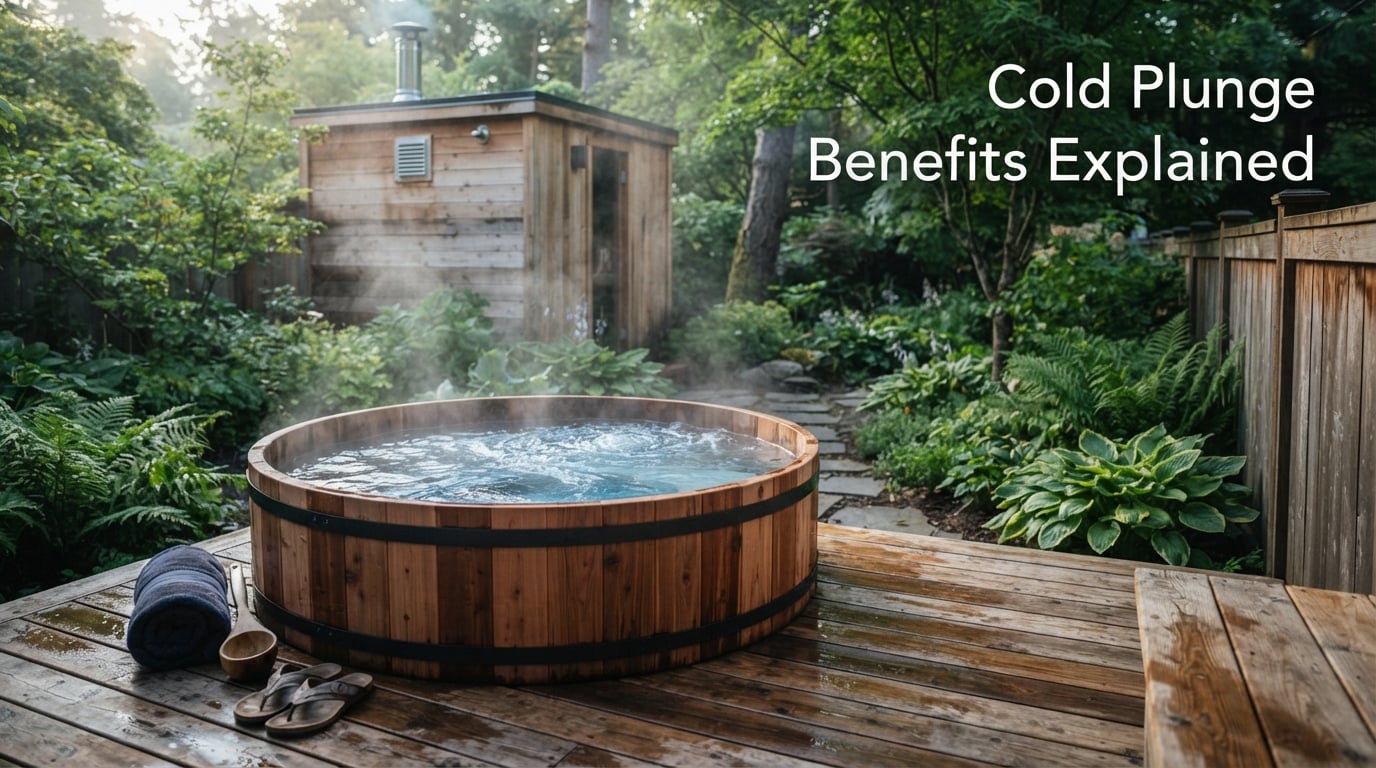
Cold plunges went from elite athlete locker rooms to backyard patios in just a few years. In this guide, I break down cold plunge benefits explained in plain language: what they actually do to your body, what research backs the claims, and where the risks hide. Whether you are a runner trying to recover faster, a desk worker chasing mental clarity, or just curious about the trend, you will leave knowing whether this habit deserves a spot in your routine.
Our team spent weeks digging into peer-reviewed studies, forum threads from real daily plungers, and clinical guidelines from major medical institutions. We focused on what is supported by evidence rather than hype. The result is a no-nonsense look at cold water immersion benefits, written for people who want specifics instead of slogans.
You will learn the physical effects like muscle recovery and improved circulation, the mental effects like mood enhancement and stress reduction, the safety numbers you actually need to remember, and the people who should stay out of cold water entirely. Let us start with the basics.
The simplest way to describe cold therapy is that it triggers a controlled stress response. Your body reacts to the cold by tightening blood vessels, releasing endorphins, and pushing blood toward your core. When you warm back up, fresh oxygenated blood floods your muscles and skin. That cycle is where most of the documented cold plunge health benefits come from.
Table of Contents
What Is a Cold Plunge and Why People Do It?
A cold plunge is a form of cold-water immersion therapy where you submerge your body in water kept between 50 and 59 degrees Fahrenheit, or 10 to 15 degrees Celsius, for a short period. Most sessions last 1 to 3 minutes for beginners and rarely exceed 10 to 15 minutes even for experienced users. The goal is to expose the body to controlled cold stress long enough to trigger physiological adaptations without crossing into dangerous territory.
People cold plunge for many reasons. Athletes use it to speed muscle recovery after hard training sessions. Biohackers chase the dopamine and noradrenaline spikes documented in research. Some people swear by the mental clarity and energy boost, while others use cold exposure for sleep and anxiety. The practice has roots in Scandinavian winter swimming traditions, professional sports recovery protocols, and the Wim Hof method that popularized deliberate cold exposure for the mainstream.
The difference between a cold plunge and a basic cold shower is intensity. A cold shower maxes out around 50 degrees Fahrenheit at the tap, but most people cannot tolerate full immersion at that temperature for more than a minute or two. A dedicated cold plunge tub or natural body of water lets you control temperature, depth, and duration precisely, which is why serious users prefer it.
If you are new to this, think of cold therapy as a stressor you dose like exercise. Too little does nothing. Too much can hurt you. The sweet spot is what we explore next.
Physical Health Benefits of Cold Plunging
The physical cold plunge benefits get the most attention, and they have the strongest research behind them. Here is what cold water immersion actually does to your body.
1. Faster Muscle Recovery and Less Soreness
Cold plunges help muscles recover faster by reducing delayed onset muscle soreness, the stiffness you feel a day or two after hard training. The cold causes blood vessels near the skin and extremities to constrict, which limits swelling and metabolic waste buildup in damaged tissue. When you get out and warm up, those vessels open wide and flush fresh blood through the muscles.
Research on athletes consistently shows that cold-water immersion after intense exercise reduces perceived soreness and helps people feel ready to train again sooner. This is why NBA, NFL, and Olympic programs have used ice baths for decades. If your goal is to train hard two days in a row, cold plunging after the first session can keep you from limping through the second.
One important nuance the research community debates: cold exposure right after strength training may blunt some of the muscle-building and adaptation signals. If your primary goal is hypertrophy or max strength gains, consider waiting several hours after lifting before you plunge, or save cold therapy for non-lifting days.
2. Reduced Inflammation and Swelling
Cold therapy is one of the oldest anti-inflammatory tools we have. The drop in tissue temperature slows down inflammatory marker production and reduces fluid accumulation around injured or overworked areas. This is the same reason you ice a sprained ankle, just applied systematically across your whole body.
For people dealing with chronic low-grade inflammation, regular cold exposure may help keep those markers in check. The evidence is promising but not conclusive, so think of cold plunging as one tool in a broader inflammation-management routine that also includes sleep, nutrition, and stress control.
3. Better Blood Flow and Circulation
Cold plunging trains your blood vessels like a workout. They constrict in the cold and dilate when you warm up, which repeated over time may improve vascular tone and overall circulation. Better blood flow means more oxygen and nutrients reach your muscles and brain, and metabolic waste clears faster.
Many daily plungers report warmer hands and feet over time, possibly because their vessels adapt to the cold stress. Anecdotal, yes, but consistent with what we know about cold acclimation.
4. Possible Metabolism Boost From Brown Fat Activation
Brown adipose tissue, sometimes called brown fat, is a specialized type of fat that burns calories to generate heat. Cold exposure is one of the few reliable ways to activate brown fat in adults. When you sit in cold water, brown fat ramps up metabolic activity to keep your core temperature stable.
Studies show cold exposure can increase resting metabolic rate modestly. The effect is real but small, so cold plunging alone will not melt off pounds. Combined with solid training and nutrition habits, it may give you a slight edge over time.
5. Immune System Support
Regular cold exposure appears to influence immune function. Some studies report increases in white blood cell counts and other immune markers in people who cold plunge regularly. The theory is that the repeated mild stress trains your immune system the same way exercise trains your muscles.
The research here is mixed and still developing. What we can say is that consistent cold plungers often report fewer common colds and quicker recovery from minor illness, but no study proves cold water prevents infections outright.
Mental and Emotional Cold Plunge Benefits
The mental effects are where cold plunging surprised me the most. The physical recovery benefits were expected, but the mood and focus changes are what kept me coming back.
Mood Enhancement and Dopamine Release
Cold water immersion triggers a measurable spike in dopamine and noradrenaline. Research commonly cited by both clinicians and users reports dopamine increases of up to 250 percent and noradrenaline increases of 530 percent following cold exposure. These neurotransmitters are tied to motivation, focus, and feelings of reward.
Unlike the quick dopamine hit from sugar or social media, the cold-induced dopamine rise is sustained for hours after you get out. Daily plungers consistently describe feeling calm, alert, and unusually clear-headed for the rest of the morning.
Stress Reduction and Anxiety Management
It sounds backwards that something stressful reduces stress, but the mechanism makes sense. Each cold plunge is a controlled dose of acute stress that trains your nervous system to stay calm under pressure. Over time, this can lower your baseline response to everyday stressors.
Forum users on r/coldplunge and r/BecomingTheIceman frequently report that daily cold plunges help with anxiety symptoms. The cold forces you into the present moment, which functions almost like meditation. Many people find that the breathing control they learn in the plunge carries over into stressful situations outside the tub.
There is a cortisol question worth addressing. Cold exposure does briefly raise cortisol and other stress hormones during the plunge itself, which is normal and expected. For most people, the post-plunge relaxation response more than balances this out. If you already deal with chronic high cortisol or adrenal issues, talk to a doctor before adding cold stress to your routine.
Better Sleep Quality
This benefit sneaks up on you. Many users say they fall asleep faster and sleep deeper on days they plunge. The likely mechanism is the rebound warming effect: as your body works to reheat after the cold, it triggers the natural temperature drop that signals your brain it is time to sleep.
For best results, plunge earlier in the day or at least a few hours before bed. Plunging too close to bedtime can leave some people too energized to sleep, so experiment with timing.
Mental Clarity and Focus
The combination of increased blood flow, dopamine release, and noradrenaline activation creates a noticeable cognitive boost. Cold plungers describe it as the brain fog lifting within minutes. If you struggle with groggy mornings or afternoon slumps, a cold plunge can be a sharp alternative to another cup of coffee.
How Cold Plunging Compares to Other Recovery Methods?
Cold plunging is powerful, but it is not the only recovery tool. Here is how it stacks up against the alternatives.
Active recovery like light walking, stretching, or easy cycling keeps blood flowing without shocking your system. It supports long-term adaptation better than cold therapy right after strength work. Many coaches now recommend active recovery as the default and reserve cold plunging for competition windows or after brutal endurance sessions.
Sauna use is the popular companion to cold plunging. The contrast between hot and cold, sometimes called contrast therapy, may amplify circulation benefits and feels incredible. People who alternate sauna and cold plunge sessions often report the best results, though the research on contrast therapy is still catching up to the enthusiasm.
For a deeper comparison, check out our article on comparing ice baths and hot showers for recovery based on real testing.
The takeaway is that cold plunging is not a replacement for sleep, nutrition, or smart training. It is a complementary tool that works best when paired with the fundamentals.
Risks, Side Effects, and Who Should Avoid Cold Plunges
Cold water immersion is not safe for everyone. The risks are real, and ignoring them can land you in the emergency room. Here is what you need to know before you commit.
Common Side Effects
The initial cold shock response is intense. Your heart rate spikes, you gasp, and your breathing goes rapid and shallow. This is normal but can be dangerous for people with heart conditions. Cold water also stresses your cardiovascular system, raising blood pressure temporarily.
Other common side effects include numbness, skin redness, shivering, and a lingering chill if you stay in too long. Most of these fade within minutes of getting out and warming up properly.
Serious Risks
Hypothermia is the biggest danger. It happens when your core temperature drops below safe levels. Early signs include confusion, slurred speech, and loss of coordination. If you notice any of these, get out immediately and warm up slowly.
Frostbite can affect exposed skin in extreme cold or long sessions. Cold water is far more dangerous than cold air at the same temperature because water pulls heat from your body roughly 25 times faster.
Cold shock can trigger dangerous heart rhythms in susceptible people. This is why anyone with a history of heart disease, high blood pressure, or arrhythmia needs medical clearance before plunging.
Who Should Avoid Cold Plunges
The following groups should skip cold plunging or get explicit doctor approval first:
Pregnant women, due to fetal temperature sensitivity
People with cardiovascular disease, high blood pressure, or arrhythmias
Anyone with Raynaud’s disease or cold-induced conditions
People with epilepsy or seizure disorders
Children, whose bodies regulate temperature less efficiently
Anyone recovering from serious illness or surgery
If you take medications that affect circulation or blood pressure, check with your doctor too. Better to ask first than risk a serious incident in cold water.
Safe Cold Plunge Temperature, Duration, and Frequency
Most cold plunge benefits show up when you follow a few simple rules. Here is how to start safely and avoid the most common mistakes we see in forums.
Temperature Guide
The standard therapeutic range is 50 to 59 degrees Fahrenheit, or 10 to 15 degrees Celsius. Beginners should start at the warmer end, around 55 to 59 degrees, and work their way down over weeks. Experienced plungers often go as cold as 39 degrees Fahrenheit, but that is advanced territory.
Drop temperature gradually. If you start at 59, try 57 the next week, then 55, and so on. Going too cold too fast is one of the most common mistakes beginners make.
Duration Guide
For beginners, 1 to 2 minutes is plenty. Most benefits come in the first 3 minutes, and few people need to exceed 10 to 15 minutes total. The cold plunge benefits are dose-dependent up to a point, but more is not better. Longer sessions raise hypothermia risk without adding meaningful upside.
A 3-minute cold plunge is safe for most healthy adults at moderate temperatures. Push beyond that only after weeks of consistent practice.
Frequency Recommendations
Most people see good results with 2 to 4 sessions per week totaling 11 minutes of cold exposure weekly. This is a common benchmark in the cold exposure community. Daily plunging works for some, but it requires you to listen to your body and back off if you feel depleted, chilled, or run-down.
For strength-focused athletes, save cold plunging for non-lifting days or at least 6 hours after training to avoid blunting muscle adaptation. Endurance athletes can usually plunge sooner after sessions since the interference effect is smaller.
Common Mistakes to Avoid
Going too cold or too long too soon
Holding your breath instead of slow controlled breathing
Plunging alone in remote locations without supervision
Jumping straight into a hot shower afterward instead of warming naturally
Plunging on an empty stomach when prone to dizziness
Ignoring early hypothermia warning signs to push through
The biggest mistake of all is treating cold plunging as a punishment rather than a practice. Calm breathing beats grit every time.
FAQs
Are there any actual benefits to cold plunges?
Yes. Cold plunges offer documented benefits including faster muscle recovery, reduced inflammation, improved circulation, mood enhancement from dopamine and noradrenaline release, better sleep quality, and possible immune and metabolism support from brown fat activation. The strongest evidence supports muscle recovery and mood effects.
How many minutes a week should you cold plunge?
Most experts recommend about 11 total minutes of cold exposure per week, spread across 2 to 4 sessions. Beginners should start with 1 to 2 minutes per session at 55 to 59 degrees Fahrenheit and build up gradually.
Is a 3 minute cold plunge safe?
For most healthy adults, a 3-minute cold plunge at 50 to 59 degrees Fahrenheit is safe. People with heart conditions, high blood pressure, or other risk factors should get medical clearance first. Beginners should work up to 3 minutes over several weeks.
What not to do after a cold plunge?
Avoid jumping straight into a hot shower, which can stress your cardiovascular system. Instead, warm up naturally with dry clothes, light movement, and warm drinks. Also avoid alcohol, intense exercise immediately after, and ignoring any numbness or confusion that could signal hypothermia.
Do ice baths raise cortisol?
Cold exposure does cause a short-term cortisol spike during the plunge as part of the acute stress response. For most healthy people, this balances out with post-plunge relaxation and does not become a problem. People with chronic stress or adrenal issues should consult a doctor before starting.
What are common cold plunge mistakes?
Common mistakes include starting too cold, staying in too long, holding your breath, plunging alone without supervision, jumping into a hot shower immediately after, and ignoring early signs of hypothermia. Build up gradually and focus on calm breathing.
Should You Start Cold Plunging in 2026?
The cold plunge benefits explained in this guide are real, but they come with real responsibilities. Faster muscle recovery, sharper focus, better mood, and deeper sleep are all backed by both research and the lived experience of regular users. The risks are manageable if you respect the temperature, keep sessions short, and listen to your body.
If you are generally healthy, curious, and willing to start slow, cold plunging is worth trying. Begin with one or two short sessions a week at the warmer end of the range. Track how you feel for 30 days, and adjust from there. The people who stick with it are the ones who treat it as a sustainable practice rather than a daily battle of willpower.
As we have seen across hundreds of forum reports and clinical studies, the cold plunge benefits compound over time. The first session is uncomfortable. The tenth starts to feel almost enjoyable. By the hundredth, you may wonder how you ever started your mornings without it.