
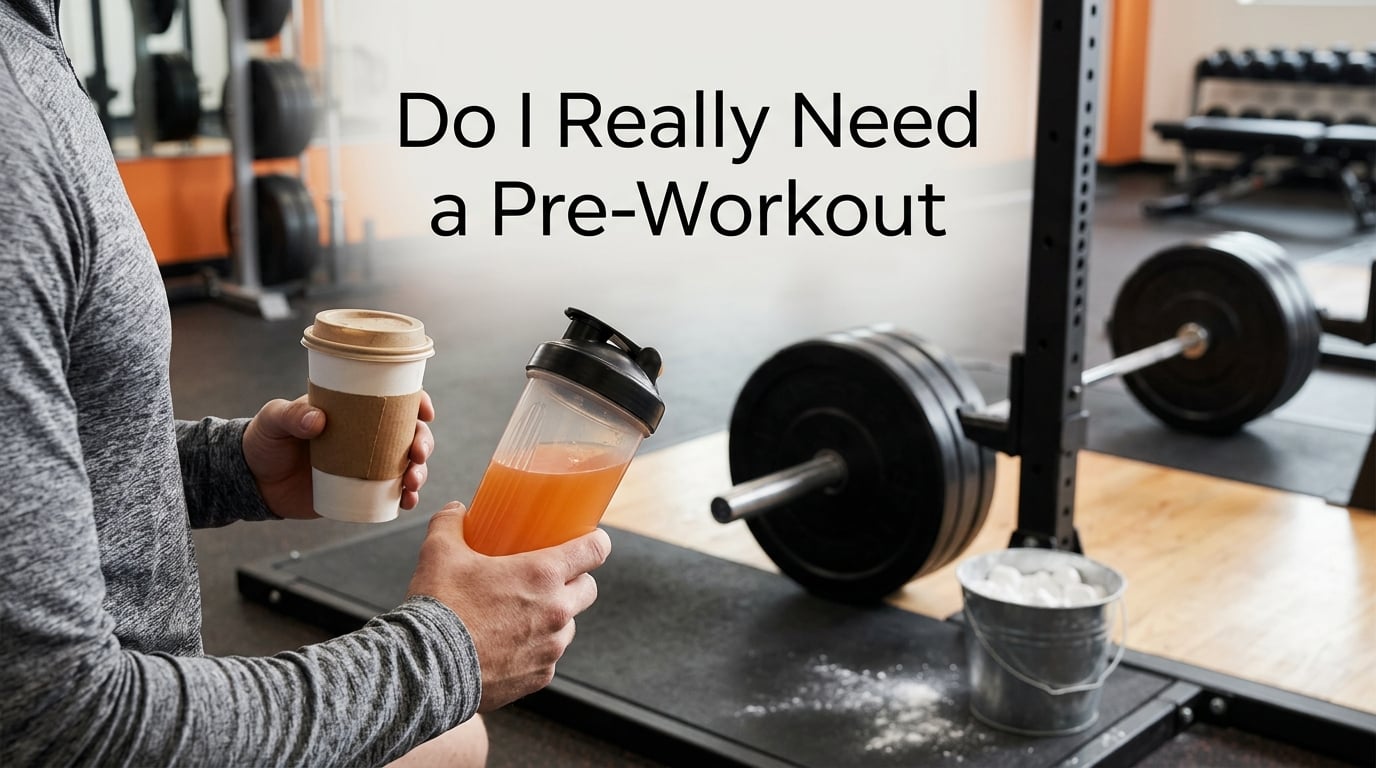
No, you do not really need a pre-workout supplement to exercise effectively, build muscle, or improve your athletic performance. Most people can get all the energy and nutrients they need from a balanced diet, proper hydration, and good sleep. Pre-workout supplements can provide a noticeable boost for certain situations, but they are far from essential.
If you are asking yourself, “do I really need a pre-workout,” you are already thinking critically about your supplement routine. That is a smart approach. The fitness industry spends heavily on marketing to convince you that a powdered formula is the difference between a mediocre session and a personal record.
In this guide, I will break down exactly what pre-workout supplements do, what ingredients actually work, when they are worth using, and when natural alternatives like a cup of coffee and a banana will do the job just fine. Our team has dug through the research from the International Society of Sports Nutrition (ISSN), analyzed what real lifters on forums are saying, and compared the science against the marketing claims.
By the end, you will have a clear answer on whether a pre-workout belongs in your routine or whether your wallet and your body would be better off without it.
Table of Contents
What is Pre-Workout?
Pre-workout is a category of dietary supplement designed to be consumed 20 to 60 minutes before exercise. The goal is to boost energy, sharpen focus, increase blood flow, and delay muscle fatigue. Most products come as a flavored powder that you mix with water, but you can also find ready-to-drink cans, capsules, and even gummies.
Researchers often refer to these products as multi-ingredient pre-workout supplements, or MIPS. The “multi-ingredient” part is important. Unlike taking a single supplement like creatine on its own, a pre-workout combines several compounds into one scoop. That convenience is part of the appeal, but it also means you are getting a mix that may include effective ingredients alongside fillers you do not need.
The way pre-workout works depends on what is in the formula. Caffeine, the most common ingredient, stimulates your central nervous system to reduce perceived effort and increase alertness. Other ingredients like beta-alanine and citrulline work through different pathways to buffer acid buildup in muscles and improve blood flow. Some pre-workouts also include creatine, which supports ATP production for short bursts of high-intensity effort.
It is worth noting that the supplement industry is not regulated as strictly as prescription medications. The FDA treats dietary supplements under a different framework than drugs, which means ingredient accuracy and purity can vary between brands. This is one reason many experienced lifters on fitness forums prefer buying single-ingredient supplements and mixing their own stack.
Pre-Workout Ingredients: What to Look For
Not all pre-workouts are created equal. The effectiveness of any product comes down to its ingredient list and the dosages used. Here are the ingredients with the strongest scientific backing.
Caffeine
Caffeine is the workhorse of nearly every pre-workout formula, and for good reason. It is one of the most researched ergogenic aids in sports nutrition. The ISSN recommends a dose of 3 to 6 milligrams per kilogram of body weight for performance benefits. For a 175-pound person, that works out to roughly 240 to 475 milligrams of caffeine.
Caffeine works by blocking adenosine receptors in your brain, which reduces your perception of fatigue. It also increases adrenaline release and can improve reaction time, focus, and power output. Most pre-workout supplements contain between 150 and 350 milligrams of caffeine per serving, which is roughly equivalent to one to three cups of brewed coffee.
The catch is that caffeine affects everyone differently. If you are sensitive to it, even 150 milligrams can cause jitters, anxiety, and a racing heart. If you have built up a tolerance from daily coffee consumption, you may need a higher dose to feel the same effects, which is where dependency concerns come in.
Beta-Alanine
Beta-alanine is an amino acid that your body uses to produce carnosine, a compound that helps buffer acid buildup in your muscles during high-intensity exercise. The ISSN supports its use for exercises lasting one to four minutes, which includes most weight training sets and high-intensity intervals.
The effective dose is around 3 to 6 grams per day, often split into smaller servings. The downside is that beta-alanine causes a harmless but noticeable tingling sensation called paresthesia. Many people on fitness forums find this sensation uncomfortable or distracting, and it is one of the most common complaints about pre-workout supplements.
Beta-alanine works best when taken consistently over weeks, not just before a single workout. This means a one-off scoop of pre-workout will not give you the full benefit of this ingredient.
Creatine
Creatine is arguably the most effective sports supplement ever studied. It increases your muscles’ phosphocreatine stores, which helps regenerate ATP during short, intense efforts like heavy lifting and sprinting. The standard protocol is 3 to 5 grams per day, taken consistently.
Many pre-workout formulas include creatine, but the dose is often too low or inconsistent to matter much. Since creatine works through saturation rather than timing, taking it before your workout offers no real advantage over taking it at any other time of day. Most experts agree that buying creatine monohydrate separately is more cost-effective and reliable.
Citrulline and Nitric Oxide Boosters
L-citrulline and citrulline malate are amino acids that increase nitric oxide production in your body. Nitric oxide relaxes and widens blood vessels, which improves blood flow to working muscles. The practical result is what lifters call a “pump,” that full, vascular feeling during and after training.
The effective dose for L-citrulline is around 6 to 8 grams, or 8 grams of citrulline malate. Studies suggest it can reduce muscle soreness and improve endurance during repeated sets. However, many commercial pre-workouts underdose this ingredient to save on cost, so checking the label matters.
Electrolytes and BCAAs
Some pre-workouts include electrolytes like sodium and potassium to support hydration, especially during sweaty training sessions. These can be helpful if you train in heat or sweat heavily, but most people get enough electrolytes from food.
Branched-chain amino acids, or BCAAs, are also common additions. The evidence for BCAAs as a standalone supplement is mixed, especially if you already consume enough total protein. Most sports nutritionists now recommend focusing on overall protein intake rather than worrying about BCAAs in your pre-workout.
Benefits of Pre-Workout Supplements
So do pre-workout supplements actually do anything? Yes, when they are formulated correctly and used in the right context. Here is what the research and real-world experience support.
The most immediate benefit is energy. A properly dosed pre-workout with 200 to 300 milligrams of caffeine can make a noticeable difference in how alert and motivated you feel, especially if you are training early in the morning or after a long workday. Many users report pushing through sessions they would otherwise have skipped or half-hearted.
Focus enhancement is another real effect. Caffeine combined with other compounds like L-theanine, which some formulas include to smooth out the caffeine buzz, can improve concentration during complex lifts. This matters for exercises that require technical precision, like squats, deadlifts, and Olympic movements.
For endurance and reduced fatigue, ingredients like beta-alanine and citrulline have solid backing. One Reddit user shared their experience of improving their squat by 40 kilograms over eight weeks without any pre-workout at all, which shows you can absolutely progress without supplements. But for competitive athletes pushing the upper limits of performance, every small advantage can add up.
Blood flow and the associated muscle pump can improve training satisfaction and may contribute to long-term muscle growth through improved nutrient delivery. The ISSN has published position stands supporting the use of several pre-workout ingredients for enhancing both resistance and endurance exercise performance.
Pre-Workout vs Coffee vs Natural Alternatives
Here is where the conversation gets interesting. If caffeine is the main active ingredient in most pre-workouts, can you just drink coffee instead? For many people, the answer is yes.
A standard 8-ounce cup of brewed coffee contains about 95 milligrams of caffeine. A double espresso packs around 125 to 150 milligrams. This puts coffee in the same ballpark as many pre-workout formulas, minus the beta-alanine, citrulline, and other extras. For someone whose main goal is an energy boost before training, coffee is a perfectly effective and much cheaper option.
The advantage of pre-workout over coffee is the additional ingredients. If you specifically want the endurance benefits of beta-alanine or the pump from citrulline, coffee will not provide those. But if you just need to wake up and get moving, coffee plus a small carbohydrate snack like a banana covers a lot of ground.
Let us talk about cost. A typical pre-workout supplement costs between $1.50 and $3.00 per serving, depending on the brand and whether you buy in bulk. If you train four times per week, that adds up to $300 to $600 per year. A cup of coffee made at home costs roughly $0.20 to $0.50, and a banana runs about $0.30 to $0.50. Over a year, the natural route saves you hundreds of dollars.
Other natural alternatives include a small bowl of oatmeal with honey for sustained energy, a handful of dried fruit for quick carbohydrates, and electrolyte water for hydration during longer sessions. None of these will give you the tingles or the artificial flavor explosion of a pre-workout powder, but they will fuel your training effectively.
One experienced lifter on a fitness forum summed it up well. They said they used pre-workout for years before realizing that a cup of black coffee and a banana gave them 90 percent of the benefit at a fraction of the cost. That perspective is worth considering before you commit to a daily supplement habit.
Who Actually Benefits from Pre-Workout?
Pre-workout supplements are not useless, but they are also not for everyone. Here are the situations where they genuinely add value.
Competitive athletes and bodybuilders who train at high intensities and need every possible edge can benefit from a well-formulated pre-workout. The combination of caffeine, beta-alanine, and citrulline can measurably improve performance in studies, and for someone competing, small margins matter.
People who train early in the morning often find pre-workout helpful for getting going when their body would rather still be in bed. If you are rolling out of a warm bed at 5 a.m. to hit the squat rack, a caffeine boost can make the difference between a focused session and going through the motions.
Those doing high-intensity interval training, CrossFit, or long endurance sessions may also benefit from the endurance-enhancing ingredients. Beta-alanine and citrulline are particularly useful for repeated bouts of intense effort with short rest periods.
Finally, some people simply enjoy the routine and the psychological ritual of mixing a pre-workout drink. If the act of taking a supplement helps you get into the right headspace for training, that placebo-plus-caffeine effect is real and valid. Just be honest with yourself about whether you are paying for ingredients or for the habit.
Potential Risks and Side Effects
Pre-workout supplements are generally safe for healthy adults when used as directed, but they are not without risks. Understanding the downsides helps you make an informed decision.
The most common side effect is the jittery, anxious feeling that comes from high caffeine doses. If you are not used to 300 milligrams of caffeine in one hit, your body will let you know. Symptoms can include a racing heart, sweaty palms, restlessness, and difficulty concentrating on anything except the discomfort.
Sleep disruption is a major concern. Caffeine has a half-life of roughly five to six hours, which means if you take a pre-workout at 6 p.m. for an evening session, a significant amount of caffeine is still in your system at midnight. This creates a vicious cycle where poor sleep makes you rely more on stimulants the next day, which further disrupts your sleep.
The beta-alanine tingling, while harmless, is unpleasant for many users. Some people describe it as an itchy, pins-and-needles sensation across the skin that can be distracting during a workout. If this bothers you, look for formulas with a lower beta-alanine dose or consider skipping that ingredient entirely.
Energy crashes are another frequent complaint. After the caffeine wears off, you may feel more tired than if you had never taken anything at all. This is especially common with formulas that use very high caffeine doses paired with sugar or other fast-acting ingredients.
A common question on fitness forums is whether pre-workout raises cortisol levels. Caffeine does stimulate cortisol release, which is part of how it increases alertness and energy. For most healthy people, this temporary spike is not a problem. But if you are chronically stressed, sleep-deprived, or already consuming caffeine throughout the day, adding more on top can contribute to elevated cortisol over time.
Finally, there is the issue of tolerance. Your body adapts to caffeine within a week or two of daily use, which means you need more to get the same effect. Many lifters cycle their pre-workout use, taking a break every few weeks to reset their tolerance. Without cycling, you can end up dependent on pre-workout just to feel normal, which defeats the purpose.
It is also worth repeating that dietary supplements are not FDA-approved before they reach the market. The agency relies on post-market surveillance, meaning problems are often discovered after consumers have already been affected. Contamination with banned substances, inaccurate label claims, and undisclosed ingredients have all been documented in testing of supplement products over the years.
Who Should Avoid Pre-Workout Supplements?
Certain groups should steer clear of pre-workout supplements or at minimum consult a doctor before using them.
People with high blood pressure or heart conditions should be cautious. Caffeine raises both heart rate and blood pressure temporarily, and some pre-workout formulas contain other stimulants that compound this effect. If you have hypertension, a heart arrhythmia, or any cardiovascular condition, the risk may outweigh any potential training benefit.
Teenagers and anyone under 18 should avoid pre-workout supplements. The American Academy of Pediatrics recommends against caffeine use in children and adolescents because their developing bodies are more sensitive to its effects. High caffeine intake in young people has been linked to elevated blood pressure, sleep problems, and anxiety.
Pregnant and nursing women should also avoid high-dose caffeine supplements. Most health guidelines recommend limiting caffeine intake during pregnancy to 200 milligrams per day or less, and a single scoop of some pre-workouts exceeds that.
If you are taking GLP-1 receptor agonist medications for diabetes or weight management, you should talk to your doctor before adding a pre-workout. These medications can affect heart rate, digestion, and how your body responds to stimulants. Combining them with a high-caffeine supplement without medical guidance is risky.
Anyone with a known caffeine sensitivity, anxiety disorder, or history of panic attacks should approach pre-workout with extreme caution. What gives one person a focused energy boost can trigger uncomfortable or even frightening symptoms in someone whose nervous system is more reactive to stimulants.
Do I Really Need a Pre-Workout? The Bottom Line
After looking at the research, the real-world experiences shared on fitness forums, and the cost analysis, the answer is clear. For the vast majority of people, a pre-workout supplement is a convenience, not a necessity.
You can build significant strength and muscle without ever touching a powdered formula. Proper nutrition, consistent training, adequate sleep, and a simple cup of coffee when you need an energy boost will get you where you want to go. The lifters making real progress are doing so through hard work and smart programming, not because of what is in their shaker bottle.
That said, if you are a competitive athlete, someone training at high intensities who wants the specific benefits of beta-alanine and citrulline, or you simply enjoy the ritual, a quality pre-workout can be a useful tool. The key is choosing a product with clinically dosed ingredients, using it strategically rather than daily, and being honest about whether you are paying for results or for habit.
FAQs
What is the 3-3-3 rule for gym?
The 3-3-3 rule is a simple training guideline that suggests doing 3 sets of 3 exercises for 3 days per week. It is often used as a beginner-friendly structure for full-body workouts, focusing on compound movements like squats, presses, and rows. The rule emphasizes consistency and basic progression over complicated programming, which aligns with the idea that you do not need supplements to make progress if your training and nutrition are dialed in.
Can you take pre-workout on GLP-1?
There is no established safety guideline for combining pre-workout supplements with GLP-1 receptor agonist medications. GLP-1 drugs can affect heart rate, digestion, and hydration, and the high caffeine content in most pre-workouts may amplify these effects unpredictably. If you are taking a GLP-1 medication, talk to your prescribing doctor before using any pre-workout or high-dose caffeine supplement to make sure it is safe for your specific situation.
Does pre workout make cortisol high?
Caffeine, the main ingredient in most pre-workouts, does stimulate a temporary increase in cortisol as part of how it boosts alertness and energy. For healthy adults who are well-rested and not chronically stressed, this short-term spike is normal and not harmful. However, if you are already sleep-deprived, stressed, or consuming caffeine throughout the day, repeated pre-workout use can contribute to sustained elevated cortisol levels, which may affect recovery and overall health over time.
What pre-workout can I take with high blood pressure?
If you have high blood pressure, you should consult your doctor before taking any pre-workout supplement, as most contain caffeine and other stimulants that can raise blood pressure and heart rate. Stimulant-free pre-workouts that rely on ingredients like citrulline, betaine, and electrolytes without caffeine may be an option, but even these should be cleared with a healthcare provider first. Your safety comes before any potential training benefit.
The Final Verdict on Pre-Workout Supplements
So, do I really need a pre-workout? For most people reading this, the honest answer is no. You can train hard, build muscle, and reach your fitness goals with whole foods, hydration, and a simple cup of coffee when you need a lift.
Pre-workout supplements have a place for competitive athletes and those who genuinely benefit from the specific ergogenic ingredients. But they are a supplement to your training, not the foundation of it. Focus on your sleep, your protein intake, and your consistency in the gym first. If you decide a pre-workout adds value on top of that foundation, choose one with transparent dosing and use it strategically rather than out of habit.
Your progress comes from the work you put in, not from what is printed on a supplement tub.