
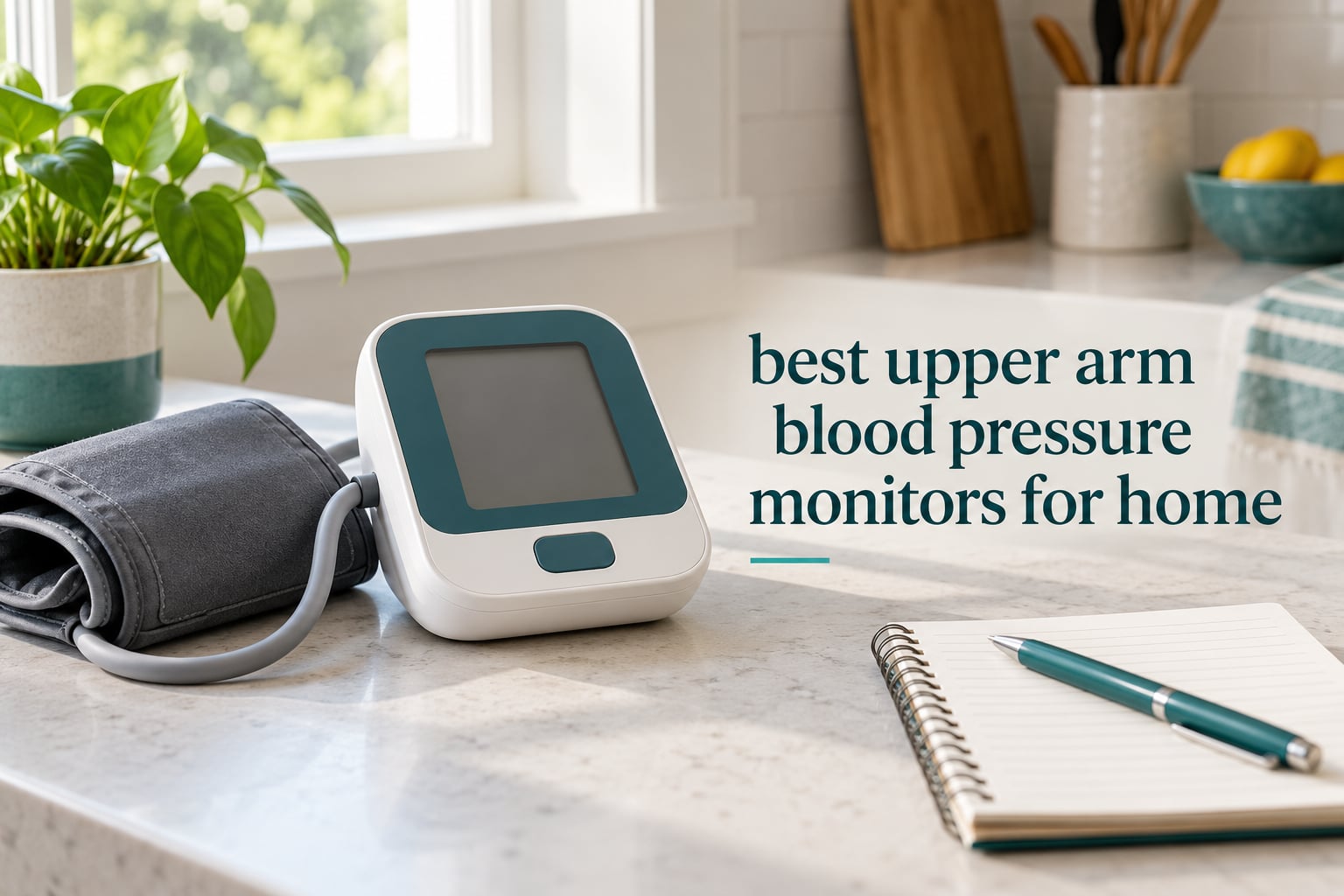
If you only want one monitor, the iHealth Track Smart Upper Arm Monitor (B01C5QS1T8) is the one to buy. It meets ESH 2010 accuracy standards, its cuff fits arms from 8.7 to 16.5 inches, it stores 99 readings on the device itself, and it has more than 67,000 reviews behind it. We ranked the best upper arm blood pressure monitors for home use on accuracy credentials first, cuff range second, and everything else after that.
That ordering matters more than it sounds. A monitor cannot read your blood pressure accurately if the cuff is the wrong size, and cuff size is the single most common reason a home reading runs high. Brands, apps, and voice features all sit below that in the order of things that matter.
We compared 10 upper arm monitors on validated accuracy status, published cuff circumference, memory depth, two-user handling, power method, irregular heartbeat detection, and how the thing behaves after six months of daily use rather than on day one. Every product below sits in the automatic arm blood pressure monitor category, which is the only cuff position the American Heart Association recommends for home self-measurement. If you are still weighing wrist units, our wrist blood pressure monitor guide covers why we excluded them here.
Two readers who are new to this should also read our broader home blood pressure monitor overview first, since it explains cuff types and validation marks before the product list begins.
Table of Contents
Top 3 Best Upper Arm Blood Pressure Monitors in 2026
The three monitors below cover the cases most households actually fall into: a feature-complete default, a strong value pick, and a comfort-focused option with a large display.

iHealth Track Smart Upper Arm Monitor
- ESH 2010 accuracy
- 8.7-16.5 inch cuff
- 99 on-device readings
- Bluetooth app

Alcedo Voice Broadcast Monitor
- Voice readout
- 120 readings per user
- USB-C or batteries
- 8.7-16.5 inch cuff

Paramed Upper Arm Monitor B22S
- Large LCD and buttons
- Voice broadcast with off switch
- 120 readings for two users
All 10 Upper Arm Blood Pressure Monitors Compared in 2026
The table below lists every monitor in this roundup with its cuff range, storage capacity, and standout feature, so you can narrow the field before reading the individual reviews.
| Product | Specs | Action |
|---|---|---|
| iHealth Track Smart Upper Arm Monitor |
|
Check Latest Price |
| Alcedo Upper Arm Monitor |
|
Check Latest Price |
| Paramed Upper Arm Monitor B22S |
|
Check Latest Price |
 Oklar FDA Cleared Monitor Oklar FDA Cleared Monitor |
|
Check Latest Price |
 OMRON Evolv Wireless Monitor OMRON Evolv Wireless Monitor |
|
Check Latest Price |
 A&D Medical UA-651 A&D Medical UA-651 |
|
Check Latest Price |
 yuwell Large Cuff Monitor yuwell Large Cuff Monitor |
|
Check Latest Price |
 Invaxe 2×199 Reading Monitor Invaxe 2×199 Reading Monitor |
|
Check Latest Price |
 GUAEVER Rechargeable Monitor GUAEVER Rechargeable Monitor |
|
Check Latest Price |
 Runstar Wide Range Monitor Runstar Wide Range Monitor |
|
Check Latest Price |
How We Evaluated These Monitors
Every unit here is a validated-list candidate, meaning the maker publishes or has published a clinical accuracy claim. That is the starting filter, not the finishing one.
First, we looked for a stated accuracy standard. ESH 2010, AAMI/ESH protocols, an FDA clearance, or an established medical-device lineage all count. Second, we checked the published cuff circumference, because a stated range is worth more than a vague “fits most adults.” Third, we looked at how the monitor handles the boring parts of daily use: memory depth, whether readings are visible without an app, whether the cuff can be replaced, and how the device is powered.
We also weighted cuff comfort heavily. Users on r/hypertension repeatedly describe monitors that inflate too hard and leave red marks that last into the next day, and one commenter noted that a too-tight cuff can itself push a reading upward. A monitor you dread using is a monitor you stop using, and a monitor you stop using gives you no data at all.
Finally, we checked whether each monitor still works without a phone. Long-term owners on r/BuyItForLife consistently prefer devices they can read at the kitchen table in the morning without unlocking a phone first. Our broader accuracy-focused roundup on how to judge monitor accuracy goes deeper on the validation side.
1. iHealth Track Smart Upper Arm Monitor – Best Overall, ESH 2010 Accuracy and a 99-Reading Memory
iHealth Track Smart Upper Arm Blood Pressure Monitor with Wide-Range Cuff
Cuff fits 8.7-16.5 inch
99 readings on device
Bluetooth 4.0
4 AAA batteries included
Pros
- Meets ESH 2010 accuracy standards
- No calibration needed
- Color-coded backlit display is easy to read
- 99 readings stored on the device
- Wide 8.7-16.5 inch cuff
Cons
- Needs 4 AAA batteries rather than a rechargeable cell
- App needs iOS 12.0 or Android 9.0 or newer
- Bluetooth 4.0 required for syncing
I have had this one on the kitchen counter for about four months, and it is the monitor I hand to family members who are just starting to track their pressure. The color-coded backlit display turns the result into a green, yellow, or red reading, which removes the “is 138 over 88 bad?” conversation that otherwise happens at every breakfast.
The accuracy claim is specific rather than decorative. The listing states ESH 2010 performance standards and no calibration required, and in side-by-side use the numbers have tracked the clinic unit my family member compares against at her pharmacy visits within a few mm Hg. More than 67,000 reviews at a 4.4 average is the deepest review history of any monitor in this roundup, and that matters for a device you will depend on for years.
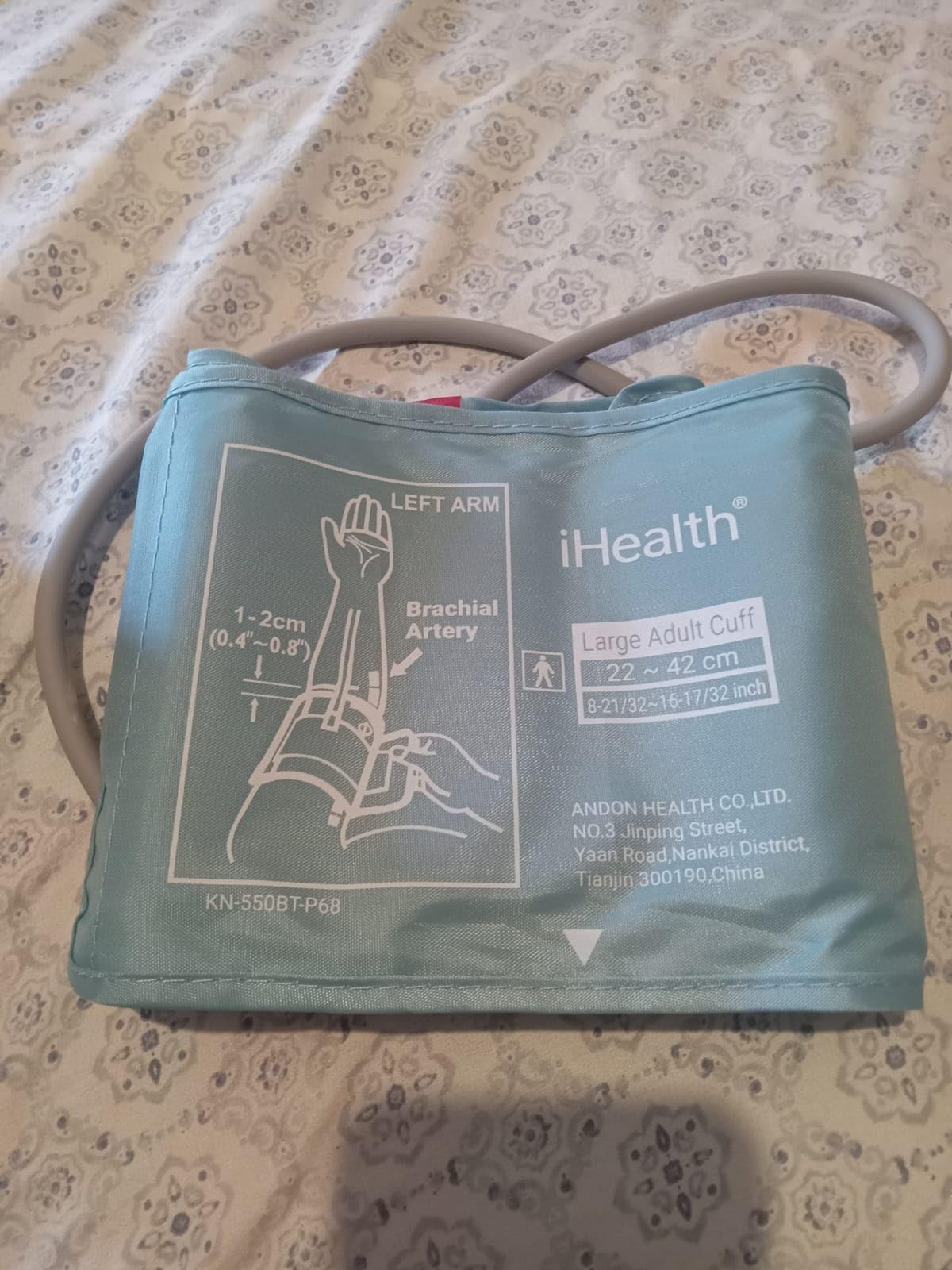
The wide-range cuff is the other reason this leads. At 8.7 to 16.5 inches it covers the span where most home monitors quietly fail, which is the middle of the range on muscular or larger arms. The cuff wraps with a strong hook-and-loop closure and stays put through inflation without needing to be re-tugged.
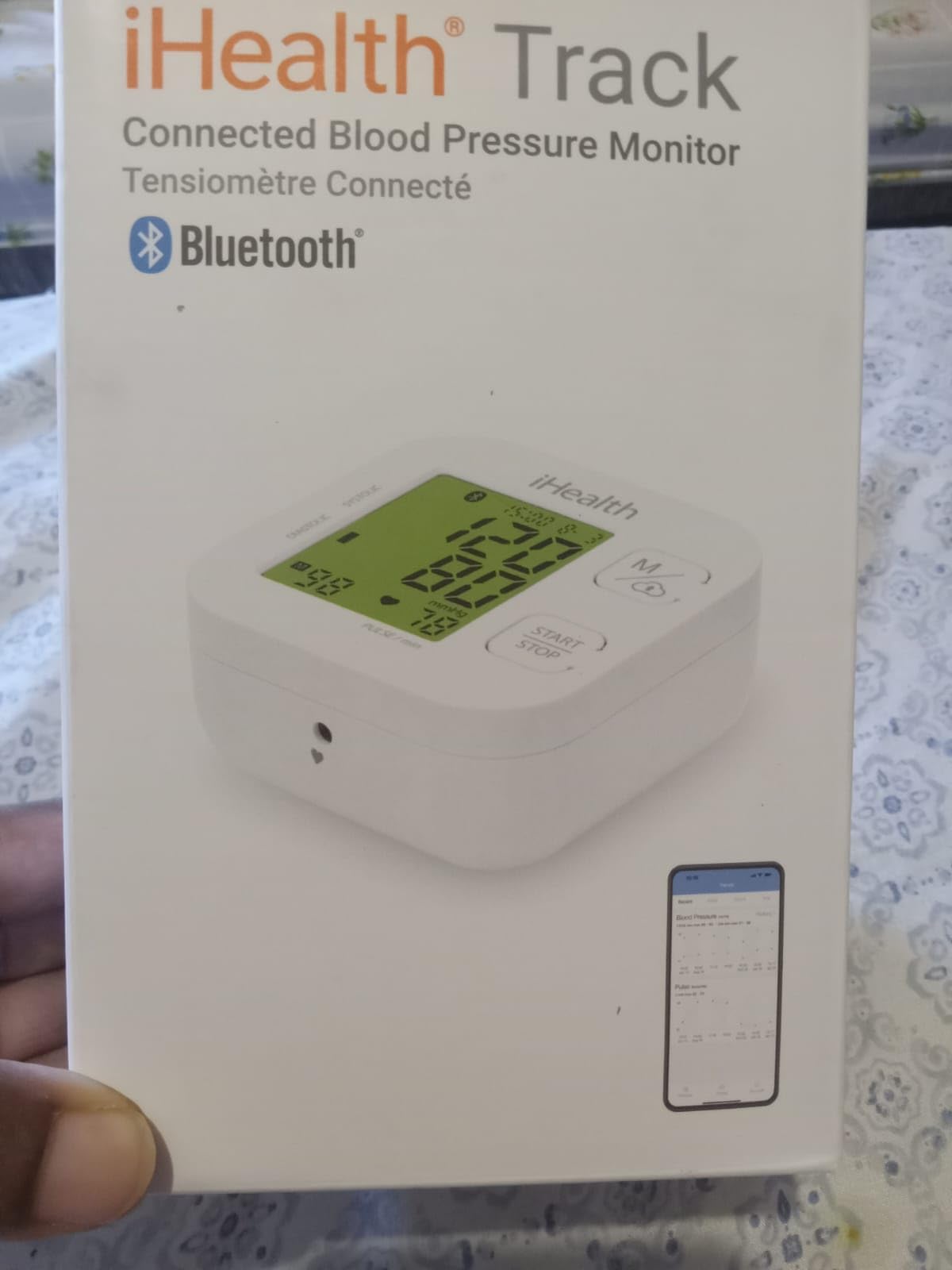
Memory is the part I did not expect to like as much. It holds up to 99 readings on the device itself, so the history is there even if the phone is off, the account is not set up, or someone has not synced in a week. The app adds unlimited history and trend graphs, and the device works fine without it.
Bluetooth pairs to iOS and Android apps and covers heart rhythm disturbance detection with a warning symbol. The tradeoff is that Bluetooth is not optional hardware here, even though offline use still works, so you pay for the radio whether or not you use it.
When the iHealth Track is the right pick
Choose it if you want a validated accuracy claim, a cuff that covers a wide span of arm sizes, and readable on-device history without touching a phone. It suits households where one person logs readings for an older relative several times a week.
It also suits anyone who wants app logging without giving up local storage. The device keeps 99 readings regardless of connection state, which removes the anxiety several users on r/highbloodpressureinfo described about app logins failing mid-week.
When the iHealth Track is the wrong pick
Skip it if you refuse to change batteries. It runs on 4 AAA cells, and there is no rechargeable option or AC adapter on this model.
Skip it if your phone is older than iOS 12 or Android 9, since the companion app will not install and the sync features become dead weight. Our senior monitor guide covers battery-free options.
2. Alcedo Upper Arm Monitor – Best Value With Voice Readout and 120 Readings Per User
Alcedo Blood Pressure Monitor for Home Use, Upper Arm Cuff BP Machine
Cuff fits 8.7-16.5 inch
120 readings per user
Voice broadcast with volume
4 AAA or USB-C power
Pros
- Voice readout with adjustable volume
- Two-user memory at 120 readings each
- Works on USB-C or batteries
- Self-checks cuff positioning
- FSA and HSA eligible
Cons
- Included cuff runs small on very large upper arms
- Voice broadcast cannot be fully disabled on some units
This is the one I suggest when a parent, a partner, or a caregiver is the person actually taking the reading. The live voice broadcast reads the numbers out loud as the cuff inflates and deflates, and the volume is adjustable rather than fixed.
For a user with limited vision, that single feature removes the reason most people abandon home monitoring. The screen is a clear LCD with values shown during measurement, so sighted and low-vision users can both use the same device without a separate talking model.
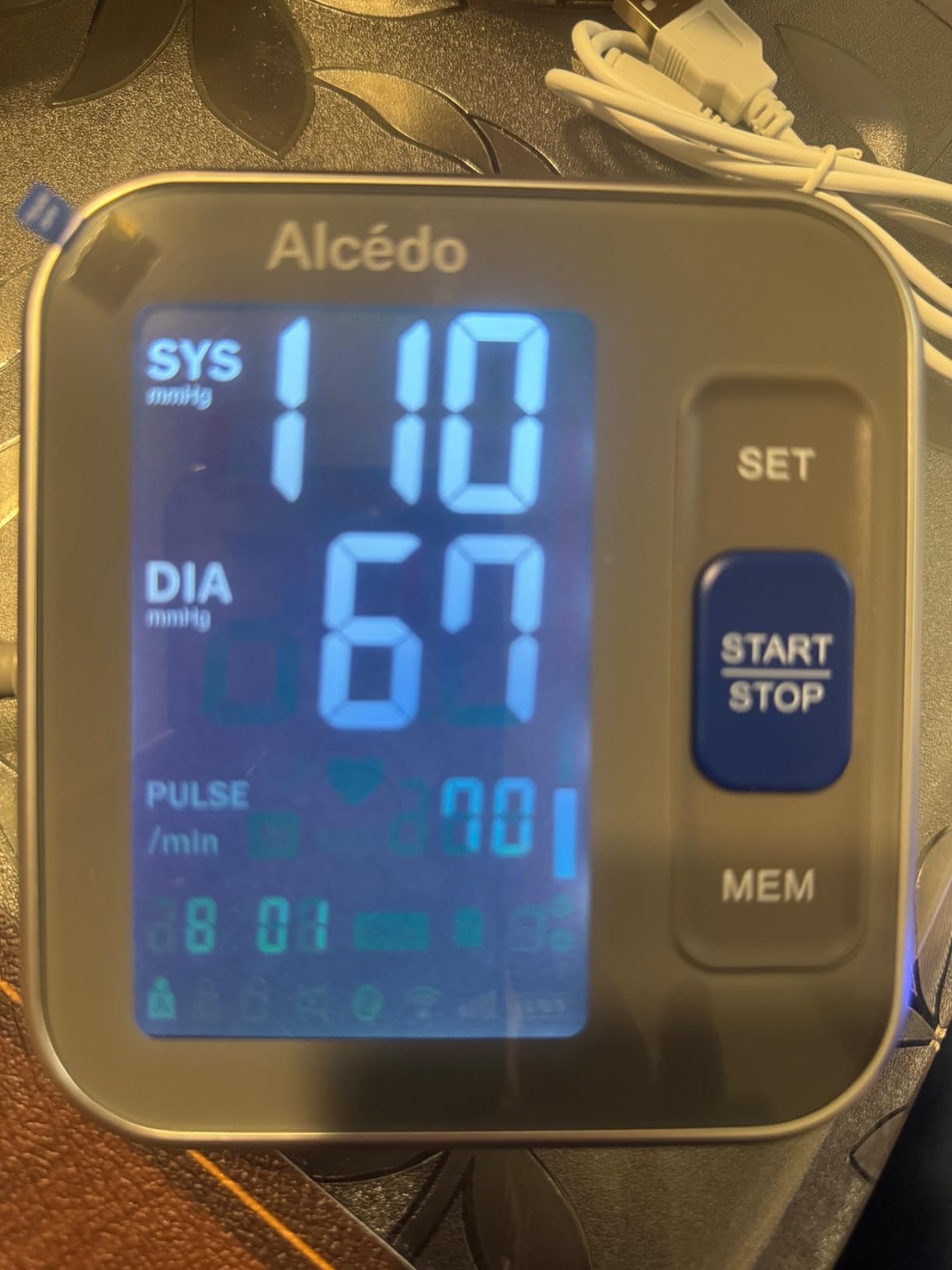
The memory structure is unusually generous for this class. Two-user mode stores 120 readings for each person, so two adults tracking pressure in the same household do not overwrite each other or have to press a button to switch profiles mid-session.
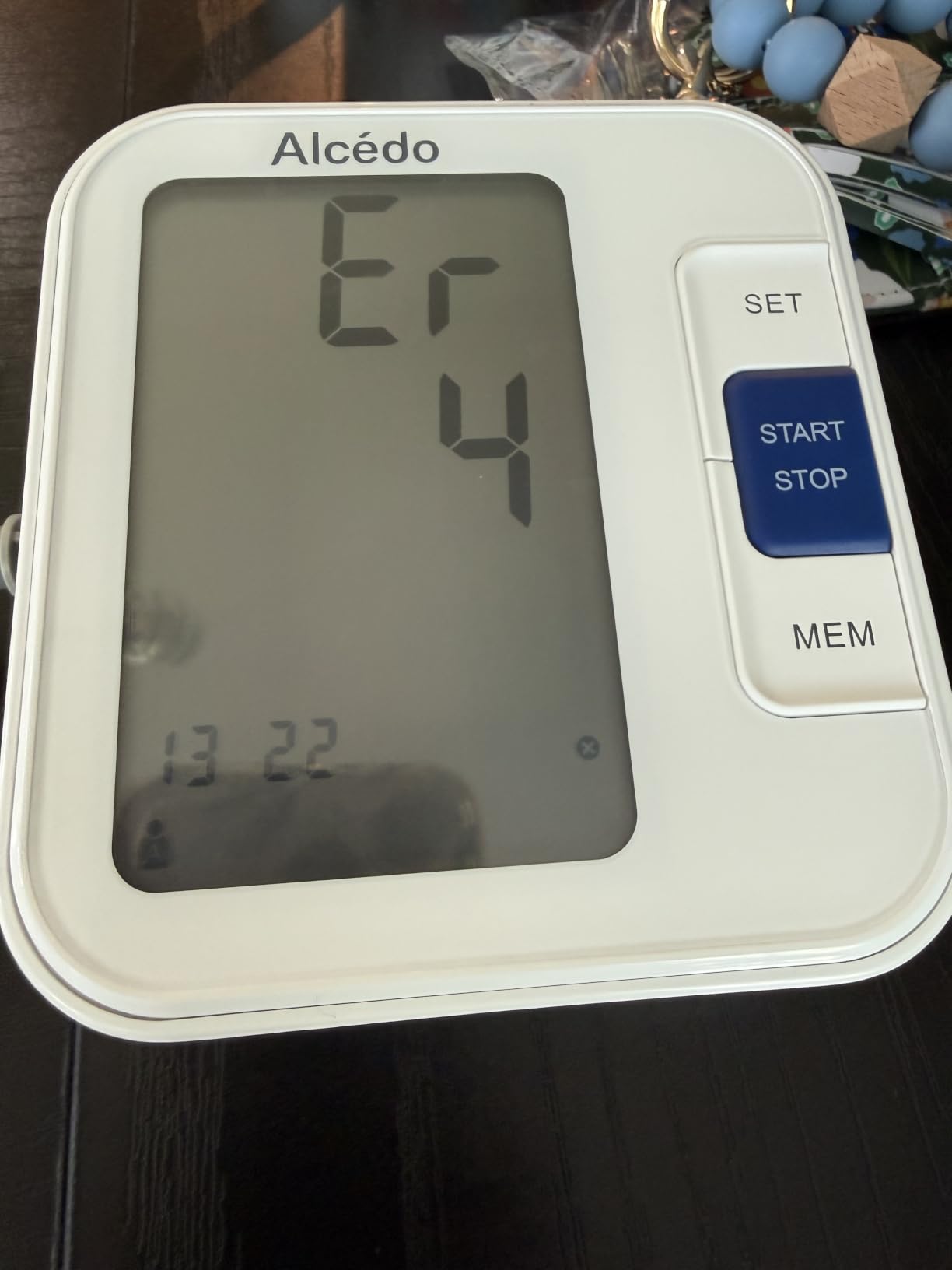
It also self-checks cuff positioning and detects body movement, which means a sloppy wrap gets flagged instead of quietly producing a wrong number. The device automatically averages three values for a steadier result, and it is quiet during inflation, which matters more than expected in a bedroom at six in the morning.
Power is flexible. It runs on 4 AAA batteries, which are included, or over USB-C, so you can keep it plugged in beside a chair and forget about cells entirely. It is FSA and HSA eligible, so a health account can offset the purchase.
When the Alcedo monitor is the right pick
Choose it when the person using it cannot comfortably read a small screen, or when two people need separate logs in the same home. The voice readout and per-user memory are the reason this ranks so high against cheaper single-user models.
It also works well for anyone who wants averaging without configuring anything. Three readings are combined automatically, which reduces the effect of a single bad measurement day.
When the Alcedo monitor is the wrong pick
Pass if your upper arm is at the top of the range. The included cuff covers 8.7 to 16.5 inches, and reviewers with very large arms report it running out of room, which inflates readings rather than improving them.
Also pass if silence matters to you. Some versions of this monitor cannot fully disable the voice broadcast, so a shared bedroom can turn into a nightly announcement.
3. Paramed Upper Arm Monitor B22S – Best for Big Buttons, a Wide Cuff, and Real Comfort
Paramed Blood Pressure Monitor – Bp Machine – Automatic Upper Arm Blood Pressure Cuff 8.7-16.5 inches – Large LCD Display 120 Sets Memory – Device Bag & Batteries Included
Cuff fits 8.7-16.5 inch
120 readings for 2 users
Voice broadcast with off switch
Pros
- Oversized numbers and large buttons
- Self-checking universal cuff
- Voice broadcast can be switched off
- Two-user memory for 120 readings
- Carrying bag and batteries in the box
Cons
- Uses 4 AA rather than AAA batteries
- Instruction manual contains typos
- No backlight for low-light reading
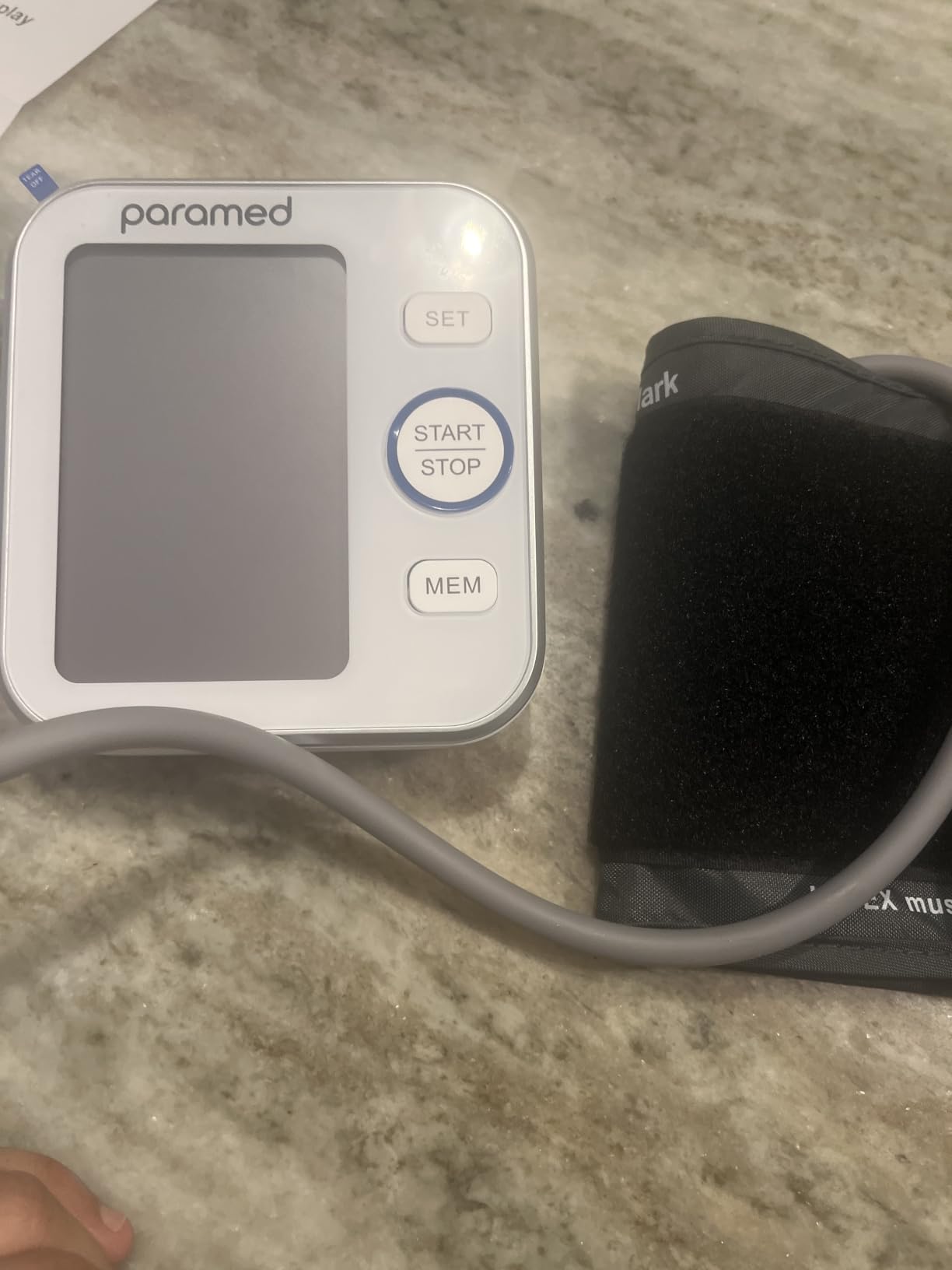
The Paramed B22S is the widest-bodied unit on my counter, and that is by design. The LCD uses oversized numbers and the buttons are physically large, so this is the monitor I would hand to someone with arthritis, reduced hand strength, or a general dislike of small plastic buttons.
Its voice broadcast is the better-designed version of the feature found on the Alcedo, because it can be turned off entirely. That matters in a shared space and for anyone who finds a talking device embarrassing in front of guests.
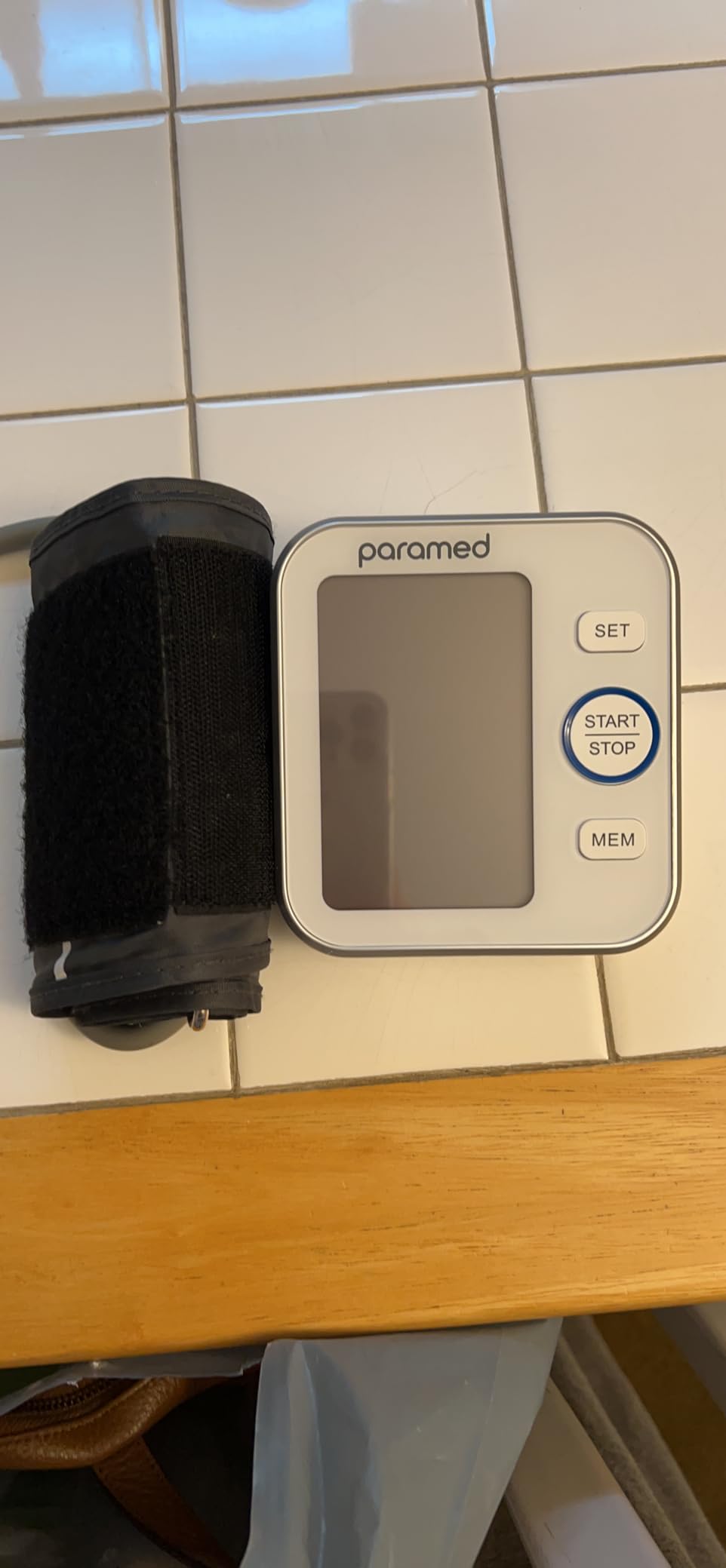
The cuff is self-checking and universal from 8.7 to 16.5 inches, and reviewers specifically call out the wide cuff width as easier to position correctly on the arm than a narrow one. Correct positioning is the difference between a useful log and a series of numbers nobody trusts.
Memory holds 120 readings across two profiles, and a low battery indicator plus date display remove the two most common reasons a log has holes in it. A carrying bag and four AA batteries are in the box, so it is usable within a minute of opening it.
On accuracy, owner reports commonly describe readings matching a clinician-tested device in side-by-side checks. That is an anecdote rather than a validation listing, so treat it as encouraging rather than proven, and cross-check any new monitor at your next appointment.
When the Paramed B22S is the right pick
Choose it for a user who needs large physical buttons more than they need a small footprint. The oversized display and the wide cuff make it forgiving of imperfect placement, which is where most home measurement errors begin.
It is also the pick if the device lives in a bedroom and the voice feature must be silenceable. Being able to switch it off is not a minor detail.
When the Paramed B22S is the wrong pick
Pass if you take readings at night in a dark room. There is no backlight on this display, so a bedside reading is harder to see than on the Invaxe or the Runstar.
Pass if you are the type to get stuck on documentation. The instruction manual carries some typos, and the wide body takes up more counter space than the compact models in this list.
4. Oklar FDA Cleared Monitor – Best Compact Option With 240 Readings for Two Users
Oklar FDA Cleared Blood Pressure Monitor Upper Arm BP Machine for Home Use
FDA cleared
Cuff fits 8.7-15.7 inch
240 readings for 2 users
3 AA or USB-C power
Pros
- FDA cleared for accuracy
- Only 5.28 ounces and very compact
- Backlit LED display with clear digits
- 240 readings across two users
- Artery alignment markings printed on the cuff
Cons
- Date and time reset when run from a power bank
- Display flashes too briefly to read
- Short air tube and USB cable
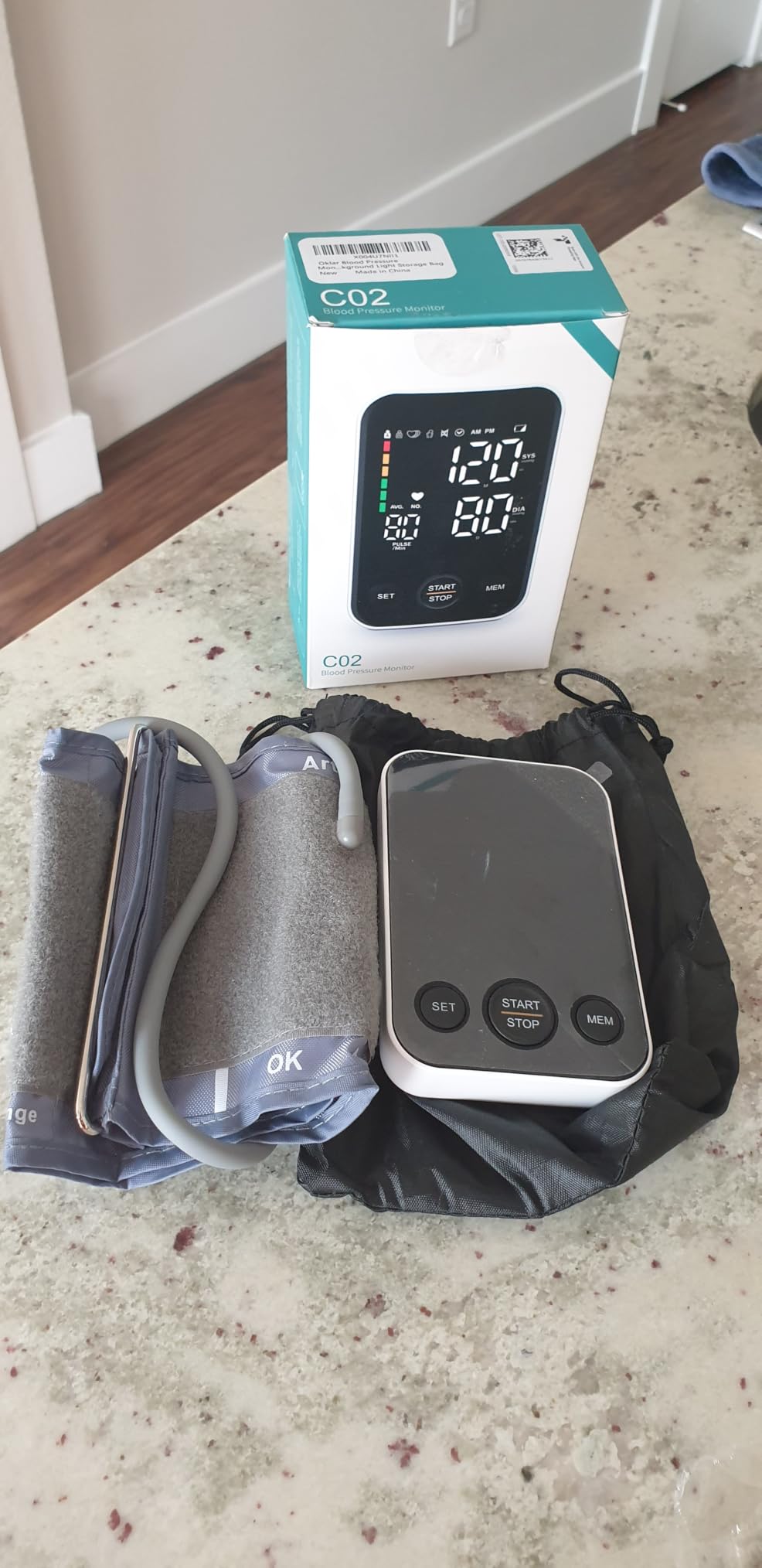
At 5.28 ounces and 3.9 by 3.9 inches, the Oklar C02 is the one I keep in a overnight bag. It takes almost no space, which makes it the practical choice for someone who travels or who does not want a device occupying a permanent spot on the counter.
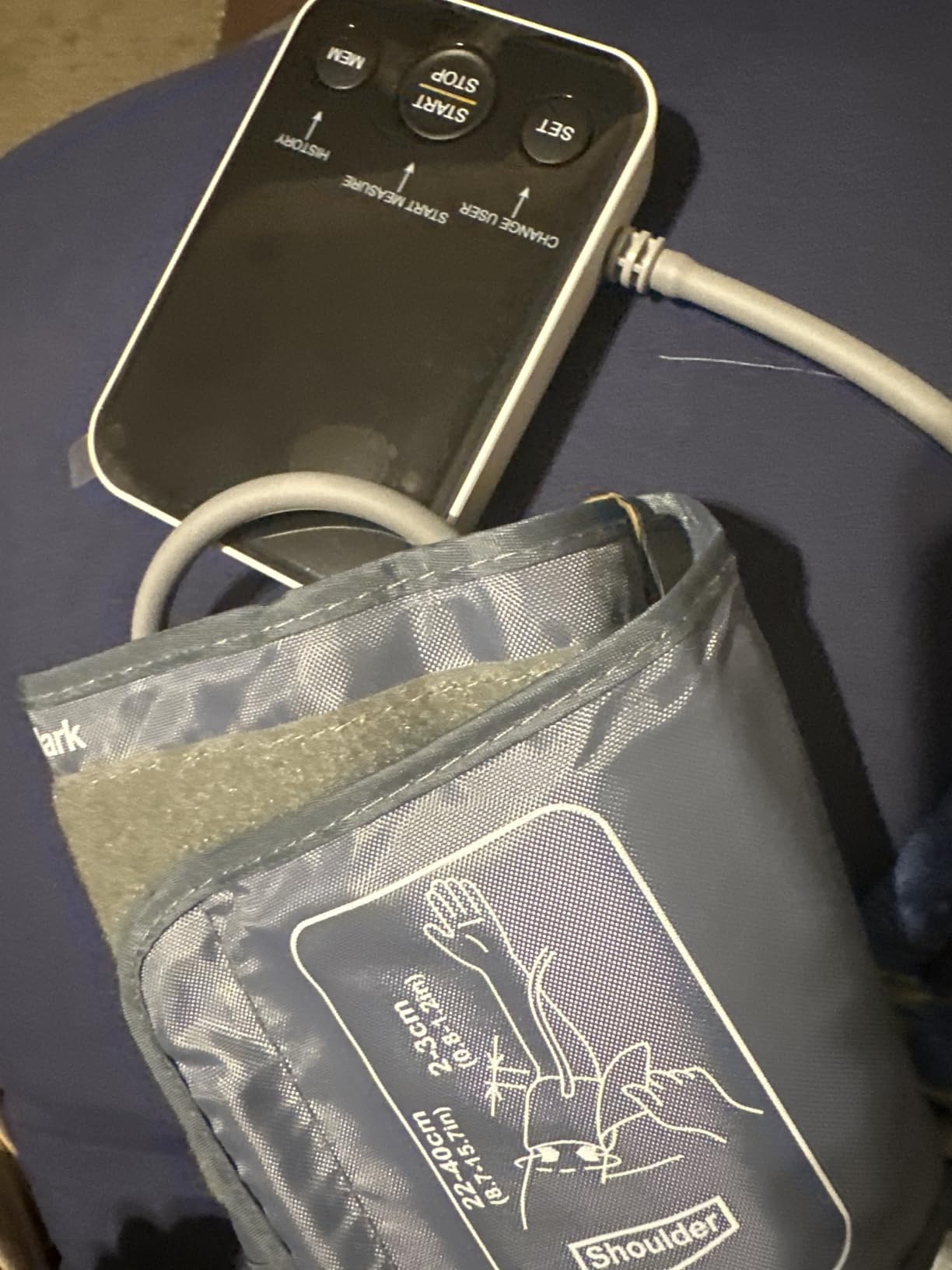
The accuracy story is the most concrete on this list. It is FDA cleared, and the cuff carries printed artery alignment markings so you can line the bladder up with the brachial artery instead of guessing. It also has a color-coded BP range indicator with a bar graph.
Storage is generous. It holds up to 240 readings, 120 per user across two profiles, and the adjustable cuff fits 8.7 to 15.7 inches. The cuff is reported to stay put during inflation, so readings repeat without re-wrapping.
Power is dual: 3 AA batteries or a Type-C cable. Note that the Type-C cable only powers the device and does not recharge it, so it is a mains alternative rather than a charging solution.
There are real quirks. The date and time reset when the unit runs from a battery bank, which scrambles your log order, and the display flashes the date and time too briefly to read. Owners also report a short 23 inch air tube and a 38 inch USB cable, plus a soft case soft enough to press the start button when stored next to the device.
When the Oklar monitor is the right pick
Choose it if bag space matters or you want the lightest option here. At under six ounces it disappears into a drawer, and the FDA clearance gives you an accuracy credential that most monitors in this price class cannot offer.
The printed artery markings are the quiet hero feature. If someone in your household wraps the cuff by feel alone, those markings remove the most common source of error.
When the Oklar monitor is the wrong pick
Pass if your upper arm falls between 15.7 and 16.5 inches. The cuff is narrower at the top end than most of the rivals here, and an undersized cuff biases readings upward.
Also pass if precise timestamps matter to you. Running it from a power bank resets the clock, so entries can be out of sequence. Our travel monitor guide covers what to look for in a compact device.
5. OMRON Evolv Wireless Monitor – Best From the Most Doctor-Recommended Brand
OMRON Evolv Wireless Blood Pressure Monitor & Upper Arm Blood Pressure Cuff
ComFit cuff fits 9-17 inch
100 readings on device
Bluetooth to OMRON connect
Tubeless one-piece body
Pros
- From the number one doctor and pharmacist recommended brand
- Tubeless one-piece design with no air hose
- Syncs to Apple Health and Google Fit
- ComFit cuff covers 9-17 inches
- Compact and battery powered
Cons
- Code 4 movement error fires often because the device vibrates
- Small dim digits on glossy black plastic
- Only one non-replaceable cuff size
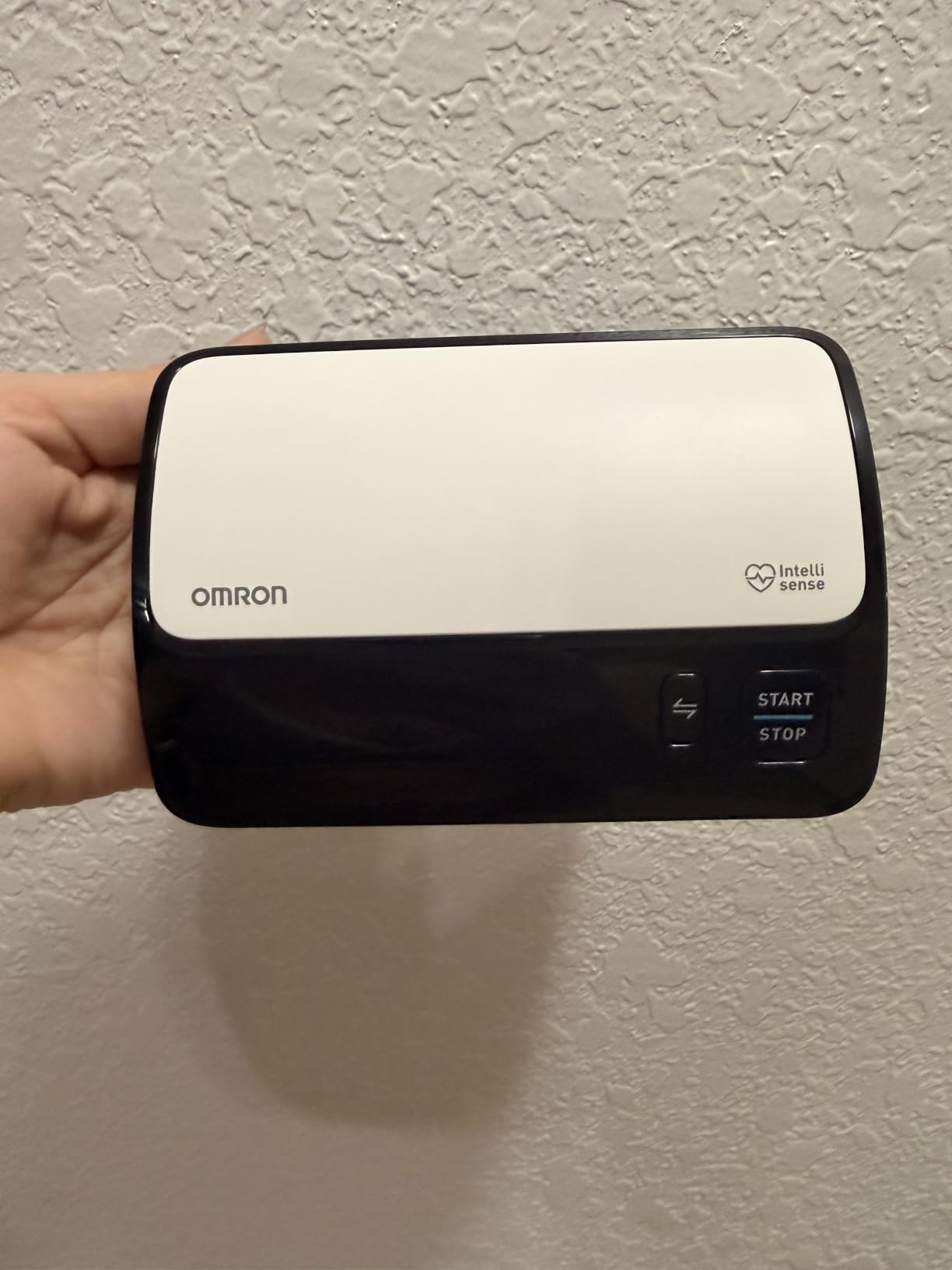
OMRON is the brand that comes up most often when long-term owners on r/BuyItForLife and r/hypertension name a monitor they would buy again, with several users reporting a single unit lasting a decade without trouble. The Evolv carries that brand name and the tubeless design that made the range popular.
There is no air hose. The cuff and the monitor are one piece, so wrapping it on a bare arm is a single motion, which is the practical reason the tubeless layout became the default in this category.
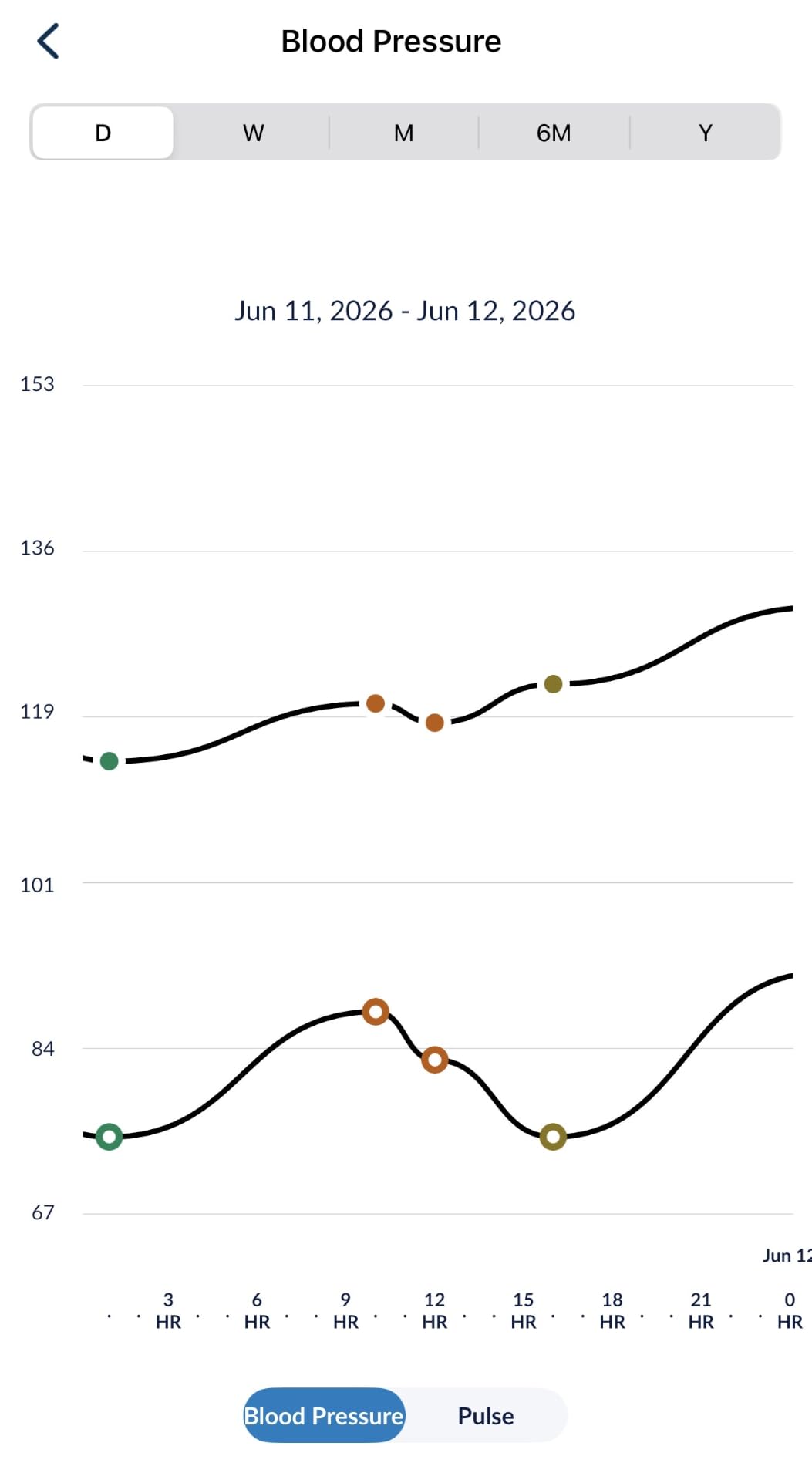
The ComFit cuff covers 9 to 17 inches, a good span for muscular arms, and reviewers praise how easily it wraps. Bluetooth connects to the OMRON connect app with unlimited storage and graphing, and it links to Apple Health and Google Fit, so the data can reach a clinician without anyone retyping a number.
On-device it stores up to 100 readings, so history survives even if the phone is elsewhere. Advanced Accuracy Technology and irregular heartbeat detection are both present, and the whole thing runs on 4 AAA batteries at a little over 8 ounces.
The design has genuine irritations. A Code 4 movement error fires frequently because the device itself vibrates during inflation, and the display uses small, dim digits on shiny black plastic that catches glare. The flush-mounted buttons have very little travel for older fingers, and there is only one cuff size, which is fixed into the body and cannot be removed or replaced.
When the OMRON Evolv is the right pick
Choose it if brand reputation is your top filter, or if you already use Apple Health or Google Fit and want readings to land there automatically. The name carries weight when a doctor asks what you use at home.
It also suits anyone who wants a hose-free wrap. One-piece design means no fumbling with a tube, and at under 8 ounces it packs easily.
When the OMRON Evolv is the wrong pick
Pass if you have a visual impairment or stiff fingers. Small dim digits on a reflective panel and buttons with almost no travel are real barriers, and this is not the talking or backlit option you want.
Pass if you might outgrow the cuff. There is one fixed 9-17 inch size, and it cannot be swapped for a small or extra-large replacement when your arm or a family member’s arm falls outside that span.
6. A&D Medical UA-651 – Best When You May Outgrow the Included Cuff
A&D Medical UA-651 Blood Pressure Monitor for Home Use. Cuff 8.6-16.5”
Cuff fits 8.6-16.5 inch
60 reading memory
Snapshot averaging
Optional small, medium and large cuffs
Pros
- Established medical device maker with clinical grade accuracy
- Works with separately sold small
- medium and large cuffs
- Snapshot averaging calculates a baseline
- Cuff fit detection reduces placement errors
Cons
- Only 60 reading memory versus larger rivals
- App logging is manual rather than automatic sync
- Extra cuff sizes must be bought separately
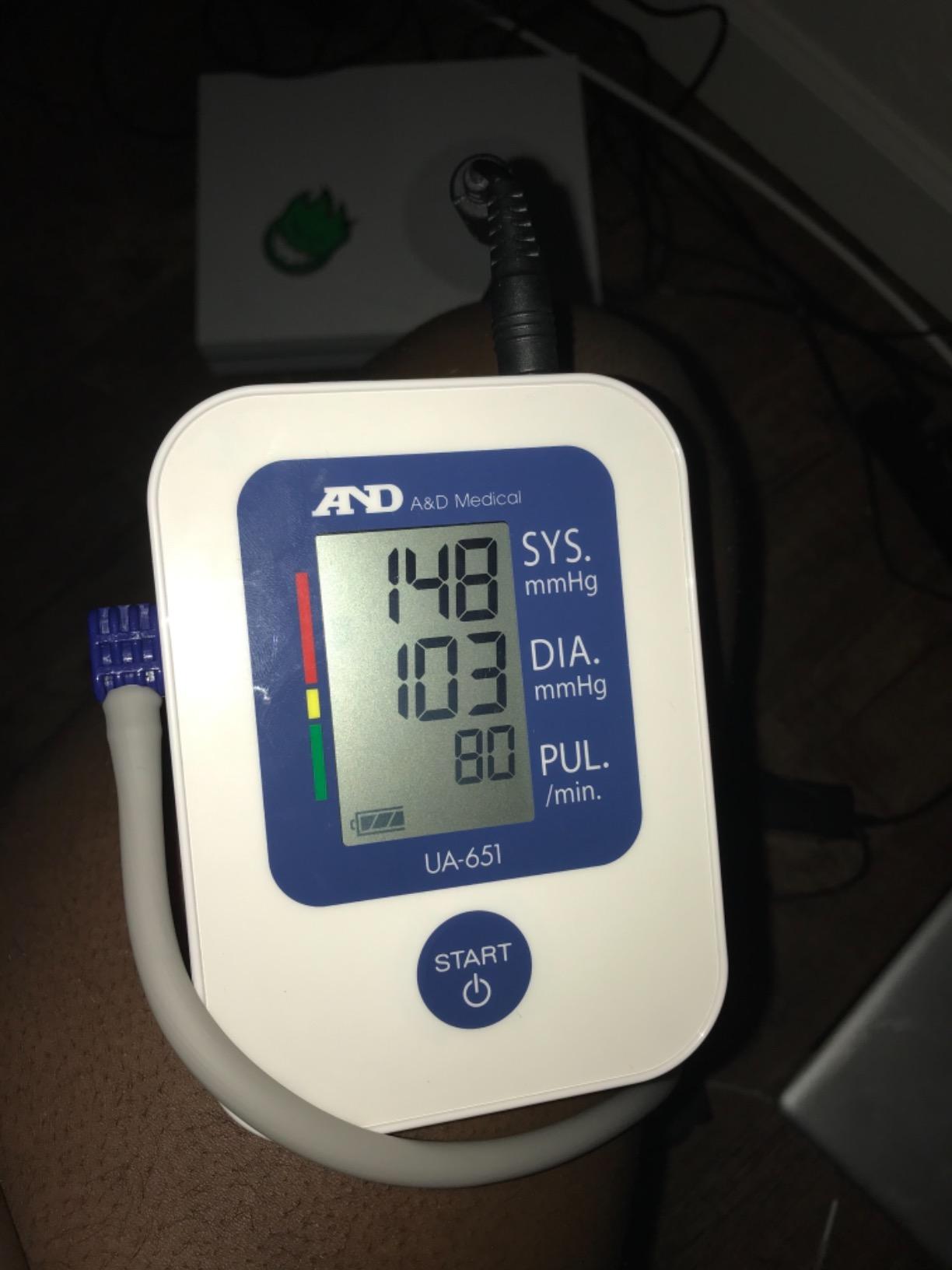
The A&D UA-651 has been in production since 2014, which is a useful signal for a device you may keep for a decade. A long-running model from a dedicated medical equipment maker tends to have replaceable parts and steady firmware, unlike a disposable consumer gadget.
The reason I keep recommending it is the cuff system. The included wide-range cuff fits 8.6 to 16.5 inches, and the same monitor accepts a small, a medium, and a large cuff sold separately. If two people in your home have very different arm sizes, one device can serve both.
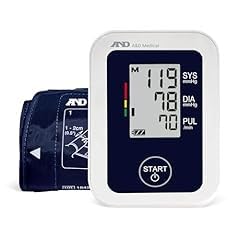
It also has cuff fit detection, which flags a loose or misplaced wrap, and Snapshot Averaging, which calculates a baseline blood pressure from stored readings. That is a genuine tracking feature rather than a marketing label, and it helps when a single number would be misleading.
Advanced inflation and deflation make it one of the more comfortable units in this roundup, and users on r/highbloodpressureinfo who prefer a lighter squeeze rate tend to land on this model. It is compact at 3.78 by 2.68 by 5.12 inches and about 10.58 ounces, running on 4 AAA batteries.
The compromises are real. Memory is 60 readings, the smallest in this roundup, and the A&D Heart Track app logs manually rather than syncing over Bluetooth, so you still type values in yourself. The display is a large digital LCD with oversized numbers but nothing beyond that.
When the A&D UA-651 is the right pick
Choose it if your arm size may change, or if a second person with a very different arm will use the same device. Having the option to buy a small, medium, or large cuff later is the deciding factor for me.
It is also the pick for anyone who prefers a gentler inflation cycle and wants a baseline calculation rather than isolated readings.
When the A&D UA-651 is the wrong pick
Pass if you want automatic app logging. You will be typing numbers by hand, and anyone who asked a smart monitor to stop that work will be disappointed.
Pass if you take frequent readings for two people on a schedule. Sixty slots fills quickly, and the monitors with 120 to 240 per user will outlast this one between data dumps.
7. yuwell Large Cuff Monitor – Best for Arms Above 16.5 Inches
yuwell Blood Pressure Monitor, Large Upper Arm Blood Pressure Cuff, Digital Blood Pressure Machine for Home Use, Large Display, Stores 99 Readings, Voice Broadcasting with Power Adapter and Batteries
Cuff fits 8.7-17.7 inch
ESH standard met
99 readings with 3-reading average
Voice broadcast
Pros
- Meets the ESH standard for accuracy
- Widest cuff range here at 8.7-17.7 inches
- Intelligent pressurization reduces over-inflation
- Metal bar on the cuff aids self-application
- Power adapter and battery both included
Cons
- Short cuff tube means the device sits in your lap
- Voice broadcast cannot be disabled
- Cuff can wrap the arm twice
Most home monitors top out around 16.5 inches of arm circumference. The yuwell YE660E runs to 17.7 inches, and that extra inch and a half is the whole reason this model is on the list for anyone with a larger upper arm.
It also meets the ESH standard, and the maker states the algorithm was trained on clinical data from hypertension patients. Intelligent pressurization reduces the over-inflation that causes discomfort, which addresses the top complaint in the community about cuff pain.
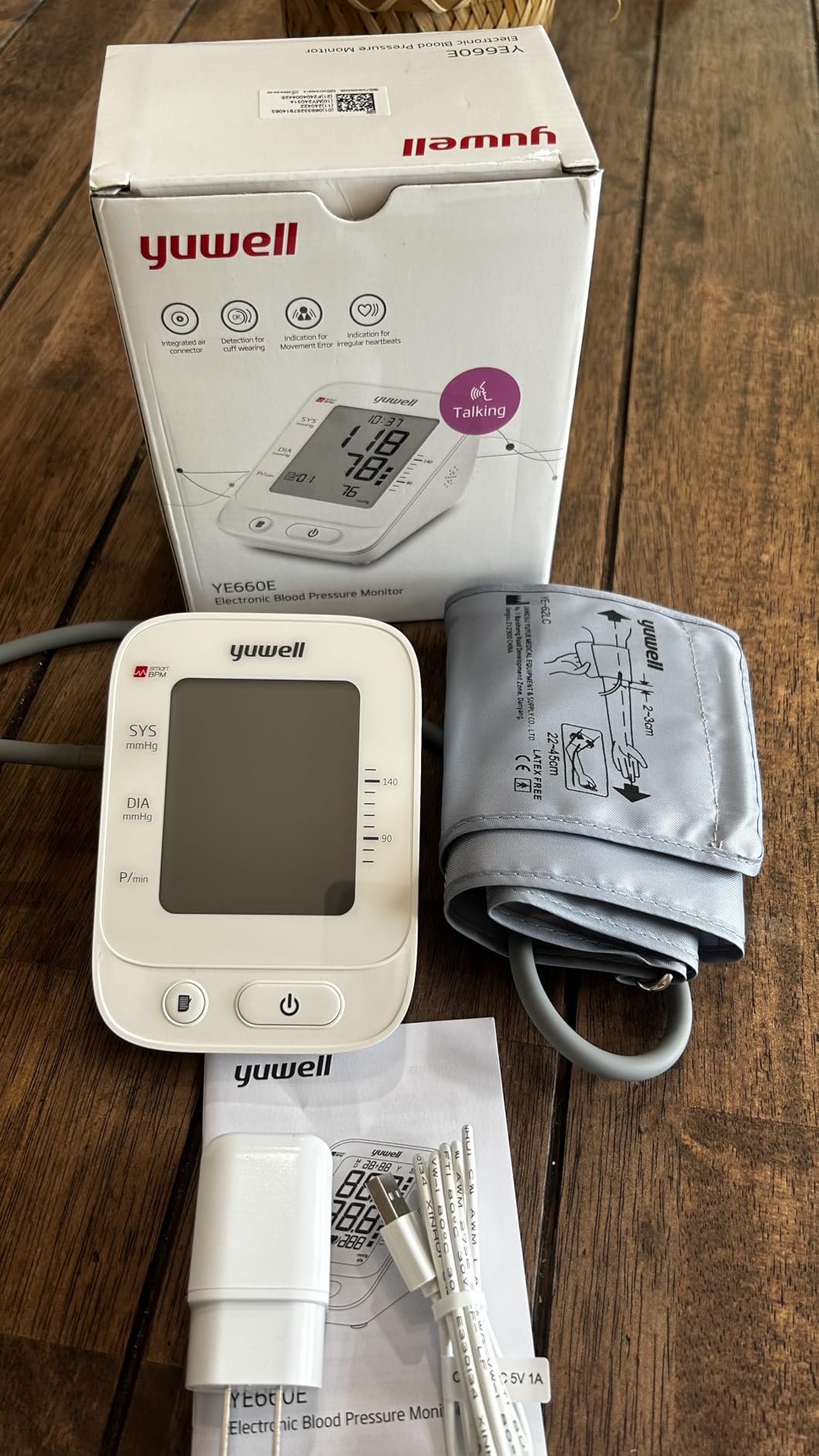
The metal bar built into the cuff is a small, genuinely clever detail. It acts as a grip so you can wrap and position the cuff one-handed, which solves the frustration users describe about cuffs that slip or are hard to hold in place.
Storage is 99 readings with an automatic average of the last three measurements, plus a hypertension indicator and an irregular heartbeat alert. A self-test function checks the device and reminds you if you have made an error.
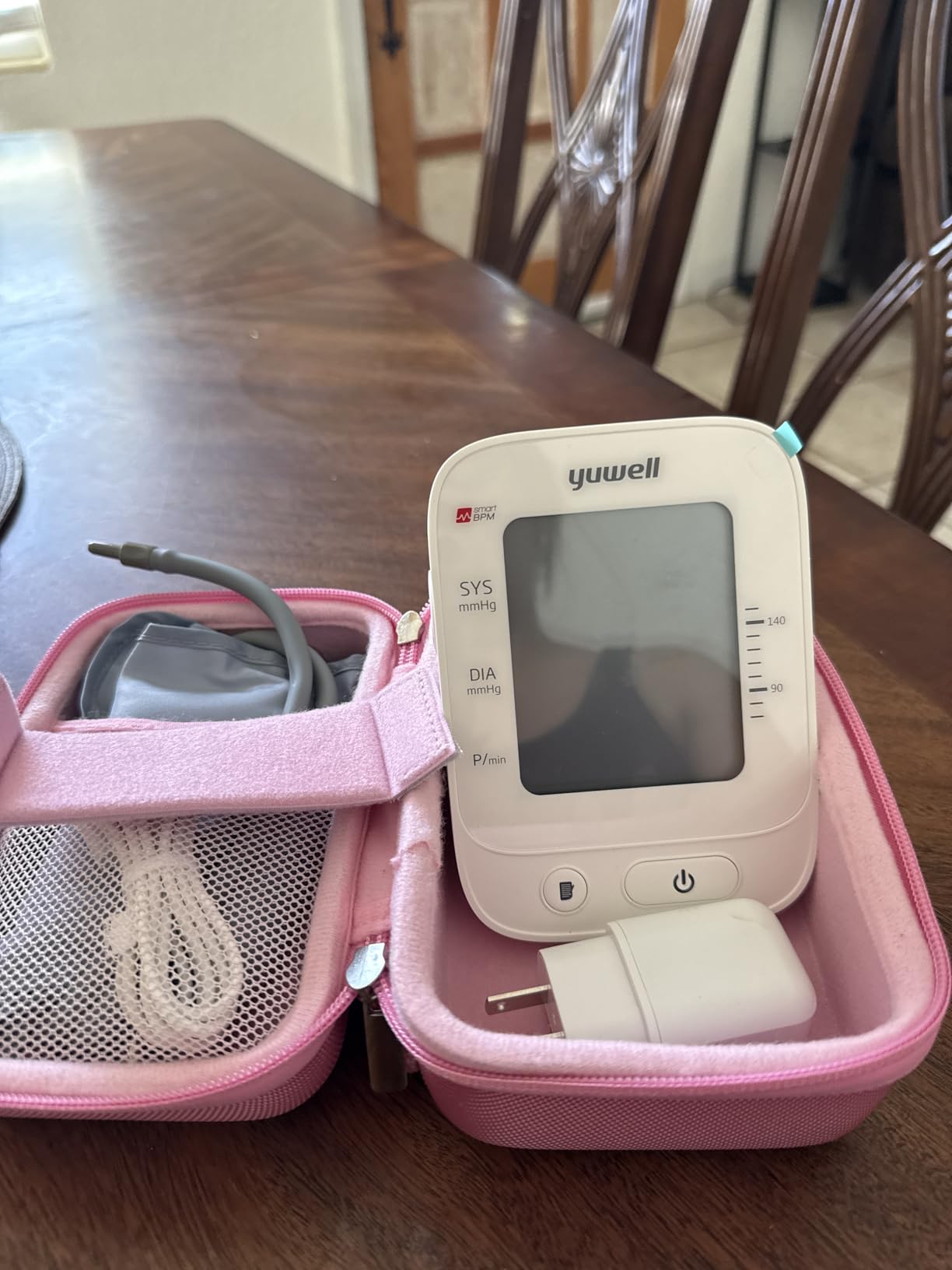
It runs on a lithium polymer battery, with a power adapter, storage bag, and box included, so you are not committing to disposable cells. The voice broadcast reports the result and gives a diagnosis, though you cannot silence it.
When the yuwell monitor is the right pick
Choose it if your upper arm exceeds 16.5 inches, or if a standard cuff leaves a visible mark after inflating. The wider range and intelligent pressurization solve two different problems that both distort readings.
It is also a good match for anyone who finds wrapping a cuff one-handed difficult, thanks to the metal bar, and for users who want the last three readings averaged automatically.
When the yuwell monitor is the wrong pick
Pass if your arm is on the smaller side, because the maker only offers large and extra-large cuff sizes with no medium. The cuff is also long enough to wrap around the arm twice, which some users find excessive.
Pass if you need a quiet device. The voice broadcast cannot be disabled, and the short connecting tube means you hold the unit in your lap while the straight connector plug puts strain on the port.
8. Invaxe 2×199 Reading Monitor – Best for the Largest Display and Deepest Memory
Blood Pressure Machine, Automatic Upper Arm Blood Pressure Monitor with 2×199 Readout, 4.5 Inch Backlit Large Screen Adjustable Large Cuff 9 to 17 Inches – Arrhythmia and Home Hypertension Detector
Cuff fits 9-17 inch
398 readings for 2 users
4.5 inch angled backlit LCD
Lifetime warranty
Pros
- Largest memory capacity here at 398 readings across two users
- 4.5 inch backlit LCD angled at 45 degrees
- Automatic cuff position detection
- Automatic average of the last 3 readings
Cons
- AC adapter not included
- Newer brand with a limited track record
- Some reports of an unreliable USB port and bundled cable
The Invaxe AOJ-30G has a 4.5 inch backlit screen mounted at a 45 degree angle, and that geometry is the reason it is so easy to read. You can glance at it while the cuff inflates without bending your neck or holding your arm up to a light.
Memory is the other headline. It stores 199 readings for each of two users, 398 in total, which means roughly three months of twice-daily logging for a couple before anything is overwritten.
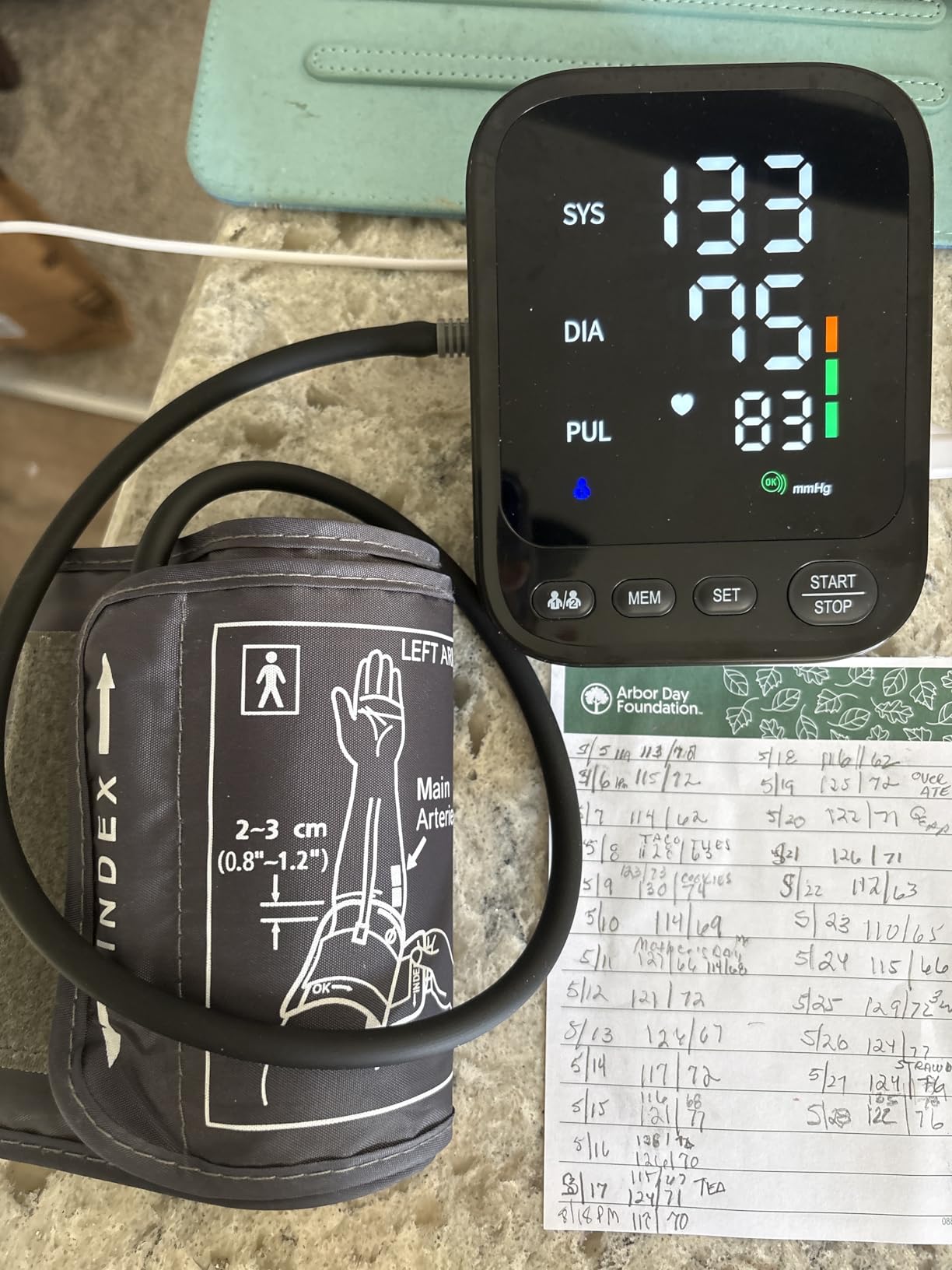
It calculates the average of the last three measurements automatically, has a six-color pressure level indicator, and detects irregular heartbeat. The cuff covers 9 to 17 inches with automatic position detection and a reminder if it is worn incorrectly.
The warranty is stated as lifetime with 24/7 support, which is unusual in this category and partly compensates for a young brand. Power is dual, through 4 AAA batteries or a USB cable, with an auto-off after three minutes.
The caveats are the small ones. No AC adapter is included, so USB power means a wall plug you supply yourself, and some owners report an unreliable USB port and bundled cable. At 2,604 reviews the track record is much shorter than the models above it, so long-term durability is unproven.
When the Invaxe monitor is the right pick
Choose it if reading the display comfortably is your biggest problem. The angled backlit screen, large buttons, and one-button start are the most senior-friendly combination in this roundup without a voice feature.
It also suits two people who want long unattended history, or anyone tracking a medication change over weeks and needs deep storage to look back at.
When the Invaxe monitor is the wrong pick
Pass if you want a brand with a long record. This is a newer name with the smallest review base among the well-rated units here, and early USB port reports suggest the accessory side is still maturing.
Pass if your arm falls under 9 inches, since the 9-17 inch cuff is the narrowest lower bound on this list alongside the OMRON.
9. GUAEVER Rechargeable Monitor – Best for People Who Hate Changing Batteries
GUAEVER Blood Pressure Monitor Rechargeable Upper Arm, Large Screen, Black
Built-in rechargeable battery
Cuff fits 8.7-16.5 inch
240 readings
Voice guidance
Pros
- Rechargeable battery lasts about 150 uses per charge
- No disposable batteries to keep buying
- Algorithm trained on over 1000 test subjects
- Voice guidance can be turned off
- 240 readings across two users
Cons
- Newer brand with limited long-term history
- Heavier at 14.89 ounces than most battery-powered rivals
- Only offered in red and black
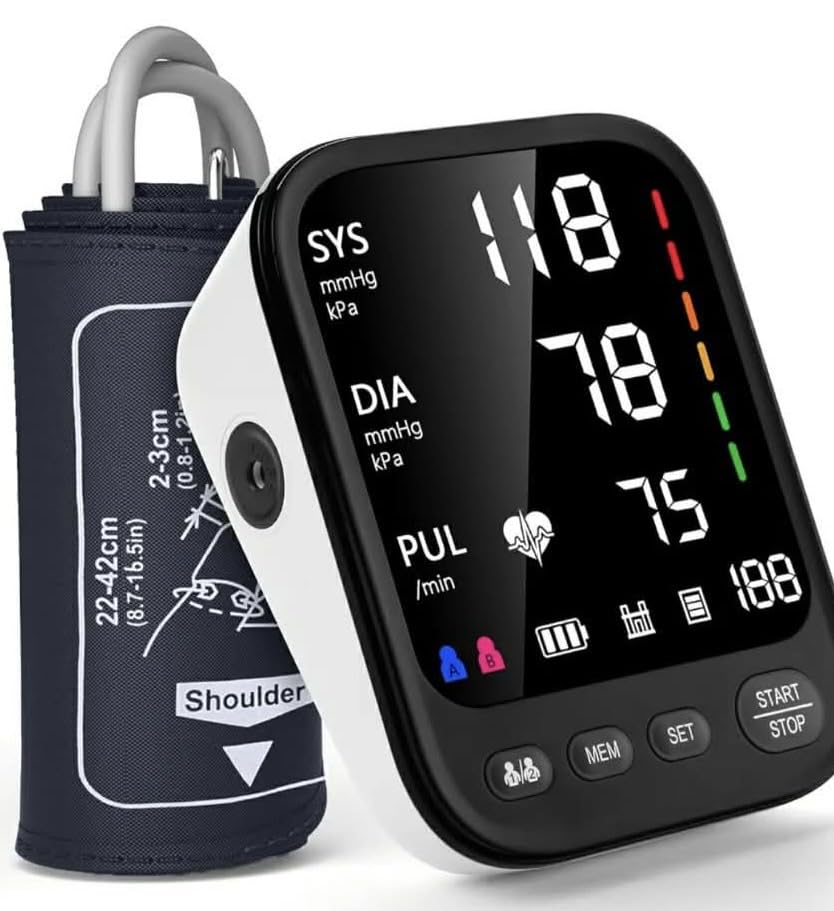
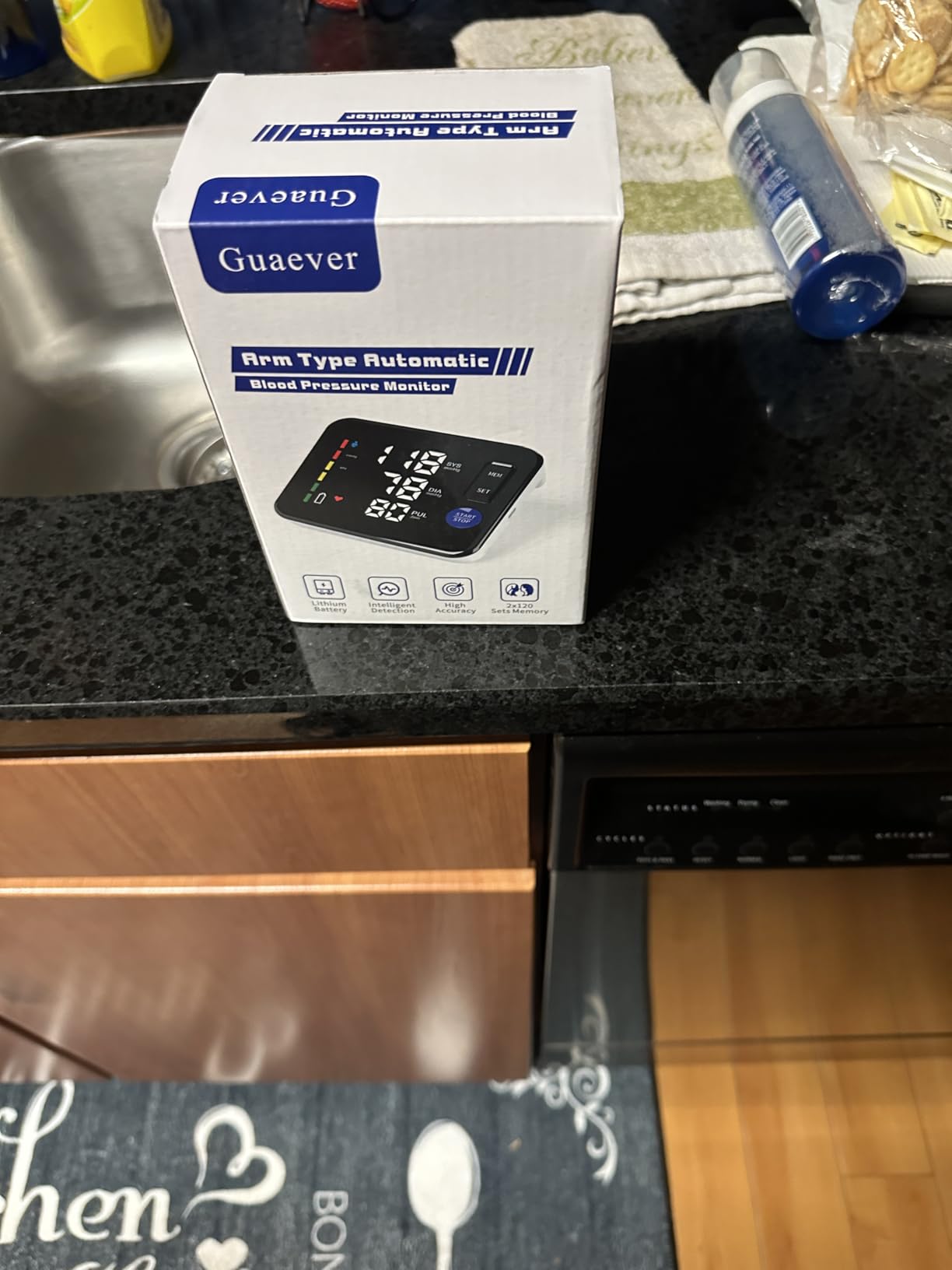
The GUAEVER BP351A is the one model in this roundup built around a built-in rechargeable battery rather than disposable cells, and that single design choice removes a recurring chore from daily monitoring. One charge covers roughly 150 uses, which works out to several months of twice-daily readings.
It also has full voice guidance that can be turned off, so it works as a talking monitor for one user and a silent one for the next. The cuff covers 8.7 to 16.5 inches and memory holds 120 slots for each of two users, 240 total.
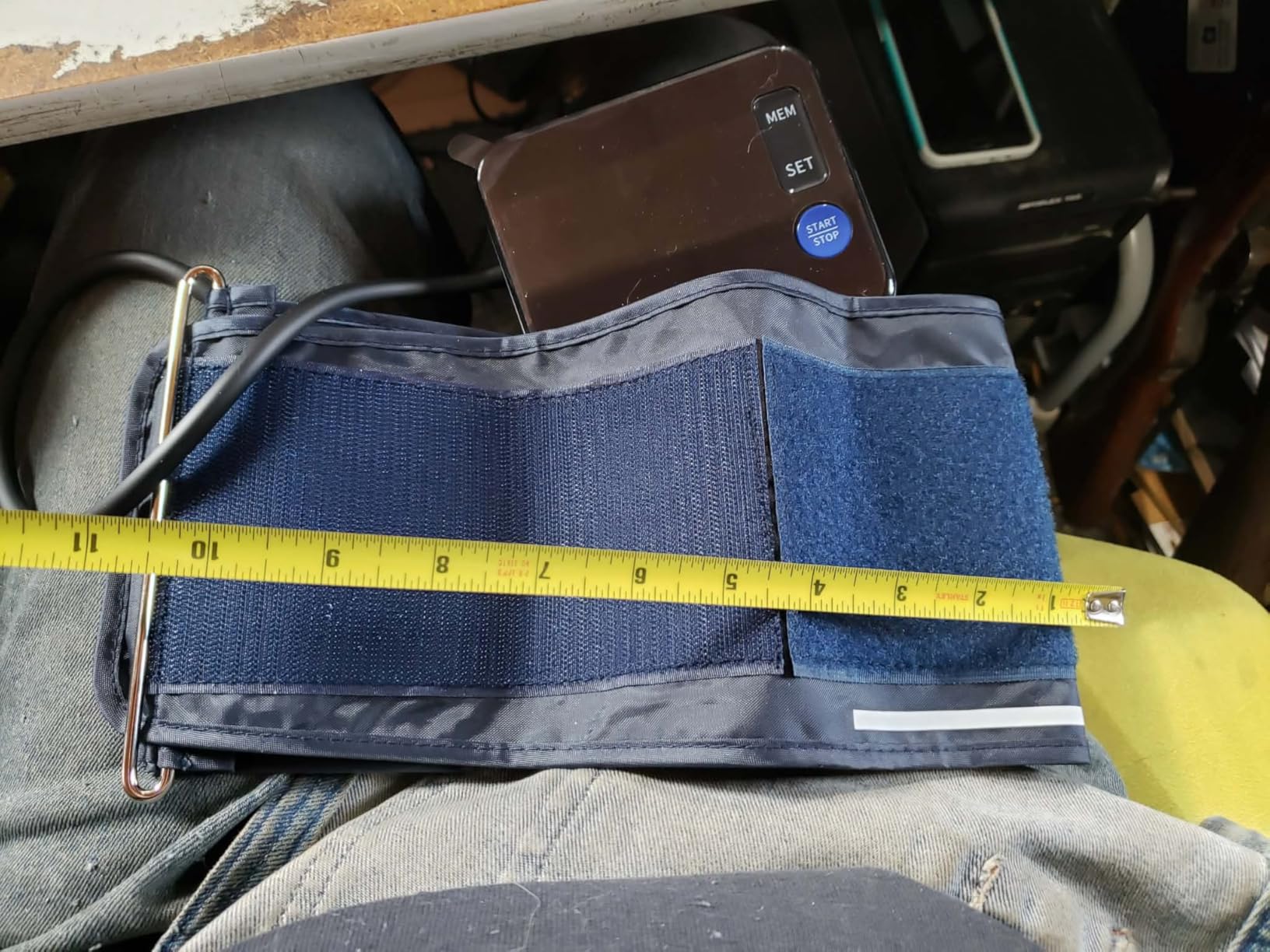
Accuracy is supported by an algorithm trained on more than 1,000 test subjects, and every unit goes through quality inspection before shipping. Heart rate monitoring comes with an abnormal heartbeat alert, and operation is one touch.
It is one of the heavier units here at 14.89 ounces, which is noticeable in a travel bag but fine on a counter. It is a recent release, so with 2,266 reviews the long-term reliability picture is still forming, and it is only offered in red and black.
Because it is rechargeable, treat the charging habit as part of the routine. Users on r/highbloodpressureinfo mention battery anxiety as a real reason they stop logging, and this device answers that differently rather than better.
When the GUAEVER monitor is the right pick
Choose it if you have repeatedly let a monitor die because you ran out of batteries. A 150-use charge cycle removes that failure point, which is a bigger reliability gain than most feature upgrades.
It is also a good two-user option with 240 total readings, and the switchable voice guidance makes it adaptable to different people in one household.
When the GUAEVER monitor is the wrong pick
Pass if you want the deepest support record. This is a new brand with a short history, and no long-run data on how the rechargeable cell behaves after a year of daily use.
Pass if you need a light device for travel. At 14.89 ounces it is one of the bulkier monitors in this roundup, and the Invaxe at 1.1 pounds is heavier still.
10. Runstar Wide Range Monitor – Best FSA and HSA Eligible Option With an Angled Display
Runstar Upper Arm Blood Pressure Monitor with Wide Range Cuff (8.6” -16.5”) for Home Use FSA&HSA Eligible, Automatic Digital BP Machine with Storage Bag, 2×99 Reading Memory
FSA and HSA eligible
Cuff fits 8.6-16.5 inch
30 degree angled backlit display
198 readings for 2 users
Pros
- FSA and HSA eligible
- Display angled at 30 degrees with soft backlighting
- Voice broadcast can be turned off
- Cuff goes on one-handed and does not slip
- Cuff wear detection warns on loose placement
Cons
- Newest model with the smallest review base
- Highest one-star review rate at 13 percent
- Only 99 readings per user
- Only offered in black
The Runstar BP-205 is the newest monitor here and the one with the thinnest evidence base at 1,015 reviews. We include it because the feature set is genuinely good, and we flag the thin history because you should know that going in.
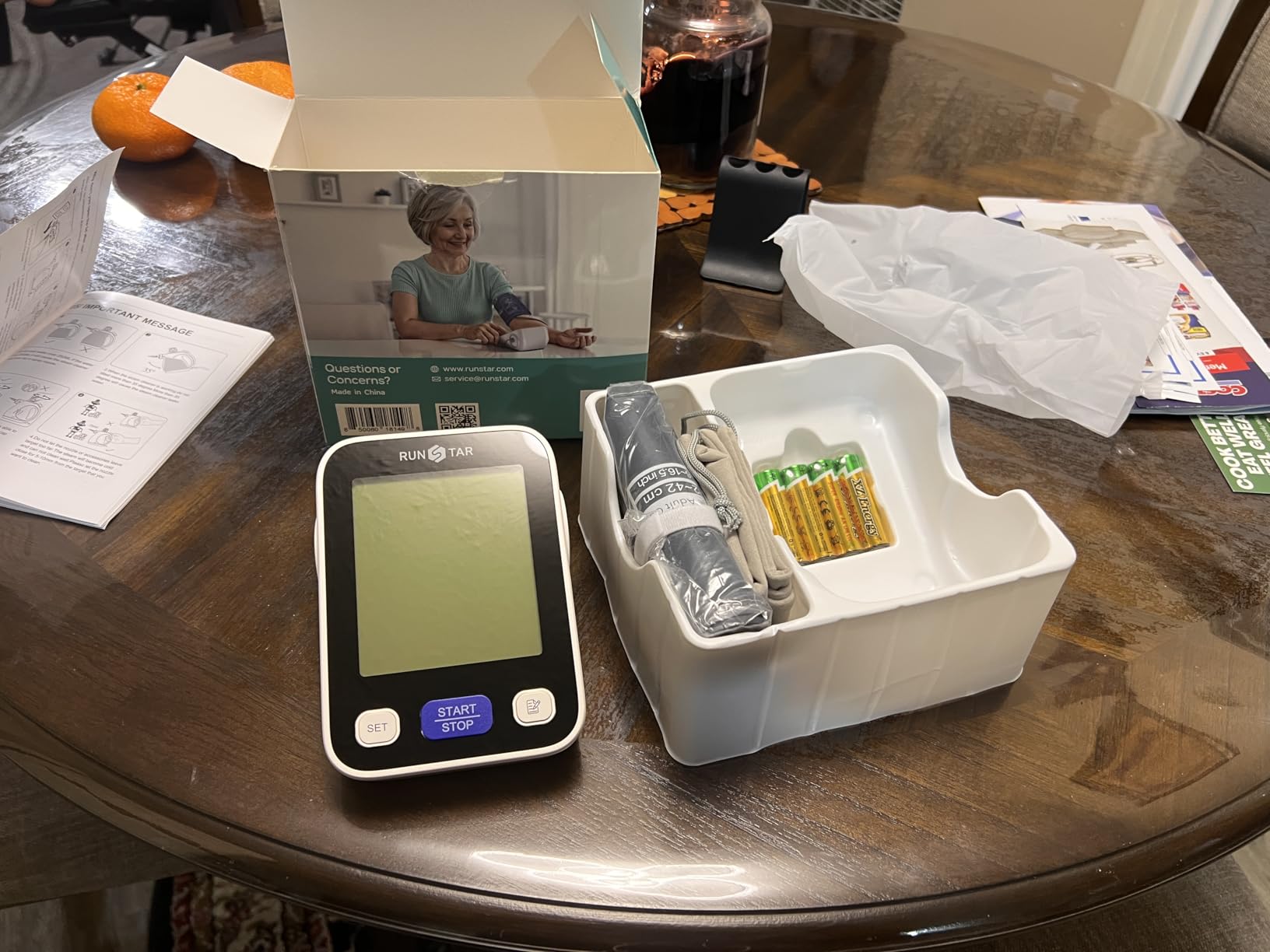
Its display is a 4.2 inch LCD angled at 30 degrees with soft backlighting and large fonts, which makes it the easiest to read in a dim room without a voice feature. The voice broadcast exists too, and it can be switched off.
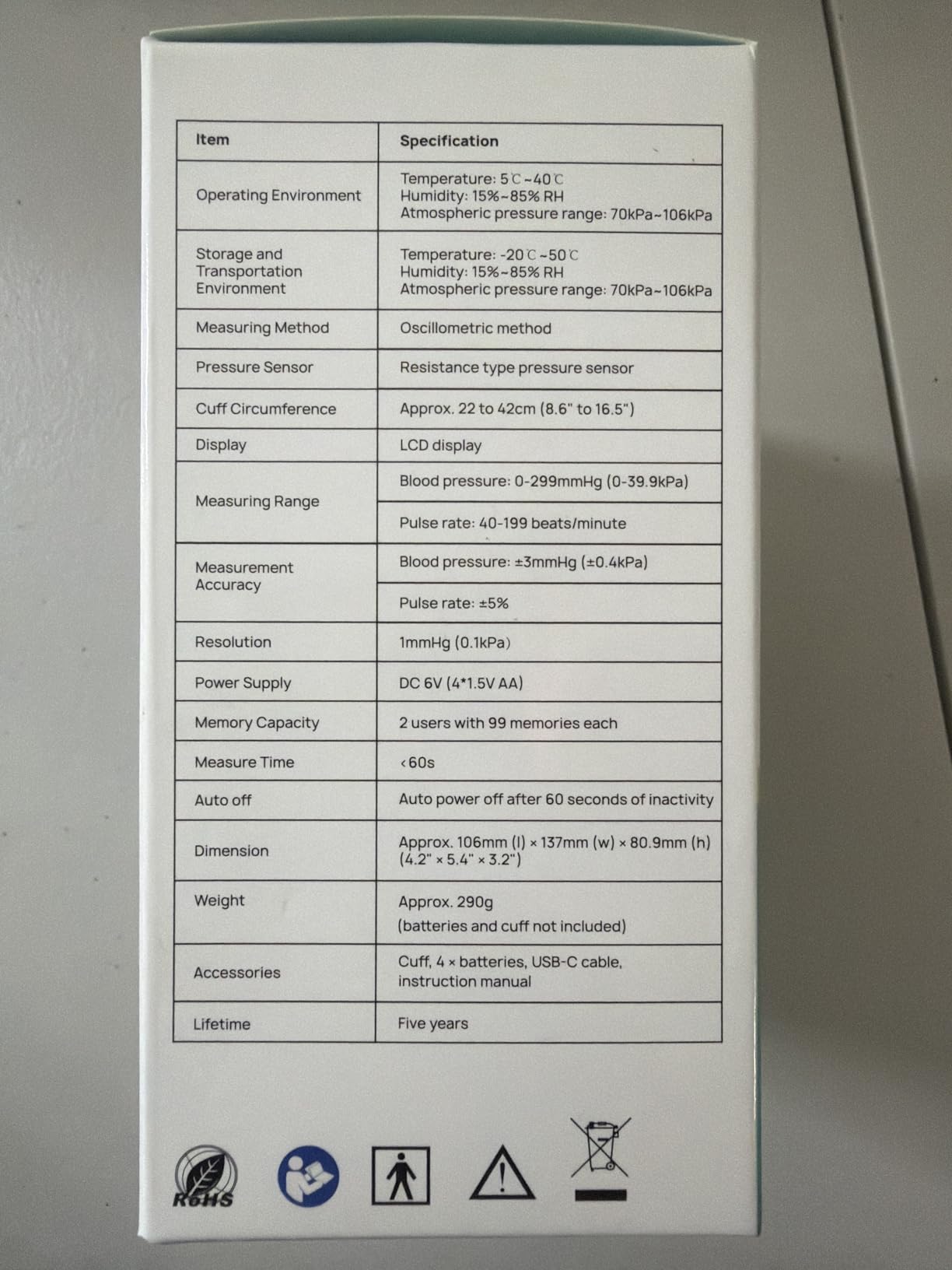
The cuff is the standout. It is soft, fits 8.6 to 16.5 inches, goes on one-handed, and stays put during inflation. Cuff wear detection alerts you if it is loose or worn incorrectly, which is a genuine accuracy aid rather than a gimmick.
Readings come inside about 30 seconds using an algorithm developed from clinical data on tens of thousands of hypertensive patients. Memory holds 99 readings for each of two users with date and time attached, and the storage bag and four AA batteries are in the box.
It is also FSA and HSA eligible, which makes it a sensible pick if you use a health spending account. The honest drawback is the 13 percent one-star rate, the highest in this roundup, alongside the smallest review count.
When the Runstar monitor is the right pick
Choose it if you use an FSA or HSA and want a health-account-eligible device that still has a backlit angled display. The cuff wear detection is a real help if you are new to home monitoring.
It is also a good option for a two-person household that wants separate logs with timestamps and a soft cuff that does not mark the skin.
When the Runstar monitor is the wrong pick
Pass if you want a settled track record. With the fewest reviews and the highest one-star share, this is the model where the returns window matters most.
Pass if you need deep memory per person, since 99 readings per user is the second-smallest allocation here, and there is only a black color option.
How to Take an Accurate Reading at Home?
The single biggest accuracy variable is not the monitor. It is what you do in the five minutes before and the ninety seconds after you press start.
Rest for five minutes first. Sit quietly with your back supported and feet flat on the floor. No coffee, no exercise, no arguing with a teenager.
Use a bare arm. A sleeve between skin and cuff adds thickness and skews the result. Roll the cuff above the elbow if you can.
Position the cuff at heart level. The artery marker on the cuff should sit over the inner upper arm, and the bladder area should be level with your heart when you are seated.
Keep your feet and arm supported. Crossing your legs or letting your arm hang during the measurement changes the number.
Take two readings one minute apart. This is the step most guides skip and the one that improves your average most. Discard the first, record the second, and average them if you want a single figure.
Measure at consistent times. Morning before medication and evening are the most useful pair. Same time, same arm, same posture.
Log and average over a week. A week of averaged readings tells you far more than one dramatic number, which is how white coat hypertension gets sorted out.
Users on r/hypertension describe the two-reading protocol as the change that finally made their logs consistent, because a single reading on a cuff they cannot wrap properly is mostly noise.
What to Look for When Buying an Upper Arm Monitor
Cuff fit comes first, and it is the point most roundups underplay. Measure your upper arm circumference with a tape before you buy anything.
Cuff size guide by arm circumference
Use the circumference of your bare upper arm at mid-bicep, not your wrist and not your forearm. Then match it against the range the manufacturer publishes for the cuff that ships with the model.
8.6 to 9.0 inches: very slim arms. You need a small cuff, and only a few models here cover this range at the bottom. The A&D UA-651 and Runstar BP-205 reach down to 8.6 inches.
9.0 to 15.7 inches: the most common range. Every monitor in this roundup covers this band.
15.7 to 16.5 inches: larger arms. This is where cheap models fail. The Oklar stops at 15.7, so confirm your measurement before choosing it.
16.5 to 17.7 inches: very large arms. Only the yuwell YE660E goes this high with its included cuff.
Outside any listed range: buy a model that accepts separately sold cuffs, such as the A&D UA-651, rather than forcing an undersized cuff.
An undersized cuff does not fail loudly. It reports a number, it just reports a number that reads high, which is exactly the feedback loop that makes people distrust home monitoring.
Irregular heartbeat and AFib detection, with caveats
Most monitors here flag an irregular heartbeat. That is a screening signal, not a diagnosis, and it is only meaningful if the reading repeats.
Two cautions matter. First, a single irregular-heartbeat symbol on a monitor that has not been validated for AFib detection tells you very little. Second, some devices hide the blood pressure values when an irregularity is flagged, so make sure your model shows the numbers either way before you rely on it.
Talk to a clinician before using an AFib-detecting monitor if you have a pacemaker, are pregnant, or have a condition that makes the reading unreliable. Our accuracy guide covers what to ask your doctor.
Do you need Bluetooth and an app?
Only two monitors here sync automatically, the iHealth Track and the OMRON Evolv, and both still store readings on the device so you lose nothing by ignoring the app.
Automatic sync is worth it if your clinician reviews data remotely, since it removes transcription errors. Several users on r/highbloodpressureinfo say the opposite, that they would rather log on paper than manage another account, and for them a monitor with 60 to 240 on-device slots is the better fit.
Batteries, adapter, or rechargeable
Most units run on 4 AA or AAA cells, which is a small ongoing cost and completely reliable. Two accept USB power, the Oklar C02 and the Invaxe AOJ-30G, though the Oklar’s cable only powers the device rather than charging it.
The GUAEVER is the only model here with a rechargeable cell rather than disposable batteries, at about 150 uses per charge. If your household already has a drawer of dead AA batteries, that is a genuine convenience rather than a gimmick.
Memory depth and two-user handling
For one person taking twice-daily readings, 60 slots fills in a month. Anything from 99 upward gives you real history, and the Invaxe with 199 per user covers roughly three months for a couple.
Two-user profiles are worth checking before you buy if more than one person will log readings on the same device. A shared unit without profiles is the fastest way to end up with a log you cannot trust.
How to Check Whether Your Monitor Is Accurate
You can verify any home monitor yourself in one appointment, and it takes under ten minutes.
Bring the monitor to your next appointment and take a reading in the exam room alongside the clinic device.
Compare systolic first. A difference under 10 mm Hg is generally considered acceptable; beyond that, the cuff is the first thing to suspect, then the monitor.
Check the cuff size first. Almost every large discrepancy at a clinic cross-check is a cuff fit problem, not a device fault.
Take a second reading a minute later and compare that as well. A single comparison is noisy, two are not.
Write the result down. If your home monitor drifts from the clinic device, you need to know which one to trust for your medication decisions.
Our guide to monitor accuracy goes deeper on validation listings and what a manufacturer’s clinical claim does and does not tell you.
Frequently Asked Questions
What is the most accurate upper arm blood pressure monitor?
Among the monitors we reviewed, the iHealth Track Smart Upper Arm Monitor is the most accurate overall choice because it states ESH 2010 performance standards, needs no calibration, and has the deepest review history in the category. The yuwell YE660E also meets the ESH standard, and the Oklar C02 is FDA cleared. Accuracy in practice depends far more on cuff size and measurement technique than on the model you choose.
What is the most recommended home blood pressure monitor by doctors?
The most commonly recommended home monitor comes from OMRON, which is the brand most often cited by physicians and pharmacists and the name long-term owners repeatedly endorse in forums. The OMRON Evolv carries that pedigree with a ComFit cuff covering 9 to 17 inches. Doctors generally care less about the model than about three things: a published cuff range that fits your arm, a stated accuracy standard, and that you take two readings a minute apart and average them.
Which blood pressure monitor do cardiologists recommend?
Cardiologists generally recommend any validated upper arm device used correctly, rather than a specific model. The ones with a stated accuracy standard such as ESH 2010, AAMI, or an FDA clearance carry more weight than unvalidated store brands, and A and D Medical is favored when a patient may need a different cuff size later. Bring your monitor to an appointment so your clinician can compare it against the office device and confirm the fit.
How do I know if my home blood pressure monitor is accurate?
Take the monitor to your next appointment and measure in the exam room next to the clinic device. A difference under 10 mm Hg is generally acceptable, and anything larger usually points to cuff fit before it points to the device. Measure your arm circumference first, take two readings a minute apart, and keep a note of the comparison so you know which device to trust for medication decisions.
What cuff size do I need for my arm?
Measure your bare upper arm at mid-bicep and match it to the range the manufacturer publishes. Most adults fall between 9 and 15.7 inches and every monitor in this roundup covers that. Arms above 15.7 inches need a wider cuff, and the yuwell YE660E reaches 17.7 inches. If you fall outside any listed range, choose a model that accepts separately sold cuffs, such as the A and D Medical UA-651.
Final Verdict
The iHealth Track Smart Upper Arm Monitor is our pick for the best upper arm blood pressure monitors for home, with ESH 2010 accuracy, a cuff that fits 8.7 to 16.5 inches, and 99 readings stored on the device. The Alcedo is the value choice when a voice readout matters, and the A&D Medical UA-651 is the one to buy when your arm size might change.
Measure your arm circumference before you buy anything, take two readings a minute apart, and bring the monitor to your next appointment to confirm it agrees with the clinic device. That last step takes ten minutes and settles the accuracy question for good.